7.3 C
New York
Saturday, March 7, 2026
Home Blog Page 103

Virginia Democrat sworn into House, narrowing Johnson's razor-thin margin

0


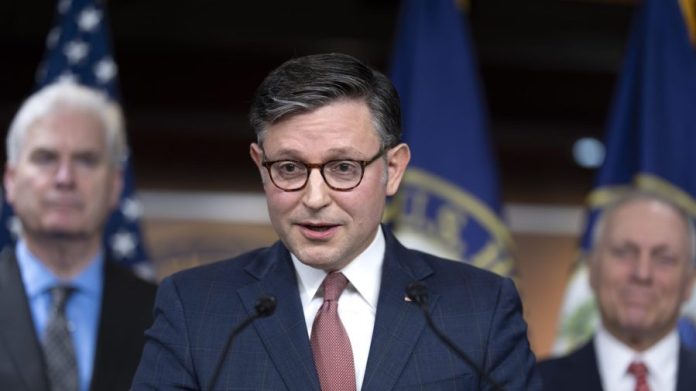
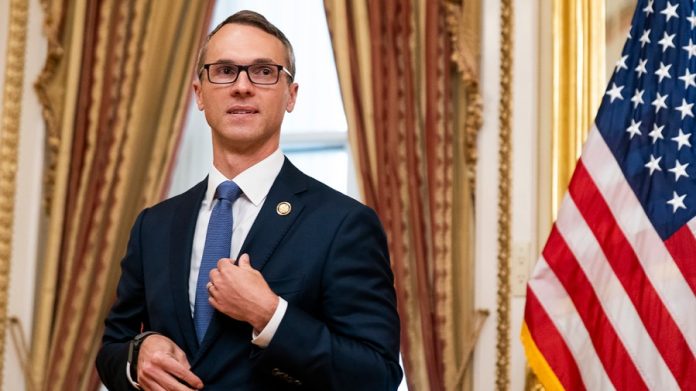
Fairfax County Supervisor James Walkinshaw (D) on Wednesday was sworn in to the House, further narrowing House Speaker Mike Johnson’s (R-La.) razor-thin majority. 

“Honored to be sworn in today to represent VA-11 in Congress. Fairfax families will always come first. Grateful to my wife Yvette and our son Mateo for their love and support every step of the way,” Walkinshaw said Wednesday in a post on social platform X. 

With Walkinshaw, the former chief of staff of the late Rep. Gerry Connolly (D), sworn in, Johnson’s majority has narrowed to 219-213, meaning he can only afford to lose two GOP votes on any party-line bill.

There are three vacant seats. 

Walkinshaw is the newest member of the lower chamber. He comfortably defeated Republican Stewart Whitson, a former FBI agent, in a special election to become the next lawmaker to represent Virginia’s 11th Congressional District. 

The ratio between Democrats and Republicans has changed numerous times since the 119th Congress began, due to vacancies resulting from the resignations or deaths of lawmakers. 

Johnson has had some breathing room when passing major legislation this year. The House passed President Trump massive tax and spending cuts legislation earlier this year, which was ultimately signed into law by the president, with Johnson losing two GOP votes on the final passage – Reps. Thomas Massie (Ky.) and Brian Fitzpatrick (Pa.) 

The next major legislative battle will be over government funding, with the deadline set for the end of this month.

Trust the Dip in Chipotle (CMG) Because Its Employees Know How to Wash Their Hands

0


To be quite honest, deciphering unusual options activity is a crapshoot. The ugly truth is that the transaction itself is the only metric you can fully trust. All the other stuff about detecting early buy or sell signals? I would say most of it is marketing copy.

Now, I suppose that for those who have deep knowledge of the derivatives market, unusual options screeners are akin to having a runner on second base. Your teammate can now attempt to read the opposing catcher’s signals — and relay to you what could be coming next.

Of course, much like interpreting unusual options activity, the signal could be profitable (or it might not be). Without some idea of probabilistic inference, it’s difficult to know when to act on a potential move or just let it pass.

That’s not to say that such screeners of the derivatives market aren’t useful because they are. You just need to know what to look for. Case in point is Chipotle Mexican Grill (CMG).

Those paying attention to business news will know that Chipotle has been struggling. Since the start of the year, CMG stock has hemorrhaged more than 34% of value. As Zacks Investment Research pointed out, Chipotle has grown increasingly dependent on its digital strategy, which accounts for 35.5% of sales. While that may sound encouraging, comps are projected to be flat for fiscal 2025.

Needless to say, if the digital pivot isn’t executed well, CMG stock could face even more pain. However, I don’t think that doomsday scenario is going to pan out.

Granted, it’s difficult to be optimistic, in part because of the unusual options activity. On Monday, total options volume for CMG stock hit 136,772 contracts, representing a 98.51% lift over the trailing one-month average volume. However, options flow — which focuses exclusively on big block transactions likely placed by institutional investors — showed that net trade sentiment slipped to $197,100 below parity, thus favoring the bears.

On the surface, that’s not great — but Wall Street almost certainly isn’t looking at this quantitative signal.

While much has been made of the percentage losses that CMG stock has incurred, from a market breadth perspective, the situation is remarkably clear. In the past 10 weeks (not inclusive of Monday’s session), the equity has printed only two up weeks, with the remainder being down weeks. Thanks to an overall negative trajectory, the sequence can be labeled 2-8-D for easy classification.

Firms will hesitate to invest in US after raid – South Korea president

0


South Korean companies will be “very hesitant” about investing in the US following a massive immigration raid at a Hyundai plant in the state of Georgia last week, President Lee Jae-myung said.

More than 300 South Koreans who were arrested in the raid are due to return home on Friday, after their departure was delayed “due to circumstances on the US side”, officials said.

“The situation is extremely bewildering,” said Lee, noting that it is common practice for Korean firms to send workers to help set up overseas factories.

“If that’s no longer allowed, establishing manufacturing facilities in the US will only become more difficult… making companies question whether it’s worth doing at all.”

Last week, US officials detained 475 people – more than 300 of them South Korean nationals – who they said were working illegally at the battery facility, one of the largest foreign investment projects in the state.

A worker at the plant spoke to the BBC about the panic and confusion during the raid. The employee said the vast majority of the workers detained were mechanics installing production lines at the site, and were employed by a contractor.

South Korea, a close US ally in Asia, has pledged to invest tens of billions of dollars in America, partly to offset tariffs.

The timing of the raid, as the two governments engage in sensitive trade talks, has raised concern in Seoul.

The White House has defended the operation at the Hyundai plant, dismissing concerns that the raid could deter foreign investment.

On Sunday, US President Donald Trump referenced the raid in a social media post and called for foreign companies to hire Americans.

The US government would make it “quickly and legally possible” for foreign firms to bring workers into the country if they respected its immigration laws, Trump said.

Live updates: Conservative activist Charlie Kirk dead in Utah campus shooting; FBI creates tip line

0


Conservative activist Charlie Kirk was fatally shot Wednesday afternoon while speaking at a Utah college campus.

Kirk, 31 and the co-founder of Turning Point USA, was struck by a gunshot to the neck, according to video footage from the event. A “person of interest” is in custody, Utah Gov. Spencer Cox (R) said at a press conference. FBI Director Kash Patel later said a “subject” was released after questioning.

President Trump announced the death of one of his biggest allies on social media.

“The Great, and even Legendary, Charlie Kirk, is dead,” Trump posted on Truth Social. “No one understood or had the Heart of the Youth in the United States of America better than Charlie. He was loved and admired by ALL, especially me, and now, he is no longer with us. Melania and my Sympathies go out to his beautiful wife Erika, and family. Charlie, we love you!”

Lawmakers from both sides of the aisle and right-wing pundits mourned Kirk and condemned the political violence. And shouting broke out on the House floor after Speaker Mike Johnson (R-La.) held a moment of prayer.

The assassination of the conservative activist sent a shockwave through the American conservative movement, with Kirk’s sudden and public death eliciting emotional reactions from some of the country’s most prominent figures on the right.  

Follow along for updates.

The Fed Seldom Cuts Rates When Stocks Are at Highs. What History Says Happens Next.

0


Traders give a 91.8% chance of a quarter-point cut and an 8.2% chance of a half-point cut when the Federal Open Market Committee meets next week, according to the CME FedWatch Tool. That’s up from 88.9% for just a quarter-point cut last month.

“While this week’s Producer Price Index (PPI) and Consumer Price Index (CPI) reports could surprise the market, it’s highly unlikely they’ll alter the Powell Fed’s decision at this point,” writes Bespoke Investment Group co-founder Paul Hickey. “The Powell Fed has thus far avoided surprising the market, and with a rate cut currently priced in with 100% certainty, a change of course would be very unusual.”

Postcode lottery for new cancer treatments, doctors warn

0


Philippa RoxbyHealth reporter and

Jim ReedHealth reporter

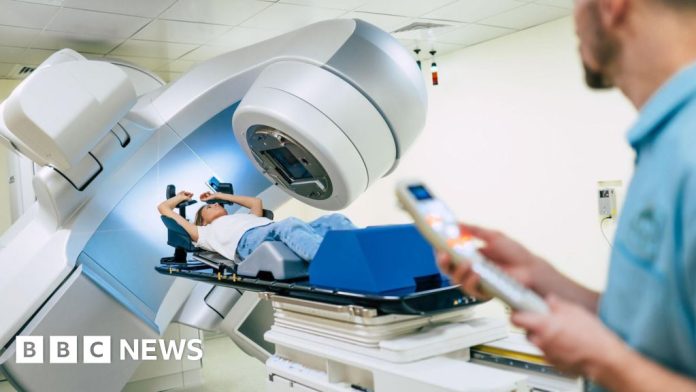
Getty Images A stock image of a woman in a private clinic being giving radiotherapy for cancer. She is lying on her back wearing a white T-shirt and blue trousers with the radiotherapy machine treating her. A radiographer stands to the right of the frame operating the machine with a remote control.Getty Images

Advances in radiotherapy and other forms of cancer treatment are driving up survival rates of the disease

Senior cancer doctors are warning that excessive red tape means some patients in England are struggling to access the latest cancer treatments.

The Royal College of Radiologists (RCR) says bureaucracy is “stifling innovation” and that applying for funding to pay for new treatments can be “cumbersome” for some cancer centres.

It says the situation is leading to an unacceptable postcode lottery with some cutting-edge treatments only available in the larger, better-funded units.

The government says a new cancer strategy, due later this year, will “put the NHS back at the forefront of global cancer care”.

Doctors and scientists say we are living through a golden age of cancer treatment, with new breakthroughs now changing the way patients are cared for.

Survival rates for many common cancers have been rising, partly driven by new technologies such as immunotherapy drugs and more advanced radiotherapy.

But the body representing both radiologists, who analyse scans and treat patients, and cancer doctors says that NHS bureaucracy means some are missing out on the latest life-saving treatments.

The RCR says that even some well-established advances, such as Stereotactic Ablative Body Radiotherapy – or SABR – can still be difficult to access.

SABR is a way of more accurately targeting the disease with a precise dose of high-strength radiation, and is typically used to treat very small tumours in the lungs, liver, lymph nodes and brain.

The RCR says individual cancer units still have to apply to NHS England to fund its use, leading to a postcode lottery where some patients lose out.

“That is inequitable and unjust and not compatible with the National Health Service,” says Dr Nicky Thorp, a practising cancer doctor and vice president for clinical oncology at the RCR.

“We would like red tape to be cut and the commissioners to listen to clinicians who really understand the impact on patient care,” she added.

Both the RCR and the Society of Radiographers have written to the government asking for SABR to be made more easily available, along with other cutting-edge treatments such as some immunotherapy medicines and molecular radiotherapy, which uses radioactive drugs to target cancer cells.

NHS England says every hospital trust that is delivering radiotherapy is able to offer SABR, and it is committed to a more “streamlined approach” to expanding its use.

Family handout A portrait shot of Ray Bowen, who has received SABR treatment, sitting in a pub. He has a white beard and grey hair and is wearing a green fleece top and staring to the left of the picture.Family handout

Ray Bowen from Middlesbrough received SABR treatment for kidney cancer in 2022 and is now in recovery.

‘Life-saving’ treatments

Ray Bowen, 76, from Middlesborough had one of his kidneys removed in 2019 after being diagnosed with cancer.

In 2022 a scan showed the disease had returned in his second kidney and he was told surgery would not be possible.

“At best that meant I would have needed to be put on dialysis which I really would not have fancied,” he said.

Instead the former soldier and shipyard worker was given SABR radiotherapy to treat the cancer with high-dose radiation and, three years on, he says he’s doing well.

“I just feel very lucky,” he said. “Not long ago something like this wouldn’t have even existed.

“It’s a magic treatment and without doubt it needs to be more available.”

New cancer strategy

The call by cancer doctors comes as the government prepares to publish its long-awaited cancer strategy for England, now expected later this autumn.

The charity Cancer Research UK (CRUK) said it should include a new commitment to diagnose cancers earlier after a new report found that only half of people diagnosed with cancer after an urgent referral are getting the news within the target 28 days.

For some cancers, such as bone, bladder, kidney and head and neck, only around a third of people receive a diagnosis within the target time.

Between 2021 and 2024, the situation for people being diagnosed with cancer has been getting worse, the charity says.

But, in contrast, those who don’t have cancer after an urgent referral – which is the large majority of people – are informed more quickly, with 75% told the good news within the target time.

“It’s promising that more people are having cancer ruled out on time, helping to put their minds at ease,” says Cancer Research UK chief executive Michelle Mitchell.

“However it’s unacceptable that only half of people who have cancer are being diagnosed within the target timeframe.”

Follow-up tests to confirm the presence of cancer, particularly complex ones, and what type it is can cause delays in diagnosis. This can lead to delays in starting treatment too.

Jon Shelton, head of cancer intelligence at CRUK, says this process “is taking too long” and tests need to be carried out “as quickly as possible”.

A spokeswoman for NHSE England said the health service is seeing and treating more cancer patients than ever before, while rolling out new initiatives, such as home tests and mobile scanning trucks, to diagnose the disease earlier.

The Department of Health described cancer care as an urgent priority and said its upcoming national cancer strategy would give patients “the most cutting-edge care”.

“Our plan for change is already making an impact, with 148,000 more people having cancer diagnosed or ruled out within 28 days from July 2024 to June 2025 compared to a year earlier,” a spokesman said.

House passes defense policy bill with proposal to repeal Iraq war authorizations

0


The House on Wednesday voted to pass its version of the National Defense Authorization Act, with a bipartisan amendment to repeal the two laws authorizing the use of military force (AUMF) in Iraq.

The legislation, which authorizes funding and sets policy for the U.S. military, passed 231 to 196. Four Republicans voted in opposition of the bill while 17 Democrats joined the rest of the GOP in voting for it.

The AUMF amendment, part of nearly two dozen amendments added in a series of votes, would repeal the 2002 Iraq War and 1991 Gulf War authorizations as well as make it more difficult for presidents to bypass Congress on military actions.

Lawmakers voted 261 to 167 to pull the AUMFs, which critics say have been abused by presidents as they grant the commander-in-chief authority to use military force without issuing a formal declaration of war. All Democrats voted in support of the amendment, joined by 49 Republicans—about one-fifth of the GOP lawmakers.

Presidents routinely use AUMFs to legally justify military action, with President Trump relying on the 2002 AUMF to authorize the January 2020 strike that killed Iranian General Qassem Soleimani as he traveled within the country.

The vote came after three members of the House Freedom Caucus – Reps. Ralph Norman (R-S.C.), Chip Roy (R-Texas) and Morgan Griffith (R-Va.) – on Tuesday broke with Republican leaders in the House Rules Committee.

The three voted in favor of a motion from Rep. Jim McGovern (Mass.), the top Democrat on the House Rules Committee, to allow a vote on the amendment.

A bill to repeal the 2002 AUMF last passed the House in 2021, while a bill to repeal both the 2002 and 1991 authorizations passed the Senate in 2023.

The AUMF proposal was among the most contentious amendments included in the NDAA, which has a topline of $892.6 billion. Also included in the bill were a pair of amendments that would restrict the Pentagon’s coverage of gender-affirming care.

Top House Democrats earlier this week signaled that they would oppose must-pass defense legislation if Republicans pushed through contentious amendments, forcing Republicans to stay united to pass the bill should they not have had the support of any Democrats.

The bill typically passes with wide bipartisan support.

Is Travelers Companies Stock Underperforming the Nasdaq?

0


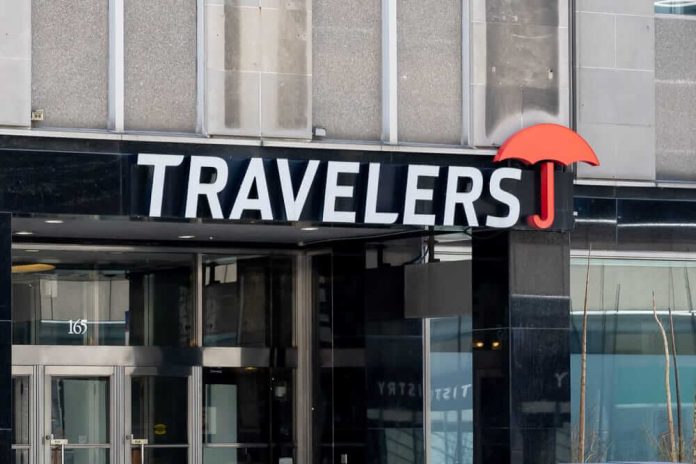
New York-based The Travelers Companies, Inc. (TRV) is a leading provider of commercial and personal property, and property casualty insurance for auto, home and business. Valued at $61.8 billion by market cap, the company’s diverse business lines offer its global customers a wide range of coverage sold primarily through independent agents and brokers.

Companies worth $10 billion or more are generally described as “large-cap stocks,” and TRV perfectly fits that description, with its market cap exceeding this mark, underscoring its size, influence, and dominance within the property & casualty insurance industry.

Despite its notable strength, TRV slipped 2.4% from its 52-week high of $280.70, achieved on Sep. 4. Over the past three months, TRV stock gained 2.3% underperforming the Nasdaq Composite’s ($NASX) 11.4% gains during the same time frame.

www.barchart.com
www.barchart.com

In the longer term, shares of TRV rose 13.7% on a YTD basis, outperforming NASX’s YTD gains of 13.1%. However, the stock climbed 13.6% over the past 52 weeks, underperforming NASX’s 29.3% returns over the last year.

To confirm the bullish trend, TRV has been trading above its 200-day moving average over the past year, with slight fluctuations. The stock is trading above its 50-day moving average since early August.

www.barchart.com
www.barchart.com

On Jul. 17, TRV shares closed up by 3.8% after reporting its Q2 results. Its revenue stood at $12.1 billion, up 7.4% year over year. The company’s adjusted EPS rallied 159.4% year over year to $6.51.

TRV’s rival, Cincinnati Financial Corporation (CINF) shares lagged behind the stock, with a 6.7% uptick on a YTD basis and 11.5% gains over the past 52 weeks.

Wall Street analysts are reasonably bullish on TRV’s prospects. The stock has a consensus “Moderate Buy” rating from the 26 analysts covering it, and the mean price target of $279.52 suggests a potential upside of 7.4% from current price levels.

On the date of publication, Neha Panjwani did not have (either directly or indirectly) positions in any of the securities mentioned in this article. All information and data in this article is solely for informational purposes. This article was originally published on Barchart.com

Postcode lottery for new cancer treatments, doctors warn

0


Philippa RoxbyHealth reporter and

Jim ReedHealth reporter

Getty Images A stock image of a woman in a private clinic being giving radiotherapy for cancer. She is lying on her back wearing a white T-shirt and blue trousers with the radiotherapy machine treating her. A radiographer stands to the right of the frame operating the machine with a remote control.Getty Images

Advances in radiotherapy and other forms of cancer treatment are driving up survival rates of the disease

Senior cancer doctors are warning that excessive red tape means some patients in England are struggling to access the latest cancer treatments.

The Royal College of Radiologists (RCR) says bureaucracy is “stifling innovation” and that applying for funding to pay for new treatments can be “cumbersome” for some cancer centres.

It says the situation is leading to an unacceptable postcode lottery with some cutting-edge treatments only available in the larger, better-funded units.

The government says a new cancer strategy, due later this year, will “put the NHS back at the forefront of global cancer care”.

Doctors and scientists say we are living through a golden age of cancer treatment, with new breakthroughs now changing the way patients are cared for.

Survival rates for many common cancers have been rising, partly driven by new technologies such as immunotherapy drugs and more advanced radiotherapy.

But the body representing both radiologists, who analyse scans and treat patients, and cancer doctors says that NHS bureaucracy means some are missing out on the latest life-saving treatments.

The RCR says that even some well-established advances, such as Stereotactic Ablative Body Radiotherapy – or SABR – can still be difficult to access.

SABR is a way of more accurately targeting the disease with a precise dose of high-strength radiation, and is typically used to treat very small tumours in the lungs, liver, lymph nodes and brain.

The RCR says individual cancer units still have to apply to NHS England to fund its use, leading to a postcode lottery where some patients lose out.

“That is inequitable and unjust and not compatible with the National Health Service,” says Dr Nicky Thorp, a practising cancer doctor and vice president for clinical oncology at the RCR.

“We would like red tape to be cut and the commissioners to listen to clinicians who really understand the impact on patient care,” she added.

Both the RCR and the Society of Radiographers have written to the government asking for SABR to be made more easily available, along with other cutting-edge treatments such as some immunotherapy medicines and molecular radiotherapy, which uses radioactive drugs to target cancer cells.

NHS England says every hospital trust that is delivering radiotherapy is able to offer SABR, and it is committed to a more “streamlined approach” to expanding its use.

Family handout A portrait shot of Ray Bowen, who has received SABR treatment, sitting in a pub. He has a white beard and grey hair and is wearing a green fleece top and staring to the left of the picture.Family handout

Ray Bowen from Middlesbrough received SABR treatment for kidney cancer in 2022 and is now in recovery.

‘Life-saving’ treatments

Ray Bowen, 76, from Middlesborough had one of his kidneys removed in 2019 after being diagnosed with cancer.

In 2022 a scan showed the disease had returned in his second kidney and he was told surgery would not be possible.

“At best that meant I would have needed to be put on dialysis which I really would not have fancied,” he said.

Instead the former soldier and shipyard worker was given SABR radiotherapy to treat the cancer with high-dose radiation and, three years on, he says he’s doing well.

“I just feel very lucky,” he said. “Not long ago something like this wouldn’t have even existed.

“It’s a magic treatment and without doubt it needs to be more available.”

New cancer strategy

The call by cancer doctors comes as the government prepares to publish its long-awaited cancer strategy for England, now expected later this autumn.

The charity Cancer Research UK (CRUK) said it should include a new commitment to diagnose cancers earlier after a new report found that only half of people diagnosed with cancer after an urgent referral are getting the news within the target 28 days.

For some cancers, such as bone, bladder, kidney and head and neck, only around a third of people receive a diagnosis within the target time.

Between 2021 and 2024, the situation for people being diagnosed with cancer has been getting worse, the charity says.

But, in contrast, those who don’t have cancer after an urgent referral – which is the large majority of people – are informed more quickly, with 75% told the good news within the target time.

“It’s promising that more people are having cancer ruled out on time, helping to put their minds at ease,” says Cancer Research UK chief executive Michelle Mitchell.

“However it’s unacceptable that only half of people who have cancer are being diagnosed within the target timeframe.”

Follow-up tests to confirm the presence of cancer, particularly complex ones, and what type it is can cause delays in diagnosis. This can lead to delays in starting treatment too.

Jon Shelton, head of cancer intelligence at CRUK, says this process “is taking too long” and tests need to be carried out “as quickly as possible”.

A spokeswoman for NHSE England said the health service is seeing and treating more cancer patients than ever before, while rolling out new initiatives, such as home tests and mobile scanning trucks, to diagnose the disease earlier.

The Department of Health described cancer care as an urgent priority and said its upcoming national cancer strategy would give patients “the most cutting-edge care”.

“Our plan for change is already making an impact, with 148,000 more people having cancer diagnosed or ruled out within 28 days from July 2024 to June 2025 compared to a year earlier,” a spokesman said.

Scalise says Charlie Kirk shooting 'brings back emotions'

0


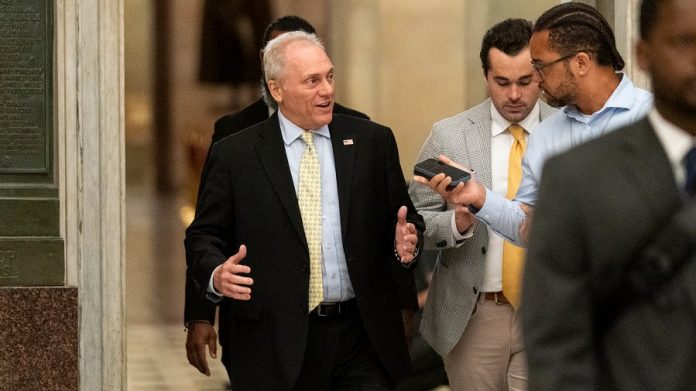
House Majority Leader Steve Scalise (R-La.) said the fatal shooting of conservative activist Charlie Kirk on Wednesday in Utah “brings back emotions” from when he was shot during Congressional baseball practice eight years ago.  

“You know, it always when you see something like this, brings back emotions that hearken back to 2017, you know. And why do you have people that want to go and harm other people for what they believe in, especially in America?” Scalise said during a Wednesday evening interview with The Hill’s sister network NewsNation. “I mean, it’s not who America is. It’s not something we can let America become and everybody, you know, we all have differences. It’s what makes us such a great nation.”

Kirk, the founder of Turning Point USA, was fatally shot while speaking at an event at Utah Valley University in Orem, Utah. The conservative activist was struck by a gunshot in the neck, according to footage from the scenes that was posted on social media. 

Scalise was wounded during Congressional baseball practice in June 2017. Three others were also injured in the attack. James Hodgkinson, the 66-year-old shooter from Illinois, was killed by Capitol Police. 

Less than two hours after announcing the alleged subject was detained related to Kirk’s murder, FBI Director Kash Patel said late Wednesday that the individual was “released after an interrogation” and that the probe, involving local, state and federal law enforcement “continues.” 

It is unclear if law enforcement has taken more people into custody or if the shooter is still at large.

“Well, it’s heartbreaking. You know, for Charlie, for his family, you know he’s got young kids, it’s just devastating from that side. You know, there’s a lot of anger, obviously. I mean, you know, here’s one of the most talented young people of our generation who was taken away in his prime by some nut and for no, no reason,” Scalise told NewsNation’s Ava Thompson. 

“I mean, there’s no justification for murdering somebody for their political views. Obviously, we’ll find out more, and I trust law enforcement, you know, they’re all working together, the FBI on down to local officials, working to get the answers that we all want, but, but it’s just a sad loss and a horrible, horrible day, yeah,” the House majority leader added. 

Utah Gov. Spencer Cox (R) also condemned the fatal shooting of Kirk, calling it a “political assassination” and a “dark day” for both Utah and the nation.