15.1 C
New York
Friday, May 1, 2026
Home Blog Page 148

Peak 10 Energy completes Verado assets acquisition

0


Peak 10 Energy has finalised the acquisition of the Verado assets in the Midland Basin from Black Topaz Oil & Gas and Blue Topaz Oil & Gas, marking the company’s eighth acquisition since its inception in August 2023.

The Verado oil and gas assets, primarily situated in Scurry County, Texas, US, are expected to enhance Peak 10’s liquid-weighted production and provide a foundation for long-term value creation.

The acquisition, which is more than 90% operated, aligns with Peak 10’s US onshore growth strategy.

Peak 10 CEO Kyle McQuire said: “This acquisition is a testament to our team’s ability to not only identify and close complex transactions but also to seamlessly integrate and optimise assets.

“Our track record in Texas, particularly with our operated positions, has proven that Peak 10 is a reliable and effective steward of high-quality oil and gas assets.”

The Verado assets will add significant scale and inventory to Peak 10’s operations in a core area, according to the company.

Peak 10 chief financial officer Brandon Powell said: “The successful close of this deal highlights our long-term vision and the unwavering support of our financial partners.

“We have significant momentum with our asset consolidation strategy, the operational expertise to optimise our existing assets and the discipline to strategically execute our growth plan on a larger scale.”

The financial backing for Peak 10 comes from Legacy Star Capital Partners, a private equity firm based in the US.

Petrie Partners acted as the financial advisor for Peak 10, while Gray Reed provided legal counsel for the transaction.

“Peak 10 Energy completes Verado assets acquisition” was originally created and published by Offshore Technology, a GlobalData owned brand.


The information on this site has been included in good faith for general informational purposes only. It is not intended to amount to advice on which you should rely, and we give no representation, warranty or guarantee, whether express or implied as to its accuracy or completeness. You must obtain professional or specialist advice before taking, or refraining from, any action on the basis of the content on our site.

At least 19 dead after youth protests against Nepal social media ban

0


Amy WalkerBBC News and

Phanindra DahalBBC Nepali in Kathmandu

At least 19 people have been killed and dozens injured in Nepal after demonstrations against a government social media ban led to clashes between protesters and security forces.

Thousands heeded a call by demonstrators describing themselves as Generation Z to gather near the parliament building in Kathmandu over the decision to ban platforms including Facebook, X and YouTube.

Nepal’s Minister for Communication Prithvi Subba told the BBC police had had to use force – which included water cannons, batons and firing rubber bullets.

The government has said social media platforms need to be regulated to tackle fake news, hate speech and online fraud.

But popular platforms such as Instagram have millions of users in Nepal, who rely on them for entertainment, news and business.

Demonstrators carried placards with slogans including “enough is enough” and “end to corruption”.

Some said they were protesting against what they called the authoritarian attitude of the government.

As the rally moved into a restricted area close to parliament, some protesters climbed over the wall.

Reuters A young man wearing a white t-shirt, rucksack, jogging bottoms and Nike trainers, appears to throw what looks like a smoke shell towards riot police on a road in KathmanduReuters

It is not clear what triggered the clashes

Kathmandu Valley Police spokesman Shekhar Khanal said 17 people were killed in the capital.

“Tear gas and water cannons were used after the protesters breached into the restricted area,” Khanal told the AFP news agency.

A Kathmandu district office spokesperson said a curfew was imposed around areas including the parliament building after protesters attempted to enter.

Two were also killed in the eastern city of Itahari while protesting after the curfew order was announced, local police said.

Nepal Army Spokesman Rajaram Basnet told the BBC that a small unit of soldiers had been deployed in the streets following the introduction of the curfew.

Last week authorities ordered the blocking of 26 social media platforms for not complying with a deadline to register with Nepal’s ministry of communication and information technology.

Since Friday, users have experienced difficulty in accessing the platforms, though some are using VPNs to get around the ban. So far, two platforms have been reactivated after registering with the ministry following the ban.

Nepal’s government has argued it is not banning social media but trying to bring them in line with Nepali law.

A large crowd of younger people, some of whom are holding up signs or the Nepali flag, are seen on the streets of Kathmandu

Content against the ban has also gone viral on TikTok, which is still operating in Nepal

Getty Images A group of ten men stood at a wall as one makes his ascent over the railings outside the parliament building in KathmanduGetty Images

Some protesters climbed over the wall into the parliament premises

Trump praises West Point group for cancelling event honoring Tom Hanks

0


President Trump on Monday celebrated the decision by a West Point alumni group to cancel an event to honor the actor Tom Hanks for his support of the military and veterans.

“Our great West Point (getting greater all the time!) has smartly cancelled the Award Ceremony for actor Tom Hanks. Important move!” Trump posted on Truth Social. “We don’t need destructive, WOKE recipients getting our cherished American Awards!!! Hopefully the Academy Awards, and other Fake Award Shows, will review their Standards and Practices in the name of Fairness and Justice.”

The West Point Association of Graduates had announced in June plans to honor Hanks with the Sylvanus Thayer Award, which it says is given each year to individuals who exemplify the West Point motto of “Duty, Honor, Country.”

The Washington Post first reported that the military academy called off this month’s event, saying the cancellation would allow West Point to instead focus on preparing enrollees for their future service.

Hanks is among the most famous actors in Hollywood and has won multiple Academy Awards. In announcing the award, the West Point group highlighted his starring roles in “Apollo 13” and “Saving Private Ryan,” as well as his role as a producer on “Band of Brothers,” “The Pacific,” “Masters of the Air” and “Greyhound.”

Hanks, who previously collaborated with former President Biden, has served as a national spokesperson for the World War II Memorial in Washington, D.C., and he helped raise money for the Dwight D. Eisenhower Memorial in the nation’s capital. The alumni group also cited Hanks’s coffee company founded in 2023 called Hanx for Troops.

The cancellation is the latest move during the Trump administration to move the military away from anything the president or his allies might deem “woke” or “politically correct.”

Since Trump took office, the Pentagon has taken a series of steps to root out what he and his allies have decried as examples of political correctness or “woke” policies. The department has rolled back diversity initiatives and reversed name changes to military bases that had been switched because they were named after Confederate soldiers.

Trump last week signed an executive order to rebrand the Defense Department as the Department of War. In making the announcement, he suggested the Department of Defense had been too “wokey,” leading to less U.S. success on the battlefield since World War II.

Planet Labs Lifts Outlook With Record Backlog And Strategic Global Contracts

0


Planet Labs PBC (NYSE:PL) shares surged after reporting second-quarter fiscal 2026 results that beat Wall Street estimates, driven by record revenue growth and raised guidance.

Revenue rose 20% from a year earlier to $73.39 million, above analyst estimates of $65.74 million. The company reported a GAAP net loss of $22.6 million, or 7 cents per share, compared with a loss of $38.7 million, or 13 cents per share, a year ago.

On a non-GAAP basis, net loss per share was 3 cents, beating expectations for a 4-cent loss. Adjusted EBITDA was $6.4 million, compared with a loss of $4.4 million a year earlier.

Also Read: Planet Labs Gears Up For Q2 Print; Here Are The Recent Forecast Changes From Wall Street’s Most Accurate Analysts

Gross margin improved to 58% from 53% a year earlier, while non-GAAP gross margin rose to 61% from 58%. Recurring annual contract value accounted for 98% of revenue. Remaining performance obligations surged 516% year-over-year to $690.1 million, and backlog increased 245% to $736.1 million.

Cash flow from operations for the year-to-date period totaled $85.1 million, with free cash flow at $54.3 million. The company ended the quarter with $271.5 million in cash, cash equivalents, and short-term investments, up $45.4 million sequentially.

View more earnings on PL

CEO Will Marshall said, “Our second quarter results demonstrate incredibly strong momentum across our business, with record revenue and substantial growth in our backlog. The increased demand for our unique Earth intelligence, highlighted by pivotal contracts including one in collaboration with the German government, one with NATO, and others with the U.S. Department of Defense, underscores the critical role Planet plays in addressing global challenges and supporting peace and security.”

New contracts included a 240 million euros multi-year agreement funded by the German government, expanded work with NATO and the U.S. Navy, and additional deals with the U.S. Department of Defense, U.S. National Reconnaissance Office, the U.K.’s Rural Payments Agency, SwissRe, and Farmdar.

The company also launched two high-resolution Pelican satellites aboard a SpaceX vehicle and marked the one-year anniversary of its Tanager-1 satellite, which has detected more than 5,500 methane and CO2 plumes.

For the third quarter, Planet guided revenue between $71 million and $74 million, above the $68.86 million analyst consensus. Non-GAAP gross margin is expected at 55% to 56%, with adjusted EBITDA between a $4 million loss and breakeven.

For fiscal 2026, the company raised its revenue outlook to $281 million to $289 million, up from prior guidance of $265 million to $280 million, but below the $328.38 million analyst estimate. Non-GAAP gross margin is expected to be 55% to 57%, and adjusted EBITDA between a $7 million loss and breakeven.

President and CFO Ashley Johnson stated, “We are pleased to see our investments in the business start to generate meaningful revenue growth rate acceleration, and our significant backlog gives us good visibility into FY’27 and beyond.”

Price Action: At last check Monday, PL shares were trading higher by 14.32% to $7.465.

Read Next:

Photo by Andrei Armiagov via Shutterstock

UNLOCKED: 5 NEW TRADES EVERY WEEK. Click now to get top trade ideas daily, plus unlimited access to cutting-edge tools and strategies to gain an edge in the markets.

Get the latest stock analysis from Benzinga?

This article Planet Labs Lifts Outlook With Record Backlog And Strategic Global Contracts originally appeared on Benzinga.com

© 2025 Benzinga.com. Benzinga does not provide investment advice. All rights reserved.

Six killed by Palestinian gunmen at Jerusalem bus stop

0


Six people have been killed and eight others wounded by Palestinian gunmen in one of the deadliest shooting attacks in Jerusalem in the past few years.

Israeli police said “two terrorists arrived in a vehicle” and opened fire towards a bus stop at Ramot Junction, on the city’s northern outskirts. An off-duty soldier and a civilian returned fire, “neutralising” the attackers, it added.

Israeli media identified the dead as five men, aged between 25 and 79, and a 60-year-old woman. Local hospitals said two of the wounded were in a serious condition.

There was no immediate claim from any armed groups, although Hamas praised the attack.

During a visit to the scene, Prime Minister Benjamin Netanyahu told reporters that Israel was in “an intense war against terrorism on several fronts”.

Israeli security forces had thwarted hundreds of attacks in the occupied West Bank this year, “but, unfortunately, not this morning”, he said.

“We are now engaged in pursuit and are cordoning off the villages from which the murderers came. We will apprehend whoever aided and dispatched them, and we will take even stronger steps,” he added.

The Israeli military said soldiers were encircling Palestinian villages on the outskirts of the West Bank city of Ramallah to “thwart terrorism and strengthen the defence effort”.

Monday’s attack took place at the end of the morning rush hour at the Ramot Junction.

Israeli police spokesman Lt Dean Elsdunne said: “The terrorists arrived by vehicle… and deliberately opened fire on a number of civilians who were waiting at that busy bus stop to start their day.

“A number of armed civilians who were at the scene acted immediately. They engaged by returning fire and they killed those two terrorists on the spot.”

He added that officers had recovered “several weapons, ammunition and a knife” used by the attackers, who Israeli media said were believed to have set out from the West Bank villages of al-Qubeiba and Qatanna, about 10km (6 miles) west of Ramot Junction.

Dashcam video shared by the Israeli foreign ministry showed dozens of men, women and children running from a bus shelter and a stationary bus as the sound of gunfire rang out.

The windscreen of a second bus behind shatters as the gunfire continues, before what appear to be armed civilians approach the scene.

“Suddenly I hear the shots starting… I felt like I was running for an eternity,” Ester Lugasi, one of the injured, told Israeli TV from hospital. “I thought I was going to die.”

Daniel Katzenstein, a first responder with the United Hatzalah emergency medical service, arrived shortly after the attack and treated one of the bus drivers at the scene.

“His name was Mohammed,” Mr Katzenstein told the BBC. “He also ran to help. This is not a battle of Islam versus Judaism, this is a battle between the people who wish to do harm, and the people who want to live life.”

Israeli media identified the five men who were killed as Yaakov Pinto, 25, Yisrael Matzner, 28, and Rabbi Yosef David, 43, Mordechai “Mark” Steinsag, 79 and Levi Yitzhak Pash.

The dead woman was named as Sarah Mendelson, 60.

In a statement posted on social media, Israeli President Isaac Herzog said: “Innocent citizens, children and adults, were murdered and injured in cold blood on a bus in the streets of a city at the hands of evil terrorists.

“The shocking attack reminds us time and again that we are fighting absolute evil,” he added. “The world must understand what we are facing.”

French President Emmanuel Macron said he “strongly condemned the terrorist attack”, while the new UK Foreign Secretary, Yvette Cooper, said she was “horrified by the terrorist attack”.

The Palestinian presidency “reiterated its firm position rejecting and condemning any targeting of Palestinian and Israeli civilians, and denouncing all forms of violence and terrorism regardless of their source”, the official Wafa news agency reported.

Hamas praised what it called the “heroic and exceptional operation by two Palestinian resistance fighters”.

Without admitting it had organised the attack, Hamas said it was a “natural response to the crimes of the occupation [Israel] and the genocide it is waging against our people”.

The group has been fighting a war with Israeli forces in the Gaza Strip for almost two years, triggered by its attack on southern Israel on 7 October 2023.

Israeli security forces have been on high alert in Israel and the West Bank since then, and there have been relatively few attacks of this kind in the Jerusalem area.

In November 2023, three Israelis were killed when two Palestinian gunmen opened fire at a bus stop in West Jerusalem in an attack that was claimed by Hamas.

Monday’s shooting comes at a critical moment with the Israeli military intensifying attacks in Gaza City. At the same time, Israel and Hamas are said to be weighing new proposals for a ceasefire and hostage deal put forward by the White House.

Live updates: Trump to address religious liberty; Congress grinds toward shutdown deadline

0


President Trump starts out the week addressing the Religious Liberty Commission, which he established earlier this year.

Trump is expected to speak on religious liberty Monday morning at the Museum of the Bible in Washington.

“The previous administration abused the federal government’s power to interfere with Americans’ First Amendment right to religious freedom. They even used the Department of Justice to target peaceful people of faith, specifically Christians,” White House spokesperson Taylor Rogers said in a statement Sunday, obtained by Libbey Dean of NewsNation, The Hill’s sister network.

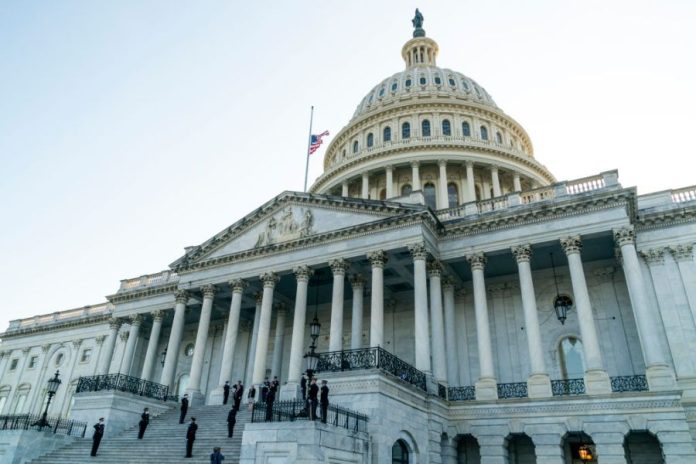
On Capitol Hill, the House has 11 legislative days scheduled before the government funding deadline on Sept. 30. Amid the grind to finding a deal, leaders on both sides of the aisle are indicating they would back a short-term continuing resolution, so long as it includes no substantial funding cuts.

In the House, Monday is the deadline set by the Oversight Committee for the estate of Jeffrey Epstein to turn over files. Read here for more on where the fight over the Epstein documents heads next.

Follow along all day for updates.

A 90-Year-Old Retiree Still Works At A Convenience Store. His Pension Hasn’t Changed Since 1998, But His Expenses Now Reach $7,000 A Month

0


Vince Scidone is 90 years old and still working part-time at a convenience store in Oklahoma. He earns $14.90 an hour. Despite decades of hard work and a pension that began in 1998, today’s cost of living has forced him to stay employed.

“You can survive, but it’s a hard way to go,” Scidone told Business Insider recently. He worked as a carpenter for over 20 years, then spent another two decades representing union workers as part of the St. Louis District Council of Carpenters. He thought he had done everything right. But now, like many older Americans, he’s dealing with economic pressure in his later years.

Don’t Miss:

Scidone and his wife, Deborah, live on a combined annual income of $104,000. That includes his fixed pension and the $997 per month she receives from Social Security. Still, their monthly expenses come out to around $7,000. That includes utilities, medical bills, car payments, a mortgage, and church tithes. “We’re not saving anything,” he told Business Insider.

The couple had $50,000 saved when they married in 2022, but it didn’t last long. The down payment on a home, furnishing it, and rising property taxes drained their funds within three years. “We ran one credit card up, and we had to pay that off, because the interest would eat you alive,” he said. Their property taxes alone went from $2,000 a year to over $5,000.

Scidone began receiving his pension nearly three decades ago. But, as he put it, that amount is “etched in concrete.” It hasn’t increased, even as everything else has. “Twenty-seven years later, everything has escalated in price, so the money I was receiving over 20 years ago isn’t adequate for today’s economy,” he told Business Insider.

Trending: Bill Gates Invests Billions in Green Tech — This Tree-Free Material Could Be the Next Big Breakthrough

He tried to find work for three months before finally getting hired by a convenience store chain last year. “I’m guessing that seeing a date of birth in 1934 made people back away,” he said. But they brought him in after a 45-minute interview. He now works Tuesday through Friday, five hours a day.

Scidone helps prepare food for the grab-and-go bar, including pizzas, quesadillas, hamburgers and more. He doesn’t handle customers, but he stays active in the kitchen. “It’s a pleasant job,” he told Business Insider, adding that he enjoys working with his team and that they often laugh and joke together.

Harry returns to UK and lays wreath as William remembers late Queen

0


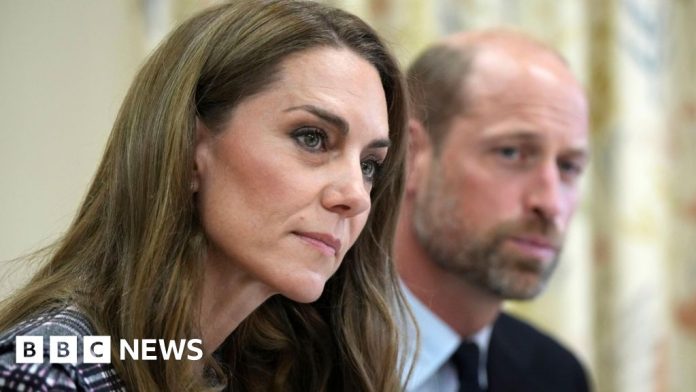
Prince William and Catherine have paid tribute to the late Queen Elizabeth II on the anniversary of her death, as Prince Harry laid a wreath on his return to the UK.

The Prince and Princess of Wales visited a Women’s Institute event in Sunningdale, Berkshire, to meet members of an organisation with a long association with the late Queen.

Elsewhere, Prince Harry – who has arrived back in the UK for the first time in five months – privately laid a wreath and paid his respects to the late Queen in Windsor, where she is buried.

The prince has flown from California and will appear at the WellChild charity awards later on Monday, the first in several planned engagements this week.

Queen Elizabeth, Britain’s longest reigning monarch, who died at the age of 96, had been president of the Women’s Institute branch in Sunningdale.

Prince William was wearing a dark jacket and tie, at a time of royal mourning for the Duchess of Kent, who died last Thursday.

This is also the anniversary of the accession to the throne of King Charles, who is spending the day in Balmoral in Scotland, where the late Queen died.

There has been speculation about whether Prince Harry will meet his father during his UK visit, with the two not having met face to face since February 2024, soon after King Charles had been diagnosed with cancer.

Prince Harry’s wife Meghan and their children have remained at their home in California.

Be bold: Vote to decrease the debt limit

0


The recently passed One Big Beautiful Bill Act increased the debt limit to $41.2 trillion, or 136 percent of GDP.

Some believe that Congress will have to raise the debt limit again before the 2026 election. But here is a bold idea for Republicans to show that they remain the party of limited government: Vote to decrease the debt limit, and do it soon.

If President Trump has taught us anything, it’s that we should get out of our status quo ruts and explore the broader horizon of policy possibilities. It is time to reevaluate how we officially measure the debt. The U.S. dollar, important as it is, is simply not a great measure for evaluating fiscal policy. This is why the Congressional Budget Office and the White House Office of Management and Budget already present data in both current dollars and as a percentage of GDP.

We have had a top-line debt ceiling in U.S. dollars since 1939, but we would be much better served setting the debt limit as a percentage of GDP.

First some background, the Constitution gives Congress the “power of the purse,” meaning Congress is ultimately tasked with both tax collection and spending policy. Congress determines how much we can spend and borrow, and Congress periodically adjusts how it handles the debt limit.

Prior to World War I, the debt limit was effectively set by Congress authorizing bonds to borrow and pay for specific projects — for example, 1840’s Mexican-American War bonds and early 1900’s Panama Canal construction bonds. After the Great War, with debt at unprecedented levels and the increasing complexity of financial markets, the secretary of the Treasury was given more latitude for managing federal debt, and in 1939 the modern top-line debt ceiling approach was established.

However, a lot has changed since then. Today’s fiat currency is no longer connected to a stable asset like gold. Increases in money supply — and resulting inflation — have compromised the dollar as a stable measure of value. Congress should therefore use our national GDP as a smarter measure for the federal debt limit. 

Consider that Federal Debt in 1946, after World War II, was about $242 billion; that number tells us little. On the other hand, knowing that the debt level was 106 percent of GDP. That tells us both the real size of that burden then and its relation to today. It helps us understand our nation’s ability to repay its debt.

For perspective, our recently increased $41.2 trillion debt limit is about 136 percent of GDP. After GDP growth, CBO projects that GDP will be $31.3 trillion in 2026, dropping the unchanged $41.2 trillion debt limit to about 131.6 percent of GDP.

To give a little wiggle room, Congress should set the debt limit at 132 percent of GDP, but it should not stop there. In the same bill that drops the debt limit from 136 percent of GDP to 132 percent of GDP, Congress should provide for the debt limit to decrease by an additional percentage point every year through the end of the 21st century. This would result in a debt limit that is 58 percent of GDP by 2100 — on par with federal debt in 1954. Alternatively, Congress could take a more aggressive approach with annual decreases of 1.25 points, which would put the debt on par with its 1988 levels in the same time frame.

Among the benefits, this approach would put us on a credible and sustainable path to radically reduce our national debt as the economy grows. Also, it would reduce economic volatility and anxiety over debt limit politics risking default on Treasury debt. This could help to lower interest rates both for federal debt — reducing our interest payments — and ultimately reduce costs on consumer loans.

The debt limit would stay firm at a set percentage of GDP, even when inflation and interest payments force the current dollar level marginally higher. And if some emergency transpires or a deep recession hits us, nothing prevents a future Congress from increasing the limit percentage or issuing special bonds to handle the situation.

Even so, given that we are already at historically high rates of debt as a percent of GDP, there will never be a better time than now to start reducing the debt.

The U.S. is on the brink of numerous fiscal crises. Some we know about, and others we don’t. Social Security and Medicare insolvency are two obvious ones. The broader economic and federal budget revenue flows emerging from demographic changes are another. The unknowns are recessions, wars, pandemics, and other tumultuous events. Presently, we are headed in a bad fiscal direction, which will limit our ability to address coming crises. This is why it is so important that we take a step to reduce our debt burden. Linking the debt limit to a declining percentage of GDP could be just the step we need.

Even if Congress puts the debt-to-GDP ratio on a downward slope, the job does not finish there. At the high rate of spending to which Congress has become accustomed, pressure will remain to increase the debt limit both from within the halls of Congress and from the growing interest payments associated with past spending decisions. However, the gradual reductions related to the annual one-percent debt limit decreases will hopefully be enough to help keep the country on track.

This is a real opportunity for both Republican and Democratic leaders to step forward and find agreement on a credible path to fiscal discipline. This could be a moment for real statesmen to emerge in both parties.

Doug Branch, a former House and Senate staffer for more than two decades, is a senior fellow and director of strategic outreach for the Fiscal Lab on Capitol Hill.

Marfrig-BRF merger approved “without restrictions” in Brazil

0


The merger of BRF with Marfrig Global Foods has been approved by Brazil’s competition regulator and now moves to the final sign off stage.

The Administrative Council for Economic Defense (Cade) issued its seal of approval on Friday (5 September), while both companies acknowledged in individual statements that each of their boards had cleared the deal at meetings in August.

First announced in May, the merger will see Marfrig acquire all of the shares in BRF it does not already own – around 49% – and the creation of MBRF Global Foods to house the pair of businesses.

In turn, BRF shareholders will receive shares in Marfrig, although the numbers were not disclosed in any of the statements on Friday.

The merger brings together two companies that are predominately engaged in meat processing and supply to form a bigger rival to local Brazilian giant JBS, albeit the latter’s annual revenues and profits are still more than twice as large.

Cade and its General Superintendence (SG) approved the transaction “without restrictions”, concluding there was limited overlap in business interests and therefore “does not raise competition concerns”.

Marfrig is primarily engaged in beef processing and the marketing of value-added products such as ready meals and burgers. It is also involved in the sale and distribution of alcoholic and non-alcoholic beverages, along with activities in agriculture, livestock and forestry.

A selection of Marfrig’s meat brands includes Viva, Bassi Angus and Montana.

BRF, meanwhile, is a processor of poultry and pork from breeding through to production and sales. As well as fresh meats, the company supplies pasta, margarine and pet food. It owns the Sadia animal protein brand and Qualy dairy products.

Citing merger documents, Cade said “the companies’ combined share in horizontally overlapping markets, where both offer similar and competing products, is less than 20%, a percentage below the threshold presumed to represent a dominant position”.

The regulator also observed that in “vertically integrated markets, when one company operates in one stage of the production chain and the other in a subsequent or earlier stage, each company’s share is less than 30%, reducing the possibility of market foreclosure”.

Announcing the proposal in May, Marfrig and BRF said the merger would result in a “fiscal optimisation” of about 3bn reais ($554.4m) based on “net present value”, along with a reduction of expenses estimated at 320m reais a year.

In 2024, BRF generated 61.4bn reais in revenue and a net profit of 3.7bn reais.
Marfrig, meanwhile, notched up revenue of 144.2bn reais and net income of 2.8bn reais. Combined revenue and income in dollars amounted to $36.2bn and $1.1bn, respectively.