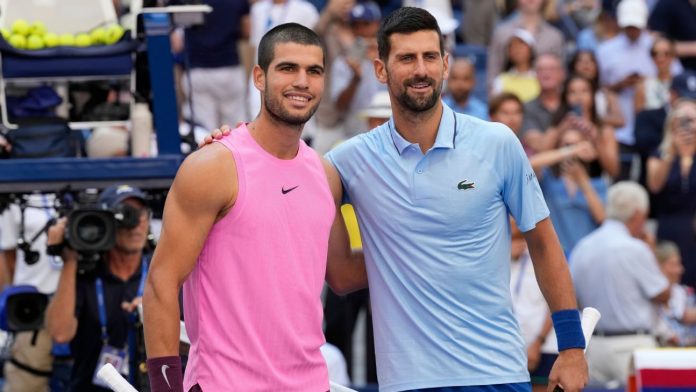
No. 1 Carlos Alcaraz will play No. 4 Novak Djokovic in the Australian Open men’s final — with history on the line. Will Alcaraz win and become the youngest man to win all four major titles? Or will Djokovic defy the odds and pull off a record-breaking 25th Grand Slam title?
Who will it be? Our experts break it down.
What can Alcaraz do to defeat Djokovic?
D’Arcy Maine: During Friday’s semifinal, Alcaraz battled through injury, cramping and even vomiting during the 5-hour, 27-minute encounter — not to mention some incredible play from Alexander Zverev — and still pulled off the victory. Asked afterward about how he won despite the circumstances, Alcaraz said he kept “believing, believing, all the time.”
And that gets to the heart of what makes Alcaraz so good. He knows he can win, no matter what, and fights until the last point. Clearly, the better tennis player at this stage, and with the physical edge, if Alcaraz keeps the same fighting spirit and unmistakable resolve he has shown, this should be his to win.
Jake Michaels: Alcaraz’s remodeled serve (off Djokovic’s, no less!) has been his secret weapon this tournament. If he continues to land his first serve at a higher rate, he will be tough to overcome, even for the greatest returner in tennis history.
Also, and it might seem incredibly backward because he’s 16 years younger than his opponent, but Alcaraz has to end the match quickly. After his epic, energy-sapping five-and-a-half-hour semifinal win over Zverev in the heat of the day, the longer this final lasts, the more the pendulum swings in Djokovic’s favor. It’s not just because the 24-time major champion is fresher, having spent four fewer hours on court to reach the final, but because he knows how to win when these legacy-defining Grand Slam matches go down to the wire.
Jarryd Barca: Obviously, it’s the case for both players, but Alcaraz doesn’t need to reinvent the wheel; he simply needs to be the best version of himself. The world No. 1 has shown no letdown all tournament, dismissing his first five opponents in straight sets, before enduring that wild, physically and mentally draining five-set semifinal with Zverev. He began cramping and barely moving during the concluding stages of the third set, but Alcaraz showed the kind of steely resolve we’ve long associated with Djokovic, overcoming a 3-5 deficit in the fifth set to win despite being far from his peak.
Tactically, variety will be the key. Alcaraz must disrupt Djokovic’s rhythm with changes of pace and direction, something Jannik Sinner didn’t do enough of in his semifinal loss. Alcaraz has to take away Djokovic’s comfort and make him work for every point. If Alcaraz can fatigue the 38-year-old’s legs early and often, his equally jaw-dropping athleticism and creativity should tilt the match in his favor.
What can Djokovic do to defeat Alcaraz?
Maine: Though recovery will obviously be key for both players entering Sunday’s final, it will be crucial for Djokovic. At 38 years old, Friday’s marathon semifinal likely will affect Djokovic more than the five-plus-hour battle the 22-year-old Alcaraz endured. To win the elusive 25th major title — it’s impressive he’s even in this position — he will need everything he has.
And if Djokovic can find more gas in the tank, he will have to utilize a similar strategy as he did during last year’s quarterfinal match. In that four-set victory against Alcaraz, Djokovic dropped the first set and, despite an obvious injury, then took control. He aggressively began dictating the points, and began ripping groundstrokes and firing one risky shot after another and relentlessly maintaining the pressure until it was over. But whatever tactics he uses, Djokovic will need his best level to pull off this victory.
Michaels: The Djokovic contrast in demeanor and level of play from quarterfinal to semifinal was stark. Against Lorenzo Musetti in the last eight, Djokovic looked subdued and almost disinterested as he lost the first two sets. But Friday evening, in that titanic battle against Sinner, Djokovic once again resembled the man who has the heart of a lion and the greatest tennis skills in history. For Djokovic to beat Alcaraz on Sunday evening, he can’t slip back into his demeanor from the quarterfinal — even for a second. He must continue to be the aggressor. He must be ruthless. He must get animated. And if he can achieve all of that, the crowd is sure to get behind him and will him to a 25th major title.
Barca: Similar to Alcaraz, it starts with recovery, but execution will decide everything, just as it did Friday night. His serve was extraordinary against Sinner, and it must be again, Djokovic is winning 86% of first-serve points in the second set and 77% in the fourth, using his precise placements to escape pressure and dictate play. It’s what allowed him to swing freely on his forehand throughout the match, playing with aggression rarely seen so late in his career, but needed to topple the top two players in the world.
Against Alcaraz, Djokovic must match that pace and intensity again. But he doesn’t need to outhit the Spaniard in every point. Djokovic must outlast him in the big moments, and find ways to replicate the 16 of 18 break points he saved against Sinner. That was the difference in the semifinal. Limiting Alcaraz’s chances by staying clutch, brave and protecting his serve will go a long way toward finding a way to win again.
Who will win?
Maine: Alcaraz is the favorite, but we’ve all seen what Djokovic can do — and the magic he has so often found throughout his storied career. Though fatigue could be a factor, Djokovic knows this might be his best (and perhaps last) chance to secure No. 25, and, as he did during the Olympic gold medal match against Alcaraz, he will give his all to achieve it. I can’t pick against that. Djokovic in four sets.
Michaels: For years, I’ve written that you cannot count out Djokovic at the Australian Open, regardless of the circumstances. He proved just how true that is yet again Friday evening in dethroning defending champion Sinner with one of his greatest performances of his illustrious career. At 38, he shouldn’t be in the final. He shouldn’t be able to go toe-to-toe with this next generation. And yet, he is. How can you pick against him? Djokovic will prevail in five enthralling sets.
Barca: Both men arrive in the final battered and bruised. Alcaraz battled cramps to survive the third-longest match in tournament history against Zverev, while veteran Djokovic produced one of the great performances of his career to dethrone two-time defending champion Sinner in over four hours despite his own visible physical struggles.
So, does this come down to recovery? Is it really who wakes up feeling fresher? Who avoids physical issues for longer? Djokovic’s history matters a lot here. He has never lost an Australian Open final, has already turned back the clock once this week and thrives when the stakes grow. Alcaraz might be the world No. 1, but Djokovic knows this stage better than anyone and might have a mental edge, leading the head-to-head 5-4. If Djokovic can produce anything close to his semifinal level again, it’s hard not to trust him. Djokovic in five.
FujiFilm’s Instax Mini Link 3 printer is a much-loved $100 accessory in my travel journal kit. I often tape a printed image next to my handwritten thoughts to preserve a moment in time. The prints produced by the instant film can, however, be soft and muddy — something the new $169.95 Instax Mini Link+ promises to improve.
The big upgrade is a new Design Print mode. It’s supposed to make text and intricate illustrations crisp and legible, but I didn’t see much of an improvement, despite that being a big selling point. I did, however, find that the improved processing inside the Mini Link+ enhanced contrast, colors, and sharpness, to reveal more details in a wide variety of photos, and I think that’s more important to most people.
From my testing, the new Mini Link+ is definitely an upgrade, but don’t expect this, or any instant film Instax printer to perform miracles, especially for images measuring just 62 x 46mm (2.44 x 1.81 inches).
$170
The Good
Best Instax Mini printer yet
Improved colors, sharpness, and contrast on most photos
Fun for creatives
The Bad
Little improvement on text heavy illustrations
Expensive
App is overwrought
FujiFilm’s Instax printers all use its Instax Mini instant film which typically costs around $30 for 20 sheets, or about 67 cents per photo. To print, you need to download the “Instax Mini Link” app available for both iOS and Android.
The app is overwrought with features that let you visualize your photos in real space with VR and use the printer as a remote camera shutter. It also helps you organize your images; imagine your prints in frames, on shelves, or as a collage taped to the wall; and prettify them with text, stickers, and filters. You can even connect your Pinterest account if you want. Fun, I suppose, but I’m not twelve-years old – I’m a full-grown man, damnit, and I just want to print photos in my iPhone’s photo library, and do it quickly!
It comes with a lanyard.
The Mini Link+ (left) is only slightly larger than the Mini Link 3 (right).
It uses the same Instax Mini instant film. Each cartridge holds 10 sheets.
It can even be used as a remote shutter button for your phone.
To do that, I have to first import the image into the Instax Mini Link app, hit print, choose either the Simple or Design mode, then wait 20 seconds for the printout. Simple print promises “smooth color tones for everyday images” and produces softer images that, in general, are still an improvement over most anything the Mini Link 3 can print. Design mode is exclusive to the Mini Link+ and the reason you might want it.
I tested the different modes with a variety of images and generally found Design prints made on the Mini Link+ were superior for faces, landscapes, high contrast images, and macro shots of nature. Everything, really, other than text-heavy illustrations, where I saw no obvious improvement.
Link+ Design mode (left), Mini Link 3 (center), Link+ Simple mode (right).
For example, look at my stupid face. Photos with intense lighting were susceptible to blowout when printed on the older Mini Link 3. The Simple and Design prints from the Mini Link+ handled the lighting better, with improved contrast, more detail in the eye, and more accurate colors and skin texture.
Link+ Design mode (left), Mini Link 3 (center), Link+ Simple mode (right).
In the example above, everything in the Mini Link 3 print is super soft and blends together in a muddled mess. The Mini Link+ again offers improved contrast, with visible textures on the rock faces, tree branches, and improved colors throughout. The wooden slats on the barn, lines of individual trees, and wheel detail are more pronounced on the Design print, with less saturation on that big pine to the left.
Link+ Design mode (left), Mini Link 3 (right).
Here, the Mini Link 3 struggles to depict the snow as anything but a white smear, while you can make out individual snowflakes and depth on the Mini Link+ Design print.
Link+ Design mode (left), Mini Link 3 (center), Link+ Simple mode (right).
In this example, the Mini Link 3 really flattens the sky and removes the texture from the distant mountain. The greens and blues are more brilliant with the Simple and Design prints, while the separation between bits of gravel and blades of grass is more apparent in Design mode.
Instax Mini Link 3 (left) versus Link+ Design mode (right).
In this Spotify screenshot, Design mode sharpens the lettering and artificially enhances the white text with a black outline, most visible on the letters “a” and “s.” Simple mode doesn’t do this. The outlining does make the lettering pop.
Link+ Design mode (left), Mini Link 3 (center), Link+ Simple mode.
Link+ Design mode (left), Mini Link 3 (center), Link+ Simple mode.
Link+ Design mode (bottom), Mini Link 3 (top).
Link+ Design mode (left), Mini Link 3 (right).
I find surprisingly little difference between these illustrations printed by the Mini Link 3 and the Mini Link+, even in Design mode. Strange because this is where FujiFilm’s new printer is supposed to excel. Nevertheless, they all look good enough for hobbyists, and anyone looking to spice up a journal or decorate a room.
1/7USB-C charging with a user-replaceable battery if you live in Europe.
After printing 15 photos over the last few days, the battery on the Instax Mini Link+ is still at 80 percent. The battery charges over USB-C, and, if you’re in Europe, the FujiFilm NP-70S battery can be user-replaced when it no longer holds a charge.
From my testing, I think it’s clear that if you want the best photo quality available in an Instax printer, then the $169.95 Mini Link+ is the one to get. It also makes the case for being a worthy upgrade for some Mini Link 3 owners, so long as you’re not expecting improved prints of text-heavy illustrations.
But its price puts the Mini Link+ into direct competition with dye-sublimation printers like the Canon Selphy QX20 which yields prints that are sharp and accurate with better resistance to water and fading. Otherwise, the Mini Link 3 is still a great printer for the price, and the soft, moody images it prints is a vibe worth $100.
Photography by Thomas Ricker / The Verge
Follow topics and authors from this story to see more like this in your personalized homepage feed and to receive email updates.
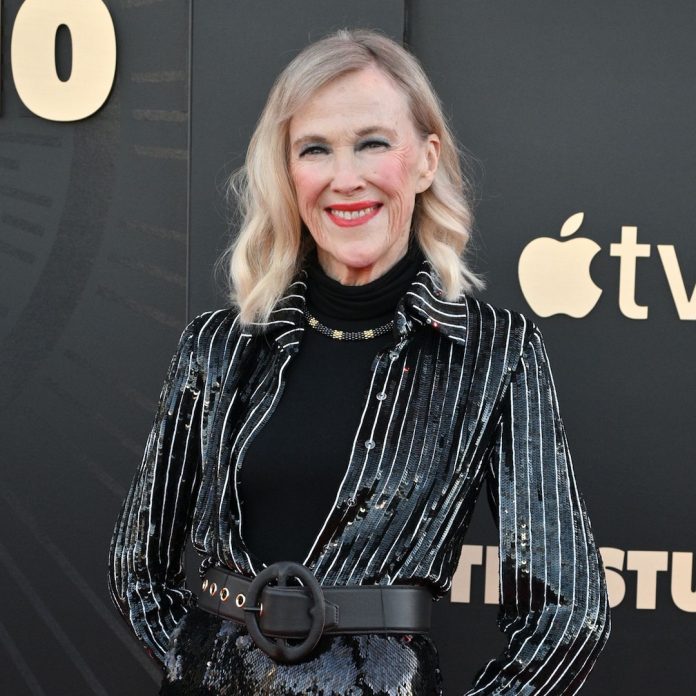
“Heartbroken doesn’t even begin to cover it. Catherine O’Hara was one of a kind. A rare light in this world and her passing hits with a weight I can’t fully put into words.
She wasn’t just a legendary artist, actor and comedian. She was an ambassador for Canada in the truest sense: brilliant, fearless, deeply original, and so full of humanity. She made the world laugh, but she also made people feel seen.
As an artist, she inspired me more than she’ll ever know. She set the bar for what it means to represent your country with excellence and grace and all without ever losing warmth or humility.
My heart is broken for her family, her loved ones, and everyone who adored her, both here in Canada and around the world.
If you’re grieving this loss, you’re not alone. We’re all holding a piece of this sadness together. Rest easy, Catherine. Thank you for everything.”
Price: $29.99 (as of Jan 31, 2026 05:19:54 UTC – Details)
From the brand
More Than Greens—More Choices
Product Dimensions : 6.2 x 3.1 x 7.4 inches; 13.76 ounces Date First Available : May 20, 2025 Manufacturer : NEWLIFE ORGIN ASIN : B0F995BKNZ Best Sellers Rank: #49,252 in Health & Household (See Top 100 in Health & Household) #465 in Collagen Supplements Customer Reviews: 4.6 4.6 out of 5 stars (92) var dpAcrHasRegisteredArcLinkClickAction; P.when(‘A’, ‘ready’).execute(function(A) { if (dpAcrHasRegisteredArcLinkClickAction !== true) { dpAcrHasRegisteredArcLinkClickAction = true; A.declarative( ‘acrLink-click-metrics’, ‘click’, { “allowLinkDefault”: true }, function (event) { if (window.ue) { ue.count(“acrLinkClickCount”, (ue.count(“acrLinkClickCount”) || 0) + 1); } } ); } }); P.when(‘A’, ‘cf’).execute(function(A) { A.declarative(‘acrStarsLink-click-metrics’, ‘click’, { “allowLinkDefault” : true }, function(event){ if(window.ue) { ue.count(“acrStarsLinkWithPopoverClickCount”, (ue.count(“acrStarsLinkWithPopoverClickCount”) || 0) + 1); } }); }); 5000mg Ultra-Potent Marine Collagen – Each serving provides 5000mg of hydrolyzed Types I, II, and III marine collagen in a convenient gummy form, designed to support overall health. Rich in Essential Nutrients – Fortified with 90mg Vitamin C (100% DV), 300mcg Biotin (1000% DV), and 50mg Hyaluronic Acid. Also contains Resveratrol, Rose Hip, Wild Yam, and Cranberry extracts for added nutritional support. Sugar-Free Formula – Only 18 calories per serving with 0g sugar and no sugar alcohols. Free from artificial flavors, colors, and preservatives. Convenient & Tasty – Our chewable gummies come in a resealable pouch, offering a simple, great-tasting way to incorporate a nutritional boost into your daily routine. 30 servings (90 gummies) per pouch. Premium Quality You Can Trust – Manufactured in the USA under strict GMP guidelines. Each batch is third-party tested for purity and potency, ensuring you receive 5000mg of premium marine collagen in a delicious and easy-to-consume gummy format.
Kalyn Kahler is a senior NFL writer at ESPN. Kalyn reports on a range of NFL topics. She reported about the influence of coaching agents on NFL hiring and found out what current and former Cowboys players really think about the tour groups of fans that roam about The Star every day. Before joining ESPN in July of 2024, Kalyn wrote for The Athletic, Defector, Bleacher Report and Sports Illustrated. She began her career at Sports Illustrated as NFL columnist Peter King’s assistant. She is a graduate of Northwestern University, where she was a varsity cheerleader. In her free time, Kalyn takes Spanish classes and teaches Irish dance. You can reach out to Kalyn via email.
Multiple Authors
IN LATE SEPTEMBER, the NFL announced that Puerto Rican superstar rapper and singer Bad Bunny, who has openly criticized the Donald Trump administration for its immigration policies, would perform this year’s Super Bowl halftime show. Five days later, U.S. Secretary of Homeland Security Kristi Noem admonished the NFL for its decision.
“They suck, and we’ll win,” Noem told right-wing podcast host Benny Johnson, who had asked what message she wanted to send to the league. “They won’t be able to sleep at night because they don’t know what they believe. And they’re so weak, we’ll fix it.”
Department of Homeland Security adviser Corey Lewandowski said on the same podcast: “It’s so shameful that they’ve decided to pick somebody who just seems to hate America so much to represent them at the halftime game.”
Despite the almost immediate backlash from the Trump administration and its supporters, the NFL has stood by its decision to book Bad Bunny for the Feb. 8 game in Santa Clara, California. It’s a departure from how the league reacted to the president’s criticism nearly a decade ago when some players began kneeling during the national anthem. According to interviews with and public statements by several high-level club and league office executives, the NFL has remained steadfast despite the blowback because Bad Bunny, one of the most popular artists in the world, helps fulfill a top business objective: growing the NFL’s international and Latino audience.
One high-level club executive who regularly attends the NFL’s league meetings said that some owners at first were concerned about Bad Bunny’s fit because he sings primarily in Spanish and that many were unfamiliar with him.
“And then I think everybody was just kind of like, ‘OK, we’re going to get on board, because the goal is global reach,'” the executive said. “And this guy has a massive global reach.”
THE NFL HAS a long-standing goal of growing its international audience. This season, the NFL played a record seven games in five international cities: Sao Paulo, Dublin, London, Berlin and Madrid. The league will add Australia in 2026. In September, NFL commissioner Roger Goodell said he wants each team to play a game abroad every year.
More specifically, the league has been focused on growing its Latino audience, inside the U.S. and in Latin America. Marissa Solis, the NFL’s senior vice president of global brand and consumer marketing, told ESPN in November that the league first identified the U.S. Latino population as a “critical growth area” several years ago.
“It is a community of more than 70 million people here in the U.S. … so it was very important for us to ensure that we were relevant,” Solis said.
In 2020, the Super Bowl halftime show was headlined for the first time by two Latina pop stars, Jennifer Lopez and Shakira. (Bad Bunny also appeared in the show.) At the time, the NFL hired veteran entertainment and brand marketer Javier Farfan as a consultant to add authenticity to the performance.
“People don’t see it, but to the broader global and Latino community, they’re like, ‘Wow. The NFL gets me,'” Farfan, who still consults for the league, said in an interview with ESPN in December. “And then now, they’re seeing [Bad Bunny] and it’s like, ‘Wow, they really get me.'”
Since 2019, the NFL has partnered with rapper and business mogul Jay-Z and his entertainment company Roc Nation to advise on the selection of halftime performers and promote “culture- and cause-focused initiatives,” according to a statement at the time announcing the arrangement.
Exactly how Roc Nation chooses the Super Bowl artist and what role the NFL plays in that decision isn’t publicly defined. Roc Nation declined ESPN’s requests to comment for this story.
“Jay-Z understands the platform,” Goodell said at an October sports conference regarding his conversations with the rapper about Bad Bunny. “… And so, it doesn’t get real deep because he knows I’m not going to challenge him.”
Solis said that Roc Nation and the NFL’s halftime strategy is to book “the cultural artist of the year.”
This year, that artist is Bad Bunny, born Benito Antonio Martínez Ocasio, who was the top-streamed artist on Spotify in 2025. His sixth studio album “Debí Tirar Más Fotos” pivoted from straight reggaeton to a fusion of reggaeton, salsa and Puerto Rican genres. The lyrics discuss his love for Puerto Rican culture, the island’s struggle with gentrification that prices out locals and his desire for the island’s independence from the U.S. (Puerto Rico is a U.S. territory.) The album topped the Billboard charts for four weeks. He stayed in Puerto Rico for much of 2025 and performed a 31-show residency in San Juan.
Bad Bunny filmed the halftime show announcement and trailer in Puerto Rico, per his request, said Tor Myhren, vice president of marketing and communications for Apple Music, the performance’s presenting sponsor. When Myhren’s team asked Bad Bunny about his goals for the halftime show, Myhren said Bad Bunny responded, “This isn’t my halftime show, this is for everyone.” The Apple Music trailer shows Bad Bunny dancing to his song “Baile Inolvidable” with people of all races, ages and genders, with the tagline, “February 8 the world will dance.”
Multiple representatives for Bad Bunny did not respond to messages from ESPN seeking interviews with the artist.
Choosing Bad Bunny potentially exposed the NFL to Trump’s ire because the artist has been openly critical of the administration’s vow to remove millions of people from the U.S. via mass deportation programs.
In an interview published in September, Bad Bunny told i-D Magazine that he chose not to take his world tour to the U.S. because he was worried about potential raids by U.S. Immigration and Customs Enforcement.
“F—ing ICE could be outside [the concert],” he said. “And it’s something that we were talking about and very concerned about.”
Bad Bunny also appeared to mock Trump on the Fourth of July when he released the music video for his song “NUEVAYoL,” a salsa tribute to the Puerto Rican diaspora in New York. In the video, he sings from the crown of the Statue of Liberty, who wears the Puerto Rican flag on her forehead like a bandanna. In the final scenes, a Trump-sounding voice apologizes to immigrants over a radio broadcast.
“I want to say that this country is nothing without the immigrants,” the voice says. “This country is nothing without Mexicans, Dominicans, Puerto Ricans, Colombians, Venezuelans, Cubans.”
In 2024, Bad Bunny endorsed Kamala Harris for U.S. president, criticizing the Trump administration’s 2017 response to Hurricane Maria in Puerto Rico.
When the NFL announced Bad Bunny as the halftime performer, Noem said ICE agents would be “all over” the Super Bowl. “I think people should not be coming to the Super Bowl unless they’re law-abiding Americans who love this country,” she said.
The day after Noem’s comments, Bad Bunny hosted “Saturday Night Live” and addressed the backlash in his monologue. He said in English: “I’m very excited to be doing the Super Bowl, and I know people all around the world who love my music are also happy.” Then he switched to Spanish and said: “Especially all of the Latinos and Latinas in the world here in the United States who have worked to open doors. It’s more than a win for myself, it’s a win for all of us. Our footprints and our contribution in this country, no one will ever be able to take that away or erase it.”
“And if you didn’t understand what I just said,” he added, switching back to English, “you have four months to learn.”
Trump was first asked about Bad Bunny on Oct. 6. NewsMax’s Greg Kelly asked the president if people should boycott the NFL because of “Bad Bunny Rabbit or whatever-his-name.”
Trump said: “I’ve never heard of him. I don’t know who he is. I don’t know why they’re doing it.”
Speaker of the U.S. House of Representatives Mike Johnson, R-La., told a reporter in October that booking Bad Bunny was a “terrible decision.”
“There are so many eyes on the Super Bowl, a lot of young, impressionable children. And I think, in my view, you would have Lee Greenwood or role models doing that,” he said. Greenwood, who is 83, is famous for his song “God Bless the USA.”
Bad Bunny’s announcement prompted the conservative organization Turning Point USA to counterprogram with its own performance, called “The All-American Halftime Show.” On the show’s website, the group provided a survey for viewers to choose the music they want to hear. “Anything In English” was the first option. Turning Point USA has yet to update its website with any information about the performance, and a spokesperson said in early January that they will not be releasing any artist information ahead of time.
Last weekend, Trump told the New York Post he would not be attending the Super Bowl because it’s “too far away.”
He also shared his opinion about Bad Bunny and Green Day, who will perform before kickoff and whose music has been sharply political: “I’m anti-them. … All it does is sow hatred.”
Trump’s immigration crackdown escalated this month in Minneapolis, with government agents clashing with protestors and fatally shooting two people. The administration has since worked to ease tensions and shift its policy.
Regarding ICE’s presence at the Super Bowl, DHS assistant secretary Tricia McLaughlin said this week that the agency does not disclose operations or personnel plans.
“DHS is committed to working with our local and federal partners to ensure the Super Bowl is safe for everyone involved, as we do with every major sporting event,” McLaughlin said in an email. “Those who are here legally and are not breaking other laws have nothing to fear.”
A person with knowledge of the administration’s plans said that ICE agents will be assigned to the Super Bowl because the event requires coverage by multiple federal agencies.
“This is routine,” the person said. “DHS was there last year and in past years. Nothing about this is unusual.”
A source familiar with Super Bowl planning told ESPN that league security officials “have not been told there will be immigration enforcement actions.”
In a statement to ESPN, the NFL said fan safety is its “top priority.”
“We have the utmost confidence in our comprehensive security plans,” an NFL spokesperson said in the statement. “Our security team has worked with federal, state, local and private sector partners over the past two years to develop extensive plans to provide a safe and secure environment at our events and on gameday.”
WITHIN THE NFL, at least one owner met the decision to book Bad Bunny with skepticism, particularly considering the league’s pending agreement to sell the NFL Network and other assets to ESPN in exchange for a 10% stake in the media company.
Shortly after the Bad Bunny announcement, an NFL owner told Goodell that he feared the decision could threaten the government’s antitrust approval of the pending deal, a source with firsthand knowledge of the discussion told ESPN.
“I told Roger he should’ve thought through that better,” the owner said, according to the source.
At the October league meeting in midtown Manhattan, Goodell said the league had no intentions of changing the halftime performer.
“He’s one of the most popular entertainers in the world,” Goodell told reporters at a news conference. “… It’s carefully thought through. I’m not sure we’ve ever selected an artist where we didn’t have some blowback or criticism. … We’re confident it’s going to be a great show.
“I think it’s going to be exciting and a united moment.”
At a marketing conference in October, NFL chief marketing officer Tim Ellis also addressed the controversy: “Well, not everyone has to like everything we do. Bad Bunny is f—ing awesome.”
Two sources who have attended owners meetings since the Bad Bunny announcement told ESPN that the artist hasn’t come up in groupwide discussions.
“There’s not some great strife here,” the high-level club executive said. “The league is tasked with setting financial and brand goals, and that’s a lot of what we asked the league to do. … Of course, it is tricky, because you have a room of 32 people that are unfamiliar with the artist or may have political concerns.”
Three club executives told ESPN they think Bad Bunny helps achieve the league’s goal of growing globally.
Dallas Cowboys chief brand officer Charlotte Jones, whose father Jerry Jones owns the team and has donated millions to Trump and his political action committee, told “The Katie Miller Podcast” in November that she supported the Bad Bunny choice.
“I think it’s awesome, and I think our Latino fan base is amazing,” Jones told Miller. “We are on a global stage, and we can’t ever forget that. … We have a mixed culture and our whole society is based on immigrants who have come here and founded our country, and I think we can celebrate that.”
Miller, who was a communications director for former vice president Mike Pence and is married to Trump adviser Stephen Miller, pushed back on Jones: “You don’t think that a time when his comments were divisive as it relates to President Trump — when everyone is just seeking a political unification — that you would want somebody who maybe didn’t touch politics to be on that stage?”
“I don’t think our game is about politics,” Jones replied. “I don’t think people tune in to look at politics. We do everything we can to avoid politics. … This is about bringing people together.”
When Trump was first president in 2017, his criticism of NFL players who chose to kneel for the national anthem — an action started by former 49ers quarterback Colin Kaepernick — created a national political crisis that threatened the NFL’s brand and its business. Trump said NFL owners should fire any player who knelt and encouraged fans to walk out. In response, more players started kneeling, and they resisted the league’s attempts to stop the protest.
According to reporting from ESPN’s Don Van Natta Jr. and Seth Wickersham at the time, owners and Goodell met with players to discuss racial and social injustice. As a result, the NFL created the Inspire Change initiative, committing $89 million to support social causes, and partnered with Roc Nation to reshape the halftime show and help the league be more proactive in social justice work. Goodell ultimately acknowledged the league initially had been wrong in its approach with players.
One club executive and a source familiar with league business said the NFL learned lessons from its interactions with the first Trump administration. The club executive said the league isn’t being as “reactionary.”
“Those are probably just lessons learned,” the executive said. “Drawing the president’s ire, there’s so many things that happen on a daily basis. I think people just have a different opinion this time around.”
Another club executive said the NFL is trying to “double down 1769810434 on an apolitical stance.”
“I think maybe in the past, the league office got a little turned around with some of the owners, or some of the other influential people, saying you have to take a stand here,” the other executive said.
The NFL spokesperson declined to comment on the league’s strategy in dealing with the Trump administration.
Multiple sources said the tension with Trump is less this time around.
“Last time with Kaepernick, that was players and owners and the president. Bad Bunny doesn’t affect any of that,” a club executive said. “It doesn’t affect week-to-week games or television coverage. It’s just a halftime show. And I don’t mean that flippantly, but it’s just a halftime show.”
The league office is engaging with Trump for other upcoming events. In May, Goodell visited Trump at the White House with Commanders owner Josh Harris to announce that Washington, D.C., will host the NFL draft in 2027.
And in November, the NFL announced it would commemorate the United States’ 250th birthday in 2026 with commemorative game balls and on-field markings. The Athletic reported that Goodell is also expected to attend an upcoming America 250 unveiling event at the Oval Office, along with the four other major professional men’s sports commissioners.
“If the league has layups or an easy win, it’s like, take the layup,” the source familiar with league business said.
When asked in November whether the league office has faced any political pressure to change its Latino-focused marketing strategy, Solis told ESPN: “Our strategy has always been to reach every fan in their culture, in their language, to make this sport global, and to make this sport for everyone. So I don’t think that strategy will change regardless of language, country, artists, players. … We have a responsibility with this platform to ensure that we continue to reach everybody.”
Farfan said in December that he wasn’t surprised by the president’s criticism and the larger backlash to Bad Bunny because everyone has the right to express their opinion. “We have the right to do what we need to do for our business and stand tall against that, regardless of the noise happening outside.”
ESPN’s Don Van Natta Jr. and researcher John Mastroberardino contributed to this report, which also includes information from The Associated Press.
The US is now leading a global surge in new gas power plants being built in large part to satisfy growing energy demand for data centers. And more gas means more planet-heating pollution.
Gas-fired power generation in development globally rose by 31 percent in 2025. Almost a quarter of that added capacity is slated for the US, which has surpassed China with the biggest increase of any country. More than a third of that growth in the US is expected to directly power data centers, according to a recent analysis by the nonprofit Global Energy Monitor (GEM).
More gas means more planet-heating pollution
The rush to install more powerful hardware into expanding data centers used for generative AI has led to forecasts of skyrocketing power demand. There’s still a lot of uncertainty about whether AI will become as ingrained in everyday life as tech companies might like, and many proposed data centers could fall flat. Even so, plans to build out more gas plants in the name of AI are stalling efforts to transition to cleaner energy sources.
“There is a risk that this capacity could lock in future emissions and become stranded assets if anticipated electricity demand from AI never materializes,” Jenny Martos, project manager for GEM’s Global Oil and Gas Plant Tracker, said in a press release.
Already, 2026 is shaping up to be a record-smashing year for gas. If all of this year’s proposed projects cross the finish line, it would be an even bigger jump in added capacity than the record set in 2002. That’s pretty remarkable considering the 2000s ushered in America’s so-called “shale gas revolution,” when fracking suddenly unleashed previously hard-to-reach reserves. Gas is now a cheaper power source than coal and creates less carbon pollution when burned. But gas production releases methane, a more potent greenhouse gas than carbon dioxide even though it doesn’t persist in the atmosphere for as long.
Image: Global Energy Monitor
Ramping up electricity generation from gas is also a sharp pivot away from global climate goals. A decade ago, nearly every country on Earth — including its two biggest greenhouse gas polluters, China and the US — signed a historic deal in Paris to limit global warming. The only way to achieve the most ambitious goals set out in the Paris agreement would be to replace fossil fuels with less-polluting alternatives like renewable energy and slash greenhouse gas emissions to net zero by around 2050.
Follow topics and authors from this story to see more like this in your personalized homepage feed and to receive email updates.
DALLAS — This was a night Cooper Flagg figures he’ll be talking about with his former Duke roommate Kon Knueppel for decades.
That’s probably true for almost everyone at the American Airlines Center who witnessed the thrilling display Thursday night in the first NBA meeting between the Rookie of the Year front-runners.
Flagg, the No. 1 pick, had 49 points, the most in NBA history by a teenager, breaking the Dallas Mavericks‘ rookie record he shared with Mark Aguirre, whose No. 24 was retired in a halftime ceremony during the game.
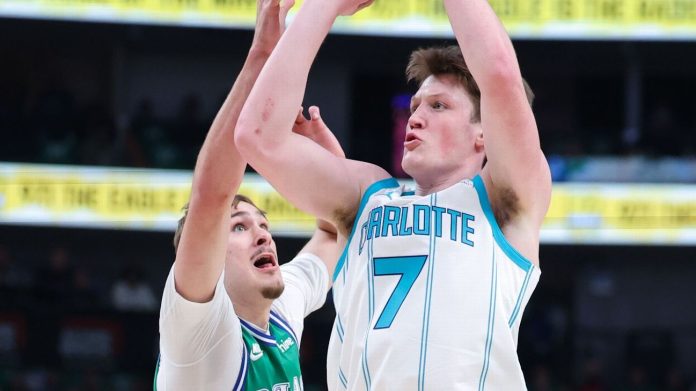
But Knueppel, the No. 4 pick, finished with 34 points and made the critical plays in the final moments to help the Charlotte Hornets earn a 123-121 win, their fifth straight. He forced Flagg into committing a turnover with 7.6 seconds remaining and hit the winning free throws after drawing a foul on his friend in transition.
Flagg’s tightly contested jumper bounced off the back of the rim at the buzzer.
“Just a crazy ending to a phenomenal game,” Knueppel said. “He was the best player on the floor tonight. Probably, I mean, that’s the best player that’s played against us all season. It’s just fun competing against the best, and obviously, being close with him, that kind of adds to the competitiveness. So, it was really fun.”
Flagg (-400) and Knueppel (+280) entered the night with the best odds to win Rookie of the Year, according to DraftKings Sportsbook, creating a unique buzz around a late-January game between two teams below .500. Flagg and Knueppel more than met the anticipation by becoming the first pair of college teammates to each score at least 30 points while playing against each other as rookies.
According to ESPN Research, their combined 83 points are the most by a pair of rookies in a game since Tiny Archibald and Pete Maravich combined for 91 in 1971.
“It’s incredible,” Flagg said of competing with Knueppel for Rookie of the Year. “I wouldn’t want to be in any other position. We’ll both be looking back on this night and this whole year in general for the rest of our lives, and we’ll be talking about it and stuff like that. It’s just so special to have this opportunity in general.”
Knueppel anticipates his odds to win that honor took a hit after Flagg’s record-setting performance.
“We’d both like to win, but we don’t talk about it,” said Knueppel, who is averaging 18.9 points with an effective field goal percentage of 61.1%, the best efficiency by a rookie who scored that much. “I mean, this was a heck of a game. I think he’s probably going to jump me with 49 and 10 [rebounds], but it is what it is. An award like that is cool, but whoever gets it, I’ll be happy for him.
“Who knows? I’m just glad we got the win. That matters more to me than anything else.”
Knueppel, who was 10-of-16 from the floor, set a Hornets franchise rookie record with eight 3-pointers on 12 attempts. He made his first three long-range attempts in the opening four-plus minutes of the game.
“It’s not good,” Flagg said, recalling his thoughts as Knueppel got off to a hot start. “I played with him last year, and when he sees some easy ones go in to start the game, it’s never a good thing. That’s how it is with a lot of great shooters. You never want to let him tee up open shots and start a game and get into a rhythm.”
Flagg, who moved past Knueppel as the rookie scoring leader at 19.5 points per game, got rolling in the second quarter with 23 points. He had 40 by the end of the third, joining LeBron James and Anthony Edwards as the only teenagers in NBA history to record multiple 40-point performances.
The stage was set for Flagg to finish his spectacular performance in storybook fashion. He hit a pull-up 3 with 33.5 seconds left to tie the score at 121-121 and grabbed a defensive rebound on the ensuing possession. But the Hornets schemed to keep Flagg from being the hero, doubling him to force the ball out of his hands as he dribbled several feet above the 3-point arc. Knueppel timed his double-team well, deflecting Flagg’s pass, and their fellow former Duke teammate Sion James saved the ball to Knueppel to start a fast break.
“By no surprise, our guy ends up making the biggest play of the game down the stretch and just continue to impact winning,” said Hornets coach Charles Lee, who praised Knueppel’s defensive effort pregame. “[He had] the instincts to come and double-team, seeing a situation where the floor is balanced in a way that that’s probably the right spot to bring a double. A guy has 49 points, so you want to try to slow him down, obviously, and make somebody else have to beat you at that point of the game.”
Flagg, the league’s youngest player at 19, took fault for poor execution with the game on the line.
“I’m trying to learn still end-of-game situations,” said Flagg, who swapped jerseys postgame with Hornets rookie Liam McNeeley, his high school teammate at Montverde Academy. “I’m always trying to get better. That’s something I don’t want to say I struggle with, but I have seen a ton of double-teams and stuff, so just figuring out how I can be effective in those moments. It’s got to be a lot better.”
Flagg finished 20-of-29 from the floor, becoming the first rookie with at least 20 made field goals since Milwaukee‘s Brandon Jennings had 21 in his 55-point performance in November 2009. Flagg was 3-of-5 from 3-point range, but he did the majority of his damage in the paint, where he scored 28 points.
“He’s not about numbers. He’s about wins and losses,” Mavs coach Jason Kidd said. “That’s who he is. For a young man who thinks that way, he’s going to be a champion sooner than later. He continues to keep working. He tried to will his team to a win tonight.”
Grammys 2026: How Addison Rae, Alex Warren and More Scored Their Best New Artist Nominations
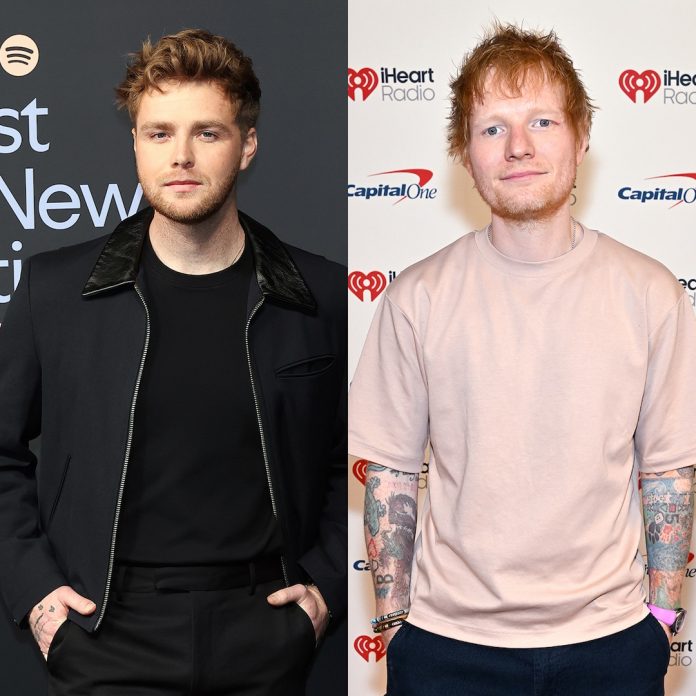
Alex Warren doesn’t have an ordinary relationship with his mentor.
The “Ordinary” singer joked that Ed Sheeran stopped responding to his emails because of how frequently he sends him messages.
In fact, Alex revealed that his last note to the “Shape of You” singer, in which he apologized for his nonstop correspondence, went unanswered.
“I swear to god, I can show you right now,” Alex exclusively told Erin Lim Rhodes during Live From E! Stream: Spotify Best New Artist Party 2026 on Jan. 29, recalling that the email said, “So sorry for emailing you. My New Year’s resolution is to email you less.”
And though Alex may be making light of their communication habits, he insisted that he really does plan to pull back.
“My New Year’s resolution is to email him less,” the 25-year-old admitted. “Because I email him every single time the slightest convenience happens in my life.”
Price: $45.00 (as of Jan 30, 2026 06:18:55 UTC – Details)
From the brand
Weight Loss
Gut Health
Anti-Aging
Skin & Hair
Package Dimensions : 10.24 x 8.82 x 2.36 inches; 1.32 Pounds Item model number : CSPPDRK1 Date First Available : May 24, 2019 Manufacturer : Dr. Kellyann ASIN : B07S9HZVL8 Best Sellers Rank: #58,615 in Health & Household (See Top 100 in Health & Household) #542 in Collagen Supplements Customer Reviews: 4.4 4.4 out of 5 stars (666) var dpAcrHasRegisteredArcLinkClickAction; P.when(‘A’, ‘ready’).execute(function(A) { if (dpAcrHasRegisteredArcLinkClickAction !== true) { dpAcrHasRegisteredArcLinkClickAction = true; A.declarative( ‘acrLink-click-metrics’, ‘click’, { “allowLinkDefault”: true }, function (event) { if (window.ue) { ue.count(“acrLinkClickCount”, (ue.count(“acrLinkClickCount”) || 0) + 1); } } ); } }); P.when(‘A’, ‘cf’).execute(function(A) { A.declarative(‘acrStarsLink-click-metrics’, ‘click’, { “allowLinkDefault” : true }, function(event){ if(window.ue) { ue.count(“acrStarsLinkWithPopoverClickCount”, (ue.count(“acrStarsLinkWithPopoverClickCount”) || 0) + 1); } }); }); PURE COLLAGEN FORMULATED BY DR. KELLYANN: This unflavored collagen peptides powder is crafted by Dr. Kellyann to support skin, joint, and gut health without compromising on quality. 60 SERVINGS OF GRASS-FED COLLAGEN: Packed with clean, hydrolyzed collagen peptides to rejuvenate your skin, strengthen joints, and improve digestion. UNFLAVORED & VERSATILE: Mix seamlessly into coffee, tea, smoothies, or recipes without altering flavor—ideal for those who prefer a neutral, no-fuss option. KETO, PALEO & NON-GMO CERTIFIED: Gluten-free and free of artificial additives, this powder is designed to fit effortlessly into clean, low-carb lifestyles. LOOK & FEEL YOUR BEST DAILY: Collagen-powered support for beauty and health—helping you glow from within and thrive every day with consistent use.
“Maybe the parameters have changed,” Dunleavy said. “Maybe the goalposts have moved.”
One of the key roster-building checkpoints on the NBA calendar is one week away. In advance of the Feb. 5 trade deadline, the Warriors have several questions to answer, beginning with the ramifications of Butler’s injury.
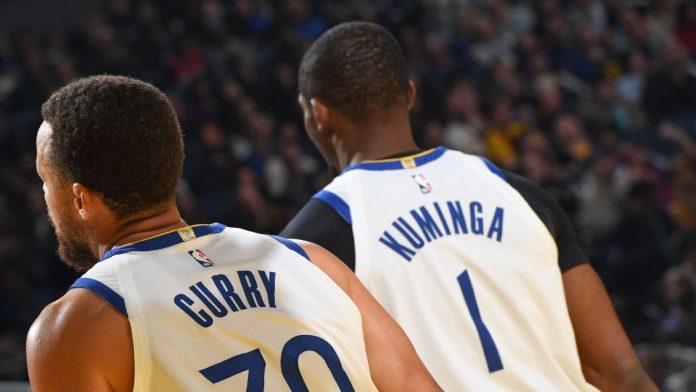
In the days since, team sources have described their approach as more future focused. With Butler in the lineup, they were exploring smaller-scale upgrades, attempting to use Jonathan Kuminga‘s $22.5 million salary to boost a surging team they believed was a fringe contender.
Realistic contention evaporated when Butler went down, reducing the front office’s appetite to spend an asset for a strictly win-now swing. It’s feasible they find a deal that raises the ceiling of this season’s team, but their focus is on better setting up the roster to enter the contention conversation for 2026-27 and beyond.
The Warriors’ prime target is the same dream name that has been on their radar for nearly a decade: Giannis Antetokounmpo. The big difference now is that Milwaukee’s door appears to finally be cracked open. ESPN’s Shams Charania reported on Wednesday that Bucks general manager Jon Horst has recently become willing to entertain the conversation.
What can the Warriors offer for Giannis?
League sources told ESPN that the Warriors have contacted the Bucks in the past week and expressed their firm interest in Antetokounmpo and their willingness to put a substantial offer on the table regardless of his calf strain and undetermined return timetable.
It’s unclear if Antetokounmpo would consider the Warriors on his wish list. But his desires, like any superstar soon to be extension eligible, matter within the conversation. A deadline trade for Kevin Durant last February fell through after Durant made it clear he didn’t want a reunion with the Warriors. A temperature check with Antetokounmpo will be needed, ensuring he would embrace a partnership with the Warriors even if they weren’t his first choice.
But the Bucks are in the driver’s seat of a car full of crowded motives, able to trade Antetokounmpo in the next week or wait until a fuller market might develop in the summer. If they opt to strike now, the Warriors — among the expected aggressive suitors — have arguably the most appealing pick package. The quicker Milwaukee acts, league executives believe, the better chance Golden State has to win the bidding war.
The Warriors can offer up to four first-rounders: 2026, 2028, 2032 unprotected and 2030 if it falls within the 1-20 range (top-20 protected owed to Washington as part of the Jordan Poole for Chris Paul trade). Because of Milwaukee’s outgoing picks, it could only command one additional pick swap.
In previous conversations about lower-level deals, the Warriors have been protective of their draft picks beyond the Stephen Curry era. This isn’t a lower-level conversation. The picks beyond the Curry era would be available to Milwaukee and valuable (though less so because the post-Curry era would suddenly include Antetokounmpo in his mid-30s).
“It would take a good amount [to move the post-Curry picks],” Dunleavy said. “Positionally, play style, archetype, all that. I would leave it pretty broad and open. But if there’s a great player to be had, we’ve got everything in the war chest that we would be willing to use.”
The Warriors have voiced to Butler a plan to keep him despite the ACL tear, believing he will rehab and boost them upon his return at some point next season. Dunleavy said he didn’t “envision” trading Butler. They are not actively shopping his contract, team sources said, but everything is on the table in an Antetokounmpo conversation — and Butler is the clear salary match, though a deal involving Draymond Green and several other rotation players is also plausible.
Rival teams — such as the New York Knicks (Karl-Anthony Towns, OG Anunoby) and Miami Heat (Tyler Herro, Kel’el Ware) — have superior young or mid-prime players to offer the Bucks. But Milwaukee has shown an interest in Kuminga dating to the summer, league sources said, and he would be viewed as an upside swing on a controllable contract as part of the return package.
Third-year guard Brandin Podziemski could also help nudge the needle, league sources said. The Milwaukee native is under contract next season at $5.7 million, the final year of his rookie contract. To help salary match, the Warriors could also absorb one of Milwaukee’s other veterans owed long-term money, such as Bobby Portis (three years, $43.5 million remaining) or Kyle Kuzma (two years, $42.7 million remaining).
What is the alternative plan?
If the Warriors don’t acquire Antetokounmpo, there isn’t anyone on the current trade market who will force this level of asset aggression from them, team sources said.
They’ve maintained a level of interest in New Orleans Pelicans wing Trey Murphy III, but have been stonewalled in conversations by a Joe Dumars-Troy Weaver front office that has so far voiced an unwillingness to move most of their young core, league sources said.
The Warriors have been linked to other midtier players such as the Brooklyn Nets‘ Michael Porter Jr. and Miami’s Andrew Wiggins, but team sources continue to throw cold water on those ideas. One team source said they haven’t and don’t plan to engage with Miami about a reunion with Wiggins.
What does it mean for Kuminga?
Despite Kuminga’s desire for a fresh start and a more consistent role away from the Warriors, Dunleavy has made it clear dating to the summer that he won’t move Kuminga if he doesn’t like the value of the deal.
Before the Butler injury, the front office had been more open to flipping Kuminga for a rotation player on a short-term deal who could help this season’s team compete.
But the Butler injury simultaneously stripped their title hopes — barring a big trade materializing — while also elevating Kuminga from out of the rotation to at least a 20-to 25-minute player.
“Now that Jimmy’s out, I mean there’s no question he’s going to play,” Kerr told ESPN. “He’s going to have a role. So I hope he gets back soon [from a minor bone bruise] because it’s a great opportunity for him and we need him. We need what he brings.”
The Warriors are still exploring Kuminga’s trade market, but team sources have described it as less likely he is moved in the wake of the Butler injury. He has a $24.3 million team option that could be utilized in the summer and a clearer path to playing time in the immediate, which could help boost his value and get both sides what they ultimately desire.
play
0:39
Jonathan Kuminga injures ankle, knee and leaves game in 2Q
Jonathan Kuminga leaves the game after injuring his ankle and knee late in the second quarter against the Mavericks.
What does it mean for the last chapter of the Curry-Kerr era?
The Warriors are 27-22, currently planted at No. 8 in the Western Conference, living in the play-in realm they’ve often inhabited the past half-decade.
“Our goals haven’t changed. We’re still trying to win,” Kerr said. “But obviously our ceiling isn’t as high. I mean, Jimmy’s one of the best players in the league and we felt pretty strongly that if you gave us a chance in the playoffs, we could make a run like we did last year.
“With Jimmy gone, obviously it’s just going to be so much harder to do that. But you still go for it. You still try to do everything you can to put yourself in position, get to the playoffs, and you never know what can happen.”
Curry turns 38 in March. The clock is ticking.
Kerr has maintained his belief that it is unwise for the franchise to burn valuable assets for marginal upgrades, but it’s clear those on the ground level would welcome an extra February boost, if reasonably obtainable.
“It’s up to Mike and Joe [Lacob],” Kerr said. “I’m in the last year of my contract, so nothing is guaranteed going forward. I always believe that they should do whatever makes the most sense for the franchise. But you do have Steph Curry and Steph’s still playing at high level and if there’s something we can do to give Steph more help, we should do it. What that means, it’s always in the details, what’s out there and what we have to give up.”
Kerr didn’t seek a contract extension entering the season. He believes the open-ended nature of his future is healthiest for both sides. He said he still isn’t leaning one way or the other about whether he will return for a 13th season coaching the Warriors.
“Let’s wait until the end of the year and see if everybody’s aligned,” Kerr said. “If we are, then we’ll keep going. If not, then we won’t. [It’ll depend] how the season ends, what the future looks like, all of that factors in. And they, meaning Joe and management, they’ve got a lot to think about. It’s a really interesting time for the organization.”