13.3 C
New York
Friday, May 1, 2026
Home Blog Page 151

Trump expresses frustration with Russia, Putin after heavy attack on Ukraine

0


President Trump said he was “not happy” about the Russia-Ukraine war after Moscow hit Kyiv with its largest drone attack since the war began, underscoring his administration’s failure so far to reach a peace deal even after his meeting with Russian President Vladimir Putin last month.

“I’m not happy, I’m not happy about the whole situation,” Trump told reporters after landing at Joint Base Andrews following his trip to see the U.S. Open men’s tennis final in New York.

Trump insisted that no one had been tougher than he on Russian and Putin, and he defended his efforts to end the war, saying those efforts would continue

“I’m not thrilled with what’s happening,” Trump continued. “I believe we’re going to get it settled. I’m not happy with anything having to do with that war.”

Russia’s attack on Ukraine on Sunday was also notable because Moscow hit a Ukrainian government building for the first time since the war began.

The attack did not suggest any signs of a slowdown by Putin and Moscow, even after Trump has increasingly shown his frustration.

Trump in his remarks on Sunday, however, was careful not to single out Russia or Putin for criticism.

When a reporter asked Trump what he thought the biggest obstacle was to getting a peace deal, Trump did not mention the Russian leader or Moscow.

“Well we’re going to see. We have some very interesting discussions,” he said, noting that European leaders would be coming to Washington this week.

Trump in recent weeks has expressed growing exasperation with Putin. He repeated Sunday that he thought the Russia-Ukraine war would have been the easiest conflict to resolve upon his return to office. It has turned out to be among the most intractable.

The president was also asked about the conflict in Gaza, and he offered optimism that a solution would be found to that war as well.

“I think we’re going to have a deal on Gaza very soon. It’s a problem we want to solve for the Middle East, for Israel, for everyone,” Trump said.

On another issue, Trump said his administration would decide in a day or two where its crime crackdown might be headed next.

“We’re going to make a decision about where we’re going to go in the next day or two,” Trump said while decrying crime in Chicago and insisting that Washington, D.C., was now a safe zone because of his actions.

Finally, Trump complimented the fans at the U.S. Open. Trump was met with a mix of boos and cheers at the event and indicated he was not sure how he’d be received because of the liberal tilt of New York City.

He called the fans at the stadium “great fans.”

Analyst views on Japan PM Ishiba’s resignation

0


(Reuters) -Japanese Prime Minister Shigeru Ishiba said on Sunday he had decided to resign, ushering in a potentially lengthy period of policy paralysis at a shaky moment for the world’s fourth-largest economy.

Ishiba, 68, instructed his Liberal Democratic Party – which has governed Japan for almost all of the post-war era – to hold an emergency leadership race, adding he would continue his duties until a successor was elected.

Here are comments from market analysts.

MARCHEL ALEXANDROVICH, ECONOMIST, SALTMARSH ECONOMICS, LONDON:

“The focus for the markets will be on what happens to bond yields. But it’s exactly what we are seeing in other parts of the world – uncertainty over fiscal policy and high levels of government debt are a toxic combination. As we continue to see in France, of course.”

MICHAEL BROWN, SENIOR RESEARCH STRATEGIST, PEPPERSTONE, LONDON:

“I don’t think we can say that the resignation is a complete surprise as it’s been mooted for some time, but the timing of the announcement is certainly unexpected. As for the market reaction, this obviously introduces significant downside risks for the (yen) and for long-end (Japanese government bonds) when trade gets underway…

“That selling pressure is likely to come first from the market now needing to price a greater degree of political risk, not only in terms of the LDP leadership contest but also the potential for a general election to be held if the new leader seeks a mandate of their own.

“There’s also the fiscal angle to consider, with candidates for the leadership all likely to propose looser fiscal stances than Ishiba, hence further pressuring the long end of the curve, where demand for JGBs had already been waning quite significantly.

“For the (Bank of Japan), all this political uncertainty is likely to be a further delay to the tightening cycle. Policymakers had already been taking an incredibly cautious approach to rate hikes, an approach which they’re now even more likely to maintain as political uncertainty ramps up.”

RONG REN GOH, PORTFOLIO MANAGER, EASTSPRING INVESTMENTS, SINGAPORE:

“Ishiba’s resignation was preceded by resignations of other senior members of his party, so it’s not wholly unexpected in a way.

“In terms of impact on JGBs and the yen, market participants appear more concerned about BOJ falling behind the curve, so are likely to focus on the coming two policy meetings in September and October to set the tone for JGBs and the yen. In my mind, the fiscal uncertainty is a secondary concern.”

What it was like inside court as mushroom murderer was jailed for life

0


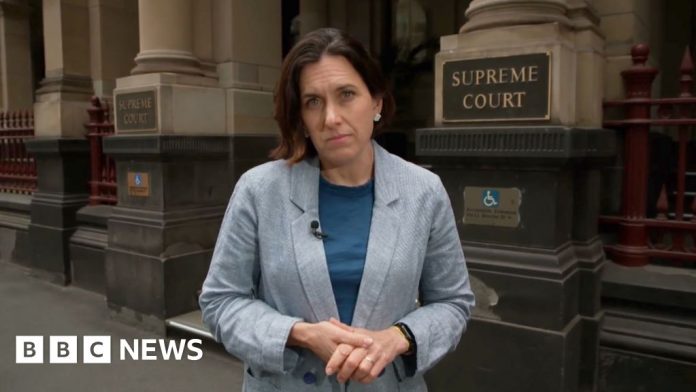
The BBC’s Katy Watson was in the courtroom as Erin Patterson was sentenced to life.

Duckworth says DHS fled Navy base near Chicago during visit from Democrats

0


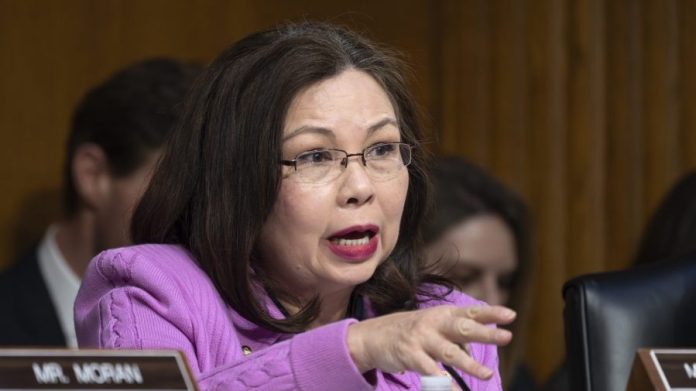
Sen. Tammy Duckworth (D-Ill.) on Sunday said the Department of Homeland Security (DHS) fled a Navy base near Chicago during a visit from Democrats.

Trump border czar Tom Homan confirmed late last month that the Trump administration was discussing using Naval Station Great Lakes, which is near Chicago, to back up immigration detention efforts.

Duckworth said she, Sen. Dick Durbin (D-Ill.) and Rep. Brad Schneider (D-Ill.) had asked DHS about what they were doing at the Naval Station Great Lakes. Initially, DHS told the lawmakers they could not visit the base, Duckworth said.

“Senator Durbin, myself, Senator — Congressman Schneider sent a request into DHS to ask them to explain what exactly are you going to be doing at Great Lakes, and can we come look at your facility so we have a better understanding of what your operations are, and they replied, no, you can’t, and, in fact, gave their staff the day off on the day that we went to go look at the facilities and locked the doors and left the base,” Duckworth told CBS’s Margaret Brennan on “Face the Nation,” referencing Naval Station Great Lakes.

“Basically, they fled the base,” she added.

Homan on Sunday said that Chicago and other “sanctuary cities” should expect to experience immigration enforcement action in the following week.

“Absolutely,” Homan in a CNN’s “State of the Union” appearance in response to being directly questioned about enforcement action in Chicago this week.

“You can expect action in most sanctuary cities across the country,” he continued. “President Trump’s prioritized sanctuary cities because sanctuary cities knowingly release illegal alien public safety threats to the streets every day. That’s where the problem is.”

“We don’t have that problem in Florida, where every sheriff and chief works for us, right, or Texas, so we got to send additional resources to the problem areas, which are sanctuary cities,” he added.

The Hill has reached out to DHS for comment.

The 30-year rate plunged Friday. Will it hold through next week?

0


Mortgage interest rates have taken a sharp turn lower. According to Zillow, the 30-year fixed mortgage rate fell 16 basis points Friday to 6.20%. The 15-year rate dropped 14 basis points to 5.38%. Shop around with three or four mortgage lenders to compare their rates and find the best deal.

Dig deeper: The best mortgage lenders for first-time home buyers

Here are the current mortgage rates, according to the latest Zillow data:

  • 30-year fixed: 6.20%

  • 20-year fixed: 5.63%

  • 15-year fixed: 5.38%

  • 5/1 ARM: 6.24%

  • 7/1 ARM: 6.18%

  • 30-year VA: 5.66%

  • 15-year VA: 5.15%

  • 5/1 VA: 5.52%

Remember, these are the national averages and rounded to the nearest hundredth.

Learn more: 8 strategies for getting the lowest mortgage rates

These are today’s mortgage refinance rates, according to the latest Zillow data:

  • 30-year fixed: 6.23%

  • 20-year fixed: 5.73%

  • 15-year fixed: 5.47%

  • 5/1 ARM: 6.48%

  • 7/1 ARM: 6.35%

  • 30-year VA: 5.76%

  • 15-year VA: 5.16%

  • 5/1 VA: 5.60%

Again, the numbers provided are national averages rounded to the nearest hundredth. Mortgage refinance rates are often higher than rates when you buy a house, although that’s not always the case.

Read more: Is now a good time to refinance your mortgage?

Use the mortgage calculator below to see how various mortgage terms and interest rates will impact your monthly payments.

Our free mortgage calculator also considers factors like property taxes and homeowners insurance when determining your estimated monthly mortgage payment. This gives you a more realistic idea of your total monthly payment than if you just looked at mortgage principal and interest.

The average 30-year mortgage rate today is 6.20%. A 30-year term is the most popular type of mortgage because by spreading out your payments over 360 months, your monthly payment is lower than with a shorter-term loan.

The average 15-year mortgage rate is 5.38% today. When deciding between a 15-year and a 30-year mortgage, consider your short-term versus long-term goals.

A 15-year mortgage comes with a lower interest rate than a 30-year term. This is great in the long run because you’ll pay off your loan 15 years sooner, and that’s 15 fewer years for interest to accumulate. But the trade-off is that your monthly payment will be higher as you pay off the same amount in half the time.

Let’s say you get a $300,000 mortgage. With a 30-year term and a 6.20% rate, your monthly payment toward the principal and interest would be about $1,827, and you’d pay $361,467 in interest over the life of your loan — on top of that original $300,000.

If you get that same $300,000 mortgage with a 15-year term and a 5.38% rate, your monthly payment would jump to $2,432. But you’d only pay $137,794 in interest over the years.

With a fixed-rate mortgage, your rate is locked in for the entire life of your loan. You will get a new rate if you refinance your mortgage, though.

An adjustable-rate mortgage keeps your rate the same for a predetermined period of time. Then, the rate will go up or down depending on several factors, such as the economy and the maximum amount your rate can change according to your contract. For example, with a 7/1 ARM, your rate would be locked in for the first seven years, then change every year for the remaining 23 years of your term.

Adjustable rates typically start lower than fixed rates, but once the initial rate-lock period ends, it’s possible your rate will go up. Lately, though, some fixed rates have been starting lower than adjustable rates. Talk to your lender about its rates before choosing one or the other.

Dig deeper: Fixed-rate vs. adjustable-rate mortgages

Mortgage lenders typically give the lowest mortgage rates to people with higher down payments, great or excellent credit scores, and low debt-to-income ratios. So, if you want a lower rate, try saving more, improving your credit score, or paying down some debt before you start shopping for homes.

Waiting for rates to drop probably isn’t the best method to get the lowest mortgage rate right now. If you’re ready to buy, focusing on your personal finances is probably the best way to lower your rate.

To find the best mortgage lender for your situation, apply for mortgage preapproval with three or four companies. Just be sure to apply to all of them within a short time frame — doing so will give you the most accurate comparisons and have less of an impact on your credit score.

When choosing a lender, don’t just compare interest rates. Look at the mortgage annual percentage rate (APR) — this factors in the interest rate, any discount points, and fees. The APR, which is also expressed as a percentage, reflects the true annual cost of borrowing money. This is probably the most important number to look at when comparing mortgage lenders.

Learn more: 6 tips for choosing a mortgage lender

According to Zillow, the national average 30-year mortgage rate for purchasing a home is 6.20%, and the average 15-year mortgage rate is 5.38%. But these are national averages, so the average in your area could be different. Averages are typically higher in expensive parts of the U.S. and lower in less expensive areas.

The average 30-year fixed mortgage rate is 6.20% right now, according to Zillow. However, you might get an even better rate with an excellent credit score, sizable down payment, and low debt-to-income ratio (DTI).

Mortgage rates aren’t expected to drop drastically in the near future, though they might inch down here and there.


France looks set to throw out another PM

0


Andrew HardingParis correspondent

Getty Images François Bayrou walking under an umbrellaGetty Images

Prime Minister François Bayrou (left) may be on his way out, after calling a confidence vote in himself

France’s parliament – deadlocked for a year and more poisonously divided than it has been in decades – looks set to throw out yet another prime minister on Monday.

But the acute sense of drama surrounding this latest vote of confidence inside Paris’s Assemblée Nationale is counterbalanced by a despondent consensus that the almost inevitable removal of 74-year-old François Bayrou, after nine relatively ineffectual months in office, will do nothing to break France’s political stalemate.

“It’s a disaster. The situation is absolutely blocked,” veteran political commentator Bruno Cautrès told the BBC.

Others have been even harsher in their diagnosis.

Marine Le Pen, parliamentary leader of the hard-right National Rally party, accused Bayrou of committing “political suicide”.

The prime minister, a consensus-seeking figure from south-west France with a tendency to frown and to bluster, initiated Monday’s surprise vote himself, seeking, as he explained it, to “shock” politicians into agreeing on a way to tackle the country’s looming debt crisis.

Getty Images A man in a hi-vis jacket and sunglasses waves a lit, red flare at a protest in FranceGetty Images

Efforts to cut the state budget have sparked protests in France over the years

Describing France’s spiralling national debt as “a terribly dangerous period… a time of hesitation and turmoil”, Bayrou warned there was a “high risk of disorder and chaos” if parliament failed to back his austerity budget with its aim to slash government spending by €44bn (£38bn).

Bayrou says young people will be saddled with years of debt payments “for the sake of the comfort of boomers”, if France fails to tackle a national debt of 114% of its annual economic output.

But Bayrou’s gamble – variously characterised as a kamikaze gesture, a pointless Cassandra-like prophecy, and an attempt to end his political career with a heroic act of self-sacrifice – looks almost certain to end in failure later on Monday.

Despite some frantic last-minute discussions, it appears clear Bayrou simply doesn’t have the votes.

At the heart of this “crisis” – a word that seems to have spent an entire year dominating French newspaper headlines – is President Emmanuel Macron’s widely derided decision, in June 2024, to call a snap parliamentary election in order to “clarify” the balance of power in parliament.

The result was the exact opposite of clarity. French voters, increasingly unhappy with their brash, eloquent young president, edged towards the extremes, leaving Macron floundering with a weakened minority centrist government, and a parliament so divided that today many rival MPs cannot even bear to shake each other’s hands.

Getty Images Emmanuel Macron looking sadGetty Images

Polls suggest President Macron’s popularity is at its lowest level since he took office in 2017

So, what next?

Far from the parliamentary power struggles on the left bank of Paris’s River Seine, the mood across France appears to be drifting towards the right and the far right.

“Jordan, Jordan,” shouted several hundred people crowding around the 29-year-old leader of the National Rally, Jordan Bardella, as he arrived at a large agricultural fair in Chalons-en-Champagne, east of Paris.

For an hour, Bardella inched through the crowd, taking selfies with his admirers.

“He seems like a good bloke. Someone you could get a drink with. France is struggling. We pay too many taxes, and we don’t understand how they’re spent. And prices keeping rising,” said Christian Magri, 44, a computer programmer.

“[Bardella] is going to overhaul our country. I’m not at all racist, but I feel that in France we already have a lot of people waiting for housing and we can’t take in all the wretched of the world,” said a woman named Christine.

Jordan Bardella takes a selfie in the middle of a crowd of journalists and supporters at a rally

Jordan Bardella (centre) was mobbed on arrival at the agricultural fair

“He’s a handsome man. His ideas are good. There are too many immigrants coming here. Mr Bardella… wants to put French people first,” said Nadine, 61, who, like many others in the crowd, declined to give her surname.

At some point, in the crush, I managed to reach Bardella and asked if he thought that – after Monday’s confidence vote – there might be another snap election that could see him emerge as France’s next prime minister.

“We’re working on it. This country has been deadlocked for over a year. It is dangerous to leave France drifting like this and to let those who’ve been in power for decades destroy the country. We want to do our best to stop mass immigration into France. If we come to power tomorrow, we will implement a referendum on the issue of immigration,” he said.

And yet few in France believe that President Macron will call another early parliamentary election, or indeed that he will step down from his own role before his term ends in 2027.

More likely is another attempt to find a path towards a functioning minority government. Having repeatedly tried to cut deals on the right, some wonder if Macron might try something new.

Reuters A poster for Let's Block Everything calls for a nationwide strike on 10 SeptemberReuters

Let’s Block Everything is a grassroots call for a huge, nationwide protest on 10 September

“We think that it’s time for the president to give the left a try because we will have a different method. We will try to reach compromises. We’ve proposed a budget that will make savings but also make investments for the future, for a green transition… while also taxing the richest persons on their fortunes,” said Arthur Delaport, a Socialist Party MP from Normandy.

While speculation continues about who Macron might chose as his next prime minister, other challenges are looming.

There is growing focus here on the prospect, not just of significant industrial action in the coming weeks, but of a wave of street protests. A fledgling grass-roots movement, calling itself “Let’s Block Everything,” has been active on social media, urging French people to bring the country to a standstill this Wednesday.

“There is a bubble of exasperation in the country,” explained the commentator, Bruno Cautrès, offering a warning to Macron.

“Macron has been extremely, extremely active at the international level, particularly with Ukraine these last two weeks. And I think that it is time that Macron is talking to the French. Because…. there is a very high level of anger, frustration, tensions.”

Trump to visit Museum of the Bible on Monday

0


President Trump is set to visit Washington, D.C.’s Museum of the Bible on Monday morning.

Trump will also give remarks while at the museum amid a meeting of his Religious Liberty Commission.

The administration signaled Trump’s visit is intended to underscore its defense of religious liberty.

“The previous administration abused the federal government’s power to interfere with Americans’ First Amendment right to religious freedom. They even used the Department of Justice to target peaceful people of faith, specifically Christians,” White House spokesperson Taylor Rogers said in a statement obtained by Libbey Dean of NewsNation, The Hill’s sister network.

“This is exactly why President Trump established the Religious Liberty Commission to stop the emerging threats against Americans’ inalienable right to practice their religion freely,” Rogers added. “President Trump is the greatest defender for people of faith in modern history and will continue to protect and promote America’s founding principle of religious freedom.”

Trump created the Religious Liberty Commission in May via an executive order. The president said in the order that federal, state and local policies have endangered the U.S.’s tradition of religious liberty in the past few years.

The president’s visit to the museum will also come in the wake of White House officials launching a review of some of the Smithsonian’s museums with an aim of “alignment” with Trump’s “directive to celebrate American exceptionalism, remove divisive or partisan narratives, and restore confidence in our shared cultural institutions.”

How to find a below-market HELOC rate

0


The HELOC interest rate today sits under 9%. However, you want to remember that your home equity line of credit interest rate will likely begin much lower than that. Introductory rates are usually well below prevailing market rates.

Dig deeper: Is it a good idea to get a HELOC? Here are the pros and cons.

According to Bank of America, the largest HELOC lender in the country, today’s average APR on a 10-year draw HELOC remains 8.72%. That is a variable rate that kicks in after a six-month introductory APR of 6.49% in most U.S. states.

Homeowners have a huge amount of value tied up in their houses — more than $34 trillion at the end of 2024, according to the Federal Reserve. That’s the third-largest amount of home equity on record.

With mortgage rates lingering in the mid-6% range, homeowners are not going to let go of their primary mortgage anytime soon, so selling a house may not be an option. Why let go of your 5%, 4% — or even 3% mortgage?

Accessing some of that value with a use-it-as-you-need-it HELOC can be an excellent alternative.

HELOC interest rates are different from primary mortgage rates. Second mortgage rates are based on an index rate plus a margin. That index is often the prime rate, which today is 7.50%. If a lender added 1% as a margin, the HELOC would have a rate of 8.50%.

Lenders have flexibility with pricing on a second mortgage product, such as a HELOC or home equity loan, so it pays to shop around. Your rate will depend on your credit score, the amount of debt you carry, and the amount of your credit line compared to the value of your home.

And average national HELOC rates can include “introductory” rates that may only last for six months or one year. After that, your interest rate will become adjustable, likely beginning at a substantially higher rate.

You don’t have to give up your low-rate mortgage to access the equity in your home. Keep your primary mortgage and consider a second mortgage, such as a home equity line of credit.

The best HELOC lenders offer low fees, a fixed-rate option, and generous credit lines. A HELOC allows you to easily use your home equity in any way and in any amount you choose, up to your credit line limit. Pull some out; pay it back. Repeat.

Meanwhile, you’re paying down your low-interest-rate primary mortgage like the wealth-building machine you are.

Today, LendingTree is offering a HELOC rate as low as 6.75% for a credit line of $150,000. That’s likely an introductory rate that will convert to a variable rate later. When shopping lenders, be aware of both rates. And as always, compare fees, repayment terms, and the minimum draw amount. The draw is the amount of money a lender requires you to initially take from your equity.

The power of a HELOC is tapping only what you need and leaving some of your line of credit available for future needs. You don’t pay interest on what you don’t borrow.

Rates vary so much from one lender to the next that it’s hard to pin down a magic number. You may see rates from nearly 7% to as much as 18%. It really depends on your creditworthiness and how diligent a shopper you are.

For homeowners with low primary mortgage rates and a chunk of equity in their house, it’s probably one of the best times to get a HELOC. You don’t give up that great mortgage rate, and you can use the cash drawn from your equity for things like home improvements, repairs, and upgrades. Of course, you can use a HELOC for fun things too, like a vacation — if you have the discipline to pay it off promptly. A vacation is likely not worth taking on long-term debt.

If you take out the full $50,000 from a line of credit on a $400,000 home, your payment may be around $395 per month with a variable interest rate beginning at 8.75%. That’s for a HELOC with a 10-year draw period and a 20-year repayment period. That sounds good, but remember, it winds up being a 30-year loan. HELOCs are best if you borrow and pay back the balance in a much shorter period of time.

TUC chief calls on ministers to show ‘whose side’ they are on

0


The UK’s most senior trade unionist is calling on the government to demonstrate “whose side it is on” following the Labour reshuffle.

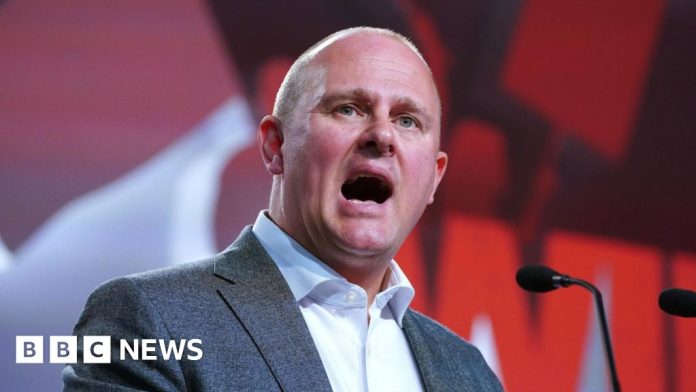
The General Secretary of the TUC, Paul Nowak, will tell his annual conference in Brighton on Monday that the government must do more for working class communities.

He will argue that Labour’s promise of change at the last election doesn’t feel like “a lived reality”.

He will say that the Labour government needs to make what he calls “the right political choices” to persuade voters that it is on their side.

He will call for the two child benefit cap to be lifted – paid for by new taxes on wealth.

There is a similar message from Sharon Graham, the leader of the Unite union – though her warning to Labour has financial as well as political consequences.

At her own union’s conference in the summer, delegates voted overwhelmingly to re-examine its relationship with Labour.

She has now told the BBC that at a future Unite conference, there will be an opportunity to sever a long-standing link which is worth around £1.3m a year to Labour.

She said: “Instinctively, workers don’t feel that Labour is on their side. We will be giving our members the opportunity to vote on whether to remain part of Labour when the time comes.

“If that vote was today, I think they’d vote to disaffiliate. There’s no doubt about that in my mind.”

Ms Graham predicted that Reform UK would be the chief beneficiaries if Labour failed to improve standards of living. She argued that “unless Labour do something quite radical”, then “they are going to find themselves in huge difficulty.”

She added: “They’ve got about a year to get this right. And if they don’t do that, people will start moving away from them, and I don’t believe they’ll go back.”

The warnings come as the leader of the UK’s biggest trade union Christina McAnea said it would be a “huge mistake” for the government to water down its Employment Rights Bill, which is due to become law in a few weeks.

The legislation would be a major shake-up of workers’ rights, including protection against unfair dismissal and a ban on “exploitative” zero-hours contracts.

McAnea said she is concerned that ministers are no longer committed to implementing the bill in full, following Angela Rayner’s resignation and the cabinet reshuffle.

Labour has said it is delivering the biggest uplift in workers’ rights in a generation and that wages are now rising faster than prices.

Prime Minister Sir Keir Starmer has said that the next phase of government will focus on “delivery, delivery, delivery” of its promises.

Massachusetts governor calls Trump Patriot 2.0 ICE action 'political theater'

0


Massachusetts Gov. Maura Healey (D) on Sunday called the Trump administration’s “Patriot 2.0” Immigration and Customs Enforcement (ICE) action in her state “political theater” and a “power grab.”

“Look, I’ll say this, I’m a former prosecutor. I’m a former attorney general. I’ve said many, many times, including to the Trump administration, that I support, as attorney general and now as governor, everything we can do on public safety,” Healey said on MSNBC’s “The Weekend.”

“But what we have seen from ICE and from the administration really isn’t about public safety, it’s about political theater. It’s about a political power grab and an attempt to intimidate,” she added.

In a statement to The Hill, a Department of Homeland Security (DHS) spokesperson said that “ICE launched ‘Patriot 2.0’ to target the worst of the worst criminal illegal aliens living in the state of Massachusetts, following the success of Operation Patriot in May.”

“Sanctuary policies like those pushed by Mayor Wu not only attract and harbor criminals but also place these public safety threats above the interests of law-abiding American citizens,” the spokesperson added, referencing Boston Mayor Michelle Wu, who is a Democrat. 

“ICE is arresting sex offenders, pedophiles, murderers, drug dealers, and gang members released by local authorities,” the spokesperson said.

In the first few months of President Trump’s second term, the president and his administration have cracked down heavily on immigration. 

Secretary of Homeland Security Kristi Noem last month said the U.S. had 1.6 million fewer undocumented immigrants since the beginning of the Trump administration, a claim that came from information from a restrictionist immigration group that said their estimate may be overstated.

The Justice Department on Thursday sued Boston and Wu over to the city’s sanctuary law, stating it is illegal and releases dangerous criminals who should be deported.