
The WSJ Dollar Index Falls 0.04% This Week to 95.06
The WSJ Dollar Index Falls 0.04% This Week to 95.06
Rights reform to ‘head off Farage’ and ‘Enders Jamie axed’
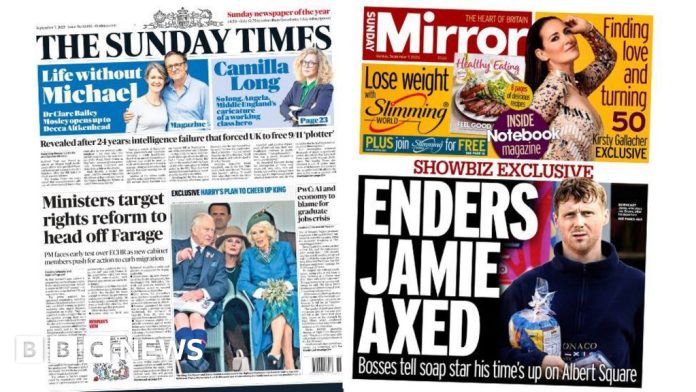

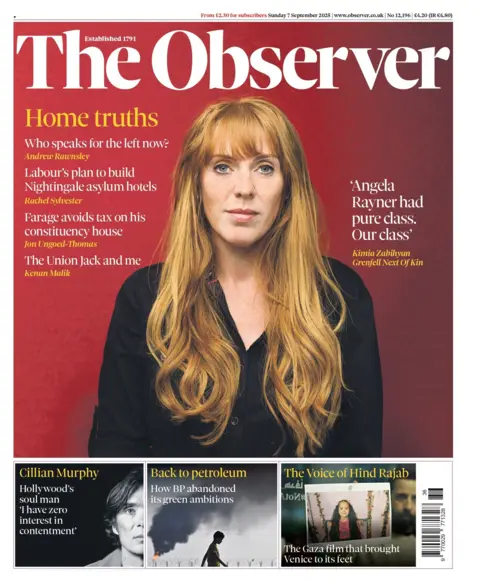
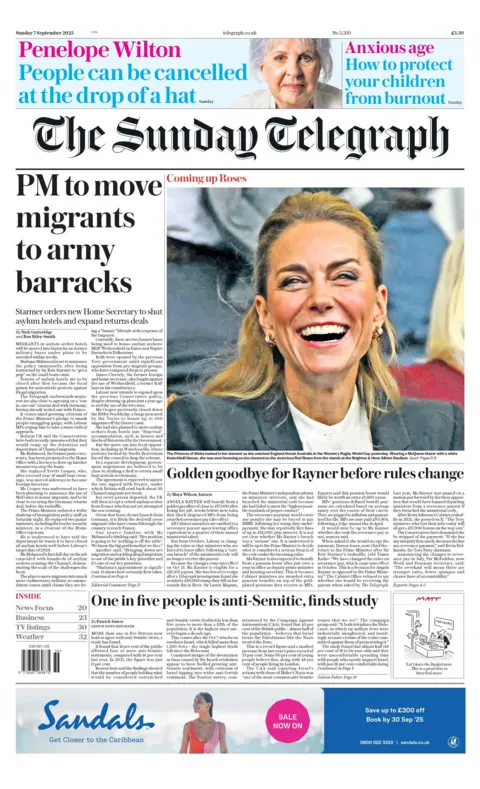
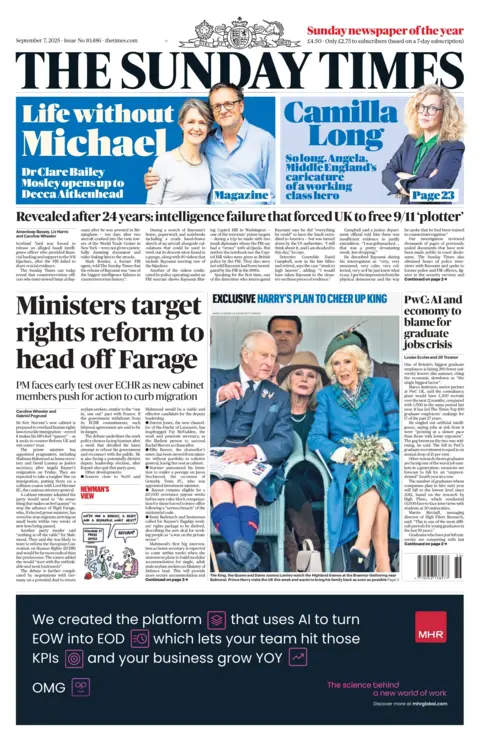
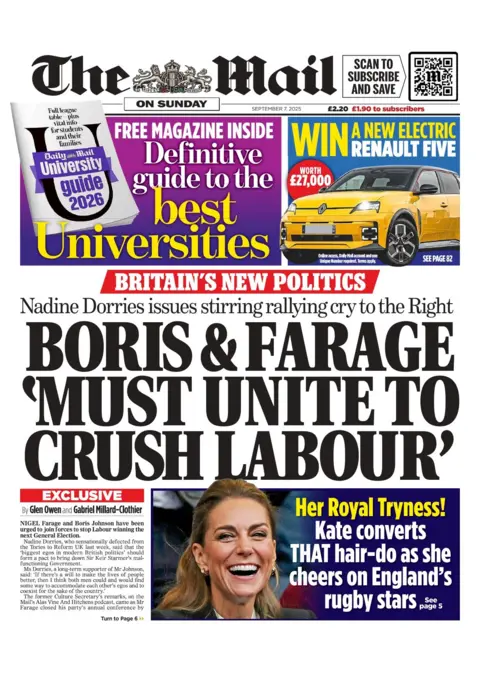

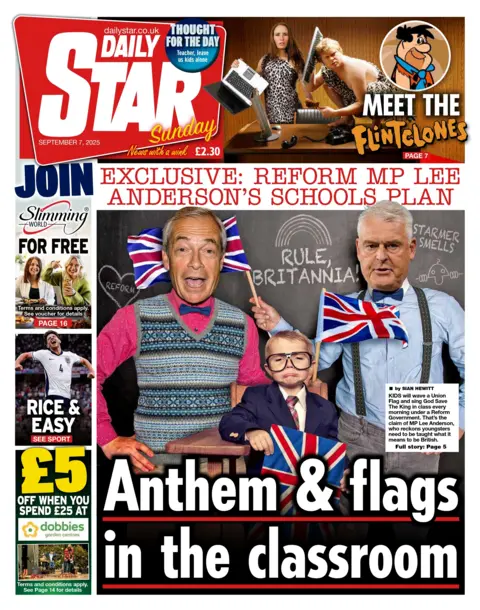
The Sunday Telegraph says that the new Home Secretary Shabana Mahmood will announce within weeks that migrants in asylum-seeker hotels will be moved into barracks on former military bases. The paper says Prime Minister Sir Keir Starmer has instructed her to “get a grip” on the small boats crisis.
The Sunday Times says the new cabinet is prepared to overhaul human rights laws to head off Nigel Farage even if it makes Sir Keir’s MPs feel queasy. The paper’s cartoonist, Newman, depicts one Downing Street press officer asking another, “We’ve had a reboot, a reset and a reshuffle. What’s next?” The answer? “Reform?”
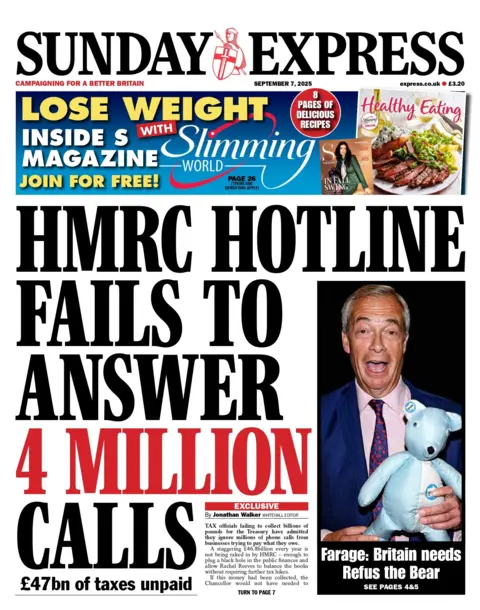
The Sunday Express says HMRC has failed to answer four million phone calls from businesses trying to pay what they owe – resulting in the Treasury failing to collect what it calls a “staggering” £47bn. The paper says this would be enough to plug the black hole in the public finances, without having to hike taxes.
Many of the papers are underwhelmed by England’s 2-0 victory over Andorra in qualifying for next summer’s football World Cup. The Daily Star says it was another bore from Thomas Tuchel and his tame three lions. The Sunday Telegraph says England were turgid as they struggled to beat the minnows. The Sunday Express says Villa Park was half-empty at the final whistle, as England laboured to a dull victory.
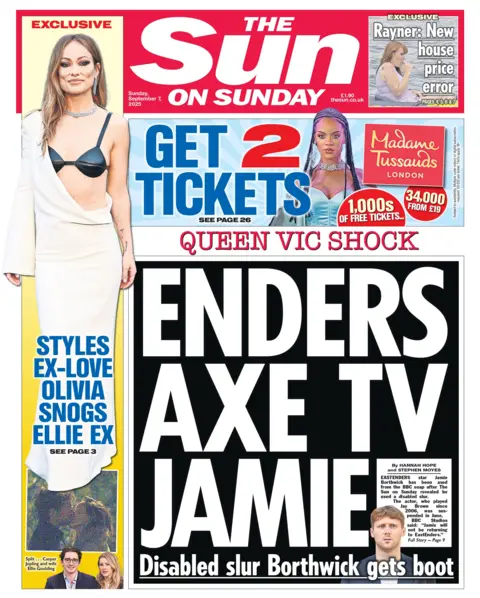
The Sun on Sunday and the Sunday Mirror lead on the BBC’s decision to axe Jamie Borthwick from EastEnders, after he made a disabled slur during his time on Strictly Come Dancing. The Mail on Sunday says that the actor apologised at the time, saying he didn’t fully understand the derogatory nature of the term.


Democrats blast Trump for war threats on US cities
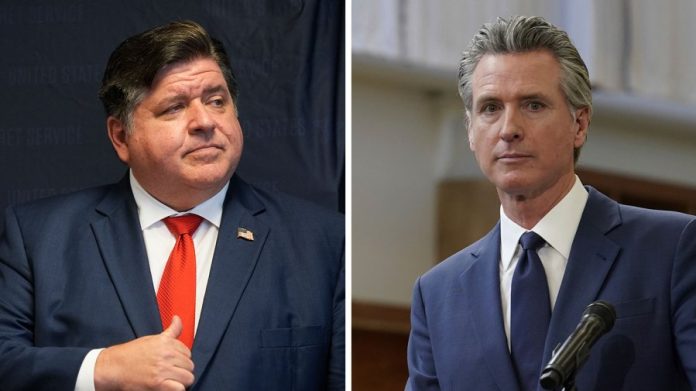

Democrats admonished President Trump on Saturday after he made a joke about deportations in a post on his Truth Social platform.
“‘I love the smell of deportations in the morning…’ Chicago is about to find out why we call it the Department of War,” the president wrote with a meme of himself next to the words, “Chipocalypse Now.”
Democratic party members from California and Illinois condemned the post.
“The President of the United States is deploying the military onto US streets and using our troops like political pawns,” California Gov. Gavin Newsom (D) wrote in a statement on X.
“DO NOT ALLOW YOURSELF TO BECOME NUMB TO THIS,” he continued.
Newsom feuded with Trump earlier this year after the White House assumed control of the state’s National Guard. The president ordered soldiers to Los Angeles without the governor’s approval, to enforce the administration’s immigration agenda.
As Trump eyes Chicago for a federal takeover by force, leaders in the Prairie State have rejected the president’s swipe at federal intervention.
“No Donald, Chicago is not your war zone,” Illinois Sen. Tammy Duckworth, who is also a combat veteran and retired Army National Guard lieutenant colonel, wrote in a statement on X.
In response to Trump’s earlier post celebrating deportation, Duckworth described the meme of the president in a Calvary hat as “stolen valor at its worst.”
Chicago Mayor Brandon Johnson (D) also chimed in.
“The President’s threats are beneath the honor of our nation, but the reality is that he wants to occupy our city and break our Constitution,” Johnson wrote on X.
“We must defend our democracy from this authoritarianism by protecting each other and protecting Chicago from Donald Trump.”
Earlier in the day, Illinois Gov. JB Pritzker called the president a “wannabe dictator.”
“The President of the United States is threatening to go to war with an American city,” Pritzker wrote on social platform X in response to a meme shared by Trump. “This is not a joke. This is not normal.”
China Plans to Sideline Lithium Competition. Albemarle Stock Rises.
China Plans to Sideline Lithium Competition. Albemarle Stock Rises.
Market ructions and cabinet reshuffles will help shape Reeves’ Budget
Faisal IslamEconomics editor
 WPA Pool/Getty Images
It’s been a bruising first week back for the government, full of resignations, reshuffles, and ructions in markets.
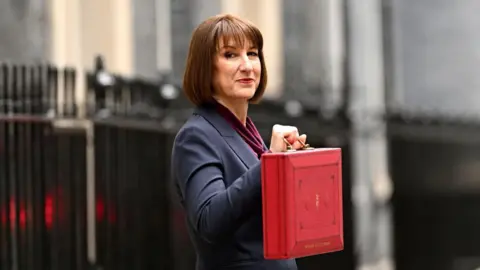
All of this will have an impact on what ends up in the chancellor’s famous red box outside No 11 in 11 weeks’ time.
The first thing to note is that it will be Rachel Reeves holding that briefcase for the second time on 26 November.
Whatever occurred with the deputy prime minister, the security of Reeves’ position was apparent in her conversation with me in Birmingham to announce the date of the Budget.
In Downing Street, the message received from the market reaction to the chancellor’s summer tears in the Commons was that the cost of borrowing went up when it was thought she was leaving office.
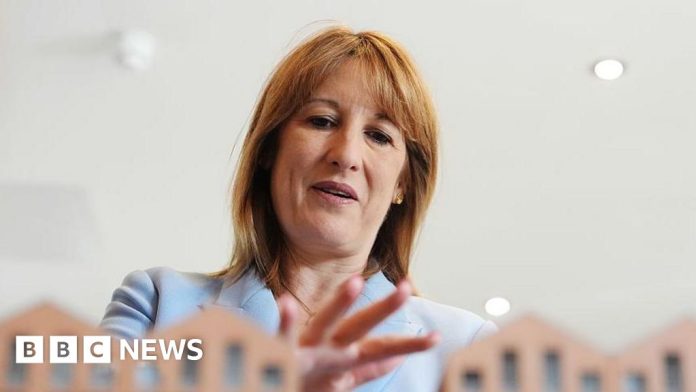
When I saw her, brandishing a hard hat and trowel at a housebuilding site, there seemed no question of her going anywhere.
“We need you to get qualified and get more flats and houses up,” she told two bricklaying apprentices, while not entirely convincing with her own trowel technique.
She rather robustly dismissed speculation about Budget measures, large black hole forecasts, and had some sharpish words even for the Office for Budget Responsibility, which we will come back to.
The chancellor spent the summer travelling the country “listening to business” and taking some time off on the Cornish coast.
During that same period global bond markets have been looking fragile. Some economists have even floated the idea there is a £50bn black hole that could lead to the need for loans from the IMF.
As politicians returned to work this week, and US traders returned on Tuesday from a national holiday, the 30-year gilt rate – the effective interest rate facing the UK government for very long-term borrowing – was heading for highs not seen since the early days of Tony Blair and Gordon Brown.
There was some significance to the unwanted landmark: the gains from nearly three decades of relative macroeconomic stability since the Bank of England became independent were being unwound.
I put to the chancellor that fragile bond markets were a reflection of the government’s, and her own, personal credibility issue. I have had similar interactions with previous chancellors, including Kwasi Kwarteng.
Reeves was adamant that this was not the case, that the move in bond markets since the beginning of the year had been in line with global trends. “Serious economists” were not talking about the IMF or a UK-specific challenge, she said.
By the end of the week, her bullishness was being proven accurate. The 30-year yield had fallen back, not just to where it was on Monday, but significantly lower, mainly off the back of weaker-than-expected US jobs data.
This was in common with many major economies. In other words, this week’s bond markets rollercoaster was not a verdict on UK domestic, economic or political developments.
 Leon Neal/Getty Images
Indeed, by Wednesday the Bank of England governor Andrew Bailey was playing down the entire focus on this measure, saying, “It is quite a high number but it is not what is being used for funding at all at the moment actually.”
He was referring to the fact that such long-term borrowing only makes up a small fraction of overall government debt.
And in terms of demand, there was no sign of a lack of appetite in actual sales of UK debt last week, with record demand on some measures.
The bigger picture though is that these forms of debt do not directly affect, for example, five-year fixed mortgage rates.
So the gilt markets are not fundamentally showing a mini-budget style UK-specific problem. At the same time, there is a clear warning signal here.
Fragile global bond markets do keep an eye on any unattractive economic or political factors. In this case the UK’s high inflation, and any doubt after the summer U-turns about the government’s control over events, could quickly turn problematic.
Indeed, expect the chancellor’s team to use the bond market rollercoaster to make the case that the answer to the autumn’s tricky Budget balancing act is not more debt through watering down her borrowing limits. Any gap, they will argue, will have to be filled by higher taxes or lower spending.
The amount of that adjustment depends on markets and the judgement of the OBR on the long-term performance of the economy. There was some substance to the chancellor’s off-the-cuff comments to me suggesting the forecasters stick to their primary role rather than giving a “running commentary on policy”.
The OBR judgement on UK productivity could be the single biggest determinant of how much of a gap there is, and therefore how much Budget pain the chancellor needs to administer.
Expect some haggling, with the Downing Street team of economists adamant that the OBR’s forecast should reflect their reforms, especially on planning. The first take of that critical independent judgement is expected to be delivered to the chancellor in the final days of this month, around the time of her conference speech in Liverpool.
At that point the long list of potential Budget revenue raisers will start to populate the Treasury spreadsheet known as the “scorecard”. Rumours will fly around. Indeed ministers are amazed at some of the speculation so far. For example, bank shares fell on suggestions the chancellor would enact a think tank report on windfall taxes, published when she was on holiday, that she has never even read.
Departmental budgets have already been set in the Spending Review, and there is no plan to reopen that process, which must mean that any restraint will have to come from the wider Welfare Bill.
The chancellor did not rule that out to me, but said there was “more to do” on reforms that helped people back into work. The new cabinet, without the former deputy PM, author of a leaked letter on wealth taxes, might be more amenable.
All in all this is the chancellor’s chance to author some long-term, pro-growth reforms to the tax system. She still hopes to do that.
But OBR spreadsheets, market ructions, and backbench unhappiness on cuts will ultimately determine just how big the extra tax demand in the red box is on 26 November.
Much can change between now and then.
Hochul hits Trump for exploring takeover of 9/11 Memorial & Museum: Reports
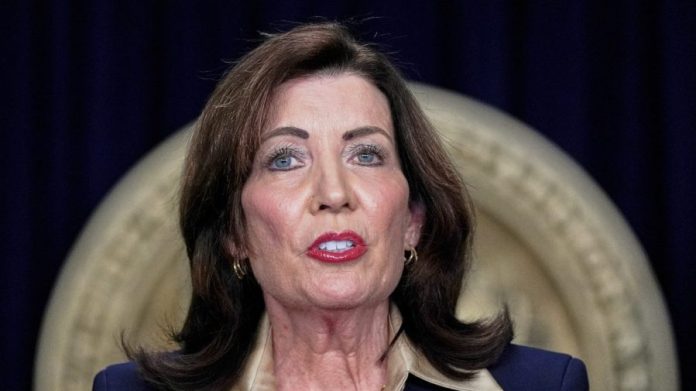

New York Gov. Kathy Hochul (D) on Saturday slammed President Trump after reports of a White House takeover of the 9/11 Memorial & Museum were published by numerous outlets.
“The @Sept11Memorial belongs to the families, survivors, and first responders who’ve carried its legacy for more than two decades,” Hochul wrote in a statement on X, with a screenshot of reporting from the New York Times.
“Instead of politicizing this sacred site, the President should restore 9/11 health care funding and support victims’ families,” she continued.
The White House and museum did not immediately respond to The Hill’s request for comments.
Reports of Trump eyeing control of the 9/11 Memorial & Museum come months after the Trump administration attempted to revoke funding from the World Trade Center Health Program.
The White House restored funding for the program after GOP lawmakers urged the president not to withhold funds from research efforts, medical monitoring and treatment to more than 100,000 survivors who were diagnosed with conditions after working in response to the Sept. 11, 2001, terrorist attacks.
The top leader at the museum questioned why the federal government would want to assume control of operations.
“At a time when the federal government is working to cut costs, assuming the full operating expenses for the site makes no sense,” Beth Hillman, president and CEO of the 9/11 Memorial & Museum, said in a statement sent to CBS.
Dow Falls 220 Points After Labor Market Worries Overshadow Rate-Cut Exuberance

The stock market fumbled an early gain on Friday as Wall Street weighed rising rate-cut odds against worries about the economy.
The Dow Jones Industrial Average fell 220 points, or 0.5%. The S&P 500 was down 0.3%. The Nasdaq Composite was down by less than 0.1%.
All three big indexes were on track for closing highs shortly after the market opened in the wake of a tepid jobs report. The U.S. economy added 22,000 jobs in August, while June and July’s combined numbers were revised 21,000 lower than previously reported.
Market ructions and cabinet reshuffles will help shape Reeves’ Budget
Faisal IslamEconomics editor
WPA Pool/Getty ImagesIt’s been a bruising first week back for the government, full of resignations, reshuffles, and ructions in markets.
All of this will have an impact on what ends up in the chancellor’s famous red box outside No 11 in 11 weeks’ time.
The first thing to note is that it will be Rachel Reeves holding that briefcase for the second time on 26 November.
Whatever occurred with the deputy prime minister, the security of Reeves’ position was apparent in her conversation with me in Birmingham to announce the date of the Budget.
In Downing Street, the message received from the market reaction to the chancellor’s summer tears in the Commons was that the cost of borrowing went up when it was thought she was leaving office.
When I saw her, brandishing a hard hat and trowel at a housebuilding site, there seemed no question of her going anywhere.
“We need you to get qualified and get more flats and houses up,” she told two bricklaying apprentices, while not entirely convincing with her own trowel technique.
She rather robustly dismissed speculation about Budget measures, large black hole forecasts, and had some sharpish words even for the Office for Budget Responsibility, which we will come back to.
The chancellor spent the summer travelling the country “listening to business” and taking some time off on the Cornish coast.
During that same period global bond markets have been looking fragile. Some economists have even floated the idea there is a £50bn black hole that could lead to the need for loans from the IMF.
As politicians returned to work this week, and US traders returned on Tuesday from a national holiday, the 30-year gilt rate – the effective interest rate facing the UK government for very long-term borrowing – was heading for highs not seen since the early days of Tony Blair and Gordon Brown.
There was some significance to the unwanted landmark: the gains from nearly three decades of relative macroeconomic stability since the Bank of England became independent were being unwound.
I put to the chancellor that fragile bond markets were a reflection of the government’s, and her own, personal credibility issue. I have had similar interactions with previous chancellors, including Kwasi Kwarteng.
Reeves was adamant that this was not the case, that the move in bond markets since the beginning of the year had been in line with global trends. “Serious economists” were not talking about the IMF or a UK-specific challenge, she said.
By the end of the week, her bullishness was being proven accurate. The 30-year yield had fallen back, not just to where it was on Monday, but significantly lower, mainly off the back of weaker-than-expected US jobs data.
This was in common with many major economies. In other words, this week’s bond markets rollercoaster was not a verdict on UK domestic, economic or political developments.
Leon Neal/Getty ImagesIndeed, by Wednesday the Bank of England governor Andrew Bailey was playing down the entire focus on this measure, saying, “It is quite a high number but it is not what is being used for funding at all at the moment actually.”
He was referring to the fact that such long-term borrowing only makes up a small fraction of overall government debt.
And in terms of demand, there was no sign of a lack of appetite in actual sales of UK debt last week, with record demand on some measures.
The bigger picture though is that these forms of debt do not directly affect, for example, five-year fixed mortgage rates.
So the gilt markets are not fundamentally showing a mini-budget style UK-specific problem. At the same time, there is a clear warning signal here.
Fragile global bond markets do keep an eye on any unattractive economic or political factors. In this case the UK’s high inflation, and any doubt after the summer U-turns about the government’s control over events, could quickly turn problematic.
Indeed, expect the chancellor’s team to use the bond market rollercoaster to make the case that the answer to the autumn’s tricky Budget balancing act is not more debt through watering down her borrowing limits. Any gap, they will argue, will have to be filled by higher taxes or lower spending.
The amount of that adjustment depends on markets and the judgement of the OBR on the long-term performance of the economy. There was some substance to the chancellor’s off-the-cuff comments to me suggesting the forecasters stick to their primary role rather than giving a “running commentary on policy”.
The OBR judgement on UK productivity could be the single biggest determinant of how much of a gap there is, and therefore how much Budget pain the chancellor needs to administer.
Expect some haggling, with the Downing Street team of economists adamant that the OBR’s forecast should reflect their reforms, especially on planning. The first take of that critical independent judgement is expected to be delivered to the chancellor in the final days of this month, around the time of her conference speech in Liverpool.
At that point the long list of potential Budget revenue raisers will start to populate the Treasury spreadsheet known as the “scorecard”. Rumours will fly around. Indeed ministers are amazed at some of the speculation so far. For example, bank shares fell on suggestions the chancellor would enact a think tank report on windfall taxes, published when she was on holiday, that she has never even read.
Departmental budgets have already been set in the Spending Review, and there is no plan to reopen that process, which must mean that any restraint will have to come from the wider Welfare Bill.
The chancellor did not rule that out to me, but said there was “more to do” on reforms that helped people back into work. The new cabinet, without the former deputy PM, author of a leaked letter on wealth taxes, might be more amenable.
All in all this is the chancellor’s chance to author some long-term, pro-growth reforms to the tax system. She still hopes to do that.
But OBR spreadsheets, market ructions, and backbench unhappiness on cuts will ultimately determine just how big the extra tax demand in the red box is on 26 November.
Much can change between now and then.
US Open asks broadcasters not to air possible reactions to Trump at final match: Reports

The United States Tennis Association (USTA), host of the US Open, asked broadcasters not to air “distractions” that may arise from President Trump’s attendance at the Sunday opening ceremony for the men’s singles final match, multiple outlets report.
“With respect to Broadcast Coverage, the President will be shown on the World Feed and the Ashe Court Feed during the opening anthem ceremony,” read an email to broadcasters first obtained by Bounces and reviewed by multiple outlets, including the New York Times.
“We ask all broadcasters to refrain from showcasing any disruptions or reactions in response to the President’s attendance in any capacity, including ENG [Electronic News Gathering] coverage,” it reportedly continued.
The message comes after a 2015 appearance from Trump warranted jeers from the crowd.
“We regularly ask our broadcasters to refrain from showcasing off-court disruptions,” Brian McIntyre, a spokesperson for the USTA, said in a statement to The Hill.
This year, the president will sit in a suite sponsored by Rolex while attending the men’s final match, according to The Associated Press.
Currently, the Swiss-based company is facing a 39 percent tariff on products imported to the U.S., notes the AP.
Trump’s appearance at the faceoff between Jannik Sinner and Carlos Alcaraz comes a day after Aryna Sabalenka of Belarus clenched her second title at the US Open on Saturday.
In remarks after her win, Sabalenka thanked Americans for cheering her on throughout numerous performances at the Billie Jean National Tennis Center in New York.
Jim Cramer Says “Record Numbers” Are Coming From Starbucks Corporation (SBUX)

We recently published 8 Stocks Jim Cramer Discussed As He Dismissed Value Stocks. Starbucks Corporation (NASDAQ:SBUX) is one of the stocks Jim Cramer recently discussed.
Starbucks Corporation (NASDAQ:SBUX), courtesy of its CEO Brian Niccol, is one of Cramer’s top stocks. Niccol is currently busy with a long due turnaround at the firm. The shares have lost 5% year-to-date, primarily on the back of a major 19.8% drop in April during the Liberation Day selloff. More recently, Starbucks Corporation (NASDAQ:SBUX)’s shares fell by 2% in late August after a Bloomberg report claimed that the firm was reducing production at its plants. Cramer discussed another report:
“Uh story this weekend in Bloomberg about Starbucks having some good numbers so far with the Pumpkin Spice Latte. I’ve confirmed that that’s true. There are many things that are going well there. They’ve got some good numbers. Now is the stock going to go up on this? Well, this, again is an example of file these things away. You’ve got some good numbers coming from Starbucks, record numbers. You have things that are starting to work for Brian Niccol. You do have many buyers of Chine if he does want to sell it. So I mean yeah go sell this, my problem is when do you know to get it back?”

Here are his previous thoughts about Starbucks Corporation (NASDAQ:SBUX):
“The last three coffee bull markets were followed by 50 to 65% corrections. If the current rally behaves in line with the past, that’s going to be brutal. Now that is very good news for Starbucks, another stock that the Charitable Trust owns. Although I gotta tell you, that stock has been made weak by the coffee prices. But there’s so many other factors involved that I think coffee prices are actually a smaller part of what’s wrong with the stock than, let’s say, a lot of other things.”
While we acknowledge the potential of SBUX as an investment, our conviction lies in the belief that some AI stocks hold greater promise for delivering higher returns and have limited downside risk. If you are looking for an extremely cheap AI stock that is also a major beneficiary of Trump tariffs and onshoring, see our free report on the best short-term AI stock.
READ NEXT: 30 Stocks That Should Double in 3 Years and 11 Hidden AI Stocks to Buy Right Now.
Disclosure: None. This article is originally published at Insider Monkey.