13.1 C
New York
Sunday, May 3, 2026
Home Blog Page 172

California's gerrymander clapback is an act of democratic self-defense 

0


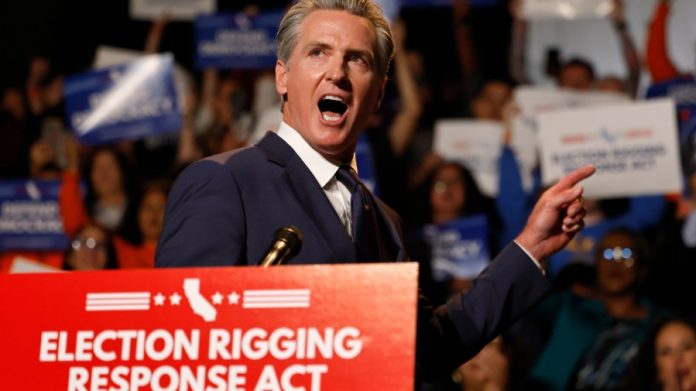
Californians are already knee-deep in the battle over Proposition 50, California’s effort to re-arrange its congressional map. The goal is to counter the Texas plan that likely just handed Republicans five additional U.S. House seats.

Although California Gov. Gavin Newsom (D) only signed the legislation authorizing the November special election to do this two weeks ago, I have already received two mailers — both against — and seen multiple digital ads about the move.

Elections in California are often sleepy affairs that don’t attract much national attention, just because it’s not a swing state. But this time, it’s different. 

The modern era of aggressive partisan redistricting — known as gerrymandering — kicked off with the launch of Project REDMAP, a Republican effort to take control of state legislatures in the 2010 election and use that control to redistrict their way into a GOP majority.

How effective was Project REDMAP? In Republicans’ own words, “[A]ggregated numbers show voters pulled the lever for Republicans only 49 percent of the time in [2012] congressional races, suggesting that 2012 could have been a repeat of 2008, when voters gave control of the White House and both chambers of Congress to Democrats. … Instead, Republicans enjoy a 33-seat margin in the U.S. House.” 

So although the Texas decision to engage in mid-cycle redistricting to help President Trump hold onto the House in 2026 is particularly shameless, it is also nothing new, having been in the Republican playbook for well over a decade.

All gerrymandering is bad. Intentionally creating congressional districts to ensure that one party has an unfair advantage is anti-democratic. We can no longer pretend that politicians can be trusted to do this fairly, so we will eventually need a constitutional amendment that mandates independent redistricting commissions like those already in use in eight states. 

But that’s for later. At the moment, we have a more immediate problem to deal with. 

It’s true that two wrongs don’t make a right. But sometimes they cancel each other out. And what Texas Republicans have done is wrong. The Constitution requires a census and new congressional districts every 10 years, to adjust for population growth and ensure that all Americans are fairly represented in Congress. Texas is doing the opposite of that. Legislators have redrafted their congressional map to make it as unfair as possible, because that will help Trump and his Republicans hold on to power.

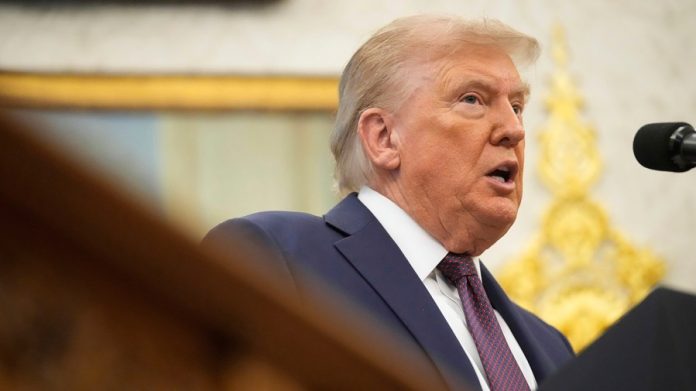
Trump said it himself: “We are entitled to five more seats.” But in a proper democracy, no one is entitled to anything. You have to earn power and constantly demonstrate your right to keep it. If you can’t do that, you lose the next election — and you should. 

This is neither a complicated issue nor a partisan one. There is no “both-sidesing” here, no moral equivalence. With all due respect to Arnold Schwarzenegger, anyone opposing Proposition 50 is either a hypocrite or a fool. 

It isn’t possible — at least in good faith — to wink and nod at what Texas has done while sanctimoniously condemning California. The idea that Prop 50 is undemocratic or unconstitutional is absurd. Texas redrew its congressional map by threatening to arrest Democratic lawmakers and then holding them in custody until Republicans had pushed their plan through. California is holding a special election to ask its citizens to suspend independent redistricting until 2030 as an emergency measure. It’s hard to imagine a more democratic process than that. 

By the same token, taking the “principled” stand that all gerrymandering is bad and that California shouldn’t do it just because Texas did is, at best, incredibly naive. Some people forswear all violence, even in self-defense. While on one level I admire these people, self defense, when it is necessary and proportional, is always morally justified.

And that’s exactly what Prop 50 is: an act of democratic self-defense. California is fighting to hold the line and ensure that Republicans don’t benefit from what they have done in Texas. Nothing more. Nothing less.

We need to remember what is at stake. Yes, having the House controlled by Democrats would be embarrassing for Trump and would thwart future Republican legislation. But what we are really fighting about is who’s going to be recognized as the next president on Jan. 6, 2029. Trump is amassing unprecedented power and it’s hard to imagine Republicans just handing that over without a fight. The best guarantee of a peaceful transition of power is for Democrats to control the House and make it impossible for Republicans — JD Vance will be presiding over the counting process — to manipulate the electoral vote count.

Whereas Prop 50 is a rear-guard action, it is also a tremendous opportunity, if only Democrats will seize it. California’s November election should become an off-year referendum on democracy and a warm-up for 2026. This isn’t just about California, it’s about America, and Democrats should do everything they can to lean into that. Newsom should challenge Trump to a debate on Prop 50. Trump will refuse, but that’s fine. Perhaps we can instead get Liz Cheney to debate Kevin McCarthy, one of the leaders of the No on 50 campaign. It is hard to see how McCarthy could refuse.

But there is another, more fundamental, reason to elevate the fight over Prop 50 and make it a national movement. There are people of goodwill, conservative and liberal, in red states and blue, who are opposed to Trump’s power grabs, but they are rudderless and frustrated. They are spoiling for a fight they can win. This is that fight. 

Enough protests. Enough hand-wringing. It is time to act. On Nov. 4, the tide will turn. 

Chris Truax is an appellate attorney who served as Southern California chair for John McCain’s primary campaign in 2008.   

Analyst Report: Toll Brothers Inc.

0


Analyst Report: Toll Brothers Inc.

Italian Grand Prix: Lewis Hamilton leads Ferrari one-two in Monza first practice

0


McLaren have traced the engine failure in last weekend’s Dutch Grand Prix that dented Norris’ title hopes to a broken oil line – a McLaren issue rather than a problem with the Mercedes engine.

Leclerc’s fastest time was his third attempt to do a lap on the soft tyres after aborting his first two runs.

The second incident led to a scare because Leclerc passed a Sauber just after a red flag was thrown because of gravel on track, despite braking as hard as he could.

He was worried he would receive a penalty, but stewards immediately reviewed the incident and accepted there was nothing he could do.

Verstappen was 0.575secs off Hamilton, while the second Williams of Alex Albon was seventh.

A number of drivers ran wide during the session, and the red flag was as a result of Racing Bulls’ Isack Hadjar running off track at the Ascari chicane and spraying the circuit with gravel.

Gravel at the second Lesmo, deposited by Norris, also needed to be cleared.

Other drivers to run wide and kick up gravel included Aston Martin’s Fernando Alonso, who was ninth fastest behind George Russell’s Mercedes.

Russell ended the session parked on the grass beside the track before the Roggia chicane as a result of a power loss, which left him stuck in seventh gear with the rear wheels locked.

Hadjar completed the top 10.

Immigration authorities raid Hyundai EV plant in Georgia

0


Federal immigration authorities raided a Hyundai electric vehicle (EV) plant in Georgia on Thursday, arresting more than 400 “unlawful aliens” as part of the Trump administration’s crackdown on illegal immigration. 

“Today, @ATFAtlanta joined [Homeland Security Investigations], FBI, [Drug Enforcement Agency], [Immigrations and Customs Enforcement], [Georgia State Patrol] and other agencies in a major immigration enforcement operation at the Hyundai mega site battery plant in Bryan County, GA, leading to the apprehension of ~450 unlawful aliens, emphasizing our commitment to community safety,” Atlanta office of the Bureau of Alcohol, Tobacco, Firearms and Explosives (ATF) said in a Thursday evening post on social platform X. 

The plant, which started pumping out EVs last year, employs around 1,200 workers. 

South Korea, which founded the company, expressed “concern and regret” over the raids that targeted Hyundai.

“The economic activities of our companies investing in the U.S. and the rights and interests of our nationals must not be unfairly violated,” South Korea’s foreign ministry spokesperson Lee Jae-woong said during a press briefing, according to Yonhap news agency. 

“We conveyed our concern and regret through the U.S. Embassy in Seoul today,” Lee added. 

Seoul sent embassy and consular officers from Washington, D.C., and Atlanta to the plant, according to the foreign ministry. 

The raid of the factory is part of the President Trump’s sweeping mass deportation effort. So far, immigration enforcement agents have raided restaurants, auto shops, construction sites and farms.

Alleged unlawful practices were taking place at the site located in Ellabell, Ga., according to Steven Schrank, the special agent in charge of HSI in Georgia.

“We have executed it exceptionally, safely thus far and we look to wrap it up in the near future,” Schrank told reporters Thursday evening. 

Ellabell is located about 27 miles west of Savannah, Ga.

Hyundai spokesperson Michael Stewart, in a statement to NBC News, said the company is ““We are “cooperating with law enforcement and are committed to abiding by all labor and immigration regulations.”

Analyst Report: Simon Property Group, Inc.

0


Analyst Report: Simon Property Group, Inc.

Rayner’s resignation is devastating blow for her and PM

0


This is devastating for Angela Rayner.

Having overcome a difficult upbringing and personal adversity to climb the heights of the Labour Party and become only its second ever deputy prime minister, it has all come to a premature end within just 14 months of government.

It also has devastating implications for Sir Keir Starmer. There is a long list of unanswered questions.

When will a deputy leadership election take place? And who will stand? Will a candidate who wants to force the government into a more left-wing position make it on the ballot?

Or, as some believe the Labour rulebook permits, could the cabinet designate an interim deputy leader from among their number who would, in time, be anointed permanently?

Would Sir Keir commit to appointing a new deputy leader to the position of deputy prime minister as well? Would the new incumbent want that, or would they rather establish a new powerbase on the backbenches?

Could the prime minister even revisit Jeremy Corbyn’s attempt to abolish the deputy leadership? That was mooted to me by one insider this morning. They acknowledged it would be a terrible look but perhaps the least terrible option.

Who will be the new housing secretary? They will be responsible for delivering the government’s policy on housebuilding, one of its most ambitious and important commitments.

We’ll begin to find out the answers to some of these questions over the coming hours and days.

Other questions, such as the impact of Rayner’s resignation on the government’s popularity, will take longer to answer.

For now, Sir Keir is seizing a moment of weakness and trying to turn it into a moment of strength.

A reshuffle is under way, but it will not merely involve the replacement of Angela Rayner as housing secretary.

It feels like he is going much wider, seeking to draw a line and move the conversation on.

Phase two, take two – if you will.

Fort Bliss immigrant detention camp is emblematic of Trump's strategy

0


Fort Bliss, the U.S. Army base that encompasses parts of West Texas and New Mexico near El Paso, has become the center for deploying a temporary “soft-sided” camp for detained migrants. The new camp is believed to hold about 1,000 people, with expansion to 5,000 in the near future.

According to official statements, the facilities there will be used as short-term processing centers for people in the process of removal, under the responsibility of Immigration and Customs Enforcement and the Department of Homeland Security. The Department of Defense only provides the land and logistics.

Funding contracts included $231.8 million, awarded to Acquisition Logistics LLC, a company with no prior experience in such work. The new camp, named Camp East Montana, is temporary on paper, offering even a prayer area for those inside — but in reality it is the largest immigration detainment facility in U.S. history.

Housing migrants on a military base entails a lack of transparency in detention. Fort Bliss is a restricted-access site where journalists, independent observers, and human rights advocates will not be admitted. This creates a “black zone” where those in custody are left without witnesses and without oversight.

For many, it brings back repeated trauma — people who fled wars and prison abuse now return to the sight of barracks, barbed wire, and military vehicles around them. Such placement erases the line between a civilian immigration system and a military prison, creating a model ready for scaling up.

But to house migrants on military bases fits perfectly into the Trump 2.0’s strategy on immigration enforcement. The point is that a show of strength and resolve at the border shifts the immigration issue from a civilian to a militarized domain.

This is first and foremost a signal to voters, especially Republican voters, of “uncompromising and tough control.” Republican governors, especially in Texas and Florida, support the idea, seeing it as a way to bypass restrictions and speed up deportations.

The danger is in making such measures the norm. When military infrastructure starts working for domestic politics, it stops being a crisis-response tool and becomes a permanent element of governance and intimidation. Its further development will only make it harder to return immigration control to civilian institutions.

All this is looking less and less like a tent camp in the desert and more like the birth of a new system. The lack of resistance to it will create a blueprint for national networks of military camps, where law and transparency give way to the discipline of the garrison.

Artem Kolisnichenko writes on crime, immigration, and border policy across the American South and Southwest.

Consumers Say They Are Pessimistic. Their Spending Trends Suggest the Opposite.

0


Consumers Say They Are Pessimistic. Their Spending Trends Suggest the Opposite.

Three British nationals among Lisbon crash dead, say Portuguese police

0


Three British nationals were killed in the Lisbon funicular crash, Portuguese police have said.

The Glória funicular, a popular tourist attraction, derailed and crashed into a building on Wednesday, killing 16.

More than 20 people were also injured, with five in a critical condition.

Nationals of Portugal, South Korea, Switzerland, Canada, Ukraine, France, and the US are also among the dead, police said.

No further details about the three UK nationals have been released by authorities.

It is not known what caused the crash. The capital’s public transport operator, Carris, said all funiculars would be inspected and that it had launched an independent investigation.

The 140-year-old carriage derailed at around 18:15 local time (17:15 GMT) near the city’s Avenida da Liberdade boulevard.

More than 60 rescue personnel raced to the scene to pull people from the wreckage.

Videos and images of the site showed an overturned, crumpled yellow carriage lying on the cobblestone street.

Portugal’s Prime Minister Luís Montenegro called the crash “one of the biggest human tragedies of our recent history” and a national day of mourning was declared.

Officials initially put the death toll at 17 but the number was revised down to 16.

A German citizen was believed to have been among the dead but was later discovered to have been in hospital overnight.

The Memo: Trump suffers sting from flurry of court defeats 

0


The courts have delivered President Trump a striking flurry of defeats this week on hot-button issues.

Even if Trump challenges the decisions, which seems almost certain, the verdicts at the least have the capacity to disrupt his efforts to asset his power in ever more expansive ways.

On Tuesday alone, courts hit at two deeply contentious Trump policies, declaring his deployment of the National Guard in Los Angeles earlier this year to have been illegal, and preventing him from using the Alien Enemies Act to deport Venezuelan migrants.

Also on Tuesday, an appeals court ruled in favor of Rebecca Kelly Slaughter, whom Trump has sought to fire as a Federal Trade Commissioner. An earlier court had ordered Slaughter reinstated and the appellate court declined a bid from the administration to have that decision put on ice.

The following day, yet another court voided the administration’s efforts to choke off more than $2 billion in research funding to Harvard amid the long-running battle between Trump and the nation’s oldest university.

Separately, the president has already embarked on the effort to have an adverse decision from last week overturned. 

Last Friday, the U.S. Court of Appeals for the Federal Circuit ruled that he did not have the authority, under a 1977 law, to impose many of his signature tariffs. Trump took to social media in the aftermath to lambaste the allegedly “Radical Left group of judges” who had delivered the 7-4 ruling.

On Wednesday, lawyers for the administration urged the Supreme Court to overturn that verdict as quickly as possible. Solicitor General John Sauer wants the high court to swiftly affirm they will take the case, and then hear oral arguments in early November.

Trump does, to be sure, have a friendly Supreme Court. It has a 6-3 conservative majority and he nominated three of the six right-leaning justices during his first term. The Court has already shown a propensity to thwart blocks placed on Trump’s actions in other matters.

This pattern, especially the use of the so-called “shadow docket” by which emergency motions can be issued with little or no explanation, has alarmed some observers and liberal critics. 

Alice Bannon of the Brennan Center for Justice wrote last month that the administration’s “overall use of the shadow docket has skyrocketed. In the first 20 weeks of Trump’s second term, the administration sought emergency action by the Court 19 times…And the Court has sided with the administration nearly ever time.”

Furthermore, the decisions from the high court’s conservative majority in Trump’s favor have provoked unusually intense anguish from the liberal justices. 

Dissenting in a case that curtailed the use of nationwide injunctions, Justice Ketanji Brown Jackson contended that the majority had rendered a verdict amounting to “an existential threat to the rule of law.”

The blizzard of court setbacks are a problem for Trump. Some, such as the Harvard decision, weaken his hand in ongoing negotiations. Others, like those pertaining to deportations or to the deployment of the National Guard, strike at his agenda on emotive issues such as immigration, and crime.

The rebukes that have been delivered to him have been notably fierce as well.

For example, Trump and his administration had argued that they could use the Alien Enemies Act to deport Venezuelan migrants it alleges belong to the criminal gang Tren de Aragua.

The 1798 law provides for the removal of “alien enemies” during a war with the U.S. or where there is an “invasion or predatory incursion…against the territory of the United States by any foreign nation or government.”

The administration has argued that illegal immigration by gang members satisfies the second part of this requirement because, it alleges, Tren de Aragua is under the influence of the Venezuelan government of Nicolas Maduro.

But the Court of Appeals for the Fifth Circuit found flatly the administration was wrong, halting removals under the Act because “we find no invasion ​or predatory incursion.”

In the National Guard-related case, U.S. District Court Judge Charles Breyer found that, in Los Angeles, the administration had violated the centuries-old legislation that, in general, prevents the use of the military as a tool of domestic law enforcement. 

Breyer further found that the administration had done so “willfully,” had engaged in the “complete sidelining” of the state and the local authorities, and “knew that they were ordering troops to execute domestic law beyond their usual authority.”

The verdict in that case has a larger political salience as Trump publicly mulls the deployment of federal forces to Chicago.

Trump has, of course, tangled with the courts throughout his career in politics, blasting judges as being too left-wing, too radical or otherwise biased against him. Allies have joined him in alleging a “judicial coup” when other adverse rulings have come down.

And the past few days haven’t been entirely bleak of him. An appeals court found on Thursday that the controversial detention center in the Florida Everglades known as “Alligator Alcatraz” can stay open for now.

Still, all this comes at a time when Trump has rolled over his political opposition and has exerted his muscle against the media, private law firms and individual enemies. 

The courts are, for now, proving less malleable to his wishes.

The Memo is a reported column by Niall Stanage.