21.6 C
New York
Monday, May 4, 2026
Home Blog Page 193

Jeffries warns Republicans: Democrats will oppose GOP spending bill

0


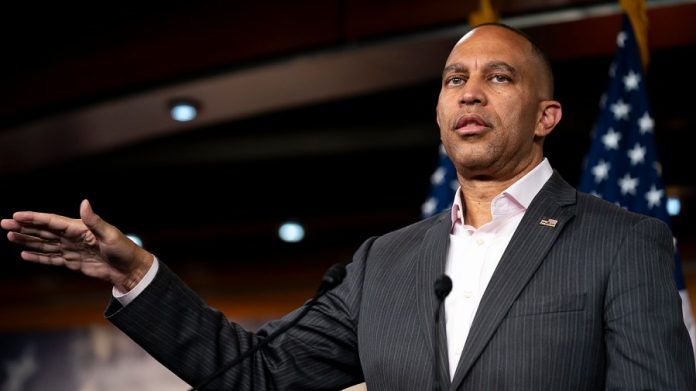
House Minority Leader Hakeem Jeffries (D-N.Y.) on Tuesday warned GOP leaders that House Democrats will oppose any government spending bill negotiated by only Republicans. 

Behind Jeffries, House Democrats had voted almost unanimously in March against the Republicans’ 2025 spending extension, which had been crafted without input from Democratic appropriators. As Congress inches closer to a Sept. 30 deadline for 2026 spending, Jeffries said his caucus is ready to hold the line again if they’re cut out of the talks. 

“The ball is in the court of the Trump administration and Republicans, because if they continue to proceed down the lane of trying to jam a partisan bill down the throats of the American people without working with Democrats in the House or the Senate, our position will be the same as it was in March,” he told reporters in the Capitol on the first day. 

“We will not support a partisan spending bill put forward by Republicans that hurts everyday Americans.” 

Jeffries said he spoke with Speaker Mike Johnson (R-La.) last week on the spending issue, which he characterized as “an opening conversation … about the importance of trying to find common ground where possible.”

“But in that conversation,” he quickly added, “I also made clear we’re not going to support partisan funding legislation. Period. Full stop.”

In March, all but one House Democrat had opposed the Republicans’ spending bill. The legislation still became law, however, not only because Johnson was able to muscle it through the lower chamber, where Republicans have the majority, but also because Senate Minority Leader Charles Schumer (D-N.Y.) and a group of moderate Democrats supported the package when it reached the upper chamber. 

Schumer’s support infuriated House Democrats of all stripes, who had pressed the Senate leader to follow their lead and use a filibuster to sink the GOP bill. The episode has raised questions about how Schumer will approach this month’s debate in the face of the threat of a government shutdown if Congress fails to get a bill to President Trump’s desk by Oct. 1. 

Schumer on Tuesday released a letter that seemed to echo Jeffries’s warning that Democrats would oppose a partisan Republican bill. 

“The only way to avoid a shutdown is to work in a bipartisan way, with a bill that can get both Republican and Democratic votes in the Senate,” Schumer wrote. “However, as we near the funding deadline, Republicans are once again threatening to go-at-it-alone – heading our country towards a shutdown.”

Jeffries said House and Senate Democrats “are working closely together,” and that he speaks with Schumer “regularly.” 

He stopped short of saying that House and Senate Democrats are united in a strategy of opposing a partisan GOP bill.

Technical Assessment: Bullish in the Intermediate-Term

0


Technical Assessment: Bullish in the Intermediate-Term

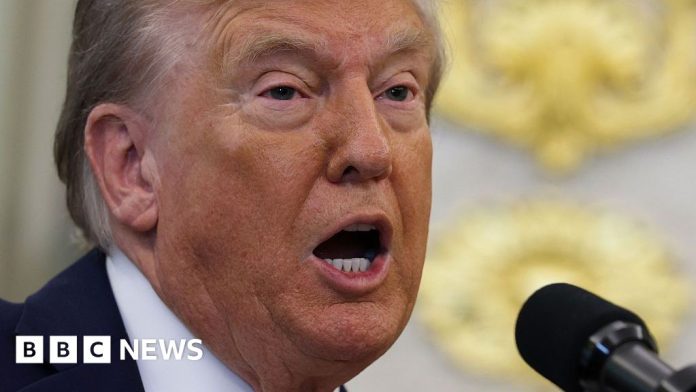
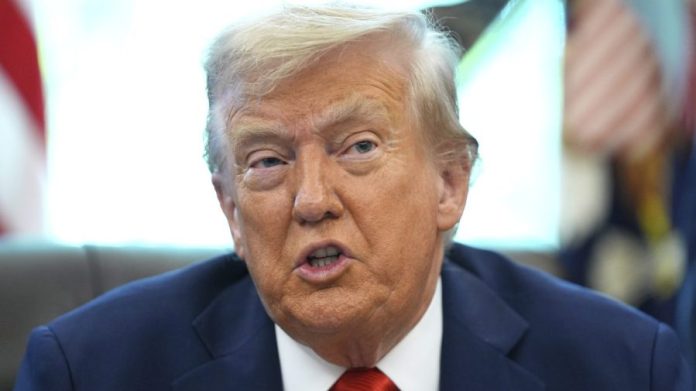
Watch: Trump addresses online health rumours in Oval Office

0


In response to a reporter’s question, the president said he was ‘very active’ over the Labor Day weekend.

Massie files petition to force vote on Epstein disclosures

0


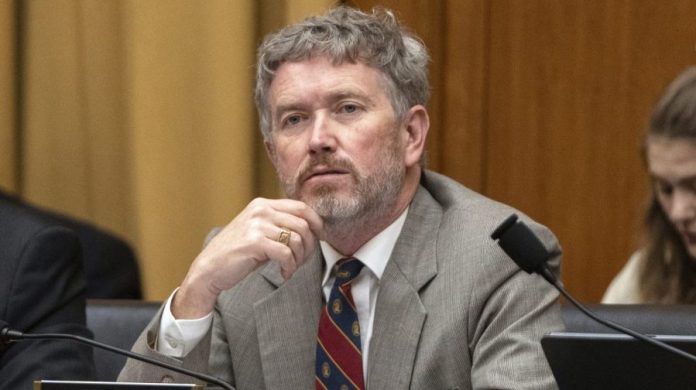
Rep. Thomas Massie (R-Ky.) on Tuesday formally filed a long-promised discharge petition to force action on his bill with Rep. Ro Khanna (D-Calif.) to require the Trump administration to publicly disclose files and information related to the late sex offender Jeffrey Epstein.

The petition, if it reaches 218 signatures, would circumvent House GOP leadership to force action on the resolution.

It would take a handful of Republicans signing on to the petition to reach that threshold — and Massie told reporters he is confident it will get there, despite what he said is a pressure campaign from GOP leadership and the White House telling Republicans to not sign on. 

The underlying resolution, introduced in July following furor over the Justice Department memo asserting there would be no further disclosures in the Epstein case, has been cosponsored by 11 other Republicans.

But since that original outrage that roiled the lower chamber, the House Oversight Committee has opened a probe into the matter and House GOP leaders on Tuesday scheduled a competing vote this week for another Epstein resolution — directing the House Oversight and Government Reform Committee to continue its investigation into Epstein.

Speaker Mike Johnson (R-La.) said that the House is seeking “maximum transparency” into the issue and brushed off Massie’s effort, making the remarks while on his way to meet with a group of Epstein’s accusers in a bipartisan meeting.

“I would describe virtually everything Thomas Massie says as related to this issue as meaningless,” Johnson told reporters on Tuesday.

The Oversight panel kicked off an investigation into Epstein after a bipartisan uproar that followed a July memo from the Department of Justice and FBI saying they would not release any more information about the Epstein matter. The committee’s probe was prompted in part by a successful Democratic-led motion to subpoena the DOJ for the “Epstein Files.” The department handed over thousands of pages of documents in response to that request in August, but Democrats on the panel said the material was mostly already public.

Massie called the competing measure a “placebo” resolution.

“Using that Oversight investigation as a placebo for the full release of these files, you run into the same situation that [Attorney General] Pam Bondi did when she gave everybody a binder. They go home, they read the binder, and they’re like, we already had all this. This is all still already on the internet. And then they get more upset because somebody insulted their intelligence by giving them things they already knew,” Massie said. 

“I think that’s the danger that the Speaker and the Oversight Committee are running right now, is that when people find out it’s a nothingburger, they’re going to be even more mad,” Massie said. 

Massie said that House Rules committee Chair Jim McGovern (D-Mass.) was the first member to sign his petition after he filed.

Weekly Stock List

0


Weekly Stock List

US Open 2025 results: Jessica Pegula beats Barbora Krejcikova to reach semi-finals

0


Pegula arrived in New York in poor form, winning just two matches in her previous four tournaments and losing in the first week of a major four times in six appearances.

While she brushed away the cobwebs with routine wins over Mayar Sharif, Anna Blinkova, Victoria Azarenka and Ann Li, the quarter-finals presented a different challenge.

Pegula has previously struggled at this stage – last year’s run to the US Open final was her first success in the last eight of a Grand Slam singles draw after six defeats.

But Pegula was unruffled by her 1-6 record, capitalising on a slow start from Krejcikova to race into a 3-0 lead, including breaking to love in the second game.

She dominated the baseline exchanges, hitting deep groundstrokes to trap her opponent at the back of the court and regularly attacked the net to keep her opponent off-balance.

Although Krejcikova pulled it back to 4-3, she was left to rue a poor serving performance, with a double fault at 40-30 opening the door for Pegula to break again in the eighth game and then close out the set.

Krejcikova’s serving struggles – winning just 28% of points on her second serve in the opener – continued and a pair of double faults at the start of the second set gifted Pegula an early break.

Pegula was not without her own service wobbles, throwing away a double break lead in the sixth game as Krejcikova sniffed another unlikely comeback.

But she maintained her composure and, a seventh double fault of the afternoon from Krejcikova brought up match point – which Pegula seized at the first attempt.

“I think I’ve been playing some really good tennis. I’ve been playing really solid and having good starts,” Pegula said.

“She had a couple of really good returns when I was serving at 4-1 and we all saw what she did against Taylor, so I’m happy that we’re done.”

Please, don't abandon the World Trade Organization

0


It is not every day that a former chief trade negotiator for the U.S. and the titular leader of the U.S. foreign policy establishment urges the abandonment of a rule-based international trading system that has contributed enormously to unprecedented commercial peace and prosperity for America and the rest of the world.

I refer, of course, to the World Trade Organization. Michael Froman, former U.S. trade representative and current president of the Council on Foreign Relations, has called for U.S. withdrawal in Foreign Affairs. Cordell Hull must be turning over in his grave.

According to Froman, “The global trading system as we have known it is dead … Even if pieces of the old order manage to survive, there is no going back. … Clinging to the old system and pining for its restoration would be deluded and futile.”

Pardon the pining, but should we really do this? The WTO is a global public good of great value, laboriously assembled on a bipartisan basis (at least in America) dating back to when Secretary of State Hull and President Franklin Roosevelt began lowering tariffs during the New Deal in the 1930s.

And what of the desires of 165 of the 166 member countries of the WTO? All of them want fervently to preserve and strengthen, not abandon, the rule-based multilateral trading system overseen by the embattled WTO, not abandon it. The one exception is the U.S. Under the capricious leadership of President Trump, the U.S. has ignored WTO rules and WTO treaty commitments, crippled the WTO’s independent and impartial dispute settlement system, and substituted the rule of power for the rule of law in world trade.

Are all these other countries “deluded?” How stereotypically American to think that we can simply ignore the wishes of other countries in crafting the future of the world.

Froman is certainly right that the WTO has been struggling since even before Trump’s accession. He did a good job as former President Barack Obama’s chief trade negotiator, but, despite his best efforts, the members of the WTO failed to further trade liberalization with a new global deal during the so-called Doha Development Round of negotiations.

He is also right that lowering barriers to trade is a “tough sell politically,” especially nowadays amid the acrimony of so much global economic angst.

But, to echo John F. Kennedy, we do these things because they are hard, not because they are easy. And we do them knowing that the economic gains from trade are maximized worldwide if we lower tariffs and other barriers to trade worldwide and not just here and there. Anything less is not only second-best economically but also raises the threat that trade cooperation may descend into trade confrontation with unforeseen geopolitical consequences. 

Consider what Froman proposes as an alternative to a multilateral system: a world full of supposedly “open plurilateral agreements” among coalitions of willing countries outside the legal framework of the WTO. It would build on the proliferation of bilateral, regional, and other non-WTO economic arrangements that have proliferated as multilateral trade deals have become harder to achieve.

The danger of such an approach geopolitically is that these “open plurilateral agreements” could very well turn into competing protectionist trade blocs. To his credit, Froman wants the new plurilateral deals he envisages to be “open.” But how many of the regional, sectoral and other plurilateral arrangements that have been concluded during the past several decades are automatically “open” to other countries? Moreover, when disputes occurred, how would they be enforced? In contrast to WTO dispute settlement (before the American assault on it), the dispute settlement systems of most other international trade arrangements have not always been reliably or routinely effective. 

Commercial wars always present the possibility of turning into shooting wars. That is one of the main reasons we created first the General Agreement on Tariffs and Trade and its institutional successor, the WTO, in the first place. As Froman notes, the Peterson Institute for International Economics has concluded that U.S. GDP is $2.6 trillion higher because of increased trade since the end of World War II — averaging gains of $19,500 per U.S. household.

Much of this can be credited to U.S. membership in the WTO. The Bertelsmann Institute has concluded that every member of the WTO has benefited economically from being in the organization — the U.S. most of all. But the most notable accomplishment of the multilateral trading system may just be that, so far, it has helped prevent World War III.

Froman does not mention is the obvious solution for those wanting to reverse the current course and return to freeing trade: open plurilateral agreements among various willing and ambitious subsets of WTO members inside the WTO. Over time, those agreements would expand to become fully multilateral. This is permitted under existing WTO rules, which require that plurilateral agreements be open to all WTO members willing to comply with their rules and to settle disputes under WTO procedures. 

Thus, it would avoid the geopolitical problems posed by Froman’s proposed non-WTO solution. This approach has been used before, with information technology, financial services, and more. Indeed, it is how we created much of the WTO back in 1995 — by transforming what had been agreements among some countries into agreements among all the countries in the trading system, binding and fully enforceable in WTO dispute settlement.

Froman’s suggestion that Americans give up on the WTO is a dispiriting sign of our pessimistic time. No doubt he is genuinely seeking the right solution. Perhaps he will think again.

James Bacchus is a former member of Congress and a founding member and twice chairman of the Appellate Body of the World Trade Organization. He is professor of global affairs at the University of Central Florida and adjunct scholar at the Cato Institute. His latest book is “Democracy for a Sustainable World: The Path from the Pnyx.”

Analyst Report: Caterpillar Inc.

0


Analyst Report: Caterpillar Inc.

Trump’s use of National Guard in Los Angeles illegal, judge rules

0


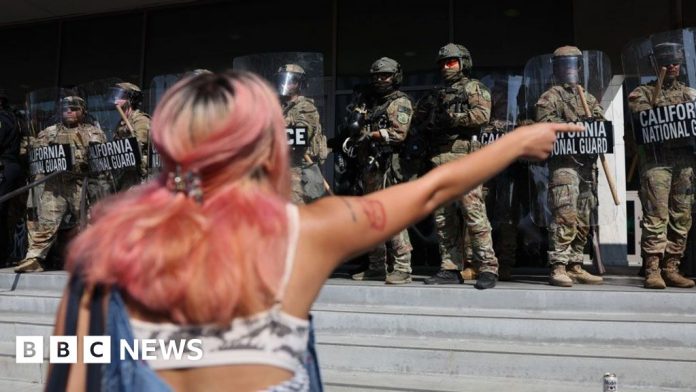
A federal judge in California has ruled that the way President Donald Trump deployed deployment of the National Guard to Los Angeles this summer was illegal.

The ruling comes as Trump seeks to use National Guard troops in order to crack down on crime in other US cities and support immigration enforcement.

US District Judge Charles Breyer said Trump violated the Posse Comitatus Act, which limits the power of the federal government to use military force for domestic matters.

White House spokeswoman Anna Kelly said that “a rogue judge is trying to usurp the authority of the Commander-in-Chief to protect American cities from violence and destruction.”

The ruling is on hold 12 September.

The Trump administration will likely appeal the ruling.

“The President is committed to protecting law-abiding citizens, and this will not be the final say on the issue,” Ms Kelly said.

Governor Gavin Newsom said in a statement that “the court sided with democracy and the Constitution.”

Trump deployed National Guard troops to Los Angeles in June in response to protests against immigration raids.

The White House argued it was necessary to quell violence, but California officials argued that their law enforcement could handle the situation without military intervention.

The president has also deployed hundreds of National Guard troops in Washington DC and is weighing dispatching troops to Chicago as soon as this week.

Judge Breyer’s order only applies in California, but could signal legal challenges ahead for Trump’s plans to use the Guard to enforce his policies.

After Trump deployed troops to Los Angeles, Governor Gavin Newsom sued the administration for alleged violations of the Posse Comitatus Act.

The law, first passed in 1878, prohibits using the US military in order to execute domestic laws, or assist with doing so. The law has limited exceptions, such as authorisation by Congress.

Judge Breyer found that the ways the Trump administration used the National Guard in Los Angeles violated these restrictions.

He cited work by soldiers such as “setting up protective perimeters, traffic blockades, crowd control, and the like” as prohibited under the law.

“President Trump’s recent executive orders and public statements regarding the National Guard raise serious concerns as to whether he intends to order troops to violate the Posse Comitatus Act elsewhere in California,” Judge Breyer wrote.

He warned that Trump and Defense Secretary Pete Hegseth ran the risk of “creating a national police force with the President as its chief”.

He blocked the National Guard from executing the following laws including “engaging in arrests, apprehensions, searches, seizures, security patrols, traffic control, crowd control, riot control, evidence collection, interrogation, or acting as informants”.

The White House did not respond to a request for comment, and the Defense and Justice Departments declined to comment.

An additional legal challenge from California sought to wrest back control of California’s National Guard contingent, after Newsom alleged Trump had unlawfully circumvented him to deploy the troops.

Judge Breyer, who also handled that case, ruled in Newsom’s favour, but the Ninth Circuit Court of Appeals ruled in favour of Trump in June.

Live updates: Trump to make Defense Department announcement as Congress eyes shutdown deadline

0


President Trump on Tuesday is slated to make an announcement about the Defense Department, reportedly moving to reverse former President Biden’s decision to keep Space Command in Colorado over Alabama. 

The remarks, scheduled for 2 p.m. EDT in the Oval Office, will mark the president’s first public appearance in a week. 

Meanwhile, the House and Senate are back in Washington after a monthlong August recess and are racing against the clock as the government shutdown deadline approaches.

Republican leadership left Capitol Hill earlier this summer on a high note following the passage of President Trump’s landmark tax and spending bill. But now the lower chamber must work to avoid a government shutdown when federal funding runs out on Sept. 30.

Divisions within the GOP about the stopgap measure as well as Democrats’ anger at Trump’s calls to rescind allocated funding threaten to derail negotiations and potentially force a shutdown.

But lawmakers are not just staring down fraught funding negotiations, they also face increased pressure from the president to confirm his Senate nominees — and are even considering a possible rule change to speed up votes amid Democrats’ pushback.

Also, clashes about the release of files related to convicted sex offender Jeffrey Epstein are once again expected to take center stage in the House as both sides of the aisle call for increased transparency about the case.

Earlier Tuesday, a federal judge ruled that Trump illegally deployed the National Guard to Los Angeles this summer amid massive immigration protests. 

For all the latest updates in Washington, follow along below.