18.5 C
New York
Wednesday, May 6, 2026
Home Blog Page 224

Democrats are winning where the party isn’t looking 

0


On Tuesday, Republicans lost their supermajority in the Iowa Senate

Catelin Drey’s victory in Senate District 1 is not just a local upset — it is part of a growing national pattern of Democratic overperformance in state legislative special elections. Donald Trump carried this district by more than 11 points in 2024. Drey’s victory represents a 20-point swing toward the left — making this one of the most consequential state legislative flips of the year.  

In fact, Democrats are overperforming their 2024 results by an average of nearly 16 points in state legislative races, according to The Downballot’s special elections Big Board. That is not a blip — it is the same kind of sustained overperformance that foreshadowed the blue wave in 2018.  

The Iowa result joins a long list. In Pennsylvania’s SD-36, Democrats defied the odds and flipped a seat Trump carried by 15 points. In Oklahoma’s HD-71, Amanda Clinton won by 69 points in a district Kamala Harris carried by only 19 — a 50-point overperformance. Even in heavily Republican-leaning districts in Florida and Alabama, Democrats are running well ahead of expectations and are narrowing margins while forcing Republicans to pour resources into traditionally safe districts.  

Special elections are a demonstration of energy, organization and the ability to mobilize voters in off-cycle conditions. For example, Sister District, a national organization that builds Democratic power in state legislatures, raised nearly $18,000 in small-dollar contributions, made more than 23,000 calls to Iowa voters, and secured 413 vote plans for Drey in just three weeks. She went on to win by 797 votes — proof of what can happen when national resources are directed strategically at the state level.  

For decades, national Democratic strategy has focused overwhelmingly on federal races and a narrow set of so-called “swing states.” That approach has left state-level Democrats in the South and Midwest running on fumes, with skeletal staff and minimal infrastructure.  

That neglect has real consequences. Republicans, who have invested heavily in state legislatures for decades, now hold disproportionate power in statehouses throughout the country. This gives them the ability to redraw congressional maps and further entrench themselves in power. 

After a painful defeat in 2024, Democrats now face a choice: retreat to the familiar trope of short-term presidential battlegrounds, or commit to building a broader, more durable movement that cannot be easily washed away. 

State legislatures are where policy is made, where democracy is shaped, and where the fight for power is unfolding right now. And the data from this year is clear: with organization and investment, Democrats can mobilize voters even in historically red corners.

If the party is serious about its future — and the future of American democracy — it must invest in state legislatures now. 

Sarah Curmi is executive director of the progressive grassroots organization Sister District. Previously she served as vice president of state and local campaigns at EMILY’s List. 

Analyst Report: Dell Technologies Inc

0


Analyst Report: Dell Technologies Inc

Why has Kamala Harris’ Secret Service detail been withdrawn?

0


Bernd Debusmann Jr, at the White House

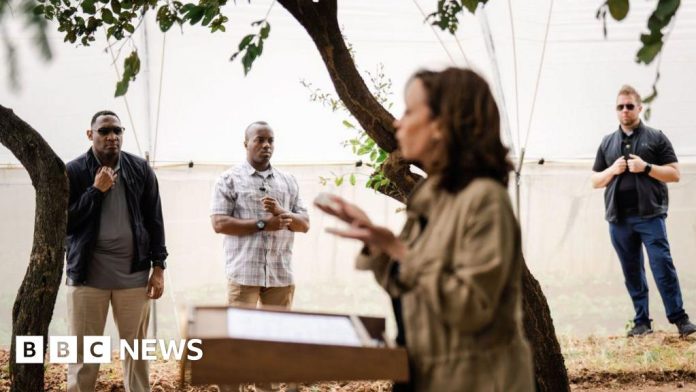
Getty Images Kamala Harris at a podium with three Secret Service agents in the background during a trip to Zambia in 2023. Getty Images

Unlike former presidents, vice-presidents are not guaranteed protection for the rest of their lives.

President Donald Trump has cancelled former VicePresident Kamala Harris’ Secret Service detail, seven months after she left office following her unsuccessful presidential campaign.

By law, the US Secret Service provides former vice-presidents and their families six months of protection after their terms end.

That term, however, can be extended, which former President Joe Biden reportedly did before leaving office.

The move already has caused controversy, with both California Governor Gavin Newsom and Los Angeles Mayor Karen Bass calling it politically motivated.

Here’s what we know.

Why did Biden extend her security?

So far, neither Biden nor Harris have commented on the reasons for extending her security past the mandated six months. CNN reported that Biden extended it for one year with a previously undisclosed directive before leaving office.

From a legal perspective, Biden was within his rights to do so.

According to a law enacted in 2008, the Secret Service can provide protection to former vice-presidents, their spouses and any children under the age of 16 after leaving office.

While the law states that the protection should not extend any more than six months, the secretary of homeland security has the authority to order “temporary protection” in situations where “information or conditions warrant such protection.”

Ronald Kessler, an author with expertise on the Secret Service, told the BBC that “if you set aside political implications, it’s just standard practice.”

Does Harris face enhanced risks?

Sources familiar with the current situation have told CBS, the BBC’s US news partner, that a recent threat assessment did not uncover anything alarming to warrant extending Harris’ security arrangements.

But some in Harris’ team reportedly worried that as the first woman and person of colour to serve as vice-president and as a candidate in a contentious, emotionally charged election, she faced additional threats.

A number of threats against Harris were made public during her time in office and as a presidential candidate in 2024.

Several men were arrested and charged with making online threats against her in 2024, for example, and in 2021, a Florida woman pleaded guilty to making threats against Harris and admitted she sent videos to her imprisoned husband in which she displayed firearms and said that a “hit” could be carried out within 50 days.

In March, after Harris left office, a Florida man also was arrested after allegedly threatening to kill her with a sniper rifle.

Mr Kessler, however, said that compared to other politicians Harris “hasn’t stirred up that much as far as I can tell.”

“I think it’s a sound judgement on the part of the Secret Service,” he added.

The removal of Harris’ detail comes just weeks before she is scheduled to begin a multi-city tour to promote her book, 107 Days, focused on her short-lived, unsuccessful presidential bid.

According to Mr Kessler, such an operation would further stretch an already overburdened and undermanned Secret Service. In September, the agency also is responsible for international dignitaries and VIPs at the United Nations General Assembly in New York.

“That would require maybe a dozen Secret Service vehicles all over the country to follow on her big tour,” he added. “That’s a big drain on the service.”

What elements of security are being taken away?

Secret Service protection extends far beyond the agents that drive a protectee, and protect them and their immediate family.

Additionally, the Secret Service is tasked with securing homes, such as Harris’ Los Angeles residence, including installation of security systems and alarms. Agents pre-emptively identify and monitor potential threats, including those sent electronically or via social media.

It is unclear how much those protections cost, and the Secret Service has not published that figure.

Private security for well-known celebrities, VIPs and business leaders can easily reach millions of dollars per year, depending on the level of threats and protection required.

Meta, for example, reportedly paid over $23m (£17m) for Mark Zuckerberg’s personal security in 2023, including $9.4m in direct security costs.

Is this political retribution from Trump?

After the removal of Harris’ detail was announced, some of her allies and Trump’s political detractors immediately characterised the move as politically motivated by the president.

Trump already removed Secret Service protection for former allies and foes alike, including Hunter and Ashley Biden, children of the former president; and Anthony Fauci, former director of the National Institute of Allergy and Infectious Diseases.

Several former Trump officials and allies also had their protections revoked, including ex-Secretary of State Mike Pompeo and John Bolton, a former national security adviser who had become a vocal critic.

“The safety of our public officials should never be subject to erratic, vindictive political impulses,” Bob Salladay, spokesman for California Governor Gavin Newsom, told CNN.

Mr Kessler said that the “severely undermanned” Secret Service likely is refocusing its efforts on more immediate threats, such as those faced by Trump and members of his administration.

“President Trump may have been gleeful to do this,” he said. “But there are real sound practical reasons”.

Only one other former vice-president, Dick Cheney, is believed to have Secret Service protections extended after leaving office, by then-President Barack Obama.

Are the rules different for former presidents?

Unlike past vice-presidents, those who served as president have security for life, unless they choose not to.

In 1994 – to save costs – Congress moved to limit protection for ex-presidents and their spouses to 10 years after they left office.

But in 2013, President Obama signed a law again mandating lifetime protection. Today, this applies to George W Bush, Bill Clinton, Obama and Biden.

Only one president, Richard Nixon, is known to have chosen to forego the security offered, in 1985.

At the time, members of his staff told the New York Times he did so to save the agency money.

Chip Roy’s departure highlights a growing trend for Congress

0


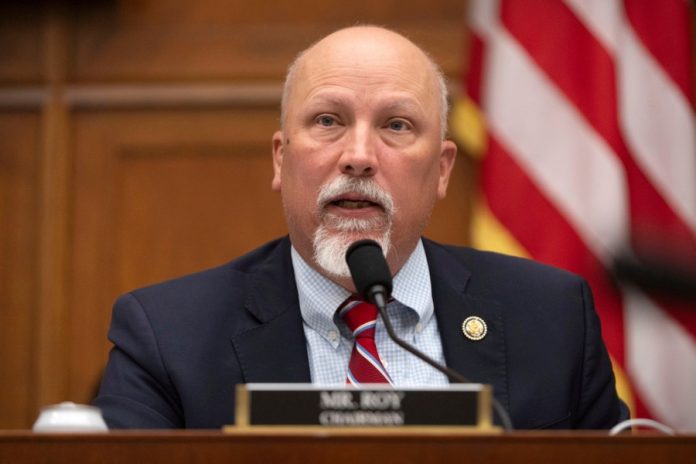
Rep. Chip Roy’s (R-Texas) decision to leave a safe congressional seat and join a crowded Republican primary to succeed Texas Attorney General Ken Paxton (R) is part of a trend. Attorney general positions — once sleepy and apolitical — are quickly becoming a pipeline to increased influence and higher office for aspiring members of Congress.

Tea Party-era Republicans figured this formula out more quickly, but Democrats have picked up on it, too. For anyone interested in what their state and country’s political future could look like, pay close attention to under-the-radar attorney general races just as much as more expensive and high-profile campaigns.

Attorney general roles have always been launching pads for higher office. Just ask 12 of our nation’s governors, eight sitting U.S. senators, former President Bill Clinton, former Vice President Kamala Harris, and U.S. Attorney General Pam Bondi about how they all leveraged their time as state attorneys general to gain higher office.

The tried-and-true joke that AG stands for “aspiring governor” has long been relevant. The increasingly noticeable trend now is that the role’s appeal is strong enough to convince someone to leave Congress to run for state attorney general.

In January 2013, a little-known congressman from Louisiana, Jeff Landry, finished his one term in Congress with no major legislative accomplishments. Landry had ridden the tea party wave into the U.S. House of Representatives and was best known for criticizing President Barack Obama for, well, almost everything. I’d argue Landry’s most significant yet underappreciated achievement related to his congressional service was launching the congressman-to-attorney general-to-governor pipeline.

Just three years after his brief congressional tenure, Landry was elected to his first of two terms as Louisiana attorney general. He quickly became one of the most conservative attorneys general in the country, achieved Republican policy goals that no freshman congressman could have accomplished, and successfully maneuvered himself into an easy 2023 gubernatorial victory after eight years of increasing his statewide profile as attorney general.

Where now-Gov. Landry led, others have followed. Three of Landry’s fellow Republican freshmen colleagues from the 112th Congress, Idaho Attorney General Raúl Labrador, Indiana Attorney General Todd Rokita and Arkansas Attorney General Tim Griffin, have begun down the same path. All three aspire to governorships, having each unsuccessfully run previously for that higher office before running for attorney general.

As Landry has shown, proving oneself first as attorney general can be a powerful stepping stone. Each is considered more conservative and combative than their predecessors in roles that traditionally involve bipartisan cooperation on multistate litigation and mundane state regulatory issues. Rokita’s and Landry’s affiliated political action committees — Fund for American Exceptionalism and Cajun PAC II, respectively — even supported Labrador’s successful 2022 campaign to oust a more moderate incumbent in the primary.

Democrats have also slowly begun to recognize this pipeline, but they are a few years behind their Republican counterparts. The MinnesotaMaryland and North Carolina attorneys general all served in Congress before seeking their current positions. North Carolina Attorney General Jeff Jackson’s race had a possible first as he ran against a fellow congressman to win his current post.

President Biden’s Health and Human Services Secretary Xavier Becerra also served more than two decades in Congress, including two terms as chairman of the House Democratic Caucus, before leaving to succeed Kamala Harris as California attorney general — a role he was able to leverage into a Cabinet post.

Attorney general races matter. The victors serve as their states’ chief legal officer, represent the state before the U.S. Supreme Court, and can be a formidable force against bad private actors, as the tobacco and opioid industries can attest. Politically, however, they have mostly run under the radar.

Voters from both parties need to focus more on who is running for their state attorney general. The role itself is powerful, but these future potential governors, senators and presidents are also communicating their priorities and how they would govern long before reaching higher offices.

Roy is not forging a new path — he is simply following a trend. Nor is he exiting the political arena by leaving Washington. He just found another potential path upward to increase his impact and influence.   

Ryan Greenstein served in several roles within the National Association of Attorneys General from 2017-2022, most recently as legislative director supporting the association’s advocacy efforts before Congress and the previous two administrations. 

Analyst Report: Snowflake Inc

0


Analyst Report: Snowflake Inc

Madeleine McCann suspect to be released from German jail in less than three weeks

0


Kathryn ArmstrongBBC News

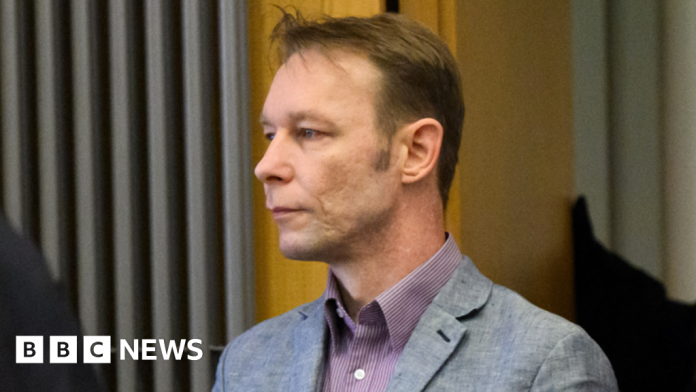
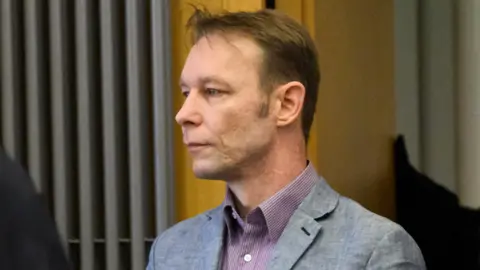
Reuters Christian B, a suspect in the disappearance of British toddler Madeleine McCann in Portugal, stands trial in Germany on unrelated sexual assault charges in Braunschweig, Germany, February 16, 2024Reuters

Christian Brückner is still dangerous, the lead prosecutor in the case believes

German investigators’ prime suspect in the disappearance of Madeleine McCann will be released from prison in a matter of weeks, local authorities have confirmed.

Christian Brückner, who is serving a sentence in northern Germany for a rape conviction, will be released by 17 September at the latest, the lead prosecutor investigating the toddler’s disappearance told the BBC.

Hans Christian Wolters also said that he believed the 48-year-old German national was dangerous but that the current legal situation meant he must be released from prison without delay.

Brückner has never been charged with any crime in relation to Madeleine’s disappearance and denies any involvement.

The then-three-year-old vanished from an apartment complex in Praia da Luz in the Algarve on 3 May 2007, sparking a Europe-wide investigation that has become one of the highest-profile missing persons cases.

Madeleine’s parents had been dining with friends at a restaurant a short walk away while their daughter and her younger twin siblings were asleep in the ground-floor apartment.

They had checked in on the children periodically until her mother, Kate, discovered she was missing at around 22:00 local time.

The case remains unsolved, but German prosecutors have pointed to evidence suggesting Brückner may have been in the area when Madeleine disappeared.

Mr Wolters said that while he and other prosecutors did not believe they had enough evidence to formally charge Brückner in relation to the McCann case, their efforts would continue.

Brückner “is not just our number one suspect, he’s the only suspect”, he said. “There is no-one else.”

“We have evidence which speaks against [Brückner], which indicates that he is responsible for the disappearance and the death of Madeleine McCann,” he said.

“We haven’t found anything in the last five years that exonerates [him]. We found evidence that strengthens our case. But in our view it’s not strong enough to make a guilty verdict likely, and that’s why so far we couldn’t charge him or apply for an arrest warrant.”

Due to differences in legal systems, German authorities suspect Brückner of murder in relation to Madeleine McCann, while British police continue to treat her disappearance as a missing persons case.

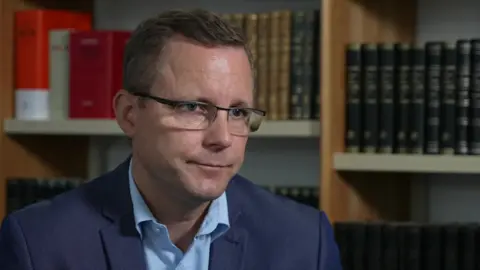
Hans Christian Wolters

Prosecutor Hans Christian Wolters says efforts are ongoing to build up the case against Brückner

The prosecutor – who has led German efforts to solve Madeleine’s disappearance since they announced that Brückner was their prime suspect in 2020 – added that an expert had recently assessed Brückner as a danger to society.

“You have to expect [Brückner] to commit further crimes.”

As a result, prosecutors were applying for restrictions to be placed on him when he is released – including fitting him with an ankle tag, Mr Wolters said. These conditions will be decided by a court hearing that will not be open to the public.

Madeleine’s disappearance was initially investigated by Portuguese authorities, before German prosecutors took the lead. Portuguese authorities have also named Brückner as a formal suspect, or “arguido”.

Brückner, who spent many years of his life in the Algarve, was a drifter, a petty criminal and a convicted sex offender. He has several previous convictions, including for sexually abusing children in 1994 and 2016.

He is known to have spent time in the same part of Portugal between 2000 and 2017. German prosecutors have linked his mobile phone data and a car sale to their case against him.

Brückner is currently imprisoned for the rape of a 72-year-old American tourist in Portugal in 2005.

Handout Madeleine McCannHandout

Madeleine McCann disappeared in 2007, then aged three

Portuguese and German police conducted a fresh search in June of land between where the McCanns had been staying and addresses linked to Brückner, but this yielded no breakthroughs.

However, Mr Wolters said items that were seized during the search were still being analysed.

He said he understood the ongoing investigation by prosecutors in the northern German city of Braunschweig could have lost credibility after five years of inquiries with seemingly no tangible results.

“I can only ask for your understanding that we would certainly not have positioned ourselves so clearly five years ago if we only had hot air.”

The German prosecutor said he had not ruled out further searches.

Last year, Brückner was cleared by a German court of rape and sexual abuse in an unrelated trial.

20 years after Katrina, disaster communication is in crisis

0


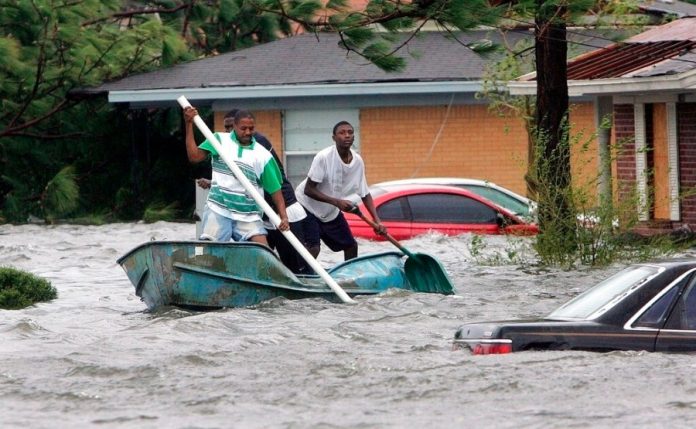
Twenty years after Hurricane Katrina, the U.S. enters another dangerous season with a fractured national emergency response system. Katrina showed what happens when truth and trusted communication are missing. Those lessons are now in danger of being lost.

The Gulf of Mexico is nearly two degrees warmer than normal. The Atlantic is very active. Floods are striking communities across the country, and wildfires are burning in the West. The National Oceanic and Atmospheric Administration forecasts an above-normal number of storms as we move into the most dangerous stretch of hurricane season.

And when we should be at our best, federal systems for delivering life-saving information are at their weakest in years.

When disaster strikes, one of the most critical lifelines is not food or water. It is information. People need to know what is happening, why it matters, who has answers, and what comes next. They need honest updates, a clear plan and credible voices — not spin, not confusion, but just the truth, especially when it is difficult.

Help only works when people trust it. After Winter Storm Uri in 2021, multiple reviews found serious communication gaps in Texas. When local messages were delayed, vague, or not translated into locally spoken languages, trust collapsed, no matter how much aid arrived.

I know this because I led the team responsible for getting it right. From 2021 to early 2025, I served as FEMA’s associate administrator for external affairs and directed the National Joint Information Center,through some of the country’s most difficult disasters.

We modernized language translations and cultural competence, expanded engagement in rural communities, built partnerships to reach older adults, people with disabilities, and those with limited resources, and created feedback loops to fix breaks in information flow.

Nationally, the Joint Information Center coordinates communication across the federal government and supports states during major disasters and national security threats. Without it, messages are delayed, inconsistent or missed. A well-run center cuts through politics, focuses on the public, and delivers facts quickly. It may look chaotic from the outside, but every second counts and everyone knows their role.

Local communication is the backbone of disaster response, and local information centers are vital in a crisis. When states, territories or Tribal Nations are stretched thin, they rely on FEMA’s capacity and expertise to deliver urgent, accurate information at scale.

In fast-moving emergencies, rumors spread quickly, expectations rise, and national headlines take over. Reaching every community is urgent, including those facing language barriers, rural isolation or other access challenges.

After Katrina, FEMA expanded its disaster response framework and strengthened external affairs to close deadly communication gaps. Congress reinforced these reforms through the Post-Katrina Emergency Management Reform Act, which required disaster communications to be translated so all communities could access life-saving information.

Last year, with congressional support and experienced leadership, FEMA was far stronger than it had been in 2005. When skilled communicators are empowered, resourced and given authority to act, the system works.

That progress is now eroding. An English-only executive order creates uncertainty. FEMA, the National Weather Service and other safety agencies have had authorities stripped and capabilities weakened. Experienced external affairs professionals have been forced out, taking decades of expertise with them. FEMA staff and funds are being shifted away to support Immigration and Customs Enforcement.

New Department of Homeland Security bureaucracy is slowing resilience funding and delaying approved recovery dollars for North Carolina. The same red tape slowed the Texas flood response.

During the Texas floods, FEMA’s communications amounted to a few press releases and social media posts — a fraction of the standard response. Homeland Security blocked or delayed critical, time-sensitive information, according to my sources inside the agency. The Joint Information Center was never activated.

This is not the first time FEMA has been weakened. After being absorbed into the newly created department in 2003, its authorities and capabilities were stripped, leaving it unable to meet Katrina’s devastation two years later. Then as now, inexperienced leaders ignored seasoned communicators who knew how to help.

Marty Bahamonde, my former colleague and a longtime FEMA official who resigned months ago, testified before Congress in 2005 about urgent warnings ignored by political leadership. Featured in a new National Geographic documentary on Katrina’s anniversary, his emails remain a warning of what happens when experienced communicators are sidelined.

We are not just repeating history. We are setting ourselves up for something much worse unless we act quickly to fix it.

First, FEMA must activate the JIC during future catastrophic disasters and shield it from Homeland Security interference. The experienced career leaders who remain at FEMA must be able to do their jobs. FEMA should have full authority over Emergency Support Function-15 and the National JIC, not the Department of Homeland Security.

Second, federal systems may not rebound quickly this season. Every sector — federal, state, local, nonprofit and private — must plan accordingly and strengthen its crisis communication capacity.

That means putting trained communicators at the decision-making table before, during and after disaster. If your organization serves the public in a crisis in any way, your communication team must have access, resources and backing to be successful.

Finally, as Congress considers how to strengthen FEMA, it must treat external affairs as a core disaster capability, equal in urgency to operations and logistics. It should fund and protect this part of FEMA’s mission to ensure timely, accurate information that helps solve problems and inform the public.

Without strong, sustained support from Congress, FEMA’s ability to communicate in the next disaster or national security crisis will remain dangerously vulnerable, and that hurts the American people.

In our darkest hours, protecting people depends on delivering accurate information they can rely on and act upon. If we act now, we can build a system that reaches every community when it matters most.

Justin Angel Knighten is a national security expert in crisis and risk communication and community engagement. He served as FEMA’s associate administrator for external affairs from 2021 to 2025 and now advises governments, philanthropy, media organizations and companies.

Access to this page has been denied.

0


Access to this page has been denied because we believe you are using automation tools to browse the
website.

This may happen as a result of the following:

  • Javascript is disabled or blocked by an extension (ad blockers for example)
  • Your browser does not support cookies

Please make sure that Javascript and cookies are enabled on your browser and that you are not blocking
them from loading.

Reference ID: #c15fc7dc-84ff-11f0-8fb3-918ab5c0af6d

US Open 2025: Emma Raducanu outclassed by Elena Rybakina in New York

0


This year, Raducanu returned to New York – the scene of her 2021 title success as a teenage qualifier – riding a wave of optimism.

Looking more carefree and content, she has played some of her best tennis since that extraordinary triumph and is close to climbing back into the world’s top 30.

But this defeat provided another reality check.

Leading into the match, Raducanu warned of 2022 Wimbledon champion Rybakina’s ability to take the racquet of an opponent’s hand with her enormous serve and penetrating returns.

That is exactly what happened in a one-sided first set lasting only 27 minutes.

Rybakina’s groundstrokes were clean and crisp off both wings, with a stream of winners painting the baseline and leaving Raducanu looking rather helpless.

A total of 23 winners from 26-year-old Rybakina underlined her dominance from the back of the court.

Raducanu’s serve had been the bedrock of her game in two clinical opening wins against lowly ranked qualifiers Japan’s Ena Shibahara and Indonesia’s Janice Tjen.

But she did not land anywhere near as many first serves on Rybakina, which instantly put her under pressure against an opponent who reperesented a huge step up in class.

Kazakhstan’s Rybakina, whose power from the baseline is among the very best when she finds her groove, continued to redline in the second set.

It was felt Raducanu stood a chance if she managed to get Rybakina moving around the court, but she was not given the time to do so.

NYC congestion pricing’s winners and losers

0


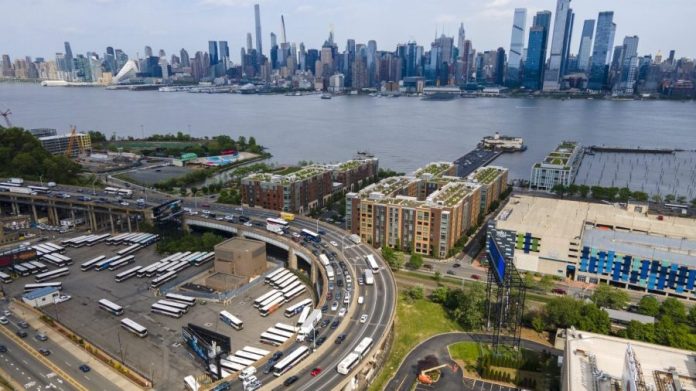
The concept of congestion pricing first appeared in the economics literature more than 60 years ago in an article written by William Vickrey, a Columbia University economics professor and future Nobel laureate. Yet traction for the concept has proven elusive.

In January, New York City became the first city in the U.S. to implement it.

The basic idea is straightforward. My decision to commute on the roadways during peak periods delays other commuters because it reduces average speeds. New Yorkers lose an average of 117 hours annually sitting in traffic.

Suppose that I am one of 1 million commuters. If my decision to commute increases the commuting time for the other commuters by 1/1000 of a second, and the value of their time is $32 per hour, then I am responsible for imposing a marginal congestion cost on all the other commuters of $8.89. This example demonstrates the logic underlying the $9 congestion toll that most passenger vehicles pay when commuting into New York City during peak periods.

Congestion pricing is politically controversial, drawing criticism from politicians from both parties. But it is not economically controversial. Congestion is a classic example of a “negative externality.” When commuters do not pay for the congestion costs that they impose on other commuters, the amount of commuting will be excessive, because the resource costs that society allocates to commuting exceed the value that society places on it.

If congestion pricing succeeds in reducing traffic volumes, then the benefits include fewer injuries and fatalities for vehicle occupants, cyclists and pedestrians, as well as reduced levels of harmful automobile emissions. Some commuters will even realize a reduction in the effective cost of commuting. For these commuters, the savings in the opportunity cost of time that results from travel at higher average speeds exceeds the $9 congestion price.

Nonetheless, congestion pricing is to a certain degree self-defeating. The same price increase that reduces congestion also gives rise to expectations of shorter commuting times, a de facto improvement in quality that in turn increases demand. These countervailing effects may explain the muted way that demand has changed in response to congestion pricing. The 6.3 percent reduction in commuting volumes that New York City experienced after introducing congestion pricing was only about half of what the Metropolitan Transit Authority expected, and a recent study found that average speeds increased by only 8 percent.

The demand for vehicular commuting is highly “inelastic” — not very sensitive to price — so a 10 percent price increase reduces demand by much less than 10 percent. This has far-reaching policy implications. It means that congestion pricing is more effective in raising tax revenues than it is in reducing peak-period traffic volumes.

This explains, in part, the Trump administration’s strong objections. Transportation Secretary Sean Duffy said he planned to rescind federal approval for the program, which he called “a slap in the face to working-class Americans and small business owners.” He further opined that “every American should be able to access New York City regardless of their economic means. It shouldn’t be reserved for an elite few.”

Despite the efficiency gains, there is a social-equity dimension of congestion pricing that some find concerning. The more inelastic the demand for vehicular commuting, the more the benefits of congestion pricing, measured in terms of the reduced effective cost of commuting, are skewed toward higher income classes.

The average commuting time into New York City prior to congestion pricing was 43 minutes, the longest in the nation. If congestion pricing reduces the commuting time by half, then the effective cost of commuting decreases for any commuter with a value of time that exceeds $25.12 per hour. However, if the commuting time decreases by only 10 percent, the effective price of commuting is reduced only for those commuters with a value of time that exceeds $125.58 per hour.

Congestion pricing has taken heavy fire from both Republicans and Democrats. The Trump administration believes the policy is elitist. Rep. Josh Gottheimer (D-N.J.) has railed against the massive tax revenues that it sends to the much-maligned Metropolitan Transit Authority. New Jersey Gov. Phil Murphy (D) argues that his constituents pay the toll when commuting into New York City, but his state receives none of the corresponding tax revenues.

New York’s congestion pricing plan remains in effect for now, but it faces strong political headwinds. One cannot be too hopeful about the longevity of a policy that economists praise and politicians deride. This may explain why it took more than a half-century before congestion pricing found its first use in America.

Dennis L. Weisman, Ph.D. is a professor emeritus of economics at Kansas State University. The author is grateful to Glen Robinson for illuminating discussions.