17.3 C
New York
Wednesday, May 6, 2026
Home Blog Page 226

Trump ends Secret Service protection for Harris

0


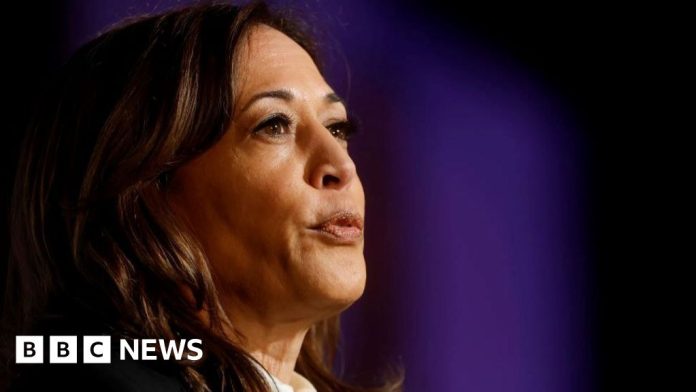
President Donald Trump has cancelled Secret Service protection which had been arranged for Kamala Harris by Joe Biden before he left office according to one of the vice-president’s advisers.

As a former vice-president, Ms Harris was entitled under law to receive six months of this extra security after leaving office in January.

Her protection had been extended for another year by executive directive signed by her former boss but this was revoked by Trump in a memo, seen by the BBC, which is dated Thursday.

The BBC has asked the White House and the Secret Service for comment.

The move comes just weeks before Harris embarks on a national book tour to promote “107 Days” – a memoir of her short-lived and ultimately unsuccessful presidential campaign in 2024.

A copy of a letter seen by the BBC, dated 28 August, directs the Secret Service to “discontinue any security-related procedures previously authorised by Executive Memorandum, beyond those required by law” for Harris from 1 September.

Can anything break the impasse in Gaza?

0


Fifty Israeli hostages remain in Gaza. Twenty are presumed dead, and President Trump suggested on Sunday that more have passed away. From videos that Hamas has released, it is clear that some of the living hostages are barely alive. They look no different than the Jewish survivors of Nazi concentration camps — although of course they remain in captivity and their survival is very much in doubt.

Hundreds of thousands of Israelis, perhaps even a million, in what they called “a day of stoppage,” demonstrated for the release of the hostages. Protesters throughout the country blocked roads and highways and lit bonfires, while many businesses closed.

Hamas has now offered Israel the same 60-day ceasefire deal it had earlier rejected when Israel and the U.S. had proposed it two months ago. The proposed agreement consists of the release of 10 living hostages and the bodies of 18 that are deceased. In exchange, Israel would release 150 Palestinian prisoners. At the same time, Israel and Hamas would immediately begin to negotiate, through third parties, a permanent ceasefire.

Having obtained the deal it had sought just months ago, Israel has nevertheless rejected the Hamas offer. More specifically, Prime Minister Benjamin Netanyahu and his extremist right-wing ministers have rejected the Hamas proposal. Netanyahu’s own senior military leadership wants the government to accept the deal, arguing that Israel has achieved its military objectives and Hamas no longer poses a serious security threat to the country.

Netanyahu claims that he wants all the hostages released as a condition of a ceasefire and prior to any negotiation. Yet he knows full well that Hamas will not do so, since it would lose all leverage by releasing the hostages. Netanyahu asserts that if Hamas fails to capitulate to his demands, the Israeli military will proceed with the attack on Gaza City that will displace hundreds of thousands of Palestinians, many of whom have already been shunted all over the Gaza Strip.

In addition, as Israel continues to targets in Gaza, it will inevitably destroy facilities like the Nasser Hospital, which it struck this week, and kill more innocent bystanders. And then Netanyahu will issue more statements regretting yet another “tragic mishap” with promises of “a thorough military investigation.”

Netanyahu remains impervious to international pressure, and pays no attention to the increasing surge in domestic Israeli opposition to the war. He continues to insist that his priority is to destroy Hamas, rather than to free the dwindling number of hostages that are still alive. While Steve Witkoff, Washington’s special envoy, has promised that the war will be over before the year’s end, that does not necessarily mean that there will be any hostages alive by that time. And that should be Israel’s priority.

Israel’s critics continue to press for the U.S. to withhold transferring any offensive weapons to Israel until Netanyahu capitulates and terminates the Gaza offensive. Others, like Sen. Bernie Sanders (I-Vt.), would go even further by terminating all military assistance to Israel. Neither approach is likely to affect Netanyahu in the near-term. In any event, the proponents of either policy are unlikely to garner sufficient congressional support, much less White House backing, any time soon.

On the other hand, Washington should consider pressing Hamas, as a condition of forcing Israel to accept the ceasefire, that it release all the dead hostages, not only 18 of them, for burial in Israel. The dead may be offering some leverage to the terrorists, but not very much, and certainly not enough to move Netanyahu. In addition, Hamas should allow the Red Cross to visit the living hostages on a regular basis so that they are treated not as concentration camp inmates but as prisoners of war.

Should Hamas accept what is simply humanitarian behavior, Washington should pressure Israel by every means at its disposal to accept the ceasefire proposal immediately and begin negotiations with its arch-enemy so that the remaining hostages can go free.

If Hamas rejects such a plan, Washington should continue its unflinching political and military support for Jerusalem. In addition, Germany should resume arms shipments to Israel, and those countries planning to recognize a Palestinian state should hold off doing so until Hamas agrees to the revised proposal.

By now it is clear that Netanyahu and Hamas are equally cynical and equally prepared to go on fighting, whatever additional human tragedies this war will continue to create. Nevertheless, a proposal that supplements what Israel originally offered and Hamas now accepts, that would bring comfort to the families of all the dead, while reviving the prospects of the hostages that still live, would be difficult to for either side to refuse.

It would force Hamas to contemplate ongoing American support for Israel’s continued effort to vanquish it, should it reject the proposal. And it would force Netanyahu to face the prospect of losing U.S. assistance for his needless war if he is the one to reject it.

For these reasons, it is a proposal the White House and Witkoff would do well to consider and act upon.

Dov S. Zakheim is a senior adviser at the Center for Strategic and International Studies and vice chairman of the board for the Foreign Policy Research Institute. He was undersecretary of Defense (comptroller) and chief financial officer for the Department of Defense from 2001 to 2004 and a deputy undersecretary of Defense from 1985 to 1987.

Analyst Report: Advance Auto Parts Inc

0


Analyst Report: Advance Auto Parts Inc

Thai PM dismissed by court over leaked phone call with Cambodian leader

0


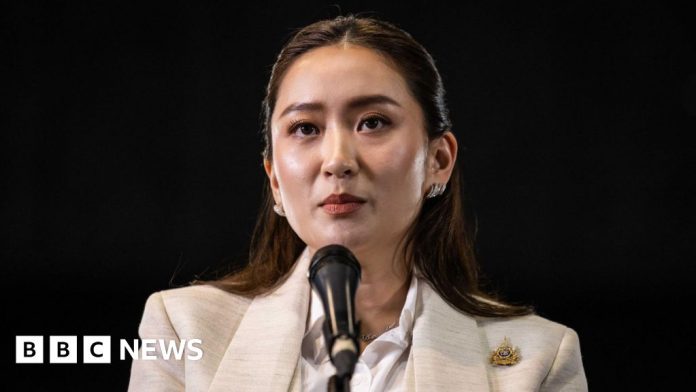
Thailand’s prime minister has been removed by the Constitutional Court, plunging the country’s politics into turmoil and dealing a blow to its most powerful political dynasty.

Paetongtarn Shinawatra was dismissed for violating ethics in a leaked June phone call, where she could be heard calling Cambodia’s former leader Hun Sen “uncle” and criticising the Thai army, amid worsening border tensions with Cambodia.

The call, leaked by Hun Sen himself, damaged her reputation and critics accused her of undermining the country’s army.

The ruling makes Paetongtarn, the daughter of former PM Thaksin Shinawatra, the fifth prime minister to be removed from office by the court since 2008.

On Friday, the court’s nine judges voted six to three against Paetongtarn, ruling that her actions had violated ethical standards expected of her office.

The court said that Paetongtarn possessed a “personal relationship” that “appeared to align with Cambodia” and dismissed her claims that the call was a “personal negotiation to… bring back peace without using violence”.

In a ruling, it said “caused the public to cast doubt” on whether her actions “would benefit Cambodia more than the nation’s interest”.

Paetongtarn acknowledged the court’s verdict but insisted she was trying to save lives.

Her call with Hun Sen, at one time a close friend of her father, came as tensions rose on the Thai-Cambodia border, which weeks later erupted into a five-day conflict in which dozens of people were killed and hundreds of thousands fled their homes.

Paetongtarn, 39, had only joined Pheu Thai in 2021 and rose to power after her predecessor Srettha Thavisin was dismissed by the Constitutional Court for appointing an ally to his Cabinet who had been jailed for trying to bribe a judge.

Her replacement will be chosen by parliament, where her party has a thin majority after its main coalition partner, the conservative Bhumjaithai party, withdrew its support over her call.

Parliament does not have to be dissolved in order to select a new leader, but a majority of MPs do need to support one of five registered candidates.

Chaikasem Nitisiri, 77, a former justice minster, is the Pheu Thai candidate to replace Paetongtarn. Anutin Charnvirakul, of Bhumjaithai, is also among the front-runners.

The powerful Shinawatra family have presided over several Thai governments – and Paetongtarn’s removal is a blow to their political dynasty.

She becomes the third Shinawatra to have their premiership cut short: her father Thaksin was deposed by a military coup in 2006 and her aunt Yingluck was also removed by the Constitutional Court in 2014.

Despite his retirement from formal politics years ago, Thaksin remained hugely influential – though it’s now unclear how much influence the Shinawatra name will now continue to bear.

Must US and UK women be forced to change clothes in front of men?

0


In 2017, there was a movement called “Me Too.” It was about taking women seriously when we complained about being sexually harassed or abused by men.

Eight years later, that has all gone out the window. Women are in fact being forced to share intimate spaces like changing rooms and locker rooms with men who claim to be women. 

Sandie Peggie is a nurse at the Victoria Hospital in Kirkaldy in Scotland, which is overseen by the National Health Service at Fife, a public body funded by taxpayers. One day, she found herself dealing with an unexpected period, bleeding through her uniform. This is an experience many women have had; it’s not unusual. She went into the women’s changing room to address it discretely. She did not expect to find a man in the room. 

The man in question is a doctor named Beth (born Theodore) Upton. He calls himself a transgender woman. Peggie asked the man to leave. He complained to superiors that Peggie was discriminating against him.

The National Health Service at Fife suspended Peggie for harassment. And so, eight years after MeToo, women are now being suspended from work for complaining about the presence of men in women’s intimate spaces. 

Peggie decided to take the matter to court. She sued the NHS Fife in an employment tribunal. That matter began in February. The proceedings are still ongoing. Peggie has been cleared of misconduct, yet these proceedings continue to drag on, wasting taxpayer money. Peggie last took the stand for one month ago today. We await a verdict in the coming months. 

An employment tribunal in Scotland has taken up weeks of time, over the course of several months and at the expense of the Scottish taxpayers, to decide whether or not women are permitted to have female-only spaces.

I have personally been in contact with lawyers and others in the U.K. who tell me that this is just going to have to play itself out because, in the words of one U.K. resident, the NHS “is now effectively rogue.”

This situation is not, of course, limited to Scotland, nor even to the U.K. American readers know that young women on the women’s swimming team at the University of Pennsylvania were forced to be naked in the presence of a man in their locker room 18 times per week throughout their 2021-2022 season. These young women, in their early twenties, were told by school administrators to stay silent. They were told that if they had any problems with the situation, that they needed to get mental health counseling.

Eight years after “Me Too,” women are being abused and gaslighted into believing that if we have a problem with men in our intimate spaces, we are actually the problem. We are being told that we must simply deal with men’s indecent exposure and voyeurism if they call themselves women.

We are told that this is just part of a left-right “culture war” against a “small community of marginalized people,” and that all opposition to transgender ideology comes from the MAGA right. 

None of this is true. And there are rank-and-file Democrats (women and men) across the country who are not okay with this, including myself. In 2023, I published a book on the topic, and in August 2024, I asked then-Vice President Kamala Harris to say out loud at the Democratic National Convention that a woman is an adult human female person. Needless to say, she did not.

The unvarnished truth is that the transgender issue is not about civil rights, but rather about abusing women. Its primary target is women and girls, but it actually abuses all of us by lying about the material reality of sex.

And now, a nurse in Scotland is being forced to sue her government employer just for the right not to be forced to share a changing room with a man — to deal with her bleeding without having to do it in front of a man. Scottish taxpayers are being made to pay for courts to preside over such an absurd case because their National Health Service refuses to accept the truth.

One day, a reckoning will come.

Kara Dansky is author of The TERF Report, “The Abolition of Sex: How the ‘Transgender’ Agenda Harms Women and Girls,” and “The Reckoning: How the Democrats and the Left Betrayed Women and Girls.”

Hewlett Packard (HPE) Introduces Security and Data Protection Solutions

0


Hewlett Packard Enterprise Company (NYSE:HPE) is one of the 10 Best Affordable Stocks Under $50 to Buy. On August 5, Hewlett Packard Enterprise Company (NYSE:HPE) reported a major expansion of its cybersecurity, resiliency and compliance solutions. These updates take a multi-layered approach to help keep organizations safe with strong data, network, and system security.

At the Black Hat USA event, Hewlett Packard Enterprise Company (NYSE:HPE) displayed its combined secure networking products. These are based on HPE Aruba Networking and HPE Juniper Networking.

Schlumberger Limited (NYSE:SLB)

The company shared many new improvements across its solutions. One highlight is a new SASE copilot for HPE Aruba Networking EdgeConnect, which uses AI to offer insights about network activity and security weaknesses.

Hewlett Packard Enterprise Company (NYSE:HPE) upgraded its leadership in hybrid cloud data security and resiliency with the new data protection solution, HPE Alletra Storage MP X10000.

Additionally, the company upgraded its portfolio with HPE Zerto Software, which offers a new integration hub that allows third-party applications to access HPE Zero data. This solution simplifies system security and disaster recovery.

Hewlett Packard Enterprise Company (NYSE:HPE) is a leader in essential enterprise technology. The company specializes in combining AI, cloud, and networking to support enterprises.

While we acknowledge the potential of HPE as an investment, we believe certain AI stocks offer greater upside potential and carry less downside risk. If you’re looking for an extremely undervalued AI stock that also stands to benefit significantly from Trump-era tariffs and the onshoring trend, see our free report on the best short-term AI stock.

READ NEXT: 11 Best Revenue Growth Stocks to Buy Now and 11 Best Under-the-Radar Stocks to Buy Right Now.

Disclosure: None. This article is originally published at Insider Monkey.

Emma Stone dazzles Venice with alien kidnap drama Bugonia

0


Steven McIntoshEntertainment reporter at the Venice Film Festival

Getty Images Emma Stone attends the "Bugonia" red carpet during the 82nd Venice International Film Festival on August 28, 2025 in Venice, Italy.Getty Images

The film marks Stone’s fourth collaboration with Poor Things director Yorgos Lanthimos

In her latest film, US actress Emma Stone plays a powerful CEO who is kidnapped by two men who believe she’s an alien.

It might sound a little out there, but Bugonia is one of the most talked-about movies at this year’s Venice Film Festival, thanks to its unique depiction of the impact of conspiracy theories and echo chambers.

The film could easily have been a preachy lecture about the dangers of the internet. But Bugonia, directed by Oscars favourite Yorgos Lanthimos, is spinning a lot more plates than you initially think, and there is more at play than meets the eye.

“There’s so much that’s happening that I think is reflective of this point in time and our world,” says Stone at the film’s launch, “and is told in a way that I found really fascinating, moving, funny, [messed]-up and alive.”

The film is Stone’s fourth collaboration with Lanthimos following The Favourite, Kinds of Kindness and Poor Things – which won the 36-year-old her second best actress Oscar.

“The opportunity to get to work on these things that I have with him has been just a dream,” Stone reflects, “because this material, there’s so much [to confront].”

The director’s films aren’t for everyone – they are often dark, twisted and gory. But while this one ticks those same boxes, viewers who struggled with his earlier films might find Bugonia more accessible.

Regardless of your thoughts on alien life, the film functions as a gripping kidnap drama, and is a truly wild ride.

Universal Emma Stone stars as Michelle Fuller in director Yorgos Lanthimos' BugoniaUniversal

Stone plays Michelle Fuller, the powerful CEO of a pharmaceutical company

Stone plays Michelle Fuller, the CEO of a pharmaceutical company which a troubled young man, Teddy (Jesse Plemons), holds responsible for his mother’s ill health and a declining bee population.

As a result, Teddy carefully plans the kidnap with his reluctant cousin Don (Aidan Delbis). Stone puts up a hell of a fight, but ultimately ends up being held captive in Teddy’s basement, where much of the film plays out.

It’s easy to dismiss Teddy as crazy, with foil on the windows around his house, but the film gradually shows more of his character and explores the factors that shaped his personality.

“Throughout history, there has been a human instinct to unconsciously categorise someone, and I think I probably tried to do that [with Teddy] when I started reading this script,” says Plemons.

“His core, his relationship with Don, what you discover happened to his mother, I could talk for a long time about Teddy but my way of understanding him was he’s a really tortured soul that was trying with all his might to help. It’s a crazy thing to say, but I believe that.”

It’s true, Teddy believes, that capturing the CEO and trying to extract information from her is for the greater good of humanity. Some of his beliefs seem ridiculous and he would be laughed at by many – but that’s the point.

“For all his ranting and raving, Plemons brings plenty of depth to Teddy, a man who has locked himself down in the wake of past traumas,” wrote Screen Daily’s Nikki Baughan.

“In this battle of wits between this well-dressed, carefully-controlled woman and this pony-tailed, irrational bumpkin, we know who we are supposed to believe. But can we? Should we?”

Getty Images US actor Aidan Delbis, US actor Jesse Plemons, US actress Emma Stone and Greek director and screenwriter Yorgos Lanthimos attend a photocall for the movie "Bugonia" presented in competition at the 82nd International Venice Film Festival, at Venice Lido on August 28, 2025Getty Images

Left to right: Actors Aidan Delbis, Jesse Plemons, Emma Stone and director Yorgos Lanthimos

Plemons, who previously scored an Oscar nomination for The Power of the Dog, says Bugonia appealed because it forced him to confront his own preconceptions about people on the fringes of society.

“I think we have an instinct in general to close the book on things that are scary, hard to look at, hard to understand.”

“For me as an actor, it’s a way I can try and make sense of some of these things, and some of these people who are very difficult to understand. And there’s a risk in writing them off as being non-human, because they are [human], and they exist.”

Bugonia is a loose remake of Jang Joon-hwan’s 2003 Korean sci-fi movie Save the Green Planet! – but Plemons admits he didn’t watch it before shooting, so he could approach the role uninfluenced.

Universal Emma Stone as seen in Bugonia, with a shaved head and in handcuffsUniversal

An image of Stone, seen in Bugonia with a shaved head, went viral this week when the film’s trailer was released

The role required Stone to shave her head. Or, more accurately, for the two men holding her captive to shave it for her.

“Was it easy for me to shave my hair? It was the easiest thing in the world, you just take the razor, it’s so much easier than any hairstyle,” the actress laughs.

Asked whether she gives any credence to theories about aliens, she doesn’t totally shut down the idea.

“One of my favourite people who has ever lived is [astronomer] Carl Sagan,” she explains. “I watched his show Cosmos, and fell madly in love with his philosophy and science and how brilliant he seems to be.

“He very deeply believed that the idea that we are alone in this vast expanse of the universe is a pretty narcissistic thing to think.

“So yes,” she jokes, raising her hand, “I’m coming out with it, I believe in aliens, thank you.”

Universal Jesse Plemons stars as Teddy Gatz in director Yorgos Lanthimos' BugoniaUniversal

Plemons plays the tortured Teddy, who meticulously plans the CEO’s kidnap

The Hollywood Reporter’s David Rooney described Bugonia as a “genre-hopping blast of suspense, sci-fi, paranoia and dark comedy” and said Lanthimos “can always be relied upon to serve up something weird and subversive”.

“As things grow increasingly frantic and gruesome, Lanthimos expertly milks maximum comic tension,” said the Telegraph’s Robbie Collin in a five-star review.

Stone was widely praised for her central performance, even by critics who were less keen on the film as a whole.

Time’s Stephanie Zacharek said the actress is “a bold, creative performer” who is “laceratingly funny and bracingly convincing”.

But she also described the movie as “punishing”, adding that while “Stone can do anything, that doesn’t mean she should.”

It could be tempting to describe the film as dystopian, but Lanthimos doesn’t think that quite hits the mark.

“Not much of the dystopia in this film is fictional,” he notes. “A lot of it reflects the real world. If anything, this film says, this is happening now, and actually it became more relevant as time went by.

“Humanity is facing a reckoning very soon, people need to choose the right path in many ways, otherwise I don’t know how much time we have, with technology, AI, with wars.

“And the denial of all these things, how desensitised we’ve become to them. To me, it’s a reflection of our times and hopefully will trigger people to think today.”

Fallout for universities that struck deals with Trump raises questions, concerns

0


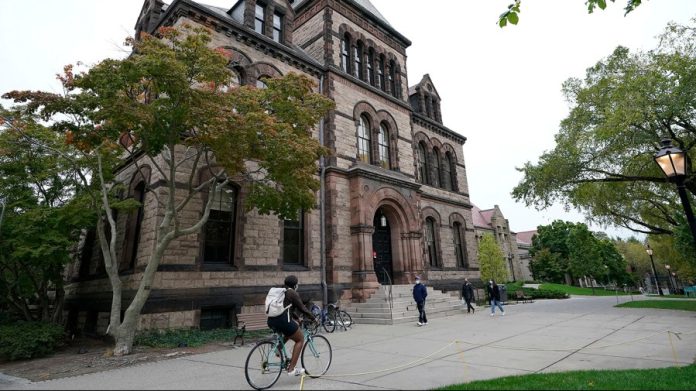
Three universities touted restoration of federal funding as the crux for striking deals with the Trump administration, but it’s unclear to faculty and onlookers whether all the benefits have panned out for these institutions.   

While leadership at the University of Pennsylvania, Brown and Columbia, along with the Trump administration, have said funding was restored, some researchers still see their money cut and others have received no communication from administrators when asked about the details of restored funds.  

The fallout is a warning sign to other campuses looking to make deals with the administration, such as Harvard and the University of California.   

Michael Thaddeus, professor of mathematics at Columbia and vice president of the Columbia chapter of the American Association of University Professors, said his institution has become more secretive in recent years and university leadership has not given details to the restoration of money at the school.  

“My main thought is that it’s very hard to find out what’s going on, even for insiders, even for Columbia faculty, it’s very opaque,” he said.  

Federal money for academic research is a complicated process, making it difficult to fully understand how the money has been processed.  

“The funding agency, such as the National Institutes of Health, awards the grant. Then the General Services Administration disperses the money to the central administration of a university like Columbia. The central administration tells lab administrators or departmental administrators that the money is there, and then the principal investigators charge submit reimbursement requests to them. So, it’s really never clear with each with any given grant whether that pipeline was ever blocked or how it’s been unblocked,” Thaddeus said, adding the university covered some funding for certain projects during the federal pause. 

Some research projects are scrambling to hire back individuals that were fired during the funding pause while other projects related to topics such as transgender health have still not seen funding restored, according to The New York Times.  

The settlements the three universities entered with the Trump administration were similar in some stipulations such as changing policies around disciplinary and protest rules.  

In terms of amounts, the University of Pennsylvania did not have to pay a monetary sum to restore $175 million in funding, Columbia gave the Trump administration $225 million to restore $400 million in funding and Brown is paying $50 million to workplace development programs to get $500 million back.  

In a statement from Brown, the university noted it did not receive payments from the National Institutes of Health from April to July, which made up 70 percent of its research funding.  

“As of the end of July, the unreimbursed funds totaled more than $50 million, and this amount had been increasing by approximately $3.5 million per week. This was in addition to the outright termination of eight federal contracts and more than 30 federal grants,” Brown said. 

However, not all grants were restored to the university. 

“Of the eight federal contracts and more than 30 federal grants that had been terminated before the July 30 agreement, a portion of these were from federal agencies not under the purview of the U.S. Department of Health and Human Services and were therefore not reinstated per the terms of the agreement,” a spokesperson said. 

Jon Fansmith, senior vice president for government relations and national engagement at the American Council of Education, said schools who took the deals did get the advantage of having a clear path before the beginning of the new academic year in terms of what resources would be available for classrooms and staffing.  

“Having that hanging over your head, having the lack of federal funding that, again, was legally obligated to schools, having that restored, it really does make a huge difference for those campuses. And then there’s certainly all of the other kind of harder to quantify benefits of you’re not in the news cycle so much anymore, you’re not dealing with a hostile federal government, you’re not having to spend huge amounts of staff, time and money and legal fees and everything else to work through these situations,” he added. 

A Columbia spokesperson pointed to a public FAQ sheet that said the “potential impact on Columbia was billions of dollars in current and future grants, and a fast-approaching loss of talent, and our research excellence” due to the funding pause.

The University of Pennsylvania did not immediately respond to The Hill’s request for comment.  

The universities were hit hard by critics for the deals they made to get the funding back but have largely stayed mum on the situation.  

According to Rick Hess, senior fellow and the director of education policy studies at the American Enterprise Institute (AEI), one of the reasons schools are staying quiet is “it’s hard to brag about” making a deal with a political party universities have labeled as “full of bad people.”  

Hess also notes schools may be nervous the administration could swing back around as the deals did not include any guarantees the president would not go after the universities again in the future.  

Every university is watching the fallout of these deals, including the University of California and Harvard, which are currently working on deals with the administration.  

“I think they’re ready to move on from this, but they’re unable to because of the ripple effect that this is creating,” said Lynn Pasquerella, president of the American Association of Colleges and Universities. “So these deals came with significant policy concessions that compromise academic freedom, institutional autonomy and shared governance.” 

“The aggressive use of funding as a leverage coupled with demands for settlements, and these demands for settlements are reshaping the relationship between universities and the federal government, and the concern is that these settlements will serve as coercive templates that could pressure dozens of other colleges and universities into accepting restrictive conditions for federal funding, and it really is a new model that threatens the core principles of academic freedom, institutional autonomy and due process,” she added.  

GoDaddy Introduces A Merchant Cash Advance Program to Support SMEs

0


GoDaddy Inc. (NYSE:GDDY) is one of the 10 Most Promising Technology Stocks to Invest In. On August 21, GoDaddy Inc. (NYSE:GDDY) introduced GoDaddy Capital, a merchant cash advance program that offers $1 million in the hands of SMEs.

GoDaddy has spotted the gap, and a recent survey of approximately 2,100 U.S. small businesses from the GoDaddy Small Business Research Lab found that SMEs need access to capital. Almost 51% of the businesses said they operate with limited cash flow, and they consider this to be their biggest financial barrier to growth. Through GoDaddy Capital, these small businesses will have access to around $1 million in as little as 24 hours.

GoDaddy Introduces A Merchant Cash Advance Program to Support SMEs

“In today’s AI-driven, agentic world—where SMBs expect fast, intuitive, and seamless experiences—the standard banking loan process is surprisingly archaic. To make financing simple and intuitive for small businesses, we built GoDaddy Capital right into the GoDaddy dashboard. GoDaddy Capital provides quick, variable-size funding and gives businesses the ability to adjust payments on the cash advance based on their success,” said Kasturi Mudulodu, president of Commerce at GoDaddy.

GoDaddy Capital will only be available to the company’s payment users, which will help attract more businesses to the company. The new offering will allow small businesses to pay down the advance through a fixed percentage of each day’s sales, providing them with one streamlined platform to take payments, manage cash flow, and secure working capital.

GoDaddy Inc. (NYSE:GDDY) is focused on serving a market of entrepreneurs, developing and delivering easy-to-use products in a one-stop shop solution.

While we acknowledge the potential of GDDY as an investment, we believe certain AI stocks offer greater upside potential and carry less downside risk. If you’re looking for an extremely undervalued AI stock that also stands to benefit significantly from Trump-era tariffs and the onshoring trend, see our free report on the best short-term AI stock.

READ NEXT: 30 Stocks That Should Double in 3 Years and 11 Hidden AI Stocks to Buy Right Now.

Disclosure: None. This article is originally published at Insider Monkey.

Transfer rumors, news: Spurs eye Sancho to replace Son

0


Manchester United winger Jadon Sancho is on the radar of Tottenham Hotspur, while Newcastle have joined the race to sign Barcelona attacking midfielder Fermín López. Join us for the latest transfer news, rumors and gossip from around the globe as the window closes on Monday, Sept. 1.

Transfers homepage | Done deals | Men’s grades | Women’s grades

TOP STORIES

Sources: Newcastle on verge of signing Woltemade in £64.9m deal
Sources: Tottenham set to sign Simons after €60m fee agreed
Sources: AC Milan agree €42m transfer for Chelsea’s Nkunku

TRENDING RUMORS

Tottenham Hotspur are considering a move to sign Manchester United winger Jadon Sancho as a replacement for Son Heung-Min, says the Manchester Evening News. Sancho, 25, is out of favor at United and has been linked with a host of clubs from Serie A, most notably Roma, though his club could take the option to extend his contract by another year to protect his transfer value. United signed Sancho from Borussia Dortmund for €85 million in 2021, but are now looking to move him on for around €25m.

– Newcastle have joined the race to sign Barcelona attacking midfielder Fermín López, according to El Chiringuito. As they close on an €80m deal for VfB Stuttgart and Germany striker Nick Woltemade, the Magpies are prepared to make an offer worth €100m to sign the 22-year-old Fermin and are willing to quadruple his salary. Previous reports have indicated that the Blaugrana would be willing to accept €90m for the transfer of their La Masia academy graduate, who has been capped by the Spain senior national team on two occasions. He has also recently been linked with Chelsea.

– PSG goalkeeper Gianluigi Donnarumma could soon get his move to Manchester City, as the European champions have lowered their demands over his fee to €30m, according to RMC Sport. Donnarumma, 26, is set to leave Paris after the club signed Lucas Chevalier as his replacement, but has a contract which expires in 2026. City are waiting on Éderson to depart for Galatasaray before moving for the Italy international, but this one could rumble on until January.

Juventus are keeping tabs on the situation of Chelsea striker Nicolas Jackson, says Gianluca Di Marzio. The Bianconeri are keen to add a forward before the transfer window closes, and they have lined up a move for the 24-year-old as a potential alternative if they fail in their pursuit of Paris Saint-Germain‘s Randal Kolo Muani. It is reported that Bayern Munich are leading the race for Jackson amid reports that a loan deal to the Allianz Arena has been agreed.

Al Ittihad midfielder N’Golo Kanté is looking to return to Europe, according to L’Equipe. The 34-year-old’s representatives are reportedly in talks with Ligue 1 sides Monaco and Paris FC, who have “not closed the door” on a potential swoop for him. Kante made the switch from Chelsea to Saudi Arabia in the summer of 2023, but despite scoring four times in 31 Pro League matches last season, he is yet to secure a call up to the France senior national team this year.

CONFIRMED DEALS

– West Ham have signed midfielder Mateus Fernandes from Southampton for a fee of £8m, plus £2m in add-ons.

Shakhtar Donetsk have signed 18-year-old Brazilian attacking midfielder Isaque Silva from Fluminense for €10m.

– Australia and Tottenham winger Hayley Raso has signed a contract with Eintracht Frankfurt until 2027 for an undisclosed fee.

EXPERT TAKE

play

2:05

What can Newcastle expect from Nick Woltemade?

Archie Rhind-Tutt explains what Stuttgart striker Nick Woltemade could provide Newcastle amid links to the Premier League side.

ESPN’s resident scout Tor-Kristian Karlsen on what Nick Woltemade could bring to Newcastle.

In his breakthrough season, Woltemade scored 10 Bundesliga goals after January and then exploded onto the international scene with a sensational European Under-21 Championship for Germany where he finished as the tournament’s top scorer (6 goals), registered the most assists (3) and key passes (3.0 per 90 minutes).

His all-round offensive abilities are impressive but standing taller than Sesko at 6-foot-6, Woltemade is notably less mobile, which limits his threat in transitional moments. Also, curiously for someone of his size, he won just 33% of his aerial duels in 2024-25 — which is 17% lower than Sesko (50%).

That said, Woltemade’s recent goal return and remarkable shot accuracy (62% of his efforts land on target) suggest he could make a real impact.

OTHER RUMORS

play

1:44

What signings do Manchester United need before the transfer deadline?

Ian Darke and Rob Dawson believe Manchester United still need to sign at least two players as the end of the summer transfer window approaches.

– Liverpool are preparing to go “all-in” to sign Newcastle striker Alexander Isak. (Fabrizio Romano)

– Talks are ongoing between Liverpool and winger Cody Gakpo over a new contract, (Eindhovens Dagblad)

– Newcastle set to make a third bid of £60m to sign Wolves striker Jorgen Strand Larsen, but it will be rejected. (Telegraph)

– Discussions are continuing between former Leicester City striker Jamie Vardy and Serie A side Cremonese over a free transfer. (Corriere dello Sport)

– After Real Madrid midfielder Dani Ceballos put the brakes on a move to Marseille, he can either stay, move to another club, or “wait for the miracle” that boyhood club Real Betis find a way to sign him. But Betis would struggle to make a deal work financially, both in terms of wages and a transfer fee, as they work elsewhere trying to bring back Antony from Manchester United. (Diario AS)

– Atletico Madrid would only accept an offer of over €42m to sign midfielder Conor Gallagher, with Tottenham interested. (Marca)

– Tottenham are also interested in Manchester City defender Nathan Ake, 30. (GMS)

– Aston Villa have made a €15m offer to sign Paris Saint-Germain attacking midfielder Marco Asensio, which is short of PSG’s €20m valuation. (L’Equipe)

– Villa are also looking at West Ham’s Lucas Paqueta, 28, as a potential replacement for Morgan Rogers should he leave Villa Park, but any deal is expected to require an offer worth at least £60m. (Footmercato)

– Wolves are in advanced talks with Genk regarding a move to sign striker Tolu Arokodare. (Mirror)

– West Ham are closing in on signing two midfielders, with the Hammers hopeful of getting deals over the line for Southampton’s Mateus Fernandes and Monaco’s Soungoutou Magassa. (Guardian)

– Negotiations between Lyon and Villarreal are underway over the signing of signing Georgia international striker Georges Mikautadze. (L’Equipe)

– Free agent defender Cesar Azpilicueta is set to sign for Sevilla, with a medical scheduled on Friday. He has agreed to a one-year contract. (Diario AS)

– A loan deal has been sanctioned by Tottenham Hotspur for 18-year-old defender Luka Vuskovic to join Hamburg. (Daily Mail)

– Clubs in the MLS, as well as Wrexham, have seen their interest in defender Andrea Carboni dismissed by Monza. (Nicolo Schira)

– Bournemouth are closing in on a move to sign AC Milan defender Alex Jimenez. (Gianluca Di Marzio)

– Talks are ongoing between Leeds United and Brighton regarding a loan move for attacking midfielder Facundo Buonanotte. (Ben Jacobs)

– An enquiry has been made by Lyon for Internazionale striker Mehdi Taremi. (Fabrizio Romano)

– Multiple Premier League clubs as well as Sevilla are interested in Eintracht Frankfurt midfielder Junior Dina Ebimbe. (TEAMtalk)