13.2 C
New York
Saturday, May 9, 2026
Home Blog Page 235

Melania Trump: Minnesota school shooting 'illuminates' need for 'pre-emptive intervention'

0


First lady Melania Trump weighed in on Wednesday’s school shooting in Minneapolis, arguing it “illuminates” the need for “pre-emptive intervention” in identifying potential shooters. 

“The tragic mass killing in Minnesota illuminates the need for pre-emptive intervention in identifying potential school shooters,” she wrote Wednesday night on social platform X. “Early warning signs are often evident, with many individuals exhibiting concerning behaviors and making violent threats online prior to their actions.”

“To prevent future tragedies, it is crucial we look into behavioral threat assessments across all levels of society — beginning in our homes, extending through school districts and of course, social media platforms,” the first lady added. “Being aware of these warning signs and acting quickly can save lives and make American communities safer.” 

Two children were killed and 17 other people were injured in a Wednesday morning shooting at a Catholic school in southern Minneapolis. 

The shooter, identified as a 23-year-old Robin Westman, barricaded Annunciation Catholic School’s door during the shooting and eventually died by self-inflicted gunshot wounds, according to police. Westman was reportedly dressed in black and carried a rifle, shotgun and pistol.

The suspect wrote incendiary messages on the gun magazines, including one that read “Kill Donald Trump.” Images of the firearms appeared in a manifesto posted online around the same time as the shooting.

FBI Director Kash Patel said the suspect identified as transgender, adding the bureau is investigating the shooting as an act of “domestic terrorism” and a hate crime targeting Catholics.

Minneapolis Mayor Jacob Frey (D) praised the “incredibly brave” faculty and teachers who “protected these kids from harm” and commended police officers who “ran towards danger when the rest of us could have run in the other direction.”

“This was a horrific tragedy in Minneapolis, and then again how many times have you heard politicians talk about an unspeakable tragedy, and yet this kind of thing happens again and again,”

Prayers, thoughts, they are certainly welcomed, but they are not enough. Right now, we have a city that is united in grief, and we have a city that is gonna be united in action,” Frey said in a Thursday morning appearance on ABC’s “Good Morning America.”

He added, “Because the truth is that there needs to be change, so that we don’t have another mayor in another month and-a-half, talking about a tragedy that happened in their city.”

Jack Daniel’s maker Brown-Forman posts quarterly sales beat

0


(Reuters) -Jack Daniel’s maker Brown-Forman beat Wall Street estimates for first-quarter sales on Thursday, on the back of steady demand for its ready-to-drink beverages and spirits.

Shares of the company rose about 4% in premarket trading, having also reiterated its annual forecast.

The popularity of the company’s premium-priced whiskey brands, Jack Daniel’s, Old Forester and Woodford Reserve, among people with more expendable income, especially in emerging markets, helped the company offset soft demand for its spirits in the U.S. market.

However, President Donald Trump‘s plans to double tariffs on steel and aluminum imports to 50% could risk the margins of its canned ready-to-drink products, alongside challenges from Brown-Forman’s reliance on Mexico, which made up 7% of its 2024 sales.

Brown-Forman said sales in international markets were hit in the quarter due to the absence of American-made alcohol from retail shelves in most Canadian provinces.

The company reiterated that the operating environment for fiscal year 2026 will continue to be challenging, “with low visibility due to macroeconomic and geopolitical volatility” and face “headwinds from consumer uncertainty and the potential impact from currently unknown tariffs”.

Organic sales in the United States fell 2% in the quarter, compared with a 4% drop a year earlier.

Overall, organic sales, which exclude the impact of acquisitions and divestitures, was up 1%, compared with a 4% decline a year earlier.

Net sales for the quarter ended July 31 fell 3% from a year earlier to $924 million, compared with estimates of $909.2 million.

On an adjusted basis, the company earned 36 cents per share, in line with analysts estimates according to data compiled by LSEG.

(Reporting by Neil J Kanatt in Bengaluru; Editing by Krishna Chandra Eluri)

Blair joins White House meeting with Trump on post-war Gaza

0


Former British Prime Minister Tony Blair has joined a White House meeting with US President Donald Trump to discuss plans for post-war Gaza, the BBC has confirmed.

Middle East envoy Steve Witkoff has said the US is putting together a “very comprehensive” plan on “the next day” after the war. However, little else has been disclosed about the meeting.

Blair served as Middle East envoy for a few years after leaving office in 2007 – focusing on bringing economic development to Palestinian areas and creating conditions for a two-state solution.

However, when Israel’s Foreign Minister Gideon Saar was asked by reporters what the plan was for a Palestinian state, he said there would not be any.

The White House meeting came after the Israeli military warned Palestinians that the evacuation of Gaza City was “inevitable”, as its forces prepare to conquer it.

Israeli tanks pushed into a new area of the city overnight, destroying houses and forcing more residents to flee, witnesses said.

Thousands of people have already moved because of recent Israeli advances – mostly to other parts of the city, where about a million Palestinians still live.

In early August, Israel announced plans to occupy the whole Gaza Strip – including Gaza City, which it described as Hamas’s last stronghold.

The UN and non-governmental organisations have warned that an Israeli offensive in Gaza City – where a famine was declared last week – would have a “horrific humanitarian impact”.

In a statement on Wednesday, all the members of UN Security Council, with the exception of the US, called the famine in Gaza a “man-made crisis” and expressed “profound alarm and distress” at the latest report from the Integrated Food Security Phase Classification (IPC).

The statement called for Israel to immediately “and unconditionally” lift restrictions on humanitarian aid, reiterating that the use of starvation “as a weapon of war” is prohibited by international law.

In an interview with Fox News on Tuesday, Steve Witkoff said he believed the war in Gaza could be ended in the next four months.

“We’re going to settle this one way or another, certainly before the end of this year,” he stated.

Asked about a plan for governing post-war Gaza, he said: “It’s a very comprehensive plan we’re putting together on the next day that I think many people are going to… see how robust it is and how it’s how well meaning it is, and it reflects President Trump’s humanitarian motives here.”

The White House said: “President Trump has been clear that he wants the war to end, and he wants peace and prosperity for everyone in the region.”

No details have been released about the post-war Gaza proposals under discussion. However, in February Trump suggested that Gazans could be permanently relocated to neighbouring countries, with the US taking over the territory to transform it into “the Riviera of the Middle East”.

The Axios website reported that Trump’s son-in-law and former senior adviser, Jared Kushner, was also at the meeting.

On the ground in Gaza City, tanks entered the northern Ibad al-Rahman district on Tuesday night, destroying several homes, witnesses told Reuters news agency.

“All of a sudden, we heard that the tanks pushed into Ibad al-Rahman, the sounds of explosions became louder and louder, and we saw people escaping towards our area,” Saad Abed said in a message from his home in Jala Street, about 1km (0.6 miles) away.

On Wednesday, the tanks reportedly retreated to Jabalia, an area further north where they have been operating.

Bombardment also continued in Gaza City’s Shejaiya, Zeitoun and Sabra districts.

The Israeli military said in a statement on Wednesday that its troops had engaged in combat in the Jabalia area and on the outskirts of Gaza City, adding that they had eliminated a “terrorist cell” and located a weapons storage facility.

In a post on X on Wednesday, the military’s Arabic spokesman Avichay Adraee said that “evacuating Gaza City is inevitable” and told residents to relocate to southern Gaza.

He said there was “empty space” and that each family making the move would “receive the most generous humanitarian aid”.

Last week, the UN and non-governmental organisations warned that forcing hundreds of thousands of people to evacuate Gaza City and head south was “a recipe for further disaster and could amount to forcible transfer”.

They also said the areas of the south where displaced residents were expected to move were “overcrowded and ill-equipped to sustain human survival at scale”.

Prime Minister Benjamin Netanyahu said Israel would conquer the entire Gaza Strip after indirect talks with Hamas on a ceasefire and hostage release deal broke down last month.

But he is facing both international and domestic pressure to not proceed with the offensive.

On Tuesday evening, tens of thousands of protesters gathered in Tel Aviv demanding a ceasefire deal to bring home the remaining Israeli hostages held by Hamas. Only 20 of the 50 hostages are believed to be alive.

Israel has not accepted the latest proposal from regional mediators for a 60-day truce and the return of around half of the hostages, saying it will now only agree to a comprehensive deal to bring back all the hostages and end the war on its terms.

The Israeli military launched a campaign in Gaza in response to the Hamas-led attack on southern Israel on 7 October 2023, in which about 1,200 people were killed and 251 others were taken hostage.

Almost 62,900 people have been killed in Gaza since then, according to the Hamas-run health ministry.

Most of Gaza’s population has also been repeatedly displaced; more than 90% of homes are estimated to be damaged or destroyed; and the healthcare, water, sanitation and hygiene systems have collapsed; and UN-backed global food security experts have confirmed that there is famine in the Gaza City area.

The dictionary of 'woke' (and other meaningless words)

0


Democrats have a language problem.

Politico recently reported that a Democratic think tank, Third Way, is circulating a memo warning party leaders to avoid 45 words and phrases that make them sound more like campus activists than neighbors.

The blacklist includes such gems as “cisgender,” “radical transparency,” “stakeholders,” “the unhoused,” “systems of oppression,” and “birthing person.” You can almost hear the eye-rolls in diners across America.

I have seen it myself. Sit in on a town hall in Michigan or wander a county fair in Iowa, and you’ll hear people talk in the blunt language of their lives: jobs, schools, bills, crime. Drop a word like “justice-involved individuals” into that mix and you don’t sound compassionate — you sound like you’re speaking through a translator.

Third Way divided its banned terms into categories like “Therapy-Speak” and “Organizer Jargon.” But why stop there? If Democrats need a guidebook, I’m happy to oblige.

Welcome to the Dictionary of Woke (and Other Meaningless Words).

Birthing person
Translation: “Mom.” Unless you’re pitching a dystopian sci-fi series, just say “mother.”

Food insecurity
Translation: “Hunger.” A hungry person wants a sandwich, not a symposium.

Latinx
Translation: “Latino or Latina.” Surveys show that practically no Hispanics use “Latinx.” To most, it sounds contrived and foreign — the opposite of inclusive.

Justice-involved individual
Translation: “Criminal,” or maybe “prisoner.” Speaking of which, whoever introduced this phrase should be locked up in prison for crimes against the English language.

The unhoused
Translation: “Homeless.” Saying the same thing slightly differently doesn’t make it any better, let alone give anyone a roof.

Person who immigrated
Translation: “Immigrant.” Adding two extra words doesn’t make it kinder, just clunkier.

Epistemic violence
Translation: “Disagreeing with me,” which usually doesn’t require medical attention.

Coup / Insurrection (Jan. 6 edition)
Translation: Riot. Nobody mistook the guy in Viking horns for Augusto Pinochet.

Fascist
Translation: “Somebody I don’t like.” The word that once described Mussolini is now applied to the neighbor who parks too close to your driveway.

Reproductive justice
Translation: “Abortion.” If that’s what you mean, just say it. Don’t hide the ball. Euphemisms don’t build trust.

Stakeholders
Translation: “People.” Unless you’re writing a vampire novel, skip the stake.

Cisgender
Translation: “Not transgender.” The word tries to sound scientific but mostly makes people wonder why they suddenly need a label for being ordinary.

Dialoguing
Translation: “Talking.” Nobody “dialogues” at the dinner table.

Centering voices
Translation: “Listening.” It’s not an avant-garde art exhibit, it’s a conversation.

Microaggression
Translation: “Insult.” Sometimes small, often just imagined, but it turns out we had a real word for this all along.

Overton window
Translation: “What’s considered normal.” You don’t need a window to see it.

Bodies (as in “Black and brown bodies”)
Translation: “People.” Ironically, it sounds less human, not more.

Cultural appropriation
Translation: “Borrowing.” Sometimes it’s tasteless, but sometimes it’s just salsa night.

Lived experience
Translation: “Experience.” As if there were another kind.

My truth
Translation: “How I feel.” Which is fine — but let’s not confuse it with “the truth.”

The problem shows up most vividly in abortion debates. Democrats’ talk of “birthing persons,” “pregnant people,” and “reproductive justice” may please activists, but to most voters it sounds contrived. Even the word abortion itself often gets avoided, replaced by softer euphemisms like “choice” or “reproductive health care.” If you’re going to advocate for abortion, at least have the courage to say the word.

And in truth, even “abortion” can be seen as its own euphemism — a clinical, bloodless label that obscures the reality of what it entails.

Politicians have been playing these word games forever. George Orwell saw it clearly when he warned that “Political language is designed to make lies sound truthful and murder respectable, and to give an appearance of solidity to pure wind.”

Third Way’s memo may be awkward, but it’s also a healthy sign. At least some Democrats understand that words matter — and that the ones they’ve been using are a liability. Republicans could use a similar reminder, because, in fairness, they have their own dictionary of the weird:

Woke
Translation: “Something I don’t like.” The Swiss Army knife of insults, now too dull to cut.

Cancel culture
Translation: “Boycott.” Americans have been canceling things since the Boston Tea Party.

Deep state
Translation: “Government bureaucracy I don’t trust.”

Fake news
Translation: “News I don’t like.” Overused to the point of parody.

Illegal aliens
Translation: “Illegal immigrants.” One is plain English, the other sounds like they came from Mars.

RINOs
Translation: “Moderate Republicans.” Not an endangered species, just colleagues you disagree with.

Groomer
Translation: “Political opponent I want to smear.” A reckless insult that diminishes real concerns about child safety.

War on Christmas
Translation: “People saying Happy Holidays.” Don’t worry, Jesus was still born on that day no matter how they say it, and Hallmark is still doing just fine.

Globalists
Translation: “Anyone who believes in international cooperation.” It’s often used like a slur.

Family values
Translation: “My values.” Often invoked right before a salacious scandal.

Both parties cling to words that rally the faithful but repel everyone else. It’s rhetorical junk food: cheap, salty, and unsatisfying. And voters can tell when they’re being force-fed.

Politicians don’t need the jargon of therapists or culture warriors; they need the voice of a neighbor. Imagine if more took the Plain English pledge: no “equity frameworks,” no “deep state.” Voters don’t need a glossary, they just need politicians to speak human. In politics, the shortest words are usually the truest.

Daniel Allott is the former opinion editor of The Hill and the author of “On the Road in Trump’s America: A Journey into the Heart of a Divided Country.”


Bernstien Raises Home Depot Price Target to $403 as the Companny Maintains Guidance

0


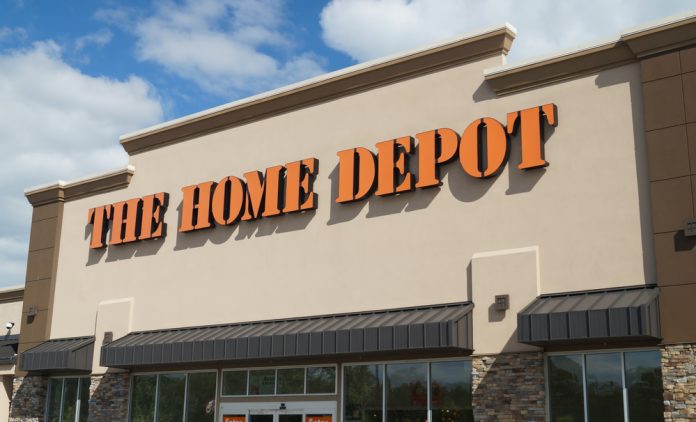
The Home Depot, Inc. (NYSE:HD) is one of the stocks on Jim Cramer’s and analysts’ radar. On August 21, Bernstein raised its price target on HD shares to $403 from $398 and maintained a Market Perform rating. The analyst noted that the company held its fiscal 2025 guidance despite missing comparable sales expectations in the second quarter. The firm stated that investors appear to be regaining interest in the home improvement sector amid expectations for interest rate cuts, but it does not anticipate a near-term recovery in demand.

Bernstien Raises Home Depot Price Target to $403 as the Companny Maintains Guidance

ThreeRivers11 / Shutterstock.com

The Home Depot, Inc. (NYSE:HD) is a home improvement retailer that supplies building materials, décor, lawn and garden products, and maintenance items. The company also provides installation services, tool rental options, and digital platforms for homeowners, professionals, and contractors. Additionally, on August 11, the company was mentioned by Cramer during Mad Money’s episode, as he said:

“We have to ask ourselves, has something changed? If something has changed and it’s really dramatic, then we will pay up. Jeff and I talked a bunch of times about whether we should pay it for Home Depot or not because we didn’t catch the bottom. We bought some, and then it flew up, and I’m a big believer that we’re gonna get rate cuts, and we said buy some Home Depot. So, I think that the thing that changed was that we knew we were going to get the rate cut from the CPI. So yes, if something changes, you can violate, but it has to change. It can’t just be because you say, ooh, I really like that.”

While we acknowledge the potential of HD as an investment, we believe certain AI stocks offer greater upside potential and carry less downside risk. If you’re looking for an extremely undervalued AI stock that also stands to benefit significantly from Trump-era tariffs and the onshoring trend, see our free report on the best short-term AI stock.

READ NEXT: 30 Stocks That Should Double in 3 Years and 11 Hidden AI Stocks to Buy Right Now.

Disclosure: None. This article is originally published at Insider Monkey.

Epping hotel case could set precendent, court told

0


An injunction that would temporarily block asylum seekers from being housed at an Essex hotel creates a “risk of a precedent being set”, the Court of Appeal has heard.

Lawyers for the Home Office and the Bell Hotel in Epping are trying to lift an injunction on the hotel being used to accommodate asylum seekers.

At the start of a day-long hearing, barristers said the order to clear the hotel of 138 asylum seekers had been made without taking into account the precedent it would set.

Edward Brown KC, for the home secretary, said: “The judge erred in declining to allow the Secretary of State to participate in the proceedings, given her unique institutional competence and her statutory duty.”

The court was told that the outcome of the case was of national importance because of the wider impact it could have on the asylum accommodation programme.

Other councils have suggested that they will go to court to seek similar injunctions against the use of hotels in their areas.

Last week, Mr Justice Eyre ruled the hotel cannot be used to accommodate asylum seekers from 12 September after an injunction sought by Epping Forest District Council.

The council claimed that planning rules had been breached. It asked for it to be granted after thousands of people protested against the use of the hotel as asylum seeker accommodation.

Somani Hotels Limited said in a written submission to the court: “The issue of the use of hotels for asylum seekers is one of national importance and scrutiny.”

It said there was no evidence it had deliberately set out to breach planning laws and said the loss of accommodation would impact on the Home Office’s ability to perform its legal duties towards asylum seekers.

There was “no evidence where exactly they would go” if the injunction was not overturned, it added.

NATO's 'Article Five-like' fallacy on Ukraine

0


There is a reason the Kremlin does not want the U.S. military or NATO forces on the ground in Ukraine as a security guarantee. It is that they would significantly inhibit future Russian military operations against Kyiv. 

For that reason alone, Western boots on the ground are the only security guarantee (short of NATO accession) that can ensure allied commitment to Ukrainian sovereignty and deter further Russian aggression.

As NATO Secretary-General Mark Rutte stated last week in Kyiv, “Ukrainian guarantees should be such that Putin, sitting in Moscow, would never think of attacking Ukraine again.” That requires skin in the game, not support from the peanut gallery. Boots on the ground is the only deterrent Russia will respect. Moscow’s adamant rejection of this proposal is proof enough. 

Russia does not get a vote. Boots on the ground would be a significant concession imposed upon Moscow, despite what Vice President JD Vance said on NBC News’ “Meet the Press” on Sunday. America and Europe must be their brother’s keeper.

The White House and Brussels must acknowledge that Russia’s goal is the systematic and complete destruction of Ukraine and the eradication of its culture. Every demand and alleged concession Putin makes is geared toward achieving that end-state. The Kremlin is setting conditions for future operations by removing obstacles. The Russian track record is clear — look no further than its actions in the Chechnya War.

Ukraine learned from the failed 1994 Budapest Memorandum that security guarantees not written into a legally binding treaty, with specific ironclad commitments, are not worth the paper they are printed on.

Russia, the United Kingdom and the U.S. made security guarantees to Ukraine in the Budapest Memorandum. The signatories agreed to “respect the independence and sovereignty and the existing borders of Ukraine.” Furthermore, they “reaffirm[ed] their obligation to refrain from the threat or use of force against the territorial integrity or political independence of Ukraine, and that none of their weapons [would] ever be used against Ukraine.”

Yet that guarantee failed Ukraine in Feb. 2014, and then again in Feb. 2022, when Putin invaded Crimea and then mainland Ukraine.

Now, 11 years later, NATO Article Five-like security guarantees have been proposed to Ukraine as part of an effort to encourage President Volodymyr Zelensky to consider a peace agreement with Russia.

The conditions would involve meeting Putin’s requirements: ceding all of the Donbas region in Eastern Ukraine, freezing the frontline in Kherson and Zaporizhzhia Oblasts in Southeastern Ukraine, renouncing aspirations to join NATO, committing to neutrality, and not allowing Western troops in the country.

The problem is, no one knows what “Article Five-like” security guarantees would look like.                       

Article Five states that “an armed attack against one or more [NATO members] in Europe or North America shall be considered an attack against them all.” To that end, NATO members agree that “if such an armed attack occurs, each of them, in exercise of the right of individual or collective self-defense recognized by Article 51 of the Charter of the United Nations, will assist the party or parties.”

How NATO accomplishes that without putting “boots on the ground” is the $64,000 question.

Last week, Italian Prime Minister Giorgia Meloni proposed a NATO-lite guarantee for Ukraine — committing Kyiv’s allies, under bilateral security agreements, to “decide within 24 hours whether to provide military support to Ukraine if it’s again attacked by Russia.” Meloni describes the proposal as a “NATO-like collective defense clause [that] doesn’t come with actual membership in the alliance.”

Easier said than done. When Russia invaded Ukraine in February 2022, it did so with 190,000 troops along multiple avenues of approach. What size force would be required to defend Ukraine? Who would plan, coordinate, and synchronize the defense? Would Ukraine be divided into zones with each contributing country responsible for the defense of their zone — like the partition of Berlin after World War II?

As Rutte recently told Fox News, “All the details have to be hammered out.” But by whom? The Supreme Allied Commander Europe, who commands NATO Allied Command Operations, is an American four-star general who also happens to command the U.S. European Command. By default, the U.S. would remain in the lead.

The decision to provide military support to Ukraine must be made before Russia attacks — not 24 hours after. A Fulda Gap-like defense would need to be established — with defensive positions prepared and ammunition prepositioned to sustain combat operations. NATO countries contributing military forces would need formations on a persistent state of alert along the Ukrainian border, or from military bases within Ukraine.

Without boots on the ground, a decision to come to Ukraine’s defense 24 hours after Russia attacks would no longer be a defense but a movement to contact. Air superiority would have to be a precondition — meaning combat air patrols similar to NATO’s Baltic Air Policing mission providing air defense and close air support for ground forces.

Questions abound. Would contributing NATO countries unilaterally decide within 24 hours to directly engage Russian ground forces? And could they respond in a timely manner? The answer is likely no. The difficult and right decision must be made prior to a second Russian invasion, or else the easy and wrong decision will be made when it happens. Standing shoulder to shoulder must be an actuality, not a metaphor, and European voters are increasingly opposed to any deployment that places troops in harm’s way.

Although Trump has stated the U.S. will not put boots on the ground, the Pentagon has said it is “prepared to contribute strategic enablers, including intelligence, surveillance and reconnaissance, command and control and air defense assets to enable any European-led deployment on the ground.”

But that requires a plan. As Brussels struggles to develop that plan, Russia continues to bomb Ukrainian cities with ballistic missiles and drones, while making incremental advances further into Ukraine. 

Peace in Ukraine cannot be done on the cheap. The attraction of NATO Article Five-like security guarantees is a fallacy.

The West needs to get Putin to stop attacking — and that means actually doing something, not conceding to more Russian demands. A forcing function — pulling the trigger on the sanctions bill and getting Ukraine the weapon systems they need to win — is the only viable way to change Putin’s cost calculus.

Col. (Ret.) Jonathan Sweet served 30 years as an Army intelligence officer. Mark Toth writes on national security and foreign policy. 

Charlotte Tilbury New Foundation & Setting Spray: Tested & Approved

0


Let’s be real: I love New York, but between the sweltering subway platforms, long office days, back-to-back events, and late-night concerts, my makeup usually waves the white flag by hour six. So when Charlotte Tilbury announced the launch of the new Airbrush Flawless Foundation, Matte Setting Spray, and Life Changing Lip Mask, I knew I had to put them through the city’s toughest beauty test.

I started my day with the Airbrush Flawless Foundation, and wow, it’s truly a 3D-matte (not flat!) miracle. It blurred my pores, softened texture, and gave me that Instagram-filter look IRL, without ever feeling heavy or cakey. The formula is waterproof, transfer-proof, and comes in 44 shades, which means it didn’t budge through a sweaty subway ride or multiple coffee runs.

Weight Loss Journal for Women: Food and Fitness Journal for Women| Diet and exercise planner to achieve Your Goals | 120-Day journal for Meal and Fitness tracker with Weekly Check-in

0


Price:
(as of – Details)


Looking for an effective way to achieve your weight loss goals, then look no further than our 120-Day Weight Loss Journal designed specifically for women!
Our journal includes 120 days of food and fitness logs to help you track your progress towards your weight loss goals. It’s the perfect tool to help you stay motivated and on track.
With our journal, you can easily record your daily meals, snacks, and exercise routines, allowing you to monitor your progress and make adjustments as needed. Plus, our journal is designed with women in mind, providing sections specifically tailored to the female body.
Whether you are just starting your weight loss journey or looking to take your fitness routine to the next level, our 120-Day Weight Loss Journal can help you achieve your goals.
Features:8.5 x 11 inch120 days of food and fitness logsRecord starting and goal body measurementSection to add before and after photograph to show the transformationEasily record meals, snacks, and exercise routinesWeekly Check-in to reflect on the progressTrack your progress and make adjustments as neededDaily tracker will allow you to track Breakfast, lunch, Dinner, Snacks, Water, Caffeine, Sleep, Steps, exercise, mood etc.Perfect for Gift-giving

From the Publisher

Weight Loss Journal for WomenWeight Loss Journal for Women

MeasurementMeasurement

Body measurement

Track your progress from inches to confidence with our comprehensive body measurement section, helping you see your transformation unfold before your eyes.

GoalsGoals

Write your goals

Empower yourself and set achievable milestones with our goal-setting pages, guiding you towards a healthier and happier version of yourself.

Daily TrackerDaily Tracker

Daily meals and exercise tracker

Take charge of your health with our user-friendly tracker, effortlessly keeping tabs on your daily meals and workouts, ensuring you stay committed to your fitness regimen.

Weekly Check-inWeekly Check-in

Weekly check-in

Stay accountable and celebrate your victories each week as you reflect on your journey, making sure you’re on the right path to reaching your weight loss goals.

ASIN ‏ : ‎ B0C5BJX8ZF
Publisher ‏ : ‎ Independently published
Publication date ‏ : ‎ May 14, 2023
Language ‏ : ‎ English
Print length ‏ : ‎ 140 pages
Item Weight ‏ : ‎ 15 ounces
Dimensions ‏ : ‎ 8.5 x 0.32 x 11 inches
Best Sellers Rank: #1,835,979 in Books (See Top 100 in Books) #516 in Aging Nutrition & Diets #899 in Exercise & Fitness For the Aging #2,528 in Personal Organizers
Customer Reviews: 5.0 5.0 out of 5 stars 2 ratings var dpAcrHasRegisteredArcLinkClickAction; P.when(‘A’, ‘ready’).execute(function(A) { if (dpAcrHasRegisteredArcLinkClickAction !== true) { dpAcrHasRegisteredArcLinkClickAction = true; A.declarative( ‘acrLink-click-metrics’, ‘click’, { “allowLinkDefault”: true }, function (event) { if (window.ue) { ue.count(“acrLinkClickCount”, (ue.count(“acrLinkClickCount”) || 0) + 1); } } ); } }); P.when(‘A’, ‘cf’).execute(function(A) { A.declarative(‘acrStarsLink-click-metrics’, ‘click’, { “allowLinkDefault” : true }, function(event){ if(window.ue) { ue.count(“acrStarsLinkWithPopoverClickCount”, (ue.count(“acrStarsLinkWithPopoverClickCount”) || 0) + 1); } }); });

Changes proposed to Wales holiday let tax rules

0


Getty Images Boats in the harbour in Abersoch, Gwynedd. The water can be seen in the foreground with the sea in the background. There is a blue sky with clouds, and there is greenery to the left of the image and a few houses behind the boats. Getty Images

Abersoch in Gwynedd sees its local population skyrocket in the summer

Controversial tax rules for owners of self-catering holiday accommodation in Wales look set to change following proposals put forward by the Welsh government.

Since 2023, self-catering properties must be available for 252 days and let out for 182 days each year to pay non-domestic rates instead of the higher council tax.

The Welsh government is now proposing changing this to an average of 182 days let over several years.

Cabinet Secretary for Finance and Welsh Language Mark Drakeford said the Welsh government had “listened” to feedback and was proposing “small changes” to the rules.

Drakeford’s plans were criticised by Welsh language society Cymdeithas yr Iaith.

The campaign group said the Welsh government should be “focusing on the housing crisis” rather than changing recent legislation which the “majority of businesses are complying with”.

The Professional Association of Self-Caterers (PASC) also criticised the latest announcement, calling it a “token gesture that fails to address the real crisis facing Welsh tourism businesses”.

A head and shoulders shot of Mark Drakeford. He has a grey suit, white shirt and blue tie. He has silver thin-rimmed glasses with short grey hair and smiles at the camera. There are bushes behind him.

Mark Drakeford wants to ensure “everyone makes a fair contribution towards local economies and funding public services”

What are the rules around holiday lets in Wales?

Previously, properties made available for let for at least 140 days – and actually let for 70 – qualified for lower business rates rather than council tax.

That system still operates in England.

However, in Wales properties now need to be made available for at least 252 days, and actually let for 182.

If not, they can be classed as second homes and liable for council tax – which in some areas means paying an additional premium.

The new proposals would allow for up to 14 days of free holidays donated to charity to count towards the 182 day target.

A consultation, open until 20 November, asks whether councils should consider giving businesses more time to adjust, such as a 12-month grace period before they may have to pay higher council tax rates.

Subject to the outcome of the consultation, the legislation would need to be passed in the Senedd to implement these proposals, with changes intended to take effect on 1 April 2026.

Drakeford said: “Wales has so much to offer, and we want to ensure we realise that potential in a way that achieves a balance between our communities, businesses, landscapes and visitors.

“We work closely with tourism and hospitality businesses to help address the challenges they face, while ensuring everyone makes a fair contribution towards local economies and funding public services.

“While most holiday let owners are already meeting the new rules brought in from 2023, with 60% of properties meeting the letting criteria, we have listened to those working in the sector and are proposing small changes to the current rules to support them.”

Getty Images A seaside view of Barmouth beach with houses along the seafront and boats dotted around, some on the sand, others in the sea. Grassy hills can be seen along the coast Getty Images

Cymdeithas yr Iaith says the Welsh government should be “focusing on the housing crisis” instead of the proposal

But director of PASC UK Cymru Nicky Williamson said “whilst members will welcome the ability to count charity weeks again, this is nowhere near enough”.

She added: “For three years we have continually presented the Welsh government with data showing the damage caused by this policy – yet they continue to ignore the reality.

“Tourism in Wales has lost over a quarter of its overnight visitors since this policy began, yet the threshold for businesses hasn’t changed, leaving owners punished for something completely outside their control.

“Business owners are working harder than ever just to stand still, with 85% driven to discount to try to achieve the threshold.

“The 182 threshold is the problem and this must be reduced significantly.”

There was also criticism from the Wales Tourism Alliance, whose chairman Rowland Rees-Evans said many operators were “discounting heavily just to reach the 182 threshold, which is obviously not sustainable in the long term”.

“If you have a three year rolling average and you don’t achieve 182 days in year one and two, then it is highly unlikely that it will be achieved in the third year.

“This will put enormous pressure on small businesses wherever they are in Wales.”