14.1 C
New York
Saturday, May 9, 2026
Home Blog Page 248

Why this row could rattle the US economy

0


Michelle Fleury

New York business correspondent


Chip Somodevilla/ Getty Images US President Donald Trump and Federal Reserve Chair Jerome Powell tour the Federal Reserve’s headquarters renovation project on July 24, 2025. Both men are wearing white hard hats, and suits, as Trump points at a piece of paper Powell is holding, which both men are looking at.Chip Somodevilla/ Getty Images

Donald Trump (left) has openly criticised the US central bank, calling its chair Jay Powell (right) a ‘numbskull’

Donald Trump says he’s sacking Federal Reserve governor Lisa Cook.

She says she’s not going anywhere – and is threatening legal action.

No one quite knows how this will unfold, or whether it could end up in the US Supreme Court.

What’s clear is that it’s highly unusual – and it’s raising serious questions about the independence of America’s central bank.

Why Trump is angry with the Fed

For months, the US president has been piling pressure on the Federal Reserve, demanding interest rate cuts to give the US economy a boost and make it cheaper for the government to borrow.

He’s repeatedly taken aim at Fed chair Jay Powell, calling him everything from “too late” to a “numbskull”.

It’s dramatic – but not entirely new. Presidential spats with the Fed go back decades. In the 1960s, President Lyndon Johnson famously shoved his Fed chair against a wall during an argument about rates.

What’s different now is that Trump isn’t just attacking Powell – he wants to shake up the entire Fed board and replace it with people who share his political outlook. That is what has got economists and investors on edge.

A quick reminder about the Fed

The Federal Reserve – or just “the Fed” – has been around since 1913.

Since the late 1970s, it has had two main goals: to keep prices stable and to help as many Americans as possible find work.

Crucially, it’s independent. That means it can raise or lower interest rates without needing approval from Congress or the president – even if that upsets politicians.

As economist Claudia Sahm puts it, the Fed’s independence exists for moments like this, when political leaders want policies like higher tariffs that might lower growth and raise inflation.

Why independence matters

Letting politics steer monetary policy can be risky.

Cutting interest rates might feel good at first – a kind of economic sugar rush.

But over time, it can lead to rising inflation, market instability, and higher costs for borrowers.

In 2010, then Fed chair Ben Bernanke warned that political interference could create damaging “boom and bust” cycles and make inflation harder to control.

And it’s not just a domestic issue.

Global investors rely on the Fed and US Treasury bonds as a financial safe haven.

If they start to doubt the Fed’s credibility, borrowing costs for the US government could rise – and that would have knock-on effects around the world since they are used to set the price of assets around the world.

What happens next?

So far, financial markets seem to be taking Trump’s latest threats in their stride.

But that could change quickly.

The Fed’s ability to act independently has long been seen as a cornerstone of economic stability in the US.

The fear now is that this norm – like many others – could be at risk of being swept aside.
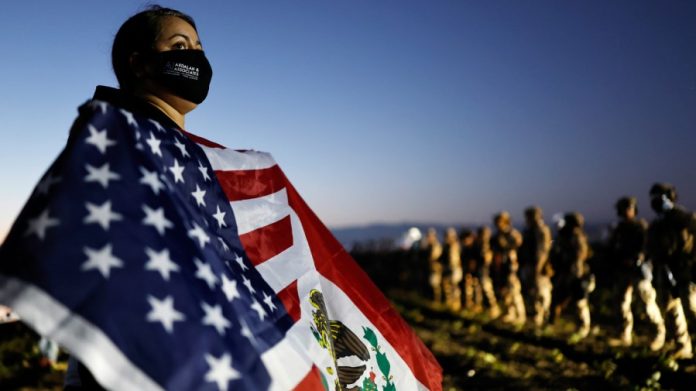
America depends on immigrants — illegal or not 

0


This administration is obsessed with deporting immigrants.  

The Department of Homeland Security claims its focus is on undocumented (illegal) immigrants and those who have committed crimes. However, U.S. Immigration and Customs Enforcement (ICE) officials appear far less discriminating with who they attempt to apprehend, with alleged quotas being used to drive deportation numbers. It appears that anyone who “looks like” an immigrant is at risk of being questioned and taken into custody. 

Yet without immigrants, our nation would suffer labor shortages across multiple industries. Here are just a few. 

International medical graduates fill a critical national need for physicians, particularly for primary care specialties like internal medicine, family medicine and pediatrics. They represent around 20 percent of the physician work force, with many willing to work in rural areas where U.S. medical graduates are less inclined to take positions. Keeping such people out of the country, or making it difficult for them to secure work visas, places headwinds on their arrival, relocation and settlement into the country. With an aging population, the need for skilled medical personnel will only grow, and embracing international medical graduates is critical to maintain our nation’s already strained healthcare system.   

The same holds true in higher education, particularly in STEM (Science Technology, Engineering and Math) fields. Satisfying the needs to educate the next generation of artificial intelligence (AI) innovators and technologists, for example, demands a highly skilled academic pipeline that cannot be filled with domestic personnel alone.  

Countries with high-quality STEM undergraduate programs, like those in India, Singapore and China, provide a reliable stream of talent to fill domestic graduate programs that will serve to mitigate future shortages in faculty at all levels. By discouraging international students from enrolling in U.S. schools, the administration is effectively turning away STEM talent that will ultimately dampen economic growth well into the future. Such short-sighted thinking is a prescription for economic stagnation for our nation. 

Even those who come into the country and fill positions and needs that do not demand higher education and training are valuable assets. Many will start their own businesses, have children here and then support their educational advancement, earning higher degrees including masters’ and doctorates. Within one generation, these children can rise to be upper-middle-class citizens, contributing to the nation’s economic health and well-being. 

Those who work at lower-paying jobs also ensure that their children are well educated and obtain higher degrees. They experience the American dream by fast-tracking their offspring well up the societal economic ladder. 

America has always been a nation of immigrants. That does not mean that our borders should be wide open for anyone who wants to live here. To the contrary, a systematic and transparent set of rules and policies that facilitate immigration into the U.S. population is necessary to create a human capital pipeline that strengthens the nation’s economic and societal fabric.  

Those fortunate enough to be born here often take for granted what they have. Those who immigrate here are seeking a better life for themselves and their families. They work hard and play by the rules far more than those born here, simply because they have been given a privilege that not everyone gets to enjoy. 

As a country, whose GDP is one-quarter of the world’s GDP, we are voracious consumers. We lack the personnel and resources to create all such goods and services. Welcoming those who can support such consumption is a simple bar to assess immigration and provide a measure for their return on investment. 

Immigration also serves to counterbalance a total fertility rate that has been persistently below replacement for decades. Immigrants provide a necessary infusion of human capital that cannot be generated internally. Even if the fertility rate instantaneously jumped above replacement levels, it would take a generation or more for its positive effect on human capital development to be realized. 

In a counter-factual world, if our borders were instantaneously shuttered and all immigrants magically vanished, our country would cease to function as we know it. Independent of the 48 million documented immigrants, if the 11 million undocumented immigrants suddenly disappeared, many of the goods and services that we rely upon would become unavailable. This is why the president is willing to permit migrant farm workers to remain in the country and continue working. 

To keep America great demands sensible immigration policies that focus first on what the nation’s needs are, and how they can be filled. Taking a vigilante-like approach to immigration control is not the solution. 

Sheldon H. Jacobson, Ph.D., is a computer science professor in the Grainger College of Engineering at the University of Illinois Urbana-Champaign. As a data scientist, he uses his expertise in risk-based analytics to address problems in public policy. 

Analyst Report: Church & Dwight Co., Inc.

0


Analyst Report: Church & Dwight Co., Inc.

Artwork looted by Nazis 80 years ago spotted in estate agent ad

0


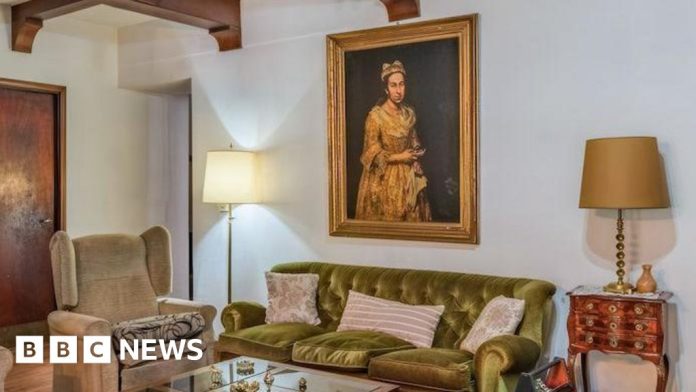
Robles Casas & Campos An interior shot showing a living room with a green sofa against a white wall, flanked by two lamps. A portrait hangs on the wall behind the sofa.Robles Casas & Campos

A Italian master painting stolen by the Nazis from a Jewish art dealer in Amsterdam has been spotted on the website of an estate agent selling a house in Argentina, more than 80 years after it was taken.

A photo shows Portrait of a Lady by Giuseppe Ghislandi hanging above a sofa inside a property near Buenos Aires once owned by a senior Nazi official who moved to South America after the Second World War.

The painting, which features on a database of lost wartime art, was traced when the house was put up for sale by the official’s daughter, Dutch newspaper AD reports.

The artwork is among hundreds looted from art dealer Jacques Goudstikker, who helped other Jews escape during the war.

Goudstikker died at sea in an accident escaping the Netherlands and is buried in England.

Over 1,100 works from Goudstikker’s collection were bought up in a forced sale by senior Nazis after his death, including Reichsmarschall Hermann Göring.

Post-war, some of the works were recovered in Germany and put on display in Amsterdam’s Rijkmuseum as part of the Dutch national collection. Goudstikker’s sole-surviving heir, daughter-in-law Marei von Saher, took possession of 202 pieces in 2006, AD reports.

But one painting, a portrait of the Contessa Colleoni by late-baroque portraitist Giuseppe Ghislandi, remained missing until now.

AD’s investigation unearthed wartime documents suggesting it was in the possession of Friedrich Kadgien, an SS officer and senior financial aide to Göring, who fled to Switzerland in 1945 before moving to Brazil then Argentina, where he became a successful businessman.

Kadgien – described as a “snake of the lowest sort” by American interrogators – died in 1979. A US file seen by AD also said notes on Kadgien included the line “Appears to possess substantial assets, could still be of value to us”.

The paper said it had made attempts over several years to speak to the late Nazi’s two daughters in Buenos Aires about their father and the missing artworks, but to no avail.

But reporters had a stroke of good luck when one of Kadgien’s daughters put the home, once owned by her father, up for sale with an estate agent specialising in expensive Argentine property.

“There is no reason to think this could be a copy,” said Annelies Kool and Perry Schrier of the Cultural Heritage Agency of the Netherlands (RCE) who reviewed the images for AD.

Another looted artwork – a floral still-life by the 17th-century Dutch painter Abraham Mignon – was also spotted on one of the sister’s social media, AD reports.

All attempts to speak to the sisters since the photo was spotted have failed, according to AD, with one telling the paper: “I don’t know what information you want from me and I don’t know what painting you are talking about.”

Lawyers for Goudstikker’s estate said they would make every effort to reclaim the painting.

“My family aims to bring back every single artwork robbed from Jacques’ collection, and to restore his legacy,” von Saher said.

Can Gavin Newsom's bold moves save the Democrats and win in 2028?

0


These are bad times for Americans in general and Democrats in particular. Will California Gov. Gavin Newsom (D) be the presidential candidate who rides to their rescue? Will Make America Gavin Again become an effective antidote to Make America Great Again, or will it simply be a harmless placebo?

Only time will tell. But Newsom is off to an impressive start. 

Struggling working families are overwhelmed by increases in the cost of living and the government resources that would aid Americans during a recession have been decimated by President Trump and his MAGA majorities in the House and the Senate.  

Unfettered by an effective opposition and unbothered by constitutional restraints, Trump has exposed his authoritarian excesses. He has already used military force to take over Washington, D.C. and Los Angeles. Immigrations and Customs Enforcement officers even showed up near Newsom’s announcement of his initiative to redraw California’s congressional districts. Trump has threatened to deploy the National Guard to Chicago, another city with a Democratic mayor and a large minority population. 

Sadly, Democrats aren’t sufficiently well positioned to stop Trump’s excesses. My party’s popularity registered at its lowest point in the last 35 years in a national poll last month by The Wall Street Journal. The New York Times reported that  Democrats had lost 2.1 million registered voters and the Republicans gained 2.4 million between the last two presidential elections in the 30 states and the District of Columbia which allow party registration.

A fragile Democratic coalition might be able to turn Trump’s reckless handling of the economy into a midterm victory. But it will take a major overhaul, new leadership and a fresh brand to win the White House in 2028.  

Newsom’s fight to create additional congressional districts for his party, along with his aggressive social media campaign, have captured the imagination of party activists as they desperately scan the horizon for a headliner who can take the fight to Trump and his MAGA acolytes.  

Newsom presents an impressive resume, with experience as mayor of San Francisco and as two-term governor of the nation’s largest state. But he will face off in 2028 against other contenders with impressive resumes including a former U.S. senator and vice president from his own state.  

He needed and found a distinctive way to separate himself from the rest of the pack. He has demonstrated that he’s as much a showman and as aggressive as Trump, established himself as the media focal point of the MAGA opposition and as a one-on-one competitor against the unpopular president. The other Democratic contenders must weigh in soon if they hope to compete.

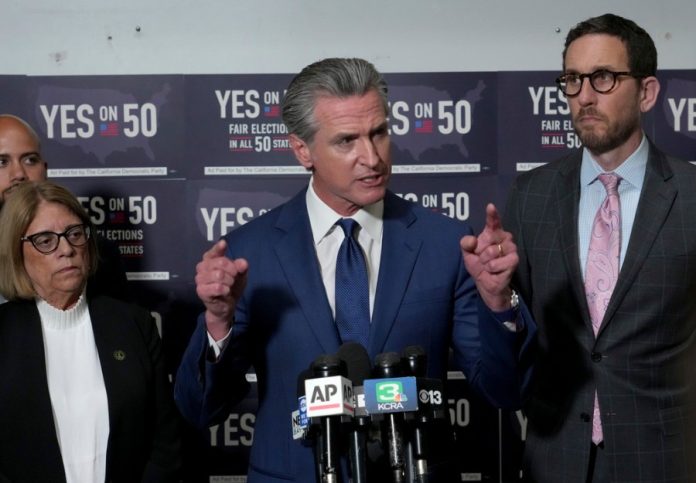
Texas has passed a mid-decade redistricting plan that could cripple House Democrats. This put the ball in Newsom’s court, and he ran with it immediately. Days after the Texas Legislature had approved its plan, California’s Legislature created a new map that will greatly advantage Democrats if voters approve it in November. Other Democratic governors, including another White House hopeful JB Pritzker of Illinois jumped on Newsom’s initiative and indicated they might try to redistrict as well. 

Newsom’s social media campaign demonstrates that he can take a punch and fight back with the best of them in a forum that Trump and MAGA have traditionally owned.  

Will California dreaming become a reality for the governor? The Golden State is the richest delegate prize in the national Democratic contest. It will be a make-or-break moment for Newsom.  

A new poll of California Democrats has Newsom and former Vice President Kamala Harris out ahead of the pack in their shared home state. Former Transportation Secretary Pete Buttigieg and New York Rep. Alexandria Ocasio-Cortez are the only other hopefuls who register in double digits. If one of the Californians decisively wins their home state’s primary, that could knock the other two out of the race. If Buttigieg or AOC wins in California, that could knock both natives out of the race.

Even if he wins the redistricting battle at home, Newsom faces problems in his quest for the Democratic nod.  

Many Democrats would prefer a nominee from the Midwestern battleground states, where they make cars, over a candidate from the coast, where they traditionally make movies. Newsom could face governors from America’s industrial heartland, such as Josh Shapiro (D) of Pennsylvania or Gretchen Whitmer (D) of Michigan, in the fight for the Democratic ticket to the White House.

Then there’s ideology. Newsom is a liberal pragmatist, not an aggressive progressive. He takes what he can get rather than reaching for the stars. His caution will endear him to moderate Democrats but, it is a red flag to the Bernie Sanders wing of the party, a strong internal force even with the Vermont senator out of the race. What’s more, Newsom’s state faces a budget shortfall that has already forced the governor to make painful budget cuts that have angered fellow Democrats.

AOC or Rep. Ro Khanna (D-Calif.) could undermine Newsom’s standing in his home state by waging a campaign staked on Sanders’s progressive proposals. That’s a hill that many Democrats are willing to die on.

Newsom possesses an aggressive gene that the Democratic DNA desperately needs in its struggle to evolve. Democrats are searching for a leader who will turn their fortunes around. That person must be the party’s next nominee for president.  

Newsom has recently raised his profile in the prelude to the 2028 Democratic nomination fight. It will take a while to determine whether his newfound social media profile is just fluff that will disappear in the fickle electronic winds of the ethernet. But visibility is vital for success in what looks to be a big field of contestants in the competitive race for the Democratic presidential nomination that is already off and running. 

Brad Bannon is a national Democratic strategist and CEO of Bannon Communications Research which polls for Democrats, labor unions and progressive issue groups. He hosts the popular progressive podcast on power, politics and policy, Deadline D.C. with Brad Bannon.    


Analyst Report: Target Corp

0


Analyst Report: Target Corp

Taylor Swift and Travis Kelce engaged

0


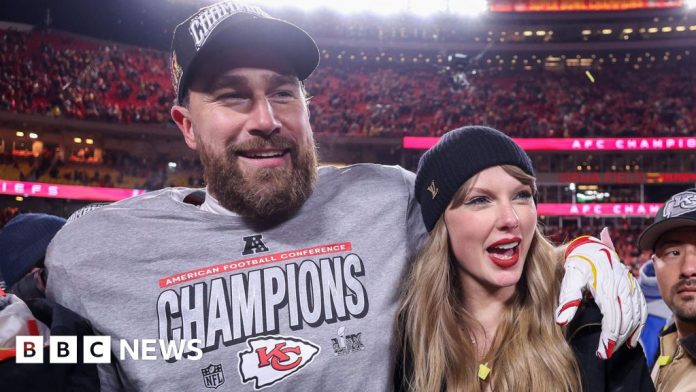
Pop superstar Taylor Swift has announced she is engaged to her partner Travis Kelce.

In a post on Instagram on Tuesday, Swift wrote: “Your English teacher and your gym teacher are getting married.”

She accompanied the post with photos showing Kansas City Chiefs star Kelce proposing to Swift.


A view of the front lines from a pissed off Washingtonian

0


In the summer of 1975, we first moved to a lovely old Georgetown home just west of Wisconsin Avenue. For a time, D.C. was the nation’s murder capital. Ironically, the lawyer who defended the Hanafi Muslims who seized the B’nai Brith Building in Washington in 1977, taking 150 hostages, was the judge who later married me and my wife — a telling reminder of the turbulent times then.

Nine years later we purchased a four story townhouse on the other side of Georgetown. And over the last 50 years, I have become increasingly furious about how both political parties have done their worst to prevent the nation’s capital from becoming one of the world’s greatest, loveliest and most desirable places to live.

Washington is none of those things. Why? This is more than outrageous and another sign why the government is failing. And perhaps things would not be so bad if Republicans transferred the $1 billion long-owed to D.C. that could bring the police force to its full strength of around 4,000 from the present 3,100.

In the wealthiest country in the world and in the most powerful city on Earth, Washington should have the best of everything. It does not because the Democratic and Republican parties have been incapable of governing the country and city with any semblance of competence, common sense and fairness.

Washington should have the best medical care, schools, universities and public transportation, as well as the safest and most sophisticated tourism, hospitality, police, research, restaurants and cultural facilities in the world.

Yet it does not.

Also, why does D.C. have the fourth highest murder rate in the country per capita? Why does it rank as the tenth worst city in the U.S. to live, with one of the highest costs of living?

Why, while its spending per student is among the highest in the country, does it rank barely in the top half of grade school education? Why does it lack the prestigious universities of Boston, Los Angeles or New York?

Although the Metropolitan D.C. Police Department does not keep statistics on percentages of white and Black arrest rates, it appears that Black residents account for about 86 percent of arrests in the city. Black people number about 45 percent of the total District population, but they account for about 86 percent of the arrests in the city. 

That violent crime is largely against other Black residents. The National Institute for Criminal Justice Reform reports that, from January 2021-December 2022, “95 percent of victims and suspects in homicides and 94 percent of victims and suspects in nonfatal shootings were Black.”

Of course, there is a lot of bad history dating from home rule. Republicans oppose D.C. statehood, as this would obviously add two Democratic seats to the U.S. Senate.

President Trump has declared a state of emergency in the District, citing Section 740 of the Home Rule Act. He has asserted that crime “is out of control,” authorizing federalization of the local police. But the D.C. police cite a drop of more than 30 percent in murders and 35 percent in violent crime year over year. The Department of Justice rejects D.C. figures.

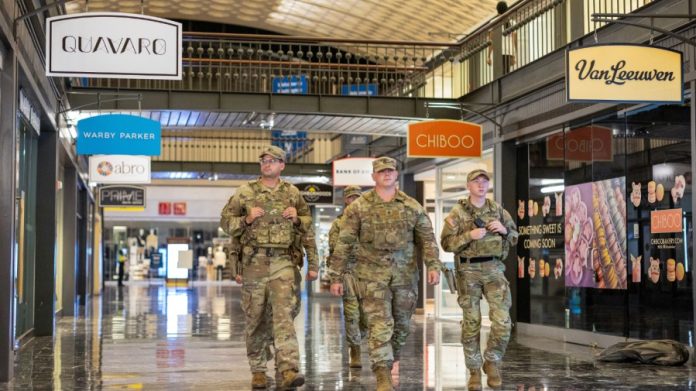
For a country that, by its own president’s admission, is on a roll, the spectacle of sending in masked armed federal ICE agents and National Guard soldiers is absurd. But Trump has retaliated against the Democratic city of Los Angeles without just cause. Reportedly, Chicago is next. After that, can New York be far behind?

Few can reasonably oppose reducing crime, as long as the procedures are lawful. And here are the two most telling reasons why Trump’s actions are dangerous for democracy and for Americans. What happens when the Feds leave the District? None of the causes of crime will have been addressed or mitigated. It does not take Sherlock Holmes to guess what comes next.

And what is so outrageous is the preponderance of data showing the huge percentage of Black residents committing crimes against other Black residents. If we really believe America is the greatest country in the world and in history, why can’t we fix this hideous imbalance? And why can we not make Washington the greatest city in the world and in the country?  

So here is a challenge for Trump: Forget MAGA — instead, just make D.C. Great Again.   

Washington D.C. should be the shiniest city on the most glorious of hills. And if you think a handful of National Guard soldiers and ICE officials can make a difference, I have a better idea.  

Instead of making Gaza the Paris of the Mediterranean, how about making Washington the Mar-a-Lago of the Potomac? If you did that, I am sure Jack Kennedy would not object to renaming the Kennedy Center after your third wife. 

Harlan Ullman, Ph.D., is UPI’s Arnaud deBorchgrave Distinguished Columnist, a senior advisor at the Atlantic Council, the chairman of two private companies and the principal author of the doctrine of shock and awe. He and former United Kingdom Defense Chief David Richards are the authors of a forthcoming book on preventing strategic catastrophe.

CareDx Battles Reimbursement Uncertainty As Market Overlooks Long-Term Potential

0


CareDx, Inc. (NASDAQ:CDNA) faces fresh uncertainty as proposed reimbursement changes threaten its core testing business, clouding near-term growth even as the company’s expanding transplant solutions platform positions it for long-term opportunity in an $8 billion market.

On Monday, William Blair initiated coverage on CareDx Inc., citing that the company is turning the page on a tumultuous recent chapter.

Analyst Andrew F. Brackmann said the company is “getting back to consistency and predictability, and leaving behind much of the ‘drama’ associated with reimbursement changes and draft local coverage determinations (LCDs).”

Amid a cloud of ongoing reimbursement challenges that have raised questions about its future, CareDx, Inc. is seen by Brackmann as a deeply undervalued company with a powerful, yet underappreciated, platform.

CareDx is a pure-play provider of solutions for transplant centers, including lab tests, transplant management services, digital administration, and pharma services.

The company’s solutions service the captive U.S. transplant ecosystem, dominated by 250 cardiothoracic and abdominal transplant centers, and target a total addressable market (TAM) of $8 billion. TAM expansion opportunities are part of the company’s pipeline.

CareDx reported second-quarter adjusted earnings of 10 cents, missing the consensus of 12 cents, with sales of $86.68 million, missing the consensus of $90.56 million.

The company narrowed its fiscal 2025 sales guidance from $365 million-$375 million to $367 million-$373 million compared to the consensus of $370.79 million.

Earlier this month, CareDx appointed Nathan Smith as the new CFO, succeeding Abhishek Jain, who will be retiring.

Brackmann sees CareDx as undervalued long-term but notes uncertainty from a proposed local coverage decision affecting its testing services, which drive about 75% of revenue. While the impact may be less severe than feared, the proposal could create modest revenue headwinds, leaving near-term forecasts unclear.

Thus, Brackmann initiated with a Market Perform rating, even though shares trade at a 67% discount to peers on a 2026 revenue multiple and a discounted cash flow analysis that points to a fair value closer to $20 per share.

CareDx has faced ongoing challenges, including reimbursement issues, patent disputes, regulatory probes, and leadership changes. William Blair notes the potential downside from the draft LCD appears priced in, but the stock may trade sideways until the policy is finalized, at which point shares could reset higher.

“We believed CareDx had the right ingredients in the current market/sector environment to see outsized share price appreciation, predictable revenue growth, modest upside, a clean balance sheet, and underlying momentum,” William Blair wrote in an investor note on Monday.

Vuelta a Espana: Ben Turner wins fourth stage to claim maiden Grand Tour stage victory

0


Great Britain’s Ben Turner produced a stunning sprint finish at the Vuelta a Espana to claim his first ever Grand Tour stage win.

The Ineos Grenadiers rider won stage four from Alpecin-Deceuninck’s Belgian duo Jasper Philipsen and Edward Planckaert, with fellow Englishman Ethan Vernon of Israel-Premier Tech fourth on his 25th birthday.

Turner – a late call up to the Vuelta when Ineos team-mate Lucas Hamilton pulled out through illness – powered to victory on the long, rising finish.

France’s David Gaudu, who won the third stage, leads the overall standings having finished enough places in front of Jonas Vingegaard of Denmark to take the red jersey on count-back.

The longest stage of this year’s race at 206km, it featured over 3,000m of altitude packed largely into the first half of the day.

After two category two climbs, an early breakaway was caught with 90km remaining, the peloton using the long descents to reel them in.

Philipsen was initially well-placed behind team-mate Planckaert but as Turner and Vernon came alongside he was boxed in, and when he finally found some space it was too late to get on terms with pumping pistons of the 6ft 4in Turner.

It was Turner’s third win as a professional and he broke into tears shortly after crossing the line to secure the biggest win of his career to date.

“Today I just had the best guys around me and I did what I had to do. It was the perfect finish for me and I really believed in what I could do on it,” Turner said.

“The last 100m felt so long. I was devastated in the first sprint when my chain came off but I really believed in myself today. It’s just a crazy feeling.”

The stage, which started in Italy and ended in France, was the final one to be held outside Spain, with the action switching to Figueres on Wednesday for a 24.1km time trial.