










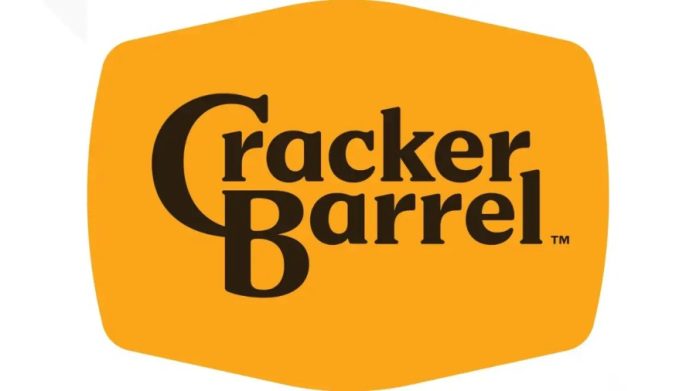
(NewsNation) — One of the country’s most famous restaurant chains just got a rebrand for the first time in almost five decades.
Cracker Barrel introduced a new logo on Tuesday as part of its “All the More” campaign, designed to enhance aesthetics in stores, in addition to redesigns that have decluttered the walls and improved the lighting.
“We believe in the goodness of country hospitality, a spirit that has always defined us,” Sarah Moore, chief marketing officer of Cracker Barrel, said in a news release. “Our story hasn’t changed. Our values haven’t changed. With ‘All the More,’ we’re honoring our legacy while bringing fresh energy, thoughtful craftsmanship and heartfelt hospitality to our guests this fall.”

The rebrand comes after the chain had received some negative feedback from its previous redesigns, which included a more dark and rustic aesthetic as opposed to the modern farmhouse aesthetic.
The chain, along with the logo, also said it will have new and returning food items for breakfast, lunch and dinner.
Cracker Barrel also announced it is treating all U.S. customers to a complimentary classic side with any purchase Saturday and Sunday.

Corn futures are trading with 2 to 3 ½ cent gains across most contracts on Tuesday. The CmdtyView national average Cash Corn price is down 2 3/4 cents at $3.62.
Monday afternoon’s weekly Crop Progress report showed the US corn crop at 97% silking, with 72% in the dough stage, both 1% back of normal. The crop was also listed at 27% dented as of Sunday, with 3% mature. Conditions slipped 1 point this week, to 71% gd/ex and 382 on the Brugler500 index.
The annual ProFarmer crop tour started on Monday, with the Ohio crop pegged at 185.69 bpa, up from 183.29 bpa last year and the 180.47 3-year average. USDA is looking for a 19 bpa increase yr/yr. Yield in South Dakota was estimated at 174.18 bpa, which is up 17.67 bpa from last year’s tour total and well 30.05 bpa above the 3-year average. USDA was looking for a 4 bpa increase from last year in last Tuesday’s report.
Brazil’s corn exports are pegged at 8.05 MMT for August according to ANEC, which is up 0.08 MMT from last week’s estimate.
Sep 25 Corn is at $3.80, down 3 cents,
Nearby Cash is at $3.62 1/1, down 2 3/4 cents,
Dec 25 Corn is at $4.03 1/4, down 3 1/4 cents,
Mar 26 Corn is at $4.20 3/4, down 3 1/2 cents,
New Crop Cash is at $3.58 1/4, down 3 cents,
On the date of publication, Austin Schroeder did not have (either directly or indirectly) positions in any of the securities mentioned in this article. All information and data in this article is solely for informational purposes. This article was originally published on Barchart.com
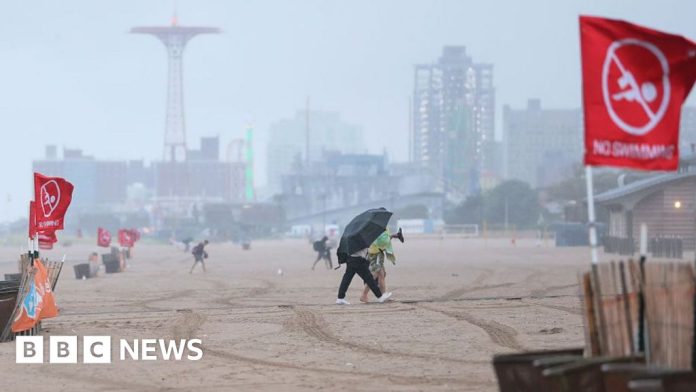
Hurricane Erin is soaking parts of coastal North Carolina as the storm brushes along the US East Coast.
North Carolina’s Outer Banks are worst affected, with authorities closing a key highway on the barrier islands, but the category 2 storm is not expected to make landfall in the US.
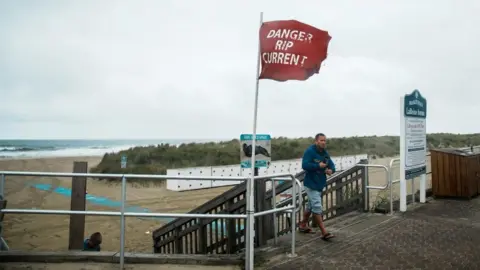
The National Hurricane Center (NHC) warned people to avoid swimming at “most US East Coast beaches due to life-threatening surf and rip currents”.
Forecasters expect Erin, which is packing maximum sustained winds of 105mph (168km/h), to peak by Thursday. It has already barrelled through the Caribbean, drenching Puerto Rico.
Meteorologists say the hurricane is unusually big, with tropical storm winds spanning 500 miles.
The NHC said in its 20:00 EDT (00:00 GMT) update on Wednesday that “weakening is likely to begin by Friday, but Erin is forecast to remain a hurricane into the weekend”.
Waves as high as 30ft (9.14m) were forming along the seaboard in the Atlantic Ocean on Wednesday.
On the Outer Banks, Highway 12 from Oregon Inlet to Hatteras Village was closed because conditions were too dangerous.
The state’s ferry system has evacuated more than 2,200 people since mandatory evacuations were ordered this week on Hatteras and Ocracoke.
Some beachgoers were still swimming in the sea at Wrightsville Beach in North Carolina on Wednesday, despite the town’s no-swimming advisory that is in effect till Friday. At least 60 people were rescued at the same beach from rip currents on Monday.
Speaking at a news conference on Wednesday, North Carolina Governor Josh Stein warned people to get ready.
“It’s a serious storm,” he said. “No-one should be in the ocean.”
Stein said the state had three “swift-water rescue teams” and 200 National Guard troops ready to help people with boats, aircrafts and other vehicles.
 Reuters
Lily, the hostess of Miller’s Waterfront Restaurant in the Outer Banks town of Nags Head, told the BBC the wind was “starting to pick up” and the weather had become cloudy.
The storm was not currently affecting business, she said, adding that “most weather channels are overreacting” – although she added it might be a different story farther south in Hatteras Island.
Vicki Harrison, who works at the Harbor House Seafood Market on Hatteras Island, said she had chosen not to join those evacuating.
“They evacuated all the tourists on Monday morning, and the residents on Tuesday,” she told the BBC. “But we chose to stay.”
She said her family had lived in Hatteras for 40 years and had to evacuate several times.
“We would have more trouble evacuating than staying,” she said.
“We’re very safe, we’re all hunkered down, we’ve got plenty of food and plenty of water.”
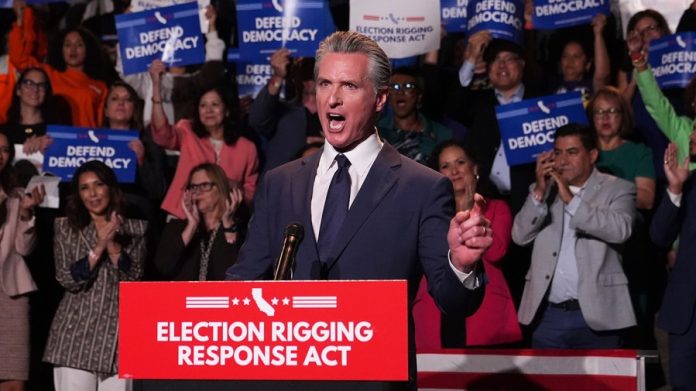

The California Supreme Court on Wednesday rejected a petition filed by state Republican legislators seeking to halt Gov. Gavin Newsom’s (D) plan to redistrict California’s congressional map.
“Petitioners have failed to meet their burden of establishing a basis for relief at this time under California Constitution article IV, section 8,” reads a brief order posted to the docket.
Newsom has hit back at Republican redistricting efforts in Texas by pushing for a special election this November to get voters’ approval on a more favorable House map for Democrats in California in time for the 2026 midterms.
The ruling paves the way for the California legislature to proceed with voting as soon as Thursday on a package that would set up the special election.
Republicans’ legal challenge revolved around a 30-day waiting period mandated under the state constitution before an introduced bill can be passed, unless three-fourths of lawmakers agree to waive the requirement.
Democrats looked to get around the requirement by gutting the text of bills introduced in February and replacing them with the redistricting plans.
Four state Republican legislators — Sen. Tony Strickland, Sen. Suzette Martinez Valladares, Assemblyman Tri Ta and Assemblywoman Kate Sanchez — went to the state’s high court on Tuesday seeking to effectively block the effort.
The petition sought to stop Democrats from moving ahead until Sept. 18, far past the window that state officials have said would be necessary to prepare for an election on Nov. 4. The lawmakers’ attorneys acknowledged in court filings that it was a case of first impression but said that permitting Democrats’ strategy would be “comically absurd.”
In a joint statement, the lawmakers stressed the court did not explain its ruling and said it is “not the end of this fight.”
“This means Governor Newsom and the Democrats’ plan to gut the voter-created Citizens Redistricting Commission, silence public input, and stick taxpayers with a $200+ million bill will proceed,” the statement reads.
“We will continue to challenge this unconstitutional power grab in the courts and at the ballot box. Californians deserve fair, transparent elections, not secret backroom deals to protect politicians,” it continued.

We recently published 10 Stocks Shine Brighter Than Wall Street. iQIYI, Inc. (NASDAQ:IQ) is one of Monday’s top performers.
iQIYI saw its share prices jump by 17.09 percent on Monday to finish at $2.33 apiece as investors gobbled up shares ahead of the release of its earnings performance for the second quarter of the year.
According to the company, it is scheduled to release its financial and operating highlights before market open on Wednesday, August 20. An earnings call will be held on the same day to elaborate on the results.
Investors will be closely watching out for cues of expansion plans, especially after Nikkei reported last week that iQIYI, Inc. (NASDAQ:IQ), alongside Tencent, was looking to roll out original productions in Thailand and Indonesia.
The report said the initiative was aimed at capturing a larger market and catching up with American streaming service rivals such as Netflix, which has already been producing its original series.

Photo by Ashley Byrd on Unsplash
iQIYI, Inc. (NASDAQ:IQ), which has 36 million regional subscribers at present, saw its net income attributable to shareholders in the first quarter of the year fall by 72 percent to 182 million yuan from 655 million yuan in the same period last year. Revenues fell by 9 percent to 7.19 billion yuan from 7.93 billion yuan year-on-year.
While we acknowledge the potential of IQ as an investment, our conviction lies in the belief that some AI stocks hold greater promise for delivering higher returns and have limited downside risk. If you are looking for an extremely cheap AI stock that is also a major beneficiary of Trump tariffs and onshoring, see our free report on the best short-term AI stock.

Sony is PlayStation 5 gaming consoles in the US will jump by around $50 (£37.16) from Thursday as the Japanese technology giant grapples with rising costs and a slowing video game market.
Like many global businesses, the firm faces a “challenging economic environment”, Isabelle Tomatis, Sony Interactive Entertainment’s vice president of global marketing said in a blog post.
All three PlayStation 5 consoles will see a similar price increase. The most expensive Pro version now has a recommended retail price of $749.99.
The price hikes come after US President Donald Trump imposed tariffs on most of America’s trading partners, including Japan, which has led to fears of rising costs.
“We’ve made the difficult decision to increase the recommended retail price for PlayStation 5 consoles in the US starting on 21 August,” Ms Tomatis said.
The base model of the PlayStation 5 will cost $499.99 in the US, she added.
The blog post went on to say that the recommended retail prices for PlayStation 5 accessories will remain unchanged and the firm has no other price changes to announce for other countries.
Japan’s exporters currently face a 15% tariff on the goods they sell to the US.
Sony raised console prices in the UK and Europe earlier this year, citing high inflation and fluctuating exchange rates.
US gamers have seen similar price hikes from other companies like Nintendo, which recently increased the price of the original Nintendo Switch.
The £75 price tag on titles like Mario Kart World has sparked criticism from players over the rising cost of gaming.
Microsoft also raised the price of its Xbox consoles and accessories in various countries this year.
Major companies have warned in recent months about the impact of tariffs.
This week, US home improvement chain Home Depot said some of its prices could be increased because of the new import taxes.
“For some imported goods, tariff rates are significantly higher today than they were at this time last quarter,” the firm’s finance chief Richard McPhail told the Wall Street Journal.
“So as you would expect, there will be modest price movement in some categories, but it won’t be broad based,” he added.
In July, German sportswear giant Adidas warned that US tariffs would cost it a further €200m (£173m;$232.9m) and confirmed that it will raise prices for American customers.
Its rival Nike said in May that it would raise prices on some trainers and clothing for US customers from June, and later warned that tariffs could add about $1bn (£730m) to its costs.
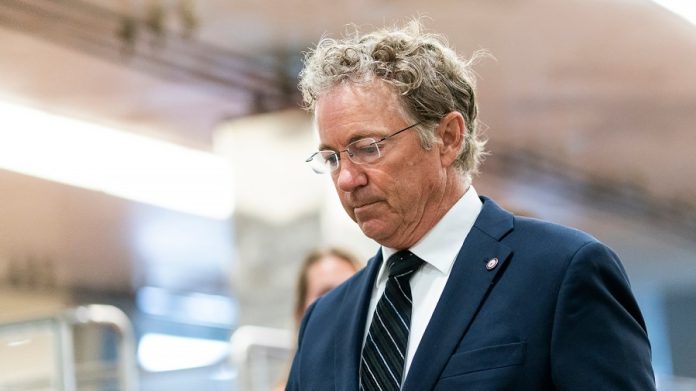

Sen. Rand Paul (Ky.), a libertarian-minded Republican, criticized the Trump administration’s push to acquire a stake in U.S. chipmaker Intel, suggesting the move would be a “step toward socialism.”
“If socialism is government owning the means of production, wouldn’t the government owning part of Intel be a step toward socialism?” Paul said on Wednesday in a post on the social platform X.
“Terrible idea,” he added, linking to a news story about the latest effort.
The Trump administration is in talks to secure a 10 percent stake in the company, which would make the U.S. government one of Intel’s largest shareholders.
Commerce Secretary Howard Lutnick said Tuesday that the money for the stake would come from previously allocated Biden-era funding. Media reports have suggested that the stake would be in exchange for converting grants pledged to Intel under the CHIPS and Science Act.
“The president figures out that we should get, America should get the benefit of the bargain,” Lutnick told CNBC’s “Squawk Box.”
“I mean, that is exactly Donald Trump’s perspective, which is, why are we giving a company worth $100 billion this kind of money?” he continued. “What is in it for the American taxpayer? And the answer Donald Trump has is we should get an equity stake for our money.”
Paul has long pushed for the federal government to play a smaller role in the daily lives of Americans and the U.S. economy. He voted against President Trump’s legacy-defining policy bill, citing concerns about increased spending and the national debt.

Back-to-school season has kicked off with anxiety for more than 42 million people carrying federal student debt. The federal government holds 91.6% of all student loans in the country.
President Donald Trump is shutting down the SAVE (Saving on a Valuable Education) program, established in 2023 under the Biden administration. SAVE paused interest on federal student loans as long as borrowers continued to pay down the principal, and forgave the debt entirely after 10 years.
No more forgiveness. As Forbes reports. On Aug. 1, the clock started ticking again on federal student loan interest.
According to the U.S. Department of Education, this affects 42.7 million borrowers, each with an average student debt of $39,075 — totalling an estimated $1.6 trillion.
If you’re one of them, this is what you need to know about the changes, and how to manage your payments going forward.
SAVE allowed borrowers to make payments based on income and suspend payments if they didn’t earn sufficient money. For those with undergrad degrees, payments were capped at 5% of discretionary income.
The program encouraged borrowers to make regular loan payments by freezing interest as long payments were made monthly — and fully forgave federal student debt after 10 years of regular payments.
Read more: Nervous about the stock market? Gain potential quarterly income through this $1B private real estate fund — even if you’re not a millionaire. Here’s how to get started with as little as $10
It was a relief to millions of Americans who saw their federal student loan debt balloon due to interest over the years — with as many as five million in default on their payments in April 2025 and another 4 million in late-stage delinquency, close to defaulting.
Those numbers are likely to grow due to the changes outlined in Trump’s One Big Beautiful Bill Act. Even if borrowers make regular payments on their student debt, interest is accumulating.
According to CNET, a borrower earning $60,000 a year could see their $217 monthly payments on a $30,000 student loan under SAVE jump by an additional $100 per month under the Trump administration’s student loan plans.
 Netflix
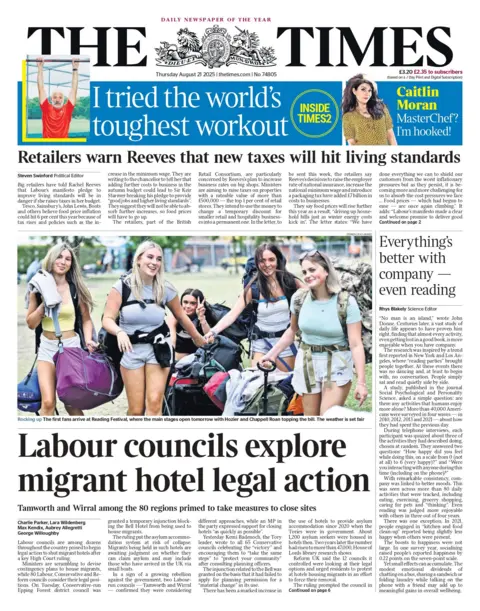
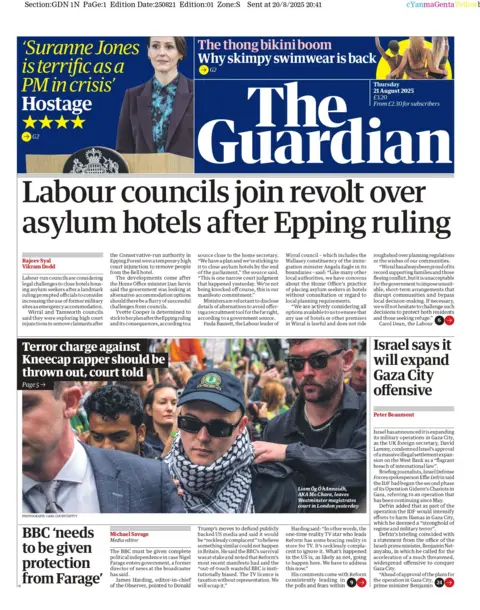
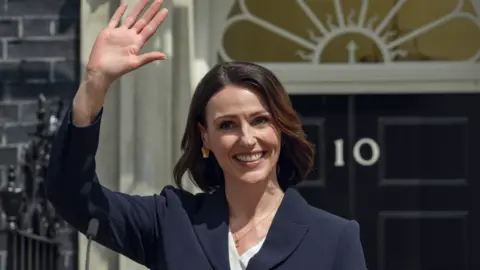
Actress Suranne Jones has taken on the role of many women under immense pressure. In Doctor Foster she suspects her husband of having an affair, in Vigil she investigates a death on board a submarine, and in Gentleman Jack she develops a dangerous lesbian romance.
But none of the roles are quite as pressured as her latest – playing a British prime minister whose husband is kidnapped.
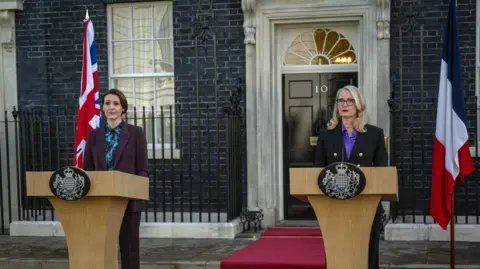
Hostage, Netflix’s new political thriller, sees Jones’ character, Abigail Dalton, build an uneasy alliance with French President Vivienne Toussaint – played by Julie Delpy – who is being blackmailed during a London summit.
The two leaders work together in order to rescue the PM’s husband, unmask the kidnapper and blackmailer, and bring those responsible to justice.
Given its themes of immigration, the funding of the NHS and public trust, audiences may be tempted to connect Hostage to today’s headlines.
But, both stars insist the show is less about mirroring today’s politics and more about creating a thrilling story set in the political world.
“We’re entertaining and we’re in the political world, but it’s in no way a reflection of the world we live in,” Jones tells the BBC.
“It’s political with a small p – there’s enough that roots us in the real world but the world is too complicated to link it directly and I think it would be inappropriate.”
Delpy agrees and says: “Things change every day. It’s impossible to be in the political moment because tomorrow is something else.”
The show’s writer, Matt Charman, explains that there are some connections to the real world as it’s “impossible to write a show that exists in the climate we live in that doesn’t end up feeling that it’s in dialogue with it”.
“If you wrote a show that isn’t connected to our world it would feel weird,” he says, “but I hope the show does have the ability to exist in its own oxygen.”
 Netflix
It is rare to see two female world leaders sharing the spotlight in a political thriller, but, for Charman, making sure Dalton and Toussaint were women was integral to the way the series was conceived and it was both a creative and political choice.
“What was exciting was the idea of women in power and how we explore that,” he says, explaining that he tried to explore how each situation the characters face would be different for a woman.
“There’s a double standard for women, so giving full dramatic freedom to that was very important.”
Charman and Jones have shared an agent for the past 10 years and Hostage came about because Charman really wanted to work with Jones and the pair settled on creating a political thriller.
Jones says she particularly enjoyed exploring “how these two women have to dance around each other”.
“A female politician is used to dealing with men so it’s interesting to see how it plays out when it’s two women.”
While viewers quickly learn about Jones’ character – a loving wife and mother who is idealistic about bettering the country – Delpy’s character is more drawn out and our opinion of her changes throughout the show.
“We made sure not to play into the female politician stereotypes,” Delpy say. “What I like is that these women actually have some things in common like they both want change and came into office hopeful.”
The Guardian describe Hostage as “quite unusual” in that it doesn’t remind you of any other political thrillers.
“It’s a little biting but it’s not House of Cards cynical, it has a breakneck pace but it’s not 24, the dialogue is sharp but never played for laughs,” Zoe Williams writes.
To play Dalton convincingly, Jones, who also served as an executive producer on the show, says she really immersed herself in the reality of political life. She visited the House of Commons, spoke to the Speaker of the House and devoured books, podcasts and documentaries.
“I’m a bit of a geek when it comes to research,” she admits. “I was fascinated by not emulating anyone but by understanding a life I knew nothing about. And it’s the cost of being in a powerful position in that way that really struck me.”
Charman also talks about the extraordinary amount of research that went into creating the show.
I ask him whether Dalton or Toussaint were inspired by any real life politicians and he confesses that they are, but he won’t say who.
“We interviewed a lot of people and Suranne had incredible access to people who had been prime minister who talked about their time in office and the pressure on their family. But it was all agreed that they would speak about this as long as it could remain confidential,” he says.
Jones won’t say which politicians inspired her character but says all of her previous characters are a part of her and she has “a boardroom of personalities” which feed into who she plays.
She says all the research into what it’s like to be a politician “changes your perception for sure” and makes you realise “the cost of being in a powerful position”.
 Netflix
One question the show raises is whether or not it’s possible for a politician today to stick to their ideals once they come into office and while Jones is unsure, Charman is an optimist.
“I wanted to explore how there can be decent people in politics who are fundamentally good but get pushed around,” he says.
He adds that it’s not “inevitable” that people give up their ideals once in office, but “it’s definitely tough to keep your morals”.
Above the thrills and drama of Hostage, Charman says the show explores “what it takes to be a good person in a system that doesn’t always reward good people.”
Delpy is slightly more pessimistic and explains that given “politicians have to be heard, if you’re too reasonable you won’t be listened to as there’s so much noise of both extremes”.
“If you have a moderate view you get lost in the noise as people are only listening to the loudest.”
Today’s News Portal offers breaking news USA in entertainment, health, technology, the economy, music, and fashion as well as breaking news USA. Being the greatest source of top headlines today, we also feature exclusive videos covering entertainment news.
The problem is that sometimes fashion trends come and go but style remains eternal. At Today’s News Portal we recognise fashion as a constant process that gives inspiration, projects and opportunities. Indeed, its is no secret that an item of clothing only gets to assume it’s liveliness once worn.
Please keep tuning with us for more breaking news USA, fashion, entertainment, top headlines today, politics and everything in between.
Contact us: todaysnewsportal@gmail.com
© Copyright - Todays News Portal