12.2 C
New York
Tuesday, May 12, 2026
Home Blog Page 309

Brennan: I hope Secret Service swept Trump limo for 'microchip' after Putin ride

0


Former CIA Director John Brennan raised the possibility in a Saturday interview that Russian President Vladimir Putin could have planted a chip in the presidential limousine when he joined President Trump for a ride to their summit on Friday.

In an interview on MSNBC’s “The Briefing with Jen Psaki,” the Obama-era CIA chief criticized Trump’s approach to the historic summit with Putin and said he hopes the Secret Service did a thorough sweep after they huddled in the backseat of the vehicle.

“The fact that he was given a ride then in the Presidential limousine, The Beast — I certainly hope the Secret Service has swept that vehicle very well, in terms of any type of, you know, small microchip that might have been put in the vehicle,” Brennan said.

Brennan earlier discussed Putin’s experience as a KGB agent and described the Russian leader as an astute manipulator.

Asked for his assessment of the “optics” of the summit, Brennan said, “It’s clear that Vladimir Putin felt very confident from the arrival in terms of how he was greeted.”

“Again, an international pariah, a war criminal, who was basically embraced by the president of the United States on a red carpet in the United States,” Brennan continued. “So I think you could see on Putin’s face, he felt very, very comfortable.”

Trump greeted Putin at the summit on a red carpet spread across the runway of a U.S. air base, and the U.S. president clapped as the Russian leader approached. The two men shook hands, and Putin joined Trump in his presidential limo as they traveled to the summit to discuss an end to the war in Ukraine.

Brennan called the display “shameful” and said he thinks Trump “realized throughout the day that he was getting played by Putin.”

“But also, I think Donald Trump just put himself in this position. He was the one who offered this meeting. He was the one who invited Putin to US territory. He was the one that put together the summit that clearly there was very little preparation for, and they came out empty handed,” Brennan said.

“When I look at what happened today, it was embarrassing. I think it was shameful, but also I think it’s very, very worrisome, from the standpoint of the United States, the leader of the United States, engaged with President Putin and came away with, apparently, nothing at this point,” he continued, noting that Trump effectively “normalized Vladimir Putin for all the tremendous suffering and the devastation that he has wrought in Ukraine.”

What student loan repayment will look like after Trump’s budget bill

0


As of 2025, 42.5 million people have outstanding federal student loans. Of those, approximately 12.3 million — about 29% of borrowers — are currently enrolled in an income-driven repayment (IDR) plan. These plans provide significant relief, giving borrowers more affordable monthly payments.

However, President Trump‘s One Big Beautiful Bill (OBBB) overhauled federal student loans and their repayment options. The changes will have a major impact on both current and future student loan borrowers. And, depending on what loans you have, you may have a limited amount of time to take action — or risk losing repayment options permanently.

The OBBB made sweeping changes, but when they go into effect varies by provision. Whether you have existing loans or plan on taking out loans in the near future, here’s what you need to know.

1. It creates a new standard repayment plan

  • Who it affects: Any borrower who takes out a federal student loan on or after July 1, 2026

  • When it goes into effect: July 1, 2026

The current loan system’s standard repayment plan requires fixed monthly payments over 10 years. The OBBB scraps that design and introduces a tiered repayment schedule based on borrowers’ loan balances.

The new standard repayment plan applies to borrowers who take out a new loan — even if they have existing federal loans — on or after July 1, 2026.

  • Who it affects: All undergraduate and graduate loan borrowers

  • When it goes into effect: July 1, 2026

The bill creates a new repayment plan, the Repayment Assistance Plan (RAP). Unlike the current IDR plans, the RAP requires all borrowers — regardless of income or dependents — to make payments of at least $10 per month. The new plan bases payments on the borrower’s income (minus $50 for each dependent).

For example, say your AGI is $45,000 per year and you have one child. Your payment would be set at 4% of your income or $1,800 per year ($150 per month). But, because you have a dependent child, your payment is reduced by $50 per month, so your monthly payment amount would be $100.

The RAP waives interest that accrues if your payment amount doesn’t cover the full amount, but borrowers will be in repayment for 30 years.

  • Who it affects: Undergraduate and graduate loan borrowers who take out loans on or after July 1, 2026

  • When it goes into effect: July 1, 2026

Borrowers who take out new loans will have just two repayment options.

“Any borrower who takes a loan on or after July 1, 2026, will only have access to the new standard and RAP repayment plans,” said Scott Buchanan, executive director of the Student Loan Servicing Alliance.

New borrowers won’t have access to today’s IDR plans, extended repayment, or graduated repayment.

4. Current undergraduate and graduate borrowers will transition to new plans

  • Who it affects: Undergraduate and graduate loan borrowers with existing loans

  • When it goes into effect: July 1, 2028

Legacy undergraduate or graduate borrowers — meaning those with existing loans — have a bit more time before they need to change their payment plans. As long as you don’t take out any new loans on or after July 1, 2026, you can continue under any of the following repayment plans for the time being:

  • Income-Contingent Repayment (ICR)

  • Income-based Repayment (IBR)

  • Pay As You Earn (PAYE)

  • Saving on a Valuable Education (SAVE)

  • Extended repayment

  • Graduated repayment

However, the OBBB will phase out most of these options over time, and all borrowers in discontinued payment plans will be required to enroll in a new plan — either IBR, the new RAP, or the new Standard Repayment plan — by July 1, 2028.

Read more: Can you change your student loan repayment plan?

  • Who it affects: Borrowers who take out new Parent PLUS Loans on or after July 1, 2026

  • When it goes into effect: July 1, 2026

Under the current system, Parent PLUS Loan borrowers can consolidate their loans with a Direct Consolidation Loan and qualify for an ICR repayment plan (and if they work for an eligible employer, they can qualify for Public Service Loan Forgiveness).

The OBBB eliminates those features; anyone who takes out a new Parent PLUS Loan on or after July 1, 2026, will only be eligible for standard repayment. Parents can’t qualify for alternative payment plans or PSLF.

“[Parent borrowers] will not be eligible for RAP or other old repayment plan options,” said Buchanan.

“Keep in mind: The new standard plan will flex monthly payments based upon the balance of the loan, offering a lower monthly payment over a longer period for larger balances, which is different from the old standard plan that was set at a 10-year term regardless of balance.”

  • Who it affects: Current parent loan borrowers

  • When it goes into effect: July 1, 2026

Parent PLUS Loan borrowers will no longer be eligible for alternative payment plans. For existing borrowers, only those who consolidate their debt by July 1, 2026, and enroll in an IDR plan will have access to alternative payment plans.

If you have not yet consolidated your loans, you must complete the process before June 30, 2026.

“Any Parent PLUS borrower who consolidates or takes out new loans on or after July 1, 2026, would only have access to the standard plan,” said Adam Minsky, a student loan attorney.

  • Who it affects: All student loan borrowers

  • When it goes into effect: July 1, 2026

For borrowers who cannot afford their payments, consolidating with a Direct Consolidation Loan could provide some relief. It gives some borrowers access to repayment plans they wouldn’t otherwise qualify for, and some borrowers can qualify for 30-year terms and get more affordable payments.

Although Direct Consolidation Loans will still exist in the future, the OBBB reduces their usefulness.

“Consolidation will be an option, but one with very little practical value for most borrowers going forward after July 1,” said Buchanan.

The new RAP and standard repayment plan have longer repayment terms. And consolidating on or after July 1, 2026, will cause legacy borrowers to lose access to alternative payment plans.

The OBBB completely changed federal financial aid and repayment options, and details are still forthcoming on some updates. For example, the ICR plan will be eliminated, but the deadlines borrowers must meet are unclear.

“We will publish more information about the ICR enrollment deadlines that borrowers must meet before ICR is eliminated in order for them to continue to be able to access the IBR Plan,” the Department of Education said on the Federal Student Aid announcement site.

As you adjust to these changes, check in with the announcement page for the latest details. And if you need help understanding your loan options or enrolling in a different repayment plan, contact your loan servicer.


‘Play Instantly on Discord’: Fortnite will be Nvidia and Discord’s first instant game demo

0


Nvidia’s GeForce Now is getting a big upgrade next month — and it’s also part of an intriguing new experiment. Nvidia, Discord, and Epic Games have teamed up for an early test of instant game demos for Discord servers, which could theoretically let you immediately try a game without buying it, downloading it, or signing up for an account.

“You can simply click a button that says ‘try a game’ and then connect your Epic Games account and immediately jump in and and join the action, and you’ll be playing Fortnite in seconds without any downloads or installs,” says Nvidia product marketing director Andrew Fear.

That doesn’t sound completely frictionless if you still need an Epic Games account to play, and it’s not clear if Nvidia, Epic and Discord will offer the demo outside of Gamescom just yet. Nvidia is calling it a “technology announcement” rather than a confirmed feature, one that’ll hopefully see game publishers and developers reach out if they’re interested in potentially adding it to their games.

After Sony bought Gaikai in 2012, it initially suggested it would offer instant try-before-you-buy game demos on the PlayStation 4 too, but that never happened. Years later, Gaikai’s founder told me that publishers didn’t necessarily want it.

How much has the US given to Ukraine?

0


Tom Edgington and Nick Eardley

BBC Verify

Getty Images Ukrainian army soldiers use a 105mm American M101 Howitzer artillery piece on Ukraine's northeastern frontline with RussiaGetty Images

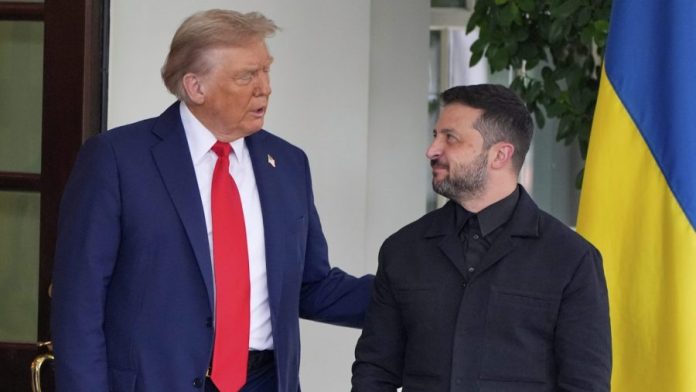
The visit of Ukraine President Volodymyr Zelensky to the White House for talks aimed at ending the war has put the scale of United States (US) support for Ukraine under the spotlight again.

President Donald Trump has criticised the amount of aid provided by the US compared to Europe in the past. But the figures he’s previously cited are not backed by the evidence.

BBC Verify has been taking a close look at how much the US has spent since Russia’s full-scale invasion of Ukraine in February 2022 and how it compares with Europe’s contribution.

How much has the US spent in total?

The US has spent a total of $130.6bn (£98.9bn) between 24 January 2022 and 30 June 2025, according to the Kiel Institute, a Germany-based think tank that tracks international support for Ukraine.

The US Department of Defense has provided its own figure looking at all spending on Operation Atlantic Resolve – a response to Russia’s invasion of Ukraine.

It says $184.8bn has been “appropriated” – a figure that covers US military training in Europe and replenishment of US defence stocks.

This total runs only to 31 March 2025, making it less up to date than the Kiel Institute’s calculation – though notably higher.

BBC Verify has asked the US departments of Defense and State if they can supply more recent figures.

What has Trump previously claimed?

Back in February, when he was hosting France’s President Macron, Trump claimed:

“We’ve spent more than $300bn and Europe has spent about $100bn – that’s a big difference”

Getty Images President Macron sat next to President Trump in the Oval OfficeGetty Images

BBC Verify looked at the claim at the time and concluded Trump’s numbers did not add up as the published numbers – from both Kiel and the US government – showed the US had spent a lot less than $300bn.

This remains the case six months on.

How does US spending compare to Europe?

It is true that the US is, by some margin, the largest single donor to Ukraine. But Europe combined has spent more money than the US, according to the Kiel Institute.

Between January 2022 and the end of June 2025, Europe as a whole spent $165.7bn on Ukraine, compared to the US’s $130.6bn over the same period, according to Kiel Institute calculations.

The figure includes aid directly from the European Union (EU), but also from bilateral deals from European countries, both inside and outside the EU. It includes military, financial and humanitarian aid.

Will Europe get its money back while the United States doesn’t?

Trump has previously claimed Europe would get its money back as it was “loaning” it to Ukraine.

This prompted Macron – who was sat next to the US president in their Oval Office meeting in February – to intervene, saying both Europe and the US had given a mixture of grants and loans.

President Macron is correct, according to Kiel figures specifically on financial aid. But the institute’s figures also suggest President Trump has a point – the US has sent more grants, while the EU sent more loans.

However, again, there are different figures out there.

As of 18 July, the EU says its members have provided about $180bn so far, with loans making up 35% of the total.

Like the United States Department of Defense, the EU has used a broader definition of what counts as aid to Ukraine.

EU loans will have been on generous terms – so Ukraine will be repaying less interest than it would normally. In some cases, Ukraine isn’t expected to pay anything, with repayments coming from revenues from frozen Russian assets.

What we can say is that aid to Ukraine has been a mixture of loans and grants.

How much has the UK given to Ukraine

The UK is one of the biggest individual state donors to Ukraine – the latest was a $2.8bn (£2.3bn) loan agreement signed during Zelensky’s visit to London on 1 March.

At the end of July, the UK government had committed $29.5bn (£21.8bn) for Ukraine overall. This includes $17.6bn (£13bn) in military support.

The only countries to have spent more are the United States and Germany, according to Kiel data.

However, the UK’s contributions are much smaller than the US

That raises a question for the UK and other European countries: if peace is not secured in the near future and US decides to withdraw a large part of its funding, can other states make up the difference?

That would require a significant increase in their current contributions.

Additional reporting: Thomas Spencer, Christine Jeavans and Daniel Wainwright

BBC Verify banner

Handwritten proof of Holocaust theft should compel Congress to act

0


In 1944, Hungarian officials sat down with pen and paper and recorded by hand the seizure of 90 Torah scrolls from Jewish families. This was not wartime chaos, but deliberate, state-organized cultural erasure.

That document, buried for decades in microfilm archives, was recently made public for the first time through the Holocaust Art Recovery Initiative. It is a single page, handwritten in a steady but chilling script. It doesn’t describe battles or casualties. It inventories sacred scrolls stolen from Jews who were soon to be deported.

These 90 Torahs were part of a larger pattern of thousands of cultural, artistic and religious items looted by Nazi-allied regimes across Europe. In Hungary alone, tens of thousands of Jewish-owned artworks, books and ceremonial objects were systematically stolen, catalogued and in many cases absorbed into state museum collections. Families were erased. Their heritage was buried — sometimes literally.

Today, many of those items remain in public institutions. And in the U.S., survivors and their heirs often face insurmountable legal barriers when trying to recover what was taken.

That’s why Congress must pass the Holocaust Expropriated Art Recovery Act Improvements of 2025, a bipartisan bill introduced in the Senate by Sen. John Cornyn (R-Texas) and in the House by Rep. Laurel Lee (R-Fla.). This legislation would strengthen and extend the original HEAR Act, first passed in 2016, which was designed to ensure Holocaust restitution claims could be heard on their merits.

That law is set to expire in 2026. Without swift action, survivors and families may permanently lose access to justice.

New evidence like the handwritten Torah document reinforces the urgency. This isn’t theoretical. It’s tangible. And it speaks to a broader truth: The Holocaust wasn’t just a genocide of people — it was a systematic looting of culture, identity and memory.

The legal fight is not easy. As recent cases like Republic of Hungary v. Simon demonstrate, foreign sovereign immunity laws, expired statutes of limitations and bureaucratic stonewalling have made it nearly impossible for families to recover what was taken. The HEAR Act Improvements of 2025 addresses these very challenges, extending the timeline and reinforcing the right to be heard in U.S. courts.

More than 25 national organizations have endorsed the legislation, including the World Jewish Restitution Organization and the Claims Conference. They rightly note that each object stolen represents not just property, but a life interrupted — and a legacy denied.

Restitution is not about money. It is about dignity. It is about accountability. And, yes, it is about history. When lawmakers see the original documents — handwritten proof of cultural theft — they begin to understand why this work cannot wait.

Congress still has time to do the right thing. But the clock is ticking, and the handwriting is on the page.

Jonathan H. Schwartz is a litigation partner at Taft-Detroit and co-founder of the Holocaust Art Recovery Initiative. He also serves as president emeritus of the Jewish Bar Association of Michigan and recently authored an evidence report on Hungarian Holocaust-era art theft.

Analyst Report: Uber Technologies Inc

0


Analyst Report: Uber Technologies Inc

Ruben Amorim uses Sir Alex Ferguson tactic to defend Man Utd keeper call

0


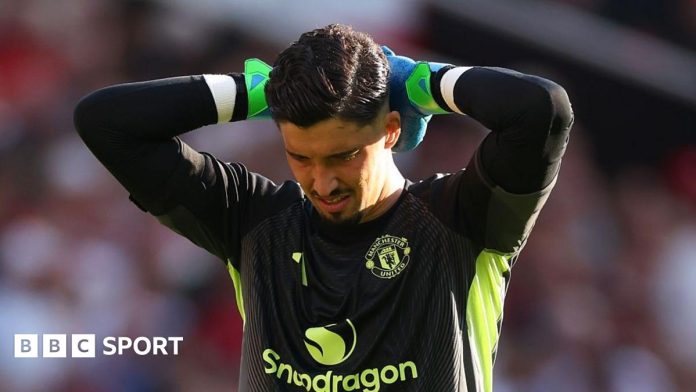
Ruben Amorim was 55 seconds into a post-match news conference that lasted less than three-and-a-half minutes at Old Trafford on Sunday when he was asked a question that made him flinch back and raise his eyebrows in disbelief.

It concerned his goalkeeper and whether he had given any consideration to picking veteran former England man Tom Heaton ahead of Altay Bayindir for the Premier League defeat by Arsenal.

“Why?” came the response, the stare accompanying it unwavering.

What followed was the kind of exchange that used to be commonplace at Manchester United when Sir Alex Ferguson was the manager.

Essentially, journalists frequently asked questions that Ferguson either felt were genuinely ridiculous or that threatened to expose a weakness. Either, Ferguson reasoned, demanded a fierce rebuttal and a circling of the wagons.

“You are either with us, or against us,” was Ferguson’s mantra. The Scot viewed almost every journalist in the ‘against us’ camp, so he tended to treat their opinions with disdain, irrespective of their validity.

Amorim spoke to Ferguson just over a week ago, at the opening of United’s revamped training ground. Whether tactics in dealing with the media were discussed is open to question.

But Amorim has certainly used this summer to try and create a tight bond with his squad, which lies behind how Sunday unfolded.

Events can change situations quickly when a transfer window is nearing its close and it has been established Andre Onana’s former club Inter Milan are looking at bringing in a new goalkeeper. However, it is still the view of those at United on Monday there will be no additions to that part of their squad.

United chose to refresh their attacking positions with the finance that was available to the club this summer. When it became apparent Gianluigi Donnarumma was likely to be available as he is no longer required at Paris St Germain, the word coming out of Old Trafford was the Italian goalkeeper would not be heading their way. That stance is not thought to have changed.

Picking Onana against Arsenal is bound to have come into Amorim’s thinking. After all, it couldn’t have been any clearer who his first choice was when the 29-year-old was picked for the Europa League final in May even though he had made high-profile mistakes in the build-up to the defeat by Tottenham in Bilbao.

However, while Amorim said in his pre-match news conference on Friday afternoon the Cameroon international was available to face Mikel Arteta’s side, by kick-off, he had only three full training sessions behind him after suffering a hamstring injury early in July.

In Onana’s absence, Amorim thought Bayindir had performed well during a summer campaign across three countries in which United remained unbeaten and the 27-year-old had featured in three-and-a-half of the five games.

It was on that basis Amorim concluded in order for players to believe his ‘group’ philosophy, it would be the wrong decision to axe Bayindir, who in his eyes had done nothing to deserve it, for Onana, whose fitness had to be taken on trust.

That he chose to get on the front foot in his post-match news conference after his decision had been questioned seemed to be part of a wider strategy.

Zelensky, Europeans highlight 'future security architecture' ahead of Trump meeting

0


Ukraine’s president and a number of European leaders on Monday said the U.S. must be a partner in creating the future security architecture for Ukraine and the entire European continent. 

The statement came after Ukrainian President Volodymyr Zelensky huddled with European leaders at the Ukrainian embassy in Georgetown before heading to the White House to meet with President Trump.

While Trump has ruled out bringing Ukraine into NATO, he has raised some sort of security guarantees for the country as part of any peace deal with Russia.

“The leaders welcomed the readiness of the United States to participate in guaranteeing security for Ukraine. One of the key issues in the negotiations with President Trump will be the joint participation of the United States and Europe in creating the future security architecture for Ukraine and, consequently, for the entire European continent,” the statement read. 

The signatories to the statement included President of Finland Alexander Stubb, Prime Minister of the United Kingdom Keir Starmer, President of the Council of Ministers of Italy Giorgia Meloni, President of the European Commission Ursula von der Leyen, and NATO Secretary General Mark Rutte.

UK’s South Eastern Railway implements IsoMat tech to mitigate heat issues

0


The South Eastern Railway has collaborated with Flint Engineering, a UK-based green technology start-up, to address the issue of excessive heat in railway signalling cabinets on the Tonbridge to Hastings line.

The new IsoMat system, which is patented and does not require any power, maintenance, or modifications to the internal cabinet, can be installed in under an hour and is designed to manage internal temperatures that can exceed 70°C.

The deployment will focus on ten of the Kent Route’s most vulnerable cabinet locations this summer.

Flint Engineering’s IsoMat technology has demonstrated the ability to reduce peak temperatures by more than 21% on the hottest days, utilising a passive heat exchanger installed on the cabinet roofs.

The system employs a flat aluminium sheet design with an internal network of sealed channels, allowing for efficient thermal energy transfer.

This approach is said to significantly outperform traditional materials such as copper and aluminium in heat dissipation.

Following a successful pilot trial, Flint Engineering is preparing to increase the number of IsoMat units for broader deployment across additional high-risk cabinet locations by summer 2026.

South Eastern Railway chief operating officer David Davidson said: “Flint’s IsoMat technology provides a simple, effective solution to a complex problem, helping us maintain service reliability even during heatwaves without requiring power, maintenance or complicated installation procedures.”

This initiative is part of an effort to explore sustainable solutions to climate change impacts, including passive cooling technologies, in collaboration with Network Rail’s Technical Authority and Contracts & Procurement department.

Network Rail, which oversees a vast network of rail infrastructure, has faced challenges related to high internal temperatures in signalling cabinets, which can lead to operational disruptions and increased maintenance costs.

The introduction of the IsoMat system is expected to alleviate these issues, thereby improving overall rail reliability.

Flint Engineering is also commencing commercial production of the IsoMat technology this year, with interest from markets in the UK, North America, and the Middle East.

The technology has potential applications beyond railways, including sectors such as construction and commercial refrigeration, where effective temperature management is essential.

Flint Engineering CEO Mark Robinson said: “Our partnership with Network Rail represents a perfect application of our technology where it can make a real difference to critical infrastructure.

The Hundred 2025 results: Southern Brave thrash Oval Invincibles to lead table

0


Southern Brave thrashed Oval Invincibles by 89 runs, the biggest margin in terms of runs in the history of The Hundred’s women’s competition, to move clear at the top of table.

Their fifth win from five matches broke a record that was only set on Sunday, when London Spirit beat Birmingham Phoenix by 88 runs.

Brave’s formidable top-order of Maia Bouchier (34), Danni Wyatt-Hodge (26) and Laura Wolvaardt (36) propelled them to a strong 161-6, while Mady Villiers took 3-17 as the visiting side were bowled out for 72.

Invincibles, who chose to chase at the toss, struggled in pursuit of their target, losing openers Lauren Winfield-Hill and Meg Lanning in the space of three Sophie Devine balls inside the powerplay.

Bell then removed her international team-mates Alice Capsey and Paige Scholfield with successive deliveries, before Villiers accounted for Marizanne Kapp and Phoebe Franklin to leave Invincibles 43-6.

Amanda-Jade Wellington offered some element of resistance, scoring an unbeaten run-a-ball 18, but no other Invincibles batter passed 10.

Debutant Daisy Gibb was the last batter to fall, caught by Villiers off Georgia Adams, bringing Invincibles’ dismal effort to an end with 17 balls to spare.

Brave now sit top of standings outright with 20 points, having previously been behind London Spirit on net run-rate, while Invincibles remain in fifth.