According to Federal Reserve Economic Data, the average American only manages to save 4.5% of their disposable income annually. With economic growth slowing and consumer prices going up, it’s more important than ever to ensure your money is working harder for you.
That’s where a high-yield savings account (HYSA) comes to the rescue.
A HYSA leverages high interest rates to help you save more faster — which is perfect if you’re looking to set up an emergency fund or have a specific savings goal in mind.
Read on to find out what a HYSA is, the key benefits of high-yield accounts, and get some of the best HYSA deals in August 2025.
A high-yield savings account (HYSA) is a savings product that offers substantially higher interest rates than traditional savings accounts.
High-yield accounts work a lot like traditional savings products. You can link existing checking accounts, make deposits, and withdraw your cash when you need it.
But banks offer better annual percentage yield (APY) rates on HYSAs for a couple of reasons.
The best high-yield account providers tend to be online-only challenger banks. They don’t have physical branches, which means lower operating costs. To win business, those savings are then passed on to customers in the form of higher APYs.
High-yield accounts also tend to offer variable rates.
That means the rate you’re shown when opening an account may fluctuate when the Federal Reserve changes its base borrowing rate. Rates can also shift in line with demand and each bank’s respective growth strategy.
You should also bear in mind that some high-yield accounts have access limits.
For example, you might need to wait 1-2 working days to receive your funds after requesting a withdrawal. Many HYSA providers also impose monthly withdrawal limits.
If you’re debating whether to set up a HYSA, here’s what makes high-yield accounts stand out:
The core benefit of a HYSA account is higher levels of compound interest.
According to the Federal Deposit Insurance Corporation, the average savings account yield in July 2025 was 0.38%. By contrast, some of the best high-yield accounts are paying over 4.00% APY.
That means you could earn up to seven times more on your deposit by placing it in a HYSA.
Because many HYSA providers are online banks with few overheads, they can afford to drop monthly maintenance fees.
That makes saving cheap and simple.
A HYSA is an easy way to accumulate interest without sacrificing liquidity.
Unlike other high-interest savings products, the cash you deposit in a high-yield account is still accessible. Some online HYSAs take a couple working days to process withdrawals, but there’s a growing range of accounts that offer instant 24/7 access.
There’s no such thing as a sure thing in markets. That’s one reason savers turn to HYSAs.
The FDIC insures all balances of up to $250,000. Even if your online bank goes bust, you’re not going to lose your deposit. That level of safety, paired with relatively high interest rates, makes high-yield accounts an attractive alternative to investing.
Opening a high-yield savings account is typically a fast and straightforward process.
Here’s how it works:
Start by shopping around. Create a shortlist of savings providers and products, then compare:
APY
Deposit requirements
Account fees
Access rules
Stack these features against your savings goals and access requirements. Then, go for the account that looks like the best fit.
Don’t be afraid to get in touch with providers to let them know you’re shopping around. They may pull out some extra incentives.
After selecting the high-yield account you’re after, it’s time to apply.
You’ll need to have documentation handy to complete the application. This will include your:
Most HYSA applications are online-only. They take a few minutes to complete, and approval is often instant.
After approval, you can immediately deposit money into your HYSA.
The easiest way to do this is by making an external bank transfer from an existing checking account. Some high-yield account providers will also offer ACH options.
After that, you can sit back, relax, and watch your savings build. Most HYSA providers compound interest and deposit interest payments on a monthly basis.
There are some attractive HYSA options available on the market in 2025.
To help you get started, here are some top picks that have no monthly fees:
Axos ONE® Savings: 4.46% APY with $1,500 minimum balance.
Peak Bank Envision Savings: 4.35% APY with $100 minimum balance.
EverBank Performance Savings: 4.30% APY with $0 minimum balance.
Bread Savings: 4.25% APY with $100 minimum balance.
Openbank High Yield Savings: 4.20% APY with $500 minimum balance.
CIT Bank Platinum Savings: 4.00% APY with $5,000 minimum balance.
Barclays Tiered Savings: 3.90% with $0 minimum balance.
Remember: These are the tip of the iceberg. There are loads of HYSAs to choose from, and the best fit for you will depend on a few factors.
Go for an account that offers a minimum balance you’re comfortable with and accessibility rules that work for you. It’s also important to look at fees. And if you’d like easy and regular contact with bank staff, you might need to trade in the highest possible APY that online-only banks offer.
Not sure if a HYSA is right for your savings strategy? Don’t worry. There are several popular alternatives worth exploring:
Certificates of Deposit (CDs) let you lock up your funds for a set term. This term can vary anywhere between three months and five years, and the rate is generally on par with a HYSA.
Unlike a high-yield account, a CD’s interest rate is fixed for the duration of your term.
The catch: your deposit is inaccessible. Early withdrawals often lead to large fees or account closure.
A money market account (MMA) essentially combines the features of a checking and savings account.
MMAs offer debit cards and can make transactions like a checking account. They also offer higher APY than a traditional savings account.
In exchange for added functionality, the APY on an MMA is normally lower than a HYSA or CD. Minimum balances and monthly maintenance fees are also common.
Treasury Bonds are another easy way to put idle cash to work without shouldering much risk.
As of August 2025, US Series I Savings Bonds (I Bonds) are posting an average rate of 4.24%. Returns are adjusted for inflation, which makes bonds a relatively safe investment. Just remember you can’t cash in a bond for 12 months — and if you cash in before the five-year mark, you’ll lose three months of interest.
At the end of the day, a high-yield account is an easy way to generate high levels of interest on your savings.
There’s a wide range of HYSA products available that offer varying rates, deposit requirements, and access rules. So you should be able to find a solution that aligns with your savings strategy.
But don’t forget to shop around. And if a high-yield savings account doesn’t quite work for you, be sure to check out alternatives like CDs or MMAs so you can start cashing in on higher interest rates.
On the date of publication, Nash Riggins did not have (either directly or indirectly) positions in any of the securities mentioned in this article. All information and data in this article is solely for informational purposes. This article was originally published on Barchart.com
In a rare public use of English, Russian President Vladimir Putin invited US President Donald Trump to Moscow at the end of their joint press conference in Alaska.
“Ooh, that’s an interesting one,” Trump responded.
Putin spoke in Russian for the majority of the press conference, but switched to English to invite him to Moscow.
The Department of Justice (DOJ) agreed to back away from appointing a commissioner to take command of Washington, D.C., police after a federal judge expressed concerns Friday.
Government attorneys said at a hearing that Drug Enforcement Administration (DEA) head Terry Cole will instead become President Trump’s designee to request services from the Metropolitan Police Department (MPD) under the president’s emergency authority invoked this week.
U.S. District Judge Ana Reyes indicated she was prepared to declare Cole’s installment as commissioner unlawful if the administration did not change course. After nearly two hours of private conversations between the two sides, the Justice Department relented without the judge intervening.
“We’re rewriting this in the next 45 minutes,” Justice Department attorney Yaakov Roth told the judge.
The government submitted the new version on the court docket a short time later, signed by Attorney General Pam Bondi.
It marks a victory, at least for now, for city officials in their lawsuit that seeks to keep command of the police force under MPD Chief Pamela Smith.
But the judge suggested the administration is ultimately likely to succeed in at least some of its efforts to demand that MPD officers assist with Immigration and Customs Enforcement (ICE).
“If the president declares an emergency with respect to whatnot, and says I want the services of the MPD to help ICE arrest illegal aliens, I don’t — I’m not sure that there’s anything wrong with that,” Reyes said.
The judge signaled she’ll hold additional proceedings on that and other questions next week.
In the meantime, D.C. Attorney General Brian Schwalb’s (D) office made clear it’s prepared to return to court immediately if it’s not satisfied with the administration’s promised rewrite.
Citing a crime emergency, Trump invoked emergency powers Monday under the Home Rule Act to begin exerting control over the MPD as he also deployed the National Guard. The battle over the MPD landed in court after the administration escalated its efforts Thursday via a new order from Bondi.
Bondi announced Cole would become the MPD’s emergency police commissioner and must approve any new policy directives moving forward. The order also lifted several MPD practices related to cooperation with immigration enforcement.
Schwalb quickly sued by the morning, leading to a hastily scheduled hearing in Reyes’s courtroom Friday afternoon. Reyes is an appointee of former President Biden.
At the hearing, the judge noted she was the first judge in the Home Rule Act’s roughly 50-year history to consider the emergency provision Trump has invoked.
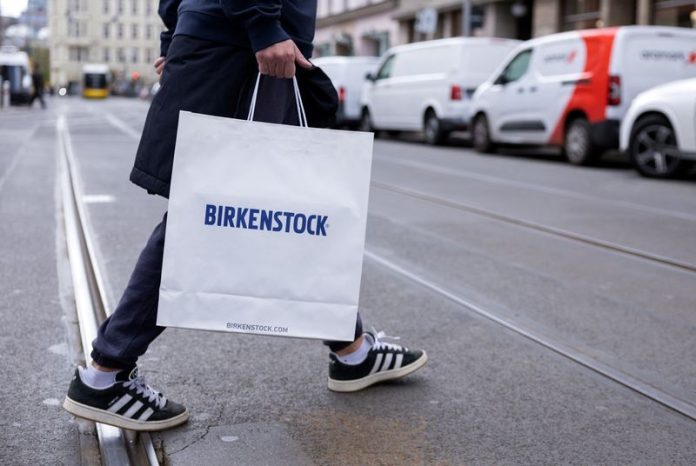
LONDON (Reuters) -Well-heeled shoppers around the United States seem – so far at least – willing to soak up price hikes for aspirational products from trendy Birkenstock sandals to Bugaboo prams, despite the impact of trade tariffs and belt-tightening elsewhere.
German sandal and clog brand Birkenstock has enjoyed strong consumer demand with little pushback from U.S. retailers since hiking prices at the start of July, its chief executive said on Thursday.
As brands raise prices and cut costs to mitigate the impact of higher U.S. tariffs on their imported products, a key question is the extent to which consumers will be put off and buy less, or simply walk away from purchases.
Comments from Birkenstock, Bugaboo, Coach, Ralph Lauren and other brands at the premium end of the market suggest that, so far, affluent consumers are shrugging off price hikes.
“We saw no pushback or cancellations following the July 1st price increases implemented in response to tariffs,” Birkenstock CEO Oliver Reichert told analysts on a call, adding demand for the brand has been “tremendously strong.”
Bank of America, the largest consumer facing U.S. bank, said this week that middle- and upper-income earners spent more on their credit cards in July than the same month last year. In contrast, spending among the lowest income bracket remained flat, the bank found.
Overall U.S. consumer spending may stay strong, Bank of America said, as long as higher-income individuals keep spending. Lower-income earners account for only 15% of all U.S. consumer spending, according to Bank of America.
However, Procter & Gamble, maker of Tide detergent, reported signs of spending cutbacks among higher-income consumers, indicating that shoppers may be becoming more selective with their purchases.
Bugaboo, a Netherlands-based maker of expensive baby gear, also raised prices on its strollers, high chairs and play pens by $50-$300 in May because of U.S. tariffs. Retailers were open and accepting.
“In general we did not see any pushback. They are like us. They understand it is a fluid situation,” Chief Commercial Officer for North America, Jeanelle Teves, said.
Bugaboo manufactures in China and sells strollers for more than $1,000 at Target, Nordstrom, Bloomingdales and independent mom and pop stores.
Coach handbags also remain in strong demand despite a gloomier economic outlook: the brand drew in more than 4.6 million new customers in North America this year, many of whom are Gen Z and millennials, Tapestry CEO Joanne Kuvoiserat said on Thursday.
Coach, whose popular Tabby shoulder bags retail for $350, will maintain its operating profit margin despite the pressure of tariffs, Kuvoiserat said.
Ralph Lauren, meanwhile, raised its annual revenue forecast as shoppers snapped up items like its $398 Polo Bear sweaters. But consumers’ behavior in the coming months remains hard to predict, CEO Patrice Louvet highlighted on a conference call with analysts.
“The bigger unknown here today is the price sensitivity and how the consumer reacts to the broader pricing environment. So that’s what we’re watching very closely as we head into the second half.”
(Reporting by Savyata Mishra in Bangalore and Helen Reid in London; Additional reporting by Siddharth Cavale and Jessica DiNapoli in New York; Editing by Richard Chang)
Former NFL players now entering retirement age are more likely to be living with chronic pain or a disability, are more depressed and anxious, and are far more likely to report having some type of cognitive decline than the average American man, a new survey has found.
Yet, in spite of all that, the vast majority say they would do it all over again, and that playing football had a positive effect on their lives.
The findings are the result of a survey conducted by ESPN and independent health-policy research, polling and news organization KFF that sought to assess the life outcomes of NFL players who are around the typical retirement age. The survey attempted to contact all 1,532 players who played in an NFL game during the 1988 season; 546 men participated, with an average age of 62, representing about one-third of the players in the league that year.
The 45-question survey, the largest independent study of its kind, asked a range of questions about the players’ day-to-day lives in the years after they retired from the NFL. Among the survey’s key findings:
Almost all the ex-players reported having at least some pain the past three months, with half saying they had pain every day and three-quarters saying pain limited their work and personal activity. Almost half said they had “serious difficulty” concentrating, remembering or making decisions at times. By several measures, former players were significantly more likely than men their age to report experiencing pain and mental health issues. (Comparisons to men of a similar age are based on data from large federal health surveys or other KFF surveys.)
Fifteen percent of players said a doctor had diagnosed them with dementia. One study based on the National Health Interview Survey found that just under 4% of men ages 65 and older have been diagnosed with dementia.
About half of players said they felt depressed in the past 12 months, compared with a quarter of men aged 55 to 75.
Six in 10 players reported living with some type of disability — including difficulty walking or climbing stairs, dressing or bathing — three times the rate of men their age.
Black players fared worse than white players across the board, from physical and mental ailments to income and interactions with law enforcement.
Ex-players continue to embrace the game in a variety of ways but were divided in their attitudes about youth tackle football. About one-third said the risks of tackle football before high school outweigh the benefits, and 1 in 4 said they would support a ban on tackle football for children below the high school level.
Still, 9 out of 10 ex-players said they would make the same decision to play professional football. Even among players who said the NFL had a negative effect on both their physical health and mental well-being, 78% said they would decide to play again.
In a statement responding to the survey, an NFL spokesperson noted the league’s efforts to fund health and wellness programs through its collective bargaining agreement with the NFL Players Association.
“In the last CBA alone, the parties invested over $2 billion to further enhance player pension and health benefits and has resulted in significantly increased access to long-term care, counseling, and career transition programs,” the statement said.
The spokesperson also cited efforts to support former players through the NFL Legends Community and steps to make the game safer, “including by implementing strategies to reduce concussions and remove head impacts from the game.”
The league last season reported 182 concussions, a 17% drop from the previous season and the fewest since it began tracking the data in 2015.
“While we’re encouraged by this progress, we know there is no finish line when it comes to the health and safety of players and are committed to find ways to continue to improve,” the statement said.
A spokesperson for the NFLPA pointed to programs including the Professional Athletes Foundation and the association’s Former Player Services department that provide support to ex-players. “We recognize the toll that the game of football has taken on the bodies and minds of our former player population. Their post-career pain and challenges are well documented, and our union is committed to contributing useful resources and support,” the spokesperson said in a statement.
Previous studies of NFL players, many funded by the league or the NFLPA, have largely focused on head trauma and physical ailments sustained from the game. ESPN and KFF’s survey polled players about their physical well-being — including the number of surgeries they’ve had, their ability to accomplish certain tasks, and the pain they feel — but also their mental acuity, with questions about feelings and forgetfulness. They also were asked about their post-NFL careers, marriages, children, income, run-ins with police and their opinions of and engagement with the NFL.
Players answered open-ended questions with the assurance their comments would remain anonymous. In their responses, some grappled with the pros and cons of their playing careers.
For example, when asked why they would or wouldn’t play professional football again, more than 30 responses included phrases like “childhood dream” and “dream come true.” One player noted the “great competition and camaraderie” of football and said that, even though he had been diagnosed with early Alzheimer’s, “I would do it again.”
Other athletes pointed to the lifelong opportunities gained by an NFL career — including money, fame and social confidence — as a reason for enduring the steep toll.
“Playing football … I encountered people from different ethnicities, religious beliefs, achievements and family units that gave me great perspectives on living,” one player said.
Those who said they wouldn’t choose to play again often expressed anger and regret. One player listed a litany of surgeries: two hip replacements, five shoulder replacements and one knee replacement. “I can’t play catch with my grandson. I can’t play the guitar or piano anymore. I can’t go hiking … I can’t do a f—ing thing physically,” he said.
Said another player: “Football has been a blessing to me, but it has also been a curse in the long run. Sometimes I wish that I never played this dear sport that I loved. … The sport of football gave me so much. But it took even more from me, in ways you can’t explain unless you played yourself.”
Some cited mental health issues: “I blew up two great relationships and have had issues with my kids as my temper and loss of memory hamper my ability to have a coherent conversation. My quality of life sucks, just sitting here waiting to die.”
Another player said he has had surgery on both hips, both knees and “an unknown number of concussions.”
“I believe that my wife is almost at her wits’ end with me because I am not the same person that she met over 30 years ago,” he said. “Don’t get me wrong, my life is not as bad as it could be, and for that I’m grateful.”
The overwhelming opinion that the pain and sacrifice were worth the opportunity held true for players regardless of race. But in many cases, Black players were more likely than white players to report mental health issues and cognitive decline, physical pain that limits their work or life activities, and financial difficulties. For example, 37% of Black former players reported that they were unable to work because of a football-related disability, compared with 19% of white players.
While previous studies have shown disparities between Black and white people across a range of life and medical outcomes more generally, Black players also reported more problems — and a greater severity of problems — than other Black men their age across several physical and mental health metrics.
The survey also sought to gauge what players thought about youth football, including their decisions to let their own children play. About 6 in 10 players encouraged their children to play football, including nearly half who said the sport had a negative impact on their physical and mental health.
The survey also attempted to account for at least 128 players from the 1988 season who have died or who couldn’t take the survey because of a physical or mental ailment. Surveyors contacted relatives or other representatives to answer questions as a proxy for those athletes. Of the 19 proxies who agreed to take the survey (18 of whom represented a player who has died), 11 said football had a positive impact on their loved one’s life and seven said it had a negative impact. One said there was no impact.
ESPN chose to survey players from the 1988 season after the widow of former New Orleans Saints offensive lineman Daren Gilbert contacted the network and expressed concern about her husband’s struggles before his death and the state of many of his teammates.
Her request prompted ESPN to explore the life outcomes of NFL players from the 1980s — an era that saw the prevalence of cocaine, two players’ strikes, rule changes, a more than doubling of the average salary and the banning of steroids.
Among the survey respondents, 23% of white players and 5% of Black players said they had used anabolic steroids. About 4 in 10 players said they have been diagnosed with low testosterone, erectile dysfunction or fertility issues. Players who reported those issues were more likely to say they have used anabolic steroids, compared to players who haven’t been diagnosed with those issues. Research has shown that steroid use can affect fertility.
Most players — 73% — said they are very or somewhat satisfied with their personal financial situation. About 3 in 10 players reported a 2023 family income of less than $90,000. (The median family income in the United States is about $80,000.) About 4 in 10 fell between $90,000 and $200,000, and the final 3 in 10 of respondents reported income of $200,000 or more.
Still, 1 in 5 reported delaying health care at least once in the past year because of the cost, and 4 in 10 reported being uninsured at some point since they stopped playing professional football.
One in 10 said they had fallen behind on their rent or mortgage in the past 12 months. Since they retired from professional football, 16% said they had lost their home to eviction or foreclosure, and 17% said they had declared personal bankruptcy. About 1 in 4 said they currently have a debt that’s past due or that they’re unable to pay.
While that may be hard to believe considering the wealth and fame often associated with NFL players, consider this: In 1988, the average NFL salary was about $250,000 — the equivalent of nearly $700,000 in 2025. The current NFL rookie minimum is $840,000.
Young people have told the BBC the “extortionate” cost of bus travel in England means they socialise less and struggle to pay rent.
A report by MPs has recommended everyone under the age of 22 should get free bus travel to help them get into work and education – similar to in Scotland.
The Department for Transport says it is already spending “£1bn in multi-year funding to improve the reliability and frequency of bus services across the country”.
But the BBC has heard from people aged 22 and under who say bus fares are too expensive and eat into their food budget.
‘I get hungry at college but can’t afford snacks’
Maisy Moazzenkivi
Maisy Moazzenkivi spends £8 a day getting to and from college on the bus
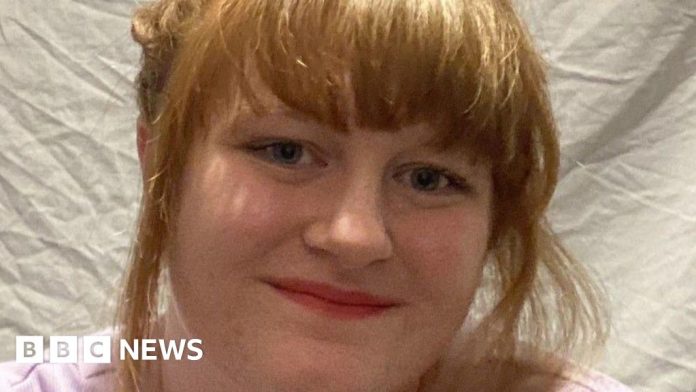
Maisy Moazzenkivi, 18, lives in Coventry with her mum, dad and brother, and travels almost two hours each way to get to college, four days a week.
Maisy, has a disability bus pass because of her autism, meaning she pays less for travel than her friends. However, she still spends £8 a day on getting to college as her free travel allowance only kicks in after 09:30, half an hour after she needs to be there.
She says money she spends on travel eats into what she would otherwise spend on food and snacks throughout the day.
“Sometimes, when I finish college I’m really hungry and just want to get a meal deal or something for the way home, but it’s so expensive on top of everything. I’m very lucky that I can go home and my family can feed me, but not everyone has that.”
If bus travel was free, Maisy says she would be able to socialise more, and save for “luxury items”.
“I know it doesn’t sound like a big deal, or an essential item, but one day, I’d love to save for a Juicy Couture tracksuit,” she said.
‘I don’t understand how it’s so extortionate’
Gracie Moore
Gracie Moore says she finds bus fares in the UK are ‘extortionate’
Gracie Moore, 22, lives in Slough and catches the bus every day to and from work, which costs her £120 a month.
“For someone who is not earning much more than minimum wage, it’s quite a big expenditure,” says Gracie who works as an administration assistant for a care home firm.
She says the high cost of travel for young people makes it difficult to navigate having a job and a social life.
Travel costs are “absolutely” a factor which stop her from moving out from her family home, she says.
“I have less independence this way, but I’m paying so much less.”
Gracie previously lived in Madrid, where she enjoyed unlimited travel on bus, train, tube, and tram) for only €8 (£6.90) a month with a young person’s travel card.
“I don’t understand how it’s so extortionate here when other countries in Europe subsidise it so well,” she says. “I just don’t know how the price of transport here can be justified.”
‘Free bus pass would make a big difference’
Nikita Upreti
Nikita Upreti says a free bus pass would give her more money to spend on groceries
Originally from Nepal, Nikita Upreti, 20, is an international student studying at University College Birmingham. She says the rising price of travel means it is getting “harder” to pay for her bus pass each month.
When Nikita first moved to Birmingham in September 2024, a monthly bus pass with a student discount cost her £49. Now, it costs her £53.
“The student discount is not helping us anymore,” she says.
Nikita also works 20 hours a week as a waitress. Despite working the maximum amount of hours her university will allow her to while studying, she still struggles to pay her rent while juggling the rising cost of living.
She says that free bus travel “would make a big difference” to her life.
“I could spend the money I save on groceries and things that would help my education. It would be really helpful.”
JOINT BASE ELMENDORF-RICHARDSON, Alaska — President Trump said Friday he made progress on key points during a meeting with Russian President Vladimir Putin but did not specify what those points were or what disagreements remained to achieve peace in Ukraine.
“We didn’t get there, but we have a good chance,” Trump said.
The president did not take questions or offer any other details. He indicated he would speak with European leaders and Ukrainian President Volodymyr Zelensky following Friday’s summit in Alaska.
So what happened? First of all, the S&P and Nasdaq were never really rallying, just rising due to gains among some of their larger members. Market breadth has been bad all day, but now just 100 stocks in the S&P 500 are on track to close higher. The Invesco S&P 500 Equal Weight ETF is down 0.9%.
The Dallas Cowboys Cheerleaders are always ready for some football, but the gig of a lifetime is also not the main event as far as income goes.
ESPN reported in 2017 that NFL team cheerleaders made roughly $75 to $150 per game, an eye-opening moment for fans who assumed those glamorous performers were making bank. Or at least a living wage.
As seen in the first season of America’s Sweethearts, DCC alum Kelcey Wetterbergis a pediatric registered nurse, while then-newcomer Reece Allman (née Weaver), who returned for the 2024 season, worked at a Dallas florist to supplement her earnings from cheerleading.
According to the Dallas Morning News, cheerleader pay has since risen to closer to $400 per game, plus hourly wages for all the time spent preparing for games and making appearances.
Still, DCC alum Kat Puryear said on the Netflix show, “I would say I’m making, like, a substitute teacher [salary]…I would say I’m making, like, Chick-fil-A worker that works full-time” money.
Non-bleeding Paper
100gsm 100gsm 100gsm waterproof paper 100gsm 100gsm 150gsm
Ways of Binding
Spiral Bound Spiral Bound Spiral Bound Spiral Bound Ring Binder Ring Binder
Accessaries
Measuring Tape no data
4 Sheets Index Tags Clear File Bag Black Pen Black Pen
Page Quantity
160 66 100 132 100 88
Cover Materials
Waterproof PP Coated Paper Waterproof Coated Paper Coated Paper Hardboard Linen
Color
Pink Rainbow Greyish-green Black & Beige Black Black & Beige
Application
Exercise, Workout, Fitness, Weight Loss Teachers Kitchen Planning Retirement Party Funeral
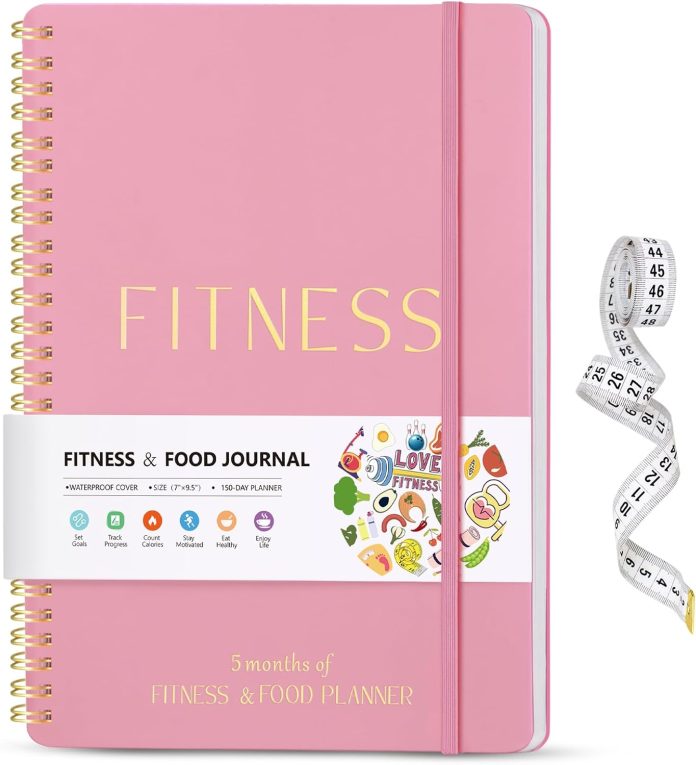
150-day/5-month food and fitness journal with measuring tape: this fitness journal allows you to record up to 150 days of fitness and diet data, ensuring you stay on track with your health goals. The measuring tape helps you to track your body dimensions and detailed tracking system helps you monitor progress and make necessary adjustments to your routine Structured goal setting and achievement: the 2 goal pages of fitness planner has 10 sections for setting clear objectives, start and end dates, detailed plans, and results. The workout journal also features a reward section to motivate you to achieve your fitness milestones Body dimension contrasts by table, photos and chart: the body dimension contrasts can be shown by figures, photos, and progress curves. This visual representation allows you to see tangible changes in your physique over time, providing motivation and a clear sense of achievement Integrated calendar and daily tracking: the 2-page undated calendar of weight loss journal provides a monthly overview with daily completion marks and progress curves. The daily tracking pages allow you to log specific exercises, calories burned, and meal calorie intake. This integrated system helps you maintain a consistent routine and stay accountable to your fitness and nutrition goals User-friendly design, durable material: the 9.5” * 7” fitness journal for women is easy to carry and use, with a waterproof and sweat-proof PP material cover and ink-resistant 100gsm thick paper inside. The elastic band keeps the workout planner closed to keep your data private and organized. Double sided pockets are designed for cards, guidebooks, etc. Perfect gift for fitness enthusiasts: whether you’re a beginner or an experienced athlete, this workout log is designed to meet your needs. The food and fitness journal is ideal for gym-goers, runners, yogis, and anyone looking to lead a healthier lifestyle and passionate about fitness and wellness