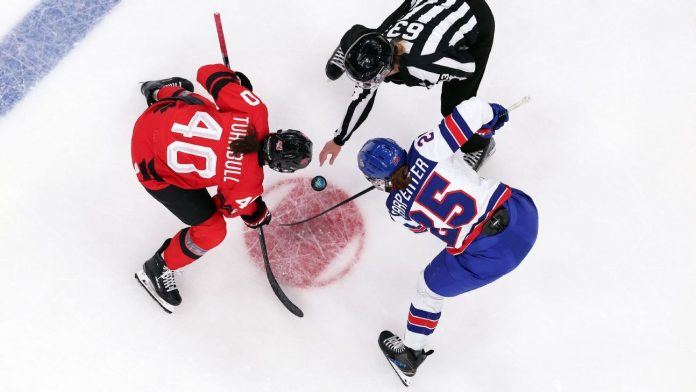
MILAN — Since women’s hockey was introduced as an Olympic sport in 1998, the only two teams that have won gold are the United States and Canada.
That will remain true this year. The rest of the world is starting to catch up, with emerging programs from Sweden, Czechia and even Switzerland, which made a surprising semifinal run. However, the North Americans remain the gold standard on the international stage.
Canadian women have won five of the seven Olympic gold medals, and they’re the reigning champions after a 3-2 win over the U.S. in the 2022 Games in Beijing. But there’s a new twist this cycle: Team USA is the overwhelming favorite. The U.S. owned Canada in a four-game Rivalry Series leading up to the Games and have been a powerhouse here in Milan, beating Canada 5-0 in round-robin play. But dynamics can change anytime there’s a gold medal on the line.
“Knowing the pressure of that moment, the energy in the building, it’s going to be different,” said U.S. veteran Kendall Coyne Schofield, who has already played in three Olympic gold-medal matches. “But really it’s just about emptying the tank. Whatever you have left. It’s a long tournament, just empty it. Go out there and give it your best. That’s all you can do.”
Here’s what that might look like when the teams face off on Thursday at 1:10 p.m. ET.
How did each team get here?
The U.S. women have absolutely dominated in Milan. They have outscored opponents 31-1, scoring at least five goals in every game. Team USA enters the final with five straight shutouts — including its beatdown of Canada last week.
Coach John Wroblewski has preached the importance of rolling four lines since before the tournament, and he has been able to achieve that so far. The Americans have received contributions from everyone. Fifteen different players have scored goals. Veterans like Alex Carpenter and Coyne Schofield have three goals each. Rising stars Laila Edwards and Caroline Harvey lead skaters in ice time and have a combined for 16 points. The most dynamic line has been the one featuring Olympic rookies Hannah Bilka, Taylor Heise and Abbey Murphy.
Hayley Scamurra, a 31-year-old veteran who has been on six World Championship teams, isn’t afraid to say it: This is the best team she has ever been on. “Oh yeah,” Scamurra said after the U.S.’s 5-0 semifinal win over Sweden. “100 percent.”
Canada, meanwhile, decided to take a much older team to Milan. Coach Troy Ryan often relies on players he’s comfortable with. They returned 16 players who helped them win gold in Beijing, but left home some of their ascending talent — which has become a topic of discussion after Canada looked much slower against the United States the first time around. In that game, each of Team USA’s four goal scorers would have been the youngest players on Team Canada.
However, the Canadians were without captain Marie-Philip Poulin, who missed the game with a right knee injury. Poulin is back and dragging her team along into the fight. The Canadians didn’t have much trouble against anyone else, until their semifinal game against Switzerland. Despite outshooting the Swiss 46-8, Canada won by a slim 2-1 margin. Both goals came in the second period from Poulin. She is clearly gutting through the injury (the broadcast has showed Poulin getting carted from the locker rooms to the ice to avoid putting additional pressure on her knee). There’s a reason they call the 34-year-old Captain Clutch.
Player for each team who has impressed the most so far
Get ready for Caroline Harvey to become a household name. She has already been hyped up by Matthew Tkachuk, who said she reminds him of Bobby Orr. “That was crazy,” said Harvey, who wears No. 4, but said it is just coincidentally the same number as the Hall of Fame defenseman.
Harvey, a senior at Wisconsin, is noticeable all over the ice, covering a ton of ground with her skating. The PWHL has never seen a draft class like the one coming this June. In any other year, Edwards or Murphy might be the clear-cut No. 1, but as of now, Harvey is the consensus pick. Another player expected to go high in the draft is Tessa Janecke, who has put up five assists in six games in a fourth-line role.
Poulin was most impressive for Canada when her team needed her the most in the semifinals, but that’s nothing new. Her two goals vs. Switzerland gave her 20 in her Olympic career, breaking a tie with countrywoman Hayley Wickenheiser (18) for the most in women’s hockey.
Perhaps the most compelling story for Canada is the reemergence of Daryl Watts. The forward’s talent was never in doubt; she won the Patty Kazmaier Award as college hockey’s best player in 2018 as a freshman. But when she was left off Canada’s 2022 roster, she quit hockey for nearly a year and pursued a career in commercial real estate. Now she’s back in pro hockey and shining for Canada. Watts assisted on both of Poulin’s goals against Switzerland and has eight points in the tournament.
Biggest question mark for each team heading into this game?
For the Americans: Have they been tested enough?
So far, they’ve crushed the competition. When the players were posed that question after demolishing Sweden, Edwards had a reasoned response: “Believe it or not, we have been challenged. We’ve just overcome it and succeeded.”
After all, they can only play the competition in front of them. Veteran defenseman Cayla Barnes explained why the U.S. has been able to come out on top in so many of these games: “It’s a testament to the pressure we put on teams. We’re relentless. We do a good job of wearing teams down.”
For Canada, the question is simply: Can it keep up with its biggest rival?
Everyone is expecting this game to be much more competitive than the group-stage meeting, in which Canada looked less determined, less connected and slower. Again, when gold is on the line, everyone has the ability to play the game of their life. All of the players who scored (Poulin and Sarah Nurse) or assisted (Claire Thompson, Brianne Jenner) for Canada in the 2022 gold-medal game are still on the roster.
As U.S. captain Hilary Knight said of Canada: “That’s a battle-tested team.”
The U.S. will win if __
It maintains its identity, which Scamurra described as “a calm confidence.” The U.S. has a spark plug in Murphy, who entered these Olympics leading college hockey in both goals and penalty minutes. The win over Sweden was a microcosm of Murphy’s duality. She roofed a gorgeous goal at the 15:12 mark of the second period, and a few minutes later got called for interference for taking out the Sweden goalie behind the net.
Murphy has been one of the most effective players on this roster. Through the Americans’ quarterfinal win against Italy, Murphy led all U.S. players in drawing nine penalties. The next closest player on her team drew only two.
Teams are trying to get under the United States’ skin. According to the players, Knight had a talk with them during the Italy game to not lose focus. Play their game, don’t do dumb things, and it’s their gold to win.
Canada will win if __
Goalie Ann-Renée Desbiens locks in. Poulin can only do so much on her own. She’ll need more help from her teammates. But realistically, a team is always at risk of getting stonewalled by the opposing goalie. Desbiens didn’t get much action against Switzerland, allowing one goal on eight shots.
It’s not even a guarantee she starts; Emerance Maschmeyer could also get the call. Both are veteran goalies who also play in the PWHL. Maschmeyer is coming off an injury from earlier in the season, while Desbiens was on a heater before the Olympics. That likely tips the scales for Desbiens as the starter, and we know she has the capabilities. But the best goalies in this tournament so far have been Americans. Aerin Frankel has had a spectacular tournament, with a .985 save percentage in five games, while Gwyneth Philips was strong in stopping 20 shots for a shutout in her lone start. The Canadians need a similar performance in net.
Here we are, baseball fans. Spring training has started, the World Baseball Classic is just around the corner and the bright lights of the 2026 MLB regular season loom in the near future.
It has been an interesting offseason, with some impact trades, some surprising free agent signings and, of course, every team improving … right?
Well, it’s time to hand out our final 2025-26 offseason grades, so let’s find out who the big winners are.
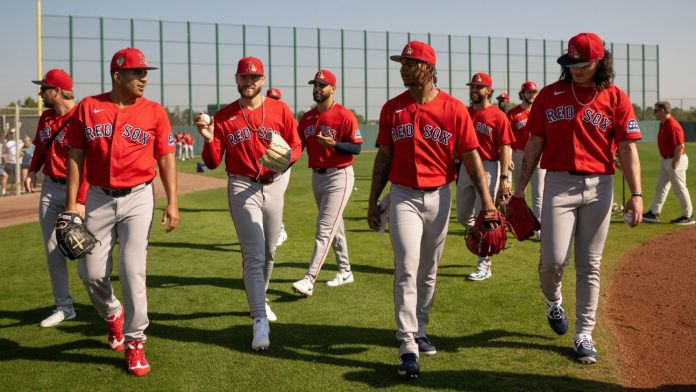
Not everyone might feel the same, but I absolutely love this offseason from Craig Breslow and his staff. Remember, the Red Sox now operate under a budget. Breslow can’t light money on fire the way the Red Sox did during the late 2010s under Dave Dombrowski. No, they didn’t re-sign Bregman, but the trade for Durbin gives them a player who projects to just one less win in value than Bregman — a younger, faster, high-contact hitter making $30 million in salary. The trades for Gray and Contreras bring in win-now veterans who also won’t hemorrhage the long-term payroll. Suarez is a riskier bet on a five-year, $130 million deal, but he has been a consistent performer since 2021 with only his durability a concern.
Importantly, Breslow kept the young core intact, not only all the outfielders, but two top-100 pitching prospects in Payton Tolle and Connelly Early, who made their major league debuts late in 2025 and should impact the rotation at some point in 2026. The Red Sox have improved their flexibility and depth in the infield while also improving their balance against left-handed pitching. If Trevor Story‘s declining range is a problem, then maybe Marcelo Mayer becomes the regular shortstop with Story sliding over to second. If you’re worried about Kristian Campbell being blocked, he can hit his way into DH or outfield at-bats.
The Red Sox are deep and good. They might be my pick to win the AL East.
Let’s see, the Dodgers entered the offseason with two major holes:
1. Their left fielders hit just .229 with 19 home runs. Fine, sign Tucker to a four-year, $240 million deal that might break baseball (he’ll play right field with Teoscar Hernandez moving to left).
2. Their closer situation was a bit of a mess by the playoffs. Fine, sign Diaz for $69 million on top of the $72 million for Tanner Scott a year ago.
Finally, do you believe in good luck charms and sentimentality? Fine, bring back both World Series heroes in Rojas andHernandez for a combined $10 million.
All that and the Dodgers payroll is still down about $1 million from 2025, according to FanGraphs. Geez, imagine if they tried a little harder to win.
The Tigers salvaged the offseason with the late signings of Valdez and Verlander, but their most important move was the one they didn’t make: trading Tarik Skubal. There has been some warranted criticism about not addressing the offense that struggled to make contact in the playoff series loss to Seattle, but I think it made sense to prioritize the pitching:
First, the offense improved 76 runs from 2024 while being one of the youngest groups in the American League. Now, the Tigers will be adding top prospect Kevin McGonigle to the infield at some point and Max Anderson could also join the lineup. Given the youth and McGonigle, there are reasons to expect the offense to be solid again.
The pitching/defense gave up 49 more runs than in 2024 and the rotation ranked just 22nd in innings. Adding a starter like Valdez, who has averaged 192 innings the past four seasons, is a huge get. Verlander, meanwhile, isn’t just a sentimental signing, especially after a terrific final 13 starts last season in San Francisco.
I’m less enthused about the Jansen and Finnegan moves for the bullpen, but in the end, the Tigers kept Skubal and increased payroll some $62 million.
There is no single blow-your-socks off move here, but the Mariners did what they had to do to remain favorites in the AL West. Bringing back Naylor on a five-year deal was the pivotal transaction, as he excelled in his two months in Seattle while becoming an instant fan favorite. First base has long been a problem for the Mariners going back two decades (save for a short stint of good play from Ty France), so Naylor provides a long-term fix there without blowing out the budget.
The early February trade for Donovan gives them a guy who can play second or third, plus a leadoff hitter who had a .353 OBP last season, including .383 against right-handers (Seattle leadoff hitters ranked 24th in the majors with a .311 OBP). Ferrer is a premium left-handed bullpen arm, and Refsynder mashes lefties. The one quibble here is that the Mariners are weak at backup catcher, so Cal Raleigh will again have to carry a big workload, playing nearly every game behind the plate or at DH. The season-ending injury to Logan Evans announced just before spring training leaves the Mariners scrambling for a sixth starter if one of the top five goes down, but maybe Kade Anderson, the No. 3 pick last year, is as polished as hoped and ready to contribute if needed. Polanco is the only significant contributor gone from the 2025 roster, so the Mariners’ World Series dreams are bigger than ever.
The biggest roller coaster in the world is Falcon’s Flight, located in Saudi Arabia. That’s what this offseason felt like for Mets fans. Fan favorite Alonso? Gone. Fan favorite Diaz? Gone. Fan favorite Nimmo? Gone. It looked as if it might turn into a disastrous offseason for the Mets. Then came the flurry of post-Christmas moves, including the three-year, $126 million deal for Bichette (which could turn into a one-year deal if he opts out) and the big trade for ace-like starter Peralta.
It’s a remarkable roster shuffle. With Juan Soto now moving to left field, of the nine players who started the most games at each position in 2025, only Francisco Lindor is slated to start at the same position in 2026 — and even his Opening Day is now in jeopardy after surgery to repair his hamate bone. Will it all add up to a better Mets team? I believe so, although there is some risk here, particularly in the bullpen, where Williams and Weaver didn’t exactly lock down the late innings last year for the Yankees. Still, this Mets team will score plenty of runs while being more athletic and better on defense — much more of a David Stearns-type team.
Give credit to the Blue Jays for keeping the foot on the gas. Their payroll is now up about $29 million from last year and about $60 million from 2024. Their time is clearly right now, with nearly all of their key players from last year’s World Series run back — and most are in their primes. Rogers is one of the most underrated signings of the offseason while Ponce, the KBO MVP, should factor into the rotation, especially with manager John Schneider saying Shane Bieber won’t be ready for Opening Day. With the announcement Anthony Santander will sit out five to six months, the Jays remained aggressive, acquiring Sanchez right as spring training started.
But I’m hedging this grade just a bit on two accounts. First, while Cease is talented and durable and wouldn’t surprise anyone if he contended for a Cy Young Award, he’s also a player with an ERA over 4.50 in two of the past three seasons. A $210 million contract is a huge payout for an inconsistent pitcher who isn’t a guaranteed upgrade over Bassitt.
Then there’s what is essentially the Okamoto-for-Bichette swap. I think Okamoto will hit and his offensive projections are close to Bichette’s, but we know Bichette can hit at a high level. Okamoto had a Bichette-like season in Japan last year, hitting .327 and improving his contact rate, but in previous years, he had hit for a lower average with more power. It will be interesting to see if he provides the same offense that Bichette offered last season.
At this point, it’s clear: President of baseball operations Mike Elias is not going to pay for a premium free agent pitcher, whether that’s his own philosophy or whether he’s hamstrung by his owners (first the Angelos family, and now David Rubinstein). It’s also fair to suggest that, this offseason at least, the market for starting pitchers wasn’t strong anyway — and given what Valdez and Cease signed for, it’s hard to blame the Orioles for not paying up (assuming they were even a potential landing spot).
The Orioles did address their needs — power and the rotation — and didn’t give up any important contributors from 2025 to do it. Indeed, their value added minus value lost might prove to be as large as any team this offseason. Trading four prospects, including two first-round picks from 2025, for Baz, a pitcher coming off a 0.4-WAR season, is certainly risky — and the Rodriguez-for-Ward deal could backfire if Rodriguez gets healthy. Even with the big contract for Alonso and the late signing of Bassitt for one year and $18.5 million, the payroll is only $6 million higher than last year. You might think a 76-year-old owner who professed his “commitment to this team and to my hometown” when his purchase was finalized in August 2024 might be a little more all-in on winning. That could still happen, but imagine an extra $20 million available to improve the roster even more.
After years of neglecting their bench, the Braves finally went all-in this offseason, adding an excellent fourth outfielder in Yastrzemski and a top utility player in Dubon. They even threw $20 million at Kim on a one-year deal to fix shortstop and then signed Suarez in addition to Iglesias. That was $58 million just for Yaz, Kim and the two relievers, leading to a $50 million payroll increase. That’s a worthy, quality offseason.
Unfortunately, the injury bug has already hit. Kim tore a tendon in his finger in January and will probably sit out a couple of months. The Braves began spring training by announcing Spencer Schwellenbach will sit out at least two months because of bone spurs in his elbow. Sean Murphy was already set to sit out the start of the season, which necessitated the Heim signing. And while the improved bench will help, the Braves need some of the returning starters to up their performances.
Key additions: RHP Hunter Dobbins, RHP Dustin May, RHP Richard Fitts, RHP Ryne Stanek, RHP/LHP Jurrangelo Cijntje, LHP Brandon Clarke
Well, it’s done: The rebuild, the revamp, the step back — whatever you want to call it — is officially complete. The only players older than 30 on the 40-man roster are relievers Riley O’Brien and Stanek. The farm system has been improved, with five top-100 prospects led by infielder JJ Wetherholt, a top Rookie of the Year candidate for 2026. The payroll has been trimmed some $45 million from 2025, so that will make owner Bill DeWitt happy, although the organization will have to win back the fans with better results — eventually — on the field.
If you accept the premise of rebuilding, then Chaim Bloom did an excellent job. Improving the long-term viability of the rotation was the biggest need and Bloom did that with two separate trades with his old friends in Boston and then the Donovan deal. Dobbins and Fitts are more fourth/fifth-starter types, and Cijntje and Clarke are power arms with higher ceilings but reliever risk. They were two of the better prospects to switch teams this winter. What we don’t know: With a payroll now half of what it was just two years ago, where will the Cardinals go in the future?
Swooping in to sign Bregman to a five-year deal was a bit of a surprise considering how well Matt Shaw had played in the second half, but it was an aggressive play by a front office looking to guide the Cubs to their first full-season division title since 2017. From a value standpoint, Bregman won’t quite replace what Tucker provided (or will provide for the Dodgers), but Bregman is less expensive and provides intangibles that Tucker didn’t.
The Caissie-for-Cabrera deal was another aggressive move, trading six years of Caissie and his power potential for three years of Cabrera, an injury-prone-but-talented starter. The Cubs needed another strikeout pitcher for the rotation, so this feels like a worthy gamble. If Cabrera and Cade Horton can both stay healthy and provide close to 60 starts, combined with the eventual return of Justin Steele, the rotation will be much better than the FanGraphs projection that ranks it 19th in the majors.
Keller and Pomeranz were both superb in 2025, so the swap to Maton and Milner is a downgrade, leaving the bullpen a little shaky and lowering the overall grade. The payroll is up about $25 million from 2025, but only up a few million from 2024. It’s an interesting year for the Cubs: Nico Hoerner, Seiya Suzuki, Ian Happ, Jameson Taillon and Imanaga are all heading to free agency, so this core group that has been together for a few years now probably will be broken up after the season. That perhaps puts more urgency into 2026.
Key additions: 2B Brandon Lowe, DH Marcell Ozuna, 1B Ryan O’Hearn, LHP Mike Montgomery, OF Jake Mangum, LHP Gregory Soto, OF Jhostynxon Garcia
The Pirates hit 31 fewer home runs than any other team last season, so adding power was the offseason priority. They tried to go big — reportedly offering Kyle Schwarber a $125 million deal, and then making a run at Eugenio Suarez — but ended up settling for a couple of second-tier free agents in Ozuna and O’Hearn. Signing Ozuna probably cements a bit of an ugly split with McCutchen, who still wants to play, but Ozuna does project as an upgrade at DH. Garcia is a 23-year-old who comes from Boston and should compete for a starting job in the outfield. Is it enough to make the Pirates interesting? Maybe, although trading both Burrows and Oviedo thins the rotation depth, which means rookie Bubba Chandler will have to assume a significant role — and a number of innings — behind Paul Skenes and Mitch Keller.
Individually, all of these moves make sense in addressing holes from 2025. The Giants needed more offense at second base and Arraez should provide league-average production, although with a hit on defense. Bader upgrades the defense in center field, although he is unlikely to repeat his offensive numbers. Mahle and Houser provide rotation depth, although Mahle hasn’t made more than 23 starts since 2021 and Houser’s 2025 numbers might be a fluke. In the big picture, it feels like a bunch of … well, 81-81 moves from an 81-81 team. That leaves the most fascinating move the Giants (or, arguably, any team) made all offseason — hiring University of Tennessee coach Tony Vitello, who has no professional playing or coaching experience, as the manager.
Not listed above: the prospects obtained in the Baz and two Lowe trades. Let’s just say we trust the Rays’ ability to pinpoint prospects from other teams. Their outfielders ranked last in the majors with only 29 home runs while ranking 26th in OPS, so the Rays attempted to address that, even if it’s throwing the whole kitchen sink and garbage disposal at the problem. Melton is a Gold Glove-caliber center fielder with questions about his bat. Mullins hit 17 home runs but has a .303 OBP over the past three seasons. Fraley is a useful fourth outfielder. Is it a better group? We’ll see. A better team? Let me know how many starts Shane McClanahan makes.
The Phillies did what they had to do in re-signing Schwarber and Realmuto, otherwise they would have had gaping holes at DH and catcher. Keller essentially replaces Strahm while Garcia is Castellanos with better defense. More notable is what they didn’t do: sign a pitcher to replace Suarez or get more aggressive to perhaps mix things up a bit in a lineup that hasn’t hit in the past two postseasons. The Phillies are still good, but you can’t help but wonder if they need to be a little bit different.
Key additions: OF Owen Caissie, RHP Pete Fairbanks, OF Christopher Morel
Though the Marlins fell only four wins short of the playoffs last year, a run differential of minus-89 suggested they might not be ready to chase a playoff berth, so Peter Bendix, president of baseball operations, instead traded two starting pitchers for slugging outfield prospect Caissie and four prospects from the Yankees. On the surface, the Marlins depleted a rotation that ranked 26th in ERA and left Sandy Alcantara and Janson Junk as the only two pitchers who threw more than 100 innings in 2025.
On the other hand, cashing in now on Cabrera and Weathers, two pitchers who have been both inconsistent and injury prone, makes sense. Caissie is a bit of a divisive prospect, but he hit 22 home runs in 99 games in Triple-A last year. If Thomas White and Robby Snelling — No. 18 and No. 47 on the top-100 prospects list — can contribute significant innings at the major league level, the rotation might be OK anyway. Both reached Triple-A in 2025 and posted big strikeout rates in the minors, so both look close to ready. If Caissie produces, maybe the Marlins can contend for a wild-card berth after all.
Key departures: RHP Devin Williams, RHP Luke Weaver
General manager Brian Cashman elected to bring back the same roster as 2025, other than his two late-inning relievers. Once Grisham accepted a qualifying offer, that kind of limited Cashman’s ability to do something different, since New York really wanted to re-sign Bellinger. The Yankees were patient, eventually getting him to return on a five-year, $162.5 million contract. Bellinger might not repeat his 5.1-WAR season, but his pull approach is perfect for Yankee Stadium and his defensive versatility a plus. Though this seems to block Jasson Dominguez, it was the situation last year and he still had 429 plate appearances.
Though it’s essentially the same roster that lost in the ALDS to the Blue Jays, remember all the trade deadline moves the Yankees had made: Ryan McMahon, Jose Caballero, David Bednar, Camilo Doval and Rosario. The Yankees went 34-19 over the final two months with that revamped roster — a 104-win pace. The key to that will be surviving the start of the season without Carlos Rodon and Gerrit Cole, plus a bullpen I’m not completely sold on. As with the Phillies, it’s usually a little dangerous to bring back the same roster, but the Yankees clearly project as one of the best teams in baseball once again — and, who knows, maybe this is the year Aaron Judge gets hot in the postseason.
The Rangers emphatically moved on from the 2023 World Series team, non-tendering Garcia and Heim while flipping Semien for Nimmo. Those moves were as much about performance as saving money as Garcia and Heim both posted .271 OBPs and Semien had his worst season in 2025 since joining the Rangers. In the Semien-for-Nimmo exchange, the Rangers traded three years of Semien for five years of Nimmo, saving a few million in AAV but not really improving the team, while taking on a contract that will probably be dead weight by the end of it. The Gore trade could be a big plus, trading four second-tier prospects for a high-ceiling pitcher, which Gore reached in the first half of 2025 before faltering. The Rangers lost a bunch of starts and the bullpen lost two productive arms in Armstrong and Milner, but the top three of Nathan Eovaldi, Jacob deGrom and Gore should give Texas a puncher’s chance.
Key departures: INF Blaze Alexander, OF Jake McCarthy
The recent re-signing of Gallen helped boost the final mark a full grade. Gallen, encumbered by the qualifying offer the Diamondbacks gave him, didn’t get the multiyear deal he anticipated and went back to Arizona on a one-year deal for the qualifying offer amount — except $14 million of the $22.025 will be deferred. Gallen had his worst season in 2025 with a 4.83 ERA and 31 home runs allowed, but he did pitch 192 innings, so he’ll at least bring some stability to a rotation that needs those innings. The Diamondbacks brought back Kelly after trading him at the trade deadline and ended up keeping Ketel Marte, which is certainly a huge plus for their 2026 outlook.
But the additions of Arenado (OPS+ of 87) and Santana (OPS+ of 77) are uninspiring, two below-average veteran hitters on their last legs. They’re paying Arenado only $5 million of his $27 million salary this year and then $6 million in 2027, and Santana just $2 million, but the pair won’t help an offense that finished fourth in the National League in runs scored (and even that was with Eugenio Suarez and Josh Naylor in the lineup for two-thirds of the season). With Corbin Carroll suddenly in danger of missing Opening Day, the lineup is reliant on Geraldo Perdomo replicating his top-10 MVP season and Marte staying on the field. Throw in a messy bullpen situation and Arizona will need Gallen and Kelly to turn the clock back to 2023.
This is the most difficult team to grade. On the one hand, I hate — hate! — that dealing Peralta and Durbin makes the Brewers less likely to win a World Series in 2026. They traded away their staff ace, a guy who finished fifth in the Cy Young voting last season, and a young infielder who finished third in the Rookie of the Year voting. And though they have a bunch of infielders in the pipeline, they now have a hole at third base for 2026.
On the other hand, the Brewers acquired a lot of interesting arms in the trades, with Sproat, Harrison and Drohan all potentially factoring into the rotation in 2026. Williams has never played third base and hit .209 after a promotion to Triple-A last year, but he’s the No. 32 prospect in the game and maybe elevates his game and takes over the position. If they can get 50-to-60 starts from Woodruff and Jacob Misiorowski, and a couple of the new starters step up — and certainly the Brewers’ track record with developing pitchers is as good as any team’s — then the rotation might be fine, even without Peralta and Quintana. In the end, I’m going to split the difference and give this a C, while acknowledging this could all work out in both the short term and long term.
Kansas City outfielders hit a miserable .225/.285/.348 last season, which isn’t going to work if the Royals want to return to the postseason. They acquired Collins from the Brewers after he hit .263/.368/.411 and finished fourth in the Rookie of the Year voting, but he was a 27-year-old rookie, so there isn’t any growth potential there — more likely some regression. Still, if he can get on base at a reasonable clip, he’ll give the Royals the leadoff hitter they lacked a season ago. Thomas hasn’t been good since 2023, so it’s unclear why the Royals would give him $5.25 million coming off a season in which he hit .160. Call it a ho-hum offseason that gets a boost with the underrated Maikel Garcia signing an extension that runs through 2031.
Key departures: CF Luis Robert Jr., OF Mike Tauchman
I love the Murakami gamble. Look, he’s going to strike out a ton and maybe he flops because of that, but there’s also 40-homer potential, so it’s a worthwhile risk for a team that needs power, especially at just two years and $34 million. Acuna — yes, general manager Chris Getz finally realized he’s not a switch-hitter — was hyped as a prospect but looks like a bench player. Kay, a former Blue Jays pitcher, is a sleeper signing after a good season in Japan.
But what doesn’t make sense is that the White Sox failed to supplement the Murakami signing with more help on offense other than Hays. If Murakami does turn into a star, then he’s a free agent in two years. Have you added enough to win in that short window? The payroll remains under $100 million. You’d think an 89-year-old owner might have a little more urgency to win, but alas, go ahead and yell at the Dodgers.
Key additions: RHP Tatsuya Imai, RHP Mike Burrows, RHP Ryan Weiss, SS Nick Allen, OF Joey Loperfido
Key departures: LHP Framber Valdez, INF/OF Mauricio Dubon, OF Jacob Melton, C Victor Caratini, OF Jesus Sanchez
With Valdez leaving in free agency and Ronel Blanco, Brandon Walter and Hayden Wesneski all gone for most or all of the season after Tommy John surgeries, the Astros’ priority was the rotation. Imai signed for three years and $54 million — or about half of the three-year, $115 million deal that Valdez eventually signed with the Tigers. That’s right in line with the projections that see Imai as about half as valuable as Valdez. Burrows comes over from the Pirates, where he had a 3.94 ERA as a rookie in 19 starts, so that looks like a nice pickup. Weiss never reached the majors with the Diamondbacks or Royals but had a big year in Korea and could factor in the rotation as well.
All of that is fine, but the Astros didn’t address an offense that scored 30 fewer runs than the AL average. A healthy Yordan Alvarez will help, but the third base logjam with Carlos Correa and Isaac Paredes still exists — and even if Paredes turns into a sort of utility guy, it’s a poor use of resources. Maybe that trade is still to come as, after swapping Sanchez for Loperfido, general manager Dana Brown said, “We’re not done.” The Sanchez trade saves about $6 million, so the payroll sits about $15 million below the first tax threshold.
Key additions: C Harry Ford, LHP Foster Griffin, INF Gavin Fien, INF Devin Fitz-Gerald
Key departures: LHP MacKenzie Gore, LHP Jose A. Ferrer
The Nationals have a new regime: 35-year-old president of baseball operations Paul Toboni, 31-year-old general manager Anirudh Kilambi and 33-year-old manager Blake Butera. They inherit a young team that’s still rebuilding — or, perhaps more apt, rebuilding again after that last rebuild didn’t take. They made two significant trades, both of which I liked: Gore for a prospect package, including Fien, the Rangers’ first-round pick in 2025; and reliever Ferrer for a potential starting catcher in Ford. Griffin is a lottery ticket, coming off a 1.69 ERA in Japan. It’s probably the right approach to this offseason, and maybe CJ Abrams is eventually traded as well, but at some point the Nationals have to spend some money to win.
Key additions: RHP Michael King (re-signed), OF/DH Miguel Andujar, INF Sung-Mun Song, OF/DH Nick Castellanos, RHP Griffin Canning
Key departures: RHP Dylan Cease, RHP Robert Suarez, 1B Luis Arraez, DH Ryan O’Hearn
This is when all those mega-contracts are starting to limit what the Padres can do as the payroll is still up $8 million despite just the one major offseason signing in bringing back King. They’ll get Castellanos for the league minimum, with the Phillies picking up the remainder of his $20 million salary. Will he help an offense that ranked 28th in home runs in 2025? He’ll have to hit better than the .250/.294/.400 he produced for the Phillies. Castellanos and Andujar are essentially fighting for DH at-bats with Castellanos maybe getting some time as a fourth outfielder, which isn’t necessarily a good thing given his defense. He had minus-0.8 WAR with the Phillies; I’m not sure he’s going to help much. Losing Cease, Suarez, Arraez and deadline pickup O’Hearn is a blow to the Padres’ overall depth. Yes, they’ll have Mason Miller for the full season, so they can manage the loss of Suarez in the bullpen, but given the lack of power, they’re going to have to ride that bullpen again.
Though the Reds will enter 2026 with the highest payroll in club history (although only a few million more than they spent more than a decade ago), this is mostly a reshuffling of the deck chairs, especially in the bullpen. There is the one-year deal for Suarez (with a mutual option for 2027), who should serve as the regular DH, where the Reds ranked 22nd in OPS (.722) and tied for 21st in home runs (21). Suarez clubbed 49 home runs between Arizona and Seattle last season, but the $15 million deal he received suggests there wasn’t much belief across the league that he can do it again.
Bleday and Myers join a crowded outfield picture but one that doesn’t project well: 24th in FanGraphs WAR in left field, 24th in center and 30th in right. Look, the Reds will be fun to watch with their rotation, and if rookie Sal Stewart and a healthy Elly De La Cruz (he played through a strained quadriceps in 2025, which helps explain his power decline in the second half) both hit for power, a return to the playoffs is possible even if this offseason didn’t improve those chances all that much.
The 2025 Rockies were one of the worst teams in modern major league history, a team that found every way imaginable to lose games, so I’m not exactly sure what they were supposed to do. The most important moves of their offseason had nothing to do with on-the-field personnel, but the hiring of Paul DePodesta as president of baseball operations and Josh Byrnes as general manager. They will have to modernize the front office and the player development system and then worry about building a competitive roster.
To that end, most of these signings and minor trades are simply to make the Rockies less of a disaster. Quintana has slowly been draining runs, with his ERA rising each year since 2022: 2.93, 3.57, 3.75, 3.96. Maybe he pitches well enough to be traded at the deadline. Sugano gave up a league-high 33 home runs in 157 innings with the Orioles last season and doesn’t strike out guys. Good luck with that. As for DePodesta, he spent the past decade with the … Cleveland Browns. Not exactly a decade of success for the Browns. Byrnes spent the past 11 years with the Dodgers. Hopefully he brings along some of the secret sauce.
How do you grade this offseason? Cleveland hasn’t added one major league hitter despite hitting .226 and scoring the fewest runs in the AL last season. Even for a team that you don’t expect to spend any money, that’s inexcusable (we’re blaming the owner here, not the front office). The only thing rescuing this offseason is the contract extension to Jose Ramirez, which the Guardians billed as a seven-year extension. That’s misleading, as he was already signed through 2028, so it’s really just an additional four years — with thanks to Ramirez again taking a hometown discount.
By the way, Larry Dolan bought the franchise in 2000 for $323 million. His son, Paul, is now the club chairman, with Forbes estimating the franchise worth at $1.55 billion. Cleveland last won the World Series in 1948. Their payroll is about $20 million less than in 2025.
Well, I’m sure those blueprints of the new ballpark in Vegas are pretty to view. Meanwhile, after an impressive final three months that saw the A’s go 41-34 with a plus-56 run differential, they didn’t do anything except adding some low-value veterans. This isn’t on general manager David Forst, of course, but on owner John Fisher, although I’m sure he will point to a $16 million payroll increase as his personal sacrifice. The good news here is that left-handers Jamie Arnold, the first-round pick in 2025 out of Florida State, and Gage Jump, a second-round choice in 2024 from LSU, could both join the rotation at some point. But the bullpen will not only need someone to step up as the closer, it also lacks proven late-game leverage. A couple of significant signings there would have been a huge plus.
Key departures: LF Taylor Ward, LHP Tyler Anderson, RHP Kenley Jansen, RHP Kyle Hendricks, 2B Luis Rengifo
One thing about the Angels: They always do something. They’re also the franchise that prefers to play in quicksand rather than just enjoying a nice day at the beach — every move just seems to sink them a little bit deeper. The Angels have 10 non-arbitration players under contract for 2026. The ages of those 10 players range from 31 to 39. You’re not going to win with that, unless you have a superstar group of young players, which the Angels don’t have. What’s even more amusing is the list of players signed to minor league contracts: Jose Siri, Jeimer Candelario, Hunter Strickland, Trey Mancini, Nick Madrigal. There’s no harm in giving those players a look, but, as always, it just raises the question: What is the plan here?
Key departures: President of baseball operations Derek Falvey
Words you never want to hear: Tom Pohlad intends to be active in the day-to-day operations of the Twins. Pohlad took over as point man in December from his brother, after the Pohlad family decided to keep its majority interest in the franchise (bringing in new limited partners instead of selling). That eventually led to the mutual departure at the end of January of Falvey, the team’s president of baseball and business operations (i.e. the head baseball guy since 2017). The Twins have talent here, but we’re grading the offseason, not their chances of winning. Their payroll is down more than $50 million from 2024.
Tesla is no longer using the term “Autopilot” to describe the self-driving capabilities of its vehicles in California, avoiding a 30-day sales suspension in the state. The California Department of Motor Vehicles (DMV) announced that Tesla has taken corrective action after finding in December that the EV manufacturer’s marketing was violating state law and misleading customers into thinking its cars would drive autonomously.
The DMV’s complaint is connected to written marketing materials for Advanced Driver Assistance Systems (ADAS) features that Tesla started publishing in May 2021, which later led to the EV maker appending “(Supervised)” to its use of “Full Self-Driving Capability.” In December, the agency gave Tesla a 60-day window to also stop using the term Autopilot or face a 30-day manufacturing license and dealer license suspension — temporarily blocking Tesla from selling vehicles to its largest US market.
“The DMV is committed to safety throughout all California’s roadways and communities,” said DMV Director Steve Gordon. “The department is pleased that Tesla took the required action to remain in compliance with the State of California’s consumer protections.”
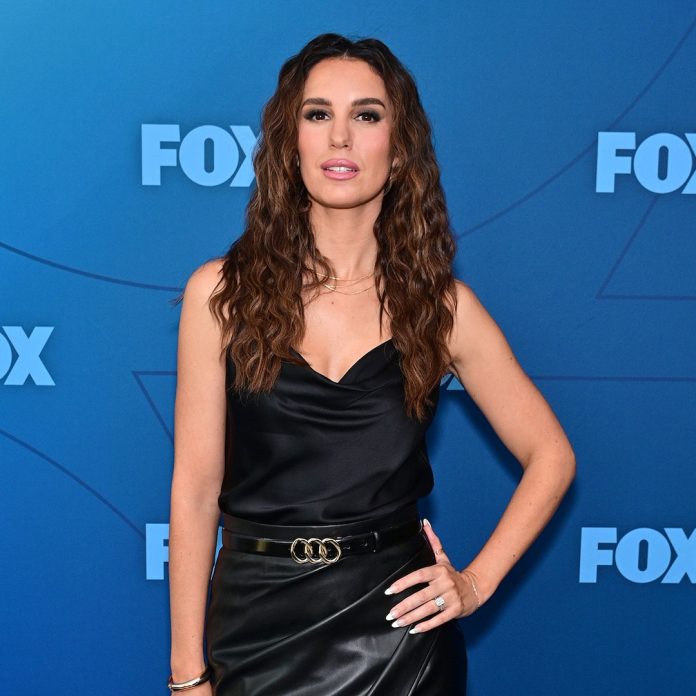
Christy Carlson Romano is providing an update on her health.
The Even Stevens alum got emotional while sharing that she recently received a positive result from a cancer screening test.
"I got…
Price: $34.00 (as of Feb 18, 2026 11:42:07 UTC – Details)
Product description
The video showcases the product in use.The video guides you through product setup.The video compares multiple products.The video shows the product being unpacked. AlgaeCal Magnesium Relax Merchant Video
1 Sleep
2 Stress
3 Cortisol
4 Inflammation
5 Resilience
How long does it take to feel a difference?
Clinical studies on key ingredients like Sensoril Ashwagandha and magnesium show significant results in as little as 60 days‡*.
Will it make me feel groggy or drowsy the next day?
No. Magnesium Relax is non-sedating. It supports your body’s natural ability to power down at night — without knocking you out or leaving you foggy the next morning‡*.
What makes AlgaeCal Magnesium Relax different from other magnesium supplements?
It’s not just magnesium. Magnesium Relax includes the active form of vitamin B6 (P5P), zinc, and Sensoril Ashwagandha, clinically shown to reduce stress by up to 62%†*. Plus, the AlgaeCal Absorb blend helps your body absorb and use these nutrients.
What about side effects?
The ingredients in Magnesium Relax have been tested in multiple clinical trials and no adverse side effects were reported in any of the studies.
Will this cause digestive issues?
No, Magnesium Relax features forms of magnesium known for their bioavailability and AlgaeCal Absorb, a bioavailability-enhancing blend, ensuring optimal absorption without digestive discomfort.
Add to Cart
Add to Cart
Add to Cart
Add to Cart
Add to Cart
Add to Cart
Add to Cart
Customer Reviews
4.3 out of 5 stars 86
4.6 out of 5 stars 1,117
4.6 out of 5 stars 3,652
4.5 out of 5 stars 2,072
4.6 out of 5 stars 1,116
4.5 out of 5 stars 250
4.6 out of 5 stars 941
Price
$34.00$34.00
$59.00$59.00
$85.00$85.00
$115.00$115.00
$62.00$62.00
$55.00$55.00
$39.00$39.00
Health Value
Reduce Stress
Stop Bone Loss
Increase Bone Density
Increase Bone Density
Anti-Aging
Support Overall Well-Being
Boost immunity
Magnesium (150 MG)
✔
✘
✘
✘
✘
✘
✘
Sensoril Ashwagandha
✔
✘
✘
✘
✘
✘
✘
Vitamin B6 (as P5P)
✔
✘
✘
✘
✘
✘
✘
Manufactured in USA
✔
✔
✔
✔
✔
✔
✔
Plant-Based
✘
✔
✔
✔
✘
✘
✘
Clinically Supported
✘
✔
✔
✔
✔
✘
✘
Vitamin D3 (1000 IU+)
✘
✔
✔
✔
✘
✘
✔
Vitamin K2 (MK-7)
✘
✘
✔
✔
✘
✘
✔
4 Patented Collagens
✘
✘
✘
✘
✔
✘
✘
Turmeric
✘
✘
✘
✘
✘
✔
✘
Sizing Guide
Size 0 (22mm x 5mm)
Size 0 (22mm x 5mm)
Size 0 (22mm x 5mm)
Size 0 and 00
Collagen Powder
Liquid Form (Full-size Bottle)
Size 3 (10mm x 5mm)
Product Dimensions : 4 x 2.5 x 2.47 inches; 2.4 ounces Date First Available : October 8, 2025 Manufacturer : ALGAECAL ASIN : B0FQGJQ76P Best Sellers Rank: #33,400 in Health & Household (See Top 100 in Health & Household) #607 in Magnesium Mineral Supplements Customer Reviews: 4.3 4.3 out of 5 stars (86) var dpAcrHasRegisteredArcLinkClickAction; P.when(‘A’, ‘ready’).execute(function(A) { if (dpAcrHasRegisteredArcLinkClickAction !== true) { dpAcrHasRegisteredArcLinkClickAction = true; A.declarative( ‘acrLink-click-metrics’, ‘click’, { “allowLinkDefault”: true }, function (event) { if (window.ue) { ue.count(“acrLinkClickCount”, (ue.count(“acrLinkClickCount”) || 0) + 1); } } ); } }); P.when(‘A’, ‘cf’).execute(function(A) { A.declarative(‘acrStarsLink-click-metrics’, ‘click’, { “allowLinkDefault” : true }, function(event){ if(window.ue) { ue.count(“acrStarsLinkWithPopoverClickCount”, (ue.count(“acrStarsLinkWithPopoverClickCount”) || 0) + 1); } }); }); Feel Calm, Even When Life Isn’t: This calm magnesium blend was made for the person juggling work, family, and everything in between. You’ll feel centered, even when your day gets chaotic. Finally Sleep Through the Night: Magnesium Relax combines magnesium bisglycinate, citrate, and malate with Sensoril ashwagandha to help your body unwind — so you can fall asleep faster and wake up feeling like yourself again. For the Stress You Don’t Talk About: Whether it’s a short fuse, 3 a.m. wakeups, or constant overwhelm — this magnesium for sleep and occasional anxiety was built to gently dial it down. And help you feel good again. Melt Into Bed — Without Melatonin: Forget groggy mornings. This absorbable magnesium, zinc, and P5P vitamin B6 formula helps your brain relax and lets you sleep deeper, naturally. Magnesium That Works With You, Not Against You: No grit. No bloating. No stomach drama. No constipation. Just small, easy-to-swallow magnesium capsules that fit your routine — and your life.
Rachel Kryshak is a professional data consultant specializing in data communication and modelling. She’s worked in the NHL and consulted for professional teams across North American and Europe. She hosts the Staff & Graph Podcast and discusses sports from a data-driven perspective.
Multiple Authors
We have reached the medal round of the 2026 men’s Olympic hockey tournament, and what a tournament it has been. It has been thoroughly entertaining from start to finish in the preliminary round, with surprising talking points and expected brilliance from the best hockey players on the planet.
Simply put, the Olympics are better when NHL players are participating. There is no other tournament where the best players are available to represent their countries with so much on the line. Not every player is available for the IIHF world championships in the spring, and obviously, not every nation participated in last year’s 4 Nations Face-Off.
Throughout history, there have been many players who found an extra gear while representing their country on the biggest stage. There are players accustomed to playing major roles on their NHL teams that play lesser roles internationally, and their play drops off as a result.
Heading into the medal round, the standings look a little different than many expected. Sweden and Finland struggled at various points, Slovakia and Switzerland overperformed their expectations, and it feels like an upset or two is brewing as the tournament hits its stride.
Here are the standouts and disappointments from group play, with the qualification round up next.
The standouts
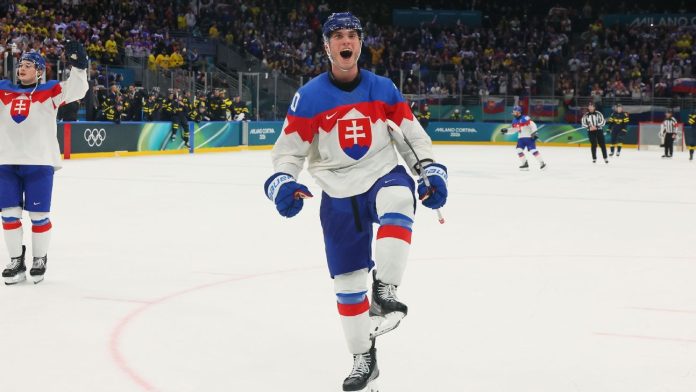
In the tournament X factors story, I noted that the next wave of Slovakian hockey was going to have to lead the charge. Slafkovsky has been one of the tournament’s best players, nothing short of brilliant for Slovakia. Tied for second in tournament scoring with six points, Slafkovsky has been the catalyst.
He has blossomed into an impactful power forward over the past 18 months, and though he has always performed well in international play, he has taken another step at the Olympics. He leads Slovakia in points, shots, slot shots and scoring chances. He has created at critical times, scoring the opener and the insurance goal against Finland, and creating the critical third goal late against Sweden. He’s not just the future of Slovakian hockey, he’s the present.
Slovakia was in the hardest group, along with Sweden and Finland, and emerged victorious, earning the No. 3 seed for the knockout stage. That was a shock. It seems that fears of the downfall of Slovakian hockey have been greatly overdramatized.
Samuel Hlavaj has been tremendous in goal for Slovakia, sporting a .934 save percentage, and he was particularly stupendous against Finland. Hlavaj’s play has led to a fortunate seeding that will see Slovakia play either Germany or France in the quarterfinal, with a great chance of earning a semifinal berth.
Slovakia has outperformed expectations through the preliminary round and has a real chance to be the Cinderella story of the Olympics. A semifinal berth in a best-on-best event would be an overwhelming success for Slovakian hockey — and something to build on with its young foundation of skilled players.
The first overall picks
Beyond Slafkovksy (2022), the first overall picks are dominating the tournament. The top five scorers in the tournament are former first overall picks. Connor McDavid (2015) has been the best player in tournament, averaging a point per period. Macklin Celebrini (2024) and Sidney Crosby (2005) are tied with Slafkovksy with six points. Auston Matthews (2016) and Nathan MacKinnon (2013) have five points through the preliminary round.
McDavid leads the tournament in scoring and scoring chance contributions. His speed has been a difference-maker, and his ability to draw defenders and make plays to his teammates has propelled Canada’s offensive explosion. The combination of MacKinnon’s and McDavid’s speed has proved to be nightmare fuel for defenders, and Celebrini’s smart play off the puck has made him the perfect complement. If those three continue to perform at their current level, stopping them will be a gargantuan, potentially impossible task.
For all the talk about Matthews’ decline over the past few months, he leads the United States in goals, points, inner slot shots and scoring chances. He’s creating off the rush and off the cycle, he’s at the net front wreaking havoc, and he has been a prominent focus of defensive matchups. Matthews had been performing better for Toronto prior to the Olympics, and his play has carried over to the tournament.
Given that the United States left high-powered scorers like Jason Robertson and Cole Caufield off the roster, his resurgence came at the most critical time. If the United States is going to run the medal round gauntlet, Matthews will need to continue to create offensively and score in critical situations.
play
1:16
USA men’s hockey faces challenging road ahead
Greg Wyshynski breaks down the U.S. men’s hockey team’s potential path to Olympic gold.
Leonardo Genoni turns back the clock
Many may not have been familiar with Genoni prior to the tournament, but this is not the first time he has been spectacular for Switzerland in international play. The 38-year-old has been brilliant for Switzerland and the main reason for the team’s fifth-place finish in the preliminary round. Rocking a save percentage of .949 and saving 2.5 more goals than expected through three games, Genoni has been the backbone of Switzerland’s success.
Genoni gave up three goals against Czechia and shut out France, while getting the night off against Canada. It is Genoni’s net in the medal round, and if the Swiss meet expectations and beat Italy, Genoni will likely face a heavy volume of scoring chances from Finland in the quarterfinal.
If the Swiss were to then upset Finland, a date with Canada or the United States likely awaits. Genoni would be under immense pressure to keep the Swiss within striking distance, something he is capable of doing. He has already been one of the best goaltenders — and one of the stories of the Games in what may well be his last Olympics for Switzerland.
Disappointments
Sweden: From coaching to goalies
If anyone had Sweden finishing third in the group, please send your lottery numbers over to me. With Finland lacking the injured Aleksander Barkov and Slovakia lacking depth, many expected Sweden to come away with a bye into the quarterfinals. Not only did that not happen, but Sweden is also staring down the barrel of a quarterfinal matchup with the United States if it beats Latvia, as expected.
There have been plenty of mistakes from the Tre Kroner, starting with the coaching staff.
Filip Forsberg, who ranks fourth in scoring this season among Swedish forwards, inexplicably started the tournament as the 13th forward. Through the preliminary round, Forsberg ranks first in slot shots and chance contributions per 60 minutes, and second in inner slot shots per 60 among Swedish forwards. And yet … he ranks 14th in ice time.
Sweden has struggled to create offense against inferior opponents, and Forsberg’s offensive abilities could have been helpful. If Sweden is going to play for a medal, he needs to be deployed much differently, and more often. Sweden is deep enough to run three scoring lines, and while there is a legitimate argument for Forsberg to play in the top six, anything less than a third-line role to create secondary offense would be a significant misstep on the part of the Swedish coaching staff.
The goaltending has left a lot to be desired, and it is surprising that coach Sam Hallam opted for Jacob Markstrom over Jesper Wallstedt given their respective performances this season. Filip Gustavsson has been disastrous in goal, with alarming miscues against Italy and struggles in the loss against archrival Finland. When Hallam went to Markstrom for a crucial third game, instead of his young goaltender, he paid the price. That decision was likely the difference between a quarterfinal bye and the collision course with the United States.
With two shaky goaltenders, Hallam is faced with a choice: Hope that one of them finds their game — or trust an NHL rookie who hasn’t played in more than two weeks.
Switzerland entered the tournament with an outside chance for a medal and still has a chance to win one. The team’s NHL talent, led by Fiala was a major reason for those beliefs.
Unfortunately, his tournament — and NHL season — came to a screeching halt on an awkward hit in the dying moments against Canada. Fiala was stretchered off the ice after getting tangled up with Tom Wilson and required surgery to repair his lower leg.
It’s a significant loss for Switzerland, as Fiala was playing on the top line with Timo Meier and Nico Hischier, carrying the offensive load.
Fiala’s injury brought NHL participation to the forefront, with NHL owners fearful of players participating for this very reason. While there is hope that Fiala’s injury does not cause uproar among owners, there is a very real fear that it may impact future Olympic participation beyond the collectively bargained 2030 Games.
All the best to Fiala in his recovery, while hockey fans hope this does not jeopardize NHL participation at future Olympics. That would be the most disappointing result of all.
To say that Ford has struggled to make profitable electric vehicles would be an understatement. The company recently pulled the plug on its F-150 Lightning, a truck once heralded as the most important EV ever made, after taking a staggering $19.5 billion hit on its EV investments in 2025. A new focus on hybrids and extended-range EVs, as well as internal-combustion engine vehicles that still bring in the most revenue, are now the new way forward for the iconic 122-year old company. Everything old is new again.
But Ford still sees EVs as the future — just not oversize ones with “no path to profitability,” like the Lightning, as Andrew Frick, president of Ford Model e and Ford Blue, said last year. Instead, the automaker is betting the farm on more affordable EVs, purpose-built with unique designs and smaller batteries, that can reignite customer demand while also turning a profit. Oh, and they need to be super fun to drive, too.
Tasked with this monumental challenge is Ford’s Silicon Valley-based skunkworks lab, led by Alan Clarke, the automaker’s executive director for EV programs and a 12-year veteran of Tesla. So far, Ford has hidden much of that work from the public — but now it’s ready to start showing off. In a briefing with a small group of reporters last week, Clarke pulled back the curtain on Ford’s so-called Universal EV Platform (UEV), which will eventually underpin a whole family of low-cost EVs, starting with a $30,000 midsize truck in 2027.
The team of around 500 engineers, spread across Silicon Valley and Los Angeles, is organized around two basic principles: efficiency and affordability. Success in the former — shedding weight, reducing friction, enhancing aerodynamics — is seen as absolutely critical in boosting the latter. And now the skunkworks team is getting ready to graduate to the main event, Clarke said. The product is being fully integrated into Ford’s manufacturing engine, with the goal to combine innovation with the company’s massive scale. In other words, Ford’s UEV team is moving past the design phase and into the “heavy lifting” of securing a supply chain and preparing for mass production.
“Once you do that, it’s much less of a ‘skunkworks’ model and much more the way that Ford operates. And so, it is smaller than a typical program, yes; but it’s also the largest product and platform change that Ford has done in at least a decade.”
Ford is using low-cost LFP batteries for its new EVs. Image: Ford
The biggest impediment in bringing down the cost of an EV, Clarke says, is the battery, which typically comprises about 40 percent of the total cost of the vehicle. But rather than hold out hope for a mythical, long-promised innovation, like solid-state batteries, Ford’s skunkworks team opted instead to focus on squeezing the most range out of the smallest possible battery pack.
To do this, Ford introduced a new system it calls “bounties” to guide its engineers’ decisions. These are numerical metrics assigned to key efficiency drivers such as vehicle mass and aerodynamic drag — factors that directly affect range and cost.
For example, a one-millimeter change in roof height can translate into a $1.30 savings in battery costs. Or perhaps a small increase in material costs could reduce brake drag, which then translates into improved efficiency and range. As they model different materials and designs, Ford’s engineers are constantly thinking about these tradeoffs thanks to the new bounty system, Clarke said.
“Bounties is a very tangible way for every engineer, every product person, every designer to understand how their micro decisions on a day-to-day basis impact the customer and the end product,” he said.
In low-cost vehicles, it can seem counterintuitive to use a more expensive part just because it’s lighter. But by assigning a monetary value to weight savings in terms of reduced battery cost, Ford’s engineers can determine those types of parts actually lower the overall cost of the whole vehicle.
Ford is reengineering the side mirror to be smaller and simpler. Image: Ford
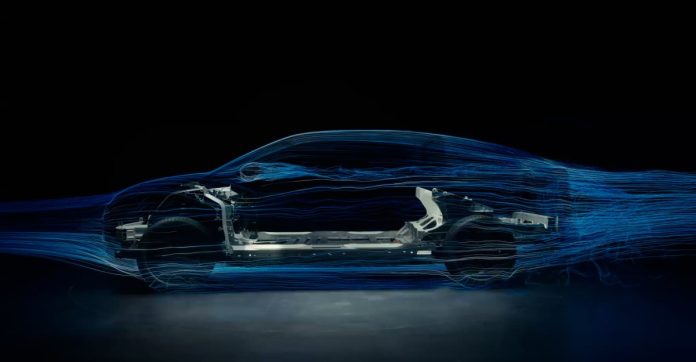
Ford’s push to develop affordable EVs is also a fight against physics itself. Every bit of inefficiency caused by drag robs you of range. At higher speeds, drag becomes even more of a hindrance. If you go twice as fast, the air holds you back four times as much, and you need eight times more power to keep going that speed, Clarke says.
With that in mind, Ford’s engineers got together with some of the brightest minds from Formula One and took direct aim at this problem. They streamlined the UEV’s underbody by making bolt holes shallower, carefully routed airflow around tires and suspension, and shaped certain components to hide the front tire wake behind the rear tires. Bounty estimate? 4.5 miles of range added.
The side mirrors also needed a rethink. Rather than using separate motors for mirror adjustment and folding, Ford merged both functions into a single actuator that moves the entire mirror body. This allowed the mirror to be more than 20 percent smaller than normal, reducing mass, cost, and drag. Bounty estimate? 1.5 miles of additional range.
Weight is another enemy of aerodynamics. To slim down, Ford is for the first time using large aluminum unicastings, which the automaker estimates will deliver more than a 27 percent weight improvement compared to competitors. For context, the Ford Maverick uses 146 structural parts in its front and rear structure. The new midsize electric pickup will use just two.
Ford also aims to slash its battery costs by adopting cheaper LFP batteries that eschew cobalt and nickel, two minerals that are among the most expensive to acquire. Using prismatic cells, Ford developed a highly efficient cell-to-structure architecture that effectively turns the battery pack into part of the truck’s skeleton. Tesla is generally recognized as a pioneer in structural batteries; BMW, Volvo, and now Ford are now seeing the gains in efficiency and weight in their use.
Ford’s ‘E-box’ combines the DC-to-DC converter and the AC charger into one serviceable module.Image: Ford
The UEV Platform will be Ford’s first crack at a zonal wiring system, rather than one that is a domain style. A zonal architecture means fewer electronic control units (ECUs), less wiring, and most importantly, decreased production cost. Tesla pioneered the use, and it has since been adapted by several EV-only shops, including Rivian and Scout.
But Clarke challenged the idea that Ford was simply chasing those other automakers in the adoption of a zonal architecture. The term itself is often used in marketing, he argues, despite actually referring to a form of zonal aggregation in most vehicles, where ECUs mainly serve to shorten wiring harnesses while logic remains centralized.
“In reality, very few vehicles that exist in the world are actually zonal architectures,” he added.
In contrast, Ford’s approach moves that logic closer to where functions physically occur in the vehicle, Clarke says. This reduces harness complexity further and allows compute resources to be used more dynamically across the car, depending on what functions are needed at a given time.
Ford extends this consolidation to power electronics as well. The DC-to-DC converter and the AC charger now share a single board and components in one compact module, which also manages power distribution and battery management, and can provide AC power to a home during an outage. By grouping these systems together and consolidating shared components, Ford created a small, serviceable module known as the E-Box.
There are tradeoffs, of course. With 400-volt architectures, Ford’s new EVs won’t charge as fast as 800-volt Hyundai and Kia EVs, for example. Clarke explained that after extensive internal studies, the team concluded 800-volt systems don’t provide any meaningful charging or powertrain advantage for this vehicle segment. And Ford wanted flexibility to support not only lithium iron phosphate batteries but also future chemistries, which will be more straightforward at 400 volts.
As a 122-year-old legacy company with a sprawling network of suppliers, Ford was always going to lag behind more vertically integrated companies like Tesla in developing software driven EVs. But the UEV project begins the necessary work of bringing as much of those systems and components under Ford’s direct control, Clarke says, so the company doesn’t have to negotiate with third-party companies about future feature improvements.
Some early designs of Ford’s upcoming UEV platform. Image: Ford
In a video presentation, Ford teased some of the designs under consideration for its future truck. In contrast to most of the trucks today, Ford’s new electric pickup will be more aerodynamically designed, with an angled hood and teardrop-shaped roofline. Not your average high-riding truck with a blunt front-end, but rather another egg-shaped EV — a design trend that has been criticized for being overused.
Clarke explains that if the aerodynamicists worked alone, the result would likely be a pure teardrop shape, which would be impractical and undesirable as a truck. Instead, by embedding aerodynamic experts alongside Ford’s other designers, each decision becomes an opportunity for shared learning.
“You can be the judge when you finally get to see the truck,” he added. “We know we want people to desire it immediately. They have to want to buy it. They have to like the way that it looks.”
Follow topics and authors from this story to see more like this in your personalized homepage feed and to receive email updates.
Bunnie Xo Vows to “Never Speak” to Jelly Roll Again
But all that free will came with a caveat: “Don’t f–king lie to me,” stressed Bunnie, “or ever let me be the last to know something.”
And she was certain there was something going on with Jelly Roll and his former paramour. “For a year, this girl tormented me online,” she detailed. “She would quote his song lyrics, she would post pictures wearing his merch, she would take cheap shots at me in her captions because she knew I was onto her. I just couldn’t prove it.”
When she brought the posts up to Jelly Roll, said Bunnie, “he would gaslight the s–t out of me and make me feel crazy for doubting him.”
An attempt at couples’ therapy went awry and “the fighting and suspicion went on for ten months,” wrote Bunnie, “until s–t finally hit the proverbial fan and splattered all over the place.”
Soon after, she returned from a trip to discover her husband had fully moved out of their Nashville home. And a chat with his best friend’s wife confirmed her worst suspicions.
“That night I contemplated taking my life,” Bunnie revealed. “The pain was so intense that I genuinely just wanted to end it all.”
Instead, she hit the road, discovering on her drive back to Vegas that Jelly Roll had announced their split on Instagram, despite promising to wait several months.
“After all the confusion, all the arguments, all the heartbreak—that was the last straw for me with J,” Bunnie wrote. “I vowed never to speak to him again.”
Price: $62.00 (as of Feb 17, 2026 12:30:35 UTC – Details)
Product description
The video showcases the product in use.The video guides you through product setup.The video compares multiple products.The video shows the product being unpacked. AlgaeCal Collagen: Beauty, Bones & Joints Support Merchant Video
1 Complete Collagen
2 VERISOL
3 FORTIBONE
4 FORTIGEL
5 UC-II
What are the sources of AlgaeCal Collagen, and why is it beneficial?
Our hydrolyzed collagen is sourced from pasture raised bovine. This bovine collagen is similar to the collagen we have in our own bodies. And because it’s pasture raised, it’s free from harmful GMOs, antibiotics, and artificial additives.
Is AlgaeCal Collagen the same as AlgaeCal Collagen Complete?
Yes! AlgaeCal Collagen is the same formula as AlgaeCal Collagen Complete—just with a new name. Nothing else has changed. You’re still getting the same clinically supported blend of four powerful collagens. Same product. Same results.
Is AlgaeCal Collagen third-party tested for quality and manufacturing standards?
AlgaeCal Collagen is manufactured in a facility in the USA that undergoes audits by the third-party organization National Sanitation Foundation (NSF) to ensure compliance with Current Good Manufacturing Practice (CGMP) standards.
Will heating affect AlgaeCal Collagen’s efficiency?
Research shows that collagen peptides, specifically Verisol collagen and Fortibone collagen, remain stable in hot beverages such as coffee and green tea, without undergoing significant changes in molecular weight.
What are the best ways to store and use your collagen to maintain its efficacy?
To ensure the efficacy of our multi-collagen peptides powder, you must keep it tightly closed in a cool, dry place. Also, keep it out of reach of children.
Add to Cart
Add to Cart
Add to Cart
Add to Cart
Add to Cart
Add to Cart
Add to Cart
Customer Reviews
4.6 out of 5 stars 1,114
4.6 out of 5 stars 1,116
4.5 out of 5 stars 3,168
4.5 out of 5 stars 2,072
4.5 out of 5 stars 528
4.5 out of 5 stars 250
4.3 out of 5 stars 86
Price
$62.00$62.00
$59.00$59.00
$85.00$85.00
$115.00$115.00
$39.00$39.00
$55.00$55.00
$34.00$34.00
Health Value
Anti-Aging
Stop Bone Loss
Increase Bone Density
Increase Bone Density
Boost Immunity
Support Overall Well-Being
Reduce Stress
4 Patented Collagens
✔
✘
✘
✘
✘
✘
✘
Clinically Supported
✔
✔
✔
✔
✘
✘
✘
Plant-Based
✘
✔
✔
✔
✘
✘
✘
Vitamin D3 (1000 IU+)
✘
✔
✔
✔
✔
✘
✘
Vitamin K2 (MK-7)
✘
✘
✔
✔
✔
✘
✘
Vitamin C
✘
✘
✔
✔
✘
✘
✘
Vitamin A (1000 IU)
✘
✘
✘
✘
✔
✘
✘
Turmeric
✘
✘
✘
✘
✘
✔
✘
Trace Minerals
✘
✔
✔
✔
✘
✘
✘
Magnesium (150 MG)
✘
✘
✘
✘
✘
✘
✔
Sizing Guide
Collagen Powder
Size 0 (22mm x 5mm)
Size 0 (22mm x 5mm)
Size 0 and 00
Size 3 (10mm x 5mm)
Liquid Form
Size 0 (22mm x 5mm)
Product Dimensions : 4 x 4 x 7 inches; 1.01 Pounds Item model number : CC1-AMZUS-V Date First Available : May 31, 2024 Manufacturer : ALGAECAL ASIN : B0D5F7XZ6D Best Sellers Rank: #2,789 in Health & Household (See Top 100 in Health & Household) #29 in Collagen Supplements Customer Reviews: 4.6 4.6 out of 5 stars (1,114) var dpAcrHasRegisteredArcLinkClickAction; P.when(‘A’, ‘ready’).execute(function(A) { if (dpAcrHasRegisteredArcLinkClickAction !== true) { dpAcrHasRegisteredArcLinkClickAction = true; A.declarative( ‘acrLink-click-metrics’, ‘click’, { “allowLinkDefault”: true }, function (event) { if (window.ue) { ue.count(“acrLinkClickCount”, (ue.count(“acrLinkClickCount”) || 0) + 1); } } ); } }); P.when(‘A’, ‘cf’).execute(function(A) { A.declarative(‘acrStarsLink-click-metrics’, ‘click’, { “allowLinkDefault” : true }, function(event){ if(window.ue) { ue.count(“acrStarsLinkWithPopoverClickCount”, (ue.count(“acrStarsLinkWithPopoverClickCount”) || 0) + 1); } }); }); Look Younger: Clinical studies with VERISOL show a 32% reduction in eye wrinkles within just eight weeks, making skin appear more youthful and radiant. Feel Younger: In clinical studies UC-II reduced joint aches in as little as 12 weeks. And FORTIGEL has been shown to increase the thickness of cartilage tissue-making joints feel more comfortable. Good hair days: In clinical studies VERISOL collagen peptides increased hair growth cells by 31% in just 16 weeks. So hair is thicker, stronger, and more vibrant. Stronger Bones: FORTIBONE is the only collagen clinically supported to slow the breakdown of bone tissue. It also increases the activity of bone-forming cells. This resuts in stronger, more flexible bones. Break–proof your nails: Tired of brittle nails that just won’t grow? A study spanning 24 weeks revealed that VERISOL collagen powder makes nails grow 12% faster. It also results in 42% fewer broken nails. Neutral Flavor & Safe to Enjoy: Our hydrolyzed bovine collagen is pure, unflavored, and easy to mix into your morning coffee or smoothie. It’s also non-GMO, free from common allergens, and gentle on digestion making it a worry-free way to support your bone health. Plus, our unflavored collagen powder dissolves easily, ensuring a smooth texture in your favorite drink.
– Arsenal have been told that Athletic Club winger Nico Williams is considering a transfer away from the club this summer, as reported by TEAMtalk. The 23-year-old’s contract includes a release clause in the region of €100 million, with Barcelona and the Gunners being the two clubs that appeal most to him. Chelsea, Liverpool, Manchester United, Paris Saint-Germain and Bayern Munich have also been informed that he could be available by “intermediaries.”
– Juventus will speak to Marcos Senesi‘s agent again to try to reach an agreement to sign the center back as a free agent when his contract at AFC Bournemouth expires this summer, as reported by Nicolo Schira. Juve are working to overtake Borussia Dortmund, Barcelona, Atletico Madrid, Brighton & Hove Albion, Crystal Palace and Manchester United in the race to sign the 28-year-old.
– Manchester United will continue to monitor Middlesbrough’s Hayden Hackney as the Red Devils plan their recruitment strategy for the midfield ahead of the summer transfer window, according to TEAMtalk. Middlesbrough were resolute in January to see off interest from Nottingham Forest and Tottenham Hotspur, but there is a belief that Hackney will be playing Premier League football next season whether that is due to promotion or a transfer, and his links with former Boro boss Michael Carrick (who is now in charge at Old Trafford) could be key to his future. But Everton are also keeping an eye on the 23-year-old’s situation.
EXPERT TAKE
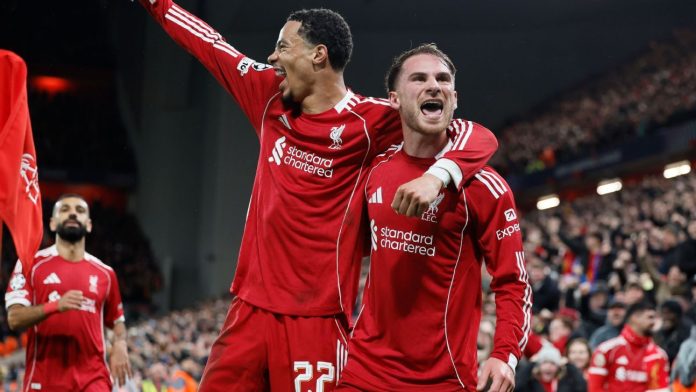
ESPN’s Liverpool correspondent Beth Lindop on the chances of a shock move for midfielder Alexis Mac Allister.
While there has been plenty of speculation over Mac Allister’s future in recent months, this one feels like a bit of a non-starter.
The Argentina international was outstanding for Arne Slot’s side as they romped to the title last season but his notable dip in form has contributed to their struggles this term. With close friends and fellow South Americans Luis Diaz and Darwin Nunez having left the club last summer, there have been some suggestions Mac Allister could soon be open to a new challenge.
However, considering a player hasn’t directly transferred between Liverpool and Manchester United since Phil Chisnall in 1964, it seems highly unlikely Mac Allister will be the one to buck that trend.
The midfielder is under contract at Anfield until 2028 and so would command a significant transfer fee this summer. It is a move that would make little sense for all parties.
OTHER RUMORS
play
1:01
Laurens: Eze needed this performance for Arsenal
Julien Laurens praises Eberechi Eze performance vs. Wigan as Mikel Arteta rotated his starting XI in the FA cup.
– Arsenal hold an edge over Tottenham Hotspur in their efforts to sign Bayern Munich midfielder Leon Goretzka as a free agent in the summer. (Football Insider)
– Liverpool are considering reigniting their interest in Newcastle United winger Anthony Gordon in case Mohamed Salah leaves. (Football Insider)
– Nicolas Jackson is set to return to Chelsea in the summer as Bayern Munich are unlikely to trigger the clause that would require them to sign the striker for a further £56.2 million on top of the £14.3 million loan fee. (Times)
– Manchester City prefer to loan out James Trafford than let the goalkeeper permanently leave, with Leeds United, Aston Villa and Newcastle United interested. (TEAMtalk)
– Arsenal will be willing to let left back Riccardo Calafiori leave in the summer amid growing concerns about his injury record. (Football Insider)
– European and Saudi Pro League sides are waiting to move for Hakan Calhanoglu if Internazionale can’t reach an agreement to extend the midfielder’s contract. (Nicolo Schira)
– There is plenty of Premier League interest in Marc Casado, but the midfielder and Barcelona will make the final decision on whether he moves. (Fabrizio Romano)
– Stuttgart have submitted a concrete offer to sign Grischa Promel as a free agent in the summer, but Hoffenheim are keen to extend the midfielder’s contract amid interest from Bayer Leverkusen, Eintracht Frankfurt and Wolfsburg. (Florian Plettenberg)
– St. Louis City are finalizing a deal to sign Venezuela forward Sergio Cordova on loan from Young Boys with an option to make the deal permanent. (Tom Bogert)




 Christy Carlson Romano is providing an update on her health.