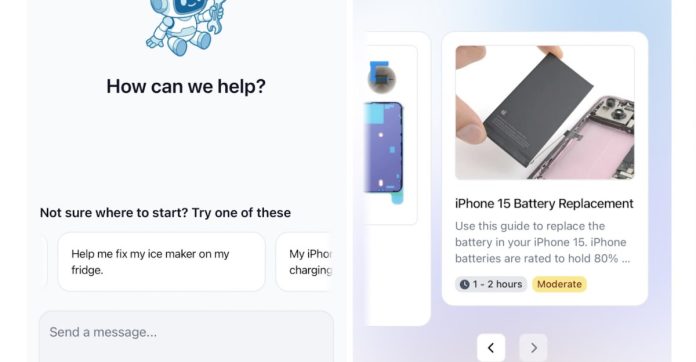
DIY repair site iFixit has launched its own app for iOS and Android, featuring its extensive library of repair guides and resources, a battery health monitor, and a new AI “FixBot” tool that’s been trained on those same guides to help with repairs.
The heart of the new app is the company’s existing library of repair guides, optimized for your mobile device. You can save the devices you own, giving you quick access to the relevant resources, and buy both tools and replacement parts from within the app.
What’s entirely new is FixBot, an AI helper designed to talk you through repairs and troubleshooting. “You tell it what’s happening: your phone dies at 30 percent, your washing machine won’t drain, your mower sputters and stalls,” CEO Kyle Wiens says in a blog post. “It asks follow-up questions. It eliminates possibilities. It thinks out loud with you, the way a master technician would, until the diagnosis clicks into place. Then it finds the parts and walks you through step by step.”
iFixit says the bot pulls its answers from its repair guides, cache of PDF manuals, and user forums. For devices without a dedicated iFixit guide already, the bot “will do its best with manufacturer docs, targeted web searches and information from similar models,” according to Wiens. Right now FixBot is entirely free to use, but eventually its voice controls and document uploads will be limited to a $4.99/month paid plan, with access limits applied to the free version too.
There are other app-specific features that take advantage of being installed on your phone or tablet. If you have an issue with the hardware it’s installed on, it will automatically detect the model, saving you from searching. It also taps into your phone’s battery information to report on your battery health. Most modern phones now include built-in battery health scores anyway, but iFixit’s unique touch is to predict future battery degradation, helping you plan a replacement ahead of time.
“We want to demystify batteries for people,” Wiens told my colleague Sean Hollister. “It should be like an oil change, you know when you’ll need to replace it and plan on regular maintenance.”
The iFixit app is available now on both iOS and Android. It isn’t actually iFixit’s first app, but it’s been a while — the company first launched an iPhone app in 2011, but a few years later was banned from the App Store for tearing down an Apple TV developer unit. Apparently it’s taken until now to get App Store access again (and Wiens’ personal developer account is still on the naughty list) but hopefully it’ll stick this time — he says iFixit has made sure Apple knows it still intends to teach people how to open up their devices.
“I was working on it, and I felt like we needed a really strong cast, like a famous cast,” Van Sant told Indiewire in 2018. “That wasn’t working out. I asked the usual suspects: Leonardo DiCaprio, Brad Pitt, Matt Damon, Ryan Phillippe. They all said no.”
In hindsight, he wasn’t sure why he was so stuck on casting big stars, concluding he was “not ready” to helm the movie at the time.
“There was something off with myself, I guess,” he said, “whatever was going on.”
Mark Wahlberg later had a meeting with Lee, but told WENN in 2007, per the Advocate, that he got “a little creeped out” by the 15 pages of the script that he read.
“I told Ang Lee, ‘I like you, you’re a talented guy, if you want to talk about it more…'” he recalled. “Thankfully, he didn’t…I didn’t rush to see Brokeback, it’s just not my deal… Obviously, it was done in taste—look how it was received.”
Price: $29.99 (as of Dec 09, 2025 09:37:11 UTC – Details)
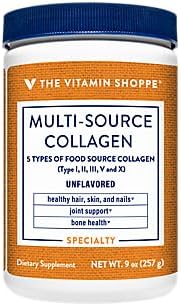
Discover trusted wellness with The Vitamin Shoppe, a U.S.-based leader in dietary supplements and vitamins. Our Collagen supplement provides this essential protein to support healthy hair, skin, and nails, promote joint comfort, and maintain youthful-looking skin. Collagen is the most abundant protein in the body. The Vitamin Shoppe line features premium supplements created to help you live healthier from the inside out. Package Dimensions : 6 x 6 x 4 inches; 9 ounces Date First Available : January 30, 2024 Manufacturer : the Vitamin Shoppe ASIN : B0CTKPC79W Best Sellers Rank: #158,611 in Health & Household (See Top 100 in Health & Household) #1,116 in Collagen Supplements Customer Reviews: 4.0 4.0 out of 5 stars (10) var dpAcrHasRegisteredArcLinkClickAction; P.when(‘A’, ‘ready’).execute(function(A) { if (dpAcrHasRegisteredArcLinkClickAction !== true) { dpAcrHasRegisteredArcLinkClickAction = true; A.declarative( ‘acrLink-click-metrics’, ‘click’, { “allowLinkDefault”: true }, function (event) { if (window.ue) { ue.count(“acrLinkClickCount”, (ue.count(“acrLinkClickCount”) || 0) + 1); } } ); } }); P.when(‘A’, ‘cf’).execute(function(A) { A.declarative(‘acrStarsLink-click-metrics’, ‘click’, { “allowLinkDefault” : true }, function(event){ if(window.ue) { ue.count(“acrStarsLinkWithPopoverClickCount”, (ue.count(“acrStarsLinkWithPopoverClickCount”) || 0) + 1); } }); }); MULTI-SOURCE COLLAGEN – Provides multiple types of collagen to support healthy hair, skin, and nails, promote joint comfort, and maintain youthful-looking skin. BEAUTY & JOINT SUPPORT – Collagen is the most abundant protein in the body, providing structural support for skin elasticity, joint flexibility, and healthy connective tissue. VERSATILE POWDER FORM – Easy-to-mix powder that can be added to water, juice, smoothies, or your favorite beverage, providing flexible dosing and convenient supplementation. The Vitamin Shoppe brand features a wide range of quality vitamins, minerals, and supplements at everyday low prices. A tested, trusted member of The Vitamin Shoppe family of brands, all products are rigorously tested for purity and potency—so you can be confident in every purchase.
Kris Rhim is a reporter for NFL Nation at ESPN. Kris covers the Los Angeles Chargers, including coach Jim Harbaugh’s franchise-altering first season (https://www.espn.com/nfl/story/_/id/41068072/los-angeles-chargers-2024-preview-jim-harbaugh-culture). In Kris’ free time, he lives his NBA dreams at men’s leagues across Los Angeles.
Tim McManus covers the Philadelphia Eagles for ESPN. He joined ESPN in 2016 after covering the Eagles for Philadelphia Magazine’s Birds 24/7, a site he helped create, since 2010.
Dec 8, 2025, 11:50 PM ET
INGLEWOOD, Calif. — In a season marred by inconsistency for the Los Angeles Chargers, their “Monday Night Football” outing appeared to be heading toward a loss in a similar fashion.
The Chargers’ defense was suffocating, forcing five turnovers from Super Bowl MVP Jalen Hurts, the most in his career. But after an opening-drive touchdown, the Chargers’ offense flatlined.
This time was different for the Chargers, however. In a thrilling 22-19 overtime win, quarterback Justin Herbert rushed for 66 yards, the third most in his career, just seven days after surgery on a fracture in his left hand. And L.A.’s defense got a stop when it needed it most, as safety Tony Jefferson intercepted Hurts to secure the victory in OT.
It was the biggest win of the season for a Chargers team that appeared to be spiraling out of playoff contention — and it could help propel them into the postseason for the second year in a row.
Los Angeles Chargers (9-4)
What to make of QB performance: Herbert’s injured left hand clearly bothered him throughout the night, but he played without much limitation — taking snaps under center, scrambling for yards and absorbing hits. Herbert’s counting stats weren’t impressive — completing 12 of 26 passes for 139 yards — but some of that can be credited to an Eagles defense that blanketed receivers and consistently pressured him. His performance with the broken hand was an encouraging sign for an offense heading into a four-game stretch that features each opponent vying for a playoff spot or improved seeding (Kansas City, Dallas, Houston, Denver).
Hole in the game plan: Pass protection.
The Eagles — missing star defensive tackle Jalen Carter — pressured Herbert on 68.3% of his dropbacks, per NFL Next Gen Stats, and sacked him seven times. One pressure in the second quarter forced an interception after Eagles edge rusher Jaelan Phillips pushed tackle Bobby Hart into Herbert’s throwing arm. Pass protection has been an issue all season, particularly since Joe Alt‘s season-ending right high ankle injury in week 9. Since that injury, Herbert has been sacked 21 times, tied for second most in the NFL (Geno Smith, 30).
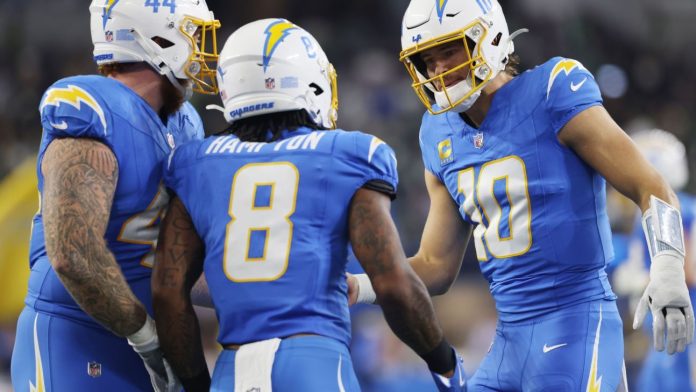
With first-round rookie Hampton back for the first time since Week 5, he and Vidal shined.
On the opening drive, they combined for 78 yards, capped off with a 4-yard receiving touchdown by Hampton. Their workload was similar — Hampton with 13 carries and Vidal with 14 — and the coming weeks will prove whether this should be a shared backfield or if Hampton will go back to being the featured back. — Kris Rhim
Coming into Monday night’s game on a two-game slide, the Eagles needed Hurts to pull the offense out of its funk and lead the team to a stabilizing win over the Chargers.
Instead, he put forth one of the worst performances of his career, factoring heavily into their 22-19 overtime loss.
Hurts had five turnovers on the night, including an interception in overtime that ended a promising drive near the goal line. He was protecting the football as well as anyone for the bulk of the season, but now he has seven giveaways over the past two games. His receiving corps could have helped him out more — an A.J. Brown drop over the middle in the second half led to a pick — but Hurts held the offense back more than anyone against L.A.
A mediocre outing would have been enough on a night when the defense registered seven sacks and Saquon Barkley rediscovered some of his 2024 magic with a 50-plus-yard touchdown run.
The Eagles remain in a solid position to win the NFC East. But their offensive woes have hit crisis levels, stoking fears in Philadelphia that the defending champs are careering toward a 2023-like collapse.
Most surprising performance: Two unheralded defensive players made big impacts in the game. Cornerback Adoree’ Jackson, the subject of much scrutiny amid the team’s quest to identify a CB2 opposite Quinyon Mitchell, had an interception and two passes defensed to continue his improved play. Defensive tackle Byron Young made the most of his increased role in Jalen Carter’s absence with 1.5 sacks, two QB hits and a tackle for loss.
Trend to watch: Kicker Jake Elliott has three missed field goals and a missed extra point over his past three games. He was unable to connect on a 48-yard attempt at the end of the second quarter Monday. With the offense struggling, the margins are too small to absorb an inconsistent kicking game over the long term.
Stat to know: Barkley’s 52-yard TD scamper early in the fourth quarter was his 15th career rushing touchdown of at least 50 yards, including playoffs, tying him with Barry Sanders for the second most in NFL history behind Adrian Peterson‘s 16. Barkley entered Monday’s contest with just one run of 40-plus yards on the season. — Tim McManus
Twelve years into the College Football Playoff, the committee may have been tasked with its toughest decision yet.
On one hand, there’s Alabama, the bluest of blue bloods, a team that played the sixth-toughest schedule in the country, with seven wins over FPI top-40 opponents, and whose final loss — the one that put the Tide squarely on the bubble — came in the SEC championship game, while others like Miami and Notre Dame sat at home.
On the other hand, there’s Notre Dame, the most storied program in the sport’s history with a legion of fans from coast to coast. The Irish are playing exceptional football, winning 10 straight all by double digits, and their lone losses, way back in August and early September, came to two other top-tier teams by a combined four points.
Then on the metaphorical third hand is Miami, a team that began the season with fireworks, sagged in the middle, then responded to its No. 18 placement in the first set of rankings by reeling off four straight wins by an average of 27 points per game. Oh, and Miami holds a head-to-head win over Notre Dame, albeit one that came in the first week of the season and that the committee may or may not consider from week to week.
Spread around a few garnishes of Texas, Vanderbilt and BYU on the plate and add a dessert course of a Duke-JMU argument that could result in bumping a Power 4 conference from the playoff entirely and it’s a tough year to be a committee member.
There have been others, of course. In 2014, the committee punted on a tricky Baylor-TCU debate in favor of Ohio State, and the Buckeyes won it all. In 2017, amid a chaotic final week, the committee handed its final bid to Alabama, despite its absence from the SEC championship game, and the Tide went on to win a championship. In 2023, the committee snubbed an undefeated Florida State, because of an injury to QB Jordan Travis, and the Seminoles have gone on to lose 18 of their next 25 games.
The results after a controversial decision always seem to lead to the same conclusion: The committee got things right.
And yet, as the committee so often notes after each rankings release, the results alone don’t tell the whole story. In football, perhaps more than any other sport, the process matters. And the committee’s process, from the outset of that first playoff 12 years ago, has been a mess.
Step away from the whole process, and the decision to rank Miami ahead of Notre Dame makes perfect sense. They have the same record. Miami won head-to-head. Most rational folks, aligned with neither side, would acknowledge the committee came to a sensible conclusion.
But look at the process and try to follow the committee’s rationale, and it’s like climbing the stairs in an M.C. Escher painting.
In the first ranking, Notre Dame was eight spots ahead of Miami. Both won out, both by big margins, and each week along the way, Notre Dame remained ahead of Miami. Last week, Alabama — fresh off a near disaster in the Iron Bowl — leapfrogged Notre Dame despite the Irish dominating Stanford 49-20. That was a head-scratcher, unless, of course, you believed the minor conspiracy that the committee was setting up a direct comparison between Miami and Notre Dame by having them ranked one right after the other.
And, what do you know, that’s what we got. After BYU lost its conference championship, the Cougars dropped in the rankings — something that didn’t happen to Alabama for a similar blowout defeat, it should be noted — and Notre Dame and Miami were separated by nothing other than the committee’s whims.
play
1:31
Saban hopes Notre Dame’s snub leads to CFP changes
Nick Saban gives his thoughts on the structure of the College Football Playoff in light of Notre Dame being left out.
So while both sat home on their couches on championship weekend, Miami somehow did enough to push its way into the playoff instead of Notre Dame.
Is it a reasonable conclusion? Yes!
Is it a ridiculous process that got us here? A thousand yeses!
Let’s consider how the committee evaluates teams for a moment. Which variables matter most? We’ve gone from Florida State’s battle against game control in 2014 to Notre Dame’s résumé boasting two quality losses in 2025.
Does head-to-head matter? For five weeks it might not, but in the last week it clearly did.
The committee is supposed to evaluate a school’s entire body of work, but does that mean a September loss can’t be overshadowed by clear and obvious growth throughout a season?
Do conference championships matter? Winning them is supposed to be a factor — though, ask 2023 Florida State about that — so shouldn’t a loss matter, too? A year ago, committee chair Warde Manuel said it might — including docking SMU two spots after a three-point loss to Clemson in the ACC conference championship game, even if it didn’t knock the Mustangs out of the playoff. But Alabama’s 21-point loss Saturday meant nothing.
Ranked wins are great, but of course the committee decides who earns the distinction of being ranked. The eye test is the best argument for one team, the data for another, and no one can be sure which metric matters more, because again, it depends. For a committee composed primarily of former coaches and active ADs, the human element — perceptions, expectations, projections, biases and misunderstandings — loom like a cloud over every mention of strength of record or game control.
Or boil it down to the most basic debate: Are we trying to find the best teams or the most deserving? And how do we even define those two things? From week to week, the answer is a shrug emoji and a Mad Libs of metrics and records pieced together like those magnetic words people put on their refrigerator.
All of this leads to arguments, which is likely a feature of the system, not a bug. Debate is part of the DNA of sports. But ironically, no one seems to contradict the committee more than the committee itself. The case for Team A so often sounds like the mirror image of the case against Team B. Alabama jumped Notre Dame in last week’s rankings after an ugly win over Auburn, but Miami’s dominant victory on the road against a ranked Pitt team made no difference. When Texas A&M needed a Houdini act to beat South Carolina, that wasn’t a knock on the Aggies, the committee chair said, but when Alabama narrowly escaped those same Gamecocks, it was a flaw in the Tide’s résumé. Ranked wins are great — but only if the team was ranked at the time, or maybe if it ends up ranked in the future. Also, the committee does the ranking so, whew.
And when those explanations get parsed by fans in the aftermath of perplexing decisions — Alabama’s “impressive” seven-point win over 5-7 Auburn allowing the Tide to leapfrog Notre Dame after a 29-point Irish win over 4-8 Stanford, for example — the outcome isn’t just disagreements and debate. It’s conspiratorial thinking. It’s a hollowing out of trust in the process. It’s a belief that the deck is stacked ahead of time. And that’s a disservice to the sport, the teams involved, and the committee itself. Good folks work hard and care about their role, but because their process is so immensely flawed, the presumption of nefarious motives isn’t just fodder for the message boards, but increasingly, mainstream thinking.
Imagine for a moment this wasn’t about college football. Imagine instead this was clinical trials for a new drug or a prized astrophysicist trying to explain an anomaly deep in outer space or, heck, assembling a bookshelf you bought from IKEA. Any such endeavor requires not just a result that seems to work, but a process that can be repeated, again and again, by a completely different set of people, before anyone gives it enough credence that a majority of people — even ones who don’t understand the process at all — believe in the work that was done and trust the results provided.
We don’t have to understand Einstein’s theory of relativity to believe in its basic principles. Relativity remains a theory, not a fact, but it is commonly accepted around the world by brilliant scientists and guys watching “Interstellar” at 3 a.m. on cable alike, because we can all appreciate a stringent process, rigorous testing, and an ability to withstand criticism from dissenting voices.
If we can do that for quantum physics, then surely we can do that for a college football playoff, right?
Instead, we’ll continue to argue. That’s OK. The arguments are part of the fun. But at the foundation of those arguments are real people — players, coaches, administrators, support staffs and even the fans. While no result will make everyone happy, the least this sport owes them is a process they can understand.
Way back on Nov. 4, Notre Dame was 6-2 with a three-point loss to Miami on its résumé. The committee believed the Irish were the No. 10 team in the country.
On that same date, Miami was 6-2 with a three-point win over Notre Dame on its résumé. The committee believed the Canes were the No. 18 team in the country.
This isn’t complicated math, but just for clarity’s sake: Five weeks ago, these two teams had the same record, Miami had a head-to-head win, and the committee believed Notre Dame was eight spots better. That would certainly seem to indicate a sincere and strong belief that, the Week 1 result be damned, the Irish were clearly the better team overall.
So, what has happened since then?
Notre Dame is 4-0 with a win over a ranked team and an average margin of 38 points per game. Miami is 4-0 with a win over a ranked team and an average margin of 27.5 points per game.
And yet, when the committee put its rankings together this time around, Miami is one spot ahead of Notre Dame.
There is every reason to be suspicious of the committee’s initial evaluation of these two teams. Perhaps those Nov. 4 rankings were a mistake. But the committee waited five weeks to correct that mistake, and during that span, the Irish absolutely demoralized everyone they played — including two teams that Miami also played, but Notre Dame won by more.
Nothing that has happened between the first rankings and the last suggests Notre Dame got worse relative to Miami, and yet a full nine spots in the rankings have shifted between the two.
If this was all about the committee playing the long game, using the opening scenes to set up a dramatic showdown between Miami and Notre Dame in the final act, then kudos for creating some exceptional TV.
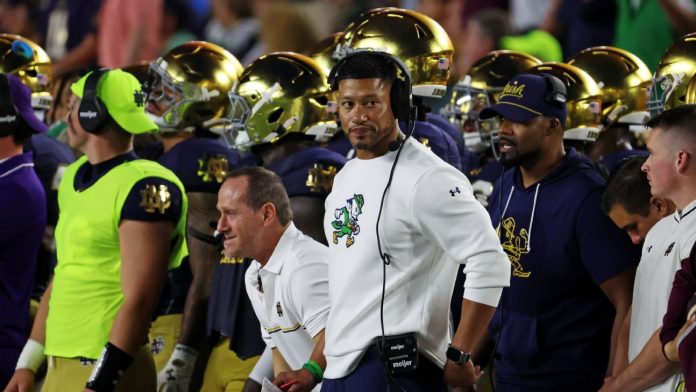
As far as offering an honest weekly evaluation of college football teams, however, this was an absurd farce that served as a slap in the face to coach Marcus Freeman and his team and leaves us without the chance to see arguably the best player in the country, Jeremiyah Love, in the biggest games of the year.
Typically the difference between a No. 6 and a No. 7 ranking is negligible. Both get a home game in the first round, both have a good shot to advance.
This year, however, it’s a little different.
Thanks to the ACC’s pratfall of a season, two Group of 5 teams made the final field. That means both the No. 5 seed and the No. 6 seed get to play teams from outside the big-boy conferences, while the No. 7 seed lands a genuine contender on the docket in Round 1.
The loser of this lottery is Texas A&M, and that’s a pretty tough take to defend.
Let’s look at the résumés.
Team A: No. 10 in FPI, best win vs. FPI No. 3, loss to FPI No. 13, No. 3 strength of record, five wins vs. bowl-eligible teams, six wins vs. FPI top 40
Team B: No. 12 in FPI, best win vs. FPI No. 15, loss to SP+ No. 6, No 6 strength of record, four wins vs. bowl-eligible teams, four wins vs. FPI top 40
They’re close, but the edge in nearly every metric is with Team A. That’s Texas A&M.
Or how about this: Against five common opponents, A&M has a scoring edge of 2 points, including a far better win over LSU, their best common foe.
Is it splitting hairs? Of course, but that’s the committee’s job. And the results of that hair-splitting are the difference between Ole Miss getting a rematch with a Tulane team it beat by 35 in September or facing off against a red-hot Miami eager to prove it belonged in the field.
3. Greg Sankey
On Saturday, the SEC commissioner was asked to state his case for his league’s bubble teams. He offered an inclusive take.
“I view that there are seven of our teams at the conclusion of the 12-game season over 14 weeks that merit inclusion in the playoff,” Sankey said.
And yet, here we are, with just a measly five SEC teams in the field, including one getting a first-round bye and three hosting home games. It’s a slap in the face!
Truth is, Vanderbilt was quite good this year, with a strength of record ahead of both Notre Dame and Miami, and the world would simply be a better place with Diego Pavia in the playoff.
Truth is, if the goal of the playoff is to seed it with the best teams — the teams capable of beating other elite teams and making a run for a championship — then Texas had as good a case as anyone, with head-to-head wins over Oklahoma, Vandy and Texas A&M.
Heck, compare these two résumés:
Team A: Three losses, the worst loss to FPI No. 53 by eight and three wins vs. FPI top-15 teams
Team B: Three losses, the worst loss to FPI No. 74 by 14 and two wins vs. FPI top-15 teams
Team A also has a 17-point win over a team that beat Team B.
So, who would you take?
Don’t ask Sankey. His answer is both. But Team A is Texas and Team B is Alabama, and the Longhorns have looked markedly better over the past month of the season than the flailing Tide.
You have to hand it to Manny Diaz. The man can make a coherent argument for a lost cause.
“We played 10 Power 4 teams. Comparing us to James Madison, for example, who had a fantastic season — their strength of schedule is in the 100s. Ours is in the 50s. Seven wins in our conference. Seven Power 4 wins as opposed to zero Power 4 wins. The ACC champions. … I’m watching them play Troy at home [in the Sun Belt championship] and Troy had a backup quarterback in for most of the game, right? And it’s a three-point game until, really, the last few minutes of the game when they were able to pull away. They won the game and their conference, but you just can’t compare going through the Sun Belt this year — the Sun Belt has been a really good conference in years past, but most of their top teams are just having down years. They’re not challenged the way they would’ve been going through a normal Sun Belt schedule. Then you start comparing strength of schedule — if you simply go into wins and losses, you have to look at who you’re playing against. That’s the whole point of why you play a Power 4 schedule. There’s a reason these coaches are all leaving to take Power 4 jobs. There’s a recognition that’s where the best competition is.”
That was no small jab at JMU, whose coach, Bob Chesney, is leaving for a Power 4 job at UCLA.
It also probably gets Diaz removed from Sun Belt commissioner Keith Gill’s Christmas card list, which given that ACC commissioner Jim Phillips can’t be pleased with Duke torpedoing his conference’s reputation by winning the league with five losses, is going to leave a lot of extra space on Diaz’s mantle this holiday season.
Alabama lost a championship game by 21 points to a top-four team. It didn’t budge in the rankings.
BYU lost a championship game by 27 points to a top-four team. It dropped a spot.
Did it ultimately matter for the Cougars? No. They weren’t sniffing the playoff unless they beat Texas Tech. But on principle, they ought to be angry about the double standard.
Moreover, BYU was the most overlooked team all season — the one that had a good case, a comparable résumé, and virtually no one outside of Provo cheerleading for them.
Which, oddly enough, feels about the same as last year, when BYU had a perfectly good case alongside Alabama, Miami, Ole Miss and South Carolina, and no one seemed to bat an eye when they finished a distant 17th — behind Clemson, even — in the committee’s final ranking.
Segway’s modest e-bike lineup is about to gain a new entrant.
The Ninebot-owned brand, once known for its pioneering self-balancing scooters, currently only sells two e-bikes: the moto-styled Xyber and the low-step Xafari. Now it’s getting a third, Myon, which it plans on officially debuting at the Consumer Electronics Show in Las Vegas next year. But before that, the company provided two exclusive teaser images of the new bike to The Verge.
Segway describes Myon as an everyday commuter and leisure e-bike that should look like a more “traditional” bicycle than the Xyber and Xafari.
“We designed the Myon for every type of rider, from first-timers to seasoned cyclists,” Nick Howe, Segway’s head of e-bikes, said in a statement. “It’s an e-bike that’s equally as suited to daily commuting as it is to weekend pleasure cruises. And with technology that combines Segway original innovations with features inspired by the auto industry, we believe it represents a leap forward in terms of the rider experience on two wheels.”
While we can’t see much in the provided images, we can see one interesting feature: rear-facing radar. Segway says that the Myon will include the millimeter wave radar for “enhanced safety,” describing it as among several technologies that the company is cribbing from the auto industry. The radar can help alert cyclists when cars are approaching, from which direction, and how close without having to take their eyes off the road, Segway says.
“It’s like having eyes in the back of your head,” Howe said. “It helps keep you more aware of your surroundings without taking your eyes off what’s in front of you.”
RearView Radar will have a 150-degree field of view with a range of up to 230 feet in the rear and 20 feet wide. It will feature a variety of alerts for the following scenarios based on distance, position and speed of the vehicle detected: Blindspot Detection (BSD), Lane Change Warning (LCW) and Rear Collision Warning (RCW). If turn signals are in use while there is an active BSD or LCW alert, the frequency of the signal will increase, urging additional caution for any intended changes of direction. Riders will be able to customize alerts and fine-tune sensitivity in the Segway Mobility App.
Rear-facing radar is nothing new in the world of e-bikes, as many manufacturers have included the technology in their models, either as a standard feature or an option. Segway is opting for the latter, selling its RearView Radar as a paid upgrade for the Myon. (Pricing for the feature, as well as the bike, won’t be available until January 6th, the same day it goes on sale.) For what its worth, Segway’s radar has less range than the Garmin-supplied rear-facing radar included in Specialized’s Turbo lineup (Segway’s 230 ft vs Specialized’s 460 ft).
It’s cool to see Segway continuing to build out its e-bike lineup. While the business of e-bikes is getting more complicated, and more expensive, and some established players fall by the wayside, it’s encouraging to see established companies, especially ones focused on affordable models, continuing to release fun and interesting products.
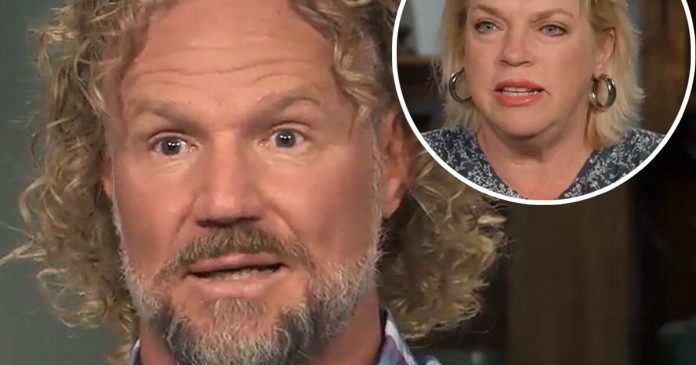
Kody Brown Still Has Women Asking to Join His Family
Should Kody still be interested in having his love multiplied, there’s no shortage of options.
As he revealed to Robyn on the Nov. 2 episode, “I got another one of those emails from some woman talking about plural marriage.”
The unnamed person was “kind of chastising me for deciding to quit plural marriage,” he explained to his sole remaining bride. And then she offered up her services. “She’s calling me out,” Kody explained to Robyn, “and then asking sort of like to get to know us for the purpose of joining the family.”
Truthfully, it wasn’t an immediate no from Robyn, who admitted in a confessional, “For a split second, I think, ‘Oh, wouldn’t this be great? This is what I’ve always wanted for my life.’ And, ‘Hmm, would they fit.'”
Ultimately, though, it was a no.
“I find it very inappropriate that they would send it to Kody,” she explained of her issue with the outreach. “It’s not usually proper to go hitting on a guy. You have to go through the sister wives.”
Price: $18.90 - $13.30 (as of Dec 08, 2025 10:34:18 UTC – Details)
From the brand
Best Deals
Holiday Gift Ideas
NEW LAUNCHED
Stocking Stuffers
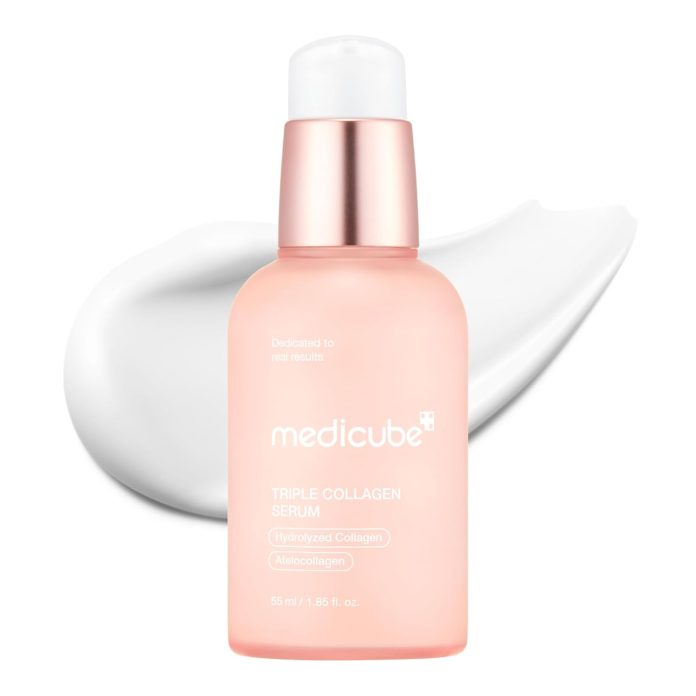
Item model number : F23T009 Manufacturer : APR ASIN : B085VWWJJT Best Sellers Rank: #2,188 in Beauty & Personal Care (See Top 100 in Beauty & Personal Care) #60 in Facial Serums Customer Reviews: 4.7 4.7 out of 5 stars (1,856) var dpAcrHasRegisteredArcLinkClickAction; P.when(‘A’, ‘ready’).execute(function(A) { if (dpAcrHasRegisteredArcLinkClickAction !== true) { dpAcrHasRegisteredArcLinkClickAction = true; A.declarative( ‘acrLink-click-metrics’, ‘click’, { “allowLinkDefault”: true }, function (event) { if (window.ue) { ue.count(“acrLinkClickCount”, (ue.count(“acrLinkClickCount”) || 0) + 1); } } ); } }); P.when(‘A’, ‘cf’).execute(function(A) { A.declarative(‘acrStarsLink-click-metrics’, ‘click’, { “allowLinkDefault” : true }, function(event){ if(window.ue) { ue.count(“acrStarsLinkWithPopoverClickCount”, (ue.count(“acrStarsLinkWithPopoverClickCount”) || 0) + 1); } }); }); Medicube Triple Collagen Serum is a powerful serum that helps to boost skin elasticity and nourish dull skin with the envious glass glow. The Triple Collagen Complex with Hydrolyzed collagen, atelo collagen, and soluble collagen penetrate faster and deeper into the skin barrier, providing even the deepest skin layer with the essential nutrients for plump and healthy-looking skin. This lightweight serum is suitable for all skin types and provides long-lasting skin suppleness and glow. It is particularly beneficial for matured skin and those who want to achieve a healthy glow. The key ingredients in this serum are Enantia Chlorantha Bark Extract and Olive Leaf Extract. Enantia Chlorantha Bark Extract is a patented ingredient for pore care, while Olive Leaf Extract is a patented ingredient for blemish and freckle care. Apply a small amount of the serum onto the face and neck, avoiding the eye area. Gently massage in circular motions until fully absorbed. Use daily in the morning and at night for best results. Everyone has skin concerns. But not everyone finds the right solution. By working with dermatologists, we research the most effective formula and develop using the best ingredients.
Customers say
Customers find this serum effective, describing it as a game changer in their skincare routine that nourishes dull skin and improves texture. The product provides excellent hydration for dry skin and helps brighten dull areas, while absorbing quickly without leaving stickiness. Customers appreciate its gentle formula that doesn’t irritate sensitive skin and its pleasant scent, considering it well worth the price.
Rich Cimini is a staff writer who covers the New York Jets and the NFL at ESPN. Rich has covered the Jets for over 30 years, joining ESPN in 2010. Rich also hosts the Flight Deck podcast. He previously was a beat writer for the New York Daily News and is a graduate of Syracuse University.
EAST RUTHERFORD, N.J. — The New York Jets head into the final four games of the season in an all too familiar position: no hope for the playoffs, mired in quarterback uncertainty.
Their playoff drought, almost old enough to drive, turned 15 years old Sunday, as the Jets were officially eliminated with their 34-10 loss to the Miami Dolphins at MetLife Stadium. It sealed what had become inevitable two months ago during their 0-7 start.
Once again, the Jets own sole possession of the longest active postseason slump in North America’s men’s sports leagues — the NFL, MLB, NBA, NHL and MLS. They’ve been sharing it for several months each year with the NHL’s Buffalo Sabres, currently at 14 years.
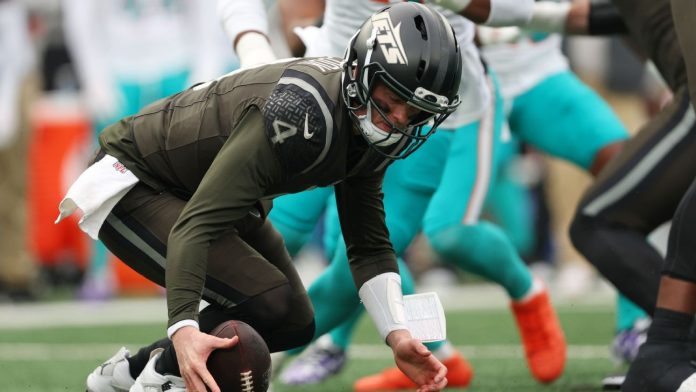
Quarterback Tyrod Taylor, making his third start for the demoted (and injured) Justin Fields, lasted only two series (six plays) because of a groin injury, forcing rookie third-stringer Brady Cook into his first NFL game. It was 21-0 at the time, and the former undrafted free agent threw two interceptions in a difficult debut.
Who starts next Sunday against the Jacksonville Jaguars is anybody’s guess. Fields, who reported knee soreness last week in practice and was ruled out on Friday, could be an option, although Glenn clearly prefers Taylor.
“We’ve got to get him healthy,” Glenn said. “The quarterback situation, we’ll look at that going into next week. But, yeah, it’s always tough when your starter goes down.”
It has been that kind of year for the Jets.
At 3-10, they reached double-digit losses for the sixth straight year, tying them for the third-longest such streak in the Super Bowl era. The longest skids belong to the Tampa Bay Buccaneers at 12 (1983-1994) and the Las Vegas Raiders at seven (2003-2009).
“It’s a yearly thing,” running back Breece Hall said of the postseason skid. “It definitely starts to weigh on you. You see your peers and you see other guys that you know you’re just as good as or better than, and they get to have a lot of fun.”
Hall, who will be the Jets’ most important free agent, added: “With AG, I see the vision and I see how guys are trying to turn it around. We just have to be better as a team and execute what the coaches are coaching us to do.”
Center Joe Tippmann said, “It sucks. [We’ve missed the playoffs] ever since I’ve been here, so it’s something that we are constantly trying to fight and overcome. It sucks being in that situation again this year.”
Glenn became the sixth Jets coach to join the drought. It started with Rex Ryan (2011-2014), who passed it to Todd Bowles (2015-2018), who handed it to Adam Gase (2019-2020), who gave it to Robert Saleh (2021-2024), who was fired after five games last season. In came interim coach Jeff Ulbrich.
Glenn was hired in January, vowing to change the fortunes of the franchise, but he got off to the worst start of any coach in Jets history. Since then, the Jets traded star defensive players Sauce Gardner and Quinnen Williams and benched Fields, Glenn’s handpicked quarterback.
“Get better, that’s it. That’s how I process it,” Glenn said of the postseason slump. “That’s the only thing that we can do is improve and get better. Because before you can start to consistently win … you have to improve. You have to improve in all areas. That’s including us as coaches.”
Glenn blamed himself for the latest loss, claiming he didn’t have the team ready to play. He said, “This one is on me.” The Jets opened the game by allowing two long touchdown drives. Miami scored another touchdown after intercepting a Taylor throw. It was 21-0 at the end of the first quarter.
The Jets generated only 207 total yards, much of it in garbage time. Cook (14-for-30, 163 yards), who didn’t have any first-team reps in practice, was sacked six times. What irked Glenn the most was that the defense allowed 239 rushing yards.
“That’s B.S.,” he said. “You can’t give up 240 yards rushing. It’s that simple.”
Glenn’s biggest challenge in the future will be to solidify the quarterback position. Sixteen different quarterbacks have started at least one game during the 15-year drought. Cook could be No. 17.
Kicker Nick Folk, the last link to the Jets’ last playoff team in 2010, acknowledged the fans’ frustration, but he preached patience with Glenn and general manager Darren Mougey.
“You can build a house on a bad foundation, but it’s not going to stand very long,” Folk said. “So, I think AG is trying to do the right thing and build a good foundation so that he can build something that’s long lasting.”
It’s easy to think about AI as a sort of existential battle between human and machine. Maybe it will be, someday, in a Skynet sort of way. But there are also lots of people trying to figure out how to use AI not as a replacement for human creativity and thinking but as a tool meant to augment those things.
Sari Azout is one of those people. She’s the founder of Sublime, a platform dedicated to curation, creativity, and ideas. Sublime is all about taste, which makes it slightly surprising that there’s a huge amount of AI powering the way it works. But to Azout, it all makes sense.
On this episode of The Vergecast, the second in our two-part series on how developers are using and building AI into their products, Azout explains how she’s bringing AI to Sublime without changing what makes it human. She talks through the platform’s discovery options, the importance of good data, how humans and AI make connections together, and much more. She also walks us through Sublime’s latest tool, Podcast Magic, which is pretty much AI models all the way down.
Azout also explains how she’s using AI in her own life, both as a productivity tool and as a creative partner. She has some reservations about the way AI might develop, and what it might mean as we rely on it for ever more of our lives, but she’s confident there’s a balance that can work.
If you want to know more about everything we discuss in this episode, here are some links to get you started: