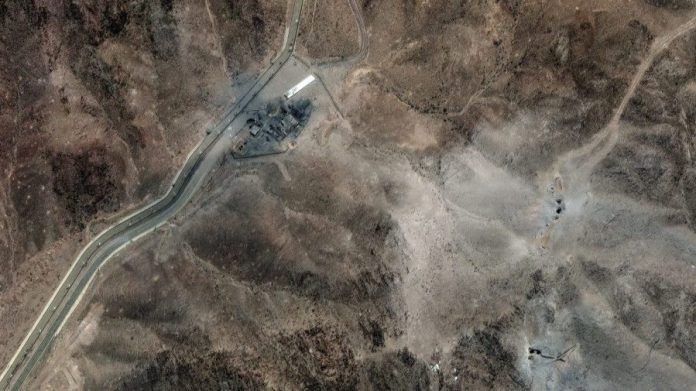
Iran’s nuclear facilities “suffered enormous damage” from the U.S. airstrikes Saturday, but more extensive evaluation is needed, the head of the United Nations’ nuclear watchdog said Thursday.
“I think ‘annihilated’ is too much, but it has suffered enormous damage,” International Atomic Energy Agency (IAEA) director Rafael Grossi told French broadcaster RFI. “I know there’s a lot of debate about the degree of annihilation, total destruction, and so on, what I can tell you, and I think everyone agrees on this, is that very considerable damage has been done.”
“Obviously, you have to go to the site and that is not easy, there is debris and it is no longer an operational facility,” he added.
President Trump has maintained that the three sites targeted were “completely and totally obliterated,” but reports this week, based on an initial U.S. intelligence analysis, raised questions about the severity of the damage.
Trump said that the strikes set Iran’s nuclear capabilities back by “decades,” but Iranian Supreme Leader Ayatollah Ali Khamenei denied that the damage was that significant during his first public remarks on the bombings Thursday.
“They could not achieve anything significant,” Khamenei said in a 10-minute recorded statement.
Grossi declined to speculate on the extent of the blow to Iran’s overall nuclear capabilities by the U.S. bombings of the Fordow, Natanz and Isfahan enrichment sites.
“It is true that with its reduced capabilities, it will be much more difficult for Iran to continue at the same pace as before,” he said. “But what the president’s statement implies is a military objective and that, as you know, is a matter of intent — it is subjective.”
“We do not judge intentions, we analyze and evaluate what we see on the ground,” the watchdog chief added.
Grossi reached out to Iranian Foreign Minister Abbas Araghchi about resuming the watchdog’s evaluations, which were being conducted in a limited capacity before Israel launched its surprise attack on Tehran’s nuclear and military sites on June 12. He said he has not heard back.
“Obviously, there is some tension at the moment,” the IAEA leader added. “There are political voices in Iran who believe that the agency has not been impartial.”
Spreedly has enhanced its open payments platform through the integration of Just-In-Time Card Updates for Visa Cards, powered by Visa Account Updater (VAU).
The new feature aims to tackle the issue of failed payments, particularly in recurring billing and subscription models, where outdated card details are a significant cause of transaction declines.
The Just-In-Time Card Updates integration allows merchants to access up-to-date card credentials in real time at the point of transaction, unlike traditional methods that rely on scheduled batch updates.
Built on Spreedly’s Advanced Vault capabilities, the solution leverages Visa’s network to enable merchants to fetch card updates precisely when needed.
Merchants can also manage the timing of card updates to align with their operational needs, Spreedly said.
In addition to the VAU integration, Spreedly is incorporating Visa Acceptance across key gateways, including CyberSource and Authorize.Net, to enhance transaction reach and reliability.
Spreedly president Peter Dougherty said: “Our mission is to provide merchants with the flexibility and intelligence they need to optimise every transaction. We wanted to create an innovation that drives results for our customers – a card update in-line with the transaction itself does exactly that.”
In April, Spreedly partnered with FlexFactor, a payment recovery platform, focussing on assisting merchants in recapturing sales lost due to incorrect payment declines.
“Spreedly integrates Visa Just-In-Time Card Updates for payment failures ” was originally created and published by Electronic Payments International, a GlobalData owned brand.
The information on this site has been included in good faith for general informational purposes only. It is not intended to amount to advice on which you should rely, and we give no representation, warranty or guarantee, whether express or implied as to its accuracy or completeness. You must obtain professional or specialist advice before taking, or refraining from, any action on the basis of the content on our site.
“Maybe you could organize your plants like this,” my friend’s text message said, with an attached photo of white pots of plants floating midair in front of a huge, sunny window. As a newbie plant collector, I do need to organize my growing collection of flora, but not like this — the photo was AI-generated and the plants depicted were not real.
Even as a beginner, I was able to identify issues with the photo. Obviously, my plants cannot physically defy gravity, but most egregiously, the organizational method of putting plants in direct sunlight would completely incinerate their leaves. This was the first time I came across AI-generated plant content from well-meaning people who earnestly believe it is real, but its proliferation is a growing problem in plant-lover communities online and off.
While online retailers have often scammed less-knowledgeable consumers, the rise of online stores using AI-generated photos of fake, usually vibrant, and otherworldly-looking plants to fool consumers into buying seeds for plants that do not exist has been remarked upon by multipleplant-specific blogs, podcasts, and communities in the last three years.
The offer of pink pastel monstera seeds, a variation of a favorite houseplant that cannot be real because of the species’ lack of pink pigment genes, is a common scam online, with even Google’s AI assistant confirming its existence. AI-generated photos of bright red and blue hostas also often advertise seeds, but pigment genes that generate these vibrant colors do not exist, and hostas grown from seeds usually inherit unpredictable traits from their two parent plants. Even if these pigment genes existed, there would be no guarantee that you could feasibly create these plants from seeds.
“In the springtime we get customers asking about AI-generated plants multiple times a week,” says Casey Schmidt Ahl, engagement manager at the Colonial Gardens, a garden center in Phoenixville, Pennsylvania, who has published a blog post teaching plant owners how to spot fake AI plant scams online. “We always make sure that we tell them that it is an AI-generated — or at least heavily photoshopped — image, and that they need to be really careful because we know that if we just say we don’t have it, they are more likely to just go online and buy it.”
According to the post written by Ahl, one customer called in asking about a black bleeding heart plant. Ahl only had bleeding hearts — which have hanging petals that look like hearts dripping in liquid — in white and pink, so she searched for the black version online. The red flags were there: there was only one image of the plant across multiple websites, and there wasn’t specific information about the plant’s growth or variety.
Plant care misinformation regurgitated by AI chatbots and apps is also a common occurrence, according to Ahl. Plant care has always involved folklore and pseudoscience, Ahl explains, like dipping leaf cuttings into honey to help them grow roots or using cinnamon to heal plant wounds. AI is now a part of a larger misinformation ecosystem that includes plant influencers without cited sources repeating plant care myths and plant ID apps. When Ahl writes articles for the Colonial Gardens blog, she uses scholarly papers and growers’ guides as sources, but she says it is unclear where an AI-powered bot like ChatGPT is pulling its information from.
“It’s always important for us to be able to ground our advice in science,” Ahl says, adding that garden centers have already fallen behind the curve of connecting with clients because of plant influencers on social media who are able to go viral quickly but rarely cite scientific studies. Ahl sees AI-generated misinformation as a part of an ecosystem that discourages plant owners from talking to an expert face-to-face. “It’s disconnecting us further from reality, relationships with nature, and also our community.”
Ahl isn’t the only one who feels this way. Most plant communities on Reddit ban AI-generated images, and there are strong feelings against AI-generated plant care advice, which some community members say is often wrong and doesn’t take the human variable into account. Plant care can vary according to where the plant owner lives, whether the plant owner is a beginner or more experienced collector, and the gardening supplies that are immediately available. But most importantly, AI-generated content — both photos of fake plants and care misinformation — disrupt community engagement, which is what many collectors are seeking when joining these forums.
“Most people are looking to socially connect based on real lived experiences, in a community with others like you, otherwise it would be easier to simply Google a question for answers,” says Redditor known as Caring_Cactus, who moderates four plant-related subreddits, in a written interview. Moderators also struggle with AI automated content that is posted in large volumes by bots. “They create a lot of generic responses that are full of false information. Most people also view it as lazy and disingenuous with ulterior motives.”
This kind of content is “discouraging any meaningful engagement” because it’s not grounded in reality, Caring_Cactus continues. “They’re trying to farm attention with low quality content, and it creates less opportunities for real connection by wasting people’s precious time when they want to socialize online.”
There are also more existential issues that arise from AI-generated plants, as fake photos and AI-generated care hacks might take away the wonder of how special being a part of the growth and development of real plants can be. “There’s a lot of different reasons that people garden, including supporting wildlife and pollinators with native plants or growing their own food, and these AI images and scams are not really interested in connecting you with a broader goal,” Ahl says. Instead, this content wants to catch your attention through “a curiosity dopamine sort of response,” Ahl says, or even try to scam you into buying seeds for blue sunflowers.
Additionally, the use of AI-powered apps in gardening, where plants and the issues that might be killing them are identified through photos, is like taking a shortcut, which defeats the whole point of the hobby. “If instead of looking at your plants and making sure that they’re watered correctly or reaching out to an expert, you always just take a picture with your AI app and have it tell you what’s wrong, you are letting AI do the thinking for you and you’re not doing the full connection and the mindfulness of having plants,” Ahl adds.
AI-generated plant slop might also make magical-looking real plants look fake, risking the destruction of the wonder collectors feel toward new plant varieties. “This year they debuted the firefly petunia, which is a glow-in-the-dark petunia,” Ahl says, adding that, admittedly, this sounds like something that shouldn’t exist. The proliferation of AI-generated photos has resulted in an existential questioning of reality, and it might be driving us even further away from nature. “It definitely draws away from the majesty of plants because there are certainly lots of existing varieties that are amazing without having a galaxy pattern on their petals.”
Andreas Hale is a combat sports reporter at ESPN. Andreas covers MMA, boxing and pro wrestling. In Andreas’ free time, he plays video games, obsesses over music and is a White Sox and 49ers fan. He is also a host for Sirius XM’s Fight Nation. Before joining ESPN, Andreas was a senior writer at DAZN and Sporting News. He started his career as a music journalist for outlets including HipHopDX, The Grammys and Jay-Z’s Life+Times. He is also an NAACP Image Award-nominated filmmaker as a producer for the animated short film “Bridges” in 2024.
LAST NOVEMBER, PAST and present generations packed AT&T Stadium in Arlington, Texas, for a one-of-a-kind boxing match. Jake Paul vs. Mike Tyson was a unique event that leveraged the curiosity of fans from different eras and brought them under one roof.
Tyson, who walked to the ring alone with his trademark cutoff towel and scowl that intimidated boxers in the ’80s and ’90s, was urged on mostly by fans in their 40s who grew up watching “Iron Mike” on cable television. Paul, who rode to the ring in a lowrider with his brother, Logan, was cheered on mostly by Gen Zers who consume the brothers’ social media content.
The visual of Tyson versus Paul was epic, even though the fight underwhelmed as Paul cruised to a decision victory over the elder Tyson.
“[I can fight] anyone I want next,” Paul said during his postfight interview after beating the 58-year-old Tyson for eight one-sided rounds. “Everyone is next on the list. I’m not going to call out specific names. I know [Canelo Alvarez] wants a payday; he knows where the money is at.”
Although there was a 31-year age gap between the influencer-turned-boxer and the former world heavyweight champion, the fight was a massive success, with 108 million viewers on Netflix. It also generated a gate of $18.1 million, the biggest for any boxing or MMA event outside of Las Vegas.
It proved that Paul, 28, is a masterful promoter who can stage huge cultural events that make millions. But did beating an opponent who hadn’t won a meaningful boxing match in over two decades get Paul any closer to proving to the world that he’s a “real” boxer and worthy of challenging for a world title?
Paul continues his quest to transform himself from social media star to boxing world champion when he faces former middleweight champion Julio Cesar Chavez Jr. on Saturday in Anaheim, California (DAZN PPV). Between his lofty boxing goals and nontraditional path, or maybe because of his mere presence in the sport, Paul faces many skeptics.
The announcement of this fight led to widespread criticism of the matchmaking. Chavez, 39, is 13 years removed from his 160-pound title run. Although Chavez is closer to his prime than Tyson was at 58, it hasn’t prevented Paul’s naysayers from criticizing the choice of opponent.
“That’s not even boxing,” Top Rank CEO Bob Arum, Chavez’s former promoter, told Fight Hub TV. “Chavez Jr. should have hung up — I thought he had hung up the gloves a long time ago. Jake Paul is not a boxer. It’s a spectacle … I have absolutely no interest in a Jake Paul vs. Chavez Jr. fight because it’s not boxing.”
The criticism is warranted to a degree. In his 12-fight boxing career, Paul (11-1, 7 KOs) has fought five MMA fighters, a retired NBA player, a YouTuber, two boxing journeymen, a prospect and a nearly 60-year-old former heavyweight champion. But it’s obvious that Paul’s boxing career operates differently from other fighters’.
No boxer in the long history of the sport has ever commanded this amount of attention heading into their 13th professional fight. Despite not winning a major title or having any amateur experience, Paul has a bigger social media following than the vast majority of boxing world champions.
Chavez, with a record of 54-6-1 (34 KOs), brings experience, but perhaps the most important factor in this matchmaking equation is his last name.
“We know why he chose Chavez Jr.,” Sean Gibbons, Chavez’s manager, told ESPN. “He’s the son of a legend [Julio Cesar Chavez] with name value. They look at his record and think they can take him but don’t know what’s behind his recent performances. I’m here to tell you that this is the best version of Chavez Jr. and there are levels to this. Julio, even at this stage of his career, is better than Jake Paul will be in his entire life.”
So, how difficult is it to find the right opponent for Paul? One who can provide a challenge but also help to promote a big event and allow Paul the opportunity to keep taking steps toward his ultimate goal of becoming a world champion? According to Paul, it is a business in itself, one that he and his team at Most Valuable Promotions don’t take lightly.
“There’s a two-sided approach for me where I have the big name to do big fights and we’ll entertain those,” Paul told ESPN. “But at the same time, I’m in this to become world champion. That’s the only thing I haven’t done in the sport yet. But I do run a business at the end of the day, so Chavez is the perfect opponent because he’s experienced and he also has the drawing power with his Mexican fan base and legendary father.”
play
1:59
Jake Paul to McAfee: Julio César Chávez Jr. fight will be my breakout performance
Jake Paul details to Pat McAfee how a victory over Julio César Chávez Jr. will get him ranked and start his rise to becoming world champion.
WHAT STARTED AS a lucrative side quest for Paul has now become his primary gig. But as his boxing career evolves, Paul and MVP, the company he founded alongside Nakisa Bidarian in 2021, have the unique task of finding opponents who can develop Paul’s raw boxing ability while also helping deliver massive events befitting a social media superstar.
“It’s a bit of a balancing act for us,” MVP’s head of boxing, Michael Leanardi, told ESPN. “A big part of it is the spotlight Jake Paul has on him. People are expecting a certain level of opponent for a pay-per-view, but also expect the fight to be competitive. It’s a challenge for us to do both.”
One person who understands the delicate balance of matchmaking is Roberto Diaz. While serving as a matchmaker for Golden Boy Promotions for 15 years, he helped guide the careers of future world champions such as Deontay Wilder and Alvarez.
“Matchmaking is an art,” Diaz, now president of Sheer Sports Management, told ESPN. “There is art in developing and progressing a fighter while identifying a good fight for fans. Every fighter is different with their goals. Do you want to win a world title, or do you just want to make the money? It’s not easy either way.”
Next to being a referee or a judge, matchmaker is arguably boxing’s most thankless job. When things are going right, their jobs are hardly noticed or discussed. But when things go wrong, the conversation turns to the matchmaking.
“If you talk to 10 matchmakers, nine out of 10 will tell you they don’t do it for the glory because there is no glory in matchmaking,” Diaz said. “Anytime a fighter loses a fight, the fault goes to either the trainer or the matchmaker because they put them in too tough [a fight], too early. And the fans? The fans are the most difficult to please in boxing, more than in any other sport in the world.”
Diaz feels Paul’s matchmaking has been “brilliant” for a fighter with so little experience.
“Jake Paul started his career late and has no background in boxing,” Diaz said. “Say what you will about Chavez Jr.’s career today, but he’s a step forward for Paul as a former world champion with legitimate boxing experience. If Paul wants to get closer to the world title level in his 13th pro fight, with no previous amateur experience and limited opposition, this is the perfect opponent.”
Ex-DiBella Promotions matchmaker Joe Quiambao believes the criticism Paul receives is due to his notoriety and has little to do with his matchmaking.
“Nobody would be complaining about who he has been fighting if his name wasn’t Jake Paul,” Quiambao, now director of Split-T boxing, told ESPN. “As a matter of fact, people would say he is overachieving considering that he has no amateur experience and he’s fighting a former world champion in his 13th fight.”
Another criticism of the way Paul is being matched is his opponents’ age. After Saturday, the average age of Paul’s opposition will be just a shade under 37 years old, with nine of his 12 opponents (he fought Tyron Woodley twice) over the age of 35. While critics will say that Paul is preying on veteran boxers, Leanardi asks people to look at the current crop of pound-for-pound fighters and their ages.
“There used to be this thought process that once fighters hit 30, they were washed up,” Leanardi said. “Fighters last a lot longer nowadays. There’s a lot more science and they take better care of their bodies. If you stop and look at pound-for-pound lists, almost all the fighters are in their 30s now.”
ESPN’s No. 1 pound-for-pound boxer, Oleksandr Usyk, is 38, and the No. 5 fighter, Artur Beterbiev, is 40. Terence Crawford (No. 3) and Alvarez (No. 7) will meet Sept. 13 at ages 37 and 34, respectively. Six of the top 10 pound-for-pound fighters are older than 30. However, a keen eye will look at where Paul’s opponents were in their careers before they faced him. Chavez hasn’t won a meaningful fight in over a decade. Anderson Silva, Woodley, Ben Askren and Nate Diaz were far removed from their best years and weren’t boxers to begin with.
Bidarian said there is no shortage of opponents for Paul to choose from for his next fight. IBF heavyweight champion Daniel Dubois, former unified heavyweight champ Anthony Joshua and lightweight champion Gervonta “Tank” Davis have called for a fight with Paul. The latter nearly came to fruition but was put on ice when “Tank” fought to a majority draw with Lamont Roach Jr. in March.
The balancing act between going the traditional route to a world title and competing in megafights isn’t expected to end anytime soon. Paul is targeting a fight with Joshua in 2026, Bidarian said, along with potential fights with Alvarez and Davis. And he’s still after a rematch with Tommy Fury but said that the only man who defeated him, back in 2023, priced himself out of the opportunity.
“His ask was astronomical and I know he just fought on some club show,” Leanardi said about Fury’s May 9 decision win over Kenan Hanjalic. “Jake’s career is fine without him.”
play
0:47
What to know ahead of Jake Paul’s bout vs. Julio Cesar Chavez Jr.
Take a look at the facts and figures to know ahead of Jake Paul’s next fight.
ACCORDING TO PAUL, his journey to become world champion began the day after his loss to Fury in 2023. Paul was forced to face the harsh reality of his limitations against an opponent who had spent much of his life training to be a boxer. But even though Paul lost the fight, he didn’t lose the attention of his followers.
“Losing the Tommy Fury fight was the best thing to ever happen to me,” Paul said. “It showed that losing didn’t define me. I decided to double down and take my boxing career more seriously. I needed to change my coaching team, be more active and try to build my career like a traditional fighter would.”
The latter part has proved difficult to sustain, as Paul had other opportunities that were too good to pass on. After beating journeymen Andre August and Ryan Bourland, both by first-round knockout, Paul veered from that path to face former UFC fighter Mike Perry in July 2024. Perry was a replacement opponent for Paul after Tyson was sidelined from the original fight date due to health issues. Paul won by sixth-round TKO, and then the chance to fight Tyson once again materialized.
“The fights with Bourland and August were by design to start building his skill set against actual boxers,” Bidarian told ESPN. “You can say that Tommy Fury is not a great boxer, but he has been trained purely as a boxer and knows what to do in the ring. After that loss, we wanted Jake to start getting experience against pure boxers.
“But, from a Jake perspective — and I agree with this — when the opportunity presents itself to create another massive fight, you’re going to jump at that opportunity.”
The idea to match Paul with Chavez has been in the plans for several years due to Chavez’s status as a former world champion.
“Two years ago, I met with [Julio] Chavez Sr. coming back from the WBC convention and I said his son should fight Jake Paul,” Diaz said. “His dad said ‘Who’s that?’ and ‘Why would he fight him?’ and I said it’s less risk for the most money. They wanted to set up a meeting in L.A., but a week later, Chavez Jr. gets checked into rehab for a year.”
Upon leaving rehab, Chavez was placed on the undercard of Paul’s fight with Perry by design, similar to how Fury fought on the undercard of the first Paul-Tyron Woodley fight in 2021. In both cases, the next fight materialized in a timeline that made sense for both parties.
But the Chavez fight was almost disrupted by a stunning turn of events when Paul appeared to be closing in on yet another blockbuster: a fight with Alvarez — a four-division boxing champion — that would have happened in May.
Although the fight fell apart at the 11th hour, with Alvarez opting to sign a four-fight deal with Turki Alalshikh, chairman of Saudi Arabia’s General Entertainment Authority, Paul and his team saw the positives.
“The way we looked at it was that it was going to be an economic juggernaut for everyone involved,” Bidarian said. “But it’s a win-win for Jake if he can hang with Canelo because the expectation is that he would be thoroughly outclassed.”
Paul isn’t protecting an undefeated record. He’s all about taking a risk if he’s going to be rewarded handsomely for it.
“It’s not a bad look for Jake to lose to Canelo,” Diaz said. “If he loses to Canelo, it gives him more exposure and experience. You take those risks because the opportunity, if you pull off the upset, is huge. Boxing is all about opportunities.”
The task at hand remains challenging for a world title, something that Paul believes he will come closer to accomplishing with a win over Chavez.
“We are already talking to [WBC cruiserweight champion] Badou Jack,” Paul said. “The WBC may rank me depending on how the fight with Chavez goes, and that would be needed to get a fight with Jack approved. That’s what I’m focused on. But the biggest thing is that there is risk involved. Even if it is a 50-50 or 60-40 fight against Chavez [Paul is a -800 favorite per ESPN BET], it’s a tougher fight than Canelo being a -3000 favorite for his decision win against William Scull in May.
“I’m still taking a bigger risk than these other fighters are, who have been boxing their whole lives.”
WBC president Mauricio Sulaiman told ESPN via text that Paul could be ranked after the fight if he scores a big win on Saturday.
“The WBC ratings committee has been following Jake Paul’s career,” Sulaiman wrote to ESPN. “If he defeats Chavez, and depending on how the fight plays out, the committee will make the decision. It’s very likely [Paul will be ranked] if he wins convincingly.”
There is no illusion that Paul’s fight with Chavez will be remotely close to the financial success of the Tyson bout. But as long as the fight takes Paul closer to his goal of becoming a world champion, he’ll turn a deaf ear to the naysayers and continue down his path.
“I have learned that no matter what you do in this sport, there are always going to be haters,” Paul said. “That’s just something I’ve accepted. I don’t care to make everyone like or respect me. A lot of this is for me and the next generation of fans. And I know some people are genuinely inspired and love me. I’m showing them what’s possible.”
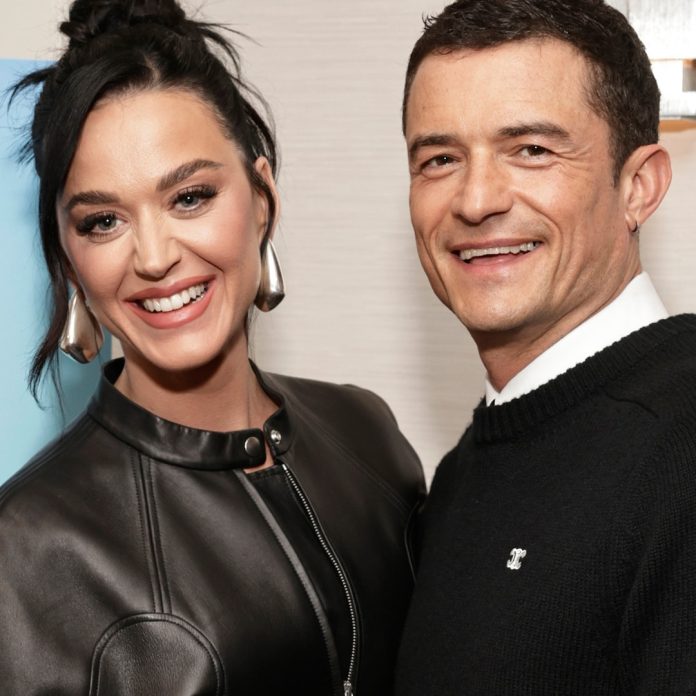
But while Orlando, 48, opted to attend the Amazon founder’s nuptials without a date, he certainly wasn’t alone. In fact, he was greeted by Kris Jenner, Kim Kardashian and Khloe Kardashian while grabbing a bite to eatalongside Scooter Braun in Venice.
Orlando—dressed casually in black shorts and a tank top—and Scooter both rose from the table to greet the Kardashians stars, exchanging hugs and air kisses.
This is not the first time the actor—who shares daughter Daisy, 4, with Katy as well as son Finn, 13, with ex Miranda Kerr—has also made other public appearances on his own as of late. In fact, when he hit the red carpet for the premiere of his new action comedy Deep Cover at the 2025 Tribeca Festival June 10, the “I Kissed a Girl” singer was noticeably absent once again.
Weight loss drugs could help turn the tide on obesity – but there are side effects
A study into potential serious side effects of weight loss jabs has been launched after hundreds of people reported problems with their pancreas.
The Medicines and Healthcare Regulatory Agency (MHRA) and Genomics England are asking people on weight loss drugs who have been hospitalised by acute pancreatitis to get in touch.
There have been hundreds of reports of acute and chronic pancreatitis from people who have taken drugs such as Mounjaro, Ozempic and Wegovy, although none are confirmed as being caused by the medicines.
The aim is to “better predict those most at risk of adverse reactions”, said MHRA chief safety officer Dr Alison Cave.
The study is being run through the MHRA’s Yellow Card scheme, which allows anyone to report an issue with a medicine, vaccine or medical device to help identify safety issues as early as possible.
Patients aged 18 and over, with bad reactions to the weight loss jabs – which are also licensed for type 2 diabetes – are being asked to report the detail on the Yellow Card website.
They will then be asked if they would be willing to take part in the study, which will check whether some people are at a higher genetic risk of acute pancreatitis when taking these medicines.
Patients will be asked to submit more information and a saliva sample, with the overall aim of reducing the occurrence of the side effects in future, says the MHRA.
Cases recorded on the Yellow Card website up until 13 May this year include 10 in which patients, who were using weight loss drugs, died from the effects of pancreatitis – but it is not clear whether other factors also played a part.
It is impossible to know exactly how many people in the UK are on weight loss drugs as many users obtain them online through unregulated sources, rather than through their doctors.
Health officials have suggested the jabs could help turn the tide on obesity. However, they have also warned the drugs are not a silver bullet and often come with side effects, commonly including nausea, constipation and diarrhoea.
Dr Alison Cave, the MHRA’s chief safety officer said information from the study “will help us to better predict those most at risk of adverse reactions, enabling patients across the UK to receive the safest medicine for them, based on their genetic make-up”.
She said evidence showed almost a third of side effects to medicines could be prevented with genetic testing.
“It is predicted that adverse drug reactions could cost the NHS more than £2.2bn a year in hospital stays alone,” she added.
Prof Matt Brown, chief scientific officer at Genomics England, said: “GLP-1 medicines like Ozempic and Wegovy have been making headlines, but like all medicines there can be a risk of serious side effects.
“We believe there is real potential to minimise these, with many adverse reactions having a genetic cause.”
He said the next step would be to “generate data and evidence for safer and more effective treatment through more personalised approaches to prescription, supporting a shift towards an increasingly prevention-focused healthcare system”.
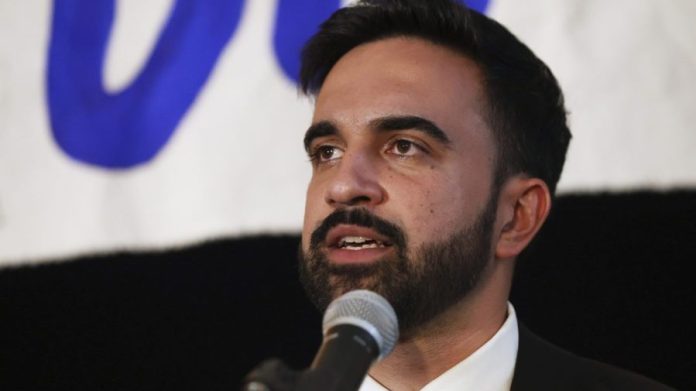
Zohran Mamdani, who delivered an upset earlier this week in the New York City Democratic mayoral primary, pushed back on President Trump’s claims that the Empire State lawmaker is a “communist lunatic.”
“You know, this is not the first time that President Trump is going to comment on myself, and I encourage him — just like I encourage every New Yorker — to learn about my actual policies to make the city affordable,” Mamdani told ABC News’s Rachel Scott in an interview Wednesday.
Trump’s criticism came after Mamdani, 33, took a commanding lead over former Gov. Andrew Cuomo in Tuesday’s primary race. No candidate won a majority in the first-choice ballots on Tuesday.
Cuomo — the establishment candidate who had been favored to win in many polls — conceded to the self-proclaimed democratic socialist later after falling short in the city’s ranked-choice voting system.
With Mamdani on track to secure the Democratic nomination, Trump joined other Republicans in voicing his opposition.
“It’s finally happened, the Democrats have crossed the line. Zohran Mamdani, a 100% Communist Lunatic, has just won the Dem Primary, and is on his way to becoming Mayor,” Trump, a longtime New Yorker, posted on Truth Social.
“We’ve had Radical Lefties before, but this is getting a little ridiculous,” Trump added.
Mamdani’s campaign largely focused on addressing the city’s affordability crisis, and he made lofty promises, including to freeze rent, to make busses faster and free and to open city-run supermarkets.
“He ran a presidential campaign, in part, speaking about the necessity of making groceries cheaper and to make cost of living more navigable for so many,” Mamdani told Scott. “He’s shown himself uninterested and unable to deliver on that.”
“If that is ever something he changes his mind on, then that’s somewhere that I would be willing to work with him,” the mayoral hopeful added.
“But if he continues to focus on persecuting political enemies and on trying to detain and disappear New Yorkers, be it on the basis of their documentation or their sexual orientation or their politics, that is someone that I will fight time and again,” the state lawmaker added.
Cuomo could still choose to follow New York City Mayor Eric Adams’ lead and run as an independent in November’s general election. Republican candidate Curtis Silwa, who founded the Guardian Angels, is also in the running.
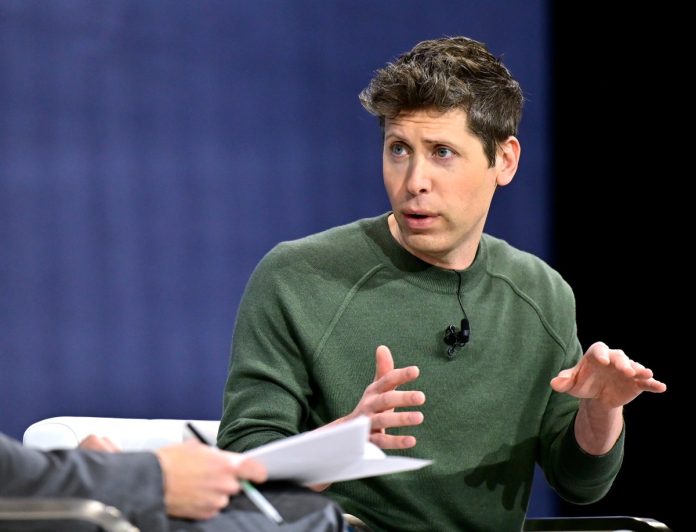
Sam Altman comes out swinging at The New York Times. From the moment OpenAI CEO Sam Altman stepped onstage, it was clear this was not going to be a normal interview.
Altman and his chief operating officer, Brad Lightcap, stood awkwardly toward the back of the stage at a jam-packed San Francisco venue that typically hosts jazz concerts. Hundreds of people filled steep theater-style seating on Tuesday night to watch Kevin Roose, a columnist with The New York Times, and Platformer’s Casey Newton record a live episode of their popular technology podcast, Hard Fork.
Altman and Lightcap were the main event, but they’d walked out too early. Roose explained that he and Newton were planning to — ideally, before OpenAI’s executives were supposed to come out — list off several headlines that had been written about OpenAI in the weeks leading up to the event.
“This is more fun that we’re out here for this,” said Altman. Seconds later, the OpenAI CEO asked, “Are you going to talk about where you sue us because you don’t like user privacy?”
“The New York Times, one of the great institutions, truly, for a long time, is taking a position that we should have to preserve our users’ logs even if they’re chatting in private mode, even if they’ve asked us to delete them,” said Altman. “Still love The New York Times, but that one we feel strongly about.”
For a few minutes, OpenAI’s CEO pressed the podcasters to share their personal opinions about the New York Times lawsuit — they demurred, noting that as journalists whose work appears in The New York Times, they are not involved in the lawsuit.
Altman and Lightcap’s brash entrance lasted only a few minutes, and the rest of the interview proceeded, seemingly, as planned. However, the flare-up felt indicative of the inflection point Silicon Valley seems to be approaching in its relationship with the media industry.
In the last several years, multiple publishers have brought lawsuits against OpenAI, Anthropic, Google, and Meta for training their AI models on copyrighted works. At a high level, these lawsuits argue that AI models have the potential to devalue, and even replace, the copyrighted works produced by media institutions.
But the tides may be turning in favor of the tech companies. Earlier this week, OpenAI competitor Anthropic received a major win in its legal battle against publishers. A federal judge ruled that Anthropic’s use of books to train its AI models was legal in some circumstances, which could have broad implications for other publishers’ lawsuits against OpenAI, Google, and Meta.
Perhaps Altman and Lightcap felt emboldened by the industry win heading into their live interview with The New York Times journalists. But these days, OpenAI is fending off threats from every direction, and that became clear throughout the night.
When asked whether the Meta CEO really believes in superintelligent AI systems, or if it’s just a recruiting strategy, Lightcap quipped: “I think [Zuckerberg] believes he is superintelligent.”
Later, Roose asked Altman about OpenAI’s relationship with Microsoft, which has reportedly been pushed to a boiling point in recent months as the partners negotiate a new contract. While Microsoft was once a major accelerant to OpenAI, the two are now competing in enterprise software and other domains.
“In any deep partnership, there are points of tension and we certainly have those,” said Altman. “We’re both ambitious companies, so we do find some flashpoints, but I would expect that it is something that we find deep value in for both sides for a very long time to come.”
OpenAI’s leadership today seems to spend a lot of time swatting down competitors and lawsuits. That may get in the way of OpenAI’s ability to solve broader issues around AI, such as how to safely deploy highly intelligent AI systems at scale.
Altman said OpenAI takes many steps to prevent these conversations, such as by cutting them off early, or directing users to professional services where they can get help.
“We don’t want to slide into the mistakes that I think the previous generation of tech companies made by not reacting quickly enough,” said Altman. To a follow-up question, the OpenAI CEO added, “However, to users that are in a fragile enough mental place, that are on the edge of a psychotic break, we haven’t yet figured out how a warning gets through.”
The United States team playing at this summer’s Gold Cup is also well represented, with seven players on Mauricio Pochettino’s side selected as All Stars.
The league builds the roster through a variation of fan, player, and media voting (12 players), selections from All Star and Austin FC head coach Nico Estévez (12 players) and two picks by MLS Commissioner Don Garber.
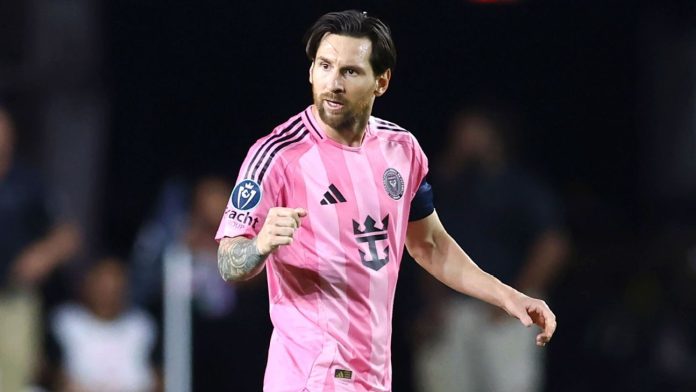
Messi and Alba were both voted into the roster by fans, making the squad for a second time after receiving the league honor in 2024. Though Alba participated in the event against Liga MX All Stars in 2024, Messi failed to feature after suffering an ankle injury while playing the Copa América final with Argentina.
Despite making the 2024 roster, Luis Suárez and Sergio Busquets did not earn the necessary fan votes to join the team or receive a coach’s selection this year.
A few of the All Stars will also participate in the MLS Skills Challenge, which will take place on July 22 at Q2 Stadium.
Liga MX won the last iteration of the All Star match between the two leagues, triumphing 4-1 at Lower.com Field in Columbus, Ohio in 2024.
FULL 2025 MLS ALL STAR ROSTER:
GOALKEEPERS: Dayne St. Clair (Minnesota United FC / Voted In); Brad Stuver (Austin FC / Coach’s Selection); Yohei Takaoka (Vancouver Whitecaps FC / Coach’s Selection)
DEFENDERS: Jordi Alba (Inter Miami CF / Voted In); Max Arfsten (Columbus Crew / Coach’s Selection); Tristan Blackmon (Vancouver Whitecaps FC / Voted In); Michael Boxall (Minnesota United FC / Voted In); Alex Freeman (Orlando City SC / Voted In); Jakob Glesnes (Philadelphia Union / Coach’s Selection); Andy Najar (Nashville SC / Coach’s Selection); Miles Robinson (FC Cincinnati / Coach’s Selection)
MIDFIELDERS: Sebastian Berhalter (Vancouver Whitecaps FC / Voted In); David Da Costa (Portland Timbers / Coach’s Selection); Evander (FC Cincinnati / Voted In); Diego Luna (Real Salt Lake / Voted In); Jeppe Tverskov (San Diego FC / Coach’s Selection); Philip Zinckernagel (Chicago Fire FC / Coach’s Selection)
FORWARDS / WINGERS: Patrick Agyemang (Charlotte FC / Commissioner’s Pick); Tai Baribo (Philadelphia Union / Voted In); Denis Bouanga (LAFC / Voted In); Anders Dreyer (San Diego FC / Coach’s Selection); Hirving ‘Chucky’ Lozano (San Diego FC / Commissioner’s Pick); Lionel Messi (Inter Miami CF / Voted In); Diego Rossi (Columbus Crew / Coach’s Selection); Brandon Vazquez (Austin FC / Coach’s Selection); Brian White (Vancouver Whitecaps FC / Voted In)