A federal judge sided with Meta on Wednesday in a lawsuit brought against the company by 13 book authors, including Sarah Silverman, that alleged the company had illegally trained its AI models on their copyrighted works.
Federal Judge Vince Chhabria issued a summary judgment — meaning the judge was able to decide on the case without sending it to a jury — in favor of Meta, finding that the company’s training of AI models on copyrighted books in this case fell under the “fair use” doctrine of copyright law and thus was legal.
The decision comes just a few days after a federal judge sided with Anthropic in a similar lawsuit. Together, these cases are shaping up to be a win for the tech industry, which has spent years in legal battles with media companies arguing that training AI models on copyrighted works is fair use.
However, these decisions aren’t the sweeping wins some companies hoped for — both judges noted that their cases were limited in scope.
Judge Chhabria made clear that this decision does not mean that all AI model training on copyrighted works is legal, but rather that the plaintiffs in this case “made the wrong arguments” and failed to develop sufficient evidence in support of the right ones.
“This ruling does not stand for the proposition that Meta’s use of copyrighted materials to train its language models is lawful,” Judge Chhabria said in his decision. Later, he said, “In cases involving uses like Meta’s, it seems like the plaintiffs will often win, at least where those cases have better-developed records on the market effects of the defendant’s use.”
Judge Chhabria ruled that Meta’s use of copyrighted works in this case was transformative — meaning the company’s AI models did not merely reproduce the authors’ books.
Furthermore, the plaintiffs failed to convince the judge that Meta’s copying of the books harmed the market for those authors, which is a key factor in determining whether copyright law has been violated.
“The plaintiffs presented no meaningful evidence on market dilution at all,” said Judge Chhabria.
Both Anthropic’s and Meta’s wins involve training AI models on books, but there are several other active lawsuits against technology companies for training AI models on other copyrighted works. For instance, The New York Times is suing OpenAI and Microsoft for training AI models on news articles, while Disney and Universal are suing Midjourney for training AI models on films and TV shows.
Judge Chhabria noted in his decision that fair use defenses depend heavily on the details of a case, and some industries may have stronger fair use arguments than others.
“It seems that markets for certain types of works (like news articles) might be even more vulnerable to indirect competition from AI outputs,” said Chhabria.
Jon Jones has been a fixture of ESPN’s pound-for-pound rankings for a decade and a half, holding down the No. 1 spot for much of that time. But his retirement over the weekend ended the Jones era.
Because of his inactivity in recent years, Jones had fallen to the middle of the men’s top 10. Even though he held the UFC heavyweight title, Jones had been ranked below the man with the interim belt, Tom Aspinall, who has been named undisputed champion with the Jones retirement. Three other fighters also were slotted ahead of Jones in the most recent previous top 10.
Now Jones is gone from the rankings.
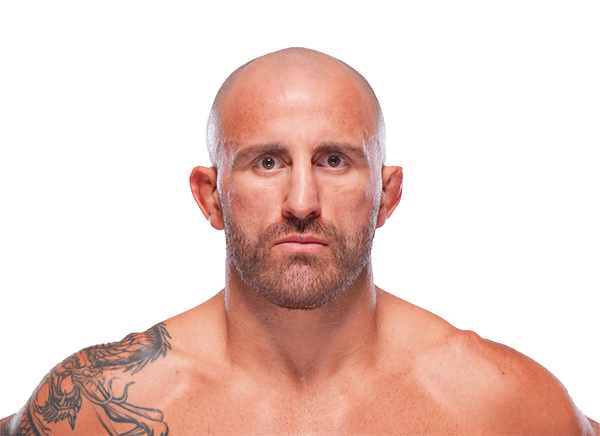
The top four spots do not change, but Jones’ departure results in a reshuffling of most who were below him. And Alexander Volkanovski, a onetime No. 1 who had fallen from the rankings after losing the featherweight title last year, returns to the top 10 on the strength of having recently regained the belt.
There could be more changes after this weekend’s UFC 317 with its two title fights, but for now here’s the reshuffled post-Jon Jones ESPN top 10.
Note: Results are current; rankings as of June 25. To be eligible for the rankings, a fighter must have competed over the past 12 months or must have an upcoming fight booked. Fighters who have been dropped for inactivity can be reinstated only after they compete.
Makhachev staked his claim as the greatest lightweight of all time by swiftly dispatching late-replacement Moicano at UFC 311. It was his UFC-record fourth title defense and tied Kamaru Usman for the second-longest winning streak in UFC history at 15. Makhachev finally won over UFC CEO Dana White, who now agrees he is the best pound-for-pound fighter in the world. Next up for Makhachev will be a move up to welterweight to challenge new champion Della Maddalena, with the date and venue to be determined. — Andreas Hale
After knocking out two of the greatest featherweights in UFC history (Alexander Volkanovski and Holloway) in 2024, it was going to be tough for Topuria to top that in 2025. He moved up to lightweight with the goal of challenging Islam Makhachev, but with Makhachev moving up a division himself, Topuria instead will go for the vacant title against Oliveira, a former lightweight champ. — Hale
UFC bantamweight champion Record: 20-4 Last: W (TechSub3) vs. Sean O’Malley, June 7 Next: TBD
Dvalishvili is on one of the most impressive runs through the UFC’s bantamweight division ever. Not only did he defeat O’Malley for the second time in nine months at UFC 316, he showcased a new part of his game, finishing O’Malley with a third-round guillotine. Since August 2022, Dvalishvili has beaten José Aldo, Petr Yan, Henry Cejudo, O’Malley (twice) and Umar Nurmagomedov, and he has said he wants to fight twice more before the end of this year. — Brett Okamoto
UFC heavyweight champion Record: 15-3 Last: W (TKO1) vs. Curtis Blaydes, July 27, 2024 Next: TBD
If you’re going by the eye test, you can make a case that Aspinall is the most dynamic, skillful, naturally talented heavyweight the sport has seen. He is dominating opponents in a way that is unmatched. No one can last a round with him. He had hoped to prove his supremacy against Jon Jones, but Jones opted to retire, elevating Aspinall from interim champion. — Okamoto
UFC flyweight champion Previous ranking: 7 Record: 29-5 Last: W (TechSub2) vs. Kai Asakura, Dec. 7, 2024 Next: June 28 vs. Kai Kara-France
The UFC’s flyweight king has racked up three title defenses, including two in pay-per-view main events in 2024. He will ride a seven-fight winning streak into his next title defense against Kara-France at UFC 317. Pantoja is quickly taking laps around the 125-pound division. — Okamoto
UFC light heavyweight champion Record: 20-1-1, 1 NC Last: W (UD) vs. Alex Pereira, March 8 Next: TBD
Ankalaev dethroned Pereira at UFC 313 for his 14th consecutive fight without a loss, a run that began after his UFC debut in 2018. The Russian champion is enjoying his time at the top, taunting potential challengers online. He’s an incredibly difficult puzzle to crack, and that’s unlikely to get any easier given his growing sense of confidence. — Okamoto
UFC middleweight champion Previous ranking: 8 Record: 23-2 Last: W (UD) vs. Sean Strickland, Feb. 8 Next: Aug. 16 vs. Khamzat Chimaev
No one receives as many backhanded compliments as Du Plessis, but as long as the wins keep coming, who cares? The UFC’s middleweight champ is known for breaking all of the technical rules of MMA and making it work. He has taken out some of the biggest names of his division’s history and has an opportunity to add another when he faces Chimaev at UFC 319. Du Plessis is on his way to becoming one of those big names himself if it keeps up. — Okamoto
UFC light heavyweight Previous ranking: 10 Record: 12-3 Last: L (UD) vs. Magomed Ankalaev, March 8 Next: TBD
A stellar 2024 cemented Pereira’s place as a star in the UFC, but he faced arguably his toughest test as light heavyweight champion when he stepped into the Octagon with Ankalaev at UFC 313. Pereira had dealt with strikers, but the question was whether he could get the job done against a talented grappler. Pereira kept the fight standing but fell short by unanimous decision. — Hale
Della Maddalena seemingly came from nowhere to make his debut on the pound-for-pound list, but that’s what happens when you win a UFC championship and snap Muhammad’s 11-fight win streak. Della Maddalena has had some close calls in the UFC, but at the end of the day he’s always found a way to win, going 8-0 inside the Octagon. Can he keep it going against Makhachev? — Okamoto
UFC featherweight champion Previous ranking: Unranked Record: 27-4 Last: W (UD) vs. Diego Lopes, April 12 Next: TBD
It felt as if the sport had started to write Volkanovski’s eulogy following his knockout loss to Ilia Topuria in February 2024. Volkanovski noticed, and made a point of proving to everyone he still has plenty left by recapturing the featherweight belt at UFC 314. His age will likely continue to be a prefight topic, which is fine because Volkanovski enjoys proving people wrong. — Okamoto
Brett Okamoto: 1. Islam Makhachev; 2. Ilia Topuria; 3. Merab Dvalishvili; 4. Tom Aspinall; 5. Alexandre Pantoja; 6. Dricus du Plessis; 7. Magomed Ankalaev; 8. Alex Pereira; 9. Alexander Volkanovski 10. Jack Della Maddalena.
Andreas Hale: 1. Makhachev; 2. Topuria; 3. Dvalishvili; 4. Aspinall; 5. Ankalaev; 6. Pantoja; 7. Della Maddalena; 8. Volkanovski; 9. Pereira; 10. du Plessis.
Ian Parker: 1. Makhachev; 2. Topuria; 3. Dvalishvili; 4. du Plessis; 5. Ankalaev; 6. Pantoja; 7. Della Maddalena; 8. Aspinall; 9. Pereira; 10. Volkanovski.
Carlos Contreras Legaspi: 1. Makhachev; 2. Topuria; 3. Dvalishvili; 4. Pantoja; 5. du Plessis; 6. Pereira; 7. Ankalaev; 8. Aspinall; 9. Volkanovski; 10. Della Maddalena.
Andrew Davis: 1. Makhachev; 2. Topuria; 3. Dvalishvili; 4. Aspinall; 5. Ankalaev; 6. du Plessis; 7. Pantoja; 8. Della Maddalena; 9. Pereira; 10. Volkanovski.
Jeff Wagenheim: 1. Makhachev; 2. Topuria; 3. Aspinall; 4. Dvalishvili; 5. Pantoja; 6. Francis Ngannou; 7. Ankalaev; 8. Khamzat Chimaev; 9. Pereira; 10. du Plessis.
Women’s pound-for-pound rankings
play
1:11
Kayla Harrison submits Julianna Pena to become new UFC bantamweight champ
Kayla Harrison taps out Julianna Pena in Round 2 at UFC 316 to become the new women’s bantamweight champion.
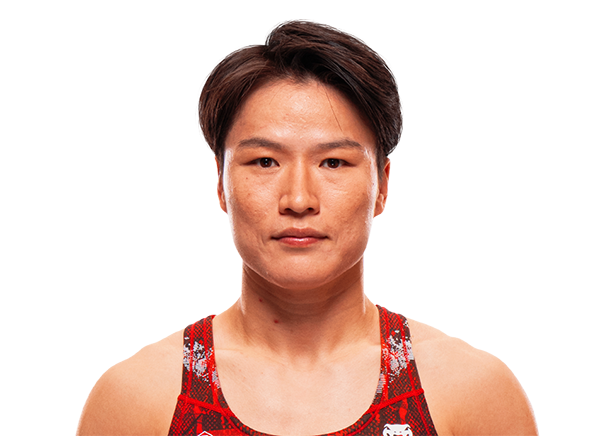
UFC strawweight champion Record: 26-3 Last: W (UD) vs. Tatiana Suarez, Feb. 8 Next: TBD
Amanda Nunes left a big hole in women’s MMA when she announced her retirement in 2023, but Zhang has filled that void in terms of a dominant presence. — Okamoto
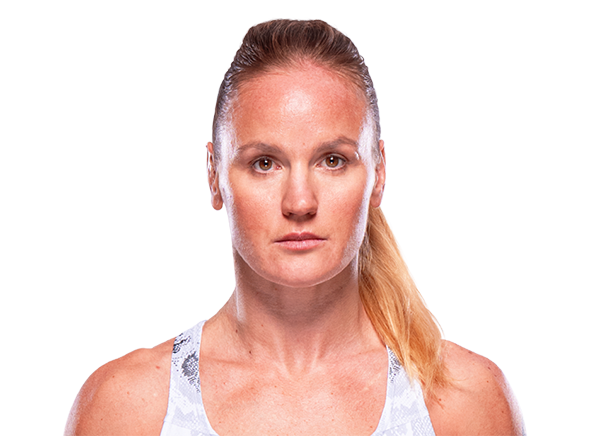
UFC flyweight champion Record: 25-4-1 Last: W (UD) vs. Manon Fiorot, May 10 Next: TBD
Shevchenko put a cap on the Alexa Grasso trilogy in 2024 with a dominant performance that put to bed any remaining questions around that rivalry. She followed that up with a well-rounded performance against Fiorot to improve to 10-1-1 in UFC title fights. — Okamoto
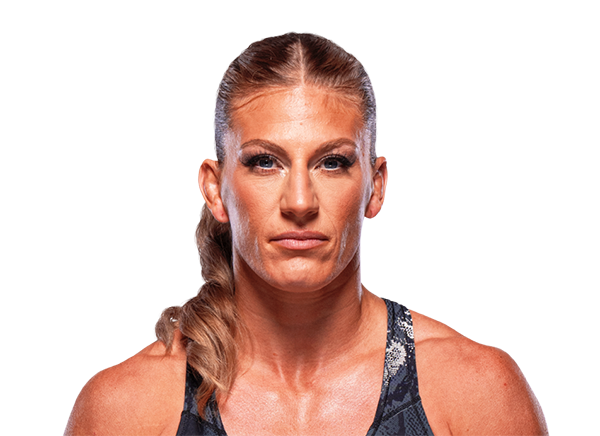
UFC bantamweight champion Record: 19-1 Last: W (TechSub2) vs. Julianna Peña, June 7 Next: TBD
The longtime face of the PFL is quickly becoming the face of the UFC’s women’s divisions as well. With a dominant win over Peña at UFC 316, Harrison is now 4-0 in the UFC and has the hardware to add to her two Olympic gold medals. She won’t have it easy in her first title defense, though, because Nunes is coming back with the belt in her sights. — Okamoto
PFL Super Fights featherweight champion Record: 28-2, 1 NC Last: W (UD) vs. Larissa Pacheco, Oct. 19, 2024 Next: TBD
It had been a while since Cyborg had fought an elite opponent in MMA until she met Pacheco in 2024. That was a legitimate matchup — and many within the industry were predicting Cyborg’s downfall. Instead, she took out the PFL’s two-weight champion, upending all of Pacheco’s momentum. One of the original pioneers of women’s MMA is somehow still going strong. — Okamoto
UFC flyweight Record: 19-5-1 Last: W (UD) vs. Alexa Grasso, May 10 Next: TBD
Silva is looking every bit the part of a future UFC champion, following a dominant display over Grasso at UFC 315. Her stick-and-move style has frustrated even the highest level of opponent, and she’s got youth on her side as she won’t turn 30 until 2027. — Okamoto
PFL featherweight champion Record: 23-5 Last: L (UD) vs. Cris Cyborg, Oct. 19, 2024 Next: TBD
As the only woman to defeat Kayla Harrison and after coming close to beating Cyborg last October, Pacheco deserves her spot on this list. Unfortunately, the lack of quality opponents in the PFL will prevent her from climbing higher. At 30, Pacheco is still improving, but it will be interesting to see who the PFL finds to face her next. — Hale
UFC flyweight Record: 13-2 Last: W (UD) vs. Rose Namajunas, Nov. 2, 2024 Next: TBD
Blanchfield dug herself out of a hole to beat Namajunas in November, and she was scheduled to have a chance to build more momentum in a meeting with another young prospect — until Maycee Barber pulled out of their May 31 bout on fight night. Blanchfield has immense potential and has shown new wrinkles in her game since dropping a decision to Manon Fiorot last year. — Hale
UFC strawweight Record: 22-3 Last: W (UD) vs. Yan Xiaonan, April 12 Next: TBD
Jandiroba thrust herself into title contention by dominating Yan at UFC 314, neutralizing the striking threat of the onetime title challenger and forcing Yan into her world — a grappling bout. With the win, Jandiroba extended her winning streak to five. With champion Zhang Weili awaiting her next challenger, Jandiroba is in position to fill the void. — Hale
PFL flyweight champion Record: 14-0 Last: W (TKO2) vs. Taila Santos, Nov. 29, 2024 Next: June 26 vs. Sumiko Inaba
Not only did Ditcheva win the PFL’s flyweight season last year, she did so in spectacular fashion — a TKO finish over Santos, who once challenged for a UFC title. She will open her 2025 campaign against Inaba (8-1) in the co-main event of the first PFL Champions Series card July 26 in Cape Town, South Africa. — Okamoto
“When you’re growing up, your parents are always like, ‘I’m just telling you, when you’re older you’re gonna wish you listened to me,’” Lola admitted. “There’s so many times in my life where I’m now like, ‘Oh my god, I completely get it.’”
She added, “When I have children one day, I’ll probably say the same thing to them. That will be the cycle.”
And repeating her parents’ tactics will likely bode well for Lola, as she has a favorite trait she learned from Kelly and Mark.
“The basics of being nice and respectful and kind has definitely gotten me far,” she told her mom. “It’s been really valuable and I forget that a lot of people don’t get that foundational advice that should be like a baseline of respect. It’s amazing that you guys raised the boys and I so amazingly.”
Read on for a deeper look at Kelly and Mark’s family of five.
A Korean Central News Agency photo showing an aerial view of the Wonsan Kalma Coastal Tourist Zone
North Korea is opening a beach resort that its leader Kim Jong Un hopes will boost tourism in the secretive communist regime, state media reports.
Wonsan Kalma on the east coast will open to domestic tourists on 1 July, six years after it was due to be completed. It is unclear when it will welcome foreigners.
Kim grew up in luxury in Wonsan, where many of the country’s elite have private villas, and has been trying to transform the town, which once hosted a missile testing site.
State media KCNA claims the resort can accomodate up to 20,000 visitors, occupying a 4km (2.5 mile) stretch of beach, with hotels, restaurants, shopping malls and a water park – none of which can be verified.
Heavily sanctioned for decades for its nuclear weapons programme, North Korea is among the poorest countries in the world. It pours most of its resources into its military, monuments and landmarks – often in Pyongyang – that embellish the image and cult of the Kim family that has run the country since 1948.
Some observers say this is an easy way for Pyongyang to earn money. While foreign tourists are allowed in, tour groups largely tend to come from China and Russia, countries with whom Pyongyang has long maintained friendly relations.
“I was hoping this might signal a broader reopening to international tourism, but unfortunately, that doesn’t seem to be the case for now,” Rowan Beard, co-founder of Young Pioneer Tours, tells the BBC.
Tourism from overseas took a hit during the Covid pandemic, though, with the country closing its borders in early 2020. It did not scale back restrictions until the middle of 2023 and welcomed Russian visitors a year later.
It opened to more Western visitors in February, when tourists from the UK, France, Germany and Australia drove across the border from China. It abruptly haltedtourism weeks later without saying why.
KCNA
Kim Jong Un, his daughter Kim Ju Ae and his wife Ri Sol Ju at a waterpark in the Wonsan Kalma
Some tour agencies are sceptical of Wonsan’s appeal to foreigners. It is “unlikely to be a major draw for most Western tourists”, Mr Beard says.
“Key sites like Pyongyang, the DMZ, and other brutalist or communist landmarks will continue to be the main highlights for international visitors once broader tourism resumes.”
However, Elliott Davies, director of Uri Tours, says North Korea holds a “niche appeal” for travellers drawn to unconventional destinations.
“It’s intriguing to experience something as familiar as a beach resort that’s been shaped within the unique cultural context of North Korea.”
KCNA described the Wonsan development as a “great, auspicious event of the whole country” and called it a “prelude to the new era” in tourism.
It was initially scheduled to open in October 2019, but ran into construction delays before the pandemic struck.
Kim attended a ceremony to celebrate its completion on 24 June, accompanied by his daughter, Kim Ju Ae, and wife Ri Sol Ju. It marked Ri’s first public appearance since a New Year’s Day event.
Russian ambassador Alexander Matsegora and embassy staff also attended.
Some tour operators expect the resort to be opened to Russian tourists, who are currently the only foreign nationals allowed into some parts of the country.
On Thursday, the two countries also reopened a direct passenger train route between their capitals after a five-year suspension because of the pandemic.
It’s crunch time for negotiations over the state and local tax (SALT) deduction cap.
After a high-stakes meeting with Treasury Department Secretary Scott Bessent on Wednesday, House Republicans in the SALT Caucus and a key GOP senator reported “progress” but no deal, leaving one of the thorniest issues in the party’s tax and spending bill unresolved.
Stakeholders say talks have zeroed in on keeping in place the $40,000 deduction cap — which the SALT Caucus negotiated in the House — but lowering the $500,000 income threshold and adjusting the numbers for inflation, a compromise of sorts that would appease moderate House Republicans while also placating Senate conservatives.
The clock, however, is ticking: Senate GOP leaders are hoping to put their version of the “big, beautiful bill” on the floor by Friday — officially kicking off the consideration process — but can’t move forward without a SALT deal.
Some lawmakers say an agreement is imminent.
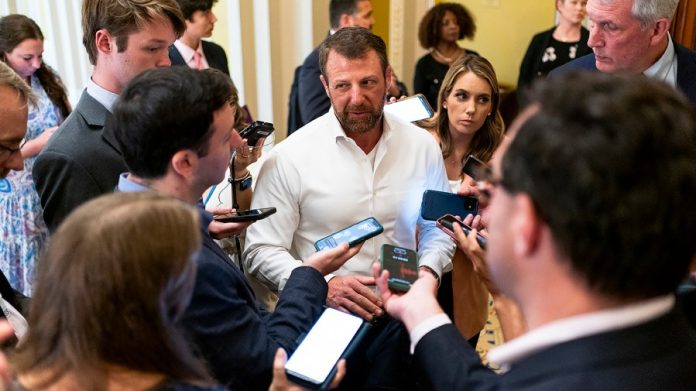
“We’ve made a little bit of progress; we’re still working through it,” Sen. Markwayne Mullin (R-Okla.), a former House member who has served as a key liaison between the chambers, told The Hill after Wednesday’s meeting. “I think we’ll have something shaken out by tomorrow — maybe, hopefully. I think we’re in good shape.”
Others, however, were more pessimistic. Rep. Nick LaLota (R-N.Y.), a key member of the SALT Caucus who attended the meeting with Bessent on Wednesday, said the gathering was “pleasant” and “cordial,” but the two chambers are still a ways away from consensus.
“Everybody wants a deal, everybody wants to get to yes, everybody wants to put the nation on a better track,” LaLota said. “But it does seem like the Senate and the House right now are far apart.”
In one signal that negotiations may be approaching their final phase, Bessent huddled with Republicans on the issue twice this week, meeting with Senate Republicans on Tuesday and SALT Caucus members Wednesday.
Attendees were coy about the contents of the meeting, though some said they were glad to see the Cabinet member taking an increasingly active role. Lawmakers didn’t emerge from the meeting floating any new policy proposals, but instead making tweaks to existing parameters.
“He’s a former constituent and certainly understands my district, understands the issue of SALT, so I think it’s good to engage in the conversation with the secretary,” said Rep. Mike Lawler (R), who represents New York’s 17th Congressional District.
Asked if Bessent’s presence should be taken as a sign that a deal is close, LaLota replied, “I hope that we’re closer today than we were yesterday.”
“He’s the Treasury secretary speaking on behalf of the administration on a bill that affects the nation’s financial well-being,” LaLota said.
According to one Senate GOP aide, Mullin and the White House presented multiple options to the SALT Caucus members. Those would likely keep the $40,000 figure in place, but would focus on altering the threshold and cap phaseouts to secure more savings.
“We’re getting close to where we need that issue landed,” Senate Majority Leader John Thune (R-S.D.) said, adding that talks have been “very productive” of late. “This is one of those deals where nobody’s going to get everything that they want.”
Lawler seemed to agree.
“Well we’re near the end of the bill, aren’t we? I mean, the Senate is barreling towards a vote, and obviously the president and the White House want to get this bill across the finish line. So, obviously we’re getting towards the end here,” he said.
Moderate House Republicans from high-tax blue states — including New York, New Jersey and California — have been at odds with Senate Republicans for months over SALT, with stakeholders in the lower chamber pushing for a higher deduction cap and those in the upper chamber voicing sharp opposition to such a move.
The disagreement escalated into a full-on fight earlier this month when the Senate Finance Committee released its portion of the megabill that had a $10,000 deduction cap for individuals making $500,000 or less — down from the $40,000 cap House SALT Caucus members landed after months of tenuous negotiations with their leadership. The cap, as implemented in the 2017 Trump tax cuts, currently stands at $10,000.
Now, members are trying to bridge that gap. After initially shutting down the idea of lowering the $500,000 income threshold — “I am done negotiating,” LaLota told The Hill when asked about the prospect last week — key lawmakers in the SALT Caucus appear open to the proposal, if the price is right.
“The Senate’s been describing it like that, yes, to not futz with the $40K deduction, but it seems that they’re endeavoring to change the $500K income cap,” he told reporters Wednesday. “And I’ve been clear, if they do that, if they water the income cap down, they need to strengthen other provisions like the inflation adjustment.”
“Otherwise, it’s not a compromise,” he added. “Otherwise, it’s them just trying to jam their preferences down our throats.”
The phaseout figures are also something Senate GOP members are angling to lower. The House GOP plan would have shrunk the deduction cap down to $10,000 for individuals making $600,000 — giving Senate Republicans another area they believe they can find much-needed savings.
Negotiations on the topic were always poised to be difficult. No Senate Republicans hail from high-tax blue states, leaving SALT without an advocate in the upper chamber — a stark difference from the House GOP conference, as leadership in both chambers is acutely aware of.
“We’ve been clear from the very beginning with our Senate counterparts that the issues with SALT in the House are very different than the issues in the Senate,” House Majority Leader Steve Scalise (R-La.) said. “We have about a dozen members that are voting on this bill exclusively based on what happens with SALT. There’s not a single senator on the Republican side that has that same issue.”
“So, it is a House challenge that we’ve had to work on from the beginning that just doesn’t exist over in the Senate side,” he added. “But it has to get resolved if you’re going to have a bill that passes.”
Mullin has held numerous discussions with the key House faction in recent days, having told reporters throughout that stretch that the goal was not necessarily to strike an agreement but to get to a point of “acceptance.”
“I don’t think either side is going to like it,” he said Tuesday, adding that they need to get “to the point where it’s palatable enough to take it and not vote not against, and that goes for both chambers.”
“Everybody’s got very strong opinions about it,” he added.
We came across a bullish thesis on NVR, Inc. (NVR) on Charts&Compaies’s Substack. In this article, we will summarize the bulls’ thesis on NVR. NVR, Inc. (NVR)’s share was trading at $7,221.25 as of 16th June. NVR’s trailing and forward P/E were 14.89 and 15.41 respectively according to Yahoo Finance.
Is NVR, Inc. (NVR) the Best Low Float Stock to Invest in Now?
A team of construction workers laboring together to build a townhome complex.
NVR presents a compelling investment case rooted in robust financial health, strong growth metrics, and attractive valuation. With total assets of $6.2 billion and cash holdings of $2.17 billion versus total liabilities of $2.24 billion, the company’s liquidity is notably strong—cash alone nearly covers all liabilities.
Historically, NVR has delivered consistent 12% revenue-per-share growth, while maintaining solid book value expansion of around 15%, underscoring a well-managed balance sheet. Asset growth consistently outpaces liabilities, adding further confidence to its financial footing. Earnings have compounded at a 10-year CAGR of approximately 20%, supported by a P/E ratio of 14.38—well below the historical median of 18.35—indicating potential undervaluation.
The company’s low PEG ratio of 0.71 and a P/FCF of 16 against 20% free cash flow growth (TTM) provide further evidence of attractive value. EBIT and EBITDA have grown at ~16%, with margins just under historical medians but still healthy. ROA and ROE stand at an impressive 25% and 40% respectively, reflecting operational excellence and capital efficiency. Margins remain solid across the board, with gross, operating, and net margins of 25%, 19.6%, and 15%.
A DCF valuation based on EPS of $502.45 and a median P/E of 18 suggests the stock could be worth nearly double its current price of $7,225, with an upside even to the mid-$9,000s under optimistic scenarios.
Despite its high absolute share price, NVR remains a potentially overlooked value play. With its combination of strong cash flow, high returns, and sustainable growth, the stock offers a favorable risk-reward profile.
Previously, we highlighted a bullish thesis on NVR by Kairos Research, focusing on its land-light model, fortress balance sheet, and unmatched capital discipline. Charts&Companies extends this view with a valuation-driven lens—emphasizing NVR’s superior ROE, robust per-share growth, and undervalued PEG and P/E ratios. Together, these theses converge on NVR’s appeal as a financially exceptional compounder hiding behind a high nominal share price.
NVR, Inc. (NVR) is not on our list of the 30 Most Popular Stocks Among Hedge Funds. As per our database, 48 hedge fund portfolios held NVR, Inc. (NVR) at the end of the first quarter which was 45 in the previous quarter. While we acknowledge the risk and potential of NVR as an investment, our conviction lies in the belief that some AI stocks hold greater promise for delivering higher returns and have limited downside risk. If you are looking for an extremely cheap AI stock that is also a major beneficiary of Trump tariffs and onshoring, see our free report on the best short-term AI stock.
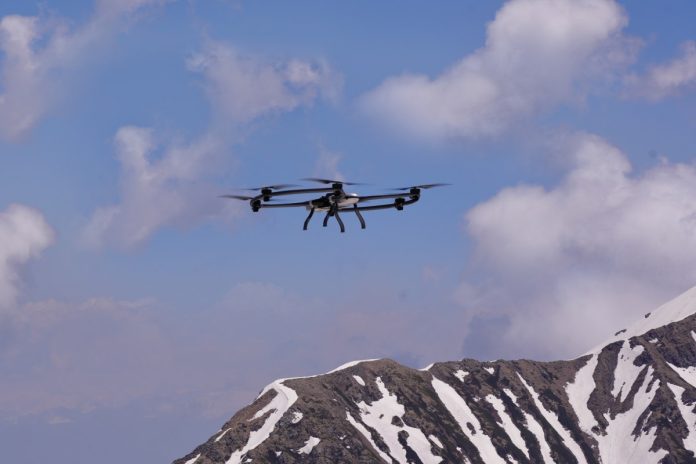
Indian drone startup Raphe mPhibr has raised $100 million in an all-equity Series B round led by General Catalyst, as the startup aims to boost its R&D and local production capabilities amid growing demand for drones in battlefields and for border surveillance.
Drones are becoming increasingly ubiquitous in global military operations. In recent and ongoing conflicts, countries have turned to drones for rapid infiltration and high-impact strikes. The recent India-Pakistan war is a prime example, with both militaries deploying drones at scale despite having advanced fighter jets and missile systems. The conflict spurred New Delhi to triple its drone spending to $470 million over the next 12 to 14 months, according to the Drone Federation of India, an association representing over 550 companies.
While China remains the dominant force in global drone manufacturing, Raphe mPhibr aims to strengthen India’s indigenous drone capabilities.
Co-founded by siblings Vikash Mishra (chairman) and Vivek Mishra (CEO) in 2017, the Noida-based startup currently offers nine different drones with payloads ranging from 4.4 pounds to 441 pounds, covering an average distance of between 12 and 124 miles. These drones include the mR10 operational drone swarm, the mR20 for high-altitude logistics resupply, the X8 compact platform for maritime patrol and situational awareness at sea, and the Bharat lightweight man-carried drone for quick surveillance in complex terrain.
The startup has more than 10 customers, all of which are Indian government agencies, including the Indian Army, Navy, and Air Force, as well as armed police forces such as the Border Security Force, Central Reserve Police Force, and the Indo-Tibetan Border Police.
The Mishra brothers conceptualized Raphe mPhibr in 2016 while Vikash was studying at the Massachusetts Institute of Technology and Vivek was at the Georgia Institute of Technology. For the initial three to four years, the co-founders focused on understanding the operational needs of the defense forces, along with other requirements, such as environmental and terrain considerations. Then they began building multicopters to meet the needs of the Indian troops, gradually expanding to fixed-wing and vertical takeoff and landing (VTOL) aircraft.
“In the process, we understood that since the need is new and the area is niche, we focused on both research and manufacturing because we didn’t want to be constrained by what [already existed],” Vivek said in an interview.
The startup began its journey with a 2,000-square-foot research facility in 2017 but expanded to a 100,000-square-foot combined research and manufacturing facility. This has now been expanded to a 650,000-square-foot facility as a result of the fresh capital infusion, which also saw the participation of its existing investor Think Investments.
“From day one, we have been against the transfer of technology,” Vivek told TechCrunch.
Raphe’s Surface Mount Technology (SMT) Line in Noida.Image Credits:Raphe mPhibr
Raphe mPhibr domestically produces its flight controllers, batteries, and all components and materials required to build drone structures, including subtractive metals, thermoplastics, carbon fiber composites, and even wire harnesses. It also develops proprietary autopilots and inertial navigation systems at its facility. However, the startup imports radars and high-end cameras, which it also plans to manufacture in-house within 18 months.
Vivek told TechCrunch that the startup does not rely on China for any of the components it uses, thereby avoiding some supply chain challenges.
“The biggest challenge was setting up the facility and doing research,” he said. “Because doing research in India is slightly more expensive compared to the U.S., just because the infrastructure is quite well set up there … getting the machinery is a challenge, installation, and commissioning is a challenge, and then operating it, again, is a challenge because finding the people who can operate these is hard.”
Raphe mPhibr has addressed some of these hurdles by focusing on training and developing its employees from its early days, he added.
The startup also utilizes AI on its drones for object detection in surveillance scenarios, automatically switching between frequency bands to adapt to electronic warfare and employing operational UAV swarm intelligence to make decentralized decisions using AI.
In recent months, Raphe mPhibr has partnered with Germany’s Hensoldt and France’s Safran to collaborate on developing new sensors, as well as with France’s Dassault Systèmes for software simulation requirements.
Raphe mPhibr also plans to expand beyond India and enter new markets. To this end, it has already participated in defense air shows, including those in Dubai and Paris.
Vivek told TechCrunch that the startup already has some export licenses and is seeking more but declined to share specifics.
“There are very advanced talks happening with a few government agencies across the world, and very soon, hopefully, this year, we will start delivering there as well,” he said.
In the past 12 months, Raphe mPhibr has sold over 300 drones and has experienced up to 4x revenue growth over the last four years, Vivek said, without disclosing specific numbers. He also stated that the startup has been profitable for each of the last four years and is projected to go public within the next two to five years.
Raphe mPhibr has around 600 employees, with 150 dedicated to research and over 250 to production. To date, the startup has secured a total of $145 million in equity funding.
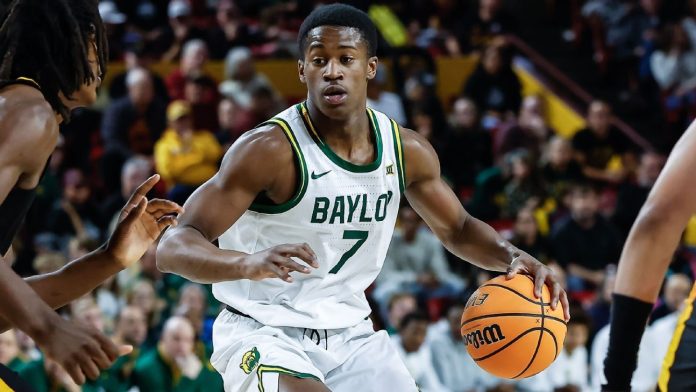
After a disastrous season in which Joel Embiid played only a handful of games before needing knee surgery, Philadelphia‘s reward was getting the third pick in Wednesday night’s NBA draft, which it used to select Baylor guard VJ Edgecombe.
Edgecombe, who was part of the Bahamian national team last summer alongside multiple current NBA players, is an explosive 19-year-old guard who could be a long-term complement to All-Star Tyrese Maxey in Philadelphia’s backcourt.
Whom the Sixers were targeting with the pick was a matter of debate throughout the predraft process, and Edgecombe said he wasn’t sure he’d be the selection until his name was called.
“No, I had no clue what was going on,” he said. “I was like, I’m just living in the moment until they tell me that I’m going there when I was at the table. Like 15 seconds before they drafted me, before the commissioner called my name. They didn’t tell me nothing. It was still up in the air about what was going on.”
The 76ers’ pick nearly went to the NBA champion Oklahoma City Thunder as part of the Al Horford-Danny Green swap five years ago, but it had top-six protection, letting the Sixers retain it. The Thunder still ended up with two picks in the first round, drafting big man Thomas Sorber at pick No. 15 and guard Nique Clifford at No. 24. Tight on roster spots, the Thunder quickly dealt Clifford to the Sacramento Kings in exchange for a 2026 protected first-round pick, according to ESPN’s Bobby Marks.
Meanwhile, Ace Bailey — projected for most of the season as the third pick — ended up falling to the Utah Jazz at No. 5. The Rutgers star had a chaotic predraft process that included canceling a meeting with the Sixers.
At No. 4, the Charlotte Hornets selected Duke’s Kon Knueppel, a sweet-shooting guard who should help a Hornets team that struggled to hit catch-and-shoot 3s. The Wizards selected Tre Johnson, who led all Division I freshmen with 19.9 points per game last season at Texas, with the No. 6 pick.
Maluach’s selection gave Duke three top-10 picks and 50 in the first round since 1989, moving it past Kentucky (48) for the most by any school.
“It was so emotional getting to see my teammates, my fellow freshmen getting drafted,” Maluach said. “I was so happy for them because they deserve everything they have. They worked hard for it, for that moment, too.”
The Portland Trail Blazers traded the No. 11 pick to the Memphis Grizzlies, who selected Cedric Coward. The Blazers got the No. 16 pick, a 2028 first-round pick via Orlando and two seconds back in the deal. The Blazers then used the No. 16 pick on Chinese center Yang Hansen in a surprise as Portland currently has several centers on its roster.
Yang is the third Chinese-born player to be selected in the first round, joining Yao Ming (first in 2002) and Yi Jianlian (sixth in 2007).
After the Bulls selected French forward Noa Essengue with the No. 12 pick, the Atlanta Hawks swung a trade sending the No. 13 pick to the Pelicans for No. 23 and an unprotected 2026 first, sources told ESPN’s Shams Charania. The pick in 2026 will be the most favorable between New Orleans’ and Milwaukee’s picks.
With the No. 13 pick, the Pelicans selected center Derik Queen out of Maryland, who hit the only winning buzzer-beater in the 2025 NCAA tournament. With the No. 23 pick, the Hawks selected defensive-minded wing Drake Powell out of North Carolina.
In another trade, the Wizards selected Florida star Walter Clayton Jr. with the No. 18 pick and then traded him to Utah for picks Nos. 21 and 43 as well as second-round picks in 2031 and 2032.
Clayton was the star of the NCAA tournament, scoring an SEC-record 134 points to help the Gators win the title.
The Wizards used the No. 21 pick they acquired in the deal to select Illinois wing Will Riley, the Big Ten Sixth Man of the Year.
“Canceled? What do you mean canceled?” Tiny Chef (voiced by Matt Hutchinson) gasped, after learning about the cancellation through a phone call. “But I have ideas that’ll blow your minds.”
Wiping away tears from his eyes, he told the voice at the other end, “I understand. I love you too.”
During its run on Nickelodeon, The Tiny Chef Show earned a Children’s and Family Emmy for Outstanding Directing for a Preschool Animated Program. It featured many cameos from their celebrity fans, including Kristen Bell, Jesse Tyler Ferguson,Tamera Mowryand Danny Trejo.
According to the makers of the stop-motion comedy series, which initially began as clips on Instagram before debuting on Nickelodeon in 2022, the cancellation was “very unexpected.”
Aylo, the owner of adult sites Pornhub, YouPorn and RedTube, says it will introduce “government approved age assurance methods” in the UK.
The company has not yet revealed how it will require users to prove they are over 18, but UK regulator Ofcom says simply clicking a button, which is all the adult site currently requires, is not enough.
Under the Online Safety Act pornographic sites must introduce “robust” age checking techniques, such as demanding photo ID or running credit card checks for UK users, by this summer.
Aylo said it would introduce the new methods to check user ages on its sites by 25 July.
In a statement, Aylo’s vice president of brand and community Alex Kekesi said Ofcom presented a variety of flexible methods of age assurance that were less intrusive than those it had seen in other jurisdictions.
“Ofcom recognises the scale of the challenge ahead and is approaching it with thorough consideration,” he said.
The regulator’s model is “the most robust in terms of actual and meaningful protection we’ve seen to date,” he added.
“When governments and regulators engage with industry in good faith, the outcome is not just better compliance, it’s smarter, more effective solutions”.
But the statement does not yet reveal what methods the site will actually employ to check users ages.