-9.1 C
New York
Sunday, January 25, 2026
Home Blog Page 835

Why all the Achilles injuries in the NBA this season?

0


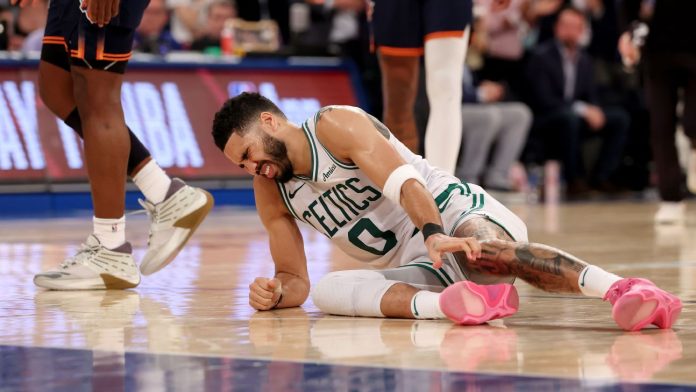
Achilles tendon injuries have become all-too-familiar headlines in professional sports, and this NBA season saw more than its usual share. During the NBA playoffs alone, Milwaukee Bucks guard Damian Lillard tore his left Achilles in the first round against the Indiana Pacers, Boston Celtics forward Jayson Tatum ruptured his right Achilles tendon in the second round against the New York Knicks, and Pacers guard Tyrese Haliburton tore his right Achilles in Game 7 of the NBA Finals.

Two other players, centers James Wiseman and Isaiah Jackson, tore their Achilles earlier in the season, as did New Orleans guard Dejounte Murray and Miami Heat guard Dru Smith.

Other high-profile athletes have suffered Achilles tendon injuries beyond the NBA, such as USMNT forward Haji Wright, whose recent Achilles injury has ruled him out for the remainder of the Concacaf Gold Cup, and Cleveland Browns quarterback Deshaun Watson, who had surgery earlier this year for his second right Achilles tendon tear.

Medical experts attribute these injuries to overuse and accidental circumstances.

Karin Gravare Silbernagel, a physical therapist and professor at the University of Delaware, compared today’s calf injuries to the kind of hamstring strains seen five to 10 years ago and pointed out that as athletes have prioritized upper-leg strength, their lower legs need to have the strength to keep up.

“At this point, we need to start thinking about the calf and Achilles in the same way,” she said. “Do we have enough strength … to be able to tolerate the sport that we’re doing? The lower leg is lagging behind some of the other things that we do.”

ESPN spoke with four experts about Achilles tendon injuries during this past NBA season, and more broadly about why the Achilles is so vulnerable and whether painkillers could be masking warning signs. Their responses have been edited for clarity.

Q: How easy is it to injure a calf?

“It’s not hard at all,” said Dr. Michael Fredericson, director of physical medicine and rehabilitation for sports at Stanford.

“You use the calf in virtually every movement when you’re walking or running,” Fredericson said, “so it is one of the most common injuries if you combine calf injuries and Achilles injuries.”

For NBA players, in particular, the most common cause is overuse, said Dr. Nirav Pandya, a professor of orthopedic surgery at the University of California San Francisco.

“As the season goes on,” he said, “you see a lot of these calf injuries crop up from the wear and tear of playing an explosive game.” He also said some injuries happen by chance, often from explosive movements, such as layups, that result in too much force for the body.

Q: What makes the Achilles tendon so vulnerable?

Unlike most muscles and tendons, the Achilles is under constant tension. It’s built for power and speed, but that means it’s always “wound up and stressed,” said Dr. Justin Greisberg, professor of orthopedic surgery and chief of foot and ankle surgery at NewYork-Presbyterian and Columbia University Medical Center.

“The stresses that go through the Achilles tendon are probably the highest in the body, many times body weight, [just from] walking,” he said. “… When you’re talking about a professional athlete who’s big and strong and doing serious running and jumping, you’re talking huge loads.”

When it ruptures, it’s not just a simple tear.

“The explosion of the rupture really affects the … muscle, the part that does the work,” Greisberg said. “… The whole muscle goes into a coma.”

For athletes, all it takes for injury is a simple misstep, like slipping on sweat, landing off balance or planting on another player’s foot, Greisberg said.

Q: Do calf strains lead to Achilles tears?

Not always. Greisberg said that many athletes who have Achilles ruptures have never had an injury to that leg before, so there often isn’t a warning sign.

Gravare Silbernagel said the data she has seen doesn’t point to a correlation, but as soon as there’s a deficit at one point in the leg, like a calf muscle, then the leg is vulnerable for other injuries.

“We don’t necessarily see them going from having a calf strain and then rupturing the Achilles,” Gravere Silbernagel said, “but they’re all attached.”

The key to preventing further injuries after a calf strain is recovery, Fredericson said.

“If those muscles don’t fully recover,” he said, “then that muscle is going to be weaker and it can’t handle high-end stress as well.”

Q: Could painkillers be masking warning signs?

The use of anti-inflammatories like strong ibuprofen is common in pro sports, but in Greisberg’s view, painkillers aren’t the culprits for Achilles injuries. He said he doesn’t think the idea of athletes being numbed and playing through pain applies in most situations.

“The reality is that [in] the majority of Achilles rupture, athletes didn’t have any symptoms,” he said. “… It was out of nowhere.”

For Fredericson, the issue isn’t the medication, but rather if it interferes with an athlete’s ability to listen to their body. Gravare Silbernagel said that if an athlete doesn’t feel intense pain, they might not have any inhibition in how heavy they can load it,

“The concern is if you don’t have the pain,” she said. “If you take away the pain, then do you have these inhibitions or not?”

Q: Why were there so many Achilles injuries this NBA season?

Fredericson said Achilles injuries for athletes come from overuse, meaning they need to “look at the amount of load that the athletes are putting on their body and the amount of recovery.” It’s a combination of athletes playing through injury and not getting enough recovery, he said.

“These athletes are some of the most supremely conditioned athletes we’ve ever had,” Fredericson said, “so I don’t think it’s a conditioning issue.”

Greisberg called it a mix of random chance and circumstances, and said athletes continue to play at higher levels and push the limits of what the body can do.

Between every-other-night playoff game and offseason Olympic training, Pandya said athletes have been training even harder than normal this year. Star players spent 39 or 40 minutes on the court per playoff game rather than 25-30 minutes of playing time with break games during the regular season.

“One of the things we know is whenever you increase the minutes you play over a period of five to 10 games, there’s an increase in injury risk,” Pandya said.

Pandya also said today’s athletes bring more “mileage” than older athletes because they start playing at a high level at a young age.

“If you’re looking at a calf muscle or the ligaments and tendons of the average 22-year-old player,” he said, “they’ve already had so much mileage on them, compared to players 30 or 40 years ago who weren’t doing that.”

Q: How can athletes prevent these injuries?

Stretching, especially hamstrings and calves, along with solid and supportive footwear can help avoid injuries, Greisberg said. Traditional sneakers with a slight heel lift can help reduce stress on the Achilles, while super-flat shoes might increase it by “pre-exposing people to Achilles injuries,” he said, although noting that those shoes are more likely to cause tendonitis than full-blown ruptures.

Gravare Silbernagel also said that calf-strengthening exercises can improve tendon strength. Pandya said that players also need to be mindful of discomfort and pain to prevent further, catastrophic injuries.

“Even though we’ve advanced surgery wise, it’s still a career-altering injury,” he said.

Q: What can teams learn from this season?

With multiple star players suffering from Achilles injuries, teams should take a harder look at how they’re training, monitoring and resting athletes, experts said.

Prioritizing basic exercises to strengthen calves can help prevent injury, Gravare Silbernagel said. Additionally, Pandya said it’s important to rest star players and not overuse them during playoffs.

“I know it’s hard because you’re trying to win, but it’s making sure that you’re appropriately managing during the season and getting their bodies ready for that offseason,” Pandya said.

He also said athletes need to be transparent about pain and potential injuries.

“It’ll take a big regrouping of looking at how they’re managing the players, making sure their bodies are ready, and also making sure they know that this is a risk and this isn’t something that happens once or twice a year,” Pandya said.

Q: How long is recovery?

Even with the best doctors and rehab, a return to peak performance takes nine to 12 months, and there’s not a safe way to speed it up without increasing the risk of retear, Greisberg said. He said the next breakthrough in sports medicine may come from figuring out how to prevent the calf muscle from going into a “coma” after a rupture.
Kate Cassidy Defends Love Island’s Vanna Einerson

0


Kate Cassidy is asking for kindness.

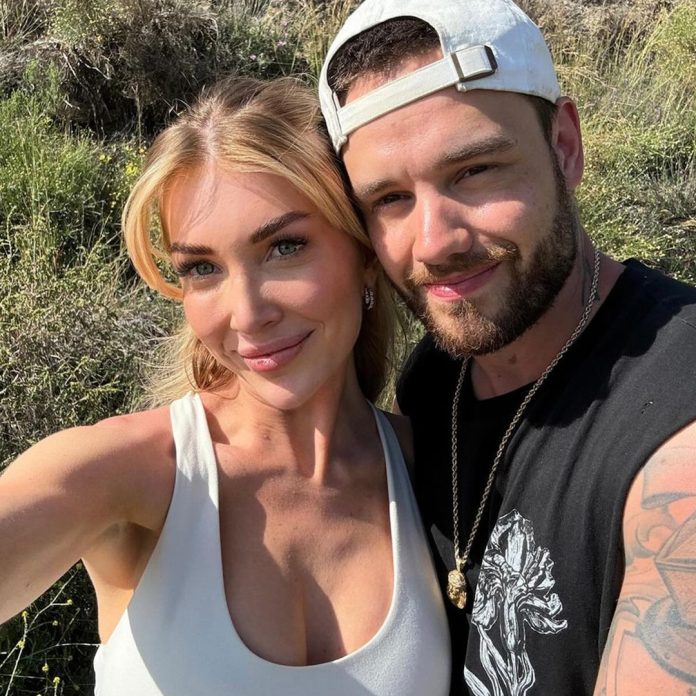
The influencer—who dated One Direction singer Liam Payne for two years before his death in October—expressed empathy for new Love Island USA star Vanna Einerson whose appearance has been subject to scrutiny online since she joined season seven of the Peacock dating competition show during the June 23 episode.

“People are brutal in this world,” Kate said in a June 24 TikTok video. “I don’t even watch Love Island. This beautiful girl who goes into the villa, I guess, Vanna, she is so pretty, she’s so young. She’s being ripped to shreds on TikTok, on the internet. It is insane, and it is so mean and hurtful.”

When Vanna first joined the show, many viewers expressed surprise that the reality star is just 21 years old, given her mature features.

Kate went on, “Could you imagine not having your phone, going into a villa, whatever, being all excited to meet all these new people, you come out, you get your phone back and you’re just scrolling and it’s literally just degrading, mean s–t?”


Christian Norgaard: Arsenal agree deal for Brentford captain amid Thomas Partey uncertainty

0


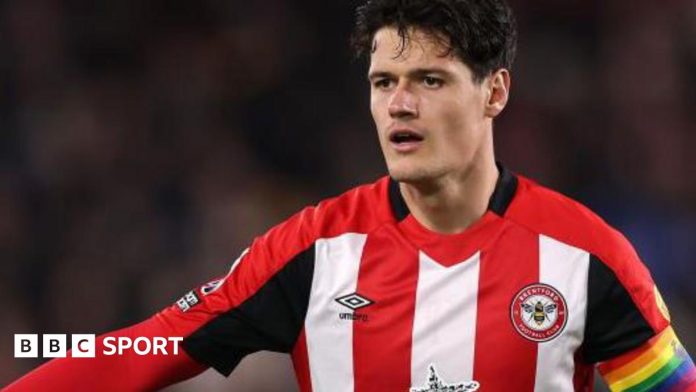
Arsenal have agreed a deal with Brentford to sign midfielder Christian Norgaard.

Sources have indicated the Gunners have been discussing a fee worth in the region of an initial £10m, with a possible £5m in performance-related add-ons.

The move for Norgaard comes just a week before Thomas Partey’s Arsenal contract expires.

Ghana international Partey, 32, has been in talks over a new deal to stay at Emirates Stadium, but no agreement has been reached.

BBC Sport understands Sevilla’s French midfielder Lucien Agoume, 23, also featured prominently on Arsenal’s list of potential targets to replace Partey.

Crucially, however, it is understood manager Mikel Arteta identified Norgaard as the midfielder he wanted because he preferred a Premier League-ready player.

Club-to-club discussions over the Denmark international have accelerated in the last 24 hours and a deal is now in place.

The 31-year-old, who joined Brentford from Fiorentina in 2019, will now undergo a medical before completing his move.

The ‘shining city on the hill’ still matters 

0


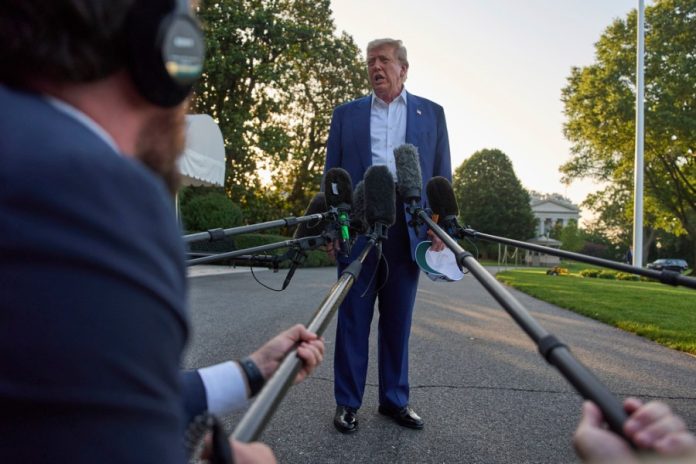
During a press conference at the G-7 summit, President Donald Trump chastised the other leaders he was meeting with for not including Russian President Vladimir Putin. Trump elaborated on the need to bring Putin to the table.

Then, he blamed the Ukraine War on Putin’s absence from the group’s summits. However, Trump’s criticisms are not just about Putin’s exclusion. Rather, they speak to a larger issue: Trump’s worldview about the role of the U.S. and other democratic nations in global politics, and how that worldview harms the U.S. and the rest of the world and, therefore, must be countered.   

In Trump’s eyes, there is no difference between authoritarian and democratic governments. Rather, there are simply economic winners and losers. Therefore, Putin should be at the G-7 table, because Russia is an economic player, regardless of the nature of his regime.  

Russia was there once. At a time when Russia was moving towards democracy, then-Russian President Boris Yeltsin was invited to join the G-7 in 1997, making the group the G-8. However, Putin gradually discarded democratic gains by limiting the press, jailing and even killing opponents, and concentrating power in the Kremlin. But the final straw was Russia’s invasion of Crimea in 2014, when the territory was clearly part of Ukraine. Putin annexed Crimea and started a war for the rest of Ukraine by supporting military separatists in eastern Ukraine.

At that point, Russia was no longer a nation moving towards democracy. It was an aggressor ruled by an autocrat. And G-7 membership had been limited to nations that respected democracy and each other. Russia under Putin no longer qualified.   

The G-7 had begun as a meeting of finance ministers discussing economics. However, over time, it has emerged as a powerful advocate of democracy. It condemned Russia’s invasion of Crimea in 2014 and the subsequent invasion of Ukraine in 2022. It has urged the promotion of values such as pluralism and openness. Former U.K. Prime Minister Boris Johnson once called the G-7 “the most prominent grouping of democratic countries.” 

With Putin at the table, the G-7 would signal that Putin’s aggression is acceptable. Moreover, it would make joint resolutions more difficult to achieve. Promoting democracy would be much more difficult.  

With his warped view of the value of democracy, Trump simply does not get that. That failure to understand the model and advocate role of the United States. Trump damages not only the G-7 but also weakens respect for the U.S. among other nations. Obviously, treating our allies as enemies by starting trade wars disparages those who have been on our side fighting for democracy through world wars and the Cold War.   

But it gets worse. The U.S. under Trump now mimics behavior we recently condemned. Trump has concluded that if Russia and China can be imperialist, so can the United States. If Putin can have Ukraine, then why can’t the U.S. declare ownership of Greenland or the Panama Canal and threaten to take them by force? Like Putin, Trump does not believe in international law, the sovereignty of other nations, or the importance of alliances of nations sharing common values.   

In 1989, President Ronald Reagan spoke of a “shining city on a hill.” The U.S. was a beacon of democracy throughout the world. In Trump’s worldview, there is no such city. The U.S. simply competes on economic terms with the rest of the world. Our national purpose is not to be a beacon of democratic governance and stability.    

Since the president has left a void in defining our worldview as one based on shared democratic values, it is incumbent on others to remind the world who we are as a nation. Members of Congress, both Democrats and Republicans, need to be vocal in reassuring allies that the Trump worldview is not the permanent posture of the United States. 

State Department civil servants should communicate to their counterparts that the U.S. once again will be a defender of democratic principles once Trump is no longer in office. At a time when autocracy is threatening democracy, a trenchant voice is essential and the people of the United States must continue to be understood as a sponsor of the values Americans hold dear, even if the current president does not.   

Richard Davis is a professor emeritus of political science at BYU. 

Daily – Vickers Top Insider Picks for 06/25/2025

0


Daily – Vickers Top Insider Picks for 06/25/2025

Apple’s sports app now shows tennis scores

0


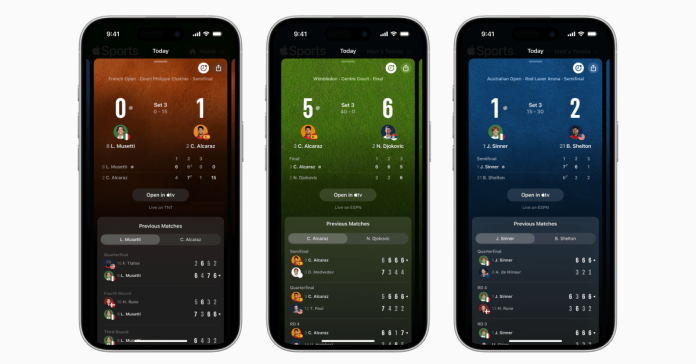
Apple Sports, the company’s sports app for iPhone, now shows scores for tennis matches. “Tennis fans can access live scores for Grand Slam and 1000-level tournaments, and can track every point across all men’s and women’s singles matches, beginning with Wimbledon,” Apple says in a press release.

The company is also adding a “brand-new home experience” to the app. “Events and matchups are now grouped by league, with intuitive controls for fans to set their preferred order, ensuring their top leagues appear first,” Apple says. Your favorite teams will “always appear at the top.”

Fantasy WNBA player rankings: Rookie class continues to shine

0


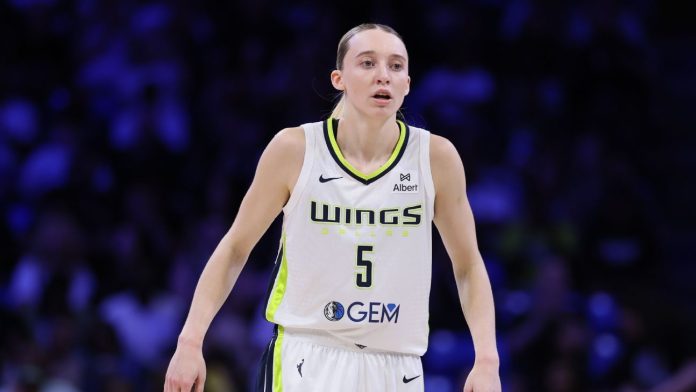
The 2025 rookie class takes center stage in this week’s fantasy women’s basketball rankings update, as Paige Bueckers, Sonia Citron, Kiki Iriafen and Aneesah Morrow each move up multiple spots.

The rankings also have a new No. 1 player as A’ja Wilson returned from injury with a bang, averaging 22.0 PPG, 10.5 RPG, 2.5 BPG, 2.0 APG and 1.5 SPG in her two games back. Meanwhile, last week’s top player Caitlin Clark has struggled over the past three games, and her slump has already lowered her fantasy scoring average by a couple points.

Jonquel Jones has also dropped precipitously in this week’s rankings after news that an ankle injury will sideline her for at least a month. In her absence, Nyara Sabally has moved into the starting lineup for the New York Liberty and has become a nightly double-double threat.

Kahleah Copper one of the biggest risers this week as she works her way back from a knee injury that cost her the first month of the season. Copper is still not quite up to full strength, but her playing time has increased in every game. She projects to be a top-15 fantasy producer when healthy.

These rankings are based on ESPN’s default women’s basketball settings, which award one point for each point, assist and rebound, a bonus point for making a 3-pointer and two points each for blocks and steals.

Click here to see the leading scorers and for our 2025 projections for the top 100 players.

1. A’ja Wilson, LV (C1) Last Week: 2 (Up 1)
2. Napheesa Collier, Min (F1) Last Week: 3 (Up 1)
3. Caitlin Clark, Ind (G1) Last Week: 1 (Down 2)
4. Breanna Stewart, NY (F2) Last Week: 4
5. Sabrina Ionescu, NY (G2) Last Week: 5
6. Paige Bueckers, Dal (G3) Last Week: 9 (Up 3)
7. Rhyne Howard, Atl (G4) Last Week: 6 (Down 1)
8. Alyssa Thomas, Phx (F3) Last Week: 7 (Down 1)
9. Nneka Ogwumike, Sea (C2) Last Week: 13 (Up 4)
10. Kelsey Plum, LA (G5) Last Week: 11 (Up 1)
11. Allisha Gray, Atl (G6) Last Week: 10 (Down 1)
12. Satou Sabally, Phx (F4) Last Week: 8 (Down 4)
13. Dearica Hamby, LA (F5) Last Week: 12 (Down 1)
14. Skylar Diggins, Sea (G7) Last Week: 17 (Up 3)
15. Angel Reese, Chi (F6) Last Week: 15
16. Jackie Young, LV (G8) Last Week: 19 (Up 3)
17. Arike Ogunbowale, Dal (G9) Last Week: 14 (Down 3)
18. Aliyah Boston, Ind (C3) Last Week: 20 (Up 2)
19. Brittney Sykes, Wsh (G10) Last Week: 18 (Down 1)
20. Kayla Thornton, GSV (F7) Last Week: 24 (Up 4)
21. Gabby Williams, Sea (F8) Last Week: 23 (Up 2)
22. Azura Stevens, LA (F9) Last Week: 22
23. Kahleah Copper, Phx (G11) Last Week: 45 (Up 22)
24. Ariel Atkins, Chi (G12) Last Week: 27 (Up 3)
25. Marina Mabrey, Conn (G13) Last Week: 21 (Down 4)
26. Courtney Williams, Min (G14) Last Week: 28 (Up 2)
27. Kayla McBride, Min (G15) Last Week: 30 (Up 3)
28. Brionna Jones, Atl (C4) Last Week: 29 (Up 1)
29. Chelsea Gray, LV (G16) Last Week: 26 (Down 3)
30. Tina Charles, Conn (F10) Last Week: 25 (Down 5)
31. Kelsey Mitchell, Ind (G17) Last Week: 31
32. Jewell Loyd, LV (G18) Last Week: 32
33. Sonia Citron, Wsh (G19) Last Week: 38 (Up 5)
34. Alanna Smith, Min (F11) Last Week: 34
35. Natasha Cloud, NY (G20) Last Week: 35
36. Natasha Howard, Ind (F12) Last Week: 33 (Down 3)
37. Veronica Burton, GSV (G21) Last Week: 37
38. Ezi Magbegor, Sea (C5) Last Week: 36 (Down 2)
39. Cameron Brink, LA (F13) Last Week: 42 (Up 3)
40. DiJonai Carrington, Dal (G22) Last Week: 40
41. Kiki Iriafen, Wsh (F14) Last Week: 44 (Up 3)
42. Brittney Griner, Atl (C6) Last Week: 39 (Down 3)
43. Kamilla Cardoso, Chi (C7) Last Week: 41 (Down 2)
44. Jonquel Jones, NY (C8) Last Week: 16 (Down 28)
45. Rickea Jackson, LA (F15) Last Week: 43 (Down 2)
46. Janelle Salaun, GSV () Last Week: 46
47. Tiffany Hayes, GSV (G23) Last Week: 48 (Up 1)
48. Erica Wheeler, Sea (G24) Last Week: 49 (Up 1)
49. Odyssey Sims, LA (G25) Last Week: 47 (Down 2)
50. Olivia Nelson-Ododa, Conn (C9) Last Week: 57 (Up 7)
51. Temi Fagbenle, GSV (F17) Last Week: 53 (Up 2)
52. Jordin Canada, Atl (G26) Last Week: 52
53. Elizabeth Williams, Chi (C10) Last Week: 55 (Up 2)
54. Shakira Austin, Wsh (C11) Last Week: 64 (Up 10)
55. DeWanna Bonner, Ind (F18) Last Week: 50 (Down 5)
56. Jessica Shepard, FA (C12) Last Week: 54 (Down 2)
57. Monique Billings, GSV (F19) Last Week: 51 (Down 6)
58. Sami Whitcomb, Phx (G27) Last Week: 62 (Up 4)
59. NaLyssa Smith, Dal (F20) Last Week: 58 (Down 1)
60. Myisha Hines-Allen, Dal (F21) Last Week: 56 (Down 4)
61. Bridget Carleton, Min (F22) Last Week: 60 (Down 1)
62. Leonie Fiebich, NY (F23) Last Week: 61 (Down 1)
63. Teaira McCowan, Dal (C13) Last Week: 59 (Down 4)
64. Nyara Sabally, NY (F24) Last Week: 78 (Up 14)
65. Maddy Siegrist, Dal (F25) Last Week: 66 (Up 1)
66. Sophie Cunningham, Ind (F26) Last Week: 63 (Down 3)
67. Natisha Hiedeman, Min (G28) Last Week: 65 (Down 2)
68. Saniya Rivers, Conn (G29) Last Week: 69 (Up 1)
69. Natasha Mack, Phx (F27) Last Week: 67 (Down 2)
70. Lexie Hull, Ind (G30) Last Week: 68 (Down 2)
71. Jacy Sheldon, Conn (G31) Last Week: 70 (Down 1)
72. Naz Hillmon, Atl (F28) Last Week: 72
73. Aneesah Morrow, Conn (F29) Last Week: 85 (Up 12)
74. Rebecca Allen, Chi (F30) Last Week: 71 (Down 3)
75. Nia Coffey, Atl (F31) Last Week: 73 (Down 2)
76. Kia Nurse, Chi (G32) Last Week: 75 (Down 1)
77. Julie Vanloo, GSV (G33) Last Week: 76 (Down 1)
78. Alysha Clark, Sea (F32) Last Week: 80 (Up 2)
79. Kiah Stokes, LV (C14) Last Week: 81 (Up 2)
80. Kalani Brown, Phx (C15) Last Week: 77 (Down 3)
81. Stefanie Dolson, Wsh (C16) Last Week: 74 (Down 7)
82. Aari McDonald, IND (G34) Last Week: 84 (Up 2)
83. Aaliyah Edwards, Wsh (F33) Last Week: 79 (Down 4)
84. Megan Gustafson, LV (C17) Last Week: 86 (Up 2)
85. Dana Evans, LV (G35) Last Week: 83 (Down 2)
86. Dominique Malonga, Sea (C18) Last Week: 82 (Down 4)
87. Sug Sutton, Wsh (G36) Last Week: 91 (Up 4)
88. Sarah Ashlee Barker, LA (G37) Last Week: 89 (Up 1)
89. Marine Johannes, NY (G38) Last Week: 92 (Up 3)
90. Emily Engstler, Wsh (F34) Last Week: 88 (Down 2)
91. Stephanie Talbot, GSV (F35) Last Week: 94 (Up 3)
92. Hailey Van Lith, Chi (G39) Last Week: 90 (Down 2)
93. Isabelle Harrison, NY (F36) Last Week: 87 (Down 6)
94. Kate Martin, GSV (G40) Last Week: 93 (Down 1)
95. Michaela Onyenwere, Chi (F37) Last Week: 96 (Up 1)
96. Aziaha James, Dal (G41) Last Week: 104 (Up 8)
97. Lindsay Allen, Conn (G42) Last Week: 99 (Up 2)
98. Haley Jones, Atl (G43) Last Week: 98
99. Sevgi Uzun, Phx (G44) Last Week: 97 (Down 2)
100. Diamond DeShields, Conn (F38) Last Week: 100

The Simpsons Kills Off Marge Simpson in Season 36 Finale

0


13. Until the 17th episode of the second season, Fox and the production crew kept which characters the voice actors performed a secret, going so far as to close recording sessions while refusing to publish photo of the recording artists. With “Old Money,” however, the network revealed which roles each actor played because the producers decided their cast should receive credit for their work.

14. Until 1998, the six main actors were only paid $30,000 per episode. After a pay dispute, in which the network threatened to replace them with new actors until Groening stepped in to support his cast, they were bumped to $125,000 an episode. After a month-long strike in April 2004, in which the cast stopped showing up to cast readings in the hopes of getting a bigger piece of the show’s rising revenue, their salaries were increased to somewhere between $250,000 and $360,000.

15. In 2011, the show was almost canceled by Fox unless production costs were cut, forcing the cast to accept a 30 percent pay cut from their then-$400,000 per episode, reached through contract negotiations in 2008, resulting in their current pay of just over $300,000 per episode.

Eight killed, medics say, as thousands march in Nairobi

0


At least eight people have been killed and 400 injured in nationwide protests in Kenya against President William Ruto’s government, doctors and rights groups have said.

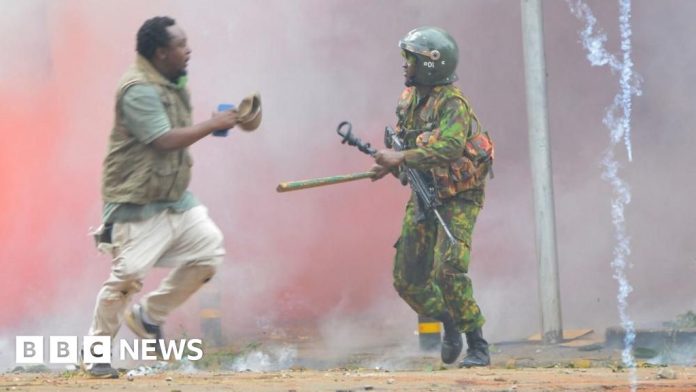
Police clashed with protesters, who marched in their thousands – some chanting “Ruto must go” and waving branches as a symbol of peaceful opposition to his rule.

The government banned live TV and radio coverage of the demonstrations, but its decree was overturned by the High Court in the capital, Nairobi.

Ruto urged protesters not to threaten peace and stability, as crowds tried to reach his official residence but were pushed back by police.

The president was speaking at a burial ceremony in the coastal county of Kilifi.

“Protests should not be to destroy peace in Kenya. We do not have another country to go to when things go wrong. It is our responsibility to keep our country safe,” he said.

Ruto’s absence from State House, his official residence, was notable as young protesters threatened to storm it.

Police used barricades and razor wire to seal off major roads – especially those leading to State House and parliament.

The protests were held exactly a year after demonstrators stormed parliament, setting part of the building ablaze.

At least 60 people were killed in a wave of anti-government protests last year.

The authorities have not yet given any casualty figures from Wednesday’s protests, but the Kenya Medical Association, Law Society of Kenya and the Police Reforms Working Group said in a joint statement that at least eight protesters were killed.

Of the 400 injured, 83 required “specialised treatment” and eight had suffered gunshot wounds. The injured included three police officers, the statement added.

Amina Mude told the BBC she joined the protests “to fight for the future of my kids”.

“I feel like as a country we’re not going in the right direction, especially in education and everything happening.

“I feel like it’s high time that the country and the leadership listens to us.”

Video footage showed plumes of white tear gas drifting between tall buildings, sending protesters scrambling for cover, coughing, and shielding their eyes. But they returned, chanting defiantly.

In the heart of Nairobi, protesters marched pass shuttered shops and empty streets.

The razor wire fencing around parliament stood as a stark reminder of last year’s violent unrest.

On Wednesday, the fence around parliament was lined with wreaths and handwritten notes from grieving families and defiant youths.

A young woman draped in a Kenyan flag clutched a poster bearing the names of those killed a year ago by the security forces as they tried to end the protests.

Winners and losers from the New York City mayoral primary

0


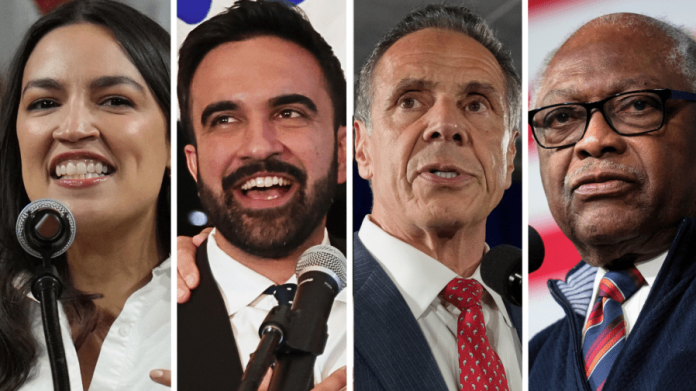
New York State assemblyman Zohran Mamdani stunned the country on Tuesday with his apparent victory over Gov. Andrew Cuomo, who conceded overnight in the race to win the Democratic nomination for mayor of New York City.

Mamdani’s win was a significant victory for progressives and younger Democrats in both New York and nationwide who have been calling for change in the party.

It will lead to new calls for Democrats to move to the left, and to lift up a new generation of leaders.

At the same time, centrist voices in the party will argue it would be a mistake to interpret Mamdani’s victory in New York to mean the rest of the country is ready to embrace other democratic socialists.

Still, Mamdani’s win represents a significant defeat to the Democratic establishment, even if some argue Cuomo brought his own baggage to the race.

Excluding the biggest winner, Mamdani, here are the other major winners and losers from the primary.

Winners

Progressives 

Tuesday night was a huge night for progressives, who saw a democratic socialist catapulted into one of the most powerful local offices.

It was a particularly good night for Sen. Bernie Sanders (I-Vt.) and Rep. Alexandria Ocasio-Cortez, (D-N.Y.), who backed Mamdani, as well as progressive groups like the New York Working Families Party and New York City Democratic Socialists of America. 

The primary results offered a much-needed shot in the arm for the left, who have suffered several high-profile losses recently, including former Reps. Cori Bush (D-Mo.) and Jamal Bowman (D-N.Y.). 

The night was in some ways also reminiscent of Ocasio-Cortez’s equally surprising primary win in 2018, and ushers yet another rising progressive star onto the national stage at a time when the left is looking to make inroads around the country.

Progressives will argue that lawmakers in Congress, prospective 2028 presidential candidates and Democrats across the country should take notice.

David Hogg 

Hogg, who ignited controversy over his decision to get involved in Democratic primaries while serving as a DNC vice chair, also came out ahead.

Hogg’s Leaders We Deserve group endorsed Mamdani in the lead-up to the primary and spent time with the New York lawmaker on the campaign trail.

Hogg’s political group also gave $300,000 to a Working Families Party super PAC, which ranked Mamdani first on its slate of endorsed candidates.  

Mamdani is the first member the group has endorsed who has won a primary this cycle. The gun control activist wasn’t shy about taking a victory lap.

“It’s gonna be a fun next couple years,” Hogg wrote on X.

Republicans 

Progressives weren’t the only ones reveling in Mamdani’s win. Republicans gleefully goaded their Democratic counterparts over the New York City race, too. 

In Mamdani, they see a new target, and one they can effectively link to Democrats across the country.

White House deputy chief of staff Stephen Miller described Mamdani on X as a “an anarchist-socialist,” while the House Republicans’ campaign arm called the New York legislator the “new face of the Democrat.” 

“If you engineered the modern Democrat Party in a lab, you’d get Zohran Mamdani: Antisemitic, anti-police, and anti-American. Every vulnerable House Democrat will own him, and every Democrat running in a primary will fear him,” Mike Marinella, a spokesman for the campaign arm, said in a statement. 

Rep. Elise Stefanik (R-N.Y.), who’s widely presumed to be running for governor next year, fundraised off of Mamdani’s win. 

Republicans are already seeking to tie Mamdani to vulnerable Democrats ahead of next year’s midterms.

“I call on Kathy Hochul and all New York Democrats to immediately state if they endorse Zohran Mamdani for NYC Mayor, and all the radical socialist policies he has endorsed on his campaign,” Rep. Mike Lawler (R-N.Y.), who could also launch a bid for the governor’s race next year, wrote on X

Young Democrats  

Young Democrats also had a reason to be optimistic after Mamdani became the first Millennial to win the Democratic nod for New York City mayor.

Young voters, a voting bloc that Democrats struggled with last cycle, were core to Mamdani’s coalition, as his social media-savvy campaign sought to connect with younger Democrats on TikTok, Instagram and X.  

He also had plenty of young Democratic surrogates and endorsers, including Hogg; Ocasio-Cortez; model and actress Emily Ratajkowski; and Ella Emhoff, the stepdaughter of former Vice President Harris. 

Losers 

Andrew Cuomo 

Cuomo suffered the biggest blow on Tuesday as the scandal-ridden former governor saw his comeback attempt — which only months ago seemed virtually predestined — fail miserably.

Despite the fact that former New York City Mayor Mike Bloomberg spent $25 million in outside efforts to boost Cuomo in the race, it wasn’t enough to put help carry Cuomo in the primary. 

While a winner has not officially been declared, Cuomo concession tells the story. It was a stunning development for the former governor, who appeared to be the clear favorite in his bid to regain power after resigning from the state’s top executive office in 2021 amid sexual harassment allegations.

Cuomo hasn’t taken the idea of running in the general election under a separate party line off the table. But even if he does, Cuomo still faces serious questions around his viability.

The Democratic establishment 

The Democratic establishment was a big loser on Tuesday night, as a number of centrist and establishment figures their weight behind Cuomo.

Bloomberg, former President Clinton, influential Rep. Jim Clyburn (D-S.C.), and New York Reps. Adriano Espaillat, George Latimer, Tom Suozzi and Ritchie Torres were among the high-profile figures who threw their weight behind the former governor. Others, like Sen. Chuck Schumer (D-N.Y.) and House Minority Leader Hakeem Jeffries (D-N.Y.), stayed out of the primary.

The setback for the establishment wing of the party comes amid a large internal battle with progressives over the future of the party. Many Democrats have accused the party’s leaders of being out of touch and have pushed for a younger generation of leadership.

While Cuomo’s loss by no means the establishment has lost the larger battle taking place within the party, it’s a significant black eye for those resisting the progressive, populist direction favored by the likes of Ocasio-Cortez and Sanders.

The New York Times editorial board 

The newspaper’s editorial board, which declined to make an endorsement in the mayoral race, also lost on Tuesday after it came out against Mamdani.  

“We do not believe that Mr. Mamdani deserves a spot on New Yorkers’ ballots. His experience is too thin, and his agenda reads like a turbocharged version of Mr. de Blasio’s dismaying mayoralty,” the board wrote last week.  

The editorial board was not in favor of electing Cuomo either. Some of its members, though, were reading the tea leaves Wednesday morning over what Mamdani’s victory meant.

“Tuesday night, Democratic voters said they were ready to move on,” Mara Gay, a member of the editorial board, wrote in her own op-ed on Wednesday. “That kind of coalition is there for the taking in many places for the politicians who recognize how to build it.”