E.A. Hanks is Tom’s only daughter from his previous marriage to Susan.
And while her siblings caught the filmmaking bug, she pursued a different career path.
Previously a writer for Vanity Fair, E.A. has contributed to outlets like TIME, The Guardian and The New York Times. She’s also an author, with her book The 10: A Memoir of Family and the Open Road dropping April 8, 2025.
According to a description from publisher Simon & Schuster, the book details E.A.’s journey as she “follows the same route as a long-ago road trip with her mother in an attempt to better understand the complicated woman who gave her life.”
In a book excerpt shared by People, E.A. looks back at the time following her parents’ split in which Susan had custody of her and Colin while Tom saw the kids on the weekends. But one day, she continued, her mom moved them from L.A. to Sacramento without giving their dad a heads-up.
“My dad came to pick us up from school and we’re not there,” E.A wrote. “And it turns out we haven’t been there for two weeks and he has to track us down.”
In the book, E.A. also shared her experience of living with her mom, writing the backyard was “full of dog s–t,” “the house stank of smoke,” and the “fridge was bare or full of expired food.”
“One night, her emotional violence became physical violence,” E.A. wrote, “and in the aftermath I moved to Los Angeles, right smack in the middle of the seventh grade.”
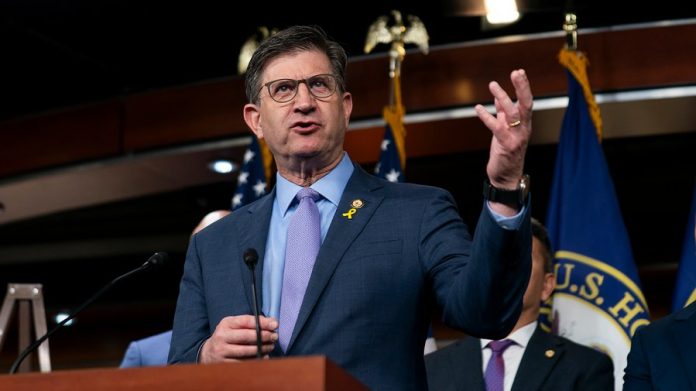
Rep. Brad Schneider (D-Ill.) said late Tuesday that the U.S. military made the world “safer” by bombing three nuclear sites in Iran.
“They ran a flawless attack on Fordow, Natanz and Isfahan,” Schneider, who sits on the House Foreign Affairs Committee, said during an interview on NewsNation’s “On Balance with Leland Vittert.”
“Unquestionably, they executed as well as we could have hoped for, and they came home safely, and we’re grateful for that,” he added.
“The world is safer because of what they did,” Schneider continued.
The Illinois Democrat, who co-chairs the Abraham Accords Caucus, refrained from giving his overall assessment of the operation when asked if he would describe the strikes as “good.”
“The jury’s still out,” Schneider said, later adding, “We need to get the battle damage assessment. We got to get the details.”
Schneider also addressed why he thinks so few Democrats have been willing to come out publicly to praise the operation.
“I think in this moment of hyper-partisanship on both sides, people react first and then think. Not everybody. There were some in my party who immediately called for impeachment. They called the action unconstitutional,” Schneider said.
Schneider said he thinks President Trump “should have come to Congress” first, but he acknowledged the “tension” in the U.S. Constitution about where the authority lies to order a strike like the one this past weekend.
“Constitution gives Congress the sole responsibility for taking our nation to war, but, it also, in Article II, gives the president responsibility for keeping our troops safe, protecting Americans around the world,” Schneider said. “There is a tension there.”
“But the tension is a safeguard, and the president should have notified at least or certainly the gang of 8 – the leaders in the Congress,” he added.
Several news outlets reported Tuesday that an internal U.S. government report found strikes on the three facilities over the weekend delayed Iran’s nuclear program by only a few months, despite initial assertions from Trump administration officials that those sites had been destroyed.
The assessment also said Iran had moved much of its enriched uranium before the strikes, according to multiple news outlets.
Defense Secretary Pete Hegseth said Wednesday at the NATO summit in the Netherlands that a leak investigation was underway, while Trump blasted the news outlets that reported on the internal assessment as “scum.”
Trump and other top officials have been adamant that the nuclear facilities were “obliterated,” even as experts have said it would take days to determine the extent of the damage.
Ring cameras are getting an AI upgrade that can tell you what’s happening at your front door, as well as show you. Video Descriptions is a new feature that generates text descriptions of the motion activity on Ring doorbells and cameras.
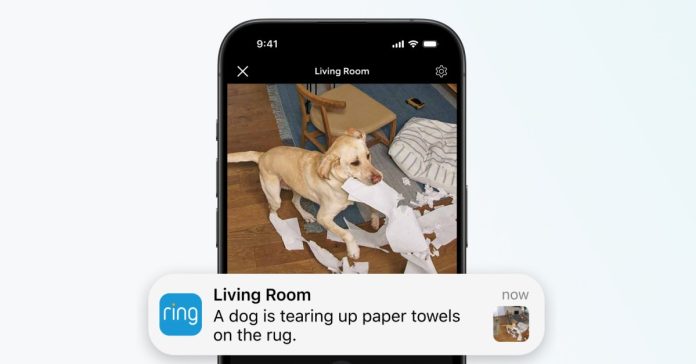
Now, instead of an alert that says “Front door: person detected,” you’ll get something like “person with broom and mop is leaving.” Or instead of “Living room: motion detected,” you might get “a dog is tearing up paper towels on the rug.” You can see how this would be helpful; you probably don’t need to do anything about the first one, but the second one demands some action.
These new descriptive alerts will appear in the camera notification on your phone, so you can see at a glance if you need to bother clicking through and waiting for the video to load.
Video Descriptions is rolling out today, June 25th, in beta to Ring Home Premium subscribers in the US and Canada (English only), and will work on all currently available Ring doorbells and cameras, according to Ring.
In a blog post, Ring founder and recent new hire at the Amazon-owned company, Jamie Siminoff, said the feature is designed to deliver only the most relevant information. So, rather than a detailed description of the scene, the notification will focus on “describing the main subject that caused a motion alert and what action they are taking,” he said.
Ring is working on combining multiple motion alerts into one and developing custom anomaly alerts.
Video Descriptions joins Smart Video Search on Ring cameras, which launched late last year and lets you query your cameras about recent events via the app, such as “did the kids leave their bikes in the driveway?” Both AI-powered tools are available with the Ring Home Premium subscription ($19.99 a month), which also includes Ring’s 24/7 recording option.
Siminoff says Ring plans to use Video Descriptions to power more proactive home security features, including combining multiple motion alerts into one alert and, more ambitiously, to develop custom anomaly alerts.
This would “generate alerts only when something happens on your property that is an anomaly,” he said, explaining that Ring will be able to learn the routines of your home and only deliver notifications when something out of the ordinary happens. Meaning you might not get an alert for the person with a broom and mop leaving the house, but you will be notified that the dog is tearing up the living room.
With Video Descriptions enabled, you’ll get a more detailed description of the activity the camera saw, along with a thumbnail of the action.Image: Ring
Ring isn’t the only company using AI to improve camera notifications. Arlo recently launched AI-powered descriptions, which it calls Event Captions. Wyze also offers them, under the moniker Descriptive Alerts, and recently launched a No Big Deal filter that filters out all alerts other than those it deems high-priority. Google announced an AI descriptions feature powered by Gemini for its Google Nest cameras last year, but it’s only available in a public preview program and is still in a limited rollout. As with Ring, all the companies require you to sign up for a subscription for these features.
One big difference from Ring’s offering is that both Google and Arlo offer facial recognition, which Ring doesn’t. This should make descriptive alerts more useful. Getting a notification that “Johnny is opening a car door in the driveway” is more helpful than “A person is opening a car door in the driveway.”
The extra context text descriptions provide could be used by a gen-AI service like Alexa Plus to enable other actions in your home
Cameras see a lot of things you don’t need to know about, and notification fatigue is a real thing when it comes to alerts. Anything that can streamline and focus them is a good thing. AI-powered smart alerts for people, pets, packages, and vehicles were the first step, and now, more descriptive alerts with more information could make cameras more useful in the smart home. For example, the extra context text descriptions provide could be used by a gen-AI service like Alexa Plus to enable other actions in your home.
Of course, more information can lead to more privacy concerns. While detailed text descriptions of activity make it easier for people to keep an eye on their property, they also make it easier to keep track of people in a home, which could be abused by unscrupulous users.
Another concern is accuracy. Both of the descriptions themselves and of any custom filters Ring might offer in the future. If I don’t get the alert for the person with a mop leaving the house because the AI determined it wasn’t an anomaly, but actually it was a particularly fastidious burglar doing away with a fancy $700 Dyson mop, I’m going to be very annoyed.
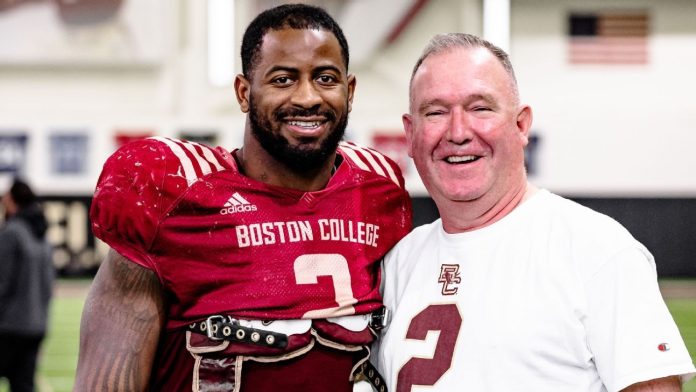
He became a prized recruit for Boston College as a linebacker, but as a kid, he played receiver, reveling in any chance to put distance between himself and a defender. He was on the high school track team, and he still follows the drills his coaches taught him. When COVID-19 scuttled his senior football season, he’d wake at sunrise most mornings, pop in his earbuds and run a few miles through a nearby park in his hometown of Raleigh, North Carolina, taking breaks only to dash off 100 situps or pushups.
After cancer, running was hell.
It was December 2023, just two months removed from his latest cancer surgery, and Steele was determined to rebuild his life, to return to the form that made him one of BC’s best prospects. Instead, he emerged from a hospital bed with nearly a half-dozen incisions twisting around his rib cage “like bullet hole wounds” where chest tubes had been inserted into his abdomen. They’d healed over by the time he started running again, but the scar tissue still burned as he pumped his fists in a wide ellipse with each stride, just the way his track coach had taught.
He could run in quick bursts, but afterward, he’d gasp for air.
“It felt like I was suffocating,” Steele said, “like someone had a bag over my head.”
Still, he kept running, first in short stumbles, then up and down the stairs outside his apartment in Chestnut Hill, then back at practice with the rest of his teammates at Boston College, a little farther and a little faster most days until this spring, when he’d reached something close enough to his old pace to work with the first-team defense again.
“This offseason, I hit it as hard as I possibly could, literally to the point of nearly passing out,” Steele said. “I want it that bad, and any way I can push myself to get back to what I was before, I’ll do it.”
Sometimes when Steele runs, he’s chasing a ghost. He’ll thumb through old highlight videos on his phone and catch a glimpse of the player he was, the player he thinks he should be again if he keeps working.
At times he’s chasing a dream. He has wanted to play football since he was old enough to hold a ball, and though cancer has often clouded that image, he still sees its contours, a little sharper with each stride.
Sometimes, though, it’s as if he’s running in place, caught between gratitude and regret, unsure whether to measure the miles from where he began or the steps left in front of him.
Steele wants to move forward. But cancer is like his shadow.
Still, he believes there’s a life beyond cancer, if he can just outrun it a little while longer.
STEELE STARTED PLAYING football when he was 4 years old, and he fell in love.
“You could just tell the way he planned for his games,” his mother, Nicholle, said. “He’d lay his uniform out the night before a game. He was meticulous.”
At Episcopal High, the boarding school he attended in Virginia, he blossomed into a star. At 6-foot-1, 230 pounds with a relentless work ethic, he had nearly three dozen scholarship offers by his sophomore year, and that summer, he took a bus tour to work out at camps across the Midwest, including at his dream school, Ohio State.
It was during those camps he first sensed something was wrong. He’d deliver a hit on a ball carrier, and it would take a moment or two longer than usual to recover. And there was that cough — a dry, hacking, full-body lurch. It had been nagging him for weeks, and when he went home to Raleigh in July, his mother sent him to urgent care. He was prescribed an antibiotic. When he returned to Episcopal a few weeks later, the cough still hadn’t gone away.
Steele’s parents, Wendell Steele and Nicholle Steele, visited for Episcopal’s season opener in late August. They insisted he see the campus doctor, who sent him for X-rays and an MRI. The family was eating dinner near campus that evening when Nicholle’s phone rang.
“We’re all laughing and joking,” Bryce said, “and immediately her face fell.”
Nicholle stepped outside to talk. When she came back, Bryce said, it was obvious she’d been crying.
Bryce didn’t pry. Instead, Wendell and Nicholle dropped him off at his dorm where he played video games with his roommate, then grabbed his scooter and went for a ride around campus. When he passed by the medical center, he noticed his parents’ SUV in the lot.
Then his phone buzzed.
“We need you to come see the doctor right now,” his mother said.
When he arrived, Bryce found Nicholle doubled over and sobbing. Nicholle still feels guilty for not recognizing the severity of her son’s symptoms earlier, she said, but Bryce was young and a high-performing athlete. Who would think of cancer?
The doctor showed Bryce his chest X-ray, pointing out a dark splotch just beneath his heart. That shouldn’t be there. More tests were needed, but the splotch could be a tumor.
“Can I play tomorrow?” Bryce asked.
The answer was obvious to everyone except him, and when it finally sunk in that he’d miss the game — maybe the season — he broke down.
His parents tried to console him, wrapping their arms around him, but Bryce pushed them away.
“I was angry at the world,” Bryce said. “I heard the term ‘possible cancer,’ but I didn’t care about that. I wanted to play football.”
That night, Bryce went back to his dorm room and said a prayer.
“God,” he asked, “whatever you do, let me play football tomorrow. I don’t care what happens in the future. Just let me play in the game.”
STEELE WAS DIAGNOSED in September 2019 with thymoma, a rare form of cancer — particularly for someone his age — that develops in the thymus gland in the upper chest. From there, things moved fast.
Steele had surgery at Duke Medical Center in North Carolina, where doctors removed a 13-centimeter tumor, then he underwent proton radiation at Georgetown Hospital in Washington, D.C., to avoid chemotherapy. Doctors expected he’d make a full recovery, but they warned that, due to the tumor’s size, there were no guarantees cancerous cells wouldn’t be left behind. He missed his entire junior season, but he kept the diagnosis private. What had been a steady stream of coaches texting and calling dried to a trickle.
Steele ended up with a half-dozen offers he seriously considered. He’d settled on South Carolina, but just weeks before he planned to enroll, head coach Will Muschamp was fired, so Steele reconsidered. That’s when he got a call from Jeff Hafley, who’d first met Steele as Ohio State’s defensive coordinator and was now the head coach at Boston College.
“We knew of his diagnosis, but he fit BC,” Hafley said. “He was made of the right stuff. Smart guy, great person. We recruited him really hard.”
Steele flashed potential as a freshman, then saw his role grow as a sophomore, racking up 51 tackles, a pair of sacks and a forced fumble. But after each season, the cancer came back.
In 2021 and again in 2022, doctors removed a small amount of cancer cells that had shown up on routine scans. The surgeries were relatively minor, and each time, Steele was back at practice within a few weeks.
By the spring of 2023, he was on the brink of a breakthrough.
“The Bryce Steele we knew was coming came that spring,” said Boston College general manager Spencer Dickow. “He’d come into his own and there was a thought for us that he’d be an All-ACC player.”
A few weeks after spring practice ended, Steele went in for a routine scan, where he always approached doctor’s visits pragmatically.
“If I go in here thinking I’m going to walk out fine, and they hit me with cancer, it’ll be that much more emotional,” he said.
So when Steele met his oncologist at the Dana-Farber Cancer Institute in May 2023, he expected bad news.
It was worse than he’d imagined.
THE APPOINTMENTUNFOLDED like the three before. His doctor held out a chest X-ray, and Steele stared at it blankly. Instead of a large mass or scattered cells, however, his doctor pointed out a maze of grim markers.
“This conversation was a little different,” Steele said.
His doctor spoke, and Steele nodded, not fully understanding. Then he asked the same question he’d asked each time before: When can I play again?
“Honestly,” the doctor said, “I don’t know if you’ll ever be able to play again. Not at the capacity you want.”
Steele had two options for treatment. The first, which doctors recommended, involved splitting his sternum and removing cancer cells that had spread throughout the lining of his chest wall, a procedure invasive enough to likely end his football career. The second, riskier alternative was to try chemotherapy, hoping it would kill enough cancer cells to allow for a less invasive procedure that would give Steele a shot to pick up football where he’d left off.
The decision was simple.
Steele’s first chemo session came in July 2023. Given his age and otherwise good health, doctors had recommended a maximum dosage, and as the final drops drained out of the IV, Steele was amazed at how good he felt. As he left the hospital, he texted BC’s then-head strength coach Phil Matusz that he planned to lift with the team the next morning.
“Let’s see how you do overnight,” Matusz replied.
Steele awoke around 1:30 a.m., dizzy and nauseous. He ran to the bathroom vomiting and wrapped himself around his toilet. He spent the next few hours sprawled on the cold bathroom floor with his rottweiler, Remi, curled next to him.
Three days later, Steele was back working out.
“We’d say, ‘Hey Bryce, you don’t have to do this, man,'” Hafley said. “But there’s no stopping him. He’s driven to have no regrets.”
Steele had one more round of chemo in August, and near the end of summer, he returned to Dana Farber for new scans. The news wasn’t encouraging. They showed no significant improvement, his oncologist said. The surgery would be invasive, debilitating and, quite possibly, career-ending.
“I’d have to relearn how to breathe,” he said.
IN THE WAITING room at Dana Farber, just before doctors delivered the grim news of his latest diagnosis, Steele sat alone working on homework, wearing a gray BC T-shirt with his Eagles backpack slung alongside his chair.
It was the backpack that Matt Moran first noticed, pegging Steele as a football player. He was struck by the image of the muscular athlete with Steele’s relaxed demeanor in a place filled with anxiety and fear.
Moran was 54, from Orchard Park, New York, and he was in the late stages of a nearly 10-year battle with renal cell carcinoma. Doctors had just given Matt and his brother, Bill, news that the latest treatment hadn’t worked.
Bill excused himself to collect his emotions, leaving Matt alone in the lobby. When Bill returned, he found Matt chatting with the football player like old friends.
“They’re talking like they’d known each other for 10 years,” Bill said.
They had a lot in common. Matt was a football fan, and one of his good friends had a son on BC’s team. They were both outgoing, making easy conversation. And they both had stared into the abyss of cancer.
Matt left Dana Farber that day knowing his odds of survival were dwindling, but in Steele, he saw hope. He texted Steele that evening, a simple “Nice to meet you, hope the scans went well.” A little while later, he got a reply.
“It was just something polite,” Bill said, “and no mention of his scans. You can kind of guess what that could mean.”
The brothers didn’t want to pry, but their brief encounter had cemented something for Matt. He had always focused on small moments of gratitude and encouraged his brother to do the same.
“I was just so taken by Bryce,” Bill Moran said. “And Matt always said, if you have a chance to send a note to say thank you to someone, you should do it.”
So Bill scrawled out a few pages of appreciation and an offer to be a sounding board if needed, then dropped the letter in the mail. It took weeks to reach Steele, however, and by the time he read it, Matt had died. He was 54.
During the eulogy, Bill talked about Matt’s chance encounter with Steele. It had been a perfect reminder, he said, of Matt’s knack for finding blessings even in the worst of times.
That’s the message Steele found in Bill’s letter, too. As he considered the dark and winding path ahead, he was looking for some inspiration. Bill’s note offered optimism from a stranger he’d met in a hospital waiting room just moments before hearing the worst news of his life.
The letter is now framed, sitting on a mantel inside his front door.
“Any time I’m feeling down,” Steele said, “I look at it, and I’m immediately reminded of who he was.”
Last Christmas, Steele’s girlfriend, Madi Balvin, gifted him a pair of cleats with a phrase from Bill’s letter inscribed on the side, a phrase that has come to define Steele’s journey: “You never used your situation as an excuse, but used it as motivation.”
STEELE’S SURGERY WAS performed on Oct. 3, 2023. It lasted 15½ hours. Afterward, he was unrecognizable.
“He was so pumped full of fluids,” Nicholle said. “He looked like the Michelin Man.”
Steele had been tireless in his workouts leading up to the surgery, theorizing the better he felt going in, the less work he’d have to do afterward, but when Hafley and Dickow saw him just a few days later, they were stunned.
“The Bryce Steele I knew was this 235-pound, rocked-up, whale of a man,” Dickow said. “And I walked in and saw this kid, and I couldn’t believe it.”
During surgery, doctors found the chemotherapy was more successful than initially thought, reducing the scope of the procedure a bit. Still, Steele’s body was ravaged. He’d lost the use of a sizable portion of his diaphragm, making breathing difficult. He spent a week in the ICU, sleeping more than he was awake.
Steele took his first steps just a day or two after surgery. He couldn’t shuffle more than a few feet without losing his breath — “like teaching a baby how to walk,” he said — but nurses encouraged him to keep moving.
He did laps, with chest tubes, a chemo port and IV lines tethered to his wrist, hand and neck, inching his way down the hallway, dragging a caravan of medical tubes and bags in his wake. But he kept going.
“There would be times I’d come into the hospital,” Balvin said, “and he’d be doing laps alone.”
After nearly a month in the hospital, he was allowed to go home. A month later, he was cleared to resume noncontact training at Boston College, to attempt to run again.
Matusz had developed a plan to help Steele rebuild his strength and conditioning metrics while closely monitoring his body’s response, adjusting Steele’s effort as needed, but always looking for small victories.
“I’d tell him, ‘You’ve never done this post-chemo,'” Matusz said. “You could tell the fight never left him.”
Steele met with breathing experts and private physical therapists, nutritionists, speed and agility specialists. He cut out any foods that weren’t optimized for energy or recovery. If he felt the slightest tweak of a muscle, Balvin would book him a deep-tissue massage or time in a cryotherapy chamber. Steele estimates he has spent hundreds of dollars per week on his body since surgery, using his limited NIL income and support from his parents to make the finances work.
At the end of January 2024, Hafley abruptly resigned. Bill O’Brien took over as head coach, and his new strength staff, helmed by Craig Fitzgerald, put a significant emphasis on conditioning. Under the new regime, the Eagles would run — a lot — and Steele wanted to prove he could keep pace.
“At times, I hated it,” Steele said, “but it’s exactly what I needed to teach my body to work with what it had.”
In August, O’Brien gathered the team for an announcement: Steele had been cleared to return to full practices.
“They went nuts,” O’Brien said. “That was a cool moment.”
Steele struggled to hold back tears, but before he snapped on his helmet and jogged onto the field, he had a message for his teammates.
“If you look at me differently,” he said, “I’m going to be pissed off at you.”
What he didn’t say, however, is that he harbored his own doubts. The chemotherapy had wreaked havoc with his focus, and it would be more than a year before he felt the fog begin to lift. He’d be exhausted after chasing down a tailback. He’d deliver a hit, and for a moment, he’d be dazed.
“That was my telltale sign I should not be out there,” he said.
After a handful of snaps in BC’s first two games of 2024, Steele came to a decision: He wasn’t ready to play football yet.
NICHOLLE HAD ALWAYS dreamed of spending Christmas in New York City, and so Boston College’s date with Nebraska in the 2024 Pinstripe Bowl was something of a celebration.
What she’d really come to see, however, was her son, back on the field.
Bryce’s redshirt status allowed him to play in two late-season games and BC’s bowl. He played sparingly against SMU and North Carolina, but the bowl game would be his most game snaps in two years.
In the stands, Nicholle whooped, hollered and cried, and when Bryce made his first tackle, she shouted, “Praise the Lord. Praise the Lord.”
“I know the people around me thought I was crazy,” she said.
For Bryce, however, it wasn’t a moment of triumph.
The previous months had been an emotional slog. He’d gone to every BC practice, willed his body to heal through relentless workouts, and he’d attended each Eagles game, stalking the sideline in a jersey and sweatpants without a chance at action.
“He’d come home after games and tell us, ‘I just want to be out there so bad,'” Balvin said.
Steele built a relationship with former BC linebacker Mark Herzlich, a fellow cancer survivor who’d played seven seasons in the NFL, and he talked often with other patients such as Chuck Stravin, a 57-year-old BC alum and a friend of Matt Moran’s. They offered Steele a sounding board.
“I was always goal focused, and I think that’s the hardest thing about cancer,” Stravin said. “Guys like me and guys like Bryce, we’re used to being in control. And cancer takes that all away.”
Eventually, Steele formulated a plan. He afforded himself a few minutes every day to be angry, to let out the frustration, regret and sadness. And then he’d flip the switch.
“Those thoughts aren’t going to make you better,” he said. “Just work. Work until you can’t work anymore.”
When coaches approached him about a return to the field late in the season, he felt almost obligated. He owed it to his coaches, teammates and, most of all, his mother.
“I pushed through a lot for her,” Steele said. “She was always saying she wished she’d gotten cancer instead of me. I knew it had been tough for her, and I really wanted to see her smile.”
By the bowl game in New York, BC’s linebacker room had endured so much attrition, Steele was put into the regular rotation. He played 18 snaps and made two tackles. When he watches that film, however, he doesn’t see a player who’d overcome nearly insurmountable odds. He sees a blurred vision of the player he wants to be.
“Did I feel good enough to play? No,” Steele said. “And I feel like that wasn’t really me out there.”
Who Steele wants to be after so many years battling his way back to the field was still a question though.
When he first had cancer, Steele recovered at Duke Children’s hospital. He’d walk the hallways and peek into the rooms, finding kids no more than 4 or 5. Steele would think, “How lucky am I to have gotten 17 years?”
The last time he had cancer, Steele shared a room with men nearly three times his age, some of whom he still keeps in touch with. They talked about life, faith, hope and death. Steele walked the halls there, too, and he found enough empty beds in once occupied rooms to understand just how closely he’d flirted with the end.
“It made me appreciate being alive, regardless of the pain I was in or not being able to play football with my brothers,” Steele said. “I was grateful to be there at that moment.”
He still feels lucky. He’s still grateful.
Does that mean he must be satisfied, too?
“It’s one thing to look at small victories, but he wants more,” Dickow said. “And it’s tough to deny him, because he’s always beating the odds.”
AFTER THE FIRST day of Boston College’s spring practice in March, Steele came home beaming. He hadn’t been perfect, but he felt reinvigorated
“You could tell he was proud of himself,” Balvin said. “He just had a giddiness about him.”
Steele built his recovery around the football maxim of getting 1% better each day — progress accumulated over time. He is still a half-step slower than he was before cancer, and he might need an extra beat to recover after a big play, but he’s smarter, more refined. He can sniff out a play before the snap, cheat two steps toward a ball carrier’s intended destination, and accomplish the job better than how his body worked previously.
O’Brien said he expected Steele to nab for a starting job in the fall, and his position coaches raved his spring performance was “like night and day” from just a few months before. This, Steele said, was the best he’d felt since the surgery.
The better he felt, however, the more he started to believe he could recapture more of what he’s lost.
On April 26, the final day of the spring transfer portal, Steele announced he was leaving Boston College. He thanked BC, his coaches and teammates for supporting him, but said he also understood how easily an opportunity can slip away. He didn’t want to miss any more.
Steele thought about life before cancer, when the biggest programs in the country wanted him. Wasn’t it only fair that, after all the pain, effort and determination, he should get the chance to script his own ending?
“My mother’s always told me, ‘It’s up to you to achieve your goals,'” Steele said. “Nobody determines your future but you.”
Within a few days, he reconsidered.
If cancer is a journey, Steele thought, the path isn’t supposed to loop back around to the beginning. Cancer took a lot from Steele, but maybe, he thinks, this is what it has given him. There is no ghost to chase. There is only some new version of himself to discover each day.
On April 30, Steele met with O’Brien for the second time in less than a week, asking to return to BC.
Whatever awaited on the other side of the portal was something the old Bryce Steele wanted, he said. He wants to be someone new now, a football player who had cancer but not one defined by it.
“I’ve changed my perspective,” Steele said. “If things don’t work out the way I think they will, I’m just grateful for the opportunity to be back on the field with my teammates. I’m more than just a football player, and it might’ve taken me a while to realize that, but now that I do, it’s made this whole journey a lot easier.”
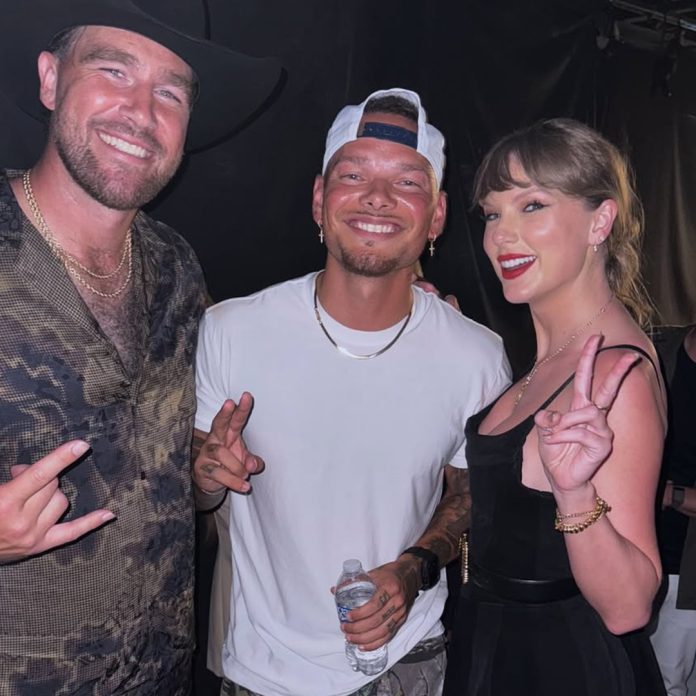
This time, Taylor Swift wasn’t dancing on her own.
In fact, she had a room full of NFL stars and their loved ones shaking it off with her when she made a surprise appearance at her boyfriend Travis Kelce’s Tight End University and its celebratory June 24 concert in Nashville, Tennessee.
Taking to the stage—for the first time since the end of the Eras Tour—alongside Kane Brown, Taylor performed, you guessed it, her hit “Shake It Off.”
“See the one thing tight ends have in common with Nashville musicians,” she said on stage as seen in footage from the event, “is we’re all friends, right? We would like to dedicate this to our favorite players, who are going play, and these are the tight ends.”
And when she launched into the first verse of the song, the whole venue exploded into cheers.
Kane joined her performance of the hit, with the pair sharing a microphone for the last few refrains. Thanking Kane and his band at the close of the song, Taylor shared a hug with Kane before going and thanking his individual band members before she exited the stage.
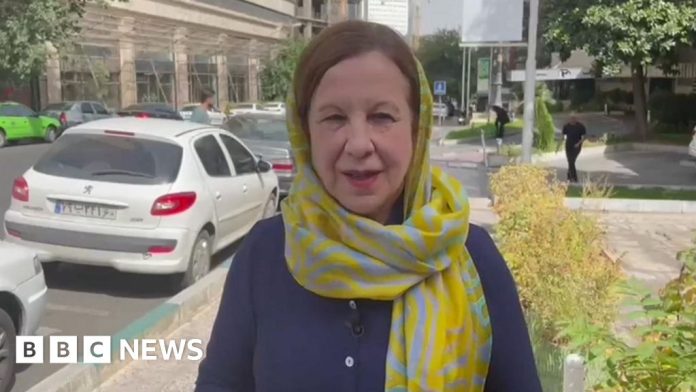
The BBC’s Lyse Doucet reports from Iran’s capital city, Tehran during what appears to be an enduring ceasefire with Israel.
The pause follows a volatile 24 hours in the Middle East, during which the White House mediated between the two countries.
Lyse Doucet is being allowed to report in Iran on condition that none of her reports are used on the BBC’s Persian service. This law from Iranian authorities applies to all international media agencies operating in Iran.
AUSTIN (KXAN) — The Austin Police Department has arrested Brian Johnson, known online as the social media influencer “Liver King,” according to Travis County Jail records.
He faces one charge of Terroristic Threat, a Class B Misdemeanor.
Sources confirmed with KXAN the Brian Johnson listed in the jail log is in fact the social media influencer.
We have reached out to APD for more information and will update this story when we receive a response. Investigators have not yet confirmed who the alleged threat was made to.
In an Instagram video Johnson posted on June 23, he says “Joe Rogan, I’m calling you out, my name’s Liver King. Man to man, I’m picking a fight with you. I have no training in Jiu-jitsu, you’re a black belt, you should dismantle me. But I’m picking a fight with you. Your rules, I’ll come to you, whenever you’re ready.”
An additional Instagram video posted around 7:30 p.m. Tuesday, shows who appears to be Johnson wearing a burgundy hoody and pants handcuffed, getting into a police vehicle.
Attorney information is not currently listed for Johnson.
This is a developing story. Check back for updates.