Death Stranding 2: On the Beach is an expansive, captivating sequel filled with huge environments to explore and a big story from Hideo Kojima to try and wrap your head around. But one of my favorite additions is a small one: an in-game music player that basically functions as your own iPod.
Woodkid, a co-composer on the game (and whose real name is Yoann Lemoine), tells The Verge that the music player was important to Kojima because it’s “the way Hideo is in everyday life… He plays songs all the time.” (And posts about songs on social media, too.) “I think he wanted the players to be able to have the same experience,” Woodkid says.
Music was a big part of the original game. Some of my favorite moments from the first Death Stranding took place when songs from artists like Low Roar, Silent Poets, and Woodkid kicked in while exploring the game’s world. That still happens a lot in Death Stranding 2, and it’s just as effective at setting a mood. But with the personal music player, accessible right from the pause menu, you can create your own vibe as you’re traversing the game’s expansive environments.
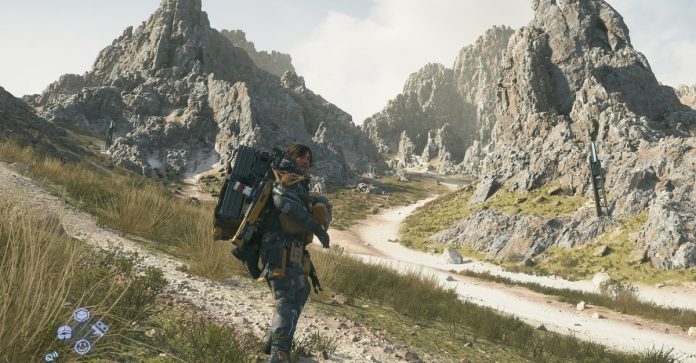
Woodkid worked with Kojima for three years to make music for DS2. In the game, his music can morph and change based on the player’s actions. In the opening moments, for example, Sam has to cross some treacherous mountain terrain to return to his shelter with Lou while Woodkid’s “Minus Sixty One” plays in the background.
As highlighted by Kojima in a recent livestream, when you run, you’ll hear drums in the song, and when you stop, they’ll stop. If you take a certain route, piano will kick in as other elements fade out. The whole sequence has a bunch of elements like that. Woodkid tells me he had to reverse engineer the song as part of what was needed to make everything work behind the scenes, and when he plays the sequence, he still gets surprised by what the engine is doing.
To help write the music for Death Stranding 2, Woodkid digested the big themes of the game, which he says are intimacy, fatherhood, grief, escapism, a “very aggressive sense of political violence” about the eco-anxiety of the world, and the concept of connection and how it’s positive and negative in the time of social networks. He then tried to inject those ideas into the songs.
That all manifests in a wide variety of musical styles in Woodkid’s music for Death Stranding 2. The game’s main theme, “To the Wilder,” is slow, haunting, and beautiful, while “Tmrrw,” which plays at a pivotal cutscene featuring the character named Tomorrow (played by Elle Fanning), has a much harder, industrial edge. Songs from artists like Gen Hoshino and Caroline Polachek show up, too. Ludvig Forssell, who composed music for Death Stranding and Metal Gear Solid V, is a composer for DS2 as well.
I think the breadth of musical styles is good, maybe almost necessary. Death Stranding 2 still has a lot of long journeys from one place to another, so like a great song on a real-life road trip, the right track at the right time can make a dull drive much more memorable.
Ryan Hockensmith is a Penn State graduate who joined ESPN in 2001. He is a survivor of bacterial meningitis, which caused him to have multiple amputation surgeries on his feet. He is a proud advocate for those with disabilities and addiction issues. He covers everything from the NFL and UFC to pizza-chucking and analysis of Tom Cruise’s running ability.
THE RAIN FEELS like needle pricks pelting down on umbrellas and faces on Sunday morning in New York City. And yet, Canelo Alvarez is wearing sunglasses.
He’s on the second leg of a three-leg tour to promote his upcoming Sept. 13 mega-fight against Terence Crawford. Most of the assembled media underneath the Javits Center is either shaking out or saying goodbye to their umbrellas — raindrops over New York City on an 80-plus degree day in June always seem to have a little extra mustard on them.
But Alvarez is dry and gleaming. Earlier that morning, he had purchased a shiny new, special-edition Jacob & Co. watch for a little under $500,000, paid for on his no-max credit card. Maybe that’s why he needs the sunglasses.
“Almost a half million,” he clarifies. But he has a big, wide smile when he says that. He’s proud of his purchase.
He plows through roughly 30 minutes of a steady string of interviewers introducing themselves and then turning on a camera in his face. So, the sunglasses start to feel like preventative eye health care rather than a fashion statement, boredom mask or hangover disguise. The literal glare he is under all day is an optometry nightmare.
Canelo doesn’t smile often or get animated during interviews. The only time he shows some emotion is when he talks about golf (man, Canelo Alvarez loves golf). The rest of the time, he is all business hyping the fight, which, whether you realize it yet or not, is going to be a major moment in any sports fan’s life come Sept. 13 on Netflix. It’s the first Zuffa Boxing event, promoted by Dana White, as part of the TKO brand. And it features probably the two best, most significant fighters of the post-Mayweather era. For die-hard fans who have gray hairs or no hair at all because of how often the best boxers have circled each other and never actually fought over the past 25 years, this is Propecia.
“This is so huge for boxing,” Canelo says. “I’m glad to be involved with these kinds of fights that so many people can see. Everybody has Netflix.”
Half an hour later, in a room 20 feet away, Crawford is even more subdued, doing the same gauntlet of interviews. And they both still have to do the news conference later that afternoon. It’s hard to blame the fighters for not cracking jokes and dancing for the cameras. The whole group was in Saudi Arabia 48 hours earlier, then flew to NYC for this event at Fanatics Fest, then they’re all off to Las Vegas for the final stop on Friday.
This is all business for them, and based on a certain recent photo, that’s how fans want it.
Turki Alalshikh, the man most responsible for making this fight happen, posted a photo on X last Friday that showed him at the head of a dinner table with Crawford and Alvarez sitting across from one another. Alalshikh, chairman of the General Entertainment Authority and president of Saudi Arabia boxing, had summoned them to a dinner of Middle Eastern cuisine to celebrate the kickoff of their hype tour.
When that photo circulated Friday night into Saturday, fight fans did not like it. They complained that Crawford and Canelo looked too chummy eating across a table from one another.
Combat sports fans can be so silly when it comes to how fighters should promote, compete and then move on afterward. In the run-up to a fight, boxers are supposed to despise each other. Stare-downs are mandatory, and the looks should kill. On fight night, the combatants should barely be able to contain themselves before the violence begins. The fight should then be a constant display of fireworks, and blood is always welcome. When the fight is over, the fighters should come together and shake hands, perhaps even hug once or twice. They ought to be sure to show respect to the entire team of the opposing fighter.
Dinner before a big fight? Outrageous.
But that’s a pretty unfair reaction. NFL players try to de-cleat their old college buddies for three hours on Sundays, then exchange jerseys afterward. A bitter NHL playoff series always ends with a handshake line and congratulations. Both of these elite fighters, Canelo and Crawford, probably deserve the benefit of the doubt that they will be able to sit across a dinner table and then try to beat the living daylights out of each other two months later.
However, both fighters also said that having dinner together was a little awkward. They once had dinner many years — and weight classes — ago. Crawford was once the undisputed 135-pound champ, and now he’s moving up two more weight classes from 154 to 168 to take on Alvarez. So at their first dinner, they seemed like two superstar ships that would always pass each other in the night.
Yet, here we are. On Sunday, both fighters say they’ve never had dinner with an opponent before, and they won’t be doing it again anytime soon. Crawford had already eaten before he got to the dinner, so he spent the hour or so nibbling on food just to be polite. Canelo didn’t eat much, either, and admitted he spent the entire time thinking about punching Crawford in the face sometime soon. “I don’t really like this kind of thing,” he tells me. “I don’t like to be involved with my opponents. But let me tell you something: I saw him and I really want to punish him. I was thinking, I am going to f— this guy up.”
Alvarez has his sunglasses on when he says this. But somehow, it still seemed like you could tell that he has bad intentions planned for Sept. 13.
THE NEWS CONFERENCE opens an hour later with Michael Buffer on stage. He’s 80 years old now but still looks quite regal and Buffery. Fans drown him out a few times, but when he launches into the start of his, “Are you ready?” spiel leading up to, “Let’s get ready to rumble,” he still seems to be hitting 93 mph on the radar gun.
The crowd is rowdy for the entire 30-minute news conference. Crawford has a vocal minority within the audience. But this is a Canelo crowd, as most are in boxing. Canelo is 34 now and had his pro boxing debut two years before the iPhone was invented. He has been body-shotting the breath out of main event boxers since about 2010. That’s how he’s earned somewhere north of $500 million as a professional boxer and can afford a Godfather watch. He has earned his money, and his masses, too.
Crawford comes out first. He mostly gets jeers, but some cheers sneak through the noise. He is an equally remarkable athlete, having dispatched all 41 boxers he has ever faced. And he’s one of those fighters whose undefeated record still seems like an underestimation of his brilliance. On the very, very few occasions when he has ever been hit hard, there’s a tendency to immediately think he must have slipped or gotten distracted by something. He rarely seems hurtable.
Canelo comes out a minute later, and the sunglasses are still on as he sits down. Buffer’s introduction gets completely swallowed up by the cheers. The intros are clearly a 10-8 round for Canelo.
Crawford wins the news conference, though. He doesn’t say much, but his words land, a little like how he tends to pick his spots in the ring, too. At one point, Alvarez asks Alalshikh to make the ring smaller for this fight so that Crawford can’t run away. Crawford immediately fires back, “The only running I’m going to do is upside his head. And he has a big head, too.”
White and the fighters take questions for about 15 minutes, then the news conference concludes with an announcement that there will be a faceoff. White stands in the middle of the stage — he’s the preeminent fighter-separator in combat sports history. He looks sturdier than ever in a Canelo vs. Crawford T-shirt. He deserves a black belt for his hard-earned ability to hold up his hands in a “the fish that I caught was this big” position that keeps fighters close enough to be in the same picture but far enough apart to make sure a brawl doesn’t happen for free a month before the actual fight.
The tables are cleared out as fast as possible, and the fighters walk off opposite sides of the stage. These stare-downs will happen several more times over the next six weeks, so there is a pro wrestling feel to the repeated theatrics of them. Canelo and Crawford just sat calmly 20 feet away from each other for 30 minutes. Now, they’re supposed to walk off the stage, then march back across and chest up with rage in their eyes. Perhaps this will appease the people who are very mad about them eating dinner together.
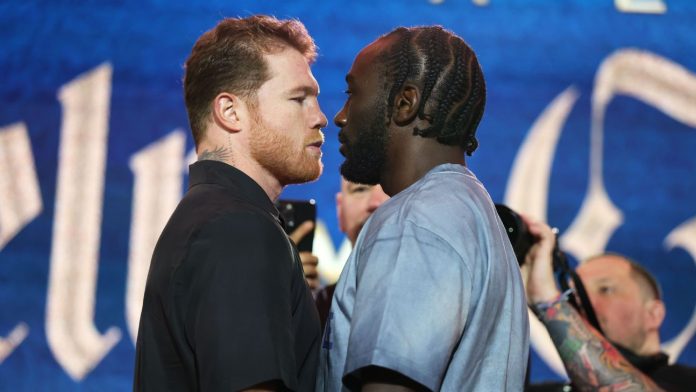
The fighters stride to the middle, and White gets wedged in between. But Crawford blows past White and into Canelo’s space. For the first time all day, Canelo’s shades aren’t on his face. The two fighters jaw for about five seconds, and then Canelo gives Crawford a solid push. Crawford comes flying back toward him, and White tries to keep some distance between the two fighters. White gets a legit “uh-oh” look on his face during the tussle, though most observers thought the whole thing looked like a WWE scuffle designed to sell a fight. Maybe that’s right, but in the room, the heat felt real.
The two fighters separate and then come back together again for a second take. This one lasts a good 20 seconds or so total, and White eventually relaxes his arms a bit in the middle. He holds up the Ring Magazine belt that the company says cost $188,000 to make, but Crawford and Canelo never take their eyes off each other.
Alvarez is still during the photo op. His left hand is at his side, and his right hand is slightly higher and balled up, coiled for a full send if necessary. His sunglasses are off, and so are future dinner plans.
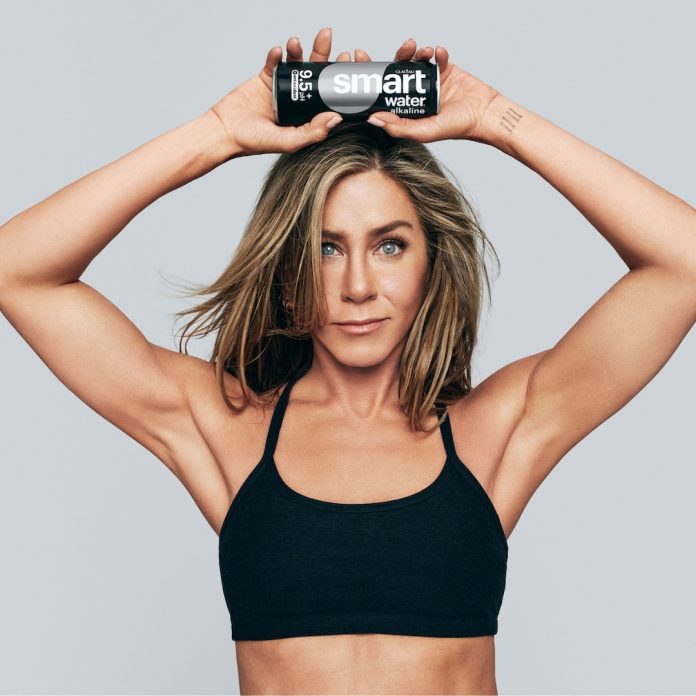
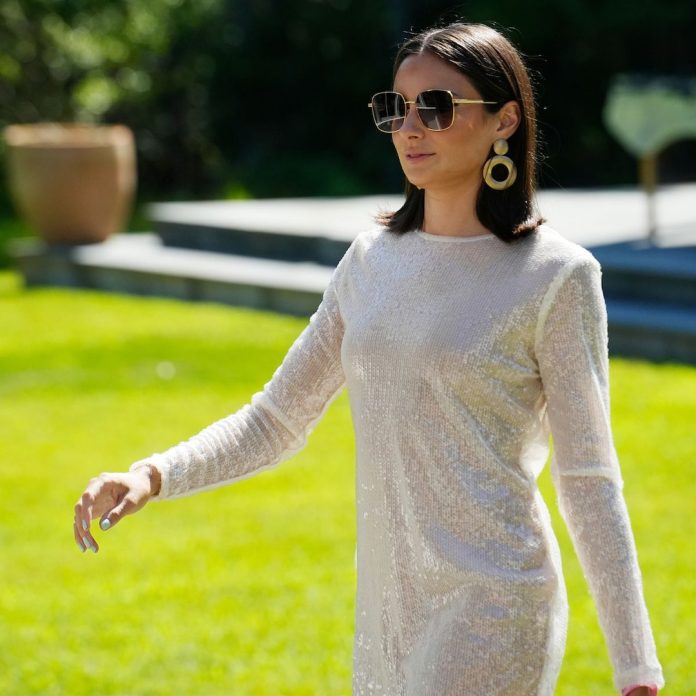
Her skincare philosophy is just as smart. “My facialist told me it’s important to rotate products,” she says. “It’s like muscle confusion for your skin.” She’s currently loving U Beauty and OneSkin, and admits she’s an “Instagram victim” when it comes to trying new things. As for summer beauty? “Less is more. A tinted moisturizer with SPF and a little spot concealer.” Red carpets may not be her thing (“They give me anxiety,” she admits), but she still has a go-to super tint that gives her that signature glow.
Jen’s fitness routine is all about low-impact movement and mindfulness. “I’ve been doing Pvolve for four years—it’s been a game changer,” she says. “My body hasn’t been injured in years.” Add in Yoga, Pilates, media breaks, and sleep (which she’s working on), and you’ve got her full wellness toolkit.
From reminding Courteney Cox to drink more water (“almost to her frustration,” she jokes) to burning her fave Cece candle from Homecourt, Aniston is full of feel-good habits—and she’s not gatekeeping.
Scroll down for the beauty picks, self-care routine, and wellness favorites she swears by (yes, take notes), plus the products she’s convincing us to try ASAP.
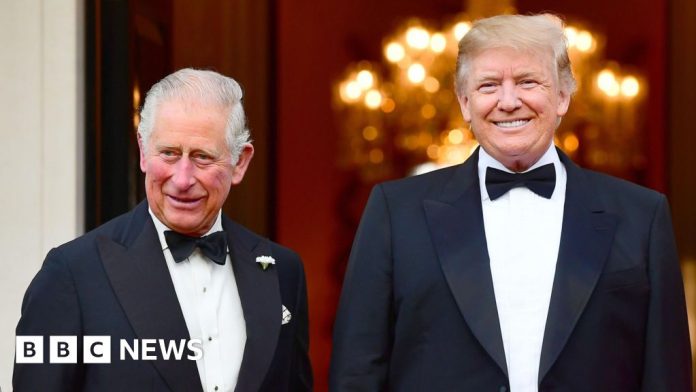
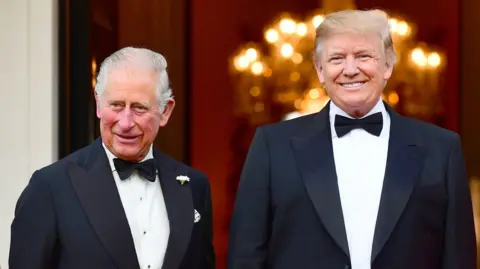
President Trump during his previous state visit in 2019
Donald Trump will make a full state visit to the UK later this year after King Charles and the US president’s schedules meant they would be unable to meet informally over the summer, it is understood.
Buckingham Palace confirmed an invitation signed by the King, called the “Manu Regia”, was taken to the White House by representatives from the British Embassy in Washington last week.
The dates of Trump’s visit are yet to be confirmed but September is said to be the most likely.
It is also understood that there will not be a private meeting between Trump and King Charles this summer ahead of the state visit.
The diary issues come despite the King heading to Scotland for his summer break each year, and Trump being expected to visit his new golf course in Aberdeenshire when it opens this summer.
“His Majesty has known President Trump for many years and looks forward to hosting him and the First Lady later this year,” a Buckingham Palace aide told the BBC.
Deputy Prime Minister Angela Rayner told Parliament on Wednesday: “We are really pleased the US president is coming for a second state visit.”
Formal planning for the second official state visit has now begun.
In February during a visit to the White House, Prime Minister Sir Keir Starmer handed Trump a letter from the King.
Traditionally, second-term US presidents are not offered a state visit and have instead been invited for tea or lunch with the monarch at Windsor Castle.
King Charles’ letter proposed a meeting to discuss details of the state visit at either Dumfries House or Balmoral, both in Scotland, a country to which Trump has connections.
Speaking in April, Trump said: “They’re going to do a second, as you know, a second fest… that’s what it is: a fest, and it’s beautiful, and it’s the first time it’s ever happened to one person.
“And the reason is we have two separate terms, and it’s an honour… I’m a friend of Charles, I have great respect for King Charles and the family, William, we have really just a great respect for the family.
“And I think they’re setting a date for September.”
The Times reported that Buckingham Palace raised concerns about Trump’s “threats to Canada, seeing it as a reason not to rush into a state visit”.
According to the newspaper, a senior source said that a senior Palace aide told government officials that the King did not want to fête Trump with a state visit while the US president was “impugning his sovereignty” over Canada.
It added that senior government sources said the King wished to have a state visit at a later date in Trump’s second term.
A Downing Street spokesman said: “It’s a matter for the Palace.”
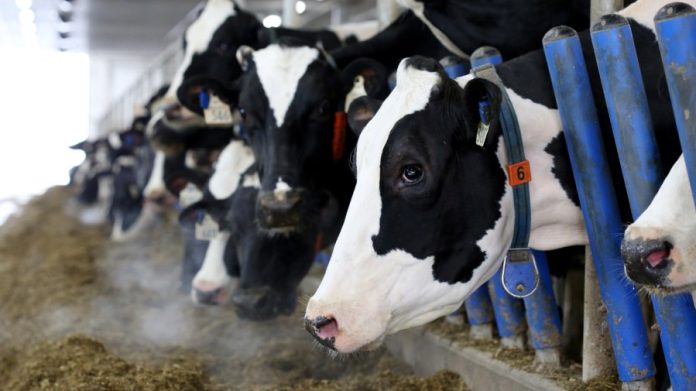
Trump often rails against Canada’s prohibitively high dairy tariffs. He’s about to get angrier.
That’s because last week, the Canadian Senate passed new legislation, years in the making, which bars the government from negotiating away its dairy protectionism in future trade agreements.
The bill’s timing was no accident. Canada wants a carve-out from Trump’s tariffs and hopes to renew the United States-Mexico-Canada Agreement next summer. Trump will demand a lot from Ottawa in exchange. Concessions on Canada’s tariff-rate quotas on dairy will be at or near the top of the list.
Canada’s new bill takes these tariff-rate quotas off the table. This is misguided. Not just because it will frustrate the U.S. and other trade partners, but also because supply management isn’t in Canada’s national interest.
A lot of ink has been spilled trying to make sense of supply management. The system, which dates to the 1970s, sets provincial quotas, establishes minimum prices and imposes steep tariffs.
Proponents argue it stabilizes prices and farm incomes. Critics say it results in higher prices for Canadians, stifles industry innovation in agriculture and has caused serious trade tensions long before Trump.
Both sides agree on something: Supply management is the third rail of Canadian politics.
That’s because the system’s quotas mostly advantage dairy farmers in Quebec and Ontario. Since these provinces are essential to winning federal elections, Canada’s political parties are loath to touch supply management.
But Trump’s tariffs have given Canadian elected officials the political cover needed to shake up supply management. Under the cloud of unprecedented trade policy uncertainty, big questions loom about the country’s economic future. It’s a moment of nation-building. It’s a time of seriousness.
Instead of rising to the occasion, the House of Commons unanimously approved its protectionist dairy bill.
What comes next? The writing is on the wall. Trump has raged against Canada’s dairy tariffs for years. He vowed that the USMCA would fix things, but it gave Canada 14 tariff-rate quotas on products from milk to cheese and butter that have further complicated things.
Canada’s tariff-rate quotas give U.S. dairy farmers tariff-free access on up to, say, 50 million metric tons, for example, but then subject them to punitive tariffs for anything more than this. The rates, ranging from 241 percent on milk to 298 percent on butter, are the ones that Trump likes to talk about.
But U.S. dairy farmers aren’t actually paying these exorbitant rates because they have never exceeded the quotas. Which invites the all-important question: Why?
The Biden administration argued that Canada’s quotas favor domestic “processors” of dairy products, as well as so-called “further processors” that use dairy as inputs used by other products. This keeps high-value-added U.S. exports worth hundreds of millions of dollars out of the Canadian market.
In 2021, the U.S. brought a case against Canada’s tariff-rate quotas under the USMCA and won. In a second case, however, Canada was deemed to be in compliance with its obligations. This rulingfrustrated the Biden administration. Now, Trump wants to use tariffs to make things right.
The U.S. isn’t alone in complaining about Canada’s dairy tariff-rate quotas. Just Last year, New Zealand filed a similar case against Ottawa under the Comprehensive and Progressive Trans-Pacific Partnership. The U.S. and New Zealand have also sued Canada over its tariff-rate quotas at the World Trade Organization.
Given this, it should hardly be surprising that there’s domestic opposition to the bill.
The Canadian Cattle Association called it “bad trade policy.” The Canadian Agri-Food Trade Alliance said it was “a flawed piece of legislation that sets a troubling precedent, undermining Canada’s longstanding commitment to the rules-based international trading system.”
Trump’s tariffs inspired Canada to take bold steps to remove inter-provincial trade barriers, despite age-old political hurdles. Getting out from under the country’s supply management should have been prioritized with the same level of urgency and commitment to creative problem-solving.
Canada’s new dairy protectionism bill isn’t that.
Marc L. Busch is the Karl F. Landegger Professor of International Business Diplomacy at the Walsh School of Foreign Service, Georgetown University.
Allworth Financial, a US-based investment advisory firm, announced the acquisition of Salzinger Sheaff Brock and Sheaff Brock Investment Advisors.
Financial terms of the transaction were not disclosed.
The deal, Allworth’s 42nd since 2018, increases its assets under management and administration to over $30bn, serving more than 28,000 client households across the US.
Indianapolis-based firms Salzinger Sheaff Brock and Sheaff Brock manage over $1.5bn in combined assets catering to high-net-worth individuals.
Allworth said the deal enhances its investment capabilities and strengthens its presence in the Midwest region.
Allworth CEO John Bunch added: “This acquisition represents the next step in our growth as a national destination for clients seeking expert guidance and personalised planning.
“I have known their team for over two decades, and not only are they one of the most impressive firms I’ve had the pleasure to engage with, but they also embody the kind of talent, philosophy, and client-first mindset that aligns with Allworth’s vision and direction.”
Salzinger Sheaff Brock co-founder Mark Salzinger said: “Combining our specialised investment strategies with Allworth’s comprehensive wealth management approach creates a powerful platform that will benefit our clients for years to come.”
Clients of the acquired firms will gain access to Allworth’s services, including investment management, tax strategy, estate planning, insurance, and retirement services.
These are delivered through a team-based approach aimed at simplifying complexities and supporting clients in achieving long-term financial peace of mind.
Sheaff Brock managing director David Gilreath added: “This partnership ensures our clients will continue receiving the investment expertise they’ve come to expect while gaining access to Allworth’s comprehensive wealth planning resources.”
Founded in 1993 and headquartered in Folsom, California, Allworth serves clients across all 50 states through more than 40 offices nationwide.
Allworth is backed by Lightyear Capital and the Ontario Teachers’ Pension Plan Board.
“Allworth Financial acquires Salzinger Sheaff Brock and Sheaff Brock ” was originally created and published by Private Banker International, a GlobalData owned brand.
The information on this site has been included in good faith for general informational purposes only. It is not intended to amount to advice on which you should rely, and we give no representation, warranty or guarantee, whether express or implied as to its accuracy or completeness. You must obtain professional or specialist advice before taking, or refraining from, any action on the basis of the content on our site.
Dutch bicycle brand Veloretti just announced a slimmed-down version of its excellent Electric Two series of electric bikes for European commuters.
The step-over Ace Two Lite is a lighter and less expensive version of the very heavy Ace Two e-bike I reviewed back in 2023, which ditches the sublime Enviolo automatic shifter in favor of a simpler single-speed, belt-driven transmission. It’s being sold alongside the step-through Ivy Two Lite for €2,599. The original Ace Two and Ivy Two e-bikes live on, only now they carry a Pro suffix and a new lower price of €2,990. That gives Veloretti a collection of e-bikes that straddle the €2,681 European average.
I should note that the Lite models aren’t exactly lightweight. They shave 3kg (6.61 pounds) off the Pro frames, putting them at 27kg (59.5 pounds) instead of 30kg (66.1 pounds). That’s still heavy, but Veloretti e-bikes ride super sturdy when carrying around groceries or kids as Europeans are apt to do — with hydraulic brakes that carry over to the Lite models to bring everything to a controlled stop.
The removable 540Wh battery is still there too, which contributes another 3kg (6.61 pounds) to the overall weight. That large battery is capable of providing between 60-120km of range, which varies based upon the rider, chosen power-assist level, weather, and terrain. The Lite models still feature integrated front and rear lighting, but the brake-light feature has been removed. I’d have preferred that Veloretti ditched its overwrought integrated display, but it lives to fight another day.
The Ace Two Lite is available in graphite or matte black, while the Ivy Two Lite is only available in matte black. They’re available to buy now with delivery in 6 to 8 weeks.
Kalyn Kahler is a senior NFL writer at ESPN. Kalyn reports on a range of NFL topics. She reported about the influence of coaching agents on NFL hiring and found out what current and former Cowboys players really think about the tour groups of fans that roam about The Star every day. Before joining ESPN in July of 2024, Kalyn wrote for The Athletic, Defector, Bleacher Report and Sports Illustrated. She began her career at Sports Illustrated as NFL columnist Peter King’s assistant. She is a graduate of Northwestern University, where she was a varsity cheerleader. In her free time, Kalyn takes Spanish classes and teaches Irish dance. You can reach out to Kalyn via email.
An arbiter ruled in January that there was no collusion by NFL clubs in response to a grievance filed by the NFL Players Association in 2022 that alleged the league and its member clubs colluded to restrict or limit fully guaranteed player contracts in the wake of Deshaun Watson‘s record-setting contract.
Though Christopher Droney did not award any damages and dismissed the NFLPA’s demand in its entirety, he found that the NFLPA showed, “by a clear preponderance of the evidence that concerted action was contemplated and invited at the March 2022 owners meeting.”
Droney cited clear evidence including emails from the league’s management council and commissioner Roger Goodell, and presentation slides from a meeting with ownership in attendance, that satisfied one of three elements to determine whether collusion occurred (the other two he did not find sufficient evidence to support): “Was concerted action contemplated and invited?”
“There is little question that the NFL Management Council, with the blessing of the commissioner, encouraged the 32 NFL clubs to reduce guarantees in veterans’ contracts at the March 2022 annual owners meeting,” Droney wrote.
The NFLPA initiated the system arbitration in October 2022, shortly after three quarterbacks — Lamar Jackson, Russell Wilson and Kyler Murray — had all failed to successfully negotiate with their clubs for fully guaranteed contracts after the Cleveland Browns set a new precedent by fully guaranteeing Watson’s $230 million contract that March.
The NFLPA alleged that the clubs and the league violated Article 17 of the CBA, the anti-collusion section, which prohibits clubs and its employees from entering into an agreement “express or implied” with the league or another club and its employees concerning the terms and conditions offered to a player in a player contract.
A week after the Browns announced Watson’s fully guaranteed contract, club owners and their representatives met for the annual league meeting, where according to Droney’s decision, the league office’s management council, an administrative group, presented to owners for 20 minutes about a trend they had recently tracked. Clubs were guaranteeing more money in signing bonuses, and the league’s management council made the owners aware of the potential salary cap consequences in continuing to do so.
On March 20, 2022, a week ahead of the meeting and two days after Watson’s contract was public, NFL executive vice president and general counsel Jeff Pash emailed Goodell to update him on the management council’s preparations for the presentation to ownership.
Pash wrote, per the decision, that in the past two years, “the very top players” received “large guarantees” but the management council wouldn’t have “a better sense of whether the large guarantees are extending further into the free agent pool” until the next tier of players signed. He wrote that it was “something that we will want to discuss at both the football ops sessions and with the owners as well.”
Goodell replied via email: “Agreed but the tip of the market is most of the dollars and if we wait to see how it falls, it will be too late to counter. Agree with raising with a big concern that this will erode a key aspect of our CBA that resisted guaranteed money except as clubs determined on their own.”
Droney’s decision cites the management council’s presentation slides and the corresponding “talk track,” which was used during the meeting to explain the slides.
The slides showed a bar graph that illustrated, “[s]ince the [2022] Super Bowl, “the average club has committed over $86M in signing bonus and salary guarantees [100% increase over 2020].” And a “92% increase over 2020 in the number of players receiving signing bonuses and salary guarantees.”
The notes said: “Both create set salary cap charges that may hamstring clubs’ abilities to construct rosters in the exact way they wish.”
And continued: “Ultimately we think that leads to less flexibility when constructing your rosters. Continued proration and guarantees, which may become proration through conversions will often beget more proration in future years as those salary cap changes stack. lt is a short term solve that, if left unchecked can create long term problems and enter a club into a cycle that is difficult to escape.
“If guarantees continue to grow in both amount and number of players, then there’s a risk that they become the norm in contracts regardless of player quality. [redacted-Privilege] That not only has the potential to hinder roster management but set a market standard that will be difficult to walk back. Of course, all clubs must make their own decisions. But continuing these trends can handcuff a club in the future. “
Goodell, multiple NFL owners and Jackson and Wilson testified in an arbitration hearing held over 10 days in July and August of 2024. Per the decision, some owners remembered parts of the management council presentation and others didn’t remember details.
Arizona Cardinals owner Michael Bidwill, who would soon be entering negotiations with Murray’s agent regarding the quarterback’s extension, said he “didn’t remember the specifics of any of the actual words from the presentation.”
Bidwill said he “guessed” that he talked to then-general manager Steve Keim about it after the meeting, because Keim was not in the owners’ session. “We were in discussions with Kyler [Murray] about extending his contract, you know presumably before that 2022 season and this was going to be something that we really needed to make sure that we focused on.”
New York Giants owner John Mara said: “Just the thought of me calling Jerry Jones or somebody and asking him not to guarantee Dak Prescott‘s contract or somebody else’s contract — I mean, he would laugh at me, among other choice words, I’m sure. Just the whole notion is ridiculous.”
Erik Burkhardt, the agent for Cardinals quarterback Kyler Murray, said that after Watson’s deal, a fully guaranteed contract was “very important” to him and Murray, and he thought Murray was more deserving of one than Watson. Per the decision, Bidwill testified at the hearing that Keim “made sure Burkhardt understood we weren’t doing that.”
In July of 2022, Murray signed a five-year contract that was not fully guaranteed.
Per Droney’s decision on July 22, 2022, Los Angeles Chargers owner Dean Spanos texted Bidwill to congratulate him on signing Murray and let him know that the parameters of the contract (not fully guaranteed) would help Spanos’ upcoming negotiations with Chargers quarterback Justin Herbert.
“I think many teams will be happy with it once they have a chance to review. Cleveland really screwed things up, but I was resolved to keep the guaranteed relatively ‘low,” Bidwill said in the text exchange.
Jackson also was seeking a fully guaranteed contract from the Ravens. Baltimore offered two three-year fully guaranteed offers, but Jackson was seeking a longer deal, per the decision. The Ravens eventually used the franchise tag on Jackson and later signed him to a five-year contract that was not fully guaranteed.
Wilson testified that he asked for a fully guaranteed contract from the Denver Broncos. The five-year extension he received from the team was not fully guaranteed, however, and Droney wrote that it was clear the team had no intention in giving him one because they had leverage in negotiations as Wilson had two years left on his current contract when he reached his extension with the club.
Per the decision, the NFLPA initiated the arbitration in a letter on October 19, 2022. In the letter, the NFLPA alleged that a high-ranking NFL executive asked an owner in August 2022 to “encourage other owners at a meeting that month to not agree to large, fully-guaranteed contracts like Mr. Watson’s.”
Per the decision, DeMaurice Smith, the NFLPA’s executive director at the time the union filed the grievance, was asked about that allegation in his deposition and at the hearing. Smith testified that ahead of the August 2022 owner’s meeting, New England Patriots owner Robert Kraft told him in a phone call that Goodell asked Kraft to talk about guaranteed contracts and say that they were “a problem” at the upcoming meeting.
Goodell testified in the arbitration and denied the allegation that he asked Kraft, or any other owner, to discuss the issue. Kraft also denied in his testimony that Goodell asked him to initiate a conversation with owners, or that he told Smith about it.
Our writers and editors independently determine what we cover and recommend. When you buy through our links, E! may earn a commission. Learn more.
Shopping for swimsuits can be a total struggle….
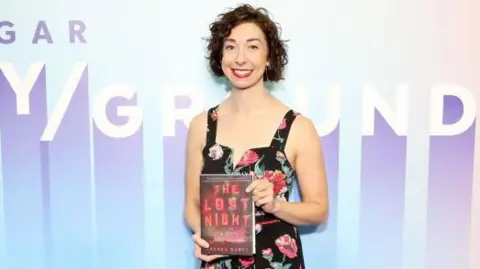
Andrea Bartz is one of a number of writers who have taken legal action over AI
A US judge has ruled that using books to train artificial intelligence (AI) software is not a violation of US copyright law.
The decision came out of a lawsuit brought last year against AI firm Anthropic by three authors, including best-selling mystery thriller writer Andrea Bartz, who accused it of stealing her work to train its Claude AI model and build a multi-billion dollar business.
In his ruling, Judge William Alsup said Anthropic’s use of the authors’ books was “exceedingly transformative” and therefore allowed under US law.
But he rejected Anthropic’s request to dismiss the case, ruling the firm would have to stand trial over its use of pirated copies to build its library of material.
Bringing the lawsuit alongside Ms Bartz, whose novels include We Were Never Here and The Last Ferry Out, were non-fiction writers Charles Graeber, author of The Good Nurse: A True Story of Medicine, Madness and Murder and Kirk Wallace Johnson who wrote The Feather Thief.
Anthropic, a firm backed by Amazon and Google’s parent company, Alphabet, could face up to $150,000 in damages per copyrighted work.
The firm holds more than seven million pirated books in a “central library” according to the judge.
The ruling is among the first to weigh in on a question that is the subject of numerous legal battles across the industry – how Large Language Models (LLMs) can legitimately learn from existing material.
“Like any reader aspiring to be a writer, Anthropic’s LLMs trained upon works, not to race ahead and replicate or supplant them — but to turn a hard corner and create something different,” Judge Alsup wrote.
“If this training process reasonably required making copies within the LLM or otherwise, those copies were engaged in a transformative use,” he said.
He noted that the authors did not claim that the training led to “infringing knockoffs” with replicas of their works being generated for users of the Claude tool.
If they had, he wrote, “this would be a different case”.
Similar legal battles have emerged over the AI industry’s use of other media and content, from journalistic articles to music and video.
This month, Disney and Universal filed a lawsuit against AI image generator Midjourney, accusing it of piracy.
In response to the legal battles, some AI companies have responded by striking deals with creators of the original materials, or their publishers, to license material for use.
Judge Alsup allowed Anthropic’s “fair use” defence, paving the way for future legal judgements.
However, he said Anthropic had violated the authors’ rights by saving pirated copies of their books as part of a “central library of all the books in the world”.
In a statement Anthropic said it was pleased by the judge’s recognition that its use of the works was transformative, but disagreed with the decision to hold a trial about how some of the books were obtained and used.
The company said it remained confident in its case, and was evaluating its options.