The Trump administration wants to open up tens of millions of acres of national forest to development. The US Department of Agriculture (USDA) announced yesterday that it’s rescinding a landmark rule that prevents road construction and timber harvesting in the last unfragmented stretches of national forest.
The USDA says the move will boost timber production, while helping officials manage wildfire-prone lands. Conservation groups say this is simply an industry-led land grab that could level pristine forests and increase the risk of wildfire.
“Make no mistake: this administration will do whatever it takes to sell off the places where we hunt, fish, recreate, and partake in long-standing traditions,” Andy Moderow, senior policy director at Alaska Wilderness League, said in a press statement. “Today’s announcement is a clear attempt to sell off public land for industrial-scale clear-cut logging.”
“A clear attempt to sell off public land for industrial-scale clear-cut logging”
In a move that’s likely to face legal challenges, the USDA is tossing out the “Roadless Rule” that Bill Clinton enacted back in 2001 and that Secretary of Agriculture Brooke Rollins called “overly restrictive” in a press release. It follows an executive order signed by President Trump in March to expand timber production. Getting rid of the roadless rule will remove protections from nearly 59 million acres of forest, or roughly 30 percent of National Forest System lands, according to the USDA.
Some forests will be more affected than others. The rule impacts 92 percent of the Tongass National Forest in Alaska, the largest old growth forest still standing in the US. It’s been one of the most contested areas since Trump first rolled back roadless rule protections there in 2020 before the Biden administration restored them a few years later.
The USDA also claims that 28 million acres of the land previously protected under the roadless rule are “at high or very high risk of wildfire.” But allowing new roads and logging there won’t lessen wildfire risk — it’ll do the opposite by raising the risk of forest mismanagement, environmental groups contend.
“When they say we will open [forests] up for responsible management. I almost laughed out loud when I saw that … It’s the height of irresponsible management to open them up to roads and logging,” says Randi Spivak, public lands policy director at the Center for Biological Diversity. Wildfires are likely to start near roads, she explains — perhaps from a stray cigarette butt or campfire. Loggers also target mature trees that tend to be more resilient to fires rather than smaller saplings that are more likely to burn.
“It’s also a very nuanced topic, and it’s completely being exploited by the timber industry and the current administration,” Spivak tells The Verge.
There’s an old-school mentality to firefighting that the logging industry has advocated for historically to preserve areas where they harvest timber. The old strategy has been to suppress any kind of forest fire, which has inadvertently exacerbated blazes in certain forests by allowing dry vegetation to build up into loads of tinder. In parts of the western US, fires are a natural part of the landscape that clear out debris that might otherwise turn into fuel for larger infernos.
Kiley McDaniel covers MLB prospects, the MLB Draft and more, including trades and free agency.
Has worked for three MLB teams.
Co-author of Author of ‘Future Value’
Jun 24, 2025, 07:00 AM ET
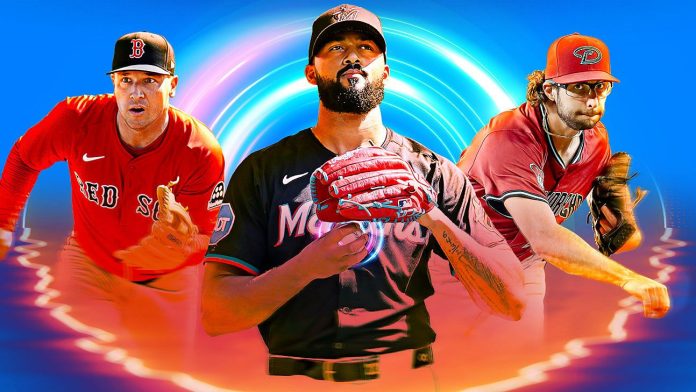
Major League Baseball’s trade market is ever evolving, and to keep you updated, ESPN’s Kiley McDaniel and Jeff Passan have put together a list of potential trade candidates that will be updated regularly depending on their performance — and that of the teams that could be involved in potential deals leading up to the July 31 trade deadline.
Some of the players on the list are unlikely to be dealt but at least are being discussed in potential deals. Others might not be on the list now but will be added in the future should their team’s fortunes change. Either way, this will be the most up-to-date accounting of where MLB’s trade market stands.
Note: Players are ranked by value for their new team if traded, not likelihood of being dealt.
Chance of trade: 10%
Bregman has been an elite big league hitter since he entered the league in 2016 but has leaned more into power this year, with his highest isolated power since 2019. Most of his underlying power indicators (barrel rate, maximum exit velo, average launch angle and hard hit rate) are at career highs. His $40 million salary — and the chance to opt into two more years at $40 million annually — significantly shortens the list of teams that would take on his deal.
Duran had a huge breakout season in 2024, posting the seventh-best WAR in the majors at 6.7. He overperformed his underlying metrics, though — i.e., had some lucky outcomes — and those metrics have regressed a bit this year. Now he’s underperforming them — he has been unlucky — so his true talent is somewhere south of that star-level 6.7 figure but better than the roughly 2 WAR (commensurate with a solid regular) he’s on pace for this season.
Best fits: San Diego, Atlanta, Cleveland, Kansas City, San Francisco, Philadelphia, New York Mets
Chance of trade: 60%
Alcantara was arguably the best pitcher in baseball in 2022, winning the NL Cy Young unanimously. He was more solid than spectacular in 2023 and missed 2024 with Tommy John surgery. He has been tinkering this season to try to get his pitch mix and locations right in hopes of regaining his former glory. It is starting to look as though he is turning the corner to become a midrotation starter (or better?) once again as he has posted a 2.74 ERA in four June outings. The Marlins could hold on to him until the winter, when teams like Baltimore would be more inclined to acquire him and the final two years of his contract.
Best fits: Chicago Cubs, Houston, Boston, Toronto, Arizona, Los Angeles Dodgers, San Diego, Baltimore
Chance of trade: 20%
Peralta has been a steady presence for years, averaging 140 innings pitched with a 3.49 ERA over the past four seasons. He’s on track to do that again, with his heavily used fastball coming in at a career-high average velo of 94.9 mph this season. He has an ultra-cheap $8 million option for 2026.
Best fits: Boston, Houston, Toronto, St. Louis, Arizona, San Diego, Baltimore
Chance of trade: 50%
Suarez is in a contract year and, despite turning 34 years old before the trade deadline, is sitting near career highs in isolated power and wRC+ (which measures overall performance). His fielding metrics have declined in recent years, but he’s still an acceptable defender at third base. Even if the Diamondbacks don’t offload their free agents-to-be, Suarez could move because they have Jordan Lawlar raking in Triple-A and primed to take over at third.
Best fits: Detroit, Milwaukee, Chicago Cubs, New York Yankees, Kansas City, Seattle, San Francisco
Chance of trade: 40%
Lugo has posted mid-3.00s or lower ERAs for five seasons despite having below-average fastball velocity and good-not-great strikeout rates. His ability to strand runners and limit hard contact comes in part due to his nine different pitches. With a Nathan Eovaldi-type contract awaiting Lugo in free agency, Kansas City could opt to move him, especially if Cole Ragans’ injured shoulder doesn’t improve.
Best fits: Chicago Cubs, Houston, Toronto, San Diego, Los Angeles Dodgers
Gallen was excellent for the past three seasons but now, in a contract year, is posting career-worst numbers in almost every category. His stuff looks pretty similar, but he’s allowing much more damage when hitters make contact. Diamondbacks general manager Mike Hazen said the team does not plan to deal away players at the deadline, but if Arizona doesn’t make a run, it could reap a huge return with all of its impending free agents.
Best fits: Toronto, San Diego, Houston, Chicago Cubs
Kelly doesn’t have big raw stuff, posting the second-lowest average fastball velocity among pitchers with 90 innings pitched this season. His changeup is his best pitch by a wide margin, and he gets by with location and off-speed stuff. He was a stalwart in the Diamondbacks’ run to the 2023 World Series, striking out 28 in 24 innings with a 2.25 ERA.
Best fits: Toronto, Boston, St. Louis, Houston, Chicago Cubs
Naylor is batting over .300 this year as a lefty-hitting first baseman in a contract year on pace for about 20 homers. Naylor faces left-handed pitchers more often than the next player on the list but hasn’t been particularly good at it. His on-base skills and lack of strikeouts make him an especially attractive acquisition candidate for postseason contenders.
Best fits: Seattle, Boston, San Francisco, Texas
Chance of trade: 85%
O’Hearn is having an out-of-nowhere career year, hitting over .300 (and with the underlying metrics to support that) along with being on pace for a career high in homers. He doesn’t face lefty pitchers much at all, and his splits suggest that he shouldn’t.
Best fits: Seattle, Boston, San Francisco, Texas
Chance of trade: 25%
Ozuna is a stone-cold DH, playing two games in the field in 2023 as his last regular-season experience defensively. Ozuna is also in a contract year, but his power numbers are down a notch from his standout .302 average and 39-homer performance last season. His on-base percentage remains among the highest of potential trade candidates. If anyone is moving from Atlanta, he’s the likeliest candidate, with free agency beckoning.
Best fits: San Diego, Seattle, Detroit, Kansas City, San Francisco, Cleveland, Boston
Chance of trade: 40%
Duran is one of the best relievers in the sport, thanks to his nasty stuff headlined by a fastball that averages 100.2 mph and a splinker that sits at 97.5 mph. He has two more years of team control after this season, so he’d demand a big trade package.
Best fits: Los Angeles Dodgers, Philadelphia, Atlanta, Arizona, Texas
Chance of trade: 20%
Clase was nearly unhittable last season, but his numbers have regressed this season. He has issued more walks and gotten fewer ground balls while allowing more damage on his cutter that averages 99.0 mph — in part due to more center-cut locations. Under contract for less than $30 million through 2028, he would bring a big return to Cleveland.
Best fits: Los Angeles Dodgers, Philadelphia, Atlanta, Arizona, Texas
Chance of trade: 15%
The Mountain is back from Tommy John surgery and looking like his former self. A dominant June — 8 innings, 1 hit, 3 walks, 12 strikeouts, 0.00 ERA — has seen him induce more popups than line drives allowed. He has another two years before free agency, and with the Orioles planning on contending between now and then, landing him will take more than most teams are willing to give.
Best fits: Los Angeles Dodgers, Philadelphia, Detroit, Atlanta, Arizona, Texas
Chance of trade: 70%
Mullins is a 30-year-old center fielder in a contract year who contributes in a number of ways, but his power numbers are trending up this season and are at their best since 2021.
Best fits: Philadelphia, Cleveland, New York Mets
Chance of trade: 60%
McMahon is on pace to keep his four-year 20-homer streak alive, with above-average power, patience and third-base defense, but a more middling contact rate and baserunning value. He has two years and $32 million remaining on his contract after this season.
Best fits: New York Yankees, Detroit, Milwaukee, Minnesota, Seattle
Chance of trade: 60%
Fairbanks raised his slot a bit this year, and now his 97.1 mph fastball has more cutting action and his slurvy slider has more depth, with both pitches playing a notch better than they did last season. He has a club option for 2026 that, with escalators, should wind up in the $10 million range.
Best fits: Los Angeles Dodgers, Philadelphia, Detroit, Atlanta, Arizona, Texas
Chance of trade: 35%
You have probably heard this story before, but Chapman is left-handed and his superpower is that he throws really hard (averages just under 100 mph) and throws that heater a lot (over 75% of the time). He’s 37 years old, and he’s still dominant.
Best fits: New York Mets, Philadelphia, Detroit
Chance of trade: 90%
Robert has been extremely unlucky with ball-in-play results this season, so that could turn around at any point. He remains a strong defender and baserunner. But the .185/.267/.305 line is unsightly, and his trade value has cratered over the past two seasons. He has a pair of $20 million-a-year club options that the acquiring team will be hesitant to exercise absent a turnaround.
Best fits: San Diego, Philadelphia, Cleveland, New York Mets, San Francisco
Chance of trade: 45%
Ward comes with an additional year of team control after this season, and his underlying numbers suggest he is still largely the same hitter as last year, when he posted a .246 average and 25 homers.
Best fits: San Diego, Philadelphia, Cleveland, Seattle, San Francisco, Kansas City
Chance of trade: 30%
Arenado is around a career best in strikeout rate, and he’s still an above-average defender, but his power and patience are both trending down to around the worst of his career. He’s still a solid starter but no longer a star, and the team taking him on a deal would still have to pay him like one. Potentially complicating any deal: a full no-trade clause.
Best fits: New York Yankees, Detroit, Milwaukee, Seattle
Chance of trade: 40%
Severino tunnels his fastball/sinker/sweeper combo well to limit damage, but because he has a middling strikeout rate, his upside is limited to a No. 3/No. 4 starter. Teams are intrigued by his road numbers, which are exceptional: 0.93 ERA in 38.2 innings over six starts without a home run allowed. They are not so intrigued by his contract, which goes two more years at $47 million.
Best fits: Toronto, Chicago Cubs, Baltimore, New York Mets
Scouting report: Helsley had the fourth-best WAR among relievers last season and is in a contract year now but has been notably worse this season. His stuff and locations are pretty similar, but the main difference is his fastball is getting hit hard — with one byproduct being his spiking home run rate.
Best fits: Los Angeles Dodgers, Philadelphia, Arizona, New York Yankees, Detroit
Chance of trade: 30%
Mahle was thriving after returning from his 2023 Tommy John surgery, looking like a third or fourth starter despite a 2.34 ERA fueled by a very favorable stranded runner rate and BABIP. But he’s currently on the injured list with right shoulder fatigue. Should he return healthy, he’ll jump up this list.
Best fits: Toronto, San Diego, Boston, Chicago Cubs
Eflin is in a contract year, and his ERA has spiked from 3.59 last year to 5.46 this season, though his underlying numbers are still pretty solid. He’s more of an innings-eating No. 4 starter type now than he was during his breakout 2023 season, but there’s still some value to a contender.
Best fits: Houston, San Diego, Chicago Cubs, Atlanta
Chance of trade: 80%
Garcia averaged 30 homers in 2021 through 2024, but he has fallen off since his 2023 career year. It’s worth noting that per xwOBA, he has been the 17th-most unlucky hitter in the big leagues this year, and he has another year of team control, so some teams could see a trade as a good value opportunity.
Best fits: Philadelphia, Seattle, Cleveland, San Diego, San Francisco
The No. 10 pick in 2020 transitioned to relief this season and has found some success, similar to other highly drafted college lefties, including A.J. Puk, Andrew Miller and Drew Pomeranz. He comes with three more years of control after this season and his velo is up 1.5 mph in the new role, so this might be where he fits long term, and trading him away could fetch a hefty return. Some teams still see Detmers as a starter.
Best fits: New York Mets, Arizona, Baltimore, St. Louis, Minnesota, New York Yankees
Chance of trade: 35%
If the Red Sox do punt on this year, Buehler will have plenty of suitors in spite of his mediocre numbers this season. His postseason bona fides are obvious, and his sinker and slider have both played this season despite his fastball and curveball getting tagged. Starter, reliever, whatever: October is Buehler’s time.
Best fits: Los Angeles Dodgers, Chicago Cubs, Houston, Toronto, San Diego
Chance of trade: 65%
Martinez took the qualifying offer of $21.05 million and might have a bigger market this winter after pitching almost exclusively as a starter, though he’ll turn 35 years old later this season and looks like a fourth starter now.
Best fits: Houston, San Diego, Los Angeles Dodgers, Toronto
Fedde’s strikeout and walk numbers have regressed from his breakout 2024 season (after coming back from a stint in the KBO League), but he’s allowing less damage on batted balls to keep himself in the rotation.
“They really stress you out,” she said, remembering that the doctors were “just all around you, looking at you, and you’re like a wounded animal on the table.”
“He is adorable, I’m very proud,” she toldSavannah Guthrieof her son during a January 2023 episode of Today. “I get weird and shy when I talk about it because it’s so new. But I’m obsessed with him. It’s all I think about.”
And upon becoming a mother, every aspect of her life changed.
“I had some friends who were like, ‘Most of the things stayed the same, a couple of things about my routine shifted,'” she recalled. “And as it was happening, I was like, ‘Everything is unrecognizable to me now. It’s all different.'”
She added, “I don’t know how people do it any other way.”
For more stars that have shared insight into their own journeys to parenthood, keep reading.
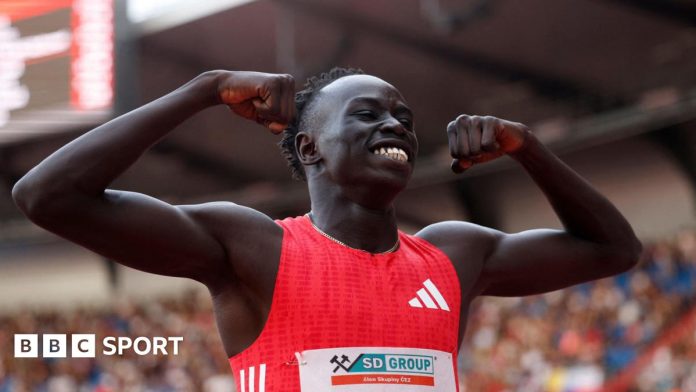
Teenager Gout Gout set a new personal best and an Australian record with victory in the men’s 200m on his senior international debut at the Golden Spike meeting in Ostrava.
The 17-year-old clocked 20.02 seconds in a highly anticipated first European meeting in the Czech Republic.
The sprinter powered past Portuguese-based Cuban Reynier Mena, who had to settle for second after winning the last two Diamond League 200m races.
Britain’s Nethaneel Mitchell-Blake finished third with a season’s best 20.60.
Gout’s time was better than Jamaica’s world record holder and eight-time Olympic champion Usain Bolt, who finished in 20.28 on his first Golden Spike meet in 2006.
However, Gout is yet to run a legal time under 20 seconds, which Bolt achieved four months before his 18th birthday with a 19.93 in Bermuda.
Gout’s previous personal best was 20.04, which he ran last December to break Olympic silver medallist Peter Norman’s long-standing Australian record.
Gout has stepped up to senior level after dominating youth meetings.
He holds the Australian under-16 records in both the 100m and 200m, and last year won the national under-20 100m title before securing a 200m silver medal in the World Under-20 Championships in Lima.
Following last year’s victory in the 200m and 400m at the 2024 GPS Track & Field Championships in his native Queensland, Gout turned professional and signed a sponsorship deal with Adidas.
He will continue his preparation for September’s World Championships by competing at the Monaco Diamond League meet at Stade Louis II on 11 July.
This year’s World Championships will be held from 13-21 September in Tokyo, Japan.
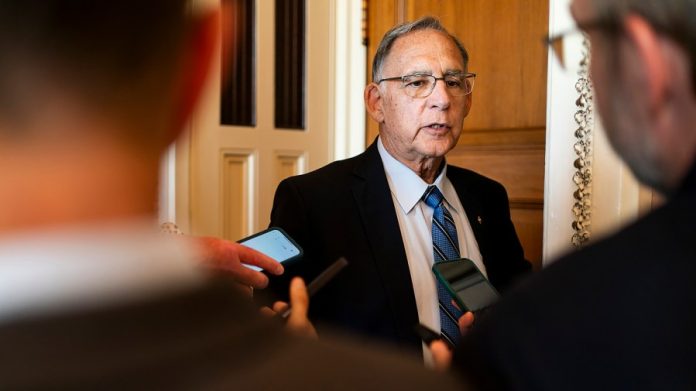
Senate Parliamentarian Elizabeth MacDonough has accepted a revised Republican proposal to shift some costs for food assistance to states after rejecting the initial draft of it over the weekend, Senate Agriculture Committee Chair John Boozman (R-Ark.) said.
The Senate Republican plan would require states for the first time to pay a sizeable share of food benefits under Supplemental Nutrition Assistance Program (SNAP) unless they reduce the error rate for delivering benefits to below six percent.
Boozman told reporters Tuesday that Republican staff reworked the proposal to give states more “flexibility” and “information” about implementing the program.
He said the revised language would achieve roughly the same level of savings as the proposal the parliamentarian ruled against over the weekend.
“It’s intact. It’s very little change. Just gives the states more information to work with but as far as affecting the program or how the program works, it’s the same. Again, it just gives [states] a little bit more flexibility and a little bit more information,” Boozman told The Hill.
“It’s all done and it’s intact. The savings are almost identical. So we’re pleased by the outcome,” he added.
It’s a welcome piece of news for Republicans who have watched the parliamentarian reject a variety of proposals in the bill for violating the Senate’s Byrd Rule, which governs what legislation is eligible to pass the Senate with a simple-majority vote on the budget reconciliation fast track.
MacDonough had dealt Republicans a setback by ruling that the section of the GOP megabill mandating that states cover a portion of SNAP benefits depending on their error rates in delivering assistance would violate the Byrd Rule.
Boozman told The Hill Monday that the parliamentarian was primarily concerned that the legislation did not provide enough time and flexibility for states to adapt to the proposed changes.
“They were concerned that [states] wouldn’t have enough time with the data that they received in order to adjust for the payment errors. Our answer to that is to come up with a fix to provides them the data sooner,” he said. “That was the parliamentarian’s concern.”
The company is making the Titan 2 available through a Kickstarter crowdfunding campaign that has already surpassed its $100,000 funding goal. Full retail pricing for the phone is expected to be around $399, with shipping starting as early as October 2025, but the early backers can preorder one for $269.
The Titan 2 is powered by a Dimensity 7300 8-core 2.0-2.6GHz processor paired with 12GB of RAM and 512GB of storage. Not only is it more powerful than Unihertz’s original Titan, which launched in 2019, but the Titan 2 is also sleeker. It’s slimmed down from the previous 16.65mm to 10.85mm, and it’s 235 grams, which is about 68 grams lighter than its predecessor. Its slightly smaller 5,050mAh battery supports 33W fast charging but not wireless charging.
The 4.5-inch screen on the Titan 2 is slightly smaller than the original’s, but the resolution has been increased from 1,430 x 1,438 pixels to 1,440 x 1,440 pixels. That’s relatively low by today’s screen standards, but the Titan 2 is designed to be a productivity tool first and foremost.
Unihertz has also included a second 2-inch screen on the device’s back, with a resolution of 410 x 502 pixels, making it useful for monitoring notifications, using widgets, or framing selfies. The screen is integrated into the Titan 2’s rear camera bump, which includes an 8MP telephoto camera and a 50MP main camera; up front, you’ll find a 32MP selfie camera.
The company says the Titan 2’s QWERTY keyboard has been redesigned so that it delivers a “more comfortable, reliable, and versatile tactile typing experience.” Custom long-press and short-press shortcuts can be configured for all of the keyboard’s letter keys, and you can slide your finger across the keys’ surface to scroll.
Other upgrades include Bluetooth 5.4, NFC, an infrared port, dual-band GPS, and an FM radio, while features like a fingerprint sensor and a pair of programmable shortcut buttons on the side have been carried forward from the original Titan.
Brooke Pryor is a reporter for NFL Nation at ESPN who has covered the Pittsburgh Steelers since 2019. She previously covered the Kansas City Chiefs for the Kansas City Star and the University of Oklahoma for The Oklahoman.
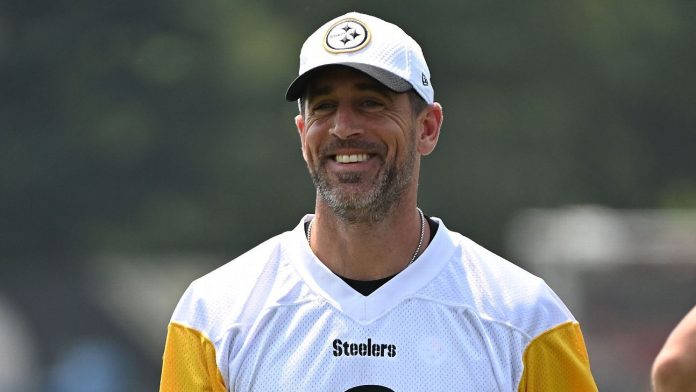
By disclosing that he would likely retire following the 2025 season during a Tuesday appearance on “The Pat McAfee Show,” Aaron Rodgers gave the Pittsburgh Steelers two gifts: clarity and time.
Each are luxuries the Steelers lacked the last two times they were led by an aging, Super Bowl-winning quarterback.
“I played 20 fricking years. It’s been a long run. I’ve enjoyed it, and no better place to finish than in one of the cornerstone franchises of the NFL with Mike Tomlin and a great group of leadership and great guys in the city that expects you to win,” Rodgers said.
With Rodgers’ intentions stated before the season even starts, the Steelers have every opportunity to make a strategic plan to secure the next franchise quarterback, one that’s eluded them since Ben Roethlisberger retired in 2021.
Not only do the Steelers have more than a year to continue their homework on a 2026 quarterback class that could include Clemson’s Cade Klubnik, LSU’s Garrett Nussmeier, Penn State’s Drew Allar and South Carolina’s LaNorris Sellers, but they’re also well-positioned to move up the draft board with a handful of compensatory picks from free agent departures. Those factors could lead to the Steelers selecting their next franchise quarterback in front of a hometown crowd when Pittsburgh hosts the 2026 NFL draft in April.
They could also go another route. Top-tier quarterbacks don’t often hit free agency, and 2026 isn’t an exception. Former first-round pick Daniel Jones, who signed a one-year deal in Indianapolis, is the best available free agent of the 2026 class so far. Other quarterbacks, though, could come available in releases or trades. Anthony Richardson Sr., Indianapolis’ other quarterback and their former first-round pick, is competing with Jones for the starting job. Whoever comes in second could be available.
Trading for a starting quarterback is rarer these days and expensive, but not impossible. Earlier this offseason, Seattle pulled off a surprise trade that sent starter Geno Smith to Las Vegas. The Steelers could first look at former first-round picks who haven’t played up to their expected potential. Arizona’s Kyler Murray will have two years and a club option on his current contract after the 2025 season. His cap hits are significant — $53.2 million and $43.5 million — but they could be massaged and restructured. Jacksonville’s Trevor Lawrence, who has one Pro Bowl berth since being drafted first overall in 2021, signed a five-year, $275 million contract prior to the 2024 season, but he could be worth an inquiry.
That’s the perk of signing Rodgers — and of him announcing his intentions prior to the season — the Steelers don’t have to scramble and can take the time to think strategically.
Pittsburgh didn’t have the same kind of luxury in their transition from Roethlisberger.
Two years removed from his season-ending elbow injury and resulting surgery, Roethlisberger agreed to a new, one-year contract prior to the 2021 season that reduced his salary and lowered his cap hit by more than $15 million. In opting to restructure the final year of his deal rather than extend him beyond 2021, the Steelers seemingly signaled that the 2021 season would be Roethlisberger’s last. But the quarterback didn’t state that clearly until January 2022.
Before that, though, he flirted with retirement a handful of times, including after a 2016 AFC Championship loss to the New England Patriots.
“I’m going to take this offseason to evaluate, to consider all options,” Roethlisberger, then 34, said in January 2017.
Coach Mike Tomlin said he took the retirement consideration “seriously” at the time and that the team would “plan accordingly.”
Roethlisberger, instead, continued to play and signed an extension in 2019. In the two years after first contemplating retirement, he threw for 4,251 yards with 28 touchdowns to 14 interceptions with a 12-3 record in 2017 and led the league in passing (5,129 yards), pass attempts (452) and completions (675) and yards per game (320.6).
He never won another playoff game after the 2016 divisional win against Kansas City, and the Steelers haven’t won a playoff game since his retirement.
As an aging Roethlisberger waffled and then resolved to return, the Steelers drafted two quarterbacks in his final five seasons: Josh Dobbs with a 2017 fourth-round pick and Mason Rudolph in the third round a year later. Roethlisberger, who told the team he intended to return for the 2018 season prior to the draft, was quick to voice his frustration over the Rudolph selection.
“I was surprised when they took a quarterback because I thought that maybe in the third round, you know you can get some really good football players that can help this team now,” Roethlisberger said in a radio interview in 2018. “Nothing against Mason. … I just don’t know how backing up or being a third [string] — well, who knows where he’s going to fall on the depth chart — helps us win now.”
The Steelers didn’t draft a quarterback with any of their 24 picks over the next three drafts until selecting Kenny Pickett with the No. 21 overall pick in 2022, months after Roethlisberger officially retired. Pickett, the first quarterback taken off the board in a weak class, struggled in two seasons and was eventually traded to the Philadelphia Eagles prior to the 2024 season.
More recently, their 2024 experiment with Russell Wilson and Justin Fields created uncertainty at the position and made charting a long-term plan difficult. Wilson’s two-year tenure in Denver ended with a release, and he signed a one-year, vet-minimum deal in Pittsburgh in an effort to jumpstart his career. Shortly after that, the Steelers acquired Fields in a trade with Chicago on an expiring rookie deal. The Steelers thought they had their quarterback of the future in the building. Either Wilson, who said he felt like he found the fountain of youth upon signing in Pittsburgh, would play closer to his Super Bowl-winning form, or Fields would emerge as the future.
Neither happened.
Wilson, sidelined early on by a calf injury, started off hot, but he and the team fell apart with an 0-5 losing streak to end the season. Fields went 4-2 in six starts but was replaced once Wilson was healthy. The team’s top priority, general manager Omar Khan said prior to free agency, was signing either Wilson or Fields. But according to league sources, the team didn’t actively pursue signing Wilson, making their top priority Fields.
Fields, though, opted to sign a two-year, $40 million deal with the Jets. Beyond top overall pick Cam Ward, the 2025 quarterback draft class was unheralded, and the market of free agent and tradeable quarterbacks was relatively desolate.
Once again, the Steelers were in the lurch as a byproduct of a situation they created. Rodgers, willing to play at a bargain price and available without spending critical draft capital, was the team’s best option. And by expressing his intent to retire before he even steps on the field for training camp, he became even more valuable — even if the season ends without a playoff win or snaps Tomlin’s streak of non-losing seasons — because he allows them to thoughtfully prepare for the future.
Eve Jobs is riding into marriage with her girls by her side.
The daughter of the late Apple CEO Steve Jobs and Laurene Powell Jobs, recently shared a glimpse into how she’s preparing for her upcoming nuptials to Harry Charles. And that included a sweet Bachelorette party by the sea on the coast of Italy, where she celebrated alongside several friends by enjoying the water, restaurants, nightlife and scenic views.
Proving the weekend was a success, Eve shared highlights from the festivities to Instagram June 23, where she gushed, “what a weekend with my favorite girls.”
Indeed, Eve is set to marry the fellow equestrian and British Olympian, one year after they hard launched their romance at the 2024 Summer Olympics.
At the time, Eve, 26, gushed about Harry as his team won gold in Paris, following in the footsteps of his father PeterCharles, who won gold at the 2012 London Olympics.
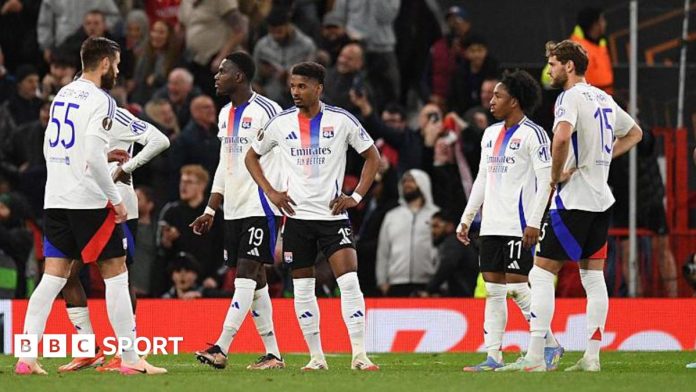
French club Lyon have been demoted to Ligue 2 because of the poor state of their finances.
The club were provisionally demoted by the DNGC, the body which oversees the accounts of French professional football clubs, in November.
Lyon officials including owner John Textor, met with the DNGC on Tuesday but failed to convince the body that the club had sufficiently improved their financial situation to lift the punishment.
Last October, his Eagle Football Group announced debts of £422m.
Seven-time French champions Lyon raised around £45m with the sales of Maxence Caqueret to Como in January and Rayan Cherki to Manchester City in June in an attempt to improve their finances.
High earners such as Alexandre Lacazette and Anthony Lopes have also been released.
Lyon have the right to appeal against the decision. Should it stand, Lyon will be replaced in the top flight by Reims, who were beaten in the relegation play-off by Metz.
Textor is also the largest shareholder of Brazilian club Botafogo and co-owner of Premier League club Crystal Palace, though he agreed a deal to sell his 46% stake in the Eagles on Monday.
Palace qualified for the Europa League by winning the FA Cup but their place is in doubt because Lyon also qualified by finishing sixth in Ligue 1.
Textor’s perceived involvement with both clubs could be in breach Uefa rules, which prevent multiple teams under one multi-club ownership structure competing in the same European competition.
The Eagles hope Textor’s decision to sell his stake to New York Jets owner Woody Johnson will avoid that scenario.