At launch, Waymo’s vehicles will be available exclusively on the Uber app in Atlanta. The two companies first announced a deal to put Waymo’s robotaxis on the Uber app back in 2023, indicating that Austin would be first, followed by Atlanta. Waymo’s own ridehail app, Waymo One, will not be operational in Atlanta; customers who open Waymo One will be redirected to Uber’s app.
Waymo’s vehicles will only operate within a 65-square-mile service area that includes Atlanta’s Downtown, Buckhead, and Capitol View neighborhoods. The vehicles don’t drive on highways yet, nor will they make trips to the airport. Another thing to consider: simply calling an Uber in Waymo’s service area doesn’t guarantee a robotaxi will show up. Like in Austin, the companies will start with a small fleet of vehicles and grow from there.
Customers can increase their chances of being matched with a Waymo vehicle by opting into autonomous rides in the Ride Preferences section of their Uber app. The rides will cost the same as a typical UberX, Uber Comfort, or Uber Comfort Electric ride. Once the Waymo vehicle arrives, customers can unlock the door, open the trunk, and start the ride from the Uber app. Rides can also be started by pressing the button on the rear touchscreen in the vehicle.
Uber will manage fleet services, including vehicle cleaning, maintenance, inspections, EV charging, and depot operations. The company is contracting with Avmo (formerly Moove Cars) to handle these tasks. Waymo is still responsible for vehicle testing, roadside assistance, and certain elements of rider support. The companies will obviously share in the costs and the revenue produced by the robotaxi service, though both companies have declined to share the split.
Uber and Waymo, former rivals turned unlikely partners, have said they will work together to get more people to use driverless vehicles. But the partnership isn’t exclusive; Uber also is working with overadozenotherautonomousmobilitycompanies, including sidewalk robot operators for its Uber Eats business. The company says it has quickly grown to an annual run rate of 1.5 million robotaxi and delivery robot trips on its network.
While many Atlanta residents will be experiencing a driverless car for the first time, Waymo isn’t new to the city. The company first started gathering mapping data and manually testing its vehicles in Atlanta back in 2018. Fully driverless testing started in January 2025, followed by early passenger trips in May 2025.
For those keeping score, there were approximately 283 days between identifying Atlanta as a future robotaxi city and launching the service on the Uber app.
Waymo’s success depends partly on narrowing that window for future cities in order to prove its scalability, while keeping an eye on safety. Waymo currently conducts approximately 250,000 rides each week in its four main markets. The company has also said it will launch in Miami and Washington, DC with its own Waymo One app.
Rachel Doerrie is a professional data consultant specializing in data communication and modelling. She’s worked in the NHL and consulted for professional teams across North American and Europe. She hosts the Staff & Graph Podcast and discusses sports from a data-driven perspective.
NHL draft week is officially here, and with that come the final draft rankings.
The top 64 are ranked here, along with details of their game, areas for development, their perception among NHL scouts and an NHL projection. The final set of rankings includes combine scores and a heavier weight of scouting opinions and intel against my projection model. While some players grade at higher or lower value than in previous rankings, their position considers how likely they are to become NHL players based on their developmental needs and perception in the industry.
After Matthew Schaefer and Michael Misa, there is almost no consensus in this draft. For example, some teams have players ranked in the 20s that others do not have on their draft list at all. Part of this is related to the fact that teams are valuing different attributes — be it skill, grit, size, playoff performance, etc. — and place higher value on players who fit their organizational mantra. More than in previous years, some players might fall in the draft because another player is higher on a specific team’s list. This could lead to teams trading up to grab players they believe have fallen too far to ignore.
The most important thing to remember is that a player’s success or failure is not dictated by his draft slot, but who he becomes in the years that follow. It is true that earlier draft picks get many more chances than late ones regardless of talent, but that doesn’t mean some gems won’t be found later in the draft. In fact, given the desire for size, truculence and hard skill over high-end talent, it is fair to suggest we might see more success from draft selections outside the first round than in previous years.
Here are the top 64 prospects, along with some players who deserve honorable mention:
1. Matthew Schaefer, D, Erie (OHL)
The Erie Otters defender is projected to become a true No. 1 cornerstone for years to come. A dynamic presence at both ends of the ice, the 6-foot-2 blueliner skates with ease and elite mobility to shut down opponents in all situations, while creating offense with quality transition play.
Though an injury at the IIHF World Junior Championships — where he was set to play a key role as a 17-year-old — cut his season to just 26 games, Schaefer still logged over 25 minutes per contest, and consistently drove play in his team’s favor.
Executives and scouts view him as a future elite NHL defenseman and a foundational piece for a championship-caliber roster. Schaefer’s ability to control play from the blue line, play tough matchups, and run a power play — combined with the belief in his character and leadership — result in many believing that Schaefer has the tools to become a top-10 defender in the league, while wearing a letter as part of a team’s leadership group.
2. Michael Misa, F, Saginaw (OHL)
Granted exceptional status in the OHL in 2022, Misa delivered one of the most remarkable goal-scoring seasons in recent memory in 2024-25, netting 62 goals in just 65 games. He projects to be a top-line forward capable of consistently exceeding 90 points per season in the NHL.
Misa’s offensive instincts are elite. He processes the game at a high level and executes at top speed. Scouts believe he is NHL-ready and has the potential to become an elite top-line center. Away from the puck, Misa excels at finding soft areas in coverage and has a flair for delivering in clutch moments. His combination of high-end playmaking and goal-scoring ability makes him a constant dual threat in the offensive zone.
His two-way game has taken a noticeable step forward with improved backchecking, defensive awareness and commitment to a 200-foot game. Paired with his explosive speed and offensive firepower, Misa profiles as a foundational player.
3. James Hagens, F, Boston College (NCAA)
Hagens is projected to be a top-line center, or one of the NHL’s best second-line centers. He lacks the dynamism of Misa, opting for a highly cerebral and efficient play style. He brings a good work rate with excellent speed and passing ability that should see him effectively drive play at the NHL level. Scouts and executives are impressed with the professional details of his game (puck support, winning battles, defensive puck play), and they believe it will ease the transition to the NHL while he finds his offensive gear.
Another season at Boston College to further develop a more a dynamic offensive gear to become a top-line NHL center — the one that had scouts impressed during his NTDP season (with 102 points) — could be the remedy. After playing on one of college hockey’s top lines with Gabe Perreault (New York Rangers) and Ryan Leonard (Washington Capitals), Hagens would now be relied upon to drive his own line, create offense through his own playmaking and play a significant matchup role.
Hagens has the potential to be the complete package in the NHL. His understanding of spacing and ability to anticipate stands out among his peers. He’s smaller and slighter than other prospects, which worries some teams, but there’s a mix of Clayton Keller and Jack Hughes in him in terms of transition play and creativity.
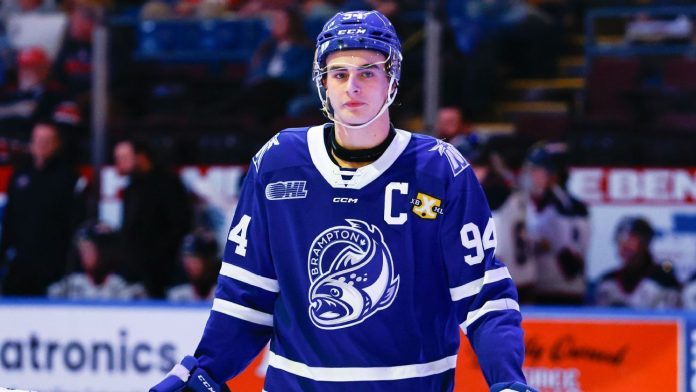
4. Porter Martone, F, Brampton (OHL)
A big, cerebral forward, Martone is a dual-threat offensive player with ability to score on his own and facilitate. He projects to be a second-line scoring winger who should see top power-play minutes.
His competitive nature will make him an effective agitator as he learns to physically impose himself on opponents. He needs to hone the competitiveness and physicality to increase its effectiveness, but he is exactly the type of player teams covet because of the unique combination of offensive talent and competitive fire.
Martone’s ability to score and make plays will make him a difficult player to defend in the NHL. There are concerns about Martone’s speed and skating posture. His speed has improved this season, but Martone needs to add explosiveness to his skating to hit his ceiling.
His unique combination of scoring ability, size and hard skill make him a very attractive prospect. While his most confident projection is as a top-six forward, Martone has a legitimate chance to become a top-line winger if his skating improves.
5. Anton Frondell, F, Djurgardens (Allsvenskan)
Frondell is a versatile two-way forward that plays both center and right wing. His flexibility is attractive to teams, although many believe he is most likely to reach his potential as a winger in the NHL.
Frondell is coming off one of the most productive seasons by an under-18 player in Allsvenskan history, giving him a confident projection as a first-line NHL forward. He’s a cerebral player, who picks apart defenders in one-on-one situations and defensive coverage in offensive zone play. The details of Frondell’s game are translatable, including excellent forechecking ability, willingness to attack the middle of the ice and high-end anticipation on both sides of the puck.
He has shown play-driving capabilities against men in the Allsvenskan, which has translated to the NHL for other prospects in the past. He’s projected to produce between 75-85 points per season. His style of play translates well and has executives excited about his ability to step in the league in the next 18 months.
He impressed during the physical testing and interview portions of the scouting combine, leaving many teams impressed. His two-way ability combined with great anticipation and a high-end shot make him one of the more exciting prospects in the class.
6. Roger McQueen, F, Brandon (WHL)
Described as “a unicorn” because he’s a 6-5 center who skates with the speed and mobility that you would expect from a smaller player, McQueen has been a hot topic all season.
He profiles as a prototypical modern-day power forward who blends soft skill with physicality. Elite right-handed centers are rare in the NHL, and McQueen’s size and willingness to physically dictate play adds undeniable value. He has professional defensive habits that are translatable to the NHL, and unique offensive upside that is still developing given the loss of playing time due to injury during his draft season.
McQueen dominates the cycle game, creates offense on the rush and uses his physical gifts to dominate the cycle and protect pucks. His projection as an elite top-line center lacks confidence, due to lack of playing time from his back injury. Without the injury, we might be discussing McQueen near the top of this draft class because his package of skating, skill and physical gifts are rare, and the type of toolbox of which executives dream.
He is a textbook case of high-risk, high-reward player; however, his performance at the scouting combine went along to proving his back injury had healed completely. Playing against tougher competition, where McQueen will be forced to develop his ability to protect himself, the puck control and ability to create offense against bigger bodies will be important. If developed without setback, he could become a two-way force in the NHL for years to come.
7. Caleb Desnoyers, F, Moncton (QMJHL)
Desnoyers might go a lot higher than where I have him, because he could be one of the best two-way players in the draft. Described as a “coach’s dream” because of his ability to take an offensive or checking assignment and execute consistently. He makes smart, simple plays, provides a physical presence on the forecheck and generally agitates and makes life difficult on defenders.
He projects to be a quality second-line center with a decent chance of becoming a first-line player. He’s cerebral, with quick hands and playmaking ability. He’s not flashy, but he’s consistently effective and makes intelligent plays with the puck.
Executives love hearing the word “reliable” from scouts, and that word is perfect to describe Desnoyers. He’s at his best when he’s in pressure-packed games because he finds a way to make the necessary plays to win. Many scouts believe he will be a leader in the NHL, with solid play on both sides of the puck, in all situations.
As one scouting director described “he’s the type of player you win with.” Some have quietly compared him to Patrice Bergeron and Jonathan Toews, who are lofty comparisons, to say the very least.
8. Jackson Smith, D, Tri-City (WHL)
Smith is a big, physical defenseman with untapped offensive ability and is the consensus second-best defender in the draft class behind Schaefer.
He possesses all the qualities of a top-four matchup guy. He defends the rush well, closes gaps and steers the play in transition, making him one of the best neutral-zone, transition defenders in the class. Given the importance of transition defense in a matchup role, Smith has a real chance to the guy coaches rely upon to play heavy minutes against the best players.
His blend of skating, size and poise with an offensive game that progressed positively as the season wore on makes me a believer that there is more to give, and playing at Penn State next season should help it along.
Smith stands 6-3, and executives love the simplicity of his game, reading pressure, disrupting plays and making effective passes to exit the zone. He lacks explosive skating, and the consistent creativity required to be a quality offensive contributor at the NHL level, but his reads are there to be a plus transition player and join the rush as a support player.
Smith’s development from here will be about using his excellent mobility to prevent rush offense and becoming a more consistent offensive threat with better puck management. If Smith can drive play on both sides of the puck in transition and become a power-play threat, there’s a real chance he becomes a No. 2 defender at the NHL level.
9. Jake O’Brien, F, Brantford (OHL)
Deceptive and incredibly smooth, O’Brien projects to be a point-producing, top-six center with a chance to become a top-line center. The right-handed pivot is one of the best playmakers in the draft, creating high-danger chances with regularity; for my money, he is the best pure creator in the draft.
He consistently manipulates defenders, distributes the puck on the forehand and backhand and uses fakes that send turn defenders and goalies into pretzels. The development will come from simplifying offensive plays to eliminate turnovers caused by holding the puck for too long.
O’Brien’s shot is going to be a necessary development area if his passing is to be an elite threat in the NHL. There is risk here, because he’s slighter than other players available at the center position, but he has room to fill out over the next few years. O’Brien’s elite playmaking skills will be that much more valuable if he can add a speed gear and increase his shooting threat.
He’s two or three years away from playing an impactful role in the NHL, and patience could be the key to O’Brien reaching his top-line ceiling. If he does, he’s going to be an elite power-play quarterback and offensive driver.
10. Victor Eklund, F, Djurgardens (Allsvenskan)
Eklund projects as a top-six forward with a good chance of becoming a top-line contributor. There’s a distinct possibility he falls out of the top 10 this week, which would mean extreme value for anyone who selects him. Despite concerns about his size — he’s 5-11, 161 pounds — Eklund’s style of play is very translatable to the NHL. He plays a lot bigger than his measurements suggest, and there is room to add strength. Should he grow, which has happened to other prospects in the past, Eklund’s projection becomes more confident as a 70-point producer with a high-end motor and excellent forechecking capability.
Eklund is excellent in transition and attacks defenders with speed and fearlessness, darting to the inside, and positioning his body to win or protect pucks. His smaller size has forced him to learn how to protect the puck with excellent body positioning. If he develops a bigger, stronger frame, those skills will make him even more difficult to defend in the offensive zone.
His off-puck play is mature, and will quickly earn the trust of NHL coaches. Eklund has the potential to be a difference-maker in a second-line role, and his blend of hard-nosed play with soft skill should translate more seamlessly than other players.
11. Carter Bear, F, Everett (WHL)
Bear is the type of player that a team looking for high-end instincts and playmaking covet. Before a season-ending injury in March, Bear was one of the CHL’s most dangerous offensive players and a reliable defensive forward. He’s versatile, in that he plays center and the wing, and projects as a 65- to 75-point, second-line player, most likely on the wing.
He’s a quality playmaker using different passes to create advantages in dangerous areas. His ability to manipulate defenders and create space for teammates while pulling coverage towards him should translate well in the NHL. He’s got good hands in tight spaces, which make him a threat around the net, and is one of the best offensive facilitators in the draft class.
On top of his offensive gifts, Bear’s defensive play makes him a quality two-way player. His stick positioning allows him to disrupt passes, and he’s a tenacious forechecker who tracks well on the backcheck and finishes hits. His skating posture needs to be more upright to allow him to develop a more explosive stride to take advantage of his offensive skills in transition, but the instincts and execution of plays already exist.
Bear is a good mix of soft and hard skill with projectable traits on both sides of the puck, and he is the type of player who should thrive in a matchup role while contributing offensively.
12. Radim Mrtka, D, Seattle (WHL)
A 6-6, right-handed defenseman with decent mobility who plays in all situations has scouts very excited, and he could be the second defenseman drafted on Friday. He’s very difficult to get around, routinely thwarting attackers in their tracks and killing plays. He projects as a top-four, shutdown defenseman because of his excellent stick work, mobility and transition defense. Mrtka uses his mobility to escape pressure, activate in the rush and make quality passes to the middle of the ice.
Mrtka should develop into a strong transition defender, a reliable penalty killer and efficient puck mover. He shoots the puck hard and could become more of a scoring threat if he can pick his spots to get pucks through. While everything flowed through him in Seattle, there are well-placed concerns about his lack of offense.
His size and physicality give him the tools to develop into a minute-munching, shutdown defender if his mobility continues to progress. His late birthday gives him lots of development runway to refine his skating, offensive playmaking, and physicality in all areas of the ice.
13. Brady Martin, F, Sault Ste. Marie (OHL)
A Swiss Army knife type of player who will be most effective on the wing because of his strong wall play, Martin projects as a middle-six forward capable of scoring 20 goals routinely, with upside as a second-line forward.
He’s a wrecking ball that will bring value in all three zones, on and off the puck. Martin has scouts raving about him after an excellent performance at the IIHF under-18 championship, with many opining that he could go very early in the first round. He’s a workhorse without an off switch, who brings a blend of physicality and hard skill. He’s a nightmare to contain with his brute strength, and forces defenders into precarious positions with good speed and willingness to make “winning” plays.
Martin finds ways to get involved physically if he doesn’t have his “A” game offensively, and executives love that. If Martin’s scoring doesn’t translate, he’ll be a valuable third-line pest.
Several teams mentioned how impressive Martin was during interviews at the combine. Combine an attractive personality with the hard-nosed style, and it forms a rare combination that is valuable to many scouts who believe he’s the type of player teams need to win in the playoffs. Surely, his mention of Conn Smythe winner Sam Bennett as a role model grabbed attention. He will likely be long gone by the early teens — but that does not devalue the players who will be selected after him.
Carbonneau possesses an offensive toolbox that teams covet, including powerful skating and eye-popping creativity. He projects as a second-line scoring forward with significant variance and is likely to end up as a middle-six player who thrives against secondary matchups. Carbonneau can drive offense with his playmaking and shooting ability and plays a well-rounded offensive game that includes playing through contact, excellent puckhandling skills and above-average skating.
As is the case with any player who possess incredible upside, there is inherent risk. He has a physically mature body (6-1, 191 pounds), and will need to adjust to the speed of the professional game. He thrives when given time and space, and his growth will come from learning to simplify his offensive play and make better decisions with the puck. There are tools to become a very effective power forward in the NHL who can score 25 goals if he adds a cerebral component to his game.
15. Lynden Lakovic, F, Moose Jaw (WHL)
The 6-4 left winger has translatable scoring ability, and excellent speed for his size. With room to fill out his frame, Lakovic is an attractive prospect.
He attacks with linear crossovers using his big frame to protect the puck, and he makes plays using good deception. He has the potential to be a dual-threat winger at the NHL level if his passing translates the way many believe his shooting will. Lakovic projects to be a middle-six winger with fair confidence because of his scoring ability, speed and size, but there is a chance he becomes a second-line scoring threat.
Lakovic’s development will come on the physical side. While he is supremely skilled, he needs to lean on defenders and force his way to middle ice to take advantage of his quick hands and shot. If he does, he becomes a significantly more dangerous player, as he’ll be a threat in transition and off the cycle. That is certainly a developable skill that translates to any level, and combined with quality offensive instincts and skill, could see Lakovic become a dual-threat, 65-point winger.
16. Logan Hensler, D, Wisconsin (NCAA)
The 6-2 defender projects to become a second-pair blueliner that excels in transition. He is one of the best neutral-zone defenders and puck movers in the draft, who steadily improved as a true freshman in the NCAA. His puck retrievals, breakout passes and offensive-zone passes consistently put his team in more advantageous attacking positions. Being a right-handed defender with excellent mobility and an easily translatable game makes Hensler a very attractive prospect in this class.
The are concerns among NHL scouts related to Hensler’s offensive abilities and how he might fare in the NHL. However, Hensler showed flashes in the back half of the NCAA season, drawing defenders in and making slick plays for high-danger scoring opportunities. He’s unlikely to become a 60-point defender, but 35-45 points as a steady transition defender who plays a shutdown role seems to be the appropriate projection.
His NHL-ready frame is a plus, and will only improve throughout his collegiate career, which is likely to be another two seasons.
17. Braeden Cootes, F, Seattle (WHL)
Cootes is likely to be the first center taken in the back half of the first round and will be a target for teams looking for a two-way, high-motor center. He lacks explosive offense, but with some development of his shooting mechanics, he could become a 60-point, two-way center. Scouts love how consistently he moves his feet throughout his shifts, his drive to play through the middle of the ice and his ability to create advantages for himself with his skating and compete level.
His ability to create space for his teammates and move the puck to advantageous areas of the ice is highly translatable. He’s proactive with his contact, moves the puck to the middle of the ice and is reliable on both sides of the puck, in every area of the ice.
A strong skater and leader, his floor is likely a third-line checking center, but the potential for him to become a two-way, second-line center should be attractive to teams who are willing to bet on offensive development.
18. Cameron Reid, D, Kitchener (OHL)
There’s a lot to love about Reid’s game — and a lot of varying opinions. Some scouts see him as a top-15 pick, others see him as a mid-20s pick, and it all hinges on their belief in his offensive game. Reid is a play driver from the back end with excellent puck-moving skills and excellent skating. He flashes high-end offensive ability in the form of setups and moving to find and create passing lanes to high-danger areas; however, his shot will need to become more of a threat to avoid his distribution being neutralized in the NHL.
In transition, he’s one of the best on both sides of the puck. His smooth puck retrievals — where he constantly shoulder checks and scans to avoid pressure — led to efficient breakouts. When under duress, he uses elite edgework to escape and shake pressure, following with a quick outlet pass to beat the forecheck.
The consensus belief is that he’s a middle-pairing, transition defender who can turn into a bona fide No. 3 if he develops his offense and grows an inch or two; currently he’s listed at 5-11.
19. Kashawn Aitcheson, D, Barrie (OHL)
There’s a very real chance that Aitcheson is drafted near the top 10 given the type of game he plays and the thirst among NHL teams for bite on the back end.
His projection as a No. 4/5 defender sees him below other players with higher upside. Aitcheson plays with all kinds of truculence and aggression, while possessing an aura of confidence on and off the puck. He’s got all the makings of being a complete menace who plays tough minutes as a No. 4 defender.
Whether it is a preseason game or the playoffs, Aitcheson plays the same rough style, and is unafraid of lowering the boom on opponents. He needs to pick his spots better to avoid unnecessary penalties, but he’s the type of player that requires opponents to be aware when he’s on the ice. Scouts see him as hard-nosed, two-way defender with significant bite who can be a momentum-shifter with his physical presence.
He needs development time, as his skating and playmaking are very raw, but the competitive attributes and his development curve this season are very promising. Aitcheson’s offensive involvement developed as the season progressed, rotating with his teammates, diving down towards the high-danger area and becoming more dangerous with open ice.
He’s likely two or three years away from being ready to step in. But when he does, he’s exactly the type of defender every coach and GM want on their team.
20. Cole Reschny, F, Victoria (WHL)
The two-way center brings an excellent mix of hockey sense, playmaking and creativity to be a middle-six contributor capable of consistently producing 60 points. He lacks elite skating, but his combine results raised eyebrows — tying Frondell for tops in VO2 max. While that isn’t indictive of NHL success, it shows a particular dedication to conditioning, and those in NHL circles pay attention to those results.
Reschny is smaller — 5-10, 183 pounds — and relies on his cerebral approach and excellent passing abilities to create advantage all over the ice. He processes the game better than many in the draft class, allowing him to manage pressure and put himself in better puck-protection positions.
Defensively, Reschny’s instincts result in positionally sound play, regularly playing above the puck, disrupting passes, and communicating assignment switches. He’s got the potential to be a great two-way complementary center that creates offense without separating speed. His reads will almost surely see him play a penalty-killing role and someone who is relied upon when his team is holding a lead.
21. Benjamin Kindel, F, Calgary (WHL)
Kindel is a scoring machine. Following a 60-point rookie campaign in the WHL in 2023-24, he vaulted into elite status this season, finishing seventh in overall scoring, and was excellent at even strength.
Though undersized at 5-10, 176 pounds, Kindel blends pace, vision and quality instincts, and he projects to be a middle-six winger with two-way ability. Kindel’s motor is relentless, which makes up for his lack of speed, and enables him to weave through traffic and execute give-and-go’s with ease. A dual-threat attacker, he pairs an accurate shot with dangerous passing ability. His elite hockey sense allows him to consistently outsmart opponents and set teammates up with creative plays in dangerous areas with time and space, while playing positionally sound hockey off the puck.
Defensively and on the forecheck, Kindel leverages his intelligence, anticipation and effort to win battles despite size disadvantages. He’ll need to refine and improve his skating posture and puck control, while adding another speed gear to succeed in the NHL.
While the potential exists for Kindel to a top-six NHL player, he is more likely to find himself in the middle-six as a complementary piece.
22. Cullen Potter, F, Arizona State (NCAA)
Potter is a dynamic skater who is the fastest straight-line skater in the draft class, and his explosive mobility ranks among the draft’s best. Making an uncommon jump from the NTDP’s under-17 team straight to NCAA play, Potter displayed elite acceleration and agility, effortlessly shifting from stride to crossover and cutting sharply through defenders. Initially reliant on raw skill, Potter often avoided physical battles and forced “hope plays,” limiting his effectiveness in the first half of the NCAA season.
Potter’s evolution in the second half of the season elevated his game dramatically, and it was impossible not to notice. He embraced defensive responsibilities, improved his physical play despite his 5-10 frame, won puck battles and filled lanes on the backcheck. Potter’s positional play improved, and his off-puck play improved as a result.
The added defensive dimension complements his offensive talents, elevating his floor to a bottom-six checker, while his upside is very high as a top-six forward because of his steep development curve. Development of his transition play and learning to use his explosive skating and accurate shot while changing gears will make him a more dangerous offensive threat.
23. Malcolm Spence, F, Erie (OHL)
Spence projects with confidence as a high-energy, two-way winger suited perfectly for a Stanley Cup contender’s third line. He possess a relentless motor, physical tenacity, and professional defensive habits. There are well-placed concerns that his game lacks a true dynamic offensive element, but the current form of his game easily translates to NHL, with a higher floor than other players in this area of the class.
At his best, Spence is a disruptive force, ferocious on the forecheck, relentless on the wall and defensively reliable. He thrives alongside skilled teammates, creating space through with his effort, and the ability to capitalize on scoring opportunities in dangerous areas of the ice. Scouts like Spence’s game-changing impact, particularity his forechecking, success in puck battles and ability to draw penalties.
His offensive growth plateaued this season and has tempered expectations about his ceiling. His projection as a third-line winger with a bottom-six floor is related to that scoring plateau. If Spence can assert physical dominance, playmaking consistency and see an uptick in scoring, there is a chance he becomes a secondary contributor in the middle six. Regardless, Spence’s blend of competitiveness, professional details and defensive reliability makes him a solid bet to become a key commentary piece on a contender who likely excels as the game gets more physical.
24. Joshua Ravensbergen, G, Prince George (WHL)
Ravensbergen is the clear-cut top goaltender prospect in this draft. He projects a composed, confident demeanor, with a confident projection as a starting NHL goaltender who can handle a significant workload.
At 6-foot-5, he leverages size, elite anticipation and crisp lateral agility, consistently positioning himself perfectly to deny shooters without unnecessary flash. He tracks the puck a level above his peers, which allows him to confidently challenge shooters and cut angles effectively. He is particularly vulnerable through the five-hole, which isn’t atypical for large goalies who hover sticks above the ice. As he develops and refines his technique, this weakness should be corrected long before he reaches the NHL.
A reliable backstop for Prince George, Ravensbergen’s .901 save percentage stands out even more when considering the high-danger chances he regularly faced. His rebound control is well above average, and he has an above-average glove hand. He regularly has his blocker angled well, enabling him to direct shots safely away from danger.
It is likely that Ravensbergen becomes a platoon starter until his mid-20s, when he is capable of become a full-time NHL starter who plays 60-65 games per season.
25. Blake Fiddler, D, Edmonton (WHL)
Fiddler is one of the draft’s most intriguing defenders with his blend of size (6-4), mobility and untapped upside.
With NHL family history (Vernon Fiddler is his father), he performed well on the international stage, leaving scouts and executives believing that his defensive-zone dominance and transition skill will make the NHL transition easier. Fiddler’s defensive toolkit stands out. His mobility lends itself to tight gap control, balanced pivots and high-quality neutral-zone defense. Physically imposing, he consistently disrupts opposing attacks, maintains strong body positioning, and proactively eliminates threats away from the puck while staying positionally sound.
Defense is his clear calling card, but Fiddler flashes creativity on offense. He manipulates defenders with fakes, executes difficult breakout passes under pressure, and flashes high-end puck skills on occasion.
To reach his ceiling of a second-pairing defenseman, Fiddler will need to refine his reads, timing, and decision-making to limit miscues with the puck. He’ll likely require patience over the next few years, but with continued development in gap control, awareness and physical engagement, he profiles confidently as a reliable second-pair shutdown defender capable of driving play in transition.
26. Jack Nesbitt, F, Windsor (OHL)
Nesbitt is an intelligent, two-way center whose game is rooted in competitiveness, defensive reliability, and off-puck hockey IQ. He excels defensively by using his 6-4 frame to break up plays with physical engagement and smart stick positioning to pick off pucks. His hockey sense consistently places him in strong positions in all three zones, allowing him to create turnovers and execute quick passes to create dangerous chances off those turnovers.
His offensive upside hinges on his skating, which is a concern. His stiff skating stride and lack of demonstrated flexibility at the combine might limit how much he can improve. Despite flashes of skill, he struggles to maneuver past defenders, and his inconsistent puck handling under pressure often disrupts his playmaking.
Nesbitt showed improvement throughout the season, leveraging his size offensively and initiating more contact more consistently. If these improvements continue, and he’s able to improve his skating stride, he projects confidently as a dependable middle-six center who can anchor a defensive line and support skilled players higher up the lineup.
27. Sascha Boumedienne, D, Boston University (NCAA)
One of the most discussed and debated defenders in the draft, Boumedienne projects as a second-pair, two-way defender.
Already known as a brilliant breakout passer with a heavy slap shot and strong stick play, Boumedienne’s defensive game evolved noticeably at Boston University. Buoyed by steadily improving his skating weaknesses, particularly his agility and edge work, he looked the part of a modern shutdown defenseman, specifically in transition. He developed greater stability, enabling more effective gap control and quicker pivots. Proactive reads, strong positioning, physicality and effective disruption of passing lanes allowed his defensive game to blossom.
While his offensive game remains primarily rush-based rather than in the offensive zone, Boumedienne’s willingness to experiment with fakes and deception improved his transition impact significantly. The volatility of his projection remains high, but Boumedienne’s substantial in-season growth, defensive reliability and refined skating offer realistic upside as an effective second-pair, two-way defender at the NHL level who can produce secondary offense.
28. Ryker Lee, F, Madison (USHL)
One of the most skilled and creative forwards in the draft, and some scouts have him ranked in the late teens because of their belief in his upside.
Lee is a dynamic offensive player who consistently cuts through defensive coverage with elite puckhandling and deceptive passes. His one-timer is one of the best in the draft class. With a full complement of high-end tools, Lee has a rare ability to create offense in tight quarters with limited space, and he stood out amongst his USHL peers. He manipulates defenders and delivers elite passes under pressure. He consistently makes translatable plays like one-touch breakouts, fake receptions, and quick releases in scoring areas. As the season progressed, he showed a willingness to forecheck, battle and apply pressure defensively.
The glaring question is his skating. His stride is stiff and lacks explosiveness. Lee will need major strides in mobility to maximize his offensive toolkit at the NHL level. That being said, if he adds a step or two to pair with his skill, Lee has the skill to become a creative, middle-six playmaker with top-six upside.
29. Jack Murtagh, F, USNTDP (USHL)
Murtagh emerged as a versatile, energetic winger and cemented himself as the NTDP’s most compelling prospect in a down year.
He plays a relentless style and possesses an explosive stride, thriving in puck battles, consistently leveraging his straight-line speed and physicality to power through opponents and create scoring chances. He owns a strong shot package, including an explosive one-timer, and Murtagh is equally dangerous off the rush. Murtagh’s development as a playmaker elevated his stock in the eyes of scouts. He regularly demonstrated above-average awareness, impressive passing skill to get the puck to the most dangerous areas of the ice. His ability to complement scoring with high-level distribution should continue to develop at the NCAA level at Boston University.
To unlock a clear NHL middle-six ceiling, Murtagh must diversify his transition approach, use teammates more consistently and rely less exclusively on raw speed and power. Even without dynamic creativity, his tenacious style, goal-scoring instincts and improved playmaking project safely to a third-line NHL power forward role.
30. Bill Zonnon, F, Rouyn-Noranda (QMJHL)
Zonnon is a relentless and detail-oriented two-way forward who has carved out a reputation as one of the CHL’s hardest-working players. With an 83-point breakout campaign in his first full-time season at center, Zonnon combined a high-end motor, raw but effective playmaking and relentless puck pursuit that allowed him to be a play driver in all three zones. He excels on the forecheck, pressuring defenders into rushed decisions, winning battles and moving pucks to teammates in scoring areas.
Offensively, he makes good reads under pressure, threading pucks through tight lanes and consistently puts his team in advantageous positions. His ability to support defensively, facilitate transitions and physically impose himself makes him ideal the type of forward teams want in the playoffs.
His skating remains a limiting factor, and he’ll need to improve his agility and posture to reach his offensive ceiling. If Zonnon can refine his stride and continue to develop his playmaking, he projects as a middle-six driver who blends tenacity and has the makings of a valuable third-liner whom playoff teams covet.
31. Shane Vansaghi, F, Michigan State (NCAA)
A steady riser as the season progressed, Vansaghi is a tenacious power winger whose physical dominance and competitive fire make him one of the most NHL-ready players in the draft. Many nights, he looked like a man among boys with excellent forechecking, delivering punishing checks to defenders who were retrieving pucks, and bulldozing through contact to establish inside position.
Offensively, Vansaghi showed flashes of legitimate upside, with good puckhandling, a heavy release that caught goaltenders by surprise, and the ability to beat defenders one-on-one. His net-front play and ability to win body position in tight areas shows that he might be an effective net-front player at the NHL level if he can deflect pucks and knock rebounds home.
His skating lacks explosiveness and agility, and will need significant revamp which might be tough given his physical maturity. If he can make improvements to his first few steps, Vansaghi could evolve into a middle-six force who complements skill with relentless physical play.
32. William Moore, F, USNTDP (USHL)
Moore remains one of the more intriguing upside bets despite a plateau in development over two seasons with the NTDP.
The feeling among scouts is that Moore’s plateau is related to the structure the NTDP plays with, in that it stifles creativity, and I would agree with that assessment. Moore is a skilled forward with strong skating, good puck skill and offensive instincts. He has moments of absolute brilliance, manipulating defenders with crossovers, threading look-off passes and showcasing high-end puck protection.
At his best, Moore combines finesse with power, winning battles along the wall, creating screens and asserting body position to generate offense. It is a quality blend of hard and soft skill. He excels in possession and can command shifts with deceptive movement and slick hands in tight space. The lack of consistency in his play leads to questions about what type of player Moore can be at the NHL level.
A lack of physical strength and assertiveness without the puck lessens his impact more often than not, leading to quiet nights and “invisibility” monikers. If Moore can raise his engagement level and improve strength, there is real second-line potential at the next level. Otherwise, he projects as a versatile third-line forward who can contribute on a second power-play unit and provide complementary offense.
33. Nathan Behm, F, Kamloops (WHL)
Behm is a dynamic winger with the skill to develop into a middle-six NHL scorer and an outside shot at becoming a second-line scorer. He combines creative playmaking, deceptive shooting, and above-average puck handling to generate offense. He beats defenders by manipulating them and using his reach to pull pucks through traffic. His soft hands allow him to catch pucks effortlessly and execute quick slot passes and shots.
He has an NHL-ready build, but he’ll need to improve pace and engage physically to reach his potential. If he can develop and refine those areas, he projects as a dual-threat offensive forward in a scoring role; without it, he settles into a bottom-six forward. As a player available late in the first round or in the second, he’s a worthwhile swing on upside.
34. Cameron Schmidt, F, Vancouver (WHL)
The goal scorer is likely to go a lot lower than I have him, but his scoring ability is among the best in the draft class. He possesses elite finishing skill, high-end speed and above-average puck handling.
He scores in a variety of ways: off the rush, through traffic, and on one-timers. He’s difficult to read because he’s deceptive in his movements to find or create space. Despite his 5-7 frame, Schmidt adds a rare physical edge and flashes playmaking quality.
For obvious reasons, scouts and executives question whether or not he can be effective at the NHL level — the numbers suggest he has a legitimate shot if he grows to 5-9. He’s a boom-or-bust pick; if he rounds out his playmaking and utilizes his full offensive toolkit on a consistent basis, Schmidt could become a dynamic second-line scorer and one of the draft’s biggest steals.
35. Henry Brzustewicz, D, London (OHL)
Brzustewicz is the next prospect from the factory that is the London Knights. The blueliner projects as a steady, mobile transition defender with the potential to grow into a No. 4 or 5 NHL blueliner.
A right-handed shot with a strong defensive foundation, he maintains good gap control, moves the puck very well and supports plays while remaining positionally sound. In an elevated role, his offensive creativity developed dramatically. He jumped into the rush, evaded forecheckers and created scoring chances with quality passes to the slot.
If he continues to develop his confidence and play-driving ability, Brzustewicz could evolve into a reliable second-pairing defender. Without that growth, he still holds value as a depth puck mover with a good defensive foundation.
36. Cole McKinney, F, USNTDP (USHL)
Not unlike his teammates, McKinney likely had his offense stifled with the program, and there were signs that he has more to give. He projects as a competitive third-line center with above-average two-way play. The NTDP’s leading scorer — and one of the USHL’s most efficient producers — McKinney’s standout attributes include relentless puck pursuit, smart positioning and strong penalty-killing instincts.
Offensively, he thrives off the cycle, supports play with timely passes and quick decisions and is an above-average net-front presence. While his puck handling and shooting limit top six upside, some scouts believe there is more upside as a middle-six player. At a minimum, his motor, defensive value, and play-driving habits give him a clear path to a bottom-six NHL role.
37. Milton Gästrin, F, MoDo (J20 Nationell)
Gästrin is one of the most well-rounded and translatable two-way centers in the draft, projecting as a reliable third-line NHLer.
He combines high-end defensive instincts, strong off-puck support and a relentless motor to have many scouts believing he’ll be a reliable checking center. His playmaking continues to develop and might give him more offense than currently projected, but he’d likely top out between 30 and 40 points.
Gästrin is a reliable play driver, and coaches will be comfortable playing him in all three zones. While he lacks dynamic offensive upside, his intelligence, versatility, and steady skating development make him a low-risk bet to become an effective bottom-six center.
38. Václav Nestrašil, F, Muskegon (USHL)
Nestrašil is a high-upside power forward who projects as a top-six NHL winger if his development continues on its current path.
He is a unique blend of above average puck skill and playmaking with size, motor and punishing physical play. He excels with give-and-go’s, attacking off the wall, and creating space in traffic. He consistently moves the puck through carries or passes to the middle of the ice, creating more threatening opportunities.
He is raw and somewhat erratic with his reads and timing; his continued improvement and physical toolkit give him legitimate upside. If he becomes a more consistent threat, he’s a second-line force; if not, his defensive value and intensity still project a role as a physical, bottom-six winger.
39. Carter Amico, D, USNTDP (USHL)
Amico is a 6-5 right-handed defenseman with the mobility, physicality and defensive instincts to grow into a No. 4/5 NHL blueliner. Injuries are a concern, but when healthy, he kills rushes with aggressive gap control, clears the crease with authority — a trait NHL scouts love — and starts breakouts with a good first pass.
Offensively, he shows flashes of playmaking, but limited reps and inconsistencies (partly due to a knee injury) leave questions about how high the ceiling is. If he stays healthy and continues to develop his transition game at Boston University, Amico has the tools to become a physical, play-driving defender with No. 4 upside.
40. Jacob Ihs-Wozniak, F, Lulua (J20 Nationell)
Ihs-Wozniak is a goal-scoring machine with one of the best finishing touches in the class. He possesses an arsenal of shot types that are NHL-caliber, has great off-puck instincts and a developing playmaking side. That combination of offensive skills gives him legitimate middle-six scoring upside. He times his movements for rebounds and slot chances very well, making him difficult to tie up. He’s not a play driver, but his frame, scoring touch and offensive instincts make him a good bet to be a complementary player.
To reach his ceiling, Ihs-Wozniak will need to improve his speed, which will improve his play in transition and his play along the wall. His potential as a power-play threat and goal scorer boost his NHL floor to a third-line player.
41. Eric Nilson, F, Djurgardens IF (J20 Nationell)
Nilson projects as a defensively reliable, bottom-six checking center with penalty-killing value. A fluid skater with a high motor and strong two-way instincts, he consistently supports play in all three zones, eliminates space on the backcheck, and was one of the top defensive forwards at Sweden’s J20 level.
Offensively, he can drive transition play and showed flashes of playmaking and a shot that could develop into a threat. Scouts question his willingness to drive the middle of the ice, given he’ll need to do that to be a two-way player at the NHL level. He’ll need to develop his playmaking and fill out physically to reach his potential. If he can develop those traits and combine them with his sound defensive play, he’ll likely carve out a bottom-six role in the NHL.
42. Benjamin Kevan, F, Des Moines (USHL)
Kevan is a skilled and speedy winger who projects as a potential middle-six scoring threat if he rounds out his game. A dynamic skater with elite transition ability and flashy puck skill, Kevan creates off the rush with give-and-go’s and creative passes. He uses his speed defensively to pressure puck carriers on the backcheck.
Kevan needs to develop his offensive-zone play to be a more well-rounded offensive threat. If he adds strength and an element of physicality, Kevan could evolve into a two-way, play-driving winger. He’s an upside bet with his skill set, but likely ends up an AHL scorer if he can’t polish his offensive-zone play.
43. Alexander Zharovsky, F, Tolpar Ufa (MHL)
Zharovsky has some of the best hands in the draft class, without a doubt. He’s an elite puck handler with high-end creativity and offensive instincts that make him one of the most skilled European forwards in the draft.
After a slow start, he exploded for 46 points in 29 MHL games and held his own in KHL playoff action. Zharovsky manipulates defenders to create for both himself and teammates, showing dual-threat potential as a scorer and playmaker. His skating and defensive play need development, but his raw skill ceiling is undeniable.
He is a boom-or-bust winger, but his performance at the KHL level is an indicator that he’s likely to be successful in the NHL. With proper development, he could become a middle-six scorer and power-play threat in the NHL.
44. Max Pšenička, D, Portland (WHL)
One of the biggest risers in the back half of the season, Pšenička projects as a two-way, shutdown defenseman with the tools to become a reliable No. 4/5 at the NHL level. He brings good speed, physicality and smart defensive reads, consistently forcing dump-ins and battling for position. Offensively, he shows flashes of creativity on breakouts and rush activation, and development in puck control and passing precision will only boost his offensive projection.
His aggressive play and competitiveness make him a playoff-type defender. At 6-4 and 176 pounds, there is more than enough room to fill out his frame, which is likely to make him a strong net-front presence in the NHL. If he continues to develop his offensive game and adds strength, Pšenička has the upside to become a reliable second-pair defender with some grit.
45. Kurban Limatov, D, MHK Dynamo Moskva (MHL)
Limatov is a high-upside, boom-or-bust defenseman with second-pair NHL potential. He possesses elite mobility and physical tools, and at 6-3, his explosive skating allows him to evade forecheckers and drive play in transition.
As the season progressed, his defensive reads improved and allowed him to play with more physicality and aggressiveness. Offensively, Limatov is raw and somewhat chaotic, but there are signs of creativity. If he continues to improve his decision-making, he could become a dynamic two-way defender. If not, he might remain a high-minute KHL player, but the NHL upside makes him an intriguing player in the second round.
46. William Horcoff, F, University of Michigan (NCAA)
The son of former NHLer Shawn Horcoff, William projects as a defensively reliable third-line center with size, strength and strong off-puck instincts. At nearly 6-5, he’s a disruptive force in his own zone, using his range and physicality to pressure puck attackers and cause turnovers.
Offensively, he facilitates with smart passes and uses his size to play with contact and protect the puck. He’ll need to develop his skating from a speed and mobility perspective to grow offensively. If he adds a step with some explosiveness and fills out his frame, Horcoff could become a physically imposing, two-way pivot in a bottom-six NHL role who plays against secondary matchups.
47. Daniil Prokhorov, F, MHK Dynamo St. Petersburg (MHL)
The best way to describe the 6-5 Prokhorov is a freight train on skates.
A physically dominant winger with middle-six power forward upside, he is one of the most physically imposing players in the draft. He delivers punishing hits, protects the puck well and drives the net with force. His heavy shot and straight-line speed contributed to a 20-goal MHL season, with flashes of puck skill.
He needs to develop his hockey sense, and he seems to get tunnel vision, which limits his playmaking and overall decision-making. If he improves his reads and off-puck awareness, Prokhorov could become a rare, punishing middle-six winger. Without growth, he still has a direct path to a depth NHL role through sheer physicality and size.
48. Jack Ivankovic, G, Brampton (OHL)
Ivankovic projects as a poised, technically sound platoon starter with the upside to become a No. 1 NHL goalie. Despite standing under 6 feet, he possesses elite skating, excellent positioning and controlled, patient movements that allow him to track and handle chaos with ease.
A standout for Hockey Canada and under-18 gold medalist, he plays bigger than his size, reading screens and staying composed under pressure. Height remains the key concern among teams, but his father is 6-5, so there is hope that Ivankovic grows another couple of inches. If he does, his mental makeup and technical foundation make him a good bet to be one the best goaltenders in the class.
49. Luca Romano, F, Kitchener (OHL)
A high-speed center with a great motor who projects as a middle-six, two-way forward, Romano has play-driving value in transition. He thrives off the rush, using speed and edge work to carry pucks through zones and create chances while keeping his feet moving.
Defensively, he’s a relentless backchecker with good positioning and strong stickwork. He lacks dynamic offensive creativity, but flashes of playmaking and shooting in stride have me believing there is more to give offensively. If he develops his creativity and learns to use the space he creates with his speed, Romano could evolve into a reliable middle-six center with speed and two-way ability.
50. Mason West, F, Edina High (USHS-MN)
Without a doubt, the best overall athlete in the draft class. A high school quarterback with legitimate college football potential and a hockey player who could go in the top 50 of the NHL draft does not come around too often.
The 6-6 forward possesses rare mobility, physical tools and intriguing upside. A natural shooter and smooth skater, his production on the Minnesota High School circuit at Edina High was impressive. When he stepped into the USHL, his development hit warp speed.
For obvious reasons, West is very raw as a prospect. He shows flashes of skill, an immovable net-front presence and growing physical engagement. Given his rawness, he will need to develop his puck control, positioning and decision-making. However, he will be able to rely on his QB scanning skills to help develop his decision-making in hockey. With continued development, there is a real chance he becomes a middle-six NHL power forward. The pure raw ability of this elite athlete has executives and scouts very excited.
51. Jacob Rombach, D, Lincoln (USHL)
Another of the really tall and mobile defensemen in this draft, Rombach has scouts believing in his shutdown ability.
The 6-6½ defender projects as a second-pair shutdown defenseman with elite defensive instincts and good puck retrievals. What separates him from similar defenders is that he handles pressure well. He shoulder checks on retrievals, scans coming up ice, absorbs contact and escapes pressure with smart passes.
He won’t be an offensive contributor, but he could develop into a plus transition player offensively. To reach his ceiling, Rombach needs to improve his skating posture, which will allow him to be more physical. With continued development at the University of Minnesota, he could become a quality shutdown defender in a top-four NHL role.
52. Eddie Genborg, F, Linkoping HC (J20 Nationell)
Genborg projects as a bottom-six checking winger with a strong chance to play NHL games thanks to his size, physicality and professional details. At 6-2, he’s a relentless forechecker with a great motor, plays a strong cycle game and is excellent defensively. Genborg impressed by earning over 20 SHL games this season and leading Sweden’s J20 league in goal pace, which buoys his NHL projection confidence.
His scoring should translate because it comes via net-front positioning and a good catch-and-release shot. While his offensive ceiling is limited by instincts and average playmaking, his blend of strength, effort and two-way value gives him a clear NHL path as a physical depth forward.
53. Semyon Frolov, G, MHK Spartak Moskva (MHL)
A steady riser in the rankings, Frolov projects as a 1B platoon goaltender with the potential to push for a larger role.
At 6-3, Frolov blends strong puck tracking and athleticism with smart positioning. He’s calm under pressure, sharp with his save selection and excels when facing high-danger chances. His aggressive play style adds value and could become a strength if developed well.
Splitting time across three MHL teams, he showed adaptability and consistency behind varied defenses and should have little issue adjusting to a KHL role next season. There are some who believe Frolov will go early in the second round, as his size, pure athleticism and demeanor are attractive to teams.
54. Matthew Gard, F, Red Deer (WHL)
Gard projects as a reliable bottom-six checking center with the motor, size and defensive IQ to earn an NHL role. He excels at pushing attackers to the perimeter, disrupting attacks and forechecking. Gard plays with nonstop energy, combining strength and good body positioning to win battles and create space for his teammates.
While he’s primarily a defensive player, there are signs that further developing his playmaking and speed could increase his offensive output. If his offensive development plateaus, Gard’s high motor, detail-oriented game makes him a strong bet to anchor an NHL fourth line, because he’s exactly the type of player coaches trust in the defensive zone and on the penalty kill.
55. Ivan Ryabkin, F, Muskegon (USHL)
One of the most polarizing players in the draft class, Ryabkin is a boom-or-bust power forward with middle-six upside. He blends a quick release, creativity and punishing physicality, albeit very inconsistently.
After a slow start in Russia, his move to the USHL reignited his game, where he became a top goal scorer in the second half. He’s a threat off the rush with one-timers and in-tight finishes, and there are flashes of playmaking ability. His inconsistent pace, poor decision-making and undisciplined physicality limit his reliability and NHL potential.
If he can dial in his effort and details, Ryabkin’s unique blend of skill and grit could make him a dangerous NHL scorer. Otherwise, he’s unlikely to be an NHL player, which is why he’s a candidate to fall out of the top two rounds.
56. Ethan Czata, F, Niagara (OHL)
Czata projects as a bottom-six checking center with strong defensive instincts, penalty-killing value and underrated playmaking ability. Despite a drop in production, his defensive play was impressive, with good positioning, physicality and ability to disrupt plays.
Offensively, he shows flashes of quality passing ability and spatial awareness, especially off the puck. His responsible two-way game and hard skill make him a strong candidate for an NHL depth role, but he’ll need to add some speed and develop his offensive playmaking ability to be anything more than a fourth-line center.
57. Charlie Trethewey, D, USNTDP (USHL)
Trethewey projects as a No. 4/5 two-way defenseman with a blend of powerful skating, physicality and a heavy shot.
As the season progressed, he improved his scanning, stickwork and breakouts, and he become a steady shutdown presence for the NTDP. He takes away time and space, delivers punishing hits and activates with confidence. The next step is to improve his decision-making and passing when he activates.
As his defensive details and play under pressure continue to develop, Trethewey’s strong physical tool kit gives him legitimate NHL potential as a hard-nosed, second-pair defenseman.
58. Theo Stockselius, F, Djurgardens (J20 Nationell)
Stockselius projects as a third-line, two-way forward with strong playmaking instincts, hard skill and projectable physical tools. A quality passer with high-end hockey sense, he consistently creates offense with intelligent playmaking and passing.
He led Djurgardens in playoff scoring and became a key contributor for Sweden’s under-18 team. As the season progressed, Stockselius started to physically engage and use his body more effectively, which should only improve as he physically matures.
He is a below-average skater in terms of speed and mechanics, and will likely need to improve that to hit his ceiling as a middle-six contributor. If he does not improve his skating — but can continue compensating with smart positioning and physical play — he’s likely to become a bottom-six contributor in the NHL.
59. Haoxi (Simon) Wang, D, Oshawa (OHL)
Haoxi Wang is a true project with second-pair NHL upside because he has a rare blend of size (6-6) and elite mobility.
A late arrival to competitive hockey, Wang is still learning the game but shows potential to become two-way defenseman by eliminating space, escaping pressure and skating pucks through transition. OHL competition exposed his rawness as a prospect, with inconsistent reads and turnovers, but he consistently improved his retrievals, breakouts and defensive play.
With significant development, Wang could become a rangy, shutdown defenseman with decent puck-moving ability. He’s a high-risk, high-reward swing who will test any team’s development staff.
60. L.J. Mooney, F, USNTDP (USHL)
It remains to be seen where the diminutive Mooney will go, but he’s one of my favorites in the draft class. He’s a high-energy winger with explosive speed, quick hands and a motor that doesn’t have an off switch. He’s dynamic off the rush and consistently beats defenders with his speed and puck handling.
Despite concerns about his 5-7 frame and questionable decision-making, he has more separating skills than many in this area. Many smaller players don’t play the defensive side of the puck, but that doesn’t describe Mooney. He’s consistently above the puck, in good positions and far more physically engaged than anyone his size — as well as most who have 5 inches and 25 pounds on him.
The fact that he thrives in chaos makes me believe his hockey sense and decision-making will improve. If he develops his playmaking, Mooney could become a middle-six spark plug with two-way impact who provides complementary scoring.
61. Hayden Paupanekis, F, Kelowna (WHL)
If a team wants a versatile Swiss Army knife type of player who can fill many roles, this is their guy.
Paupanekis showed two sides this season: shutdown specialist in Spokane, and play driver in Kelowna. A competitive, physical center with NHL-ready defensive detail, Paupanekis consistently shut down opposing top lines. He is not special at anything, but he does everything at an average or better level, and plays a professional style. He stays above the puck, supports his teammates, wins battles and it doesn’t hurt that he’s 6-4. His skating and hands allow him to manage pressure and make plays at speed, showing there is more offensive upside to give.
While his scoring instincts are a work in progress, his speed, strength and penalty-killing potential give him a clear bottom-six NHL projection with room to grow into more.
62. Tyler Hopkins, F, Kingston (OHL)
Hopkins projects as a bottom-six forward with a projectable defensive game and the motor to be reliable in a checking role. He defends with pro details, remaining patient, engaging physically and disrupting plays both on the forecheck and in transition. With good puck protection skill, he wins many of his puck battles.
Offensively, he makes efficient passes and has the skating to beat other players to pucks. While his offensive upside is limited, his playmaking has some developable traits. Given Hopkins’ high floor as penalty-killing, reliable two-way forward, he’s what scouts call a “safe bet” to reach the NHL as a fourth-line forward.
63. Peyton Kettles, D, Swift Current (WHL)
At 6-5, Kettles has a good blend of size, physicality and strong defensive instincts. Trusted in all key defensive situations, he uses his long reach and good positioning to close gaps, force attackers to the perimeter and win battles along the boards.
His puck moving is limited, which is likely related to his risk-averse style, but he did show flashes of being able to make plays under pressure. His skating and mobility need to develop for his play under pressure to improve, but he’s one of the youngest players in the draft class and has a longer development path than most. Kettles has the tools to become a dependable, hard-to-play-against blueliner in a No. 4/5 shutdown role.
64. Kristian Epperson, F, Saginaw (OHL)
Epperson made the most of his second draft-eligible season, earning top-line minutes next to Michael Misa and proving he could drive play on his own. He’s a relentless forechecker who reads the play to time his routes and stifles the breakout.
Epperson has a good blend of above-average playmaking, good hockey sense and a nonstop motor. He creates space, plays connected with his linemates, and supports plays across all three zones. He’ll need to add a step or two to be effective at the NHL level.
While he remains a project, the combination of two-way play, puck-moving skill and hockey sense gives him a shot at carving out a third-line NHL role.
Honorable mentions
Adam Benak, F, Youngstown (USHL) Aleksei Medvedev, G, London (OHL) Conrad Fondrk, F, USNTDP (USHL) Malte Vass, D, Farjestad (J20 Nationell)
As the Kansas City Chiefs player prepares for his upcoming NFL season with Tight End University—the annual event that brings together the best tight ends in the league to train and bond, held this year in Nashville—Taylor almost brought the house down when she joined the after-event festivities at a local bar on June 23.
As seen in footage and pictures shared to social media, Taylor and Travis were all smiles as they let loose. For the occasion, the Midnights artist dressed in a green gingham, two-piece skirt set while the NFL player arrived in a white knit polo and matching shorts. Taylor even posed for a photo with fellow attendees.
The event’s DJ Mike Fresh also took to social media to share insight into the evening, which included him playing Taylor’s “Love Story,” writing on his Instagram Story, “She’s here. Am in disbelief.”
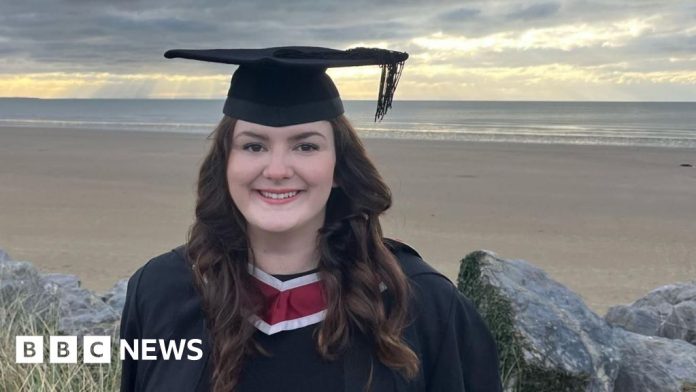
Swansea University graduate applied for 646 roles before getting a job
Beth Alaw WilliamsBBC News
Caitlin Morgan describes the emotions of an 18-month job hunting journey after graduating from Swansea University
After applying for more than 600 jobs, university graduate Caitlin Morgan almost felt like giving up hope of finding employment.
Just as she was becoming demotivated, the 23-year-old’s persistence was rewarded as she was offered a job as a trainee accountant after her 647th application.
But after 18 months of job hunting, Caitlin was left wondering if going to university for four years and getting a degree was worth it.
Latest research from the Institute of Student Employment shows competition for graduate roles is at a “record high” as estimates suggested there were 1.2 million applications for 17,000 graduate vacancies last year.
Setting herself a target of sending two applications a day, Caitlin was immediately rejected 150 times without feedback and did not hear back from 271 other applications.
She said: “I put so much effort into my applications and so much time that when I didn’t hear back from them that I just wondered what made my application not worthy of feedback?”
Caitlin completed a year in industry as part of her finance and accounting degree at Swansea University and hoped it would help her stand out when applying for roles.
Instead, she has a spreadsheet filled with rejections dating back to September 2023.
“I worked hard for my degree and had experience so was thinking, was it worth it?
“There was a period where I was feeling completely demotivated and didn’t believe in going to university or getting degrees.”
After 18 months of job hunting, Caitlin finally got a job as a trainee accountant in London and will start in September
Caitlin thinks the use of artificial intelligence (AI) by companies as part of their filtering process could be a reason why she did not get very far in some applications.
She said initially her CV was not written in a way that could be read by a resume screening programme called ATS (applicant tracking system), where AI reads CVs.
“I was just getting straight rejections whereas after adjusting it, sometimes you’d be invited to an assessment after you’ve applied,” said Caitlin.
“Had I have known that from the get go, that would’ve helped me with my other applications.”
She reached the assessment stages for 221 of the roles she applied for and had five final interviews before getting a job.
Latest data estimates an average of 140 applications were received for each available graduate job in 2024.
The Institute of Student Employment spoke to 145 companies that hired almost 40,000 new students and the body said applications were the highest for 30 years – a more than 50% rise from 2023.
The figures showed that for finance roles like the ones Caitlin applied for, an average of 188 applications were submitted for each role.
Following months of uncertainty after graduating last year, Caitlin has been offered her first degree-level job and will move from her home in Tintern, Monmouthshire, to London to become a trainee accountant in September.
Getty Images
Caitlin was one of about 465,000 students that graduated with a degree from a UK university last year
“It was exactly what I wanted and is offering all the courses I want to do in finance,” she said.
“I just wished it would’ve happened a bit quicker.”
Despite Wales having the lowest proportion of graduates in the UK workforce, the group that represents universities believes the demand for graduate-level skills will grow by 2035.
“While we recognise that today’s job market presents real challenges for many people, research shows that a degree continues to boost lifetime earnings, career prospects and personal development,” said a Universities Wales spokesperson.
“University offers a transformative experience that not only benefits individuals but also strengthens our communities and economy.”
Thousands more students are now preparing to follow in Caitlin’s footsteps this summer.
Huw Williams is getting ready to start his role as Bangor University Student Union’s Welsh officer for 12 months, before returning to education next year.
Huw Williams says some of his friends from Bangor University are “struggling” to find work in the area
“I think I’ll apply to be on a teachers’ training course in history, a career pathway I’ve always been interested in,” said the 21-year-old.
While Huw knows what the next year looks like for him, the future is not so clear for fellow Bangor graduate Alaw Simpson.
The 21-year-old is returning home to nearby Anglesey where she hopes to find her first graduate-level job.
She said: “I want to move on from education and try something different.
“It is a worry because it can be very difficult to find professional jobs these days.”
As she prepares to graduate, Alaw Simpson has started looking for jobs at home on Anglesey
Recruitment experts have said many employers now focus on attitude and personal behaviour.
“Getting your first job post-education is the biggest step because you might not necessarily have a lot of experience,” said James Fortnam of Robert Half Recruitment.
“I think there’s a lot of noise with employers with a sheer number of applicants for an opportunity, so it’s really difficult for clients to whittle that down.
“It’s really important applicants tailor their CV to the opportunity.”
Many companies use AI to help with recruiting, according to James Fortnam
Mr Fortnam has said some firms use technology to help assess applicants’ skills.
“Companies will use software tools to match somebody’s CV to the job,” he said.
“Because they won’t have had huge volumes of experience, typically a lot of graduates sometimes appear lower on that matching capacity.”
Senate Parliamentarian Elizabeth MacDonough has ruled against provisions in the GOP megabill to enact President Trump’s agenda that would dramatically accelerate the approval of offshore oil and gas projects, handing Senate Republican Leader John Thune (R-S.D.) a setback and Democrats another procedural victory.
The parliamentarian ruled against a provision in the legislation that would deem offshore oil and gas projects as automatically compliant with the National Environmental Policy Act, essentially nullifying the environmental review process for these projects.
And MacDonough advised against a subsection of the bill that requires offshore oil and gas leases to be issued to successful bidders within 90 days after the lease sale.
The parliamentarian rejected a section of the bill requiring the Interior secretary to permit the construction of Ambler Road, a 211-mile access road that would facilitate the development of four large mines in Northern Alaska and hundreds of smaller mines in the region.
She also ruled against language in the bill to mandate the sale of millions of acres of federal public land by the Bureau of Land Management and the U.S. Forest Service.
MacDonough said these provisions do not comply with the Senate’s Byrd Rule and therefore are not eligible to pass the upper chamber with a simple-majority vote. Sections of the bill found to violate the Byrd Rule need 60 votes to overcome a point-of-order objection.
Sen. Jeff Merkley (D-Ore.), the ranking member on the Senate Budget Committee, hailed the rulings as another important procedural victory.
“Democrats continue to show up and fight every provision of this Big, Beautiful Betrayal of a bill, because this bill is an attack on workers and families everywhere,” Merkley said in a statement.
“Democrats will not stand idly by while Republicans attempt to circumvent the rules of reconciliation in order to sell off public lands to fund tax breaks for billionaires.” he continued. “We will make sure the Byrd Rule is followed and review any changes Republicans attempt to make to the bill.”
The parliamentarian also rejected a subsection of the bill that removes the secretary of the Interior’s discretion to reduce fees for wind and solar projects on federal land as well as sections that would require the Interior Department to hold yearly geothermal lease sales and change how geothermal royalties are calculated.
MacDonough is still reviewing several Alaska-related environmental provisions in the bill and considering a section of the bill that would require 90 percent of the revenue from oil and gas leases in Cook Inlet to be handed over to the Last Frontier State starting in 2035.
She is also expected to weigh in on language to require oil and gas lease sales in the National Petroleum Reserve in Alaska.
(Reuters) -U.S. stock index futures rose on Tuesday as President Donald Trump announced a ceasefire between Israel and Iran, bringing investors some relief after 12 days of conflict in the Middle East hurt global risk assets and fanned inflation concerns.
Oil prices dropped to their lowest levels in two weeks as supply concerns triggered by the war eased, pulling down U.S. energy stocks in premarket trade. Chevron and Exxon were down 1% and 1.7%, respectively.
Defense stocks Lockheed Martin and RTX Corp dipped about 1.6% each.
Trump’s call for truce was a sharp turnaround after the U.S. bombed Iran’s nuclear sites over the weekend and Iran retaliated by firing missiles at a U.S. base in Qatar.
Hours after the ceasefire declaration, however, Israeli Defence Minister Israel Katz said Iranian missiles were fired in violation of the agreement and he had ordered the military to strike Tehran in response. Iran said it had not violated the ceasefire.
For the moment, optimism around the ceasefire was helping support equities.
At 05:26 a.m. ET, Dow E-minis were up 326 points, or 0.76%, S&P 500 E-minis were up 53.5 points, or 0.88%. Nasdaq 100 E-minis were up 252.75 points, or 1.15%.
The benchmark S&P 500 index remains about 2% below its record level.
Federal Reserve Chair Jerome Powell’s congressional testimony scheduled at 10:00 a.m. ET will likely be parsed for clues regarding the near-term interest rate trajectory, a day after policymaker Michelle Bowman said a cut as soon as July could be a possibility.
Six central bank officials including Fed Board Governor Michael Barr and Fed Minneapolis President Neel Kashkari are also scheduled to speak later in the day.
This week, focus will be on the Commerce Department’s final take on first-quarter GDP and its Personal Consumption Expenditures (PCE) data.
Consumer confidence data for June is due at 10:00 a.m. ET.
Megacap and growth stocks were trading higher, with Tesla shares leading gains, up 2.7%. Google-parent Alphabet rose 1.5% while Amazon.com was up 1.8%.
Shares of crypto companies rose after bitcoin hit a one-week high. Coinbase Global was up 3.2% and Strategy advanced 1.8%.
Package delivery firm FedEx was up nearly 1% ahead of quarterly results due after the closing bell.
(Reporting by Kanchana Chakravarty in Bengaluru; Editing by Devika Syamnath)
Federal safety regulators have reached out to Tesla a day after the automaker began providing rides in its branded robotaxis in Austin.
The U.S. National Highway Traffic Safety Administration (NHTSA) contacted Tesla after numerous videos posted online appear to show Tesla robotaxis violating traffic laws in South Austin, where the company is providing rides to invited customers. Bloomberg was the first to report that the NHTSA reached out to Tesla. The NHTSA confirmed to TechCrunch that it has contacted the automaker.
“NHTSA is aware of the referenced incidents and is in contact with the manufacturer to gather additional information,” the company said in an emailed statement. “NHTSA will continue to enforce the law on all manufacturers of motor vehicles and equipment, in accordance with the Vehicle Safety Act and our data-driven, risk-based investigative process. Under U.S. law, NHTSA does not pre-approve new technologies or vehicle systems — rather, manufacturers certify that each vehicle meets NHTSA’s rigorous safety standards, and the agency investigates incidents involving potential safety defects. Following an assessment of those reports and other relevant information, NHTSA will take any necessary actions to protect road safety.”
On Sunday, Tesla began giving paid rides to invited customers in South Austin. The launch, while limited in size and scope, is the first real test of the automaker’s autonomous vehicle technology. Tesla does sell its branded Full Self-Driving Supervised software to owners of its vehicles. FSD handles steering and braking when engaged. However, it is considered an advanced driver-assistance system that requires the driver to have their hands on the wheel.
Tesla robotaxis are equipped with an unsupervised version of FSD, although the company has not provided specific details about this software. The robotaxis, which customers can hail via an app, are meant to drive on their own. Notably, Tesla robotaxis have a human “safety monitor” sitting in the front passenger seat during these rides.
Videos posted online show the Tesla robotaxis driving over the speed limit and in one case, swerving into the wrong lane.
TechCrunch reported Sunday that Ed Niedermeyer, author of “Ludicrous: The Unvarnished Story of Tesla Motors,” who is in Austin to monitor the robotaxi rollout, took video showing a Tesla branded robotaxi suddenly hitting its brakes on two occasions without reason. A video, which TechCrunch has viewed and has since been posted on YouTube, shows that in both instances the Tesla hit the brakes as it approached police vehicles that were located in parking lot driveways adjacent to the roadway.
SAN DIEGO — Padres star Fernando Tatis Jr. filed a lawsuit Monday against Big League Advance in an attempt to void the future earnings contract he signed as a 17-year-old minor leaguer that could cost him $34 million.
The lawsuit, filed in San Diego County Superior Court, accuses BLA of using predatory tactics to lure him into an “investment deal” that was actually an illegal loan. BLA misrepresented itself to Tatis, hiding its unlicensed status and pushing him into loan terms banned by California’s consumer protection laws, the suit alleges.
Attorney Robert Hertzberg said the suit also seeks public injunctive relief to protect young athletes from being lured into such deals.
Hertzberg said Tatis received $2 million up front in exchange for 10% of future earnings. Tatis signed a $340 million, 14-year contract in February 2021. Hertzberg said Tatis also would be on the hook for future earnings from any subsequent contract he might sign, unless the deal is voided.
“I’m fighting this battle not just for myself but for everyone still chasing their dream and hoping to provide a better life for their family,” Tatis said in a statement provided by a publicist. “I want to help protect those young players who don’t yet know how to protect themselves from these predatory lenders and illegal financial schemes — kids’ focus should be on their passion for baseball, not dodging shady business deals.”
Tatis, a son of the former big league infielder, declined further comment before Monday night’s game against the Washington Nationals.
Hertzberg said that even though Tatis signed the deal in his native Dominican Republic, he is covered by California consumer protection laws.
BLA declined comment.
“California lawmakers have put in place serious, straightforward protections against predatory financial activity, but BLA has still disregarded our laws to pursue a business model built on prohibited, deceptive and abusive practices,” said Hertzberg, a former speaker of the California State Assembly and majority leader of the California Senate.
Tatis has blossomed into one of the game’s biggest stars, although he has been dogged by injuries and an 80-game suspension for performance-enhancing drugs handed down by MLB in 2022. He debuted in 2019 and was an All-Star at shortstop in 2021 before being moved to right field, where he was an All-Star last year.
BLA sued onetime Padres outfielder Franmil Reyes on June 16 in Delaware Superior Court, claiming breach of contract. BLA says Reyes owes $404,908.87 in past-due payments plus $298,749.13 in interest, as well as a yet-to-be-determined amount from when he played in Japan.
Our writers and editors independently determine what we cover and recommend. When you buy through our links, E! may earn a commission. Learn more.
Summer is officially here. That means it’s time to start thinking about packing for your upcoming vacation.
The timing couldn’t be more perfect! Amazon Prime Day is right around the corner, which means you can stock up on all of your travel must-haves for less (up to 70% less, to be exact).
As if that news wasn’t good enough, you don’t have to wait until Prime Day officially starts on July 8 to start saving.
That’s becasue Amazon’s Early Prime Deals have already started, and there are discounts on tons of finds that your favorite Bravo celebrities swear by.
From a top-rated handheld fan loved by Gizelle Bryant to the packing cubes Kyle Richards swears by and Teresa Giudice’s go-to makeup remover wipes, these are the best Early Prime Day 2025 travel deals on Amazon.
The first Britons evacuated out of Israel have landed back in the UK after a “long and intense” journey.
The Royal Air Force (RAF) flight departed Tel Aviv’s Ben Gurion Airport with 63 British nationals and their family members on Monday afternoon, making a stop in Cyprus before landing at Birmingham Airport early on Tuesday morning.
One passenger said he was grateful to personnel on the ground, but was critical of the evacuation plan which has followed many other nations bringing citizens home, including the US and Portugal.
Israeli airspace has been closed – leaving thousands of Britons stranded – since the conflict started earlier this month when Israel attacked nuclear sites in Iran, prompting Tehran to respond with missile strikes.
Passenger Max Radford accompanied his elderly parents on the first British evacuation flight.
“It’s been a pretty long and intense day”, he said just moments after landing back in the UK on the RAF A400 military aircraft.
Mr Radford emphasised that while he was “really thankful” to the RAF and Foreign Office staff, the evacuation plan was “shambolic every step of the way”.
He accused the UK government of seemingly “making it up as they go along”, saying that more needs to be done to get British citizens out of Israel.
“There are thousands of people – and 63 people on one flight, maybe once a day, is nowhere near enough,” he said.
Downing Street said that around 1,000 people had asked for a seat on an evacuation flight – a quarter of the 4,000 who have registered their presence in Israel or the Occupied Palestinian Territories with the Foreign Office.
On Monday, the Foreign Office said further evacuation flights would be based on demand and the security situation. British nationals still in Israel have been urged to register their presence with the UK government.
Mr Radford, who paid £1,050 for three tickets, also said it was “ridiculous” that the plane had landed in Birmingham, accusing the Foreign Office of choosing the destination because it would be cheaper than landing in London.
The Foreign Office has been approached for comment.
Recalling a moment of positivity during the flight, however, Mr Radford he said he would “never forget” how passengers started singing the Israeli national anthem and God Save the King on the plane.
“It just shows the togetherness and the spirit of the Jewish people of the UK,” he said.
On Tuesday morning, US President Donald Trump said a ceasefire between Israel and Iran was “now in effect”.
In a statement, the Israeli government said the country had agreed to Trump’s proposal but would “respond forcefully to any violation of the ceasefire.”
Israel and Iran exchanged heavy fire before the ceasefire was confirmed. The Israeli ambulance service said four people were killed, and 22 wounded, as a result of Iranian strikes overnight.
Tehran also faced a barrage of intense attacks, although the number of casualties is not yet clear.