The British Business Bank has announced a £10m ($13.3m) investment in Shawbrook Bank’s £75m Tier 2 note issuance.
According to the UK Government’s economic development bank, its investment follows a previous £30m subscription to Shawbrook’s Tier 2 note issuance in 2020.
The lender’s Tier 2 capital note investments are designed to support recipient banks in expanding their services, thereby increasing the supply of finance to smaller businesses in the UK.
With the capital raised through this issuance, Shawbrook will continue supporting growth in its specialist small business markets.
British Business Bank managing director of direct financial institution solutions Richard Bowen said: “This £10m investment is our third Tier 2 investment in Shawbrook Bank and follows a £150m ENABLE Build transaction in 2024, extending a successful partnership since our first investment in 2015.
“I am delighted to continue our work together to support diversity within the small business finance markets, helping fuel the growth of smaller businesses across the UK.”
Shawbrook Bank CFO Dylan Minto added: “We are pleased to have successfully completed the issuance of £75m Tier 2 capital, strengthening our capital base to support our growth and strategic ambitions.
“We value the continued support from British Business Bank, with their long-term participation serving as a strong endorsement of our strategy and providing the capital foundation to further grow our SME lending, supporting businesses across the UK.”
This facility aims to enhance ScotLend’s presence in the bridging finance market across the UK.
In the full year 2024, Shawbrook’s loan book grew by 16% to £15.2bn, driven by strong demand in specialist commercial and retail markets.
However, underlying profit before tax decreased to £294m from £302m in 2023.
“British Business Bank invests $13m in Shawbrook” was originally created and published by Leasing Life, a GlobalData owned brand.
The information on this site has been included in good faith for general informational purposes only. It is not intended to amount to advice on which you should rely, and we give no representation, warranty or guarantee, whether express or implied as to its accuracy or completeness. You must obtain professional or specialist advice before taking, or refraining from, any action on the basis of the content on our site.
As part of his appearance on the Decoder podcast, Hinge co-founder and CEO Justin McLeod says that the company would like to introduce an alternative payment service by the end of this year.
With a Hinge-run alternative payment service, Apple won’t be able to take a cut of any purchases, and that “changes the equation” for Hinge on “many fronts,” according to McLeod. Not only would Hinge be able to invest more in the company, but he says it “could result in lower prices,” too. It also “certainly gives us major opportunities to invest in the core product experience at a time when there’s massive disruption.”
Match Group, which owns Hinge and other dating apps, like Tinder, OkCupid, and Match, has been a vocal critic of Apple’s App Store fees. McLeod says that the payment service will “most likely” be Hinge-specific instead of a Match Group service.
PHILADELPHIA — Hanging from the iconic City Hall building in Philadelphia is a banner advertising the FIFA Club World Cup, with five players in action.
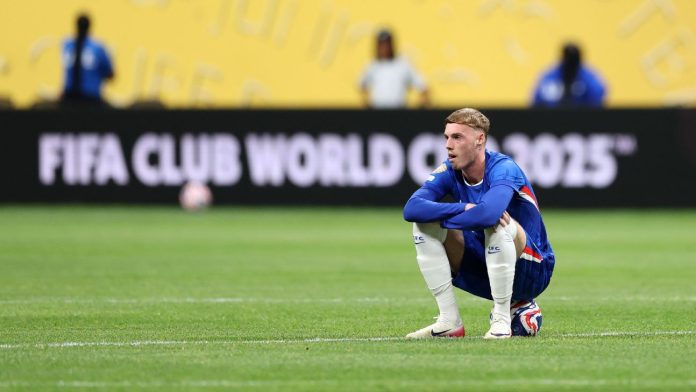
The final figure, pointing with purpose, is Cole Palmer. It is level of profile the 23-year-old is still coming to terms with, given that his burgeoning popularity is the product of a fledgling career that has included just 89 Premier League appearances and 12 England caps.
“It has been quick in terms of how fast it has happened,” he said last week. “But it is a nice feeling and if I keep performing and keep doing stuff hopefully it will get better and bigger.”
At one point, it seemed that Palmer’s ability to keep performing was unstoppable. For so long, his improvement was rapid and exponential ever since signing from Manchester City in September 2023 for £42.5 million.
In Chelsea‘s 2-2 with Bournemouth on Jan. 14, Palmer delivered another mesmeric masterclass, including scoring the opening goal with typical style. At that point last season, it was his 20th goal involvement — 14 goals and six assists — in 21 league matches and further evidence that he was clearly the talisman of modern-day Chelsea.
Nobody predicted what came next: one goal (a penalty) and three assists in the final 17 league matches of the season. Beyond the lack of end-product, the freedom of expression in Palmer’s play disappeared. The kid playing on instinct was second-guessing himself, something he admitted to after suddenly sparking back into life during last month’s UEFA Conference League final.
After 45 minutes of collective slumber against Real Betis in Wroclaw, Palmer produced two stunning assists to turn a 1-0 deficit into what ultimately became a 4-1 win, delivering the first trophy of the Todd Boehly/Clearlake Capital era. “I was sick of going backwards or sideways,” Palmer said when asked what led to his first inspired assist, a brilliant dart inside and cross for Enzo Fernández to convert from close range.
Critics would argue he has been going backwards for some time. Moments after Friday’s 3-1 win over Chelsea in the Club World Cup at Lincoln Financial Field, Flamengo’s social media team seized the opportunity to mock their opponents’ star player by posting the high-temperature weather details with the caption “Too hot for ‘Cold Palmer,'” in reference to his trademark shiver celebration.
They subsequently deleted the message, but the point had been made: in amongst Chelsea’s collective struggles, Palmer is currently some way short of living up to his poster-boy billing.
Part of Palmer’s charm is his refreshing lack of filter. He is a man of few words but almost every interview he does still goes viral, whether it is in expressing his fondness for “chippy chips,” not understanding what a questioner meant by a.m. and p.m. or, bizarrely, screaming when holding a chimpanzee.
While addressing assembled media at Philadelphia Union‘s Subaru Park training base late last week, there was another handful of gems you could pick from: He told reporters he wears a mask on flights because he doesn’t like the smell of planes; he doesn’t particularly care for Starbucks; he spoke to new Chelsea signing Estêvão — who will join from Palmeiras after the Club World Cup — but only via Google Translate; he had no interest in visiting Philly’s famous Rocky Steps, despite the team hotel being located a 20-minute walk away.
Palmer’s appeal is found in how relatable and normal he is. He plays PlayStation in his spare time and still finds it strange people want his picture in the street. But among the trivialities were hints at the difficulty Palmer has faced of late. Only last month, he hit out at social media “idiots and trolls” critical of his goal drought during the second half of the season.
Speaking in Philadelphia, he said: “Obviously, pressure sometimes gets to everyone. But most of the time, I try and ignore it. I still do the same things now that I did before I came to Chelsea. I try and think it’s just a game of football at the end of the day, it’s not life or death. So I just try and enjoy it. I like to go and play five-a-side and go to the astro [turf] and just do normal things [to take my mind off things].”
That much was evident in his body language during training out at the Club World Cup. The roots of Palmer’s relationship with winger Noni Madueke date back to England’s under-15s and their closeness was clear in the Philadelphia morning heat during one session last week. The pair walk out together, undertaking the first drills in which the squad were split into groups of threes. Nicolas Jackson was nearby and Palmer shouted “Nico” twice but got no answer. “Jackson!” he shouted louder and the striker responded with a smile; Palmer then almost constantly whispering in Madueke’s ear, both sharing grins and laughs.
When Chelsea are at their best, the link-up between Jackson, Palmer and Madueke is at the forefront. Replicating that, or ideally improving on it, is among striker Liam Delap‘s biggest challenges following his £30 million arrival from Ipswich Town, though he knows Chelsea boss Enzo Maresca and Palmer well, having worked with them in the Manchester City academy.
“I’ve known him [Palmer] since I was 15, playing at City with him,” said Delap. “I’ve got a good relationship with him so it was nice to see a familiar face. I think Cole has always been that good and everyone at City will tell you that. I think the rate he’s done it at [Chelsea] is incredible. But I think ultimately it was always going to happen.
“Do I see the chance to emulate him? Yeah, of course, that’s the goal. I think we both had similar positions and he’s gone and smashed it [played well], so hopefully I can also.”
play
0:42
Maresca: We knew Flamengo were a good team
Chelsea manager Enzo Maresca reacts to Chelsea’s surprising 3-1 loss to Flamengo in the Club World Cup.
Maresca’s gameplan against Flamengo did not seem to play to Palmer’s strengths. Pushed out to the right, away from his preferred No. 10 position (the shirt number he now wears) Palmer struggled to impact play and did not link up with Malo Gusto, who was given greater licence to roam from right-back.
In fact, Palmer barely connected with anyone. He had just 32 touches and, in a considerable departure from his hitherto untouchable status, he was substituted on 82 minutes when Chelsea were a goal and a man down thanks for Jackson’s red card.
Afterwards, Maresca deflected a question about Palmer’s subdued performance by answering in reference to the collective, insisting the tactical experiment — which also included defender Reece James playing midfield — would benefit the Blues in the long run. Of course, that is possible but there was scant evidence Palmer benefitted from the change.
The suspicion remains that he is better drifting into that space rather than occupying it to begin with. The numbers mostly back this up, although the split isn’t as stark as the naked eye would suggest. During the 2023-24 campaign under former coach Mauricio Pochettino, Palmer started 12 league matches in the No. 10 role and registered 10 goals, five assists and 32 chances created, with 27 key passes. In the 13 games he played on the right that season, he managed 11 goals, three assists, 29 chances created, and 26 key passes.
Palmer’s effectiveness in moving into the wide-right space was seen to positive effect in their opening game of Group D at the Club World Cup, a 2-0 win over LAFC in Atlanta. He linked up twice with Delap, who came on as a substitute for his Chelsea debut, although it is Palmer’s luck at the moment that his contribution to the game will probably be remembered most for the second-half shot he blazed over the bar when well placed to score.
It is possible that Delap’s arrival could even rekindle Palmer’s form. They were a key part of City’s Elite Development Squad which won the Premier League 2 title in 2020-21 with Delap scoring 24 goals in 20 goals.
“The team we had was crazy,” said Delap. “You look at it now and everyone has gone on to progress differently but they are all doing really well.”
Perhaps the heat is another factor. “We are getting used to it,” said Palmer. “I like it, something new, it is hotter than England, so it is alright.”
He could be forgiven for feeling the pace, however, even at his tender age. Maresca managed his minutes by omitting Palmer from Chelsea’s squad for the Conference League group stage, but Tuesday’s game against Esperance de Tunis will still be his 52nd game for club and country since the start of the 2024-25 season. And it will be a real test: the hottest temperature of the year — 102 degrees Farenheit — is forecast, albeit with a 9 p.m. local kick-off time mitigating the worst of the exposure.
But it is also the third-consecutive summer Palmer has played in a tournament. Last season, he scored in the Euro 2024 final as England lost to Spain; a year earlier, his deflected free kick won the European Under-21 Championship final against Spain.
Playing in a third final in three years at this Club World Cup feels a long way off right now. But if Chelsea are to have any chance of getting there, Palmer’s revival will still have to be the catalyst.
Sean “Diddy” Combs’ Ex Says She Fainted After Reading Cassie Ventura’s Lawsuit
Jane said during her testimony that parts of Ventura’s November 2023 lawsuit—which was ultimately settled—mirrored her own experience with Combs.
“I almost fainted, in fact, I think I did,” she told jurors as she cried. “There was three specific pages that was just a harrowing reference to what I was experiencing.”
Jane, who took part in “hotel nights, “said that it felt like she was reading “her own story.” It led to her confronting Combs via text messages.
“I feel like I am reading my own sexual trauma,” she wrote after Ventura’s lawsuit, in screenshots shown in evidence. “I am sick. It’s exactly word for word, drug-filled days and nights. You knew this was coming. You gaslit me, you made me go crazy.”
“I am disgusted, I felt forced to perform back to back,” the messages continued. “You made me feel crazy about the sex trauma I was feeling. I feel very violated. This was sexual exploitation.”
Combs subsequently called Jane and recorded the conversation without her knowledge that was entered into evidence, in which he told her that they “did these things together” and that “this is when” he needed her “to be there.”
Jane, who didn’t know she was being recorded, told Combs that she was “sick” to her stomach after reading Ventura’s documents.
Plans to lower energy costs for thousands of businessesby exempting them from some green energy levieshave been set out as part of the government’s new 10-year industrial strategy.
The measures, which could slash energy bills by up to 25% for more than 7,000 UK businesses,have been unveiled alongside other plans aimed at boosting growth.
Prime Minister Sir Keir Starmer told the BBC the strategy intended to “stabilise” and help “mitigate” challenges to the UK from abroad.
Acting shadow energy secretary Andrew Bowie criticised the plans, saying the UK needed “a serious approach to energy policy” that “tackles the root cause of our high energy prices”.
He said it was “astonishing” Labour was “finally admitting that the costs of net zero are so high that they’re having to spend billions of pounds of taxpayers’ money subsidising businesses’ energy bills to stop them going bust”.
Manufacturers in the UK currently pay some of the highest electricity prices in the developed world.
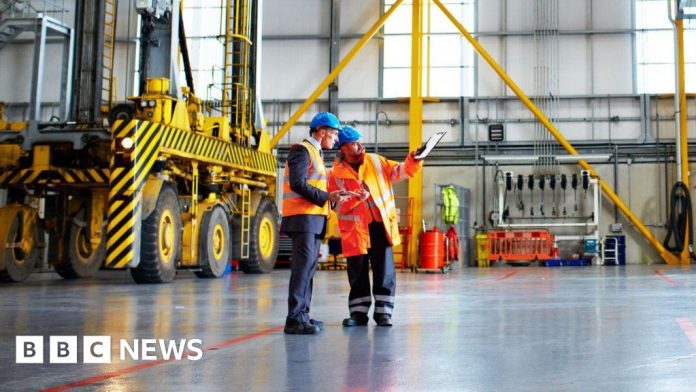
A new British Industrial Competitiveness Scheme will cut costs by up to £40 per megawatt-hour from 2027 for more than 7,000 manufacturing firms by exempting them from certain extra charges that currently support green energy and back-up power supply systems.
Details of which businesses are eligible and further details on the exemptions will be determined following a two-year consultation period.
About 500 of the most energy-intensive firms, including the steel industry, chemicals and glassmaking, will also have their network charges cut.
Those firms currently get a 60% discount through the British Industry Supercharger scheme, which will increase to 90% from 2026.
Monday’s announcement also contained measures to speed up the time it can take to connect new factories and projects to the energy grid.
The prime minister said the industrial strategy gave businesses “the long-term certainty and direction” they need to “invest, innovate and create good jobs that put more money in people’s pockets”.
Following the events in the Middle East, Sir Keir also told the BBC that the strategy was intended to help the UK “mitigate the effect of issues and challenges from abroad”.
“One of those challenges has been energy prices… this strategy delivers cheaper electricity prices in this country in the long term”.
Boosting skills
Other plans within the industrial strategy include:
improving UK workers’ skills and reducing reliance on foreign workers by spending an extra £1.2bn each year for skills by 2028-29
attracting “elite global talent” to come and work in the UK with visa and migration reforms
hiring more planners and streamlining application processes to reduce planning timelines and cut costs for developers
boosting research and development spending to £22.6bn per year by 2029-30 to drive innovation – including £2bn for AI
The government said it would be focusing on eight specific sectors where the UK is already strong and therefore should have the potential for faster growth.
These sectors are advanced manufacturing, clean energy industries, creative industries, defence, digital and technologies, financial services, life sciences, and professional and business services.
When Labour won the election last year, it made boosting economic growth its top priority.
While the economy grew by more than expected in the first quarter of this year, it shrank by 0.3% in April – its worst contraction for a year-and-a-half – and analysts are predicting weak growth in the months ahead.
Chancellor Rachel Reeves said the industrial strategy will “see billions of pounds for investment and cutting-edge tech, ease energy costs, and upskill the nation”.
Hospitality sector ‘disappointed’
Manufacturer’s organisation Make UK’s chief executive Stephen Phipson said the government strategy set out plans to address “all three” major challenges facing industry – “a skills crisis, crippling energy costs and an inability to access capital for new British innovators”.
Trades Union Congress (TUC) general secretary Paul Nowak welcomed action “to reduce sky-high energy costs for manufacturers”.
He said: “For too long, UK industry has been hamstrung by energy prices far above those in France and Germany. It’s made it harder to compete, invest, and grow.”
However, not all businesses are happy with the proposed plans. Retail and leisure sectors have not been included in the strategy despite many complaining of high energy bills and the rise in staffing costs.
Kate Nicholls, chief executive of UKHospitality, said: “We were desperate to see a plan for hospitality and the High Street, which together employs over 7 million people. We were disappointed.
“How can national renewal be properly delivered if 70% of the economy is excluded from the government’s flagship plan for growth?”
Business Secretary Jonathan Reynolds told the BBC: “It’s neither picking winners or picking losers it’s about having a business environment where for the most internationally mobile capital sectors we’re competing across the world.”
He added that this would “direct benefits to every other sector of the economy.”
Liberal Democrat business spokesperson Sarah Olney said government plans “must contain real solutions to bring down businesses’ sky-high energy costs and upskill workers around the country” and ministers must ensure small businesses “are right at the heart” of measures.
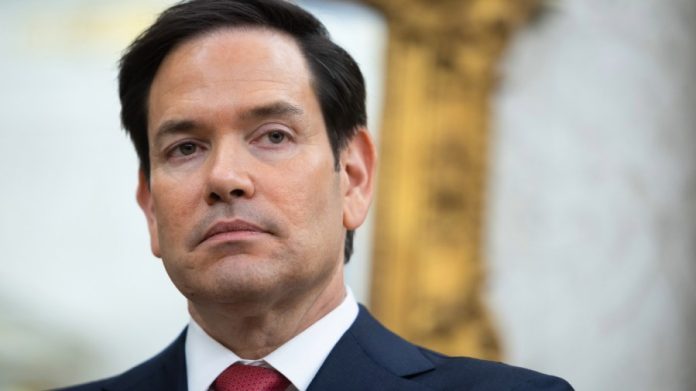
Secretary of State Marco Rubio on Sunday urged China to intervene to prevent Iran from closing the Strait of Hormuz, which is one of the most important shipping routes for the world.
In an interview on Fox News Channel’s “Sunday Morning Futures,” host Maria Bartiromo asked Rubio whether he expected Iran to close the Strait of Hormuz in an effort to disrupt oil transportation globally.
“I would encourage the Chinese government in Beijing to call them about that, because they heavily depend on the Straits of Hormuz for their oil,” Rubio replied.
As the world braces for possible retaliation from Iran — after the United States bombed three of its nuclear sites on Saturday — Rubio warned on Sunday that closing the vital strait would be “economic suicide” for Tehran.
He also warned that other countries could intervene if Iran takes that step.
“If they do that, it’ll be another terrible mistake. It’s economic suicide for them if they do it,” Rubio said. “And we retain options to deal with that.”
“But other countries should be looking at that as well,” he added. “It would hurt other countries’ economies a lot worse than ours. It would be, I think, a massive escalation that would merit a response not just by us but from others.”
A spokesperson for the Chinese Foreign Ministry, Guo Jiakun, deflected when asked on Monday what China would do if Iran closed the strait, saying the international community should “step up its efforts to promote the de-escalation of the conflict,” The New York Times reported.
Rubio made clear in the Fox Business interview that the U.S. would only strike again if Iran retaliates.
“What happens next will depend on what they do,” he said. “They want to negotiate, we’re ready to negotiate. They want to get cute and do things that are dangerous, we have responses available that are devastating.”
The Iranian Parliament on Sunday approved a measure to close the Strait of Hormuz after the United States bombed nuclear sites in Natanz, Isfahan and Fordow, the last of which is located inside a mountain
Closing the strait, located between Iran and Oman, could have serious implications for both the global and U.S. economy.
The Strait of Hormuz’s width and depth allow it to handle the world’s largest crude oil tankers, and very few alternatives exist if it is closed, according to the U.S. Energy Information Administration (EIA), making it a critical choke point for oil shipments. Approximately 20 million barrels, or 20 percent of global consumption, flowed through the strait in 2024.
Tata Consultancy Services (TCS) has announced the launch of three new hubs in Europe to bolster its capabilities in the software-defined vehicles (SDV) space.
The new automotive delivery centres in Munich and Villingen-Schwenningen, Germany, along with an engineering centre in Romania, represent a strategic move to support the automotive industry’s transition to next-generation mobility solutions.
The delivery centres in Germany will assist automakers in developing and deploying software-driven services for autonomous driving, infotainment, safety systems, and connected vehicle technologies.
The Romanian engineering centre will be dedicated to the design and creation of advanced automotive software platforms, fostering early-stage development and innovation.
This expansion is part of TCS’ long-term strategy to enhance its comprehensive automotive software capabilities, including chip-to-cloud technologies and services.
The strategic placement of these centres enables TCS to collaborate closely with European OEMs and global automotive enterprises, offering nearshore capabilities.
TCS Internet of Things (IoT) and Digital Engineering senior vice president & global head Regu Ayyaswamy said: “These new centres will position TCS at the forefront of automotive innovation, enabling us to deliver state-of-the-art solutions in autonomous driving and advanced cockpit systems. This expansion reaffirms our commitment to leading the transformation in the Software-Defined Vehicles space.”
Currently, the new centres employ more than 100 skilled professionals who will join forces with more than 2,000 SDV Engineers across TCS’ global locations.
This talent pool will contribute to the development of next-generation automotive platforms for digital cockpits, infotainment, advanced driver assistance systems, and other critical SDV functions, supporting the entire product lifecycle from concept through to production and ongoing support.
Having served European automotive customers for over 25 years, TCS has a well-established presence in the region’s automotive hubs.
The company has been delivering innovative solutions in digital cockpits, electrification, autonomous vehicles, and connected car ecosystems, utilising digital engineering, IoT, cloud, and data analytics.
Additionally, TCS leverages Generative AI to expedite product development, enabling quicker innovation and greater personalisation in SDVs.
TCS Manufacturing president and business group head Anupam Singhal added: “The shift to software-defined vehicles marks a defining moment for the automotive industry. With the launch of these new centers, we are deepening our commitment to support OEMs in building the next generation of intelligent, connected, and sustainable vehicles.
“This expansion is a key milestone in our journey toward Future-Ready Mobility—where software, engineering, and design, backed by AI, converge to deliver safer, more personalised, and continuously enriching experiences for drivers and passengers.”
“TCS launches new software-defined vehicle hubs in Europe” was originally created and published by Just Auto, a GlobalData owned brand.
The information on this site has been included in good faith for general informational purposes only. It is not intended to amount to advice on which you should rely, and we give no representation, warranty or guarantee, whether express or implied as to its accuracy or completeness. You must obtain professional or specialist advice before taking, or refraining from, any action on the basis of the content on our site.
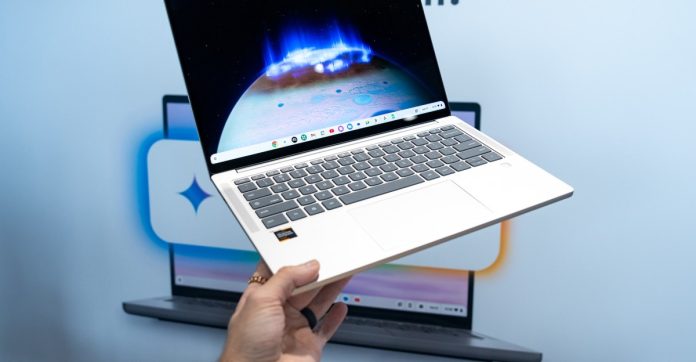
Google announced a handful of new Gemini AI features for Chromebook Plus laptops, including a sleek, new 14-inch flagship device from Lenovo that I got to handle recently.
The new AI functions include select to search, which allows you to long press the launcher icon or take a screenshot and do a Google search based on on-screen images or text. (It’s like circle to search on phones, but for Chromebooks.) Text captured this way can be imported into a calendar or Google Workspace apps like a spreadsheet or document. On-screen text that’s a bit technical or jargon-y can also be simplified. And now, the Quick Insert key — the “Gemini button” that replaces the Caps Lock key on Chromebooks — gets a shortcut to AI image generation.
There are two more new Gemini features: a smart grouping tool that automatically organizes your current tabs and documents based on what you’re working on, and some image editing built into the Gallery app for automated tasks like background removal and making stickers. These new functions use on-device AI and are exclusive to Lenovo’s new Chromebook Plus 14 laptop, which launches today alongside Google’s new tools.
The Lenovo Chromebook Plus (14-inch, 10th-gen) starts at $649 and uses a MediaTek Kompanio Ultra chip capable of 50 TOPS. It’s an eight-core Arm-based processor with Wi-Fi 7 and support for up to two external 4K monitors. Lenovo’s new flagship Chromebook also has a 14-inch OLED display capable of 1920 x 1200 resolution and 400 nits of brightness, with the option for a touchscreen version starting at $749. Its other key specs include up to 256GB of storage, up to 16GB of RAM, a fingerprint sensor, Bluetooth 5.4 support, and a four-speaker Dolby Atmos audio setup. For ports, it has just two 5Gbps USB-C, one 5Gbps USB-A, and a 3.5mm combo audio jack.
I got to briefly hold and see the Lenovo Chromebook Plus 14 at a recent Google preview event, and it was certainly a svelte and sleek machine. It weighs just 2.58 pounds, making it easy to lift up from a corner with just one hand. And, as usual for OLEDs, its screen had a deep and colorful contrast that was pleasant to look at. In addition to this being the first Arm-based model for Google’s Chromebook Plus range of laptops, the Lenovo Chromebook Plus 14’s 60Wh cell is claimed to have the best battery life among its peers.
Buying the Lenovo Chromebook Plus 14 or any Chromebook Plus device in 2025 gets you free access to Google’s AI Pro Plan for one year, which includes Gemini 2.5 Pro, the Veo 3 AI video generator, and 2TB of cloud storage.
Jamal Collier is an NBA reporter at ESPN. Collier covers the Milwaukee Bucks, Chicago Bulls and the Midwest region of the NBA, including stories such as Minnesota’s iconic jersey swap between Anthony Edwards and Justin Jefferson. He has been at ESPN since Sept. 2021 and previously covered the Bulls for the Chicago Tribune. You can reach out to Jamal on Twitter @JamalCollier or via email Jamal.Collier@espn.com.
OKLAHOMA CITY — Tyrese Haliburton stood on crutches outside the Pacers locker room, welcoming teammates with an embrace as each one came off the floor following Indiana’s 103-91 loss to the Oklahoma City Thunder in Game 7 of the NBA Finals on Sunday night.
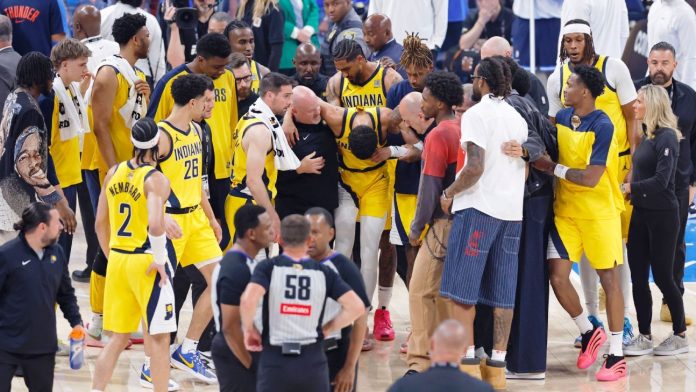
Haliburton had not been able to finish the game alongside them after going down with a right lower leg injury in the first quarter and needing to be helped off the court.
His father, John Haliburton, told ESPN’s Lisa Salters during the broadcast that it’s an Achilles injury.
The seriousness of the injury was apparent from the moment the Pacers’ star guard — who had been playing through a strained right calf — crumpled to the floor without contact as he was attempting to drive to the basket with 4:55 remaining in the opening quarter.
He immediately began slapping the court in frustration and remained on the floor as virtually the entire Pacers team surrounded him.
“All of our hearts dropped,” Pacers coach Rick Carlisle said.
“We all are devastated for him,” Pacers guard T.J. McConnell added.
“I was thinking about it the whole game,” admitted Pacers forward Obi Toppin, who was 0-for-4 from the field.
Haliburton put no weight on the leg and had his face wrapped in towels as he was taken to the locker room. He spent the rest of the game surrounded by family, with applause that could be heard from outside the locker room as he watched the Pacers attempt to clinch a championship without him.
At halftime, with Indiana clinging to a 48-47 advantage, Haliburton remained a vocal presence, cheering on the rest of the team.
“That’s just who Ty is,” McConnell said. “To go down like that, be selfless and just continuing to cheer for us. Even though he can’t play, I think that just speaks volumes to who Tyrese Haliburton is, one of the greatest human beings I’ve come in contact with.”
Haliburton began the game looking primed for a classic performance in Game 7. He had scored nine points, knocking down 3 of 4 3-pointers, when he got hurt.
Despite suffering a calf strain in Game 5 of the Finals, Haliburton insisted on playing through the injury, saying, “If I can walk, I want to play.”
The day before Game 7, Haliburton acknowledged after practice his leg was “still stiff, still sore,” but he said he planned to play through it.
Indiana did not provide any further information on Haliburton’s injury Sunday night, but a torn Achilles tendon would put Haliburton’s status for the 2025-26 campaign in jeopardy.
“I’m proud of that kid,” Pacers co-star Pascal Siakam said. “He went through so much during the year. A lot of criticism. It’s a lot for a young kid to go through, and he had a lot of stress. And he just kept fighting. He kept fighting every single day.
“He did some incredible things, this whole playoff run and this year. I’m just super proud of him. Obviously, it hurts because we couldn’t get it done, and I wanted it so bad for him just because I know that he gave us everything — everything he had. It just hurts that he couldn’t see it through with us.”
Siakam praised Haliburton for bringing him to Indiana, and although Siakam said the Pacers were not happy with a moral victory, he acknowledged how proud he was of what the team accomplished.
“He’s going through some tough times, and he looked out for us and he wanted to be there for us,” Siakam said of Haliburton. “It just shows his character and who he is as a player. He’s one of the big reasons I’m here, and he made it kind of super fun for me to be here.”
The injury put a damper on what had been one of the most thrilling playoff runs in NBA history. Haliburton, 25, had been the breakout star of the postseason, leading Indiana on its improbable run to the Finals. In all four rounds, he hit a tying or winning shot in the final seconds, becoming the league’s first player do so in a single postseason.
He was averaging 17.7 points and a playoff-leading 9.0 assists on 46% shooting entering Sunday. His 197 assists were a franchise record for a single postseason.
“He authored one of the great individual playoff runs in the history of the NBA with dramatic play after dramatic play,” Carlisle said. “It was something that no one’s ever seen and did it as one of 17. You know, that’s the beautiful thing about him: As great a player as he is, it’s always a team thing.”
The Edward Scissorhands actor went on to explain how his mother Betty Sue Depp, who passed away in 2016, “liked to escape from reality from time to time and learnt how to live in a miserable state.”
“So, I’m not surprised,” he continued, “I allowed myself to experience something—in some little psychological sphere—to help understand what it was like between my parents. I had to understand how my father dealt with it. So, it would be dumb for me to carry any bitterness.”
He added, “Eternal hatred? You want to put curses on someone? No. I know who I am, what that was and, look, it was a learning experience.”
A learning experience that ultimately cost the actor millions of dollars and saw the pair viciously battle it out in court. Following Depp and Heard’s divorce in 2016, Heard alleged the actor had been verbally and physically abusive, and a settlement was reached within the year that said Depp would pay her $7 million.