3.5 C
New York
Thursday, January 22, 2026
Home Blog Page 874

How the US says it hit Iran’s nuclear sites

0


A continuous flight over 18 hours, multiple mid-air refuelings, and a series of decoys – this is how the mission to bomb Iran’s nuclear facilities played out, according to four-star General Dan Caine, the Chairman of the Joint Chiefs of Staff, the highest-ranking officer in the US military.

Although the full impact of what the US is calling ‘Operation Midnight Hammer’ is still unclear, a timeline of how the complex mission unfolded was laid out in a Pentagon briefing on Sunday morning, mere hours after the strikes.

American bombers went “in and out and back without the world knowing at all”, US Secretary of Defense Pete Hegseth told reporters.

It all began just after midnight when Secretary Hegseth joined US President Donald Trump, Vice-President JD Vance, Secretary of State Marco Rubio, and elite Pentagon staff in the Situation Room at the White House to watch as a fleet of aircraft departed an American airbase in rural Missouri.

Under the cover of darkness, B-2 stealth bombers took off from Whiteman Air Force Base at 00:01 EDT (05:01 BST), according to the Pentagon.

Their ultimate target: Iran’s most secure nuclear sites.

The subsonic jets, which travel just below the speed of sound, flew over the Atlantic Ocean loaded with powerful “bunker buster” bombs capable of penetrating concrete over 18m (60ft) deep.

It’s the kind of weaponry needed to hit Iran’s nuclear enrichment facility at Fordo, which is buried below a mountain deep underground and considered to be the epicentre of the country’s nuclear programme. The US is the only country in the world known to possess this type of weapon.

But the world wasn’t watching – yet. All eyes were facing west, towards the Pacific Ocean, following reports bombers had been sent to the US island territory of Guam.

“While the deployment is not being officially connected to discussions around the US joining Israel’s war on Iran, few will doubt the link,” the BBC wrote at the time.

But it was just a ruse – according to the account delivered by the Pentagon – a decoy to distract from the top-secret flights heading straight for Iran over the Atlantic.

The planes that flew west over the Pacific were “a deception effort known only to an extremely small number of planners and key leaders,” Gen Caine said.

“The main strike package comprised of seven B-2 spirit bombers, each with two crew members, proceeded quietly to the east with minimal communications,” he added.

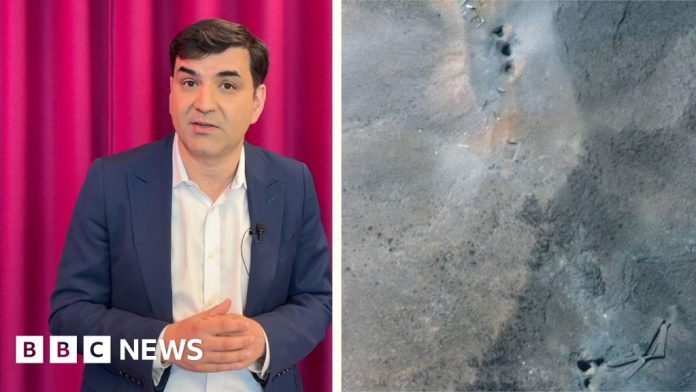
Those military planes don’t show up on flight tracking websites, making it difficult for the BBC to independently verify the Pentagon’s description of the events.

And although satellite images can help show the extent of damage at the sites overnight, they can’t tell us the exact times when they were hit.

When the fleet made it to the Middle East, sometime around 17:00 EDT (22:00 BST), it was joined by support aircraft that helped protect the bombers by sweeping in front of them to look for enemy fighters and surface-to-air missile threats, in what Gen Caine called a “complex, tightly timed manoeuvre”.

But Iranian fighter jets didn’t take off and no air defences appeared to fire a shot, according to US officials.

“Israeli dominance over Iranian airspace primed the pump for American bombers to operate with impunity,” Patrycja Bazylczyk, a missile defence expert at the Center for Strategic and International Studies in Washington DC, told BBC Verify.

The next hour and forty minutes were described by Gen Caine during the Pentagon briefing in a level of detail not normally disclosed to the public.

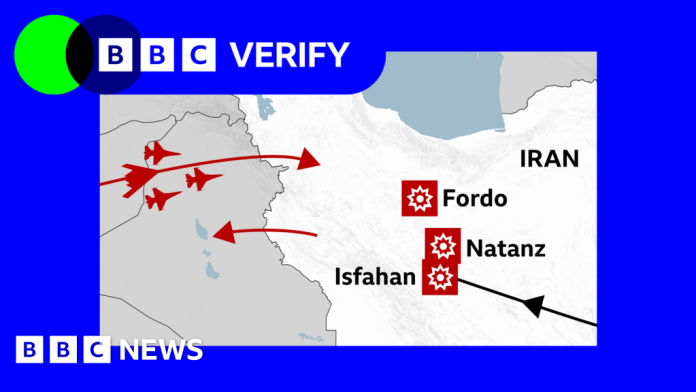
Although the briefing provided timings for certain events, the map showing the bombers’ journey wasn’t a specific flight path and differed slightly in two versions presented.

The Trump administration has proclaimed the subsequent events as a total victory, claiming the US had “obliterated” Iran’s nuclear regime. But the true extent of the damage, and its aftermath, has yet to be measured.

While Iran has confirmed the attacks, it has minimised the extent of the damage and has not provided a specific account of the sequence of events.

At around 17:00 EDT (22:00 BST) US officials say more than two dozen Tomahawk land attack cruise missiles were launched from a US submarine stationed in the Arabia Sea towards the nuclear site near Isfahan, a city of about two million people.

While the nuclear facility there is hundreds of kilometres inland, the submarines were close enough to enable the cruise missiles to impact at roughly the same time as the stealthy B-2s dropped their “bunker buster” bombs over the other two nuclear sites, said Dr Stacie Pettyjohn, a defence expert at the Center for a New American Security.

It all meant that the US was able to provide “a coordinated surprise attack on multiple sites”, she told BBC Verify.

Meanwhile, the fleet of bombers entered Iranian airspace, where the US employed several other deception tactics, including more decoys, according to the Pentagon.

Then the air strikes began.

The lead bomber dropped two GBU-57 Massive Ordnance Penetrator weapons – known as MOPs – on the first of several targets at Fordo at about 18:40 EDT (23:40 BST), just after 02:00 in the morning in Iran.

The MOP bomb is able to drop through about 18m (60ft) of concrete or 61m (200ft) of earth before exploding, according to experts. This means that although it’s not guaranteed success, it is the only bomb in the world that could come close to impacting the depth of tunnels at the Fordo facility – thought to be 80-90m (262-295ft) below the surface.

It was the first time the “bunker buster” bombs were ever dropped in a real combat operation.

The remaining bombers then hit their targets – with a total of 14 MOPs dropped on Fordo and a second nuclear facility at Natanz, according to the Pentgaon. And at the Isfahan nuclear site, over 200km away from Fordo, the Tomahawk missiles hit their targets.

After the planes spent 18 hours in the air, all the targets were hit in just about 25 minutes before they exited Iran at 19:30 EDT (00:30 BST) to return to the US, according to the Pentagon.

In total, about 75 precision guided weapons and more than 125 US aircraft were used, and Secretary Hegseth claimed the mission provided “powerful and clear” destruction of Iran’s nuclear capabilities.

But evidence of the full scope of the strikes will take time to assess – with more footage needed to see how deep underground the bunker buster bombs were able to penetrate at the key nuclear sites.

“This was an incredibly complicated and very sophisticated attack that no other country in the world could have performed,” Dr Pettyjohn said.

“Despite the success of the operation tactically, it is unclear if it will achieve the goal of permanently setting back Iran’s nuclear program.”
Former CENTCOM commander: US 'certainly vulnerable' to attacks in Iraq, Syria

0


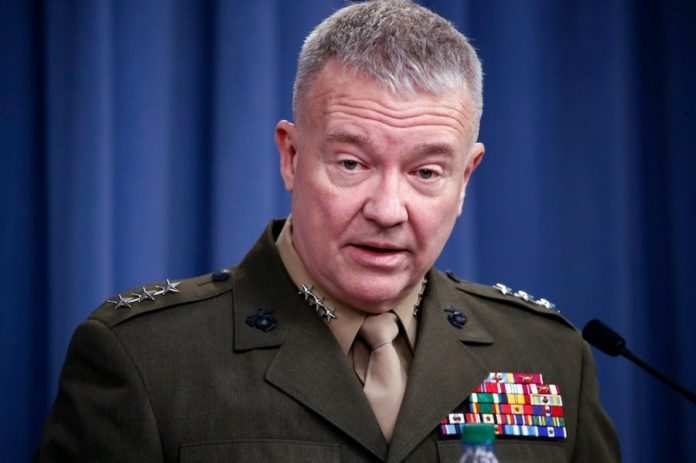
Retired Gen. Frank McKenzie, the former commander of the U.S. Central Command (CENTCOM), said on Sunday that he thinks U.S. troops in Iraq and Syria are “certainly vulnerable” to retaliatory attacks by Iran.

In an interview on CBS News’s “Face the Nation,” McKenzie said he’s not surprised that Iran has not yet retaliated following U.S. strikes on its nuclear sites, noting, “I think Iranian decision making is a little crippled right now because of the loss of senior leaders” at the hands of the Israelis.

But he said he’s confident the U.S. military has taken steps to prepare for any future attacks.

“To your question about where they might strike, I think we’re certainly vulnerable in Iraq. I think we’re certainly vulnerable in Syria,” adding, “And I’m certain that Central Command has done all the things we need to do to harden ourselves against those potential attacks.

“The same for our other bases across the region,” McKenzie said. “I don’t know that it would be localized to the region though.”

McKenzie speculated about the possibility of a strike on U.S. soil but noted efforts to achieve such a goal in the past have not been very successful.

“Iran has long harbored the desire to attack us in the United States. They typically have not been effective when they’ve done that. We’ve caught them in a couple of plots that are very public, that you’re well aware of,” McKenzie said.

“So I think all those things are on the table, but it may take the Iranians a little while to work through this process, because nobody’s excited about going to a meeting in Iran right now,” he said.

The interview comes as U.S. leaders are warning Iran from taking retaliatory actions against the U.S. and of far-reaching consequences if Iran does not take steps to make peace.

Should You Forget Bitcoin and Buy Solana?

0


  • Solana has underperformed Bitcoin over the past year.

  • It faces a lot of competitive threats.

  • It has catalysts on the horizon — but it could struggle to stand out.

  • 10 stocks we like better than Solana ›

Bitcoin‘s (CRYPTO: BTC) price surged about 60% over the past 12 months and trades about 7% below its all-time high. That rally was driven by an inflow of cash into its spot price ETFs, which started trading last year; more corporate and institutional purchases, and the Trump administration’s crypto-friendly stance and establishment of a Strategic Bitcoin Reserve. Bitcoin could also be gaining more traction as a hedge against inflation, geopolitical conflicts, and other macro headwinds, while expectations for lower interest rates are driving investors toward the crypto market again.

Yet many of the smaller cryptocurrencies were left behind and underperformed Bitcoin. One of those tokens was Solana (CRYPTO: SOL), which only rose about 7% over the past 12 months and remains more than 50% below its all-time high. Let’s see why Solana slipped — and if it might be a better long-term investment than Bitcoin at these levels.

A visualization of a blockchain.
Image source: Getty Images.

Solana, like Ether (CRYPTO: ETH), is staked on its blockchain (locked up for interest-like rewards) instead of mined. That proof of stake (PoS) mechanism consumes a lot less power than the proof of work (PoW) mechanism used to mine Bitcoin. PoS blockchains also support smart contracts, which are used to develop decentralized apps (dApps), games, non-fungible tokens (NFTs), and other crypto assets. PoW blockchains are only used for mining tokens and don’t support those developer-oriented features.

Therefore, Solana and other PoS tokens are often valued by the speed of their transactions and the growth of their developer ecosystems instead of the scarcity of their tokens. Moreover, Solana is an inflationary token with no maximum supply. Nearly 528 million Solana tokens are currently in circulation, but it’s reducing its annual inflation rate (currently at 4.5%) by 15% every “epoch year” (450 days to 630 days) until it reaches an annual inflation rate of 1.5%. Bitcoin is a deflationary cryptocurrency with a maximum supply of 21 million tokens, 19.9 million of which have already been mined. That scarcity makes Bitcoin more comparable to gold, silver, and other physical commodities.

Many PoS tokens were built on Ethereum’s blockchain, but Solana has its own native PoS blockchain. Solana also upgraded that PoS blockchain with its proprietary proof-of-history (PoH) mechanism, which enables it to process transactions at a faster rate than Ethereum.

OpenAI pulls promotional materials around Jony Ive deal

0


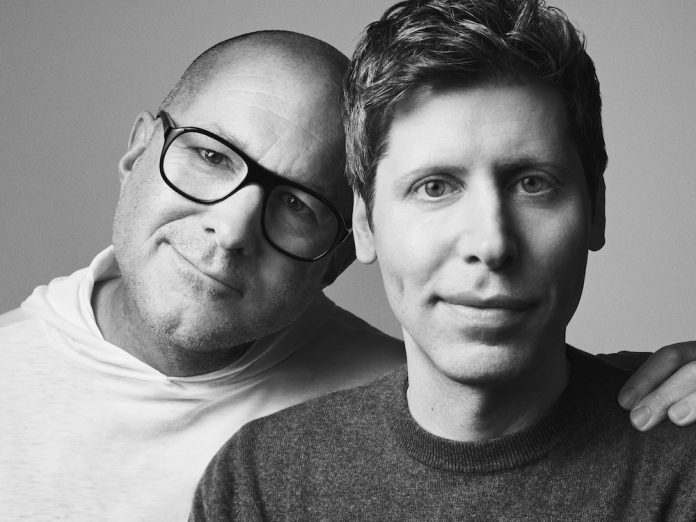
OpenAI appears to have pulled a much-discussed video promoting the friendship between CEO Sam Altman and legendary Apple designer Jony Ive (plus, incidentally, OpenAI’s $6.5 billion deal to acquire Ive and Altman’s device startup io) from its website and YouTube page.

Does that suggest something is amiss with the acquisition, or with plans for Ive to lead design work at OpenAI? Not exactly, according to Bloomberg’s Mark Gurman, who reports that the “deal is on track and has NOT dissolved or anything of the sort.” Instead, he said a judge has issued a restraining order over the io name, forcing the company to pull all materials that used it.

And indeed, an earlier report at Bloomberg Law noted that AI device maker IYO has brought a trademark lawsuit against OpenAI, with the judge suggesting she’s open to IYO’s argument that OpenAI’s promotional video might already be creating consumer confusion.

TechCrunch has reached out to OpenAI for comment. For now, at least, the video remains viewable on X.

Juventus 4-1 Wydad (Jun 22, 2025) Game Analysis

0


Kenan Yildiz scored twice and played a key role in an own goal as Juventus secured a 4-1 win over Morocco’s Wydad Casablanca in the Club World Cup on Sunday to move to the verge of qualifying for the round-of-16.

The Italian side top Group G with six points after two matches, three clear of Manchester City, who play UAE’s Al Ain later on Sunday.

Juve will reach the knockouts if Al Ain fail to beat the Premier League club, who can also book their round-of-16 berth with victory.

Both Al Ain and Wydad remain without points and on the brink of elimination.

Juventus made the breakthrough in the sixth minute with a well-worked team move that ended with Wydad defender Abdelmounaim Boutouil scoring an own goal.

Following a clever through ball from Khephren Thuram, Yildiz’s angled shot deflected off Boutouil and wrong-footed goalkeeper Mehdi Benabid.

The 20-year-old Turkey forward doubled Juventus’s lead in the 16th minute with a sublime strike from the edge of the box. Receiving the ball in space, Yildiz unleashed a ferocious effort into the top-right corner, leaving Benabid rooted to the spot.

Kenan Yildiz scored twice for Juventus on Sunday.

FRANCK FIFE/AFP via Getty Images


Wydad pulled one back in the 25th minute following a defensive lapse from Juve. Nordin Amrabat pounced on a misplaced clearance, threading a precise ball to Thembinkosi Lorch, who calmly lobbed Juve keeper Michele Di Gregorio.

The goal ignited the Moroccan fans, whose flares created a cloud of red and black smoke that halted play for several minutes, until the smoke dissipated.

Needing at least a draw to keep alive any realistic hope of reaching the last 16 after a 2-0 loss to Manchester City in their opener, Wydad pressed high and unsettled Juventus.

However, the Italian side regained control in the second half, helped by the introduction of Teun Koopmeiners for Weston McKennie.

Andrea Cambiasso went close to restoring Juve’s two-goal cushion in the 55th minute, striking the post with a close-range volley from a corner.

The decisive third goal eventually came in the 69th minute, with Yildiz again the protagonist. He received a neat pass from Randal Kolo Muani, cut inside to evade a defender, and coolly slotted home from close range.

Substitute Dusan Vlahovic sealed the win deep into added time, converting from the penalty spot after being fouled by Guilherme Ferreira.

The Italian giants, unbeaten for two months under coachIgor Tudor, will look to maintain their momentum in their final group match against Manchester City, while Wydad and Al Ain are staring at early elimination.

Lucy Hale, Ian Harding Defend Pretty Little Liars Age Gap

0


8. Sasha Pieterse, who would go on to play Alison DiLaurentis, was this close to landing the role of Hanna before producers discovered she was only 12 years old. 

“I knew what Hanna was going to do and I was like, ‘Do we really want a 12-year-old doing those things?'” King recalled in an interview with Variety. “But also, they can only work a certain amount of hours under the age of 16. So that’s when we just said she’s Alison. She read with a few of the girls as Alison, she was several years younger than all of them, but she scared the hell out of everyone in a good way.”

9. Ashley Benson was the last of the four main actors cast, with King revealing to Variety, “I remember her coming in for her audition and she was in tears because she was on a show called Eastwick and she had just found out it was canceled, and so she came over to this audition.”

King continued, “We knew we wanted a blonde for this role because it was one of the last roles to cast and other than Alison, we did not have a blonde in the show. We couldn’t find the right person and she came in…there’s just something magical that happens with her and the way the camera captures her and those eyes. We all knew in the room that we found our Hanna.”

How successful have the US strikes on Iran been?

0


The BBC’s security analyst Gordon Corera examines how much damage is likely to have been caused to Iran’s nuclear sites.

The US has bombed three sites in Iran and President Trump said the strikes took “the ‘bomb’ right out of their hands”.

However, Iran’s foreign minister has said his country’s nuclear knowledge “can’t be destroyed by bombing”.

Video produced by Sofia Ferreira Santos

Senate parliamentarian rejects GOP's attempt to limit courts' contempt powers

0


The Senate parliamentarian has ruled against a controversial provision in the Senate Republicans’ megabill that would have made it significantly more difficult for courts to enforce contempt findings against the Trump administration.

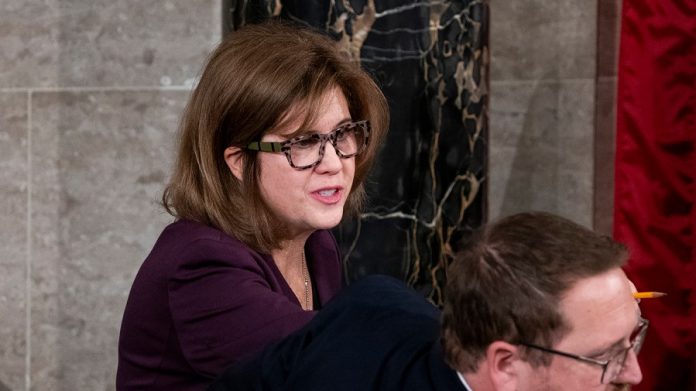
The parliamentarian, Elizabeth MacDonough, ruled that limiting courts’ ability to hold Trump officials in contempt violated the Senate’s rules governing what can be passed with a simple-majority vote on the budget reconciliation fast track.

Senate Democratic Leader Chuck Schumer (N.Y.) hailed the parliamentarian’s decision as a major victory.

“Senate Republicans tried to write Donald Trump’s contempt for the courts into law — gutting judicial enforcement, defying the Constitution and bulldozing the very rule of law that forms our democracy,” Schumer said in a statement responding to the development.

“But Senate Democrats stopped them cold. We successfully fought for rule of law and struck out this reckless and downright un-American provision,” he said.

The provision, tucked into the thousand-page bill House Republicans passed in May, would have required anyone suing the federal government to pay a bond before a court would be allowed to use its contempt power to enforce injunctions and other rulings.

Courts have already ruled more than 190 times against the Trump administration since January.

The controversial language received little notice when it came to the floor, and Rep. Mike Flood (R-Neb.) later caused an uproar at a town hall meeting when he admitted he didn’t know the provision was in the legislation when he voted for it.

“If enacted, this would have been one of the most brazen power grabs we’ve seen in American history — an attempt to let a future President Trump ignore court orders with impunity, putting him above the law,” Schumer said Sunday afternoon.

“Donald Trump is not above the law. And thanks to Senate Democrats — including the tireless work of Senator Durbin and the Judiciary Democrats — the courts can still hold him and any president accountable,” Schumer said, referring to Sen. Dick Durbin (D-Ill.).

Provenir’s Carol Hamilton on credit risk decisioning, fraud prevention and reward

0


The financial services sector is facing an inflection point in 2025 and beyond says Carol Hamilton. And staying ahead is not just about managing credit risk and preventing fraud. Instead, it is about leveraging AI, better data orchestration and an end to fragmented decisioning strategies.

But it means a lot more than just modernising decisioning systems. Getting risk decisioning right will not come from any isolated fix. Instead, there needs to be a change of strategy towards a holistic approach to credit risk decisioning and fraud prevention. And for that approach to work it means aligning data automation and decisioning processes to maximise impact.

A reactive approach to risk management will not effectively combat fraud and manage credit risk. Put simply, a reactive approach is no longer enough. Financial institutions need to embrace a proactive, AI driven strategy that integrates risk decisioning across the entire customer life cycle.

A successful approach includes real time, AI power decisioning, with AI driven models that continuously learn and adapt to new fraud patterns.

“It is a critical moment for a shift from a very reactive risk management approach to something much more intelligence driven, proactive and dynamic so that that credit risk is managed dynamically,” says Hamilton.

Fraud and credit risk are often managed in separate silos, says Hamilton. The result is inefficiencies and missed insights. A unified decisioning approach enables better risk assessment, faster response times and enhanced customer experiences.

Accordingly, financial institutions need to invest in unified decisioning platforms to eliminate silos, reduce inefficiencies and improve risk assessment accuracy.

While financial service providers increasingly recognise that AI can enhance credit risk assessments, strengthen fraud detection and improve operational efficiency, that is only part of the equation. It is true that AI adoption is accelerating but poor data integration remains a significant barrier.

The financial institutions that embrace this transformation will be better positioned to mitigate risks, drive growth and deliver superior customer experiences.

The extent of the challenge facing the sector was highlighted by a global survey conducted by Provenir earlier this year.

Key decision makers at financial services providers globally were surveyed to understand their risk decisioning and fraud challenges across the customer lifecycle, decisioning investment priorities, and AI opportunities.

Why Danny Boyle shot ‘28 Years Later’ on iPhones

0


Director Danny Boyle famously shot his post-apocalyptic classic “28 Days Later” on Canon digital cameras, making it easier for him to capture eerie scenes of an abandoned London, and giving the movie’s fast-moving zombies a terrifying immediacy.

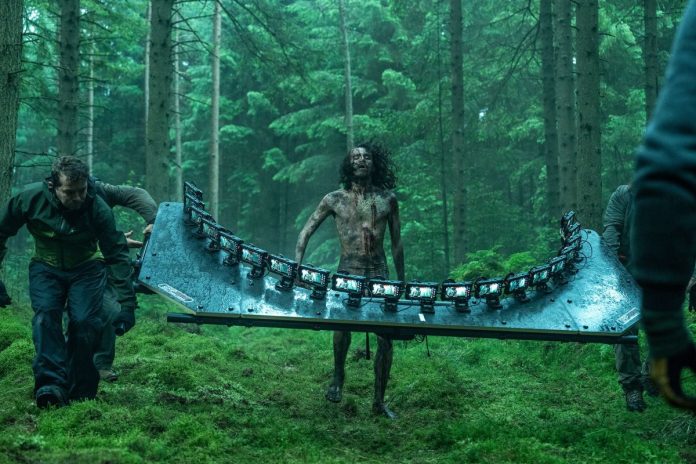
To make his decades-later sequel “28 Years Later” (which opened this weekend), Boyle turned to a different piece of consumer tech — the iPhone. Boyle told Wired that by using a rig that could hold 20 iPhone Pro Max cameras, the filmmaking team created “basically a poor man’s bullet time,” capturing the brutal action scenes from a variety of angles.

Even when he wasn’t using the rig, Boyle (who once directed a biopic of Apple co-founder Steve Jobs) said the iPhone was the movie’s “principal camera,” albeit after disabling settings like automatic focus and adding special accessories.

“Filming with iPhones allowed us to move without huge amounts of equipment,” Boyle said, adding that the team was “able to move quickly and lightly to areas of the countryside that we wanted to retain their lack of human imprint.”