2.2 C
New York
Thursday, January 22, 2026
Home Blog Page 877

NPS could impose surcharge on some national park visitors in 2026: budget proposal

0


(NEXSTAR) — After the busiest year on record, and an already busy start to the year for at least one park, the National Park Service budget could be reduced by more than $1 billion next year. A new surcharge imposed on some visitors may, however, help bring in more than $90 million, according to the Department of the Interior’s budget proposal for fiscal year 2026. 

“I think we’re way undercharging, as a nation, for international visitors,” Secretary Doug Burgum said during a House Committee on Natural Resources oversight hearing earlier this month.

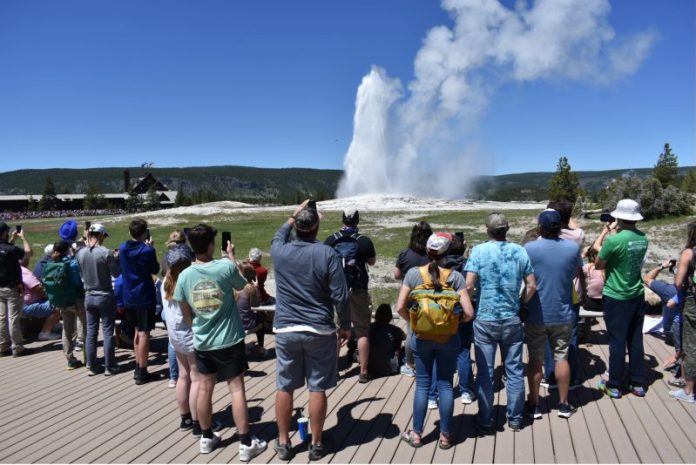
Currently, only 106 of the 475 sites that are managed by the National Park Service charge an entrance fee. The most expensive among them — like Yellowstone, Yosemite, and Zion — charge $35 per private vehicle. Few charge on a per-person basis (for those entering on foot or by bicycle), but the highest fee there is $20, found at the same three parks. If you’d prefer an annual membership, which is not available at all of the fee-charging parks, the most you’ll pay is $70. Some parks also require reservations to get in or visit certain features within the parks.

International visitors do not currently pay more to visit the national parks than U.S. residents.

During the hearing, Burgum pointed to other international venues where Americans and other non-resident tourists are charged more than locals, like the Galapagos Islands.

There, according to the Galapagos Observatory, non-Ecuadorian adults must pay a $200 entrance fee, in cash, to the Galapagos National Park. The entrance fee for children is $100. Meanwhile, Ecuadorian citizens over the age of 12 pay $30 while the fee for younger citizens is $12.

Citizens also have discounted or free admission to popular tourist attractions around the world. College-aged residents of the European Union have free access to several museums within member countries, including the Louvre and The Orsay Museum in Paris. Tourists pay over 20 times more to visit the Taj Mahal than local residents do.

It’s not uncharacteristic for venues and tourist attractions in the U.S. to charge out-of-towners more than locals, either. 

Hawaii will begin charging a “Green Fee” tourist tax next year in order to generate funds for mitigating future environmental challenges the state expects to face. Chicago’s Field Museum offers discounted admission to city residents, for example. Residents of the state of New York are able to pay whatever they prefer to visit The Metropolitan Museum of Art, though they are required to pay at least one penny per ticket. Even Disney World and Disneyland offer deals for those who live near their parks. 

“There could be a billion-dollar revenue opportunity without discouraging visitors,” Burgum said during the committee hearing. He did not expand on how the extra fee could bring in more than $90 million. An analysis by SFGate, using an estimate that 14.6 million international visitors went to U.S. national parks last year, determined that if the parks saw the same number of visitors in 2026, the necessary surcharge to reach the aforementioned budget goal would be about $6 a person.

The Interior Department did not immediately respond to Nexstar’s request for additional information on the proposed surcharge.

Meanwhile, the budget proposal is requesting $2 billion for the national parks, down more than $1 billion from the current budget. It would be the largest cut in NPS history, according to the National Parks Conservation Association (NPCA). 

“It’s nothing less than an all-out assault on America’s national parks,” Theresa Pierno, president and CEO of the NPCA, said.
Veteran chartist unveils eye-popping S&P 500 target

0


Veteran chartist unveils eye-popping S&P 500 target originally appeared on TheStreet.

With the stock market again flirting with record highs, investors want to know if their portfolios can keep climbing the proverbial wall of worry or whether the recent gains have been a last gasp before headline risks kick in and the next downturn starts.

It’s a fair question in a market that has largely performed to analyst expectations only if you measure prognostications by their beginning and end points.

💵💰Don’t miss the move: Subscribe to TheStreet’s free daily newsletter💰💵

Plenty of analysts expected the market to be near peak levels by mid-year, but no one was calling for the bumpy ride that stock market has actually seen.

The S&P 500’s roller coaster ride this year has left many scratching their heads, wondering what may happen next. Many on Wall Street are revamping their S&P 500 targets, including two long-time technical analysts who recently shared their updated forecast.

Technical analysts see reasons why the S&P 500 could continue to rally in 2025.Bloomberg/Getty Images

The Standard & Poor’s 500 Index entered 2025 at 5,868 and peaked on February 19 at 6,144; it then proceeded to give back nearly all of that gain by the time April rolled around. But after President Trump’s so-called “Liberation Day” – when he announced sweeping tariff plans that rattled the markets – the index lost another 15% in a matter of days, setting a new low on April 8 at 4,982.

The market then began to grind its way back; a month after Liberation Day, on May 2, it had recovered the full measure of the decline triggered by the tariff announcement. By May 13, the S&P 500 was in positive territory for the year.

Related: Fed official sends shocking message on interest rate cuts

Since then, it has ground higher, crossing 6,000 on June 6; that – and the record of 6,144 – was where a lot of market observers expected to see resistance, where a market that failed to break through could fall back, potentially all the way back to the April lows.

While news events don’t become part of the S&P 500 chart until they show up in prices, they do factor into what market technicians think can happen next. Technical analysts can cite legitimate concerns about a potential economic slowdown, sticky inflation, uncertain tariff policies, geopolitical tensions around the world and more.

Those headlines cast a shadow over the market, which has market technicians looking for a breakthrough to confirm that the recent bounce-back isn’t just a bear market rally.

Two prominent technical analysts have made it clear that they expect the rally to hold, with new record highs coming any day now.

LinkedIn CEO says AI writing assistant is not as popular as expected

0


While LinkedIn users seem to have embraced AI, there’s one area that’s seen less uptake than expected, according to CEO Ryan Roslansky: AI-generated suggestions for polishing your LinkedIn posts.

“It’s not as popular as I thought it would be, quite frankly,” Roslansky told Bloomberg. When asked why, he argued that the “barrier is much higher” to posting on LinkedIn, because “this is your resume online.” Plus, users can face real backlash if they post something that’s too obviously generated by AI.

“If you’re getting called out on X or TikTok, that’s one thing,” he added. “But when you’re getting called out on LinkedIn, it really impacts your ability to create economic opportunity for yourself.”

At the same time, Roslansky noted that the professional social network has seen a 6x increase in jobs requiring AI-related skills over the past year, while the number of users adding AI skills to their profiles is up 20x.

And he said he uses AI himself when he talks to his boss, Microsoft CEO Satya Nadella:  “Every time, before I send him an email, I hit the Copilot button to make sure that I sound Satya-smart.”

Game 7 line drops as Pacers try for NBA Finals upset vs. Thunder

0


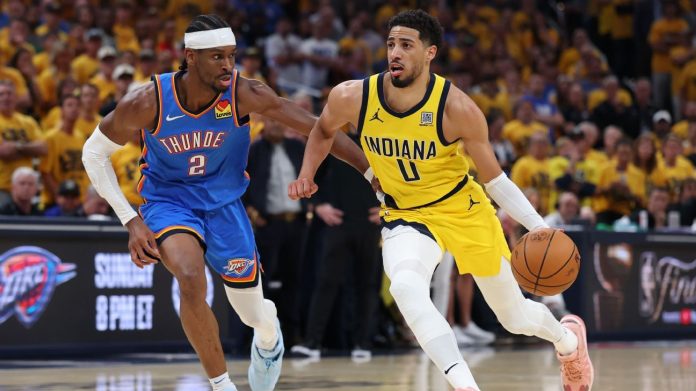
The Indiana Pacers, one win away from the biggest upset in a modern NBA Finals series, have earned the respect of influential bettors heading into Sunday’s Game 7 against the Thunder in Oklahoma City.

Multiple sportsbooks reported taking bets on the underdog Pacers from sharp bettors Friday and Saturday, causing the Game 7 spread to drop by as many as two points. After opening with the Thunder favored by 8.5, the line at ESPN BET moved to Oklahoma City -6.5 on Friday. The consensus line Sunday morning was Thunder -7, tied for the largest point spread in a Finals Game 7 since 1991, according to ESPN Research.

“With the way the series has played out, I can see people taking the [points] rather than laying,” Jeff Sherman, the vice president of risk for the Westgate SuperBook in Las Vegas, told ESPN.

Sherman, a veteran NBA oddsmaker, said his book took bets on Indiana +8 and +7.5 from influential bettors.

Chris Andrews, the sportsbook director at the South Point in Las Vegas, said he took sharp action on Indiana and had to move the line down to Oklahoma City -7 before he could attract any money on the favored Thunder.

The Pacers entered the Finals as +525 underdogs to beat the Thunder in the series. At those odds, Indiana would become the biggest underdog to prevail in the Finals since at least 1975, surpassing the 2004 Detroit Pistons, who upset the Los Angeles Lakers as +500 underdogs, according to SportsOddsHistory.com.

Indiana, after reaching the Eastern Conference finals last year, got off to a slow start this season. The Pacers’ odds to win the championship got as long as 150-1 midway through the season, and few bettors believed they had a chance entering the playoffs. Sixteen teams had attracted more bets to win the title than Indiana at BetMGM, including the Phoenix Suns and Philadelphia 76ers, two squads not in the postseason. The Pacers accounted for 1% of the money wagered on the sportsbook’s odds to win the championship.

Indiana, which entered the season at 50-1 to win the title, would be the biggest preseason long shot to win a title in the past 40 seasons, according to ESPN Research.

Tammy Hembrow, Matt Zukowski Split After 7 Months of Marriage

0


“I feel like I’ve made not the best choices when it comes to relationships,” she added. ”I feel like I’m really good at putting on rose-colored glasses or just getting swept up in it all.”

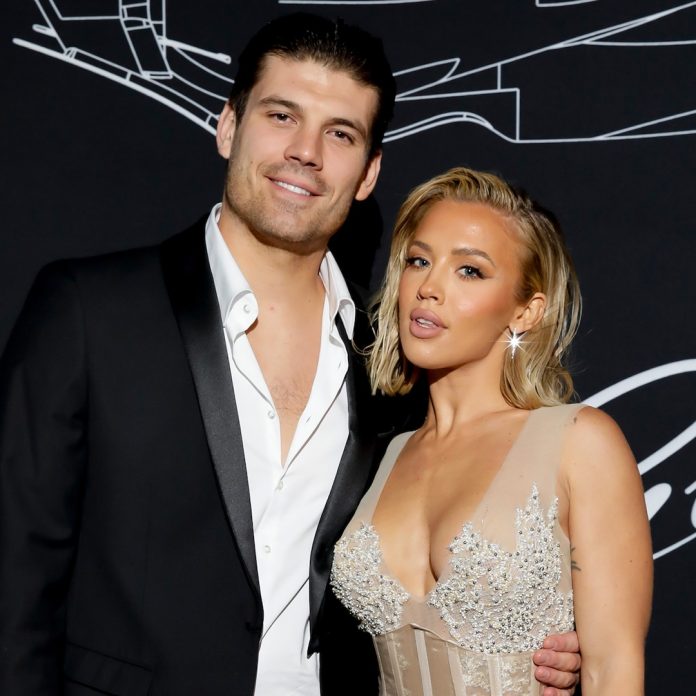
But while she made it clear that she was going to be okay, Tammy—who shares kids Wolf, 10, and Saskia, 8, with her ex Reece Hawkins as well as Posy, 3, with ex-boyfriend Matt Poole—said that the “worst part” of her and Matt’s separation is the effect it might have on her little ones.

So, she decided to focus on spending time with her kids and enjoying “all the good things in my life” moving forward.

“At the end of the day, I know this is what needs to happen,” she admitted. “There’s no other option.”

England vs India first Test: Brydon Carse takes early Yashasvi Jaiswal wicket

0


Brydon Carse’s nipping delivery gets an outside edge and is caught behind by Jamie Smith to dismiss Yashasvi Jaiswal for four runs as India fall to 16-1 in the second innings on day three of the first Test at Headingley.

FOLLOW LIVE: England v India first Test – day three

Available to UK users only.

Rubio on Iran becoming a nuclear weapons power: 'It would be the end of the regime'

0


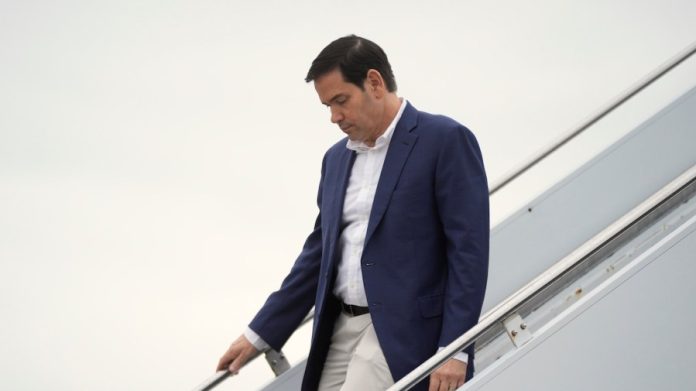
Secretary of State Marco Rubio on Sunday warned that if Iran is committed to building and obtaining nuclear weapons, “it would be the end of the regime.”

During an appearance on Fox News’s “Sunday Morning Futures,” Rubio said the strikes “degraded” Iran’s nuclear capabilities, but warned that if they are determined to become a nuclear weapons power, it would put “the regime at risk.”

“Look, at the end of the day, if Iran is committed to becoming a nuclear weapons power, I do think it puts the regime at risk,” he said. “I really do. I think it would be the end of the regime if they tried to do that.”

He noted that the latest strikes are not the only reason Iran’s nuclear capabilities are impacted.

“It’s certainly been set back from a technical standpoint, not just due to what we did last night, but obviously the Israelis have done incredible work in advance as well,” Rubio said.

Rubio also noted that the U.S. isn’t against Iran using nuclear energy but against having nuclear weapons.

“If what they want is nuclear reactors, so they can have electricity, there are so many other countries in the world that do that, and they don’t have to enrich their own uranium,” he said.

“But if what they want is a secret program buried in the mountain where no one can see it and inspectors can only come when they say they can come…then they’re going to have big problems, because this is a dangerous, violent, radical regime, not the Iranian people,” he said.

He also asked whether Iran is aiming for a civil nuclear program, noting that other countries would likely get involved.

“And if what they want is some secret program that looks nothing like the civil nuclear programs around the world, that looks a lot like you’re trying to build a bomb, they’re going to continue to have problems, not just with us, but with many other countries in the world,” he said.

The bombs targeted three Iranian nuclear sites in Natanz, Esfahan and Fordow, located inside a mountain. Six “bunker buster” bombs were reportedly dropped on Fordow, while more than two dozen Tomahawk missiles were launched at the other two sites.

The bombings mark a significant entrance by the U.S. in the Mideast war, which Israel launched with airstrikes against Iran on June 13.

Oil prices expected to rise after US attack on Iran

0


<span>A barrel of Brent crude was selling for about $77 on Friday, and could rise by another $5 when markets open at 11pm UK time on Sunday.</span><span>Photograph: YONHAP/EPA</span>
A barrel of Brent crude was selling for about $77 on Friday, and could rise by another $5 when markets open at 11pm UK time on Sunday.Photograph: YONHAP/EPA

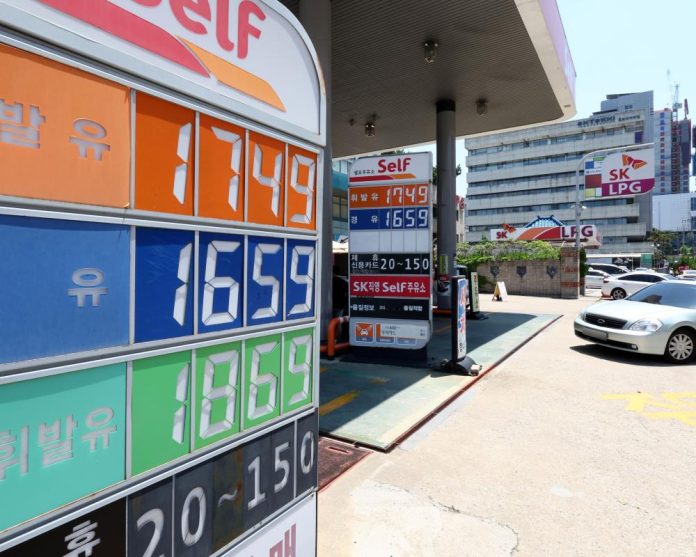
Oil prices are expected to rise as the trading week starts, after the US attack on Iran stoked fears of an escalating regional conflict that could shut down the vital strait of Hormuz shipping route.

A barrel of Brent crude was selling for about $77 on Friday, having risen by more than 10% since mid-June when Israel’s attack on Iranian nuclear sites prompted missile strikes from Tehran against Tel Aviv.

Donald Trump’s decision to follow Israel in launching a US attack on Iran over the weekend could drive prices up by a further $5 when markets open, according to forecasts from oil market analysts.

Trading for the week begins at 11pm UK time on Sunday.

“An oil price jump is expected,” said Jorge Leon, the head of geopolitical analysis at the energy intelligence firm Rystad and a former official at Opec, the group of major oil-producing nations.

“In an extreme scenario where Iran responds with direct strikes or targets regional oil infrastructure, oil prices will surge sharply. Even in the absence of immediate retaliation, markets are likely to price in a higher geopolitical risk premium.”

Brent crude, the traditional benchmark global oil price, could gain $3 to $5 per barrel when markets open, Ole Hvalbye, an SEB analyst, said in a note.

The Wall Street bank JP Morgan has previously forecast that the oil price could rise as high as $130 in the event that a sustained Middle East conflict closes the strait of Hormuz.

Iranian officials have previously threatened to block the Strait, the conduit for a fifth of global oil consumption, if Tehran’s interests are threatened.

Any such retaliation could have huge knock-on effects for the global economy, with the resulting oil price shock risking a period of high inflation, as motorists pay more for petrol and the cost of transporting goods soars.

Brent crude settled at $77.01 a barrel on Friday, while the US West Texas Intermediate (WTI) benchmark was at $73.84.

Some analysts played down the risk of long-term disruption to shipping routes, pointing out that most of Iran’s oil exports to China pass through the strait of Hormuz.

If oil prices were to rise to $130, that would exceed levels reached in the aftermath of Russia’s invasion of Ukraine.

The all-time high for Brent crude is $147.50, set in July 2008 just before the global financial crisis sent prices plunging.

What happens when AI comes for our fonts?

0


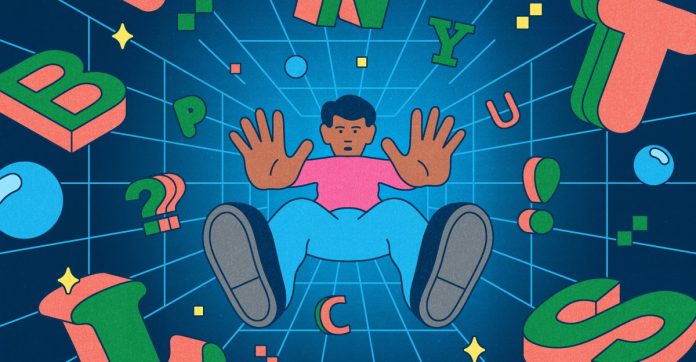
Monotype is keen for you to know what AI might do in typography. As one of the largest type design companies in the world, Monotype owns Helvetica, Futura, and Gill Sans — among 250,000 other fonts. In the typography giant’s 2025 Re:Vision trends report, published in February, Monotype devotes an entire chapter to how AI will result in a reactive typography that will “leverage emotional and psychological data” to tailor itself to the reader. It might bring text into focus when you look at it and soften when your gaze drifts. It could shift typefaces depending on the time of day and light level. It could even adapt to reading speeds and emphasize the important portions of online text for greater engagement. AI, the report suggests, will make type accessible through “intelligent agents and chatbots” and let anyone generate typography regardless of training or design proficiency. How that will be deployed isn’t certain, possibly as part of proprietarily trained apps. Indeed, how any of this will work remains nebulous.

Monotype isn’t alone in this kind of speculation. Typographers are keeping a close eye on AI as designers start to adopt tools like Midjourney for ideation and Replit for coding, and explore the potential of GPTs in their workflow. All over the art and design space, creatives are joining the ongoing gold rush to find the use case of AI in type design. This search continues both speculatively and, in some places, adversarially as creatives push back against the idea that creativity itself is the bottleneck that we need to optimize out of the process.

That idea of optimization echoes where we were a hundred years ago. In the early 20th century, creatives came together to debate the implications of rapid industrialization in Europe on art and typography at the Deutscher Werkbund (German alliance of craftspeople). Some of those artists rejected the idea of mass production and what it offered artists, while others went all in, leading to the founding of the Bauhaus.

“It’s almost as if we are being gaslighted into believing our lives, or our professions, or our creative skills are ephemeral.”

The latter posed multiple vague questions on what the industrialization of typography might mean, with few real ideas of how those questions might be answered. Will typography remain on the page or will it take advantage of advances in radio to be both text and sound? Could we develop a universal typeface that is applicable to any and all contexts? In the end, those experiments amounted to little and the questions were closed, and the real advances were in the efficiency of both manufacturing and the design process. Monotype might be reopening those old questions, but it is still realistic about AI in the near future.

“Our chief focus is connecting people to the type that they need — everywhere,” says Charles Nix, senior executive creative director at Monotype, and one of Re:Vision’s authors. This is nothing new for Monotype, which has been training its similarity engine to recognize typefaces since 2015.

But the broader possibilities, Nix says, are endless, and that’s what makes being a typographer now so exciting. “I think that at either end of the parentheses of AI are human beings who are looking for novel solutions to problems to use their skills as designers,” he says. “You don’t get these opportunities many times in the course of one’s life, to see a radical shift in the way technology plays within not only your industry, but a lot of industries.”

Not everyone is sold. For Zeynep Akay, creative director at typeface design studio Dalton Maag, the results simply aren’t there to justify getting too excited. That’s not to say Dalton Maag rejects AI; the assistive potential of AI is significant. Dalton Maag is exploring using AI to mitigate the repetitive tasks of type design that slow down creativity, like building kern tables, writing OpenType features, and diagnosing font issues. But many designers remain tempered about the prospect of relinquishing creative control to generative AI.

“It’s almost as if we are being gaslighted into believing our lives, or our professions, or our creative skills are ephemeral,” Akay says. She is yet to see how its generative applications promise a better creative future. “It’s a future in which, arguably, all human intellectual undertaking is shed over time, and handed over to AI — and what we gain in return isn’t altogether clear,” she adds.

For his part, Nix agrees: the more realistic and realizable use of AI is the streamlining of what he calls the “really pedantic” work of typography. AI might flatten the barrier to entry in design and typography, he says, but “creative thinking, that state of being a creative being, that’s still there regardless of what we do with the mechanism.”

“Thirty-five years ago there was a similar sort of thought that introducing computing to design would end up replacing designers,” he continues. “But for all of us who have spent the last 35 years creating design using computers, it has not diminished our creativity at all.”

“For all of us who have spent the last 35 years creating design using computers, it has not diminished our creativity at all.”

That shift to digital type was the result of a clear and discernible need to improve typographic workflow from setting type by hand to something more immediate, Akay says. In the current space, however, we’ve arrived at the paintbrush before knowing how the canvas appears. As powerful as AI could be, where in our workflow it should be deployed is yet to be understood — if it should be deployed at all, given the less-than-stellar results we’re seeing in the broader spectrum of generative AI. That lack of direction makes her wonder whether a better analog isn’t the dot-com bubble of the late 1990s.

In many ways, it mirrors our current situation with AI. As public access to the internet increased, a wave of dot-com startups emerged and with them increased venture capital, even though the internet at the time “never connected to a practical consumer need,” Akay says. Overvalued and without a problem to solve or a meaningful connection to consumers, many of those startups crashed in 2000. “But [the internet] came back at a time when there were actual problems to solve,” she adds.

Similarly, few consumers exploring AI are professional designers trying to optimize workflow; rather, AI is increasingly the playground — and product — of executives overvaluing AI as they attempt to automate jobs and try to push creativity out of creative professions.

Both Nix and Akay agree a similar crash around AI might actually be beneficial in pushing some of those venture capitalist interests out of AI. For Nix, however, just because its practical need isn’t immediately obvious doesn’t mean it’s not there or, at least, won’t become apparent soon. Nix suggests that it may well be beyond the bounds of our current field of vision.

Nix adds that in our Western-focused view of AI, we might not see the difference in our expansive selection of typefaces and how limited those choices might be for non-Latin scripts, for instance. That, and similar areas outside the Western mainstream of design, may be where the need for change is more apparent. “The periphery may end up driving the need-state [for AI].”

For all that, it remains unlikely that current models of selling typography will change, however. We’d still be licensing fonts from companies like Monotype and Dalton Maag. But in this AI-driven process, these generative apps may well be folded into existing typography subscriptions and licensing costs passed on to us through payment of those subscription fees.

Though, that remains more speculation. We are simply so early on this that the only AI tools we can actually demonstrate are font identification tools like WhatTheFont and related ideas like TypeMixer.xyz. It’s not possible to accurately comprehend what such nascent technology will do based solely on what it does now — it’s like trying to understand a four-dimensional shape. “What was defined as type in 1965 is radically different from what we define as type in 2025,” Nix adds. “We’re primed to know that those things are possible to change, and that they will change. But it’s hard at this stage to sort of see how much of our current workflows we preserve, how much of our current understanding and definition of typography we preserve.”But as we explore, it’s important not to get caught up with the spectacle of what it looks like AI can do. It may seem romantic to those who have already committed to AI at all costs, but Akay suggests this isn’t just about mechanics, that creativity is valuable “because it isn’t easy or fast, but rather because it is traditionally the result of work, consideration, and risk.” We cannot put the toothpaste back in the tube, but, she adds, in an uncertain future and workflow, “that doesn’t mean that it’s built on firm, impartial foundations, nor does it mean we have to be reckless in the present.”

Reds’ Elly De La Cruz, M’s Trent Thornton fall ill due to heat

0


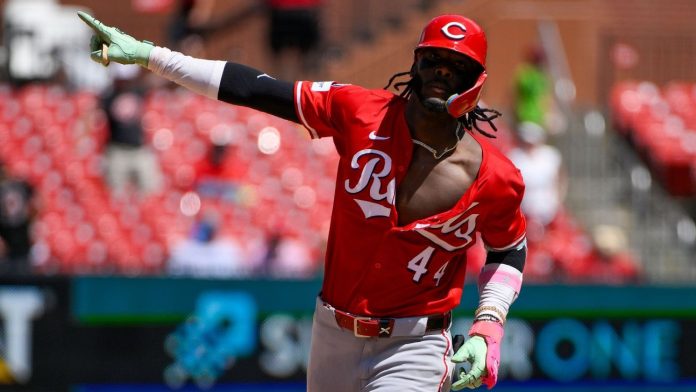
Cincinnati Reds shortstop Elly De La Cruz and Seattle Mariners reliever Trent Thornton got sick Saturday while playing in the extreme heat that covered much of the United States.

De La Cruz vomited on the field with two outs in the fourth inning of Cincinnati’s extra-inning loss against the Cardinals in St. Louis. He was checked on by an athletic trainer, and two workers from the grounds crew cleaned up the area.

“I actually watched him. He drank a bunch of water. I mean a bunch,” Reds manager Terry Francona said, “and then he went right out and got rid of it.”

The 23-year-old De La Cruz, who is from the Dominican Republic, stayed in the game and hit a two-run homer in the seventh.

Thornton pitched 2⅓ scoreless innings for Seattle before departing in the eighth as the Mariners lost 10-7 to the Cubs in Chicago. The 31-year-old right-hander had to be helped off the field.

Mariners manager Dan Wilson said Thornton had “a little bit of a heat-related illness.”

“It was a scary moment, for sure,” Wilson said. “He battled hard. But just really glad that he’s feeling a little bit better now and should be OK.”

The game-time temperature for the Reds at Cardinals was 92 degrees, and it was 94 for the first pitch of the Mariners’ loss to the Cubs. Milwaukee‘s game at Minnesota was played under an excessive heat warning, and the Rockies said the first-pitch temperature of 98 degrees for their game against the Diamondbacks at Coors Field was highest for a major league game this season.

Seattle and Chicago finished their game with three umpires after Chad Whitson got sick. Dexter Kelley moved from second base to home plate.

Whitson was treated in the Mariners’ dugout.

“He came in, same kind of thing. Just was not feeling well,” Wilson said. “Threw up a few times in the dugout, and then they came and took care of him from there. The heat was a real thing today, for sure.”

Whitson was dealing with some dehydration, but a Major League Baseball spokesman said he was doing better Saturday night and had been cleared to work third base for the series finale.

A Wrigley Field staffer had a heat-related medical issue right after Saturday’s game, according to a Cubs spokesman. He was tended to by medical personnel and walked off the field on his own.

The Cubs set up cooling and misting stations throughout Wrigley Field to help fans with the heat Saturday, along with additional emergency personnel. The team had similar plans in place for Sunday, along with bringing in a city bus to use as a cooling station on the street.

The Associated Press contributed to this report.