-8.2 C
New York
Wednesday, January 21, 2026
Home Blog Page 884

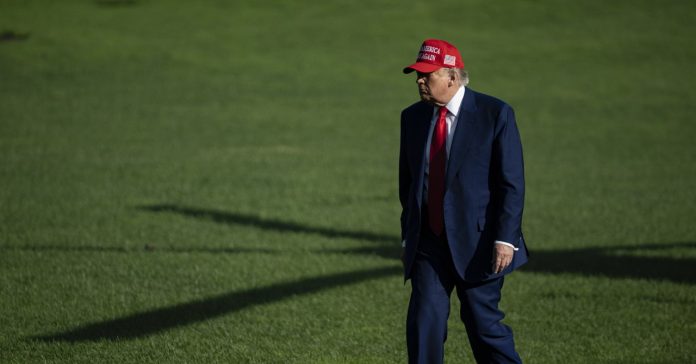
Truth Social Crashes as Trump Live-Posts Iran Bombing

0


Truth Social malfunctioned on Saturday night amid President Donald Trump’s announcement that the United States had bombed Iran’s nuclear facilities.

Starting around 8 pm ET on Saturday, attempts to load the social network, which is owned by Trump Media & Technology Group (TMTG), displayed error messages. “Network failed,” a message on Truth Social reads. “Please try again.”

Trump’s initial Truth Social announcement that the United States had entered Israel’s war against Iran posted at 7:46 pm ET, stating that the US had waged a “very successful attack on the three Nuclear sites in Iran, including Fordow, Natanz, and Esfahan.” Trump’s account on the social media platform X posted a screenshot of the bombing announcement at 7:53 pm ET.

“All planes are now outside of Iran air space. A full payload of BOMBS was dropped on the primary site, Fordow,” Trump continued. “All planes are safely on their way home. Congratulations to our great American Warriors. There is not another military in the World that could have done this. NOW IS THE TIME FOR PEACE! Thank you for your attention to this matter.”

Trump frequently shares posts to Truth Social about issues of national and international importance. The president appeared to post multiple times after news of the US bombings against Iran were first announced. A significant portion of Trump’s net worth is reportedly derived from his stake in TMTG, Truth Social’s parent company.

DownDetector, a website that crowdsources service outages, saw an influx of reports of Truth Social going down around 8 pm. The reason for the apparent outage was not immediately clear. NetBlocks, which monitors internet accessibility, posted on BlueSky just before 9 pm ET: “Truth Social is experiencing international outages for many users after US President Donald Trump announces strikes on three nuclear sites in Iran; incident not related to country-level internet disruptions or filtering.”

Truth Social did not immediately respond to WIRED’s requests for comment.

US and Iranian officials, speaking on the condition of anonymity, confirmed to The New York Times that US forces had conducted airstrikes on the Fordo and Natanz facilities. The condition of the US targets were not yet confirmed as of just before 9 pm ET.

Israel first began bombing targets in Iran on June 13. The two countries have repeatedly targeted each other since.

On Wednesday, Truth Social reportedly sent an email to at least some users encouraging them to follow Trump’s account. The email read in part, “If you aren’t following President Donald J. Trump on Truth Social, you’re missing an essential resource for navigating world affairs today.”

Trump will hold a televised address at 10 pm ET, according to the White House press secretary, Karoline Leavitt.
Kade Anderson’s historic outing has LSU one win from MCWS title

0


OMAHA, Neb. — After 61 days — a full two months — of undefeated baseball, it was beginning to feel like it would take something truly spectacular to end Coastal Carolina’s impossible-to-do-these-days 26-game winning streak. Something rarely seen, produced by someone rarely seen.

That someone’s name was LSU’s Kade Anderson. And that something was actually a handful of somethings.

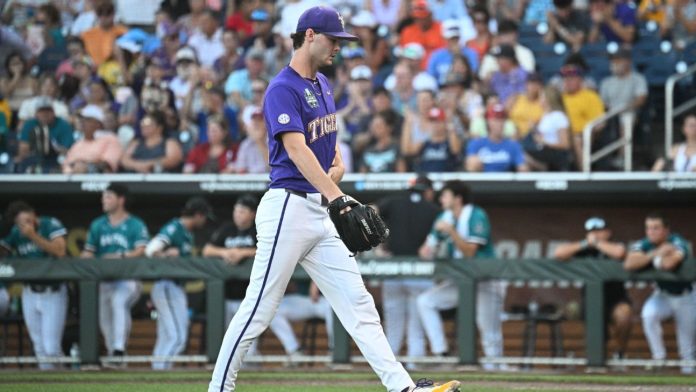
In the opening game of the best-of-three Men’s College World Series finals Saturday, the 20-year-old threw only the second complete game of his collegiate career. He also threw just the third complete game shutout seen in the current 22-year era of the MCWS finals. It was also the first 1-0 victory for LSU in its prolific, nearly unparalleled Omaha history.

By the time Anderson had thrown the last of his 130 pitches, the Tigers had ended the Chanticleers’ streak and extended LSU’s own postseason run of seven consecutive wins, now a perfect 4-0 in Omaha and one victory away from the program’s eighth national title.

“Kade is the best pitcher on the planet,” said LSU head coach Jay Johnson, openly assuming that the Washington Nationals will use the first pick of next month’s MLB draft to make the Slidell, Louisiana, native a member of their organization. “Even with his struggles tonight, when I went out to talk to him, he looked at me and said, ‘Don’t worry about me. I got this.’ I have never doubted him before. I wasn’t going to start tonight.”

He did indeed struggle. Well, as much as a rubber-armed 98 mph thrower can struggle. He countered his 10 strikeouts with five walks and hit two batters — actually, the same batter twice — contributing to Coastal’s nation-leading HBP tally.

Those relatively tiny struggle stats loomed large only because CCU refused to go away. The Chanticleers put runners on and got those runners into scoring position, but they were 0-for-9 when they got there. Meanwhile, LSU was being handled by Coastal Carolina pitcher Cameron Flukey, who smoked through six innings and was relieved by equally impressive Dominick Carbone. The only run they surrendered came in the first inning, and that was manufactured via a LSU seven-pitch walk, a groundout and a single. The game’s only score came in its very first stanza. The Tigers were on 2-of-14 with runners on base.

“Everything was working today,” Flukey said in the postgame news conference. “To go through a lineup like that, yeah, it was working.”

Then, after he left that stage and entered the concourse, teammate and catcher Caden Bodine wrapped his arm around his pitcher and said, “It was working. It was working for both of you guys. Classic duel, man.”

The winner of that duel, knowing this would be his last in an LSU uniform, was asked how often, as a Louisiana kid, had he dreamed of winning a game like this for the state’s sport pride and joy in their Omaha home away from the bayou home.

“Every single night,” he replied. Then he course-corrected on behalf of his entire team. “But this game also didn’t win the College World Series. We have to win more.”

To do that, LSU will face Coastal’s ace Jacob Morrison. On Saturday night, Anderson boosted his record to 12-1. On Sunday afternoon, Morrison will try to hit 13-0. And while the rest of the college baseball world will spend the time in between assuming that the momentum of a Game 1 win will carry a team to the eventual title, the two head coaches know better.

“If it was going to be easy, then there would be two national champions,” said Kevin Schnall, who is in his first season as head coach of his alma mater. “We won 26 in a row. Let’s just call it what it is. The odds were not in our favor to win 28 and 0 and win a national championship. So, now we respond. We know how to do that. We did it a lot tonight. It just didn’t bounce our way.”

Remember the stat about Anderson’s complete game shutout being just the third in the MCWS finals since 2003? The last one came in 2016, when Arizona’s JC Cloney hurled a full night’s work in the opening game of the champ series. Like Anderson, he also allowed only three hits in a 1-0 victory. But the Wildcats, who were then coached by Johnson, dropped the next two and lost the title. Who won the championship? Coastal Carolina, with then-assistant coach Schnall on the staff.

“I don’t need to do any psychological work with these guys tonight,” Schnall said as he stood among his players and they prepared to board the bus for their hotel and a night of strategic studies and hopefully a little sleep ahead of Sunday’s day game (2:30 p.m. ET on ABC). “Now we are challenged with winning two games in a row. We know how to do that. But first, we have to win one game before we start focusing on the next one.”

Then, in a rare crack of his usual stoic, hyper-focused stone-cold game face, Schnall showed just a hint of a smirk. Perhaps he was speaking for everyone in college baseball when he quipped: “And we don’t ever have to see Kade Anderson ever again.”

Witnesses Speak on “Murderer” Claims

0


District Attorney Michael Morrissey Fires Back Against Karen Read Defense Allegations

In a lengthy Aug. 25, 2023, video statement, Norfolk District Attorney Michael Morrissey denied that any fight occurred within the Albert home on the night O’Keefe died. Eleven people had given statements saying they did not see the officer enter the house, he said, and “zero people” said they saw go inside. Data from O’Keefe’s phone that was found under his body, Morrissey said, “shows that his phone did not enter that home.”

Accusing any of the witnesses of murder was “outrageous,” the prosecutor added. Moreover, he said, Proctor had no opportunity to plant evidence nor motive to do so. (Read has said that she cracked her taillight pulling out of the garage to go look for O’Keefe, but alleged it was smashed only after her vehicle was in police custody.) Proctor didn’t have a “close personal relationship” with anyone involved in the investigation, Morrissey said, and “every suggestion to the contrary is a lie.”

Prosecutor Lally argued against a defense motion to obtain records of texts, calls and social media message between Proctor’s wife and Brian Albert’s sister-in-law Jennifer McCabe, one of the people with Read when O’Keefe’s body was found. Lally said during a January 2024 court hearing, “As the Commonwealth understands it, Trooper Proctor has a sister, who has a friend, who has a sister, who has a husband, who has a brother, who has a wife, who has a sister who is Jennifer McCabe.” 

Trump’s Iran gamble fraught with risk

0


Anthony Zurcher

North America correspondent

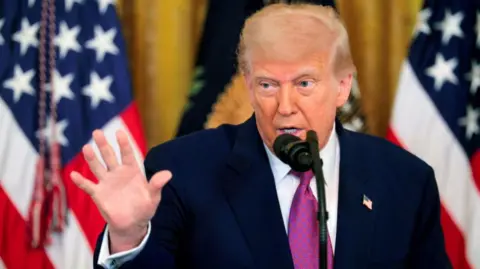
Getty Images Donald Trump in a suit with his hand raised, standing in front of US flagsGetty Images

Donald Trump, the president who returned to the White House in January promising to be a “peacemaker”, has taken a dramatic step to insert the US into the fraught conflict between Iran and Israel.

Far from bringing peace to the Middle East since taking office, Trump is now presiding over a region on the precipice of even greater warfare – a fight in which America is an active participant.

In a televised address to the nation from the White House just over two hours after announcing on social media that American forces had struck three nuclear sites in Iran, the American president said the operation had been a “spectacular success”.

He expressed hope that his move would open the door to a more lasting peace where Iran no longer had the potential to become a nuclear power.

Iran has said that there was only minor damage to its heavily fortified Fordo nuclear site. Time will tell which side is correct.

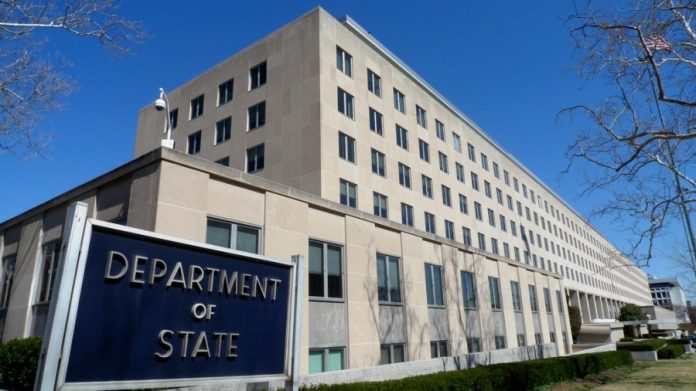
Flanked by Vice-President JD Vance, Secretary of State Marco Rubio and Defence Secretary Pete Hegseth, Trump warned Iran that if they did not abandon their nuclear programme, they would face future attacks that were “far worse and a lot easier”.

There were “many targets left”, Trump said, and the US would go after them with “speed, precision and skill”.

Despite the president’s bravado, a continued American military engagement in Iran may be a worst-case scenario for the US, the region and the world.

UN Secretary General warned of a “spiral of chaos” that could result from the American decision to escalate the conflict, noting that the Middle East was already “on edge”.

If Iran retaliates – as Ayatollah Ali Khamenei warned would happen in the event of a US attack – then the American side may feel compelled to respond.

Trump’s “unconditional surrender” rhetoric from earlier this week had put the president in a position where it would be difficult for him to back down. Iran has backed itself in a similar corner.

This is how wars start – and how they can expand beyond the control, and imaginations, of those involved.

On Thursday Donald Trump gave the Iranians a two-week deadline but that turned out to be much shorter than expected. On Saturday night, the US president announced he had acted.

Was the two weeks for negotations a feint? A bid to lure the Iranians into a false sense of security this weekend? Or did behind-the-scenes negotiations led by Trump’s designated peacemaker Steve Witkoff collapse?

In the immediate aftermath of the strikes, little is known. But in his social media post and in his televised address, Trump tried to open the door for peace.

That may be an optimistic outlook, however. While the Israelis have made considerable efforts toward degrading Iran’s military capabilities, the ayatollah still has weapons at his disposal.

Things could get messy fast.

Now the waiting game begins. How will Iran respond to attacks on three of its sites, including Fordo, seen as the crown jewel of its nuclear programme?

Trump appears to be hoping the US strikes force Iran to make greater concessions at the negotiating table, but it seems unlikely that a nation unwilling to talk while under Israeli attack will be more inclined when American bombs are also falling.

And while Trump seemed to be implying that the US attack was a singular, successful event, if that’s not the case, then the pressure to strike again will grow – or the president will have taken a serious political risk for minimal military gain.

That risk includes domestic political concerns, along with questions of international security. The prospect of a US attack on Iran had already prompted sharp criticisms not only from Democrats but also from within Trump’s own “America First” movement.

The president’s unusual decision to give his national address flanked by three of his closer advisors may have been an attempt to project unity within his party.

Vance, in particular, has been an outspoken advocate of a more restrained American foreign policy and, recently, had taken to social media to make the case that Trump is still a non-interventionist who should be given the benefit of the doubt by his supporters.

If this attack is a one-off event, Trump may be able to smooth over the divisions within his base. But if it pulls the US into a larger conflict, the president could have an uprising with his ranks.

Saturday’s attack was an aggressive move for a president who boasted of starting no new wars during his first presidential term and who regularly railed against predecessors who had drawn the country into foreign conflicts on the campaign trail last year.

Trump has made his move. Where it goes from here is not entirely within his control.

Senator Fulbright had a vision. His successors must see it through.

0


Last week, 11 of the 12 members of the Fulbright Board of Directors resigned, citing political interference in awarding Fulbright Scholar awards for the upcoming year. This comes less than two weeks after ten students and six researchers left Sweden after nine months away from home, returning to America to continue their educational and professional paths.

Unless something changes, this year’s Fulbright research grantees to Sweden, and those to other countries around the world, may be the last to make the trip, as the entire international cultural exchange program budget faces elimination in the budget bill.  

Since it was founded in 1946, the Fulbright Program has enjoyed bipartisan support because it has always been aligned first and foremost with our national interests. In the words of Sen. J. William Fulbright (D-Ark.), the American politician and statesman who served in the U.S. Senate between 1945 and 1974, Fulbright was designed to be “a modest program with an immodest aim — the achievement in international affairs of a regime more civilized, rational and humane than the empty systems of power of the past,” as he said when the program was signed into law by President Harry S. Truman.

In order to continue this work, Fulbright’s successors today must act to restore this important program that has been paying huge dividends for nearly 80 years.

The Fulbright scholars in Sweden, including myself, hail from institutions across the country. After a rigorous selection process over the course of a year, they were chosen to represent our country abroad, facing long winter days, to study critical issues such as immunities in malaria infections, potential treatments for chronic kidney disease, root causes of autoimmune disorders, fair uses of artificial intelligence, strengthened safety regulations in long-range rescue operations, long-term sustainability of oceanic food sources, and enhanced access to medical services. 

The Fulbright Program runs on a tight annual budget of $288 million, representing a minuscule share of America’s international relations budget. Scholars and students are deployed to 165 countries around the world. Stipends to grantees are exceedingly modest, covering only room, board and incidental expenses. Limited financial support encourages grantees to explore local resources and even share accommodations.

To survive the Nordic winter when the sun appeared only two or three hours each day, the 15 researchers in Sweden spent their free time participating in local sports teams and volunteering at health clinics and community service organizations. Their presence in community activities helped forge lifelong relationships and spread goodwill at a time when America’s hard power is frequently questioned abroad.

Since the program’s inception, Fulbright recipients have gone on to win 62 Nobel prizes, 96 Pulitzer prizes and 17 Presidential Medals of Freedom. Eighty-two have been named MacArthur geniuses and 44 have become heads of state. The list of Fulbrighters is long, distinguished and bipartisan. Fulbrighter Linus Pauling, one of the founders of the fields of quantum chemistry and molecular biology, won both the Nobel Prize in Chemistry and the Nobel Peace Prize. Authors John Steinbeck, Edward Albee and John Updike were Fulbrighters, as is American soprano Renée Fleming.

In the eyes of Fulbright, who himself received the Presidential Medal of Freedom in 1993, the Fulbright Program was meant to bring a little more knowledge, a little more reason and a little more compassion into world affairs, thereby increasing the chance that nations will learn to live in peace and friendship. The 2025 Swedish Fulbright researchers, representing the best and brightest our country has to offer, have done their part to contribute to this goal.

I wish our senators could have seen them in action as I have. At a time when governmental funding priorities are scrutinized for fiscal efficiency, the Fulbright Program stands as a proven investment in education and diplomacy while promoting American values worldwide and shaping future leaders.

Fulbright helps build a stronger, smarter, more prosperous United States. Eliminating its funding would be a poor investment in America’s future, making the world a more dangerous place in the process.

Christie S. Warren, the 2024-2025 Fulbright-Lund Distinguished Chair in Public International Law, is Professor of the Practice of International and Comparative Law and director of the Center for Comparative Legal Studies at William and Mary Law School.

The Crypto Rally Is ‘Just Getting Started’ According to Analysts. Buy Coinbase Stock Here.

0


Crypto coins by Kanchanara via Unsplash

The crypto tide is surging again. Bitcoin (BTCUSD) vaulted past $110,000 in June, edging near its all-time high, fueled by heavy institutional and exchange-traded fund (ETF) inflows. President Donald Trump’s renewed support and pro-crypto policy winds have only intensified this momentum. Now, Ethereum (ETHUSD) is eyeing predictions as high as $15,000 while Bitcoin bulls whisper targets near $250,000 before year’s end. Meanwhile, altcoins and artificial intelligence-powered blockchain projects are also gaining serious traction, hinting at a potential full-blown bull run in 2025.

Amid this resurgence stands Coinbase (COIN), the premier U.S. crypto exchange. As digital assets turned mainstream, Coinbase became the go-to gateway for retail and institutional investors diving into Bitcoin, Ethereum, and the broader crypto universe. With the crypto titans gaining steam and interest broadening across the ecosystem, Coinbase stands perfectly positioned to ride this rally’s every twist, turn, and breakout.

One Rosenblatt analyst thinks the crypto rally is “just getting started.” With expectations of lighter regulations and Coinbase’s push into crypto payments and lending, some see COIN stock as a wise buy for investors while it’s still in the runway phase.

Founded in 2012, Coinbase is a Delaware-based crypto exchange with a $75 billion market capitalization. As the world’s third-largest crypto exchange, it caters to retail and institutional investors, driving revenue through trading and services. Coinbase expands through global licensing, acquisition, and innovation, diving into stablecoin payments, crypto cards, and subscriptions while shaping policy and redefining modern digital finance.

Coinbase’s meteoric rise to a 52-week high of $349.75 last December felt like a coronation. Bitcoin was booming, and Trump’s pro-crypto stance added fuel to the fire. But the rally fizzled. Regulatory overhangs, market tremors, and the snub from the S&P 500 Index ($SPX) bruised sentiment. COIN stock’s glow dimmed, slipping steadily as investor euphoria gave way to caution.

Now, the tide’s turning. Shares of Coinbase have rocketed 60% in just three months, fueled by Bitcoin’s resurgence and strategic bets like the Deribit acquisition. But a recent jolt came, with a more than 16% jump in just the last trading session, sparked by the Senate’s GENIUS Act win bringing clarity to stablecoin rules. The surge of Circle, USD Coin (USDCUST) issuer and Coinbase partner, as well as an American Express (AXP) powered credit card push shows that Coinbase is rewiring its playbook — and Wall Street is listening.

www.barchart.com
www.barchart.com

Coinbase’s fiscal first-quarter earnings report painted a tale of momentum clashing with missed marks. Revenue clocked in at $2.03 billion, up 24% year-over-year (YOY), riding on heightened trading activity and surging demand for offerings like Coinbase One. But Wall Street wanted more. Earnings per share landed at just $0.24, and both top and bottom lines missed estimates. Adjusted net income dropped 23% to $1.94 per share.

Transaction revenue jumped 18% to $1.3 billion, with consumer volume soaring 39% YOY to $78 billion, even though it slipped 17% from Q4. Institutional volume hit $315 billion, up 23% annually but down sequentially. Subscriptions and services revenue didn’t flinch, soaring 36% YOY to $698.1 million, buoyed by stablecoin demand and platform stickiness. April alone generated $240 million in transaction revenue.

Management spotlighted the $2.9 billion Deribit buy as a strategic leap, cementing Coinbase’s global derivatives play. CEO Brian Armstrong aims to unify spot, futures, and options under one roof, eyeing deeper institutional ties. With growing USDC balances fueling steady revenue, the deal is seen as EBITDA-accretive and key to unlocking seamless, profitable institutional trading ahead.

Looking ahead, Coinbase acknowledged macro jitters and crypto volatility as short-term bumps. CFO Alesia Haas flagged early Q2 softness in blockchain rewards and subscriptions. Still, management remains upbeat, leaning on a sturdy roadmap, global push, and improving regulatory winds. They expect Q2 subscription and services revenue to land between $600 million and $680 million, anchoring growth.

Analysts monitoring Coinbase expect the company’s EPS to be around $5.12 in fiscal 2025, before surging by 26.8% annually to $6.49 in fiscal 2026.

Rosenblatt’s Chris Brendler is all in on COIN stock, giving a “Buy” rating with a $300 price target. Fresh off Coinbase’s Annual State of Crypto Summit, Brendler came away convinced that the company is shaping the crypto wave. The summit spotlighted a surge in stablecoins and on-chain trading as well as strengthening ties with traditional finance through slick new products and strategic partnerships. Brendler views this as a real play for long-term growth.

The analyst believes waning regulatory pressure gives Coinbase the freedom to stretch beyond its core into payments and lending. Sure, trading volumes look soft this quarter. That has raised a few eyebrows, along with the stock dipping last week. But with crypto momentum kicking up again, Brendler says now’s the time to step in, before the next leg of the rally erupts. Adding fuel to the bullish fire, Canaccord Genuity analyst Joseph Vafi holds the highest COIN price target at $400, suggesting 30% upside.

Wall Street leans bullish on COIN, with the stock having a “Moderate Buy” consensus rating overall. Out of 28 analysts, 12 now rate it a “Strong Buy” — two more than last month — while one analyst calls Coinbase a “Moderate Buy.” Finally, 14 analysts play it safe with “Hold” ratings while one is outright bearish with a “Strong Sell” rating on COIN stock.

The stock’s surge over the past few weeks has it trading above the mean price target of $268.61, signaling strong market appetite.

www.barchart.com
www.barchart.com

On the date of publication, Sristi Suman Jayaswal did not have (either directly or indirectly) positions in any of the securities mentioned in this article. All information and data in this article is solely for informational purposes. This article was originally published on Barchart.com

After raising $38M, African e-commerce startup Sabi lays off 20%, pivots to traceable exports

0


African B2B e-commerce startup Sabi has laid off around 20% of its workforce (~50 employees) as it pivots from its original retail-focused platform to double down on a growing business in commodity exports.

The layoffs, confirmed by the company on Thursday, are part of a broader restructuring aimed at aligning resources with what it describes as rising demand for traceable, ethically sourced commodities, an area it began building out last year under a new vertical called TRACE (Technology Rails for African Commodity Exchange).

Launched in Lagos in 2020, Sabi began as a software platform helping informal retailers digitize inventory and sales amid COVID-19 disruptions. It later expanded into a fast-moving consumer goods (FMCG) marketplace with embedded finance, scaling across Nigeria and Kenya. By mid-2023, Sabi claimed over 300,000 merchants and $1 billion in annualized GMV. 

That momentum helped it secure a $38 million Series B round at a $300 million valuation.

But like many startups in the B2B e-commerce space in Africa, Sabi faced structural headwinds: thin margins, capital intensity, and tough unit economics. Unlike competitors that burned through capital, Sabi maintained an asset-light model and stayed profitable. Still, the market shift has been clear.

In March, the company launched TRACE as a new business line, alongside FMCG. The new vertical targets mineral and agricultural exports such as lithium, cobalt, tin, and cash crops, where global buyers increasingly demand transparency, ESG compliance, and traceability.

Sabi says it now exports over 20,000 tons of such commodities monthly to buyers across the U.S., Europe, and Asia. It has also launched operations in the U.S. and made senior hires to support that expansion.

“Sabi is entering its next chapter, with a focused commitment to commodity trade and traceability for global customers,” it said in a statement.

“We’re doubling down on the part of our business seeing the most demand, built on the strong foundation we’ve laid since 2021 by supporting African merchants and their growth. To align with this momentum, we’ve made the difficult decision to restructure parts of our team.”

The transition underscores a broader theme: As informal commerce platforms in Africa search for sustainability, Sabi is showing that evolving into infrastructure plays for global trade is possible. While this strategy offers higher margins and clearer paths to profitability, it can also lead to internal shakeups as Sabi’s restructuring shows.

Tommy Fleetwood builds 3-shot lead at PGA Tour’s Travelers

0


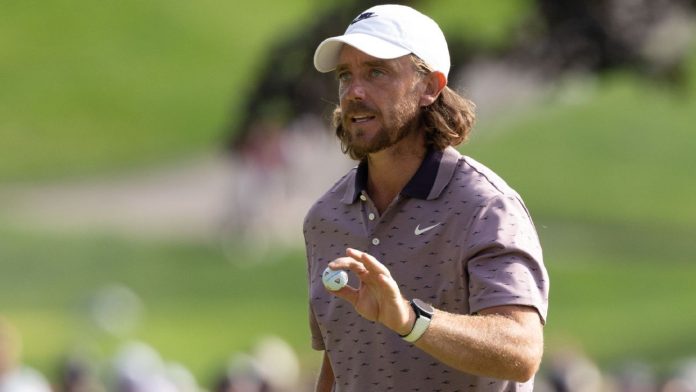
CROMWELL, Conn. — Tommy Fleetwood avoided the type of blunders made Saturday by Scottie Scheffler and Justin Thomas, never missing a fairway and seizing on the good scoring conditions for a 7-under 63 for a three-shot lead going into the final round of the Travelers Championship.

At stake for Fleetwood, a regular fixture among the top 25 for the past two years, is a chance to add a PGA Tour title to a résumé that includes seven European titles and three Ryder Cup appearances.

The immediate challengers in steamy conditions at TPC River Highlands are New England’s favorite son and Ryder Cup captain Keegan Bradley (63) and Russell Henley, who had a career low-tying 61 one day after calling a penalty on himself when he wasn’t entirely sure it was one.

Missing are Scheffler and Thomas, both tied for the 36-hole lead with Fleetwood.

Scheffler had a 29th birthday to forget. Thousands of spectators around the first tee serenaded him. He responded with a triple bogey, the first time he has done that to start a round in his PGA Tour career. The world No. 1 never quite recovered, posting a 72, the fifth time in 55 rounds this year he was over par.

Scheffler was nine shots behind.

Thomas, already a winner at Hilton Head this year, was still in range of Fleetwood when he hit his tee shot onto the railroad tracks left of the par-5 13th, the club slipping out of his hand. And then it got worse. He twice watched chips up a slope to a green that ran away from him come up short and roll back down the hill.

He missed a 6-foot putt and took a quadruple-bogey 9. Thomas shot 73 and was 10 behind.

Without the wind — only extreme heat — the course average was right about 68. The final group of Scheffler and Thomas combined to go 5-over par.

Fleetwood was in such control of his game that he didn’t realize until after the round that he didn’t miss a fairway, key to setting up birdie chances.

He also made eagle on the 13th hole for the second day, giving him three eagles for the week. They don’t hand out crystal for that at the Travelers, only red umbrellas. But it allowed Fleetwood to get some separation for Henley and Bradley going into Sunday.

Fleetwood, a 34-year-old from England, was at 16-under 194.

His three-shot lead is his largest advantage after any round of his PGA Tour career. Some 20 of 22 golfers to lead by three or more strokes entering final round over past two seasons won the event. If Fleetwood does it, the win will come in his 159th career start.

“I’m on top of a lot of stat lines for people that haven’t won on the PGA Tour, so to always be a No. 1 at something is always nice,” he said with a laugh.

“Yeah, of course I would love to win on the PGA Tour. I think it’s like an element of your career that everybody wants, and I of course want it. I haven’t, this year especially, I don’t feel like I’ve given myself … I’ve given myself a back end chance a couple of times this year, but I’ve not been in contention. So this is like my first real chance, so I’m really excited about that and looking forward to it.”

Jason Day ran off three straight birdies on the back nine to salvage a 67 and was five shots back. No one else was closer than eight shots of Fleetwood.

Scheffler hasn’t finished out of the top 10 since March and remarkably he ended the day with a birdie for a tie at eighth. The start was a shocker.

He drove left into the 5-inch rough and hit wedge into a front bunker with a decent lie. But he caught all ball and sent it over the green, leaving him a tough pitch up the slope and over a mound toward the hole. The first pitch came up short and rolled back down into the rough.

He hit a flop to 15 feet and two-putted for triple bogey, his first on the tour since the BMW Championship in August.

Bradley, whose name has not vanished from Ryder Cup consideration as a player, won the Travelers two years ago and cleared a major hurdle trying to perform before New England fans, now chanting, “U-S-A! U-S-A!” at him at every turn.

He likes his position of chasing, but he still knows he needs to play well.

“Oh, man, you’re going to have to shoot something at least in the mid-60s, probably where I am, probably lower,” Bradley said. “But it’s doable out here. When you play a course where you’ve got to make birdies it brings a different challenge. You can’t have a stretch of 1-over par for seven holes, or you lose a million shots.

“So in some aspects it’s difficult just like a hard course would be.”

8 Dead, 13 Injured After Hot Air Balloon Crash in Brazil

0


The people of Brazil are mourning a terrible tragedy.

A hot air balloon crashed June 21 in the municipality of Praia Grande, Brazil, leaving eight people dead and 13 more injured, according to a news release from the Government of Santa Catarina.

The balloon, which was carrying 21 people including the pilot, per the release, crash landed near a health center. No one is believed to be missing.

Following the fatal incident, Santa Catarina Governor Jorginho Mello—who was on an official trip to China at the time of the crash—sent his condolences to the victims and their families while emphasizing his commitment to investigating the matter.

“We are in mourning,” Mello said in a video posted on X (formerly Twitter) June 21, translated from Portuguese. “A tragedy has happened. We will see how it unfolds, what happened, why it happened. But the important thing now is for the state structure to do what it can.”

What we know about US air strikes on Iran’s nuclear facilities

0

US air strikes on Iran’s nuclear facilities ?US air strikes

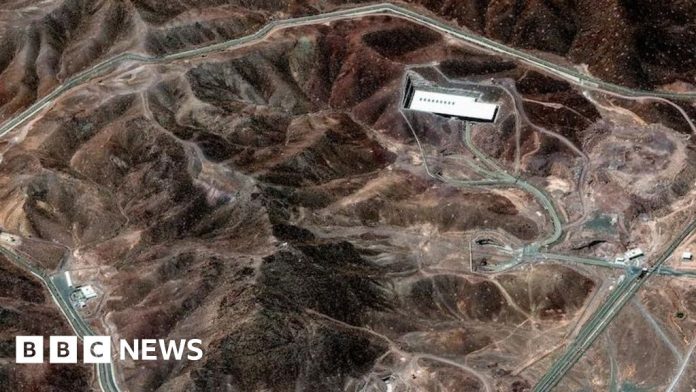
A satelite image of Fordo, one of three Iranian nuclear sites hit by Trump

US air strikes :

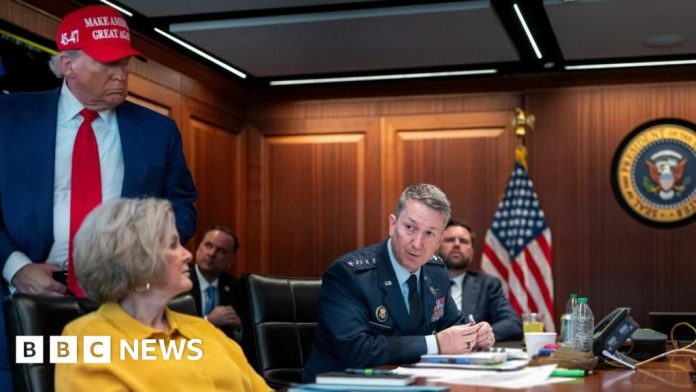
US President Donald Trump says the American military has completed strikes on three nuclear sites in Iran, marking a significant escalation in the ongoing war between Iran and Israel.

“Remember, there are many targets left. Tonight was the most difficult of them all by far, and perhaps the most lethal,” the president said in a brief televised address to the American people.

“But if peace doesn’t come quickly we will go to those other targets with precision, speed and skill.”

One of the targets was Fordo, an enrichment plant hidden in a remote mountainside that is vital to Iran’s nuclear ambitions. We do not now know the full scale of the damage at the facilities.

Israeli officials say they were in “full co-ordination” with the US in planning these US air strikes.

Iran could respond by targeting US military assets in the region. Its officials had earlier warned that they would retaliate and that any US attack risked a regional war.

Here is a breakdown of what we know so far.

How did this start?

Israel launched a surprise attack on dozens of Iranian nuclear and military targets on 13 June. It said its ambition was to dismantle its nuclear programme, which Prime Minister Benjamin Netanyahu said would soon be able to produce a nuclear bomb.

Iran insists its nuclear ambitions are peaceful. In retaliation, Tehran launched hundreds of rockets and drones at Israel. The two countries have continued exchanging strikes since, in an air war which has now lasted more than a week.

Trump has long said that he is opposed to Iran possessing a nuclear weapon.

In March, US national intelligence director Tulsi Gabbard said that while Iran had increased its uranium stockpile to unprecedented levels, it was not building a nuclear weapon – an assessment that Trump recently said was “wrong”.

On the campaign trail, Trump had criticised past US administrations for engaging in “stupid endless wars” in the Middle East, and he vowed to keep America out of foreign conflicts.

The US and Iran were in nuclear talks at the time of Israel’s surprise attack. Only two days ago, Trump said he would give Iran two weeks to enter into substantial negotiations before striking – but that timeline turned out to be much shorter.

What has the US bombed, and what weapons did it use?

The US says it hit three nuclear sites – Fordo, Natanz and Esfahan.

Fordo is hidden away in a mountainside south of Tehran, and is believed to be deeper underground than the Channel Tunnel connecting the UK and France.

The uranium enrichment site is considered by experts to be vital to Iran’s nuclear ambitions.

Fordo’s depth below the Earth’s surface has made it difficult to reach with Israel’s weaponry. Only the US was considered to have a “bunker buster” bomb strong and large enough to destroy Fordo.

That American bomb is called the GBU-57 Massive Ordnance Penetrator (MOP). It weighs 13,000kg (30,000lb), and is able to penetrate about 18m of concrete or 61m of earth before exploding, according to experts.

Fordo tunnels are thought to be 80m to 90m below the surface, so the MOP is not guaranteed to be successful, but it is the only bomb that could come close.

US officials have confirmed to the BBC’s partner CBS News that MOPs were used in the strikes, with two for each target struck.

What is the impact on the ground in Iran?

It is unclear yet what damage the US attack has had on the nuclear enrichment facilities, or whether there are any injuries or casualties.

The deputy political director of Iran’s state broadcaster, Hassan Abedini, said Iran had evacuated these three nuclear sites a “while ago”.

Appearing on state-run television, he said Iran “didn’t suffer a major blow because the materials had already been taken out”.

Trump has said the “nuclear enrichment facilities have been completely and totally obliterated”.

But speaking on the BBC News Channel, Mark Kimmitt, a former assistant secretary of state for political-military affairs, was far more circumspect.

“There’s no way to suggest that it has been destroyed for all times,” he said.

Iran has said that more than 200 people were killed since its latest round of fighting with Israel began, and more than 1,200 were injured.

Meanwhile, Israel is ramping up security in the wake of the US attacks on Iran’s key nuclear sites.

Israel has tightened its public security restrictions across the country, the Israeli Defense Forces (IDF) said.

The upgrade – including a “prohibition on education activities, gatherings, and workplaces” – comes after the US strikes on Iran.

How might Iran retaliate?

Iran has been weakened significantly by Israel’s attacks on its military bases so far, experts say, as well as the dismantling of its regional proxies in Lebanon (Hezbollah), in Syria and in Gaza (Hamas). But Iran is still capable of doing a considerable amount of damage.

Iranian officials warned the US against getting involved, saying it would suffer “irreparable damage” and that it risked an “all-out war” in the region.

It has threatened to target US bases in the region in retaliation. The US operates military sites across at least 19 regions in the Middle East, including in Bahrain, Egypt, Iraq, Jordan, Kuwait, Qatar, Saudi Arabia and the United Arab Emirates.

Among the most obvious targets for Iran is the US Navy’s 5th Fleet HQ at Mina Salman in Bahrain.

It could also target a critical shipping route known as the Strait of Hormuz, which links the Persian Gulf to the Indian Ocean and through which 30% of the world’s oil supply is transported. It could also attack on other sea routes that risk destabilising global markets.

Iran could also target the assets of nearby countries it perceives to be aiding the US, which risks the war spilling over to the entire region.

Does Trump need approval from Congress to send the US to war?

Under US law, the president does not have the sole power to formally declare war on another country. Only Congress – lawmakers elected in the House of Representatives and the Senate – can.

But the law also states that the president is the commander in chief of the armed forces. That means he can deploy US troops and conduct military operations without a formal declaration of war.

For example, Trump’s decision to conduct air strikes in Syria in 2017 against the Assad government did not require approval from Congress. Instead, Trump acted unilaterally, citing national security and humanitarian reasons.

Some lawmakers on both sides of the aisle have recently tried to limit Trump’s ability to order US strikes on Iran by pushing a war powers resolution through Congress, though it may take weeks before it is put to a formal vote, and such measures are more symbolic than substantive. Please, follow our Facebook page and Visit our Homepage for latest News Update