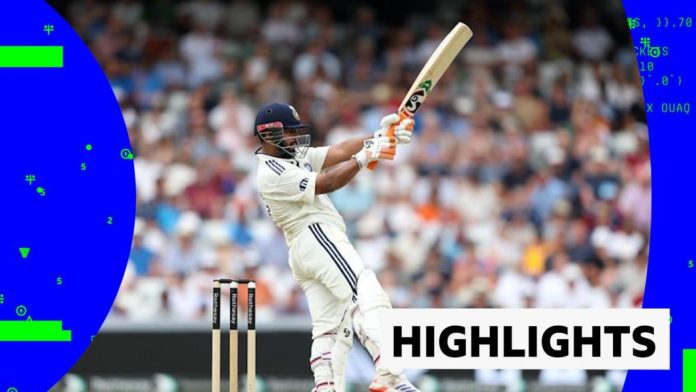
Rishabh Pant scores a superb century before a measured Ollie Pope knock gives England a fighting chance as day two closes with England sitting on 209-3, trailing India by 262 runs in the first Test at Headingley.
Department of Defense (DOD) officials are moving B-2 bombers across the Pacific as President Trump weighs intervening in Israel’s war on Iran.
Reports from Reuters say the 30,000-pound “bunker buster bombs” will be stored on the island of Guam while Trump considers the possibility of striking Iran.
The DOD referred The Hill’s request for comment to the White House, which did not immediately respond to a request for comment.
Flight tracking data shows several aircraft leaving Travis Air Force Base with B-2s following the president’s statement allotting a two-week deadline for a decision on U.S. intervention in Iran. The Air Force has the ability to turn off the planes’ transponders, which allows the tracking of jets.
The bombers were originally being held in Missouri and would likely be used to damage the Fordo nuclear fuel enrichment plant in Iran.
Fordo is Iran’s second nuclear enrichment facility after Natanz, which was hit by Israeli forces on Friday.
The attacks damaged the facility and furthered the Israeli objective to obliterate Iran’s efforts to develop nuclear weapons of war.
Israel on Saturday said it struck an Iranian nuclear facility in Isfahan and killed two additional top commanders as the clash between the two Middle Eastern countries expands.
Israeli Air Force fighter jets later in the day also moved to strike military infrastructure in southwestern Iran, according to an Israeli military statement.
Ahead of Saturday’s strikes, Iran fired 40 drones overnight on Friday that were intercepted by Israel, according to the IDF.
“We’ve been able to take out a large amount of their launchers, creating a bottleneck — we’re making it harder for them to fire toward Israel,” an Israeli military official told AP on the condition of anonymity. “Having said all that, I want to say the Iranian regime obviously still has capabilities.”
Earlier this week, Israel Defense Forces said they’d killed multiple top commanders and nine engineers working on Iran’s nuclear projects.
Trump said the conflict would continue until an “UNCONDITIONAL SURRENDER” was supported by Iran.
However, the Iranian Supreme Leader said they would continue to defend themselves amidst the rubble.
“I would like to tell our dear nation that if the enemy senses that you fear them, they won’t let go of you. Continue the very behavior that you have had up to this day; continue this behavior with strength,” Ali Khamenei wrote in a post on X.
After spending time in multiple career-related subreddits, one Reddit user had a realization that registered with people: Reddit sometimes makes the job market look worse than it really is.
“I’ve been trying to switch careers recently and joined a bunch of subreddits — tech, healthcare, education, engineering, etc.,” the original poster wrote. “And in every single one, it’s the same thing: ‘No jobs’ ‘The market is dead’ ‘Everything’s saturated’ ‘You should’ve started 10 years ago’.”
High Yield Savings Offers
Powered by Money.com – Yahoo may earn commission from the links above.
But they pushed back on the despair. “People get hired every single day. That’s a fact,” they said. “The people who are getting jobs aren’t posting here. The ones who are stuck are the ones who are venting.”
Don’t Miss:
Their perspective resonated, especially as others chimed in with their experiences. “I got laid off at the beginning of the year and was terrified because I’m here lurking a lot,” one person commented. “Luckily, I’m pretty good at interviewing and landed a [work-from-home] job maybe two weeks after. I never posted about how fast I was able to find work, so what you say is true.”
Others said the negativity isn’t universal across fields. “Tech jobs in education, medical, and finance are booming right now. I moved companies earlier this year and did not have any trouble finding another fully remote position for a significant raise,” one person added.
Still, the thread also highlighted the brutal side of the market. Many shared long stretches of unemployment and feelings of defeat. One mid-level developer said they’d sent out over 100 applications in four weeks and heard back from only five. “I’m not the best interviewee and am a poster child for, ‘if it wasn’t for bad luck, I’d have no luck at all.’”
New graduates, in particular, seemed to bear the brunt of the pain. “Some have literally been unemployed for 2-3 years now,” another person said of recent tech grads. “One of [my friends] is a camp counselor at a coding camp. The other, working IT at a warehousing startup.” He described them as “Smart kids, high 90’s in HS and 3.8 and above GPA in university.”
The nursing and teaching sectors drew mixed responses. Many users acknowledged that these fields continue to experience high demand due to staffing shortages, burnout, and high turnover. However, some pointed out that employers often prefer experienced workers, leaving recent graduates without opportunities to gain that very experience.
Others emphasized how working conditions and pay in these sectors contribute to why positions remain unfilled, with some describing the workload and pressure as overwhelming despite the steady demand for workers.
Reddit’s tendency to skew toward doom and gloom was a recurring point. “Reddit as a collective has the mentality of a depressed 16-year-old. It definitely shouldn’t be used as a barometer for anything,” one person joked. Another added, “It’s like reading reviews on Amazon. People only post something negative, while positive is rarely posted.”
In the end, the original poster urged job seekers to stay the course. “Don’t let [Reddit] convince you that nothing is working anywhere for anyone. That’s just not true. If you’re feeling discouraged, I get it. But keep going. You’re probably doing better than you think.”
Recent data from the U.S. Bureau of Labor Statistics paints a mixed yet still functional employment picture. In May, employers added 139,000 nonfarm payroll jobs, keeping the unemployment rate steady at 4.2%. Job gains were led by health care, leisure and hospitality and social assistance.
While federal government payrolls declined, private-sector hiring continued. Though slower than prior months, growth continues, supporting the idea that “people get hired every single day.”
Up Next: Transform your trading with Benzinga Edge’s one-of-a-kind market trade ideas and tools. Click now to access unique insights that can set you ahead in today’s competitive market.
Paul Pope has written and drawn some of the most gorgeous comics of the twenty-first century — from “Batman: Year 100,” in which Batman challenges a dystopian surveillance state, to “Battling Boy,” with its adolescent god proving his mettle by fighting giant monsters.
But it’s been more than a decade since Pope’s last major comics work, and in a Zoom interview with TechCrunch, he admitted that the intervening years have had their frustrations. At one point, he held up a large stack of drawings and said the public hasn’t seen any of it yet.
“Making graphic novels is not like making comics,” Pope said. “You’re basically writing a novel, it can take years, and you work with a contract. No one can see the work, so it can be very frustrating.”
It’s all part of what Pope described as “a number of chess moves” designed to “reintroduce” and — he grudgingly admitted — “rebrand” himself.
Pope is reemerging at a fraught time for the comics industry and creativity in general, with publishers and writers suing AI companies while generative AI tools go viral by copying popular artists. He even said that it’s “completely conceivable” that popular comic book artists could be replaced by AI.
The contrast is particularly stark in Pope’s case, since he’s known for largely eschewing digital tools in favor of brushes and ink. But he said he isn’t ruling out taking advantage of AI (“any tool that works is good”), which he already uses for research.
“I’m less concerned about having some random person create some image based on one of my drawings, than I am about killer robots and surveillance and drones,” he said.
The following interview has been edited for length and clarity.
Image Credits:Paul Pope/Archaia
You have a gallery show coming up, and it coincides with the second volume of your art book, “PulpHope.” How did those come about?
I got contacted by Boom Studios, I think it was late 2023, and they were interested in possibly collaborating on something [through their boutique imprint Archaia]. So we went back and forth for a bit, I came on as art director, and I was able to hire my own designer, this guy Steve Alexander, also known as Rinzen, and we spent about nine months [in] 2024 putting the book together.
And then, coincidentally, I know Philippe Labaune, just from having been to the gallery, we have mutual friends and things, and he made the offer to show work from not only the book, [but] kind of a career retrospective. It’s ballooned into something really nice.
Are you somebody who thinks about the arc of their career and how it fits together, or are you mostly future-oriented?
I’d say a combination of both, because — I have said this elsewhere, but I think at a certain point, an artist needs to become their own curator. Jack Kirby famously said, “All that matters is the 10% of your best work. The rest of it gets you to the 10%.”
But then in my case, I do a lot of variant covers. I’ve worked on many things outside of comics that are kind of hard to acquire, whether it’s screen prints or fashion industry stuff. And I thought it’d be really cool if we do something that’s a chronological look at the life of an artist — [something that] focuses mainly on comics, [with] a lot of stuff that people have either never seen or it’s hard to find.
It’s the first of a number of chess moves that I’ve been setting up for a long time. And the gallery is — I would call it a second chess move. I have another announcement later in the summer for a new project.
Making graphic novels is not like making comics. You’re basically writing a novel, it can take years, and you work with a contract. No one can see the work, so it can be very frustrating. This stack here, this is my current work, and it’s all stuff that basically hasn’t been published yet. So I thought this was a great way to either reintroduce my work or — I hate the term “rebrand,” but rebrand myself.
In your essay “Weapons of Choice,” you talk about all these different tools you use, the brushes and pens, the Sumi ink. Has your working style been pretty consistent, pretty analog, for your entire career?
I would say mostly. I did start incorporating Photoshop for coloring and textures, kind of late to the game — I’d say it was not ‘till around 2003 or so.
I developed carpal tunnel around 2010, so I’ve tried to steer away from digital as much as I can, but I still use it. I mean, I use Photoshop every day. It’s just [that] most of what I do is the comics purism of ink on a paper.
Image Credits:Paul Pope/Archaia
Do you think of ink on paper as objectively better, or it just happens to be how you work?
I don’t think it’s better, to be honest. I think any tool that works is good. You know, Moebius used to say that sometimes he would draw with coffee grinds, he drew with a fork.
And I have some friends, in fact, a number of friends, who are doing highly popular mainstream books, who have gravitated toward digital work, or its various advantages. And I just don’t like that. But one thing [is,] I sell original art, and if you have a digital document, you might be able to make a print of it, but there is no drawing. It’s binary code.
Also, I feel an allegiance to the guys like Alex Toth and Steve Ditko, who took time to teach me things. Moebius, I was friends with him. Frank Miller. We all work in traditional analog art. I feel like I want to be a torchbearer for that.
How do you feel about the fact that comics-making is increasingly digital?
I think it’s inevitable. The genie is out of the bottle at this point. So now it’s a matter of being given a new, vivid array of tools that artists can choose from.
When you talk to younger artists, do you feel like there’s still a lane for them to do analog work?
Absolutely. One of the challenges now is, you can download an app, or you can get an iPad Pro and start drawing. I think the learning curve in some ways is a little quicker, and you can fix, edit, and change things that you don’t like.
But it also means the drawing never ends. One thing I really like about analog art is, it’s punishing. [One] piece of advice I got early on was, your first 1,000 ink drawings with a brush are going to be terrible, and you just have to get through those first 1,000. And it was true, it was humiliating — every time I sat down and tried to draw with the brushes, a lot of the work is going to be in your your fingers or your wrists, and it’s easy to make mistakes, but gradually you get an authority over the tool, and then you can draw what it is you really see in your mind.
Before we started recording, we were also talking about AI, and it sounds like it’s something you’ve been aware of and thinking about.
Yeah, sure, I use it all the time. I don’t use it for anything creative outside of research. For example, I just wrote an essay on one of my favorite cartoonists, Attilio Micheluzzi. His library is being published by Fantagraphics right now, and I did the intro for the second book. It’s amazing, because there’s a lot of personal detail about the man that was really, really hard to find, unless you could literally go to — he died in Naples, but he spent a lot of his time in North Africa and Rome. This guy’s a man of mystery. But you now can get the dates of his birth and his death, what caused his death, what did he do? And AI helps with that.
Or sometimes, I work on story structure. But I don’t use it directly to create anything. I use it more like, let’s say it’s a consultant. My nephew writes [code] and he describes AI as a sociopath personal assistant that doesn’t mind lying to you. I’ve asked AI at times like, “What books has Paul Pope published?” It’s kind of strange, because maybe 80% of it will be correct, and 20% will be completely hallucinated books I’ve never done. So I tend to take my nephew’s point of view on it.
You have this skepticism, but you don’t want to rule out using it where it’s useful.
No, absolutely not. It’s a tool.
It’s a very contentious point with cartoonists, and there are important questions about authorship, copyright protection. In fact, I just had dinner with Frank Miller last night, we were talking about this. If [I ask AI to] give me “Lady Godiva, naked on the horse, as drawn by Frank Miller,” I can spit that out in 30 seconds. Some people might say, “Oh, this is my art.” But AI doesn’t generate the art from the same kind of place that humans would, where it’s based on identity and personal history and emotional inflection.
It can recombine everything that’s been known and programmed into the database. And you could do with my stuff, too. It never looks like my drawings, but it’s getting better and better.
But I think really, speaking as a futurist, the real question is killer robots and surveillance and a lot of technology being developed very, very quickly, without a lot of public consideration about the implications.
Here in New York, at the moment, there’s a really great gallery on 23rd Street called Poster House. It’s pretty much the history of 20th-century poster design, which is right up my alley. So I went there with my girlfriend last week, and they currently have an exhibit on the atom bomb and how it was portrayed in different contexts through poster art. There was this movement “Atoms for Peace,” where people were pro-atomic energy [but] were against war, and I kind of liked that, because that’s how I feel about AI. I would say, “AI for peace.”
I’m less concerned about having some random person create some image based on one of my drawings, than I am about killer robots and surveillance and drones. I think that’s a much more serious question, because at some point, we’re going to pass a tipping point, because there’s a lot of bad actors in the world that are developing AI, and I don’t know if some of the developers themselves are concerned about the implications. They just want to be the first person to do it — and of course, they’re going to make a lot of money.
Image Credits:Paul Pope/Archaia
You mentioned this idea of somebody typing, “Give me a drawing in the style of Paul Pope.” And I think the argument that some people would make is that you shouldn’t be able to do that — or at least Paul should be getting paid, since your art was presumably used to train the model, and that’s your name being used.
It’s a good question. In fact, I was asking AI before our talk today — I think the best thing is to go to the source — “compare unlicensed art usage [for] AI-generated imagery with torrenting of MP3s in the ‘90s.”
And AI said that there’s definitely some similarities, because you’re using work that’s already been produced and created without compensating the artist. But in the case of AI, you can add elements to it that make it different. It’s not like [when] somebody stole Guns N’ Roses’ record, ”Chinese Democracy,” and put it online. That’s different from sitting down with an emulator for music with AI [and saying,] “I want to write a song in the style of Guns N’ Roses, and I want the guitar solo to sound like Slash.”
Obviously, if somebody publishes a comic book and it looks just like one of mine, that might be a problem. There’s class action lawsuits on the behalf of some of the artists, so I think this is a legal issue that is going to be hammered out, probably. But it gets more complicated, because it’s very hard to regulate AI development or distribution in places like Afghanistan or Iran or China. They’re not going to follow American legal code.
And then on the killer robot side, you’ve written a lot and drawn a lot of dystopian fiction yourself, like in “Batman: Year 100.” How close do you feel we are to that future right now?
I think we’re probably, honestly, about two years away. I mean, robots are already being used on the battlefield. Drones are used in lethal warfare. I wouldn’t be too surprised, within two or three years, if we start seeing robot automation on a regular basis. In fact, where my girlfriend lives in Brooklyn, there’s a fully robot-serviced coffee shop, no one works there.
And the scary thing is, I think people become normalized to this, so the technology is implemented before there’s the social contract, where people are able to ask whether or not this is a good [thing].
My lawyer, for example, he thinks within two or three years, Marvel Comics will replace artists with AI. You won’t even have to pay any artists. And I think that’s completely conceivable. I think storyboarding for film can easily be replaced with AI. Animatics, which you need to do for a lot of films, can be replaced. Eventually, comic book artists can be replaced. Almost every job can be replaced.
How do you feel about that? Are you worried about your own career?
I don’t worry about my career because I believe in human innovation. Call me an optimist. And the one distinct advantage we have over machine intelligence is — until we actually take the bridle off and machines are fully autonomous and have a conscience and a memory and emotional reflections, which are the things that are required in order to become an artist, or, for that matter, a human — they can’t replace what humans do.
They can replicate what humans do. If you’re trying to get into the business of, let’s say comics, and you’re trying to draw like Jim Lee, there’s a chance you might get replaced, because AI has already imprinted every single Jim Lee image in its memory. So that would be easy to replace, but what is harder to replace is the human invention of something like whatever Miles Davis introduced into jazz, or Picasso introduced, along with Juan Gris, when they invented Cubism. I don’t see machines being able to do that.
You were talking about the discipline needed to draw with a brush, and one of the things I worry about is, if we increasingly devalue the time and the money and everything it takes for somebody to get good at that, you can’t decouple the inventiveness of the Paul Pope who comes up with these cool stories with the Paul Pope who spent all his time making drawing after drawing with brushes and ink. If we think we can just focus on coming up with cool ideas, it’s not going to work like that.
I do think about this. I think it would be very challenging to be 18, 19, having grown up with a screen in front of you, you can upload an app to do anything, within seconds, and that’s just not the way most of human history has worked.
I mean, I don’t think we’re at that term “singularity” yet, but we’re getting really close to it. And that’s the one thing that worries me is whether we talk about killer machines or machine consciousness overtaking human ingenuity, it would almost be a forfeit on the part of the people to stop having a sense of ethics, a sense of curiosity, determination — all these old school, bootstrap concepts that some people think are old-fashioned now, but I think that’s how we preserve our humanity and our sense of soul.
The first big collection of your “THB” comics is coming this fall, and it sounds like that’s also a big part of the Paul Pope rebrand or relaunch, the next chess move. Is it safe to assume that one of the other next chess moves is “Battling Boy 2”?
Yes. It’s funny, because for a long time, we had it scheduled — “Battling Boy 2” has to come out before “THB” comes out. But there was some restructuring with [my publisher’s] parent company, Macmillan, and my new art director came on in 2023 and he said, “You know what, let’s just move this around. We’re going to start putting ‘THB’ out. It’s already there.” And I was so relieved because, again, “Battling Boy” is 500-plus pages, and I’d work on it, then I’d stop working to do commercial work. I work on it. I stop. I work on the movie. It’s like I’m driving this high performance car, but it doesn’t have enough gas in it, so I have to keep stopping and putting gasoline [in it]. So it’s been reinvigorating [to have a new book coming out], because it kick-started everything.
Borussia Dortmund held off a spirited comeback from South African champions Mamelodi Sundowns to secure a 4-3 victory on Saturday and move closer to the Club World Cup knockout stages.
Dortmund were behind after 11 minutes at the TQL Stadium but rallied to win their second game in Group F and move top of the group with four points, one more than Sundowns.
Lucas Ribeiro had given Sundowns the lead while Iqraam Rayners and Lebo Mothiba scored in the second half as they looked to rally from 4-1 down in a competitive game played in blazing hot conditions with a midday kickoff.
Ribeiro burst through a static Dortmund defence, picking up the ball on the halfway line and gliding past two opponents to score a shock opener.
Jobe Bellingham celebrates his first Borussia Dortmund goal.
Photo by Michael Reaves/Getty Images
But the lead last only five minutes before a calamitous error from Sundowns goalkeeper Ronwen Williams, who played a short pass to Nmecha who had an easy tap-in for the equaliser.
Dortmund went ahead after a slick set of one-two passes between Julian Brandt and Guirassy, who powered home with his head.
Bellingham, in his second appearance for Dortmund, made it 3-1 on the stroke of halftime as Williams parried Brandt’s cross straight at him, and he delayed shooting for a split second before wrong-footing the goalkeeper.
Rayners struck the woodwork for Sundowns 10 minutes into the second half but on the hour mark Daniel Svensson’s cross from the left took a wicked deflection off Sundowns’ fullback Khuliso Mudau as Dortmund extended their lead.
Two minutes later, the South African side pulled one back as Teboho Mokoena’s free kick was floated to Rayners, who struck the foot of the post but the rebound bounced back onto his head and he did not waste the second opportunity.
Mothiba struck in the 90th minute as Sundowns stole away possession and the substitute scored from close range but they could not find an equaliser.
“This is my hair,” Jenna declared with Leslie by her side. “I feel a little… You know that ’90s movie Single White Female, where you try to copy somebody to such an extent? You made this haircut so famous, and then I used your hairstylist, who is a star, to get the exact same haircut, and I’m feeling a little strange.”
And while Leslie raved about Jenna’s new look, the TV host admitted it may take some getting used to.
“There’s a lot of change happening and I feel a little embarrassed by the attention,” she confessed. “I know, the people who work with me are like, ‘Mother loves attention,’ but I felt a little embarrassed.”
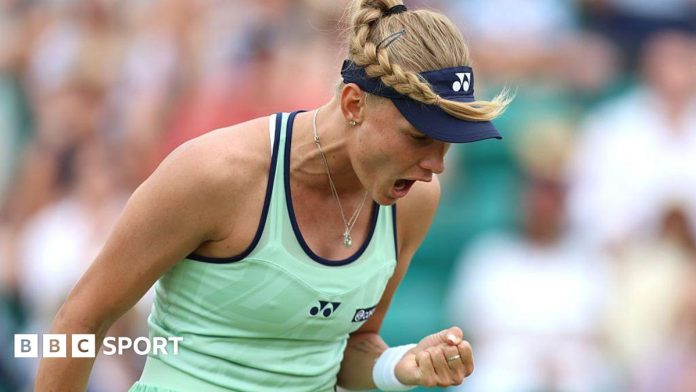
Ukrainian Dayana Yastremska could be allergic to grass but said she loves the surface after reaching her first final on it at the Nottingham Open.
The world number 46 beat Polish sixth seed Magda Linette 6-4 6-4 in a rain-interrupted semi-final to reach Sunday’s final, where she will face American McCartney Kessler, who overcame Slovakia’s Rebecca Sramkova 6-4 6-2.
“I really love playing on grass, even though I think I have a bit of an allergy to grass,” Yastremska said.
“I’m very excited, and I was proud of myself. In general everything worked pretty well. I can’t wait to play in the final.”
Yastremska, who has dropped just one set on her way to the final, faces the player who beat Britain’s Katie Boulter in the quarter-finals and top seed Beatriz Haddad Maia in the first round.
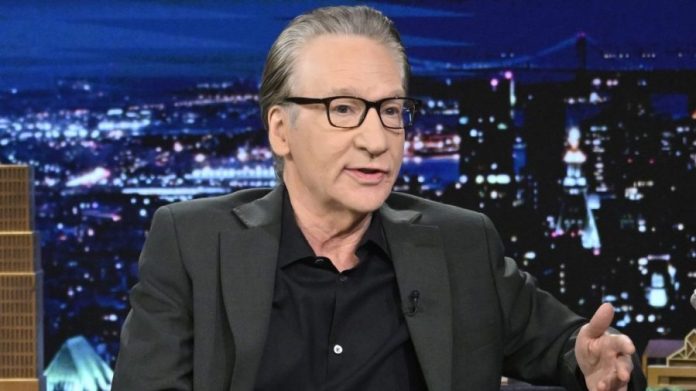
Bill Maher clashed with Rep. Wesley Hunt (R-Texas) over President Trump’s military parade on HBO’s “Real Time with Bill Maher” on Friday.
Maher, although open to the celebration ahead of the event last Saturday, slammed the parade, which drew smaller than expected crowds.
“If you’re going to have a vaguely fascist parade, do it right,” he said.
Rep. Wesley Hunt (R-TX) immediately came to Trump’s defense.
“And you know what I saw? I saw the president salute the Corps of Cadets as they walked past him. I watched him salute the 75th Ranger Regiment as they walk past him, I sat there and watched the fireworks behind the Washington Monument,” he said.
“And you what I thought? D—, that’s absolutely outstanding. And it’s far better than [former President] Biden checking his watch when bodies were being returned to Dover,” he continued, mentioning the return of 11 servicemen killed in Afghanistan in 2021.
Hunt served in the military from 2004 to 2012 and flew Apache helicopters. He was deployed in Iraq and in Saudi Arabia after which he left the military and attended Cornell University.
Hunt criticized Biden for what he described as a lack of patriotism and applauded Trump for celebrating the troops.
“And so, the dichotomy of what we’re seeing with President Trump and his patriotism saluting the flag actually making an effort rather you like it or agree with the execution, the effort is there, that’s all we want to see,” he said.
Maher responded, thanking Hunt for his service, but emphasized that “execution does matter.”
The military parade drew widespread criticism from Trump critics and allies alike over its price tag, which cost millions of dollars. Hundreds of thousands of protests also gathered for “No Kings” demonstrations against the parade and the Trump administration to correspond with the Washington event.
The rise of artificial intelligence (AI) is generating plenty of wealth on Wall Street — and the winners won’t be limited to just semiconductor stocks like Nvidia. Tech stocks across several subsectors will benefit, too.
Let’s take a look at one such stock, Datadog (NASDAQ: DDOG).
Image source: Getty Images.
Between 2019 and 2021, Datadog was one of the hottest names in the stock market. Shares advanced by more than 400% in only three years. However, as the stock market soured on tech stocks and speculative companies in 2022, Datadog shares plummeted. All told, the shares cratered by 68%, erasing the majority of their earlier gains. As of this writing, Datadog stock remains more than 35% off of the all-time high it touched in late 2021.
High Yield Savings Offers
Powered by Money.com – Yahoo may earn commission from the links above.
Yet sentiment regarding the stock appears to have shifted. Datadog, which provides cloud monitoring services for enterprises, now boasts strong ratings from the analyst community.
According to data compiled by Yahoo! Finance, there are 46 analysts covering Datadog. Of those, 10 rate it as a strong buy, 28 rate it a buy, and eight call it a hold. None of them rate it a sell or strong sell.
Moreover, the average 12-month price target for Datadog shares is nearly $139. That’s about 9% higher than the stock trades as of this writing.
Datadog’s business model is to sell monitoring services to organizations with significant cloud assets. This type of monitoring is critical to enterprises today, as operational downtime can result in serious consequences, including lost revenue, customer dissatisfaction, and even legal action. It already serves tens of thousands of clients across a range of industries, including e-commerce, gaming, and finance.
While the type of monitoring that Datadog offers isn’t new, what it is monitoring is changing. New large language models (LLMs) powered by AI algorithms have become much more important to organizations.
Use of these models is rapidly spreading into the day-to-day operations of countless organizations. As this happens, their performance must be monitored, too. That has created a new source of revenue for Datadog, which is helping boost its growth.
Consider the company’s first-quarter results. Datadog noted that about 8.5% of its total revenue came from AI-native customers. That was up from 3.5% one year earlier — showing meaningful growth for this new source of revenue.
Management also raised its revenue guidance for the year by about $40 million, or 1%, on the back of this fast-growing new source of sales.
Ultimately, these figures aren’t game changers for Datadog, but they demonstrate that the AI revolution is benefiting the company. If it can continue to deliver on its higher guidance — or even surpass it — the stock should respond positively.
In part, that’s because Datadog’s valuation remains near multiyear lows.
Though Datadog’s stock price has recovered significantly from its 2022 low point, its valuation — as measured by its price-to-sales (P/S) ratio — remains near the bottom of its range.
As of this writing, Datadog shares trade at a P/S ratio of around 16. That’s well below the peak levels above 60 that it reached in 2020 and 2021. It’s also far below the stock’s average of 28.
Granted, a P/S ratio of 16 is still high compared to many stocks — even within the tech sector. However, for long-term investors who want to establish a position in Datadog shares, it should be comforting that it doesn’t appear to be overvalued.
The stock appears to be rebounding after a steep decline. The AI revolution is playing a role in that comeback, and the analyst community is moderately bullish on the company’s prospects. Finally, its current valuation is well below its long-term average. Overall, that suggests that this could be a good time for long-term investors to buy.
Before you buy stock in Datadog, consider this:
The Motley Fool Stock Advisor analyst team just identified what they believe are the 10 best stocks for investors to buy now… and Datadog wasn’t one of them. The 10 stocks that made the cut could produce monster returns in the coming years.
Consider whenNetflixmade this list on December 17, 2004… if you invested $1,000 at the time of our recommendation,you’d have $664,089!* Or when Nvidiamade this list on April 15, 2005… if you invested $1,000 at the time of our recommendation,you’d have $881,731!*
Now, it’s worth notingStock Advisor’s total average return is994% — a market-crushing outperformance compared to172%for the S&P 500. Don’t miss out on the latest top 10 list, available when you joinStock Advisor.
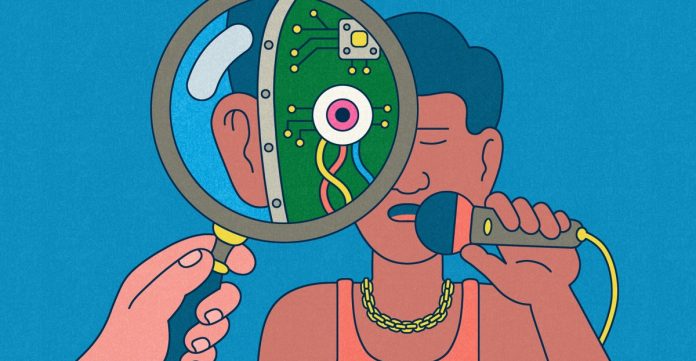
The music industry’s nightmare came true in 2023, and it sounded a lot like Drake.
“Heart on My Sleeve,” a convincingly fake duet between Drake and The Weeknd, racked up millions of streams before anyone could explain who made it or where it came from. The track didn’t just go viral — it broke the illusion that anyone was in control.
In the scramble to respond, a new category of infrastructure is quietly taking shape that’s built not to stop generative music outright, but to make it traceable. Detection systems are being embedded across the entire music pipeline: in the tools used to train models, the platforms where songs are uploaded, the databases that license rights, and the algorithms that shape discovery. The goal isn’t just to catch synthetic content after the fact. It’s to identify it early, tag it with metadata, and govern how it moves through the system.
“If you don’t build this stuff into the infrastructure, you’re just going to be chasing your tail,” says Matt Adell, cofounder of Musical AI. “You can’t keep reacting to every new track or model — that doesn’t scale. You need infrastructure that works from training through distribution.”
The goal isn’t takedowns, but licensing and control
Startups are now popping up to build detection into licensing workflows. Platforms like YouTube and Deezer have developed internal systems to flag synthetic audio as it’s uploaded and shape how it surfaces in search and recommendations. Other music companies — including Audible Magic, Pex, Rightsify, and SoundCloud — are expanding detection, moderation, and attribution features across everything from training datasets to distribution.
The result is a fragmented but fast-growing ecosystem of companies treating the detection of AI-generated content not as an enforcement tool, but as table-stakes infrastructure for tracking synthetic media.
Rather than detecting AI music after it spreads, some companies are building tools to tag it from the moment it’s made. Vermillio and Musical AI are developing systems to scan finished tracks for synthetic elements and automatically tag them in the metadata.
Vermillio’s TraceID framework goes deeper by breaking songs into stems — like vocal tone, melodic phrasing, and lyrical patterns — and flagging the specific AI-generated segments, allowing rights holders to detect mimicry at the stem level, even if a new track only borrows parts of an original.
The company says its focus isn’t takedowns, but proactive licensing and authenticated release. TraceID is positioned as a replacement for systems like YouTube’s Content ID, which often miss subtle or partial imitations. Vermillio estimates that authenticated licensing powered by tools like TraceID could grow from $75 million in 2023 to $10 billion in 2025. In practice, that means a rights holder or platform can run a finished track through TraceID to see if it contains protected elements — and if it does, have the system flag it for licensing before release.
“We’re trying to quantify creative influence, not just catch copies.”
Some companies are going even further upstream to the training data itself. By analyzing what goes into a model, their aim is to estimate how much a generated track borrows from specific artists or songs. That kind of attribution could enable more precise licensing, with royalties based on creative influence instead of post-release disputes. The idea echoes old debates about musical influence — like the “Blurred Lines” lawsuit — but applies them to algorithmic generation. The difference now is that licensing can happen before release, not through litigation after the fact.
Musical AI is working on a detection system, too. The company describes its system as layered across ingestion, generation, and distribution. Rather than filtering outputs, it tracks provenance from end to end.
“Attribution shouldn’t start when the song is done — it should start when the model starts learning,” says Sean Power, the company’s cofounder. “We’re trying to quantify creative influence, not just catch copies.”
Deezer has developed internal tools to flag fully AI-generated tracks at upload and reduce their visibility in both algorithmic and editorial recommendations, especially when the content appears spammy. Chief Innovation Officer Aurélien Hérault says that, as of April, those tools were detecting roughly 20 percent of new uploads each day as fully AI-generated — more than double what they saw in January. Tracks identified by the system remain accessible on the platform but are not promoted. Hérault says Deezer plans to begin labeling these tracks for users directly “in a few weeks or a few months.”
“We’re not against AI at all,” Hérault says. “But a lot of this content is being used in bad faith — not for creation, but to exploit the platform. That’s why we’re paying so much attention.”
Spawning AI’s DNTP (Do Not Train Protocol) is pushing detection even earlier — at the dataset level. The opt-out protocol lets artists and rights holders label their work as off-limits for model training. While visual artists already have access to similar tools, the audio world is still playing catch-up. So far, there’s little consensus on how to standardize consent, transparency, or licensing at scale. Regulation may eventually force the issue, but for now, the approach remains fragmented. Support from major AI training companies has also been inconsistent, and critics say the protocol won’t gain traction unless it’s governed independently and widely adopted.
“The opt-out protocol needs to be nonprofit, overseen by a few different actors, to be trusted,” Dryhurst says. “Nobody should trust the future of consent to an opaque centralized company that could go out of business — or much worse.”