While it wasn’t the first film to feature fast-moving ghouls, there is no denying how much of an impact 28 Days Later had on modern zombie movies. It was a gripping and nauseating wonder, whose action felt uniquely visceral thanks, in part, to director Danny Boyle’s inspired use of a digital video camera. And there was a gut-wrenching sense of hopelessness baked into writer Alex Garland’s script that made 28 Days Later feel far more grounded than most of the zombie films that inspired it.
Boyle and Garland stepped back from the franchise as it continued with a graphic novel and director Juan Carlos Fresnadillo’s 28 Weeks Later in 2007, but they are back together again for 28 Years Later. Though it’s set in the same world and calls back to the original, the new film hits very differently because of how much more overrun pop culture is with zombie-themed horror. You can feel Boyle and Garland trying not to echo other big pieces of zombie IP as they weave a new tale about how the world has changed almost three decades after the outbreak of a deadly virus. And in a couple of the movie’s pivotal moments, the filmmakers manage to avoid being too derivative.
Many of this story’s smaller beats feel overly familiar, though — so much so that it almost seems intentional. That wouldn’t be a huge knock against 28 Years Later if it could conjure the same kind of pulse-quickening scares that made the first film such an instant classic. But the most terrifying thing about the franchise’s latest chapter is how oddly conservative and, at times, nationalistic its story winds up becoming.
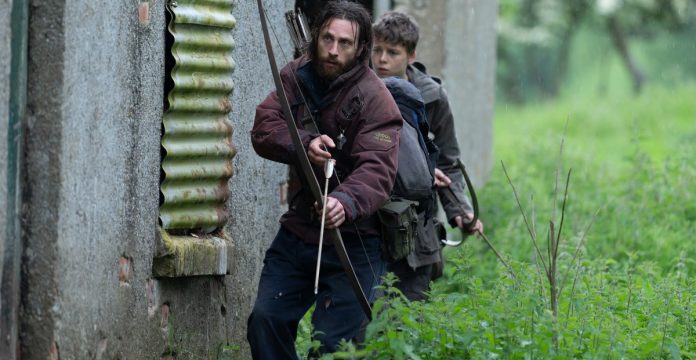
Though 28 Years Later opens with an arresting reminder of how people had no idea how to defend themselves against those infected with the rage virus in the outbreak’s early days, it revolves around a community that has learned what it takes to survive. Like everyone else holed up on a tiny island in northern England, Jamie (Aaron Taylor-Johnson) knows how dangerous the infected are and how easily their virus is spread. He also understands that, were it not for the island’s unique geography — it connects to the mainland with a causeway that vanishes with the tides — his life of relative comfort wouldn’t be possible.
Jamie and his sickly wife Isla (Jodie Comer) work hard to impress upon their son Spike (Alfie Williams) how important it is to adhere to their community’s rules. People can leave the island to collect wood or hunt for whatever food they can find. But they do so knowing that no one will come to save them if they can’t make it back to the island on their own.
Everyone also knows that, while Great Britain is still quarantined, the rage virus has been all but eradicated everywhere else in the world. And because other countries have essentially left the British to fend for themselves, there’s a current of resentment (particularly toward the French) coursing through Jamie’s community.
One of the first things that jumps out about 28 Years Later is its overwhelmingly white cast. Some of that can be attributed to the idea that these are all people who just happened to already live on the island when the virus first got out. But Boyle also makes a point of emphasizing how capital B British all of the film’s characters are, with closeups of photos of Queen Elizabeth II and moments where people remind each other that it’s time for tea. The film frequently cuts to archival black-and-white footage of British soldiers marching during World War I and scenes from Laurence Olivier’s Henry V in a way that makes British identity feel like it’s meant to be understood as a crucial part of the story. This is also true of the way 28 Years Later prominently features a recording of “Boots,” Rudyard Kipling’s famous poem about a British soldier’s participation in the Second Boer War. But all of that imagery becomes charged with a very pointed, Brexit-y energy when 28 Years Later juxtaposes it with shots of the writhing, naked infected who have become the mainland’s dominant population.
The racial homogeneity of Jamie’s community is that last thing on anyone’s mind as he prepares Spike to go on his first trip to the mainland — an experience that’s supposed to help them bond and show the boy what it’s like to kill an infected. Isla’s terrified at the idea of her son leaving, but it excites Jamie, who almost seems to enjoy his forays into danger. Spike, too, is thrilled to finally get a chance to see parts of the world that he’s never had access to. But it’s not long before they encounter the infected and are forced to spend the night hiding rather than returning home.
Columbia Pictures
Especially once Jamie and Spike have ventured out, 28 Days Later starts to feel a lot like The Last of Us in the sense that its story is — at least initially — about a man working through his feelings about fatherhood in a world plagued by flesh-eating monsters. And the film’s focus on manhood (as well as its parallels to other, more recent zombie fiction) becomes that much more pronounced when Jamie and Spike first encounter an alpha, one of the new types of infected.
The way 28 Years Later evolves its monsters is one of the more interesting aspects of the film. There are still jerky, sprinting infected who present the most immediate risk, but after decades of mutation, the virus has also given rise to corpulent “slow-lows” who crawl on the ground, and infected who seem able to form social connections. Boyle showcases the film’s new types of monsters brilliantly in a number of action sequences that make heavy use of a unique iPhone camera array that creates shots that pivot around scenes in a very Matrix-y, bullet time fashion. Those shots — of arrows being shot into infecteds’ necks and groins — are exhilarating and impactful, but deployed so frequently that it quickly grows tiresome.
What’s even more exhausting is how, despite the fact that we’re told how these survivors have adapted to life with the infected, the film’s characters repeatedly make decisions that feel wholly unmoored from reason. This becomes very apparent in the movie’s second half as Comer — who delivers a tremendous, if restrained performance — takes on a much more prominent role.
Columbia Pictures
That said, 28 Years Later is absolutely gorgeous more often than not. Boyle’s shots of the English countryside are majestic, but they become alarming as the infected shamble into view. There’s one chase scene on the causeway that stands out for having some of the most beautiful visuals ever featured in a zombie film. But the story’s rote-ness keeps 28 Years Later from feeling like the product of Boyle and Garland working at the height of their powers.
As questionable as some of its messaging is, 28 Years Later is just the first installment of a new trilogy. It’s possible that its off-putting qualities are being propped up for the subsequent two films to knock down — which means that, like the infected, the series will have to evolve.
28 Years Later also stars Ralph Fiennes, Edvin Ryding, Chi Lewis-Parry, Christopher Fulford, Stella Gonet, Jack O’Connell, Erin Kellyman, and Emma Laird. The movie is in theaters now.
The University of Wisconsin filed a lawsuit Friday claiming Miami’s football team broke the law by tampering with a Badgers player, a first-of-its-kind legal attempt to enforce the terms of a financial contract between a football player and his school.
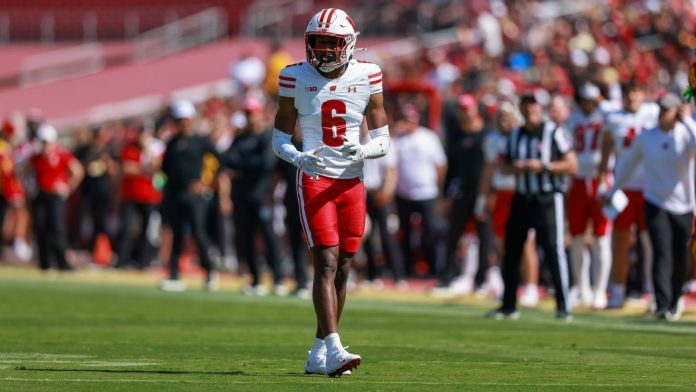
The lawsuit refers to the athlete in question as “Student Athlete A,” but details from the complaint line up with the offseason transfer of freshman defensive back Xavier Lucas. Lucas left Wisconsin and enrolled at Miami in January after saying the Badgers staff refused to enter his name in the transfer portal last December.
In the complaint filed Friday, Wisconsin claims that a Miami staff member and a prominent alumnus met with Lucas and his family at a relative’s home in Florida and offered him money to transfer shortly after Lucas signed a two-year contract last December. The lawsuit states that Miami committed tortious interference by knowingly compelling a player to break the terms of his deal with the Badgers.
“While we reluctantly bring this case, we stand by our position that respecting and enforcing contractual obligations is essential to maintaining a level playing field,” the school said in a statement provided to ESPN on Friday.
According to the complaint, Wisconsin decided to file suit in hopes that “during this watershed time for college athletics, this case will advance the overall integrity of the game by holding programs legally accountable when they wrongfully interfere with contractual commitments.”
Representatives from the University of Miami did not immediately respond to a request for comment.
The pending case promises to be an interesting test of whether schools can use name, image and likeness (NIL) deals to keep athletes from transferring even though the players aren’t technically employees. Starting July 1, schools will being paying their athletes directly via NIL deals.
The contracts between Wisconsin and their athletes gives the school the non-exclusive rights to use a player’s NIL in promotions. Part of the deal, according to the lawsuit, prohibits an athlete from making any commitments to enroll or play sports at other schools. The lawsuit says Wisconsin had a reasonable expectation that Lucas would “continue to participate as a member of its football program” until the deal ended.
However, according to several contracts between Big Ten schools and their players that ESPN has previously reviewed, these deals explicitly state that athletes are not being paid to play football for the university. Since the school is technically only paying to use the player’s NIL rights, it’s not clear if a judge will consider it fair to enforce a part of the contract that dictates where the player attends school.
The Big Ten said in a statement Friday that it supports Wisconsin’s decision to file the lawsuit and that Miami’s alleged actions “are irreconcilable with a sustainable college sports framework.”
Darren Heitner, a Florida-based attorney who represents Xavier Lucas, told ESPN that Wisconsin did not file any legal claims against Lucas and declined to comment further.
British OnlyFans star Bonnie Blue rang in 2025 by sharing that adult film actress Lisa Sparks‘ record of sex with 919 men in one day, set in 2004, was no more.
Blue shared Jan. 12 that she’d had sex with 1,057 men in 12 hours. “So one person would watch whilst I was with somebody,” she said in a video, explaining the logistics, “and then it would literally just be like a rotating circle like that.”
Born Tia Billinger, she used to work a regular 9-to-5 job in an office but it wasn’t for her, telling GB News in December, per The Sun, “I just wanted a better life.”
Blue moved to Australia and “had a lot of fun” doing web cam work, she said. “Then it quickly escalated to OnlyFans, because in my eyes, if I was making content anyway to put on this website, I thought I might as well use a more established website like OnlyFans.”
Asked about becoming notorious for sexual encounters with very young men, she noted that she wanted her content to be educational as well as entertaining.
“If I could go and sleep with as many people as I could, not only do I educate those I sleep with, but also I get a video that can educate the wider audience and obviously I can monetize that,” Blue explained. “So when I sleep with students, or barely legal, it shows me discussing consent with him and it also gives them an opportunity to tell me what they like.”
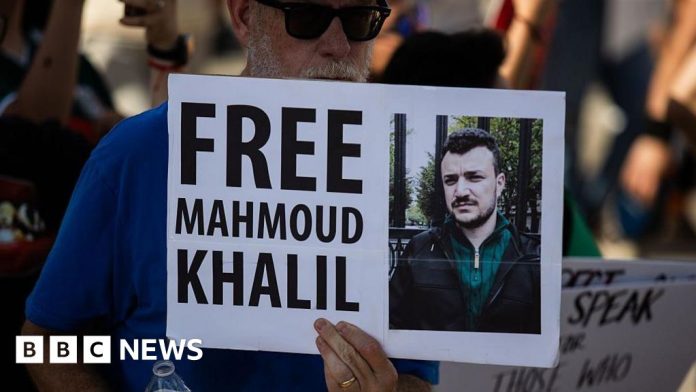
A federal judge ordered Columbia University student and activist Mahmoud Khalil to be released on bail, after he has spent over three months in detention.
Mr Khalil became a symbol of the the Trump administration’s crackdown on universities and foreign students when US Immigration and Customs Enforcement arrested him in New York on 8 March.
Mr Khalil was a prominent voice in Columbia’s pro-Palestinian protests last year, and his arrest sparked demonstrations in New York and Washington, DC.
US District Judge Michael Farbiarz determined Mr Khalil was not a flight risk or threat to his community, and could be released during immigration proceedings, according to the BBC’s partner CBS News.
Mr Khalil graduated from Columbia while he was in detention. His wife took his place in the ceremony and accepted his diploma on his behalf.
The government has not accused Mr Khalil of a specific crime.
He has been held by Immigration and Customs Enforcement (ICE) under two charges.
Secretary of State Marco Rubio invoked a rarely-used portion of the Immigration and Nationality Act to argue Mr Khalil’s presence in the US could pose “potentially serious adverse foreign policy consequences.”
Mr Khalil, who has been held in Louisiana since his arrest, remained in custody.
Mr Khalil’s attorneys have argued that the government is violating their client’s free speech rights. They also asked the New Jersey federal court to free him on bail or transfer him closer to his wife and baby, who was born during his detention.
Throughout Friday’s two-hour hearing, Judge Farbiarz, who presides in the District of New Jersey, expressed scepticism of the government’s requests to keep Mr Khalil detained while his case moves foward.
He also said Mr Khalil’s arrest and detention on the second charge was “highly unusual.”
“It’s overwhelmingly unlikely that a lawful permanent resident would be held on the remaining charge here,” Judge Farbiarz said, according to CBS News.
He added that “there is an effort to use the immigration charge here to punish the petitioner” for his protests against Israel’s military actions in Gaza.
The ruling from the bench sets the stage for Mr Khalil to soon leave detention. Details of his bail requirements were not immediately available.
Democratic strategist Patti Solis Doyle said that the party lacks a leader, message and agenda when asked about the state of the Democratic Party in an interview that aired on Friday.
“Right now we’re leaderless, we’re messageless, we’re agendaless, we don’t have any alternative ideas to the president and the Republicans right now. So, you know, I’m concerned, to say the least,” Solis Doyle, who ran Clinton’s 2008 presidential bid, told journalist Mark Halperin on his podcast “Next Up with Mark Halperin.”
“You know, if your party holds the White House, the leader of the party is president. If your party doesn’t hold the White House, the leader of the party is the last, you know, president of that party. So right now for us, that’s Joe Biden, but he has completely — you know, he’s off the radar completely,” she said, adding that the Democratic National Committee (DNC) chair “isn’t really the leader of the party.”
Solis Doyle also noted that she has “never been happier not” to be in the middle of politics.
“It sounds really depressing, what’s going on at the party,” she said. “I mean, overall, when you lose, the party that loses gets, as you know, as I know personally, attacked and criticized, and they’re the stupidest people that ever walked the planet and ‘How could you have missed that?’ That’s what’s happening with the Democrats right now, they’re getting attacked from all sides.”
Solis Doyle’s remarks come as intraparty tensions among Democrats have spilled out into the public in recent weeks. News surfaced Sunday that American Federation of Teachers union President Randi Weingarten and American Federation of State, County and Municipal Employees President Lee Saunders would decline to be reappointed as at-large members of the DNC. And last week, former DNC vice chair David Hogg said he would not be running for reelection as vice chair after he faced backlash from Democrats for launching his organization, Leaders We Deserve, that would primary incumbent House Democrats in an effort to bring about generational change within the party, all while he was serving as a vice chair.
A Reuters/Ipsos poll released on Thursday found that 62 percent of Democrats said “party leaders should be replaced.” Forty-nine percent of Democratic respondents said they were “unsatisfied with current leadership,” while 41 percent said they disagreed with the sentiment that they were unsatisfied with leadership.
Applebee’s and IHOP plan to launch an AI-powered “personalization engine” that could help its restaurants provide recommendations and customized deals, according to a report from The Wall Street Journal. The personalization engine would use a customer’s past purchases — or the orders of customers similar to them — to make recommendations.
Justin Skelton, the chief information officer at the restaurants’ parent company, Dine Brands, tells the Journal that an AI-powered personalization system would be designed to boost customer loyalty, as well as serve as a way to upsell products. As noted by the Journal, IHOP already has some information about its customers’ ordering habits through its rewards program.
As noted by the Journal, Dine Brands is considering rolling out AI tools designed for staff members as well. Along with exploring the use of AI-powered cameras to detect when a table needs cleaning, it’s also testing an AI app for managers.
Ryan O’Hanlon is a staff writer for ESPN.com. He’s also the author of “Net Gains: Inside the Beautiful Game’s Analytics Revolution.”
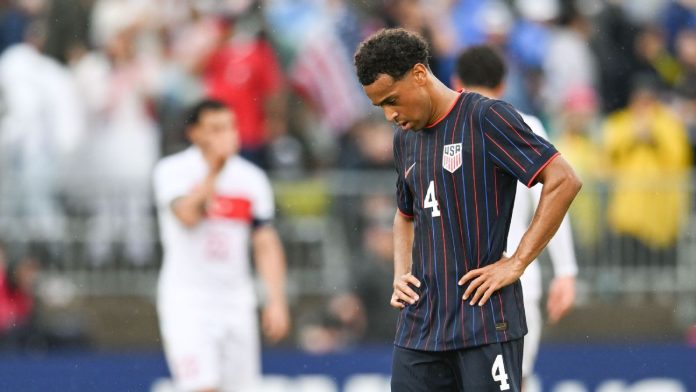
Even with two wins to start the Concacaf Gold Cup, it appears the U.S. men’s national team is in crisis.
Christian Pulisic, Antonee Robinson and Yunus Musah have already asked out of the Gold Cup. A trio of other potential or likely starters, Gio Reyna of Borussia Dortmund, and Weston McKennie and Timothy Weah of Juventus, didn’t participate because of the Club World Cup. Then, both Monaco’s Folarin Balogun and PSV’s Sergiño Dest — perhaps the two players with the highest ceiling-raising potential in the player pool — aren’t on the U.S. roster because of injuries.
This was supposed to be the USMNT’s last chance to test itself in competitive matches before next summer’s World Cup — and a chance to right the wrongs of the 1-0 Nations League loss to Panama. Without something like 80% or 90% of the expected starting lineup next summer, it could have transformed into an opportunity for some fringe players to make a case to play a bigger role in Mauricio Pochettino’s plans once the matches matter again.
But then came the friendlies against Switzerland and Turkey: two losses, by a combined score of 6-1, against two teams the U.S. needs to be better than if it seeks a deep run in 2026.
It wasn’t just that the U.S. lost these matches — it was what the losses signified. This was a group of players that didn’t appear to care. The play was uninspired, as was the attitude of the team’s stars.
Former USMNT star Landon Donovan ripped Pulisic’s commitment to the national team. Pulisic’s dad responded by screenshotting a conversation he had with ChatGPT. The AC Milan star told Donovan to say it to his face and revealed that he had asked Pochettino if he could play in the two friendlies and then skip the Gold Cup. This led to Pochettino clarifying his role as the manager who makes personnel decisions and his personhood: “When I signed my contract with the federation, I am the head coach. I am not a mannequin.”
A year before co-hosting the World Cup, the USMNT under Pochettino promised to be on a steady upward trajectory. Instead, its best players are playing golf rather than soccer. Parents are feuding with former players. The captain and coach are airing their dirty laundry in public. And that expensive, experienced, supposed-to-be-transformative coach has barely changed anything.
That sounds like a disaster — but it also sounds like the situation at pretty much every world-class national team at some point over the past decade. These are growing pains as the United States is slowly becoming a real soccer country.
Why the USMNT doesn’t matter as much anymore
American soccer players probably don’t care about playing for the USMNT as much as they used to. In the long run, that is a good thing.
Let’s go back to 1994, essentially the birth of modern American soccer as we know it. The U.S. was hosting the World Cup, Alexi Lalas was still a harmlessly peculiar guy with a bright-red beard and a guitar, the uniforms were acid-wash denim, and MLS didn’t kick off for another couple of years.
Almost none of the players were good enough to play abroad, and even if they could, there was still a stigma against signing American soccer players. So, instead, the U.S. Soccer Federation signed a large chunk of the roster as essentially full-time USMNT players. The team trained together for two years and played in just about every international tournament it could enter. At the 1994 World Cup, more than half of the roster (14 players) listed the U.S. Soccer as their employer.
Four years later, no one was a full-time U.S. Soccer player, but 16 guys were playing professionally in a league that didn’t exist in 1994: Major League Soccer. Then, at the 2002 World Cup, an MLS player won Best Young Player as a 20-year-old Landon Donovan led the USMNT to a quarterfinal loss against Germany. Donovan, though, was on loan to the San Jose Earthquakes from Bayer Leverkusen, who had just lost the Champions League final 2-1 to Real Madrid and that Zinedine Zidane goal.
Donovan was shoved into an ecosystem that still didn’t have a place for him. Leverkusen signed him at 17. He was a superstar across the youth levels and had to carry the weight of American fan expectation on his shoulders. Donovan has talked about how hard it was to live in Germany and be a professional while his friends were still in high school, an ocean away. He was alone — there was no one else like him, in a position like him, anywhere else in the world.
If Donovan made it at Leverkusen, it would prove something about American soccer — that our best players could play for the best teams in the world. But it didn’t work out for him at Leverkusen, and outside of a couple of beloved loan spells with Everton, he spent most of his career in MLS.
So, unsurprisingly, playing for the USMNT meant a lot to him. It was a chance to prove that failure at Leverkusen didn’t have anything to do with talent. He could play at this level if he wanted to. On a more universal level, for him and most of his teammates, games with the USMNT were the highest-level matches they would play.
The USMNT’s matches at the World Cup, Confederations Cup, and against Mexico were much more difficult than the games most of its MLS-based players played weekly. These games were so important, in part, because they could push their limits.
An increasing-but-still-small number of Americans started to play in Europe during Donovan’s USMNT career, but most of them began in MLS. And because their numbers abroad were still so limited and most of them weren’t competing for titles and playing in the Champions League, winning games with the USMNT was a way to legitimize American soccer — even if it meant flying thousands of miles across the Atlantic Ocean every season.
That’s not the case anymore. With teenage American prospects at almost every major club academy in the world, eight senior players in the current pool who cost at least $20 million in transfer fees, and a growing number featuring in the Champions League every season, the national team doesn’t matter like it did.
The paradox of Pulisic
As much as FIFA tries to increase its influence, UEFA is still in control.
The Champions League is the pinnacle of the sport: The competition makes around $4 billion per year and the soccer is being played at a higher technical and physical level than anything else we’ve seen. The World Cup will always be the bigger event because of the history, the scarcity and the fact that the world is participating, but the best players in the world are playing the best soccer in the world on Tuesdays and Wednesdays from September through May.
This has created tensions between leagues and national federations, players and their national teams, and fan expectations and reality.
Kylian Mbappe, Lionel Messi and Robert Lewandowski are all incredibly wealthy, all-time great players — and the main reason is what they’ve done for their club teams. Their national team careers? Practically irrelevant.
Mbappe became someone your dad knew because of the 2018 World Cup, and the 2022 World Cup final between him and Messi was arguably the greatest game ever. But Mbappe has been paid over $400 million by the various club teams across his career, and Paris Saint-Germain paid around $200 million to acquire Mbappe … the summer before the 2018 World Cup.
For most of Messi’s career, the national team was a weird anomaly — everyone agreed this was one of the greatest players ever because of what he did with Barcelona. With Lewandowski, Poland has nothing to do with his legacy or status in the game. He will go down as the best center forward of the 21st century — solely because he has scored 500-plus goals for Borussia Dortmund, Bayern Munich and Barcelona.
Messi, still in his prime, retired from the national team for a few months, partially because of frustration with the Argentine national federation. Mbappe briefly stopped playing for France — missing multiple Nations League matches — last fall. And most recently and most familiar: Lewandowski recently got Poland’s manager fired. The Barcelona forward said he wouldn’t play in the team’s two World Cup qualifiers this month because of “physical and mental tiredness” from the club season, so the coach stripped him of his captaincy. Then, Lewandowski said he would stop playing for Poland if Michał Probierz remained the coach, and now Probierz is no longer the coach.
Similar to Lewandowski, the majority of players at the highest level are tired because they play too many games. The most recent study from FIFPro, the international players’ union, found that 70% of surveyed players think a guaranteed rest period each season is necessary. For last season, the study defined 55 games played or more as an “excessive workload,” and for the players who hit that mark, 30% of their matches were with their national team.
“The schedule is very tough, especially for those of us from South America because we have 12-hour flights there and 12-hour flights back,” said Real Madrid star Federico Valverde, who represents Uruguay at the international level. “There are times when it’s too much for our bodies.”
This is the downside of what American soccer fans have been wanting. As more Americans are playing at the highest level in Europe, why wouldn’t they also feel this way? Why wouldn’t they also want to spend less time traveling to and playing with their national teams?
play
2:05
Keller wonders why USMNT has so much disconnect
Kasey Keller breaks down the situation between Christian Pulisic and Mauricio Pochettino, in which Pochettino said Pulisic isn’t allowed to dictate games he plays in.
Even without the Gold Cup, Pulisic is at 58 games since the start of last August. His club teammate, Yunus Musah, would’ve broken the 55-match mark had he played this summer. Both of them have traveled over 85,000 kilometers (about 52,817 miles) this season between Milan’s European matches and games in North America for the USMNT.
In the FIFPro report for last season, they compared a number of young players with their older compatriots. By his 25th birthday, Pulisic had made 338 club and national team appearances in his career. At the same point in his career, Donovan had played only 280 times. Here’s the study’s author:
“Pulisic, if not for injuries, would have an even greater distance, in terms of appearances, compared to Donovan. This is particularly evident between Pulisic’s 21st and 22nd birthdays, where he missed numerous club and national team games due to a long-term ankle injury, COVID-19 and general illness. Overall, Pulisic’s incredible number of appearances at such a young age has likely contributed to his worrisome injury record, having had the misfortune of missing close to 100 games since the 2017/2018 season through various injuries.”
After the report was published, Pulisic played 58 more games for the USMNT and Milan.
How the USMNT became just like everyone else
There’s a vision of a unified American soccer model — a professionalized and well-defined way we play, where everyone is fully committed to the cause and developed within the same model. The players add up to something greater than the sum of the parts, and everything makes sense every time they take the field.
This will never happen. How do I know this? Because it hasn’t happened anywhere else. You can’t achieve this when all of your players are spending 75% of their time doing the same job for someone else. Although the situation arose by accident, the current constraints on the international game force it into dysfunction.
At the club level, teams get to target the players they want, and then they get to specify how they want to play on the training ground every day. They live in the same homes and play in front of the same fans, at the stadium, each week.
With the national team, you’re limited by the quirks of birth years, national borders and citizenship rules. Your five best players might be goalkeepers, and there’s nothing you can do about it. The squads are almost, by definition, ill-fitting, and then you have even less game and practice time for the coach and the players to figure out how the pieces best fit together. Oh, and then the roster changes almost every time the team convenes for a couple of matches and a few training sessions.
The players don’t get paid anywhere near as much to play for the national team as they do for their clubs, and all of the matches either occur during “breaks” in the club season or at the end of the grueling European calendar. And as for the number of truly meaningful games these teams play every four years? You can count them on two hands.
play
2:56
Gomez: The USMNT is a laughing stock for the world
Herculez Gomez reacts to the USMNT’s “embarrassing” situation after Christian Pulisic hit back at critics.
As more and more Americans earn prominent roles in Europe, why should we expect this environment to produce anything other than drama, consternation and disappointment?
That is the reality for almost every major national team, most of the time.
Yes, Argentina is running hot right now, but it was the world’s most depressing soap opera for the first 15 years of Messi’s career. French fans hated how the team was playing pretty much until the final whistle in 2018, and it has as many World Cup wins as player mutinies. Spain looks great at the moment, but do you remember the last World Cup? When it was managed by Luis Enrique, the guy who just won the Champions League with PSG, and it got knocked out in the round of 16 after attempting over 1,000 passes and not scoring a goal?
Brazil has more raw talent than any nation not named France, and it has had four managers in the past two years. (Brazil is trying to win its first World Cup since 2002.) Italy hasn’t qualified for a World Cup since 2014 or gotten out of the group stage since 2006. Germany seemed like it had cracked the code in 2014 — and it hasn’t been out of the group stage since. And England, well, England is home to the best soccer league in the world, and it has never won an international tournament that it didn’t host.
All of which is to say: Every weird thing that’s happening with the USMNT is normal. The expensive manager whom U.S. Soccer hired last year didn’t immediately fix things because they never do. The players don’t seem fully committed to their national team because no one is anymore. The former players are mad because soccer has already changed so much since they were playing.
However, the beauty of international soccer — really, the thing that makes international soccer what it is — is that next summer almost none of this will matter. Pulisic and Musah and Robinson won’t save themselves for the next club season — it’s the World Cup, not the Gold Cup. And historically, the level of dysfunction in the lead-up to the tournament has almost no correlation with performance at the tournament.
In August 2022, Morocco was in way worse shape than the USMNT. It didn’t have as much talent on its roster, it had lost in the quarterfinals at the Africa Cup of Nations, and despite qualifying for the World Cup, the federation fired its head coach, Vahid Halilhodzic, who dropped Chelsea star Hakim Ziyech from the team.
Four months later, Morocco was somewhere the USMNT would love to be next summer: playing in the World Cup semifinals.
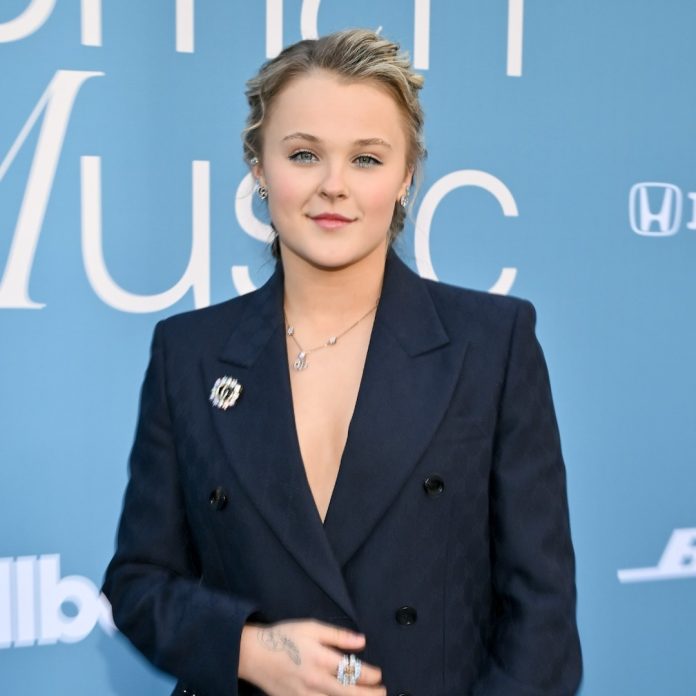
The Dance Moms alum—who came out as a lesbian in 2021 but now identifies as queer—detailed impact the public had on her coming out journey and feeling the need to label herself amid her new romance with Chris Hughes.
“When I came out at 17, I said, ‘I’m pansexual, because I don’t care [about gender],'” JoJo said in an interview with The Daily Mail published June 20. “But then I kind of boxed myself in and I said, ‘I’m a lesbian.’ And I think I did that because of the pressure.”
As for where that pressure came from, the 22-year-old pointed to several different factors, including the LGBTQ community at large.
“In a weird way, I think it came a little bit from inside the community at times,” she pondered. “From people I know, from partners I’ve had. You just get put in this world where you feel like, because you now have said, ‘Oh, I’m a lesbian,’ you have to be a lesbian. And the truth is, sexuality is fluid.”