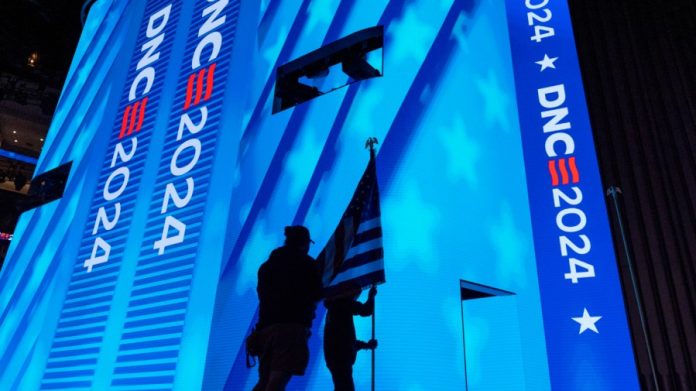
More than half of Democrats agree party leadership should be replaced amid infighting, according to a new survey.
Thursday’s Reuters/Ipsos survey featuring self-identified Democratic respondents found that about 62 percent backed the idea that party leadership should be replaced, while 24 percent did not support the idea, and 14 percent did not provide a response or did not know.
In the wake of the November 2024 elections, Democrats have struggled to identify what went wrong after losing the White House and Senate. The party has also found it difficult to build a cohesive message as the Democratic National Committee (DNC) has been embroiled in internal turmoil.
Earlier this week, a powerful teachers union head resigned from party leadership shortly after former DNC Vice Chair David Hogg announced he would not run again in a redo election. This all comes as some some Democrats have expressed concern about DNC Chair Ken Martin’s leadership.
Party divides, however, can also be found on Capitol Hill, particularly surrounding Democrats’ messaging on hot-button issues such as transgender rights and how to effectively counter President Trump’s message.
Rep. Sarah McBride (D-Del.), the first openly transgender member of Congress, argued this week that her party must make more space for disagreement when it comes to trans rights and welcome “imperfect allies” into the discussion to bring about long-term and substantial change.
This spring, Senate Minority Leader Chuck Schumer (D-N.Y.) also faced attacks from his party’s base after he voted to advance a GOP funding bill, with some members, such as Rep. Alexandria Ocasio-Cortez (D-N.Y.), publicly slamming the veteran Democrat.
“There is a deep sense of outrage and betrayal,” Ocasio-Cortez said at the time of Schumer’s decision.
The Reuters/Ipsos survey also found 49 percent of Democrats were unhappy with current leaders while 41 percent backed the party; 10 percent of those surveyed were unsure or did not provide a response.
The Reuters/Ipsos survey took place June 11-16, featuring 4,258 people and 1,293 Democrats and had 3 percentage points as its margin of error.
Pernod Ricard has launched “an internal project” aimed at creating “a more agile and simplified organisation” at the Olmeca Tequila maker.
Reports from Reuters yesterday (18 June) suggested the group was looking to streamline its operations.
Internal company presentation slides viewed by the publication reportedly suggested Pernod Ricard plans to group its brands into two main divisions.
When asked about its plans, the group told Just Drinks: “At Pernod Ricard, we work on an ongoing basis to adapt our organisation and ways of working to the fast-evolving business environment.
“That is why we have announced to all our employees an internal project aimed to create a more agile and simplified organisation aligned with our strategic objectives and the current evolution of our business.
“These changes imply the launch of local consultation processes with our social partners and employees where necessary, therefore we cannot comment any further at this stage”.
It is unclear how many employees may be affected by the move.
According to a staff memo, seen by Reuters, CEO Alexandre Ricard said the project, called Tomorrow 2, looks to “further advance the simplification of our organisation”.
Two sources also told the publication Ricard informed staff in a video the group’s restructuring would bring about “departures”.
Several major distillers have been facing pressure on sales amid slowing demand in important markets including the US and China. Trade tensions have also weighed on consumer sentiment and shaken supply chains.
Pernod Ricard’s two new business divisions are allegedly called “Gold” and “Crystal”, with the former including Champagne, and brands such as Martell Cognac and Jameson whiskey. The latter would feature Havana Club rum, Absolut vodka and French aperitifs.
According to Reuters, the changes are expected to be brought into force in the last three months of this year.
In its third-quarter results, released in April, Pernod Ricard booked €2.38bn ($2.7bn) in net sales, declining 3% on an organic and reported basis.
Nine-month net sales dipped 4% organically and by 3% in reported terms to €8.5bn, hit by a €145m foreign-exchange impact. Volumes in the nine months were up 1%.
In Pernod Ricard’s third quarter, its net sales in the US were up 2%, although the company said organic net sales were “ahead of sell-out supported by wholesalers’ orders ahead of tariff announcements”.
In China, net sales declined 5% and were down 22% in the first nine months of the financial year. At the time, the group said it was facing a “macro context” that “remains challenging”.
Speaking after Pernod Ricard reported its third-quarter results, CFO Hélène de Tissot said the company expected China to weigh on its annual performance.
“For the fiscal year ’25, the main impact of tariffs is China, which we are completely assessing. That’s why we are confirming our ability and our confidence to sustain the operating margin,” she said at the time.
“Pernod Ricard launches reorganisation plan” was originally created and published by Just Drinks, a GlobalData owned brand.
The information on this site has been included in good faith for general informational purposes only. It is not intended to amount to advice on which you should rely, and we give no representation, warranty or guarantee, whether express or implied as to its accuracy or completeness. You must obtain professional or specialist advice before taking, or refraining from, any action on the basis of the content on our site.
Midjourney has released the first version of its video generation model to the public. For now, the tool can generate short videos based on images uploaded or created on the platform, but Midjourney plans on rolling out more capabilities in the future.
After creating an image using Midjourney, the service will show a new “animate” button that users can press to create a 5-second clip based on a text prompt. It will also show the option to add an image you uploaded to the platform as a “starting frame” for a video. The tool will generate a generic prompt that “just makes things move” by default, but a “manual” button lets users describe how they want the motion to look.
Users can extend an animation by four seconds up to four times, making for a 21-second-long video in total. There are also high and low motion settings that control whether both the subject and camera move, or just the subject.
Midjourney’s AI video generator is currently only available on the web and through the startup’s Discord server. It requires a subscription to the service, which starts at $10 / month for 3.3 hours of “fast” GPU time (around 200 image generations). The startup says it will charge “about 8x more for a video job than an image job,” adding up to around “‘one image worth of cost’ per second of video.”
Midjourney is currently the subject of a lawsuit from Disney and Universal, which cited the prospect of it launching a video generator as a special point of concern. It contends Midjourney offers a “virtual vending machine, generating endless unauthorized copies of Disney’s and Universal’s copyrighted work.” The in-progress video generation model was first announced in January, and Disney and Universal argued that its training process meant “Midjourney is very likely already infringing Plaintiffs’ copyrighted works.”
In a post announcing the generator, Midjourney founder David Holz says this first version is just “a stepping stone” as the startup works toward creating “models capable of real-time open-world simulations.” Google, OpenAI, and Meta have also launched AI video generators, all of which can generate videos with text prompts.
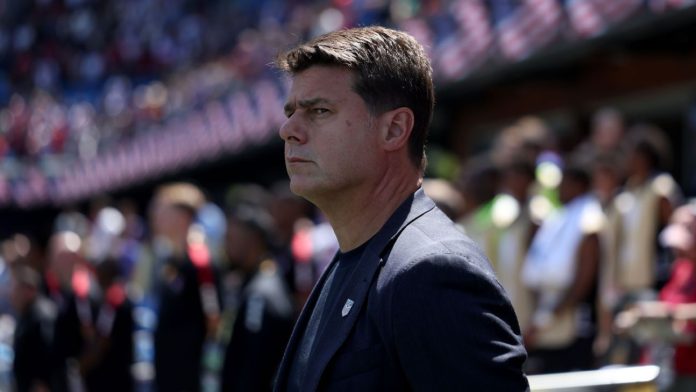
AUSTIN, Texas — United States coach Mauricio Pochettino said he’s not seeking vengeance against his critics after a positive start for the men’s national team in the 2025 Gold Cup.
“I think we’re here to create a group and a team … searching for the best pieces,” the Argentine coach told reporters on Wednesday when asked if a place in the knockout rounds would silence his doubters. “We’re not here, in the case of losing and now winning, to be vengeful.”
“I think what’s normal in soccer is that when you win, everything is fine, and when you lose, it’s normal to have criticism.”
After heading into the Gold Cup with a four-game losing streak, Pochettino and his men created some positive momentum with a 5-0 thrashing of Trinidad and Tobago in their tournament opener last weekend.
Depending on the outcome of a separate match in the group, the USMNT could secure their knockout round spot through a win over Saudi Arabia at Q2 Stadium on Thursday. Like the U.S., Saudi Arabia will also be entering the second round of the group stage with a win in hand.
“A team with experience, they are really competitive,” Pochettino said of his team’s next opponents. “I think they did very well beating Argentina in the last World Cup.
“The characteristics of the players, Saudi Arabian player, always aggressive, fast, good speed, good technique. Yes, tomorrow is a good challenge for us.”
As for player availability, the U.S. coach noted that Tyler Adams and Johnny Cardoso, who were both left out of the Gold Cup opener, have recently trained with the team and could possibly gain minutes on Thursday.
The U.S. only attracted a crowd of 12,610 for the clash with Trinidad and Tobago at San Jose’s PayPal Park, continuing the trend of varying levels of attendance across the early games of the Gold Cup and Club World Cup, which is also being held in the United States.
But Pochettino said he had no worries that fans would turn out in huge numbers for next year’s World Cup, which is being co-hosted by the U.S., Canada and Mexico.
“Yes it’s struggling,” said the coach. “A lot of different options because it’s three competitions in USA; Club World Cup, Concacaf Gold Cup, and then also MLS. It’s really tough.
“I think we can not ask for more [of] our fans, and our fans are going to be there [tomorrow]. I think tomorrow, I think [we’re] going to hope that the stadium is full. Last time [in Austin] the people [were] and the fans were amazing. I hope tomorrow is the same.
“I have no doubt that all the excitement for being hosts in the World Cup in one year … the stadiums are going to be all full.”
After the Saudi Arabia game, Pochettino and his men will then face Haiti on Sunday at AT&T Stadium in Arlington, Texas.
Trace Cyrus Accuses Dad Billy Ray Cyrus of Missing Grandma’s Funeral to Attend Fashion Show
Miley Cyrus says she wasn’t the one having a party in the U.S.A. on the set of Hannah Montana.
According to the “Flowers” singer, she was blamed for smoking weed on the set of the Disney Channel show, when it was actually her dad Billy Ray Cyruswho was flying high.
During an appearance on the June 19 episode of Sorry We’re Cyrus, her mom Tish Cyrus asked about a “core memory” from Hannah Montana, which ran from 2006 to 2011.
“Dad smoking pot and everyone blaming me for it,” Miley responded. “It’s hilarious. He wasn’t sharing.”
Tish said she even defended Billy Ray—her husband from 1993 to 2022—from the allegations at the time.
“They were calling me, saying, ‘B. Ray was smoking pot,'” Tish shared. “And I was saying, ‘He would never do that.'”
The mother-daughter duo went on to joke that it was also costar Mitchel Musso who may have been lighting up as well.
As sister Brandi Cyrus quipped, “That’s incredible.”
E! News has reached out to Billy Ray and Mitchel for comment but hasn’t heard back.
Pieces of twisted metal shrapnel – some of it apparently from the missile itself – scattered across a 200m (656ft) area in and around the hospital complex.
Vehicles carrying medical staff lined the road outside – an emergency response to a situation that many had feared would be worse.
Crowds of soldiers, police and rescue teams milled around the hospital entrances, as a stream of ministers arrived to express their outrage at the strike.
Alon Uzi was wandering around outside the hospital entrance with two bags of belongings.
He said he had been receiving treatment in the emergency department when the attack happened, and didn’t have time to reach the shelter.
“I was lying in bed, and I heard a big boom,” he told us. “And before I could do anything, there was an explosion and part of the ceiling fell and I was covered with white dust.
“There was no time to get out of bed. I was just getting ready and then I heard a whistling noise.”
Inside the emergency reception area, the air carried the tang of chemicals mixed with dust. Patients were still being evacuated on stretchers from deep inside the building, as emergency teams passed through into the surgical wards that were hit.
Medical staff told local media that patients there had recently been moved to the hospital’s emergency shelters underground. Seventy-one people have been injured, according to Israel’s ministry of health.
Reuters
Professor Asher Bashiri, director of the maternity ward, said he could see the area of impact from his office.
“It looks unbelievable,” he told me. “The upper part of the building is cracked, and fire was coming from it in the first hours. Everything looks broken.”
He said they had moved all the patients to a more protected area when the war began.
“We were very, very lucky,” he said. “It could have been so much worse. But we are still living in an unbelievable situation. It’s not finished – I don’t know what will happen tomorrow, or the next day. We’re just happy that we’re alive.”
The hospital director, Shlomi Codish, said that the northern surgical building was hit and that several wards were demolished, with extensive damage to the entire hospital.
“We expect that we will be transferring over 200 patients in the next few hours to other medical centres,” he said. “We’re trying to minimise the number of people; we don’t know if buildings might collapse or if wards might collapse.”
Among the stream of ministers visiting the site today was Culture Minister Miki Zohar, from Prime Minister Benjamin Netanyahu’s Likud party.
“All the people need to know what we’re facing – a regime that is trying to kill innocent people,” he said. “When you’re dealing with evil, this is a different war. Believe me, we won’t stop until we win. We’re going to reply and it’s going to be very strong.”
Mr Zohar was asked about Israel’s history of bombing hospitals in Gaza – locations its army says are being used as military control centres by Hamas.
“We keep innocent people in Gaza safe as much as we can,” he said. “We call them to evacuate before we bomb. This is the big difference between Iran and us.”
BBC on the scene at Israeli hospital struck by Iranian missile
Among the stream of ministers visiting the site today to express their outrage was Culture Minister Miki Zohar, from Prime Minister Benjamin Netanyahu’s Likud party.
“All the people need to know what we’re facing – a regime that is trying to kill innocent people,” he said. “When you’re dealing with evil, this is a different war. Believe me, we won’t stop until we win. We’re going to reply and it’s going to be very strong.”
Mr Zohar was asked about Israel’s history of bombing hospitals in Gaza – locations its army says are being used as military control centres by Hamas.
“We keep innocent people in Gaza safe as much as we can,” he said. “We call them to evacuate before we bomb. This is the big difference between Iran and us.”
EPA
Israel’s military has attacked several hospitals in Gaza, which it claims Hamas use as military control centres
Israel’s Defence Minister Israel Katz accused Iran’s supreme leader of committing “war crimes of the most serious kind,” saying he would be held accountable.
Netanyahu has accused Iran of deliberately targeting civilians, promising that Israel will “exact the full price from the tyrants in Tehran”.
Iranian media says the centre they were targeting was at the Gav-Yam tech park, which is less than 3km (1.86 miles) away.
It was one of half a dozen sites hit by Iranian missiles on Thursday morning, a day after Donald Trump demanded Iran’s “unconditional surrender”.
It’s a reminder that both sides have the capacity to escalate this conflict, either by using different weapons – or by choosing different targets.
The US president is weighing up the decision to enter the war alongside Israel, while demanding that Iran submit to an agreement ending its nuclear enrichment, with the aim of blocking its path to a nuclear weapon.
On Wednesday, Israel said it sent 40 fighter jets to bomb targets in Iran, including an inactive nuclear reactor at Arak and a nuclear development building in Natanz, along with dozens of missile sites and radar.
After almost a week of daily attacks from both sides, this war is precariously balanced on the edge of a much wider conflict.
White House press secretary Karoline Leavitt will speak to reporters Thursday amid rising tension in the Middle East between Israel and Iran following nearly a week of air strikes between the two nations.
The press briefing also comes as the U.S. celebrates Juneteenth — a federal holiday celebrating the day the last formerly enslaved Black people were notified of their freedom through the Emancipation Proclamation, officially marking the end of the Civil War.
Benzinga and Yahoo Finance LLC may earn commission or revenue on some items through the links below.
David Ortiz is used to swinging for the fences. However, the former Boston Red Sox slugger has traded his garden fence for a condo’s luxury amenities, having just agreed to buy a branded residence at ORA by Casa Tua, the New York Post reports.
Ortiz, who sold his Miami-area mansion for $10.6 million two years ago, is happy to put his money where his mouth is as Casa Tua is part of an upscale restaurant chain with locations in Miami, New York, Paris, and Aspen, Colorado. He recently posed for a photo at the building’s sales office with his broker, who promptly posted it on Instagram.
Don’t Miss:
Ortiz is spending far less on the condo than he sold his mansion for, purchasing a three-bedroom, three-bathroom luxury home featuring a library and a terrace in the 77-unit building where prices range from $3.25 million to $3.75 million, according to the Post.
Having spent 14 of his 20 seasons with the Boston Red Sox, where he won three World Series and the World Series MVP in 2013. Ortiz traded the Northeast’s chilly climes for the Florida sunshine when he retired in 2016.
Ortiz’s ex-wife, Tiffany, oversaw the construction and development of his former mansion, The Wall Street Journal reported, paying $1.5 million for the lot the same year that Ortiz retired. The couple owned multiple homes around the time they sold their former marital home in Miami in 2023, according to the Journal.
At the time of his retirement in 2016, Ortiz earned $22 million, according to Forbes, with $16 million of that amount representing his salary. He signed endorsement deals with multiple brands, including MasterCard (NYSE:MA), JetBlue (NASDAQ:JBLU), Coca-Cola (NYSE:KO), and Buffalo Wild Wings, while continuing to work with previously affiliated companies such as Dunkin’ Donuts, New Balance, and Marucci.
According to ESPN, Ortiz signed a one-year deal in 2015 that earned him $16 million, with team options for 2016 and 2017. However, he never played in the 2017 season. Ortiz earned over $160 million during his entire career, according to Sportskeeda.
Ortiz was severely shot and wounded in 2019 while at the Dial Bar and Lounge in Santo Domingo, Dominican Republic. He had three surgeries. Eventually, 11 suspects were arrested. The Dominican Attorney General’s office stated that Ortiz had not been the intended target.
“It was crazy because you go from spending a whole day with your kids in a facility where your kids are having fun, and all of a sudden you’re in a hospital, not knowing what is going to end up happening to you,” Ortiz told WBZ-TV three months after the shooting. “You learn that your life can change in seconds, not only yours – your life and the people around you.”
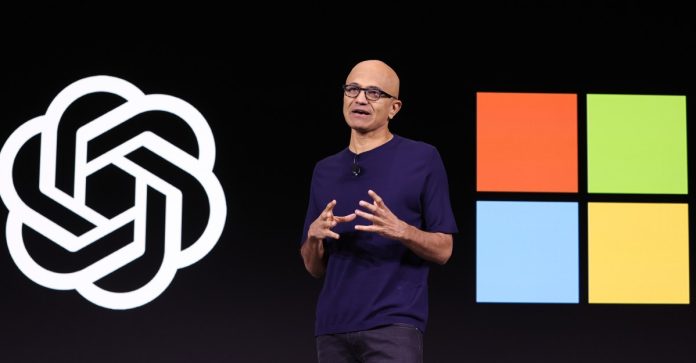
Beyond the selfies between Microsoft CEO Satya Nadella and OpenAI CEO Sam Altman, and the friendly conversations between the pair on stage, all is not well with Microsoft’s $13 billion AI investment. Over the past year, multiple reports have painted a picture of a Microsoft and OpenAI relationship that is straining under pressure.
As OpenAI battles for access to more compute power and less reliance on Microsoft, tensions have been rising during negotiations over the future of OpenAI’s business and its Microsoft partnership. Microsoft backed down on being the exclusive cloud provider for OpenAI earlier this year, but OpenAI still needs Microsoft’s approval to convert part of its business to a for-profit company. That’s led to a potentially explosive outcome.
OpenAI executives have now reportedly considered accusing Microsoft of anticompetitive behavior, which could mean regulators look even more closely at the terms of Microsoft and OpenAI’s contract for potential violations of antitrust laws. The Wall Street Journal reports that OpenAI’s potential acquisition of AI coding tool Windsurf is at the heart of the latest standoff, as OpenAI wants Windsurf to be exempt from its existing contract with Microsoft.
If OpenAI does wage a public war against its biggest partner, Google will be grinning from ear to ear. The Federal Trade Commission (FTC) opened an investigation into Microsoft last year under the Biden administration, and the Trump administration is reportedly pushing ahead with the antitrust probe — including looking at Microsoft’s AI investments and deal with OpenAI. Google already reportedly urged the FTC to kill Microsoft’s exclusive deal with OpenAI, so regulators will be keen to hear directly from OpenAI. It’s more than ironic given that Microsoft’s initial OpenAI investment was triggered by Google fears.
Microsoft’s partnership with OpenAI is complicated, and the pair are intertwined both technologically and financially. While it’s been widely reported that OpenAI shares 20 percent of its revenues with Microsoft, there are additional revenue-sharing agreements in place, according to sources who are familiar with the arrangement.
Microsoft receives 20 percent of the revenue OpenAI earns for ChatGPT and the AI startup’s API platform, but Microsoft also invoices OpenAI for inferencing services. As Microsoft runs an Azure OpenAI service that offers OpenAI’s models directly to businesses, Microsoft also pays 20 percent of its revenue from this business directly to OpenAI.
Microsoft also has an unreported revenue share related to OpenAI’s impact on Bing and Microsoft Edge. If Microsoft’s search and news advertising revenue grows by 15 percent year-over-year, Microsoft then pays a 10 percent revenue share to OpenAI. This revenue sharing deal scales up to 20 percent, depending on year-on-year growth.
These complicated revenue-sharing agreements show how difficult it will be for OpenAI to break from this partnership. Microsoft’s multibillion-dollar investments also entitle it to up to 49 percent of the profit generated by OpenAI’s for-profit arm. Given OpenAI is far from profitability and Microsoft has a share of OpenAI’s losses, the software giant is still years away from seeing those profit returns.
But OpenAI is trying to convince Microsoft to give up its entitlement to future profits in return for a stake in the reshaped OpenAI business. The Information reports that this could give Microsoft an approximately 33 percent stake, if it’s willing to give up the capped share of profits. Microsoft’s OpenAI contract also includes a clause that means it will relinquish its rights to OpenAI revenue and its AI models when the startup achieves AGI. This is also reportedly linked to OpenAI’s profits.
While OpenAI is keen to get access to more compute and a better deal, Microsoft has also been hedging its bets on OpenAI over the past 18 months.
The trouble all started when the OpenAI board fired Altman in November 2023. This immediately hit Microsoft’s stock price and had executives working overtime during a holiday period to try and salvage the situation. Even Nadella was directly involved in the discussions, and he announced that Microsoft would be hiring Altman, OpenAI cofounder Greg Brockman, and others “to lead a new advanced AI research team.”
The OpenAI board quickly backed down, and Altman was reinstated as CEO, but sources familiar with Microsoft’s AI efforts tell me that this messy incident shook the company’s confidence in OpenAI.
Nadella has been pushing Microsoft’s AI teams to move quickly on hosting OpenAI alternative models as part of its Azure AI Foundry business. Microsoft doesn’t have to share revenues from this business with OpenAI, as it’s set up as a way for developers to get access to a variety of AI models from different AI labs.
Engineers worked through the night to get DeepSeek’s R1 model ready for Azure AI Foundry earlier this year, something that Nadella pushed for. He also pushed for Microsoft to host xAI’s Grok 3 models recently, in a bid to be seen as the key host for popular or emerging AI models. Microsoft is in a race to build what it calls an AI “agent factory,” and it needs the best models to achieve this.
Microsoft might even create its own AI models to replace OpenAI ones. Mustafa Suleyman, the Google DeepMind cofounder who is now CEO of Microsoft AI, is overseeing Microsoft’s long-term efforts to replace OpenAI models. That’s a complicated project that’s not close to fruition yet, and Microsoft seems to be making more progress with small language models like Phi that can even run locally on Copilot Plus PCs.
Both Azure AI Foundry and Microsoft’s AI model experimentation are clearly a hedge against OpenAI, especially as the pair are increasingly on a path to competing for the same customers. Microsoft even listed OpenAI as a direct competitor for the first time last year, just months after OpenAI released GPT-4o, a faster model that it made free to all ChatGPT users. At the time, I wrote that OpenAI’s GPT-4o release surprised some people at Microsoft, because it undermined Microsoft’s own paid AI services on Azure, including speech and translation features.
OpenAI also sells ChatGPT Team and Enterprise to businesses, while Microsoft is trying to get businesses to buy Microsoft 365 Copilot licenses for its own AI efforts. During an internal town hall meeting earlier this year, Nadella said that he wants Microsoft to take inspiration from OpenAI so that its future cloud work “will look like ChatGPT.”
Whatever happens next in Microsoft’s complicated relationship with OpenAI, I fully expect Microsoft to continue aggressively striking deals that embrace rival AI models. As Nadella has proven time and time again since becoming CEO more than a decade ago, he loves a good partnership.
Microsoft’s next-gen Xbox has an AMD chip inside and is ‘not locked to a single store.’ A week after I wrote in Notepad that the Xbox Ally handhelds are a teaser for the next-gen Xbox console, Microsoft has confirmed its next Xbox is “not locked to a single store,” just like Windows isn’t. In fact, Xbox president Sarah Bond even says Microsoft wants to ensure “Windows is the number one platform for gaming.” Notice the focus on Windows as the top platform for gaming, not Xbox as we know it today. As I’ve been writing for years, Xbox and Windows are moving a lot closer together.
Microsoft should change its Copilot advertising, watchdog says. The BBB National Programs’ National Advertising Division (NAD) has recommended that Microsoft discontinue or modify some of its Copilot claims. NAD has reviewed Microsoft’s Copilot advertising and criticized its productivity claims and confusing use of Copilot branding. Microsoft says it disagrees with those conclusions, but that it “will follow NAD’s recommendations for clarifying its claims.”
Call of Duty: WWII and a trio of Warcraft games head to Game Pass. It’s a strong month for Game Pass, with the addition of Warcraft I: Remastered, Warcraft II: Remastered, Warcraft III: Reforged, and Call of Duty: WWII. These titles join the recently released FBC: Firebreak and the Rematch soccer game that’s launching tomorrow on Game Pass.
Microsoft accidentally swapped Windows 11’s startup sound with Vista’s. Microsoft has mistakenly replaced Windows 11’s boot sound — in test versions of the OS — with the startup chime from Windows Vista. The change came in the same week that Microsoft made it clear it thinks Apple’s new Liquid Glass design bears some resemblance to its Aero Glass look in Windows Vista. Conspiracy theories aside, it’s likely an innocent bug that has appeared in early Windows 11 builds before.
Microsoft’s Windows Hello facial recognition no longer works in the dark. I’ve noticed that Windows Hello face unlock on my Surface Laptop hasn’t been working as consistently in recent months, and it appears I’m not alone. Microsoft quietly made a change to Windows Hello in April, in order to fix a vulnerability with Windows Hello spoofing. It means that Windows Hello facial recognition no longer works reliably in a dark room. I sure hope Microsoft can return this functionality in a future update, though.
Microsoft has started testing its AI agent in the Windows 11 Settings app. A new AI agent has started appearing in test versions of Windows 11, which allows you to more naturally find settings. For example, you can type “my mouse pointer is too small” and immediately get offered suggestions on how to resize it. I expect we’ll see a lot more AI agents like this in Windows in the coming months.
Security researchers found a zero-click vulnerability in Microsoft 365 Copilot. The first zero-click AI vulnerability has been discovered in Microsoft 365 Copilot. Security researchers at Aim Labs found that attackers could “automatically exfiltrate sensitive and proprietary information” from Microsoft 365 Copilot without users even having to do anything. Microsoft has fixed the flaw, which allowed attackers to send a malicious prompt injection disguised as a normal email that would instruct Copilot to pull sensitive information from a user’s account.
Microsoft announces cloud data protection plans for Europe. Microsoft says that any data stored in its European cloud data centers will now stay in Europe. It’s part of a new set of commitments from Microsoft to reassure European businesses that their data won’t be moved into US data centers and beyond the reach of European laws.
Microsoft appears at the Nasdaq closing bell. Microsoft joined the Nasdaq’s closing bell ceremony last week. The appearance was part of a partnership between the pair for Nasdaq’s Boardvantage portal on Microsoft Azure. Asha Sharma, Microsoft’s head of AI platform products, says the company’s Foundry services have helped contribute to a “25 percent reduction in board-prep time, returning hundreds of hours to boards annually.”
Microsoft is talking to developers about Xbox handhelds. Pay close attention to how Microsoft presents its future Xbox platform plans to developers, because it really needs to get them on board. A new page has appeared on Microsoft’s Game Dev portal that encourages developers to “deliver seamless cross-device gameplay so players can access the games they love — anytime, anywhere, on any device.” Microsoft says this work is all about “delivering a consistent, approachable experience anywhere — across handheld, console, PC, cloud, and more.” The devil, as always, will be in the details of how Microsoft expects developers to build “Xbox” games in the future.
Another Microsoft employee resigns with a mass email over Israeli government contracts. Microsoft employee Maryam Shalaby resigned this week and sent an email to thousands of colleagues, protesting the company’s contracts with the Israeli government. Shalaby, a software engineer based in Egypt, says, “Microsoft needs to absolve itself from all partnerships and relations with the Israeli government and Israeli forces before it becomes permanently stamped with the ‘genocide enabler’ label, smearing its ethical and public image.”
I’m always keen to hear from readers, so please drop a comment here, or you can reach me at notepad@theverge.com if you want to discuss anything else. If you’ve heard about any of Microsoft’s secret projects, you can reach me via email at notepad@theverge.com or speak to me confidentially on the Signal messaging app, where I’m tomwarren.01. I’m also tomwarren on Telegram, if you’d prefer to chat there.
Jesse joined ESPN Chicago in September 2009 and covers MLB for ESPN.com.
CHICAGO — One of Matt Armstrong’s earliest memories of his son on an athletic field came not on a baseball diamond, but on the gridiron. When Pete Crow-Armstrong was 7, Matt was the head coach of his flag football team in Southern California. Former major league player and manager Gabe Kapler, who also had a son on the team, was Matt’s assistant.
“I think he was my defensive coordinator,” Matt said.
One day after practice, Kapler was throwing a football around to some of the kids.
“There was a moment when Pete ran this crossing route, like 5 yards up, and then he cut and Gabe whipped the ball to him,” Matt said. “He extended his hands and caught it out in front of him and flew up the field. And Gabe looks at me and says, ‘You know that’s not normal, right?'”
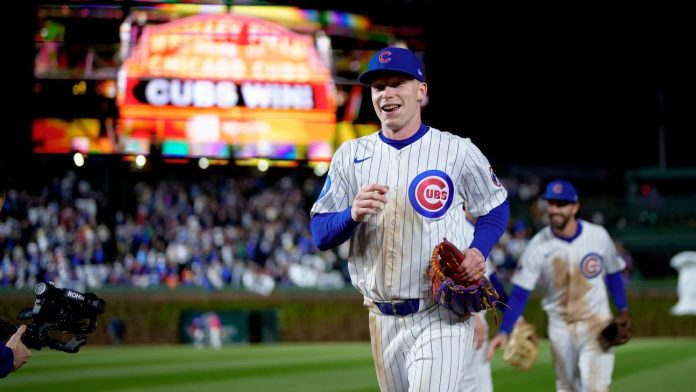
Fast forward about 16 years, and Pete Crow-Armstrong continues to do things that don’t seem normal — although now it’s while manning center field for the Chicago Cubs and batting in the middle of one of the best lineups in Major League Baseball.
The 23-year-old also flashes speed few players possess (his 23 stolen bases rank third in baseball) while providing more power (19 home runs) than his 6-foot, 184-pound frame might suggest. He’s burst onto the scene this season, helping the Cubs into first place in the National League Central. His latest heroics include an improbable diving catch to preserve a one-run lead Tuesday against the Milwaukee Brewers and a laser off Wrigley Field’s right-field scoreboard just a few minutes later that registered at 111.5 mph off the bat. The two moments led to 38,000 fans chanting, “M-V-P! M-V-P!”
Crow-Armstrong’s infectious personality is also a huge part of his appeal for a fan base starving for a star and a league always trying to sell its game. He has garnered the most All-Star votes of any National League outfielder and fourth most among all players — behind only Aaron Judge, Shohei Ohtani and Freddie Freeman. He connects with the young and old in the stands at Wrigley as well as inside the Cubs’ clubhouse.
He might be the complete package.
“He’s incredibly kind and genuine and full of energy and good with kids,” teammate Dansby Swanson said. “Just seeing him with players or coaches’ kids. He’s so kindhearted and fun towards them.
“Energy is attractive. He’s full of it.”
WHEN YOU TALK to anyone who has known Crow-Armstrong for a while, they’ll tell you the same thing: He’s always been like this. Full of energy and exuberance.
“Always in motion,” his mom, Ashley Crow, said. “And just completely game for anything. He just loves [baseball]. He’s loved it as early as 3.”
Even before turning 3, Crow-Armstrong was hitting baseballs. A T-ball set from an aunt came as a gift for his second birthday — but quickly became obsolete.
“Within a week he had abandoned the tee entirely,” Matt recalled. “He wanted us to throw to him.”
Matt and Ashley were working actors at the time. Both appeared on the television show “Heroes,” and Ashley had played the mom from the movie “Little Big League,” in which her character’s 12-year-old son takes over the Minnesota Twins. But there’s really no line to be drawn from their acting days to their son’s emerging stardom, even with all three ending up in the entertainment industry.
“Everyone expects this Hollywood answer to this question,” Crow-Armstrong told ESPN recently. “Nah, I was outside every day playing ball. Minimal screen time. I went to set once or twice, but other than that I was in the backyard. We had a big backyard.”
Said Ashley: “That backyard was his home. He would wake up in the morning and head right to the backyard.”
Soon, PCA — as he’s commonly known — would join Sherman Oaks Little League, where Detroit Tigers pitcher Jack Flaherty once played. In fact, Flaherty umpired some of Crow-Armstrong’s games.
“He’s a good kid,” Flaherty said before facing Crow-Armstrong recently. “Always has been.”
Flaherty was asked how he planned to get the hot-hitting third-year player out.
“I’m going to hit him,” Flaherty deadpanned.
Crow-Armstrong went 1-for-3 off Flaherty, but the ball stayed in the ballpark, a victory for pitchers these days. Power wasn’t his trademark growing up anyway. His legs were.
“He’s always run the bases like someone is chasing him,” childhood friend and Cubs minor leaguer Drew Bowser said. “He just kept getting better and better and better. What you’re seeing is not surprising. At least not to me.”
Bowser hit the first home run off PCA, the pitcher. They were 7 years old.
“Oh, I remember it,” Crow-Armstrong said. “Only gave up three home runs in my Little League career and he was one of them. His mom has a video of it.”
Bowser added: “He just stood there and looked at it. I would have been crying.”
As with many kids, it was a time when Crow-Armstrong fell in love with the game. He was asked what comes to mind when he considers his early memories of baseball.
“It’s kind of a corny cinema in a way,” he said. “The dads are drinking beer and all the kids are playing whiffle ball and throwing the football on the field after hours. Just being kids.
“I found so much of myself on a baseball field.”
Eventually, Crow-Armstrong would join the famed Harvard-Westlake high school that Flaherty, New York Yankees pitcher Max Fried and Boston Red Sox pitcher Lucas Giolito had attended. They were all older, but Crow-Armstrong felt their presence.
“They definitely shaped Harvard-Westlake’s baseball program to set it up to get players like myself and make it a baseball recruitment,” Crow-Armstrong said. “I had no business going to Harvard-Westlake, financially or academically. Those guys built that program up.”
The coach at Harvard-Westlake, Jared Halpert, likes to tell a story that illustrates the confidence of his former student.
During a fall league game, the teams were tied heading into the final inning. Crow-Armstrong was in the on-deck circle.
“Being a coach, I told him to stay within himself and that we don’t need anything special,” Halpert recalled in a phone interview. “Just get a good swing off.
“He told me to get away from him — it may have been more colorful — he was going to end the game. First or second pitch he hit a ball over a house in right field.”
Crow-Armstrong remembered that moment: “I think I was nice about it, but yeah I told him, ‘I got this.'”
Many of Halpert’s former players who are now in the big leagues commonly return to the high school to hang out with the current team, including Crow-Armstrong.
“There’s a little bit of a reserve by them,” Halpert said. “No one wants to get out there and compete with the high school kids. Nothing to gain. But Pete just doesn’t care about that. He’s out there every day when he comes back here. He’s taking reps and getting after it with these high school kids. He doesn’t care how he looks.
“When you talk about little kids playing baseball, this is the epitome of that. It’s a business, but this kid is in love with the game. That’s what he’s showing everybody right now.”
LOOKING BACK NOW, Jed Hoyer, the Cubs’ president of baseball operations, feels fortunate. A shoulder injury — along with the COVID pandemic — might be the reason Crow-Armstrong is currently manning center field for Hoyer’s team and not the New York Mets.
After a successful career at Harvard-Westlake, PCA was drafted 19th by the Mets in 2020. He began his pro career the following season but lasted only six games due to a shoulder injury which required surgery. It was during his recovery that summer when he was traded to the Cubs in a deal headlined by shortstop Javier Baez.
“That year, we had a bunch of rentals and other executives were not willing to talk about their top prospects at Double-A and above,” Hoyer said. “So we dipped down to Single-A.”
Chicago was in the midst of stripping apart its championship core from the previous decade, and Hoyer had a lot on his plate. Along with the Baez deal, he traded stars Kris Bryant and Anthony Rizzo, hoping he would find a good prospect or two in return. PCA has been the best of them.
“Honestly, we were fortunate he was hurt,” Hoyer said. “Out of sight, out of mind a little bit.”
Crow-Armstrong summed it up this way: “When you’re hurt in the minor leagues, nobody gives a s—. It gave me quiet time to get healthy and go work on my s—.”
Crow-Armstrong worked his way up the Cubs system, hitting 20 home runs and stealing 37 bases in 2023, but it was his defense that opened eyes. Scouts said he was major-league-ready in the field and the team would eventually agree, bringing him up in 2023 for a 13-game taste of the big leagues.
He didn’t get a hit.
Then last year, Crow-Armstrong’s struggles continued during his first full season with the Cubs, but he eventually figured things out at the plate over the course of the last month, hitting .284 in his final 31 games. Still, the vibe he gave off was about defense and stealing bases.
The same could have been said of PCA early this season — until he arrived in his hometown for a series against the Los Angeles Dodgers in mid-April. He was hitting .200 with no home runs after the first game.
Over the course of that series, he found his rhythm at the plate — and everything changed.
“I got back on time,” Crow-Armstrong said. “I was late [to hitting balls] all year leading up to that.”
Since April 13, Crow-Armstrong has a .959 OPS, including all 19 of his home runs and 17 of his stolen bases. And he became an RBI machine, moving up from seventh in the order to hitting leadoff in some games and cleanup in others. With runners in scoring position, he’s hitting .342 and is tied for the league lead with eight home runs.
Crow-Armstrong has also played a near-flawless center field, tracking down balls with a burst of energy, stealing sure hits off the bat while daring baserunners to test his arm. Like his power, his arm strength is also deceiving, ranking ninth among center fielders. And he leads all outfielders in defensive runs saved.
“He’s playing at as high a level that I’ve seen a center fielder play,” Cubs manager Craig Counsell said this week. “We’re 70 games in but how he’s playing it, it’s as good as I’ve seen.”
His offensive and defensive contributions have him surprisinglyahead of Ohtani in fWAR, leading all NL players.
“You don’t know what his ceiling is,” Cincinnati Reds manager Terry Francona said recently, shaking his head.
Francona’s team has been the recipient of the full Crow-Armstrong experience this season, which includes a game-changing grand slam, 10 RBIs and three stolen bases over the course of six games against the Reds.
“He can do it all,” Francona said. “I hear people say he doesn’t walk and everything, but that’s probably how he’s a good hitter. He’s aggressive. He can beat you with his legs. He can hit the ball out of the ballpark. He can go get the ball in center. He can bunt.
“S—, I hope he does bunt next time against us.”
What’s made Crow-Armstrong stand out more than anything is his ability to hit pitches nobody has any business hitting. According to ESPN Research, he has hit a pitch the second furthest from the strike zone for a home run this season (8.1 inches above the edge of the strike zone) and the lowest pitch for a home run (5.8 inches below the zone).
“Off the plate, in,” veteran teammate Justin Turner said. “Off the plate, away. A 100 mph on the black away against Hunter Greene. The heater 8 inches above the zone against Andrew Heaney. The slider in Milwaukee that almost bounced. The stuff up and in.”
Crow-Armstrong does have a 43% chase rate, second highest among qualified hitters, but has nine extra base hits on pitches outside the zone. He’s a free swinger, with only 14 walks, but continues to do damage on pitcher’s pitches. The comp heard most in the Cubs’ clubhouse when it comes to his bad-ball hitting is Rafael Devers.
“The power in all zones is crazy,” Turner said. “Usually, power guys have a sweet spot. He really doesn’t have a sweet spot. When he’s on time and ready to go, it doesn’t matter where it’s at. He has a chance to drive it out of the yard.”
Said Reds reliever Brent Suter with a shrug: “He’s hitting the ones he’s supposed to hit and hitting the ones he’s not supposed to hit.”
Cubs assistant hitting coach John Mallee has always been a proponent of hitting the ball in the air. He helped coach the 2016 Cubs to a World Series title, which included an MVP award for former Cub Bryant, but he likens PCA to another hitter of his from more than a decade ago.
“I worked with Jose Altuve in Houston,” Mallee said. “He always profiled as a bigger guy, meaning he hit the ball harder than you would think as a smaller player. Pete also profiles as a big guy, but he’s a little guy [frame-wise] with speed.
“Why would you want to hit it on the ground? They stand where you hit it for the most part. He naturally gets it in the air.”
SPEED AND POWER are what makes Crow-Armstrong stand out on the field, and now they’ve helped make him one of the most popular players in Chicago, regardless of sport.
His jerseys already litter Wrigley Field and, according to league data, he’s a hit on social media, too, ranking sixth among all players in follower growth percentage on Instagram this season. For a league in search of superstars, MLB sees Crow-Armstrong as the next big thing.
“We are huge fans of PCA on and off the field,” said EJ Aguado, MLB vice president of player engagement and celebrity relations. “He’s one of the great personalities in the game, and his on-field performance speaks for itself. We’ve been engaged with Pete for some time, going back to his minor league days. We’re also in touch with his team at CAA and the Cubs on some cool upcoming projects to showcase the amazing season he’s having and who he is off the field — stay tuned.”
His charisma and sense of fun was developed at an early age. His dad believes being an only child made him more comfortable around adults, while his mom thinks team sports was his outlet to grow into such a fan favorite.
“He always makes time for people, especially kids,” catcher Carson Kelly said. “True professional but has that kid in him. It’s why the younger generation probably gravitates towards him.”
PCA said: “That’s who I’m here for, kids. I definitely have some kid in me. It’s fun being Uncle Pete. And it’s the coolest feeling when Matt Boyd says his son is cheering me on when he’s watching TV. Or Carson Kelly’s kids.”
The fact it extends to the field is all the better.
“The way he celebrates his teammates,” left fielder Ian Happ said. “You see him after a walk-off running out as the first one out there.
“We have pretty opposite personalities. That makes it fun. Watching him play, there is something about the excitement. It’s good for me to see on a daily basis.”
As everything swirls around him, Crow-Armstrong maintains his daily routine. He’s recently started hitting off a tee — perhaps for the first time since he was a 2-year-old using his aunt’s birthday gift — then joins teammates on the infield, taking grounders and helping them turn double plays during pregame practice. Then it’s a word or two for a stadium employee or a couple of young fans whose eyes light up when he walks up to them. Watching his day unfold brings back his mom’s observation: always in motion.
When the game starts, the grass in center field, and the left side of the batter’s box, become his domain. He transforms into PCA.
“It’s just super special I get to do this every day,” Crow-Armstrong said, standing near the Cubs’ dugout. “I know that sounds cliché. All of us are replaceable. People’s careers as fans go on a lot longer than us as players. This is my space and that’s my center field, but it’s also theirs. It was theirs first.”