4.8 C
New York
Saturday, March 7, 2026
Home Blog Page 92

We've failed Charlie Kirk, and ourselves

0


Charlie Kirk spent his career showing up where he wasn’t welcome. Mostly on college campuses, where he would set up a tent and invite students to argue with him. At 31, the Turning Point USA founder and father of two was fatally shot Wednesday afternoon while doing what he had built his career around for more than a decade: encouraging dialogue over violence and shouting matches.

Kirk believed deeply that “when people stop talking, really bad stuff starts. When marriages stop talking, divorce happens. When civilizations stop talking, civil war ensues. What we as a culture have to get back to is being able to have reasonable disagreement where violence is not an option.”

The only rational response to such an act of terror is sympathy. Keep the political statements in your pocket. But the response to Kirk’s death has been depressingly predictable. Within hours, partisan actors on both sides weaponized the tragedy for political gain. Some Republicans immediately declared war on liberal extremism, despite no known suspect or motive for the shooting. Some Democrats focused more on relitigating Kirk’s rhetoric than mourning his death.

This is our test as a civil society: Can we protect those we despise and refuse to use our losses to score political points? We are failing spectacularly.

I always thought Kirk argued with cherry-picked facts that supported his agenda. His debate style involved talking fast and self-righteously to overwhelm intimidated college students. But personal disagreement becomes irrelevant when someone dies for their political beliefs. The important thing to recognize — and this requires looking above the mess of social media and ordinary life — is that many Americans no longer accept that, in a free society, nobody should die for their political beliefs, no matter how wrong those beliefs might be.

Conservative pundits filled X with declarations of “war.” Douglas Murray claimed on Sky News just after the assassination that “most conservatives tend to think the left is wrong, but in its entirety, not evil; but that favor is not returned.”

Yet this narrative conveniently overlooks Republicans’ own complicated relationship with political violence. Jan. 6 stands as stark evidence, as does the hammer attack on Paul Pelosi by a mentally ill man echoing far-right conspiracy theories (whose motives Elon Musk recklessly mischaracterized). And recall the assassination of a Minnesota Democratic state representative and her husband by an alleged Trump supporter just three months ago.

Far worse is the left. On MSNBC, now-fired analyst Matthew Dowd declared that those like Kirk who share “hateful” rhetoric should “expect awful actions to take place.” If hateful thoughts lead to hateful actions, as Dowd suggests, then what of the hateful words Dowd himself spoke about a man whose body was still warm? Would he accept the same logic if his own family were attacked?

On X, a post reading “Breaking: Charlie Kirk loses gun debate” went viral with 424,000 likes; the hashtag #charliesquirt is trending on the platform. Former Sen. Al Franken (D-Min.) condemned political violence, but only after clarifying that he “never thought [he’d] say a prayer for Charlie Kirk.” Such smears are vile and contemptible. 

What does it say about us that assassination is first and foremost an opportunity for political point-scoring? We have lost the ability to recognize that some basic human boundaries must never be crossed. This is the logical endpoint of political discourse that no longer believes good-faith disagreement.

The onus falls especially on those of us who vehemently disagreed with Charlie Kirk to resist the inflammatory rhetoric and demand better. When someone tries to drag you into the gutter, ask them what vision they have for America. Do they still believe in democratic principles? Do they respect the rule of law? Do they value human life universally, not selectively? Many on the right will use this tragedy to silence dissent, arguing that criticism killed Charlie Kirk. That’s wrong too. We should never be afraid to express our views — that’s a fundamental right in a free society. But it’s equally fundamental to participate in that society without fear of violence.

This is the consequence of years of people peddling the line that “words are violence.” That’s typically nonsense designed to quell free speech and incite retaliatory violence. Words are words; shooting someone in the throat is violence. But words do have consequences. Those who have systematically dehumanized political opponents should examine what they have created.

Charlie Kirk believed in the possibility of reasonable disagreement. America needs more who, as Ezra Klein described today, “Practice Politics the Right Way”: willing to talk across divides, to find common ground, to remember that our political opponents are still human beings with families and dreams and fears. Just one day before his death, Kirk posted a photograph of Iryna Zarutska, the young woman murdered on a Charlotte light rail, and wrote beneath it: America will never be the same. America will not be the same. His own murder proved it. But his life’s work will inevitably shape what comes next. He fought the good fight, he kept the faith, and he finished his race. 

Kirk once wrote, “You can tell a lot about a person by how they react when someone dies.” He was right. My thoughts are with Charlie’s young wife and the two children he leaves behind. With them, and with anyone in this country who still cares about preserving a sense of common humanity.

William Liang is a writer living in San Francisco.


Nepal to get first female PM after deadly unrest

0


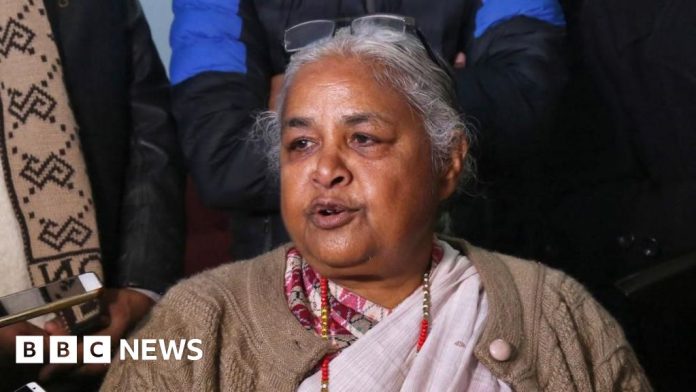
Nepal’s former Supreme Court chief justice Sushila Karki is set to become the country’s interim prime minister after deadly anti-corruption protests ousted the government.

Karki, 73, will be the first woman to lead the impoverished Himalayan nation after a deal was reached with the protest leaders for her to be sworn in.

More than 50 people were killed in clashes with riot police during this week’s mass protests sparked by a ban on social media platforms.

The ban was lifted on Monday – but by then protests had swelled into a mass movement. Angry crowds set fire to parliament and government buildings in the capital Kathmandu on Tuesday, forcing Prime Minister KP Sharma Oli to resign.

Karki would take the oath of office on Friday evening, President Ram Chandra Poudel’s press adviser confirmed to the BBC.

The agreement between the president and the protest leaders was reached after days of consultations. Legal experts were also involved.

Parliament is expected to be dissolved shortly.

Karki is widely regarded as a person of clean image, and is being supported by student leaders from the so-called “Gen Z” to lead the interim government.

Nepal’s army has deployed patrols on the streets of Kathmandu, as the country reels from its worst unrest in decades.

The protests were triggered by the government’s decision last week to ban 26 social media platforms, including WhatsApp, Instagram and Facebook – but they soon widened to embody much deeper discontent with Nepal’s political elite.

In the weeks before the ban, a “nepo kid” campaign, spotlighting the lavish lifestyles of politicians’ children and allegations of corruption, had taken off on social media.

And while the social media ban was hastily lifted on Monday night, the protests had by that stage gained unstoppable momentum.

Democrats should abandon MAGA tactics for the moral high ground

0


California Gov. Gavin Newsom (D) is leaning into his aggressive attacks against President Trump, mimicking his online style and adopting his peculiar lexicon.  

His efforts have invigorated a Democratic party that’s eager to challenge MAGA on its home turf, using its tactics and adopting its style. Other Democrats are following his lead.  

Maryland Gov. Wes Moore (D) says he is not running for president, but he takes actions that make a run viable. He recently called President Trump a “chicken hawk” and later told him to “keep our name out of your mouth”, receiving enthusiastic applause from a supportive crowd.

This is a change for Moore, who previously presented himself as a pragmatist interested in holding the moral high ground.

Moore’s changing tone may be rooted in genuine exasperation with the president’s policies. But the timing suggests his behavior is driven by a desire to keep pace with Newsom as he redefines the contours of Democratic resistance to President Trump.

Democrats are at a crossroads. They can mimic MAGA or choose to set an example of virtuous politics. 

The latter requires trust that most Americans will support leaders who bring them out of the Trump era, rather than politicians who surrender to its worst parts by adopting its mannerisms. 

Becoming MAGA with a different tax policy won’t extricate the country from its current malaise or begin to heal our divisions. Even if Democrats are successful at eking out narrow electoral victories by inspiring their base with name calling and mockery, our core problems remain.

Except for rabid partisans, Americans sense that neither party has been the good guy, and both are responsible for this unhappy moment in our politics. 

Republican redistricting in Texas is legal but unfair. Democrats are poised to recreate that dishonorable action in California and elsewhere. But there’s an alternative. 

Democrats could make a grand gesture and un-gerrymander some of the districts in a place like Illinois that make it hard for Republicans to win. 

This would draw a clear contrast for voters and might be enough to discourage Republican states other than Texas from undertaking similar maneuvers. 

A grand gesture by Democrats might extricate us from the current cycle of partisan redistricting and doesn’t preclude them from regaining control of the House of Representatives.

As recently as 2018, Democrats flipped 40 seats, and Texas is only redistricting five.  If our country and economy are as bad under Trump as Democrats claim, winning big in 2026 is quite possible. Republicans also realize this.  

Beyond the boisterous rhetoric lies several unpopular Republican policies. Parties that engage in unusual efforts at unexpected times to create safer legislative districts, as the Republicans are doing, probably aren’t approaching the next election with confidence. 

There are two ways of resisting President Trump and the cultural change he’s unleashing on America. The first is to adopt his tactics and demeanor but doing this concedes that the president has changed us forever.  

If Democrats are Trumpian now, our most important reason to resist him is already lost. We’re either a country whose leaders call each other mean-spirited names via tapped out messages on cell phones or we’re not.  

The fact that a plurality of Americans identify as political independents suggests that large numbers prefer a more serious and sober politics.

Democrats are struggling to accept the idea that maintaining the moral high ground matters. They point to election losses as proof that being the better-behaved party doesn’t win. 

In fact, Democrats have never presented Americans with a clear distinction.  Democrats accused President Trump of acting like a dictator and then propagated a “cancel culture” that complicated free speech.

They complained about gerrymandering but undertook egregious gerrymandering of their own.  

They told Americans that MAGA was a threat and then supported MAGA candidates in Republican primaries. They lamented the Supreme Court’s decision in Citizens United but spent $1.2 billion in 2024 through groups that didn’t need to disclose their donors.

Democrats who advocate for fighting fire with fire should realize that the party has already tested that approach.

The result is the lowest approval ratings of Democrats in 30 years and the 2024 loss to MAGA Republicans.  Fighting fire with fire isn’t a new idea and isn’t working.  Doubling down on that effort isn’t the answer. 

Most Americans, don’t want to live in a petty world of social media taunts and retorts. What we want are serious leaders who tackle hard problems and admit when they make mistakes.  

Newsom’s latest caricature of himself doesn’t move us closer to that vision. If Democrats follow his lead, as Moore and others seem inclined, our country will complete its transition to something completely shaped by Trump and his presidency.

Colin Pascal is a retired Army lieutenant colonel and a graduate student in the School of Public Affairs at American University.

Charlie Kirk: ‘We have him’

0


Jude SheerinBBC News, Washington DC

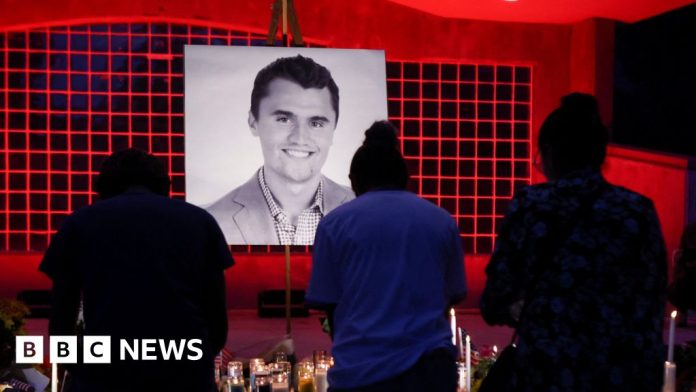
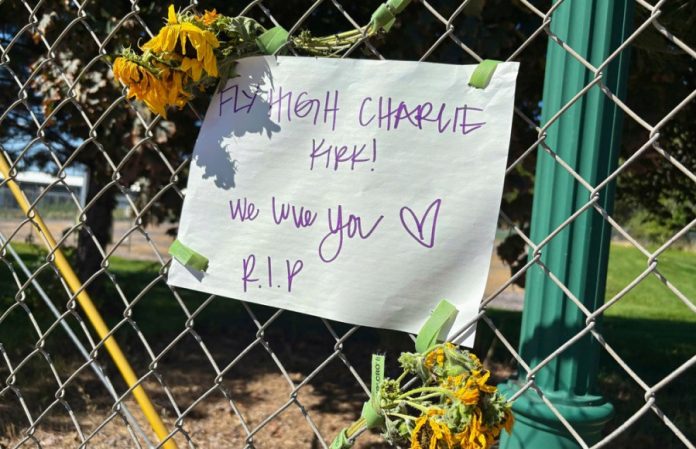
Reuters People pay their respects during a vigil at Orem City Center Park, after U.S. right-wing activist and commentator, Charlie Kirk, an ally of U.S.Reuters

A memorial to Charlie Kirk in Orem, Utah

The breaking news was announced by US President Donald Trump on a morning television show.

“I think with a high degree of certainty, we have him,” said Trump on the sofa of Fox & Friends on Friday morning in New York City. “In custody.”

“Essentially, someone that was very close to him turned him in.”

It was Trump, too, who first announced that his ally, Kirk, had died after he was shot in the neck at Utah Valley University on Wednesday.

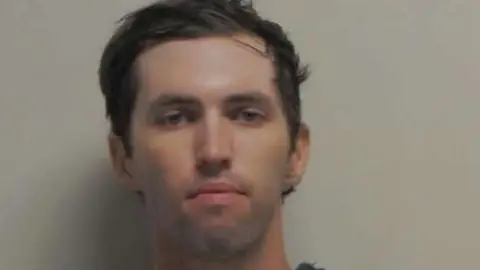
At a press conference on Friday morning, officials identified the person in custody as 22-year-old Tyler Robinson.

Utah Governor Spencer Cox told reporters that “a family member of Tyler Robinson reached out to a family friend who contacted the Washington County Sheriff’s Office with information that Robinson had confessed to them”.

Surveillance video shows the suspect arriving on campus at the university in a grey Dodge Challenger at 08:29 local time (14:29GMT) on the morning of the shooting, said Cox.

He said investigators had interviewed a family member who said the suspect had become more political in recent years.

Tyler Robinson, 22

Tyler Robinson, 22

Cox said: “The family member referenced a recent incident in which Robinson came to dinner prior to September 10, and in the conversation with another family member, Robinson mentioned Charlie Kirk was coming to UVU.”

There was a mention of how “Kirk was full of hate and spreading hate”.

Cox said investigators had also spoken to a roommate of the suspect who had shown them messages with an account named “Tyler” on the messaging app Discord.

The messages referred to a need to retrieve a rifle from “a drop point” and the rifle being left in a bush, wrapped in a towel.

The FBI said on Thursday they had found the suspected murder weapon – an imported Mauser .30-06 bolt action rifle – wrapped in a towel in a wooded area near campus.

Utah governor details how Charlie Kirk murder suspect apprehended

Cox told reporters that investigators had found inscriptions engraved on casings recovered with the rifle, which had a scope mounted on top of it.

The inscriptions included “hey fascist! catch!” and “bella ciao” and “if you read this, you are gay, LMAO”.

Bella ciao means “goodbye beautiful” in Italian. It is also the title of a song dedicated to the Italian resistance who fought against the occupying troops of Nazi Germany.

The Utah governor said he was not aware of any potential further arrests in the investigation.

Watch: New video of moment Kirk shooting suspect flees the scene

Utah County Sheriff Mike Smith said it had been a “vast, complicated and very, very fast paced investigation” and one that had been “very taxing”.

FBI Director Kash Patel told reporters the crime scene was large, but had been processed quickly and forensic evidence had been recovered.

He said the first federal agents had arrived on the crime scene some 16 minutes after Kirk was shot.

“Just last night, the suspect was taken into custody at 10pm local time,” Patel said.

Map

The arrest came after the FBI released grainy pictures of a “person of interest” wanted for the shooting.

Investigators appealed for the public’s help identifying the suspect, who was wearing sunglasses, Converse shoes and a “distinctive” long-sleeved black top featuring an American flag and an eagle.

On Wednesday, Patel said another potential suspect had been detained for questioning before being released.

Another person – seen in viral videos on social media – was taken into custody immediately after the shooting, but was determined not to be the gunman.

China flips the script on nuclear arms control 

0


On Aug. 27, Beijing rejected out-of-hand President Trump’s call for denuclearization talks with China and Russia. 

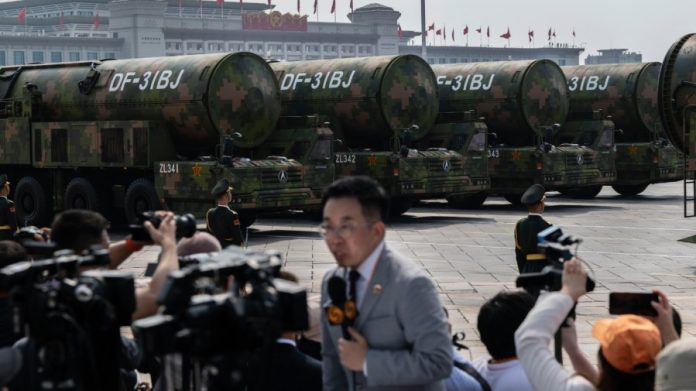
It’s not hard to figure out why China is in no mood to talk about the world’s most destructive weapons. Alone among the major powers, Beijing is fast increasing its stockpile of them.  

“I think the denuclearization is a very — it’s a big aim,” Trump told reporters at the White House. “But Russia’s willing to do it, and I think China is going to be willing to do it too.”  

“We can’t let nuclear weapons proliferate,” he added. “We have to stop nuclear weapons. The power is too great.” 

It’s not clear what Trump meant by “denuclearization” — complete disarmament or merely a reduction in the number of weapons — but his comments indicate he is following in the footsteps of Ronald Reagan, who wanted to completely abolish nukes

Tulsi Gabbard, Trump’s director of national intelligence, also favors disarmament, as her comments in a three-minute video posted in early June suggest

Denuclearization might have crossed Trump’s mind now because America’s last nuclear arms-control agreement with Russia will expire soon. 

New START, which limits the number of warheads each side may deploy, came into force in 2011 and was extended in 2021. It is scheduled to terminate in February.  

Termination may not have much of a practical impact, however. Moscow, after all, is violating New START’s terms by not permitting regular inspections. In February 2023, Vladimir Putin announced he was suspending participation in the treaty

Getting Russia to the negotiating table may or may not be an easy lift, but enticing the Chinese to talk will certainly be much more difficult.

“It is neither reasonable nor realistic to ask China to join the nuclear disarmament negotiations with the U.S. and Russia,” said Chinese Foreign Ministry spokesperson Guo Jiakun at his regular press briefing. 

“The country sitting on the world’s biggest nuclear arsenal,” Guo said, is primarily responsible for disarmament and should take actions including “drastic and substantive cuts to its nuclear arsenal” and “[creating] conditions” for global nuclear disarmament.

Guo was likely referring to the U.S., but Russia, in fact, maintains the world’s largest arsenal of nuclear weapons.

The Stockholm International Peace Research Institute estimates that last year Russia maintained 4,380 deployed weapons. The U.S., the institute believes, possessed 3,708 warheads while China had 500, up from 410 in 2023.  

China has never publicly confirmed it number of nukes, and there is no consensus as to the current size of its arsenal. Almost all observers, however, agree that it is building warheads fast. The Pentagon in a November 2022 report forecast that China would quadruple warheads from about 400 to 1,500 by 2035.   

Nuclear analyst James Howe predicts China will have between 3,390 to 3,740 weapons by 2035.

Richard Fisher of the International Assessment and Strategy Center looks at the rapid increase in delivery platforms, such as missiles and subs, and thinks China will have even more. He told me his 2035 estimate: 7,000.  

“I don’t think I’ve seen anything more disturbing in my career than the Chinese ongoing expansion of their nuclear force,” said Frank Kendall when he was secretary of the Air Force in House testimony in March 2023.

Adm. Charles Richard, as commander of U.S. Strategic Command in 2021, said: “We are witnessing a strategic breakout by China.”

“For decades, they were quite comfortable with an arsenal of a few hundred nuclear weapons, which was fairly clearly a second-strike capability to act as a deterrent,” Kendall testified, referring to China. 

“That expansion that they’re undertaking puts us into a new world that we’ve never lived in before, where you have three powers — three great powers, essentially — with large arsenals of nuclear weapons.” 

With its rapid buildup, China is apparently looking for a war-fighting capability. Its increased nuclear weapons capacity means its threats to launch first strikes would be credible and Beijing would thus be able to intimidate adversaries into not defending, say, Taiwan. 

“The breakneck growth in China’s nuclear weapons tells us Xi and his [Chinese Communist Party] comrades see nuclear weapons as instruments of coercion and terror to use in furthering China’s hegemonic ambitions,” Peter Huessy of the National Institute for Deterrence Studies told me this month. 

China’s rejection of negotiations could also be a sign of weakness. 

“The [Chinese Communist Party] pushback on denuclearization talks could be easily misread as Chinese assertiveness or Xi Jinping’s ‘Wolf Warrior’ diplomacy,” Blaine Holt, retired Air Force general and military analyst, wrote to me after the Chinese foreign ministry statement. 

“In actuality, avoiding the topic altogether and shunning dialogue betrays a Communist Party and People’s Liberation Army mired in crisis. No one in Beijing feels they can discuss this.” 

Whether China is weak or strong — that debate continues — the Chinese leadership has decided it will not talk nukes with the United States. 

During the Cold War, the U.S. did not have to consider China’s arsenal when negotiating arms control with the Soviet Union. Now, in light of the rapid buildup in China, the U.S. cannot prudently come to any agreement with Russia about nuclear weapons if the Chinese are not a party.  

Beijing has essentially taken both disarmament and arms control off the table.  

Gordon G. Chang is the author of Plan Red: China’s Project to Destroy America” and The Coming Collapse of China.”  


Peers share personal losses as assisted dying law is examined

0


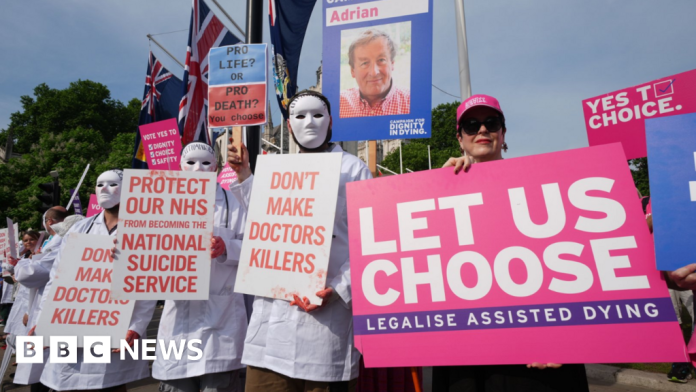
Peers have made emotional pleas on both sides of the assisted dying debate, many sharing personal tales of loss underpinning their stance.

The House of Lords has begun its scrutiny of the Terminally Ill Adults Bill, which was passed by MPs by a majority of 23 in June, and is expected to continue for two days.

Some peers – including former PM Theresa May – are vehemently opposed to the legislation, calling it an “assisted suicide bill”.

Others, including Lord Michael Dobbs, said he would have loved to “help my mother pass peacefully in my arms, instead of watching her years of suffering”.

The red benches in the Lords were packed with a record number of requests to speak as two days of consideration began, with the Labour MP who introduced the Bill to the Commons, Kim Leadbeater, watching from the gallery.

Outside Parliament, demonstrators for and against the plans made their views known as the Bill progresses towards potentially comes into force in England and Wales.

The former justice secretary Lord Charlie Falconer, who is the sponsor of the Bill in the Lords, branded the current legal situation “confused”, causing “terrible suffering” and lacking “compassion and safeguards”.

Lord Falconer reassured peers there would be “more than enough time” for scrutiny before the current Parliamentary session neded next spring and that he was “very open” to suggestions for how the Bill could be “further strengthened and improved”.

However, he reminded his colleagues the Bill had already been passed by MPs and the House of Lords should “respect the primacy of the Commons”, instead of trying to block the plans.

“We must do our job in this House, and our job is not to frustrate, it is to scrutinise,” he said.

As debate began, Conservative peer Lord Forsyth of Drumlean told colleagues he had changed his mind on the issue after his father, who “died in agony” from cancer, said his son was to blame for not allowing him to end his suffering.

“I was completely poleaxed by that,” he said, adding his father told him: “you have consistently voted to prevent me getting what I want, which is having the opportunity to decide how and when I come to die”.

“As a Christian I have thought about that long and hard, and come to the conclusion that my father was right,” he added.

House of Cards trilogy author Lord Michael Dobbs described the current legal framework as “cruel and untenable” and insisted those who were opposed for religious reasons had “no right to impose your view on others”.

He said: “I wish I’d had the opportunity out of love to help my mother pass peacefully in my arms, instead of watching her years of suffering.

“It would have been her choice, but she had no choice, and instead I’m left with an enduring memory of endless pain.”

Former prime minister Theresa May spoke in opposition, saying she did not believe the Bill has good enough safeguards to prevent people from being pressurised to end their lives.

Baroness May of Maidenhead said she also worried about knock-on effects around normalising deaths by suicide for people who feel their life is “less worth living than others”.

“I worry about the impact it will have on people with disabilities, with chronic illness, with mental health problems,” she said.

“Because there is a risk that legalising assisted dying reinforces the dangerous notion that some lives are less worth living than others, and again as we have seen in other countries, once a law like this is passed, the pressure then grows to extend the scope of it.”

Warning of the risk of medical cover-ups, Baroness May said she had a friend who calls it the “license to kill Bill”.

But in her view the legislation would be “an assisted suicide Bill”, she said, adding: “Suicide is wrong, but this Bill, effectively, says suicide is okay. What message does that give to our society?”

On a similar note, Baroness Tanni Grey-Thompson said certain aspects of the assisted dying Bill “blur the line” for doctors around euthanasia.

Lady Grey-Thompson, a Paralympian and long-time campaigner on the rights of disabled people, said: “Clause 25, sub-clause eight, allows the co-ordinating doctor to assist the person to ingest or otherwise self-administer the substance. This blurs the line between assisted dying and euthanasia.”

Speaking in support, Baroness Margaret Hodge said “denying choice represents a fundamental attack on the freedom and right of individuals to control their life at that terrible time when they’re dying”.

She said: “In my view, we’re presented with a straightforward choice: are we prepared to allow people in this country faced with certain and imminent death to choose how they die?

“I want that choice for myself, I would have wanted that choice for those close to me whom I have seen die in terrible agony.”

Republicans have abandoned their promise to protect rural America

0


Many voters in rural America cast their ballots for Republicans in the last election because they believed their values would be defended — and their communities prioritized over wealthy elites and urban power centers.

But recent policy decisions have made one thing clear: Rural America was not protected. It was sacrificed.

From criminal investigations to economically backward tariffs, and now the dismantling of critical health care infrastructure, the betrayal is not accidental. It is the inevitable result of long-held priorities — polished for voters but designed for donors.

At the center of this betrayal is a bill wrapped in classic Orwellian doublespeak: the so-called “One Big Beautiful Bill.” 

Behind the grandstanding lies the reality — brutal cuts to Medicaid that will devastate rural hospitals, strip healthcare from vulnerable families and stall already-precarious local economies.

Just months ago, less than two weeks after President Trump’s inauguration on Jan. 20, Americans were promised by Trump that programs like Medicaid and SNAP would be loved and cherished.

But that promise was quietly discarded. The legislation that ultimately passed, according to the nonpartisan Congressional Budget Office, would add $3.4 trillion to the national debt while slashing more than $1 trillion from Medicaid.

To sell this, party leaders dusted off the same tired excuse: waste, fraud and abuse. But rural Americans know what that really means: clinic closures, darkened emergency rooms and a 40-mile drive to deliver a baby or for addiction or mental health care — if it’s available at all. 

According to the Government Accountability Office, rural patients already travel 20 to 40 miles farther for care after hospital closures. That delay translates into worse outcomes and, in too many cases, preventable deaths.

This isn’t abstract. In Montana, as of July 1, 50 out 56 counties are classified as medically underserved. In addition, 25 out of 55 rural hospitals are listed as facing “risk” or “immediate risk” of closing.  

And it’s not just Montana. Since 2010, over 130 rural hospitals have closed. Today, over 300 more are at immediate risk, and as former Sen. Bill Frist (R-Tenn.) has warned, 600 additional hospitals may not survive the blow this legislation delivers to their budgets. 

This isn’t just a crisis — it’s a collapse in motion.

Rural hospitals were already strained. They serve communities that are older, poorer and sicker, and rely heavily on Medicaid. 

Yet while demand grows, federal support is being pulled away. CEOs like Steven Fontaine of Penn Highlands Healthcare have been blunt: “Without immediate and sustained support, the services we provide are at risk.”

Let’s be clear: This wasn’t an oversight. It was a choice. A choice to prioritize tax cuts for the wealthy over health care for working Americans. And it was made by the same political machine that claimed to fight for the forgotten heartland.

In 2024, 63 percent of rural voters backed this version of the GOP — one increasingly unrecognizable from the principles of conservatism it once claimed. These voters believed they were being heard. 

But this law tells a different story: one of betrayal, opacity and harm inflicted on the very people who believed most deeply in the promise of change.

Rural America is now paying the price. Either Congress acts to repair the damage or it will answer for it at every town hall between now and a 2026 election season that must hold members to account.

Marc Racicot is a former U.S. Army JAG Corps officer, two-term governor of Montana and former chairman of the Republican National Committee. He now serves as the national chair of Our Republican Legacy.

Jay Wynne, former BBC weather presenter, dies aged 56

0


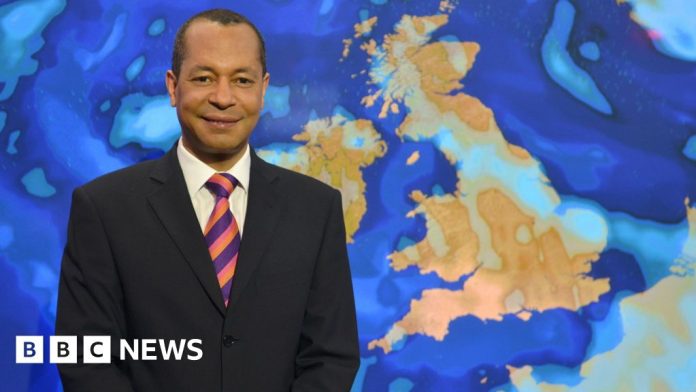
Former BBC Weather presenter Jay Wynne died in June at the age of 56 after a long-term illness, his brother has confirmed to BBC News.

Wynne joined BBC Weather in October 2000 and was a regular forecaster on BBC News at Ten.

“Jay had a gift for gentle clarity, making his forecasts for sometimes complex weather systems feel accessible and engaging,” his brother, Matthew, said in a tribute.

“A keen skier, golfer and musician, Jay enjoyed travelling to pursue his sporting interests,” Matthew Wynne added.

“We will miss his wisdom, generosity and dry sense of humour.”

Wynne’s interest in how the weather works began while he was studying Environmental Geography at the University of Aberdeen, leading him to complete a master’s degree in Applied Meteorology at the University of Reading.

He told the Radio Times in 2011 that he would often stay up until sunrise after working overnight, to make sure his weather reports for accurate.

“I have been known to drive around after night shifts, waiting for the sun to come up,” he said.

“At night, it’s difficult to tell what kind of cloud there is on satellite pictures, so I like to see if I was right. More often than not, I am.”

Before deciding on his future career in weather, he studied Civil Engineering at university, dropping out two years into the course.

He then worked on a North Sea offshore oil rig for three years as a technician, before going back to university to study Environmental Geography.

As part of his environmental research, he was able to travel widely, exploring South-East Asia.

Wynne also worked as an English teacher in Fukuoka, Japan before studying for his masters degree.

His Met Office training involved a six-month secondment at RAF Northolt and lasted 14 months in total.

Top Utah cop: 'No idea' where Charlie Kirk killer is

0


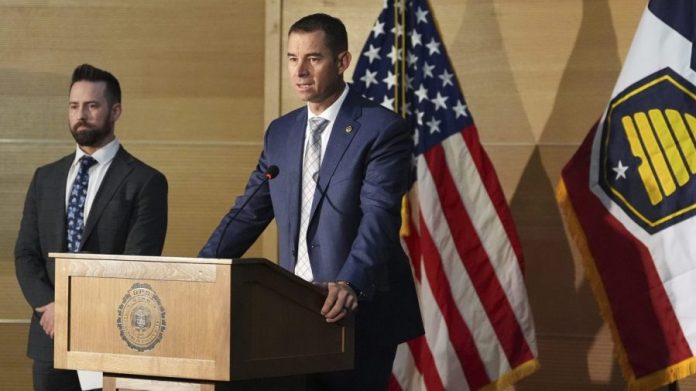
Utah Department of Public Safety Commissioner Beau Mason said during a recent interview that officials have “no idea” where Charlie Kirk’s assassin is, after the conservative activist was shot and killed in Utah earlier this week.

“I know you can’t say too much here but is it your understanding that this individual may be close by or still in Utah?” an NBC News reporter asked Mason Thursday night.

He responded, “We have no idea. We’re exploring leads for individuals out of state and individuals that live close by.”

“We literally have persons of interest, tips coming in on the tip line that are spanning far, far and wide,” the officer added.

The manhunt for Kirk’s assassin entered its third day on Friday, with officials releasing new still photos of the person of interest, along with the video of a potential suspect fleeing the scene after the shooting. 

The footage showed the person of interest running across the roof of a building at Utah Valley University, going down the side of the building, going through the parking lot and toward a busy street. 

President Trump, during an interview with Fox & Friends on Friday morning, signaled that the suspect may already be in custody.

“I think with a high degree of certainty we have him in custody,” Trump said.

During a Thursday press conference, Mason told reporters that the alleged assassin “left some palm impressions” as he came down the side of the building. 

“There’s some smudges in some places we’re looking to collect DNA. There’s a shoe imprint where we believe the suspect is clearly identified as wearing Converse tennis shoes,” he said.

The FBI also said Thursday that the agency recovered a high-powered bolt-action rifle in the wooded area. 

Investigators are analyzing imprints of a forearm, palm and a shoe of the person of interest. 

“We cannot do our job without the public’s help,” Utah Gov. Spencer Cox (R) told reporters at the press conference. Cox said that officials will pursue the death penalty once Kirk’s assassin is caught. 

Law enforcement said it has received over 7,000 tips. They have yet to name the suspect or cite the motive in the murder of Kirk.

Two people were previously taken into custody, but both were released as they were not connected to the shooting of Kirk.

Officials are expected to provide an update on the investigation later Friday morning.

Man jailed over shooting that left girl, 9, with bullet in brain

0


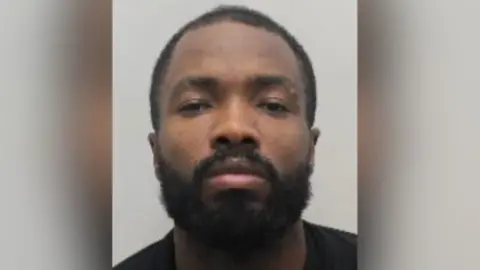
Met Police Javon Riley mugshotMet Police

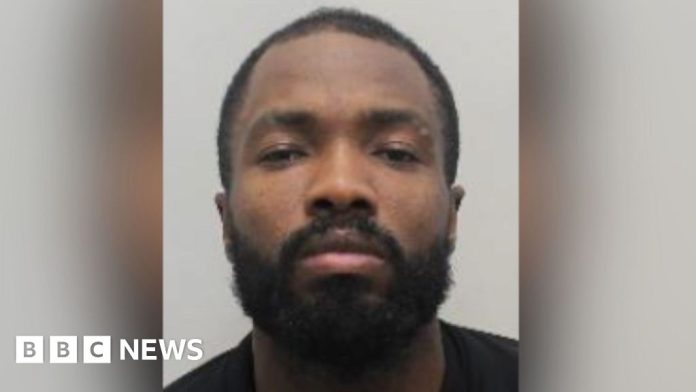
Javon Riley was found guilty of three charges of attempted murder and causing grievous bodily harm with intent

A man has been jailed for 34 years over his role in a gangland shooting that left a nine-year-old girl with a bullet lodged in her brain.

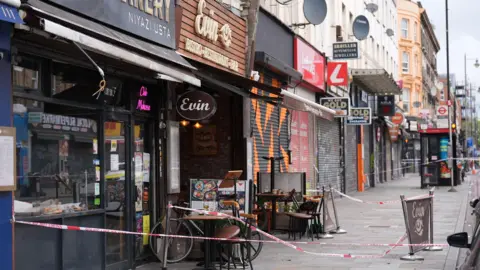
Javon Riley, 33, was convicted last month of causing grievous bodily harm with intent after the girl was hit in the head by the first of six bullets fired from a passing motorbike at a restaurant on Kingsland High Street, Dalston, last May.

Riley was also sentenced over the attempted murder of three men – Mustafa Kiziltan, Kenan Aydogdu, and Nasser Ali – who were sitting at tables outside the Evin Restaurant.

The gunman and weapon used in the shooting in east London have never been found.

Sentencing him on Friday, Judge Mark Lucraft KC said the gang rivalry had seen a number of “tit for tat” murders and attempted murders in London and overseas over the past 10 years.

The three men who were shot were said to be affiliated with the Hackney Turks organised crime gang, who had a rivalry with the Tottenham Turks, with whom Riley had links, jurors had heard.

The gunman remains at large but prosecutors said Riley had played a “key role” before, during and after the shooting.

Riley carried out reconnaissance of the restaurant before the attack, scouted for potential targets and drove the gunman away in a stolen car, which was later burnt out.

The nine-year-old girl spent three months in hospital and will suffer with lifelong physical and cognitive problems as the bullet remains lodged in her brain.

The three adult male victims received gunshot wounds to the arm, leg and thigh.

Scotland Yard has offered up to £15,000 for information leading to the identification, arrest and prosecution of the person who fired the shots.

During a three-week trial, Riley was asked to identify the “third party” who had recruited him for around £40,000.

He refused, citing fear for his life and that of his family.

Riley admitted conducting reconnaissance, spotting targets and picking up the gunman, but claimed he believed it was a “smash-and-grab” robbery.

PA Media Exterior of restaurant after shooting with police tape cordoning the scenePA Media

The nine-year-old girl was eating an ice cream with her family inside the restaurant

Riley later admitted the person who used the gun had said to him: “Shots have been fired. I need to get out of here.”

The court heard Jamaica-born, who was born in Jamaica, had a string of convictions dating back to 2008.

They include possession of cannabis and cocaine, driving offences and having an offensive weapon and a blade in his car.

He also admitted involvement in car theft, drug dealing and robberies, but said he had never been caught for those offences.

Police recordings revealed Riley’s links to the Tottenham Turks, including talks about Izzet Eren, who was shot in Moldova on 10 July last year in what was believed to be a revenge attack.

‘Future torn away’

Det Ch Insp Joanna Yorke said: “Riley will face the consequences of his actions behind bars. Actions that traumatically derailed the life of a little girl.

“While this outcome is a reminder that justice can be served, it will never undo the suffering caused to her or her family.”

In a statement shared after Riley’s conviction last month, the mother of the nine-year-old girl said: “In a single moment, the future we had imagined for our daughter was torn away. She was once an energetic, adventurous child — everything that celebrated movement, energy, and life.

“Now, weakness on her left side means she can only watch from the sidelines, living with a titanium plate in her skull and a bullet still in her brain.”