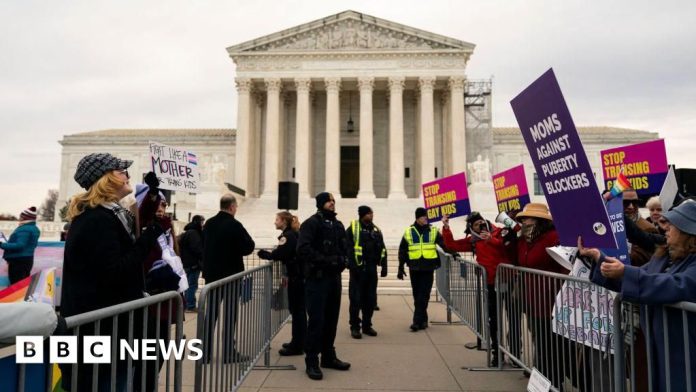
The US Supreme Court has ruled that Tennessee can limit or even fully ban gender transition care for young people.
The justices voted 6 to 3 that a Tennessee law limiting access to treatments such as puberty blockers for under-18s was not discrimination. The ruling will likely have a nationwide effect – 25 states have similar laws.
Three Tennessee transgender teenagers, their parents, and a doctor who provides transition medications had argued the 2023 Tennessee ban violated a US constitutional guarantee of equal protection under the law by discriminating on the basis of sex.
The case, known as United States v Skrmetti, marked the first time the court has taken up the issue of transgender healthcare.
The federal government has long struggled with technology and is far behind private industry in using data to prevent fraud and payment errors. The Computer Matching Act of 1988 is one of the biggest barriers to government using data and technology to safeguard taxpayer dollars from fraud and abuse.
Passed when personal computing was brand new, the Computer Matching Act reflected a fear that combining datasets would risk government overreach. This is important, but the Computer Matching Act’s overly broad approach also prevents monitoring federal payments the way your bank or credit card monitors your payments.
This law is a huge impediment to technology that could prevent fraudsters from exploiting programs meant to help Americans coping with situations ranging from disasters to retirement to economic shifts. It is also an obstacle to protecting Americans from identity theft.
The Computer Matching Act established a painful bureaucratic process in which agencies must draft agreements between agencies to compare data, establish Data Integrity Boards to assess cost-benefit analyses to justify matching activities, publish details about the analyses, and submit reports to the Senate.
All of this must be done once every 18 months just to perform basic analytical activities. Worse, data matching agreements have historically taken a long time to approve. When I was the director of an analytics center at the Department of the Treasury, one request to combine data sat for more than two years.
The inability to combine data across payment programs prevents basic safeguards, such as identifying when a fraudster applies for multiple benefits with the same personal information. Schemes like this were rampant during the pandemic and diverted $5.4 billion from a single loan program away from citizens needing help and into the hands of bot farms and illegal actors.
The Government Accountability Office’s solutions for these kinds of improper payments include requiring agencies to report on antifraud controls and assess risks. Yet these solutions — which GAO has been recommending for years — would largely be a waste of taxpayer dollars. New and more complex monitoring and reporting of a problem that is already so well documented will not solve the problem. It amounts to merely watching the theft happen, all the while increasing administrative costs.
We need real data-centric technology solutions, and these cannot be developed as long as a nearly four-decade-old law prohibiting comparing data is in place. I want the government to alert me if someone is using my name and Social Security number to apply for disaster assistance for a hurricane in Florida when I live in Pittsburgh. I want the government to alert me and stop someone from using my name to apply for unemployment payments when I am gainfully employed.
What happens if another economic crisis occurs and I need that temporary support, but a terrorist organization has already stolen those dollars, using up my eligibility and putting those dollars to a terrible purpose?
In the same way your credit card company combines your travel data with your purchases to detect that your account is being used at a gas station four time zones away, the federal government should monitor financial payments to prevent identities from being misused. The elimination of these bureaucratic approval processes would enable the same basic analytics in government that we already expect of financial services companies.
I recognize that many people have concerns about government overreach. For some, those fears have been heightened by the Department of Government Efficiency’s use of data. Many may feel this is not the right time to change legislation that could serve as a safeguard to overreach. And yet as Congress and the administration contemplate reducing budgets related to the social safety net, those dollars become even more critical to protect.
In addition, we need a modern view of the role the government plays in identity theft. Government programs are a source of vulnerability for our identities to be exploited, and yet there is no program to stop bad payments even though the federal government could do so, just like your bank. The Federal Trade Commission has a process for reporting identity theft and will help you to develop your own personal recovery plan, but this is fixing damage that should have been prevented and requires hours of your own work.
Reforming the Computer Matching Act could not only save billions, but it could protect Americans from ruinous identity theft that diverts their tax dollars from support they may need in a crisis. It’s time for the federal government to stop talking about fraud and start using data and technology to protect its citizens and our taxes from falling into the hands of bad actors, terrorists and others interested in making America more vulnerable.
As Congress works toward a budget and considers new legislation to reshape the government, an update to the Computer Matching Act should be on its to-do list.
Joah G. Iannotta, Ph.D., is the former acting deputy assistant commissioner for data at the U.S. Treasury. She is a former senior vice president at one of the nation’s largest banks, where she worked to use data to strengthen payment integrity.
Chardan notes Dyne Therapeutics (DYN) announced updates for its DYNE-101 program for myotonic dystrophy type 1, which included an update on regulatory alignment with the FDA regarding an accelerated approval pathway and updated data, out to 12-months, for the 6.8 mg/kg dose from the ACHIEVE trial. An accelerated approval pathway for DYNE-101 targeting DM1 requires the company to revise the protocol for the registrational expansion cohort of the ACHIEVE trial, switching to video hand opening time as the primary endpoint, notes the analyst, who believes that the confirmation by the FDA of an accelerated approval pathway “more than offsets” what could be a six month delay from prior estimates of a BLA submission. The firm, which maintains its Buy rating and 12-month price target of $50 on Dyne shares, argues that with the stock having declined 41% year-to-date at yesterday’s close that the current stock price “represents an attractive entry point.”
Published first on TheFly – the ultimate source for real-time, market-moving breaking financial news. Try Now>>
Starting in summer 2026, Netflix subscribers in France will be able to watch commercially broadcast TV content “without ever having to leave the service.” The streaming giant has announced a distribution deal with French media company TF1 Group to make TF1’s free-to-air live TV channels and on-demand TF1 Plus streaming content available to French Netflix users as part of their existing subscription plan.
“This is a first-of-its-kind partnership that plays to our strengths of giving audiences the best entertainment alongside the best discovery experience,” Netflix CEO Greg Peters said in a statement. “By teaming up with France’s leading broadcaster we will provide French consumers with even more reasons to come to Netflix every day and to stay with us for all their entertainment.”
The carriage deal will enable French Netflix subscribers to watch major live sports matches, scripted dramas like Broceliande and Erica, soap operas such as Demain nous appartient, and unscripted shows like The Voice. Financial details were not disclosed, but for Netflix, this deal may also contribute towards a legal requirement to invest a portion of its French revenue into French-language content. Netflix started experimenting with a linear-style TV feature in France in 2020 called “Direct” that broadcast a programmed schedule of shows, but the TF1 partnership is the first deal to host channels from a third-party network.
The partnership could be compared to Netflix being granted the output for CBS in the US, or ITV in the UK. It’s significant because the TF1 network holds around 24 percent of the French linear TV market — higher than the domestic US market share for NBC, CBS, ABC, or Fox.
As more consumers switch from traditional TV to streaming on-demand content, the Netflix TF1 partnership could pave the way for similar deals to help struggling networks bolster their audiences by piggybacking off the very streaming services that viewers are jumping to.
In the announcement, TF1 Group CEO Rodolphe Belmer said, “as viewing habits shift toward on-demand consumption and audience fragmentation increases, this unprecedented alliance will enable our premium content to reach unparalleled audiences and unlock new reach for advertisers within an ecosystem that perfectly complements our TF1 Plus platform.”
Kiley McDaniel covers MLB prospects, the MLB Draft and more, including trades and free agency.
Has worked for three MLB teams.
Co-author of Author of ‘Future Value’
With the combine underway and only a few more games in Omaha remaining, MLB draft season is winding down — so it’s time to take another stab at projecting the first round-plus of the 2025 draft.
The start of the MLB draft combine has become a sign that we’re about to enter silly season, when rumors become less attached to reality by the day. Private on-field workouts for players mentioned below are over, so there won’t be much more useful information collected — and that means the rumors are tied to controlling perception, more than reflecting a new reality.
The biggest trend to note compared to the previous mock are the half-dozen or so rising college position players, which also corresponds to rumblings that the second cut of high school position players might slip a bit, often for overslot bonuses.
My “speculative” projection in the last mock was Arkansas right-hander Gage Wood at No. 17 — I thought he could be this year’s Cade Horton or Ty Floyd, rising late through the college postseason. Well, Wood threw a no-hitter earlier this week in the Men’s College World Series and now looks to have a floor somewhere in the range I initially projected him in — which was high at the time.
Now let’s predict the first 40 players to come off the board when this year’s MLB draft starts on Sunday, July 13.
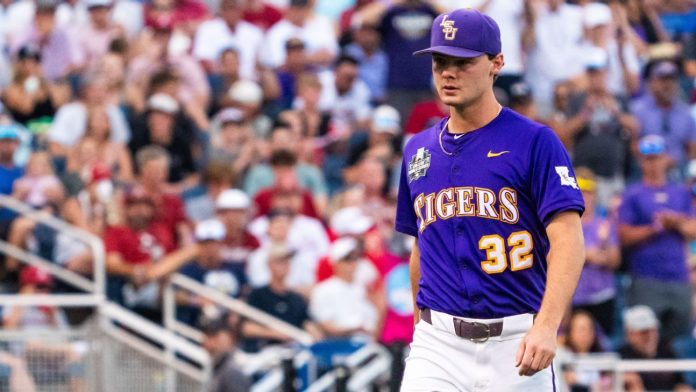
Kade Anderson, LHP, LSU Top 150 rank: 7
The conversation around who will go No. 1 continues to be wide open and will be until draft day, but Anderson’s strong finish to the season has him looking like the slight favorite over Ethan Holliday as the top pick. Seth Hernandez and Eli Willits are also getting looks here, and I’m sure there are internal conversations about a couple of other options, but Anderson and Holliday are seen as the most likely selections.
Liam Doyle, LHP, Tennessee Top 150 rank: 6
Name a player, and they’ve probably been connected to this pick. Trying to figure out what’s actually going on here has been like watching “Tinker Tailor Soldier Spy” — there are more outgoing calls, workouts, rumors, misinformation and theories about the second pick than any other in the entire first round.
When in doubt, judge a team based on what it has done, and the Angels like to save on a quick-moving college player with their first pick. Despite his excellent season, Doyle’s interest seems to have a major hole in it. Whilethere’s believed to be real interest in him at No. 2, teams picking behind the Angels think Doyle could slide all the way to No. 9 of No. 10. Both Doyle and Hernandez have a similar group of teams on them, as they’re both seen as a riskier type of pitcher (though not in the same way) than Anderson or Jamie Arnold.
There’s some buzz that prep shortstop Eli Willits could be the pick here (his father Reggie played for the Angels), breaking the Angels’ trend of taking college players, but I’ll believe that when I see it. Outside of the targets in the top 10 or so picks, the Angels seem to really like Georgia prep shortstop Daniel Pierce, but it’s unlikely he drops to their next pick at 47. At the Angels’ next few picks, potential quick-moving college arms such as Georgia’s Brian Curley, Tennessee’s A.J. Russell and Iowa’s Cade Obermueller make a lot of sense.
Jamie Arnold, LHP, Florida State Top 150 rank: 1
The Mariners seem to be zeroed in on pitching with Anderson and Arnold being the best fits for them, along with high school pitcher Seth Hernandez if they can stomach taking a prep right-hander this high. In this scenario, I think they just take Arnold. Oregon State shortstop Aiva Arquette is still being scouted for this pick and I’ve heard Ike Irish and JoJo Parker brought up, but they seem to be on the outside looking in right now.
Ethan Holliday, 3B, Stillwater HS (Oklahoma) Top 150 rank: 3
This is one of the most well-known connections in the draft, and Holliday is likely to go fourth if he doesn’t go first. I’d guess this would be for an overslot bonus, similar to what Colorado did with Charlie Condon last year. Colorado is also tied to Arquette and Kyson Witherspoon, though I think they’d also be looking at whichever of the three college lefties remain if Holliday isn’t available.
JoJo Parker, SS, Purvis HS (Mississippi) Top 150 rank: 9
This is right about where the consensus starts to open up. Names like Ike Irish, Willits, Parker and Billy Carlson come up here, and this is seen as a stopping point for Holliday, Anderson and Arnold if they get this far. Wake Forest shortstop Marek Houston’s name has also come up. If Anderson, Arnold and Holliday are gone, this pick is seen as likely to be a position player — probably the one the Cards think has the best hit tool of the group. Parker would most likely come with some (but not a lot of) savings if he went here and, of late, he has momentum to sneak ahead of Carlson and/or Willits. Some teams think Parker is actually the best hitter in the draft.
Aiva Arquette, SS, Oregon State Top 150 rank: 8
The two players most tied to this spot are Arquette and Billy Carlson. I’ve also heard the Pirates would take prep righty SethHernandez if the board falls a certain way. There are some parallels to Hernandez in other picks this front office has made, like Jared Jones and Bubba Chandler, so it makes some sense.
Eli Willits, SS, Fort Cobb-Broxton HS (Oklahoma) Top 150 rank: 2
Willits has some interest at the top two picks, and then is in the mix for basically every pick starting at No. 5 with the Cardinals — so he should go by this pick or the next (Toronto). Miami is tied almost solely to prep position players –Willits, Parker and Carlson come up a lot. There have also been some rumors of another underslot deal like last year’s pick of P.J. Morlando, with targets like some of the prep hitters who are projected a dozen picks or so later, if Miami doesn’t like the names/prices of the players on the board.
Ike Irish, C/OF, Auburn Top 150 rank: 26
Irish will be ranked higher once I update my rankings, and his name is coming up a lot in the back half of the top 10 and into the teens. There’s lots of buzz he will go ahead of Jace Laviolette — and not that far behind Arquette, if not ahead of him. College bats are rumored to be rising late in the process this year (including Brendan Summerhill, Gavin Kilen, Wehiwa Aloy, Marek Houston, Caden Bodine and Andrew Fischer), and moving a high school player who’s a late-first-round talent to a later pick is a common and often successful strategy. Toronto is often tied to the same prep bats as Miami and St. Louis, but the Blue Jays are believed to be going the college route if the right names with the right prices don’t land here. Irish, Arquette, Willits, Parker and Carlson seem like the group from which they’ll probably pick.
Seth Hernandez, RHP, Corona HS (California) Top 150 rank: 4
Hernandez, as mentioned above, is seen as likely to either go No. 3 to the Mariners or here — with some chance he goes at a couple of other slots, but half the teams in the top 10 seem unlikely to take a prep right-hander. The Reds are hoping he gets here and have no fear of taking this kind of player. If Hernandez isn’t available, they are tied to toolsy types, mostly high schoolers: Steele Hall, Jace Laviolette and Billy Carlson come up the most. This is about where Josh Hammond’s range begins, but he could also go in the 20s.
Billy Carlson, SS, Corona HS (California) Top 150 rank: 5
The White Sox are casting a wide net because of where they pick. I think Doyle — and probably Carlson and Parker, too — stops here if he happens to slide this far, while Hall is also in the mix. The top tier of talent in the eyes of most evaluators is at least eight players and maybe as many as a dozen, so Chicago will have to be reactive to who is left over. But the White Sox probably will get one of the players they target from that tier.
Brendan Summerhill, CF, Arizona Top 150 rank: 27
This is about where the top college righties — Kyson Witherspoon and Omaha hero Gage Wood — come into the mix. This is also where that second cut of college position players, with Arquette and Irish gone in this scenario, start to come into consideration depending on what a team prefers: shortstops Wehiwa Aloy, Gavin Kilen and Marek Houston and outfielders Brendan Summerhill and Jace Laviolette. The A’s have been tied to Summerhill all spring, and he probably goes in this range and fits the type of player they’ve taken in the past. He’ll also move up in my rankings in the next update.
Steele Hall, SS, Hewitt-Trussville HS (Alabama) Top 150 rank: 11
Texas is right in the middle of Hall’s range and I think his most likely landing spot. The Rangers are probably straddling the line between picking up a top-tier player who might get to this spot and leading off the next tier of players, which will lean more toward prep prospects and upside. I think Hall is the last position player in that top tier. Texas is also one of the teams most in on New York prep catcher Michael Oliveto, who has interest as high as the comp round, and could be the team’s second-round pick.
Kyson Witherspoon, RHP, Oklahoma Top 150 rank: 10
Witherspoon has some landing spots in the top 10, but Arkansas’ Wood is closing in on him as the top college righty. I think both will land just outside of the top 10. The Giants have been tied to many of the aforementioned second cut of college players, with Aloy and Houston also coming up a lot, and Irish quite similar to recently traded former first-rounder James Tibbs.
Gavin Kilen, SS, Tennessee Top 150 rank: 24
The Rays are tied to the top prep position players, as usual, with Hall, Jaden Fauske, Sean Gamble, Dean Moss andJosh Hammond mentioned the most — though there are also some college players tied to this pick, with Kilen leading the pack. The Rays pick again at Nos. 37 and 42, and there’s a chance most of those prep players will still be around for an overslot bonus, so grabbing a rising college bat that should go by the 20th pick is a good strategy.
Gavin Fien, 3B, Great Oak HS (California) Top 150 rank: 13
I’m a big believer in Fien, and he fits around here or in the next half-dozen picks or so. The Red Sox were also heavy on Kilen out of high school, or I could see them being swayed by Wood’s outstanding close to the college season.
Gage Wood, RHP, Arkansas Top 150 rank: 21
I was high on Wood’s upside early on, having him go to the Cubs at the next pick in the last mock I did. After his historic MCWS performance, I think the consensus is he belongs in this general area, maybe as high as Nos. 12 or 13, but probably gone by 20 or 24. Wood, for the right team, could be rushed to the upper level of the minors for a potential big league look in relief as a way to limit his innings but also develop his pitchability against better hitters. Minnesota is mostly tied to college players here and that’s who should be going in this range, though they’re also in on prep third baseman Xavier Neyens.
Wehiwa Aloy, SS, Arkansas Top 150 rank: 14
Aloy could go a half-dozen picks higher or even a bit lower than this, as the college bats in this tier are seemingly in a different order for every team. Wood still makes sense here, too, especially as a potential quick mover, along with other power bats such as Jace Laviolette, Neyens, Andrew Fischer, JoshHammond and Tate Southisene.
Marek Houston, SS, Wake Forest Top 150 rank: 15
The Diamondbacks tend to look for contact-oriented types who fit at up-the-middle positions with their high picks. College players Caden Bodine, Houston and Kilen, as well as high schoolers Slater de Brun, Daniel Pierce and Kayson Cunningham all fit here and at their next pick, No. 29.
Jace LaViolette, CF, Texas A&M Top 150 rank: 9
Many think Laviolette’s slide would end here given Baltimore’s history of taking power-and-patience-types with some defensive value. Neyens is also commonly connected to the Orioles here, among other position players being named at the picks in this range. But a number of those high school players could get floated to Baltimore’s next picks at 30 and 31.
Caden Bodine, C, Coastal Carolina Top 150 rank: 35
Bodine’s range starts in the middle of the round with numbers-oriented teams being on him most due to his contact rates and framing prowess, both attributes that Milwaukee emphasizes. Lots of contact-oriented bats are tied here, such as Kilen, Houston, de Brun and Pierce. I could also see this being a possible floor for Wood.
Xavier Neyens, 3B, Mount Vernon HS (Washington) Top 150 rank: 19
Houston has been tied to a number of the standout athletic testers in the prep class such as Neyens, Southisene, Hammond and Gamble. I could also see this being a floor for power-oriented college bats such as Laviolette and Aloy, with some overlap between the Astros’ targets and who the Orioles take at No. 19.
Tyler Bremner, RHP, UC Santa Barbara Top 150 rank: 28
Bremner has been a bit disappointing this season but has now fallen enough that he’s a strong value for a team to get in the 20s with a number of landing spots throughout the comp round. I think this Braves pick will be a nice landing spot for college talent with Houston, Wood and Bodine mentioned here.
Josh Hammond, 3B, Wesleyan Christian HS (North Carolina) Top 150 rank: 18
Hammond has a number of potential landing spots starting around No. 10 and ending somewhere in the mid-20s. Given Hammond’s two-way exploits, there are parallels here with Austin Riley, a player that Royals scouting director Brian Bridges drafted while with Atlanta. I’d expect prep pitching and/or a prep shortstop (lots of names are mentioned, especially given Kansas City’s history) at their next few picks.
Andrew Fischer, 3B, Tennessee Top 150 rank: 53
Fischer is rising due to his strong performance in the SEC this year, and while he’s likely still behind Irish, he might be sneaking up on Laviolette with a chance to go in the top 20 picks. I think Detroit is looking to pair a college player with a high school player between this pick and its next (34) and will be looking mostly at left-handed hitters. As you can guess, that means a lot of different players have been tied to these two picks. Slater de Brun, Cam Cannarella, Fauske and Kayson Cunningham come up the most.
Slater de Brun, CF, Summit HS (Oregon) Top 150 rank: 16
De Brun is believed to be in play for Arizona at No. 18 but otherwise probably lands somewhere in the 20s. The Padres are tied to a number of high school players here — Dax Kilby, Quentin Young, Kruz Schoolcraft and Matthew Fisher, among others — but also seem to be in on some college players such as Ethan Conrad and Bremner. I’d predict they go with a high schooler, especially given their history.
Sean Gamble, 2B, IMG Academy (Florida) Top 150 rank: 23
The Phillies are considering some high school players with upside, as you’d expect, and if the board plays out this way, Gamble, Pierce or Cunningham all fit. There’s a good shot they would look to pair this pick with a prep arm at their next pick.
Tate Southisene, SS, Basic HS (Nevada) Top 150 rank: 22
I think the Guardians will be in on what’s left of the upside prep position player crop along with being opportunistic if a college player such as Fischer, Wood, Bodine or Bremner falls this far.
Prospect promotion incentive picks
28. Kansas City Royals: Daniel Pierce, SS, Mill Creek HS (Georgia)
33. Boston Red Sox: Luke Stevenson, C, North Carolina 34. Detroit Tigers: Aaron Watson, RHP, Trinity Christian HS (Florida) 35. Seattle Mariners: Ethan Conrad, RF, Wake Forest 36. Minnesota Twins: Charles Davalan, LF, Arkansas 37. Tampa Bay Rays: Anthony Eyanson, RHP, LSU
These three teams had their first-round picks moved down 10 slots due to exceeding the second surcharge threshold of the competitive balance tax. We’ll include them so all 30 teams have a projected pick.
Devin Taylor, LF, Indiana Top 150 rank: 57
Taylor has a lot of interest in the comp round and doesn’t have an enormous upside, but he could be quick moving with 55-grade hit and power grades.
J.B. Middleton, RHP, Southern Miss Top 150 rank: 50
Middleton has a lot of interest from a late-first to an early second-round pick as a power arm with starter feel and gaudy numbers this spring.He’s similar as a prospect to two top picks in last year’s draft, college righties Ben Hess and Bryce Cunningham.
Quentin Young, SS, Oaks Christian HS (CA) Top 150 rank: 101
Young, the nephew of Dmitri and Delmon Young, is tied to the Dodgers and Padres and has lots of late momentum despite his high whiff rates in the spring and last summer. That’s due to his gargantuan upside as a 6-foot-6 infielder with plus-plus raw power that might be 80-grade one day; he’ll be moving up in the update of my top 150 rankings.The Dodgers also have the 41st pick and while I have them tied to a number of arms, I landed on Louisville’s Patrick Forbes.
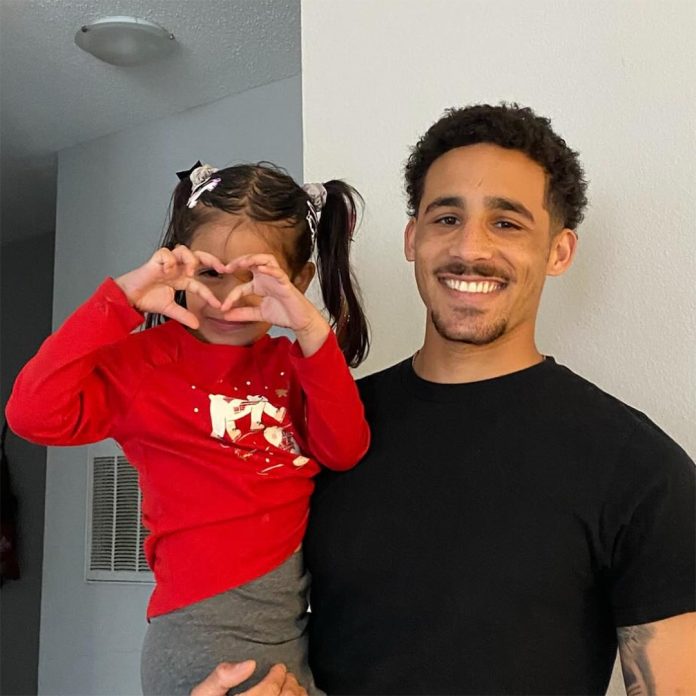
As theLove Island USA star continues to make polarizing choices in the villa amid her relationship with Jeremiah Brown, her ex and father of her only daughter, Arleigh, spoke out in her defense.
“At the end of the day I hope everyone remembers we’re human,” Noah wrote in a June 16 TikTok Story, per People. “Her going on that show to find love, or whatever you think it was she’s doing, remember she’s still human, she has a daughter, and a life.”
And while Noah admitted that Huda’s choices on the dating reality series have not been great, he implored fans to go easy on her, calling the amount of hate “unhealthy.”
“She’s maybe not doing a great job idk I don’t watch the show but I don’t like that I’m seeing so much negative s–t on my page,” he continued, “or even clips of it about her.”
Indeed, Noah, 25, is trying to do the best for the couple’s young daughter.
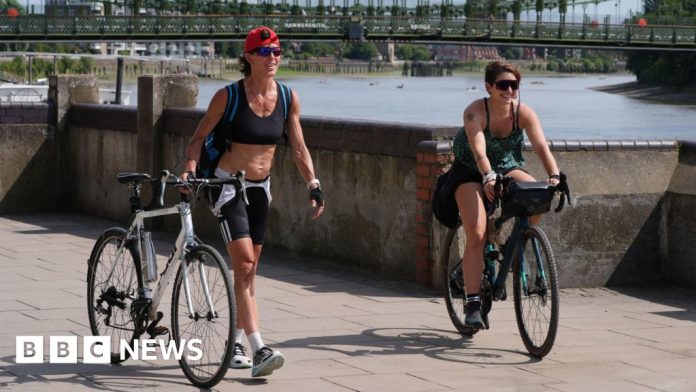
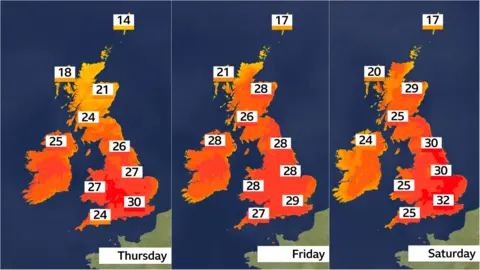
Temperatures are set to reach 30C (86F) in parts of the UK on Thursday, with the heat expected to build steadily as the week goes on.
It is likely to mean the first heatwave of 2025 being declared by the weekend. The nights will also be much warmer from Thursday, with many areas seeing temperatures in the high teens.
Temperatures will peak in different areas on different days, with some of the highest figures on Thursday expected in the south and east, the Midlands and South West England.
By Friday, the north and west will be feeling the heat, with Aviemore, Strabane and Aberystwyth among the possible spots to hit 28C or higher.
Northern Ireland, western Scotland and west Wales will see temperatures peak on Friday with highs of 24 to 28C likely.
For east Wales, eastern Scotland and much of England the peak will be on Saturday, where many areas will see highs of 28 to 31C, while some places in south-east England and East Anglia may reach 33C.
Saturday night could see the first “tropical night” of the year. This is where overnight temperatures do not drop below 20C, something that is increasingly likely for parts of south-east England.
The heat is down to a developing area of high pressure. This will help winds switch to a south-easterly direction and draw in hot weather from other parts of Western Europe. Parts of France and Spain could see temperatures close to 40C over the next few days.
For a heatwave to be declared by the Met Office we need to reach a threshold temperature for at least three consecutive days, and that threshold varies from 25C across the north and west of the UK, to 28C in parts of eastern England.
Whilst we have seen temperatures exceeding these figures in recent weeks, the warm spells have not been long enough to qualify as a heatwave – but that looks like it is about to change.
Meanwhile, a Met Office study said the risk of 40C temperatures in the UK was rapidly increasing.
The last time temperatures exceeded 40C in the UK was 19 July, 2022
Writing in the journal Weather meteorologists said there was a 50:50 risk of temperatures exceeding 40C in the UK in the next 12 years – four years earlier than the previous estimate, and that temperatures of 45C or more “may be possible”.
The risk is increasing as climate change continues to drive global temperatures upwards.
Scientists from the World Weather Attribution group have previously found such extremes would have been “almost impossible” without human-induced climate change.
Gillian Kay, lead author of the Met Office study, said: “We find that temperatures several degrees above those recorded in July 2022 are plausible, with a simulated maximum of 46.6C. This is close to the theoretical range for London in today’s climate – in the upper 40s or even higher – that has been proposed elsewhere.”
PA Media
The heat builds steadily through the week, likely bringing the first heatwave of 2025
The UK’s June temperature record stands at 35.6C, set in Southampton in 1976. Current forecasts suggest this is unlikely to be exceeded this time.
That infamous summer included the longest continuous heatwave on record, with 18 days above 28C. However, the Met Office’s model found that today’s climate could support a heatwave lasting up to 39 days.
High pressure and rising temperatures have prompted the UK Health Security Agency (UKHSA) to issue yellow heat-health alerts for most of England from midday Wednesday to Sunday evening.
While yellow is the lowest level (below amber and red), it warns of possible impacts on health and social services and recommends preparation for vulnerable groups, including the elderly.
It is worth noting that heatwave conditions do not always mean sunshine. As temperatures rise over the weekend, showers or thunderstorms could develop across parts of the UK.
A quick check of the BBC Weather app will show when the risk of rain increases locally – useful for anyone planning to spend time outdoors.
Current UK forecasts are showing that winds will start to switch to less hot westerlies from Saturday onwards. However, it’s likely to be still very hot in eastern areas on Sunday with temperatures above 30C for some.
There will be a greater chance of occasional rain next week, but hotter weather will still not be far from the south-east corner of the country.
(WJW) — Some ready-to-eat meals sold nationally at Walmart and Kroger stores have been recalled as public health officials investigate a deadly Listeria outbreak, according to the U.S. Department of Agriculture’s (USDA) Food Safety and Inspection Service (FSIS).
According to the FSIS, as of Tuesday, the outbreak has resulted in three reported deaths and one “fetal loss,” as well as 17 people sickened in 13 states.
As a result, the FSIS said, FreshRealm establishments in San Clemente, California; Montezuma, Georgia, and Indianapolis, Indiana, are voluntarily recalling chicken fettuccine alfredo products that may be contaminated with Listeria monocytogenes (Lm), a strain “isolated from ill people” from last August to this May.
“Out of an abundance of caution, the company is voluntarily recalling all products produced prior to June 17, 2025, that are available in commerce under the following brand names,” states the recall notice.
Customers can identify the recalled products by the following descriptions, taken directly from the FSIS alert:
32.8-ounce tray packages of “MARKETSIDE GRILLED CHICKEN ALFREDO WITH FETTUCCINE Tender Pasta with Creamy Alfredo Sauce, White Meat Chicken and Shaved Parmesan Cheese” with the best-by date of June 27, 2025 or before.
12.3-ounce tray packages of “MARKETSIDE GRILLED CHICKEN ALFREDO WITH FETTUCCINE Tender Pasta with Creamy Alfredo Sauce, White Meat Chicken, Broccoli and Shaved Parmesan Cheese” with the best-by date of June 26, 2025 or before.
12.5-ounce tray packages of “HOME CHEF Heat & Eat Chicken Fettuccine Alfredo with pasta, grilled white meat chicken, and Parmesan cheese” with the best-by date of June 19, 2025 or before.
The products will also include one of several establishment numbers — “EST. P-50784,” “EST. P-47770” or “EST. P-47718” — on the package, as well as the USDA mark of inspection.
Here are the product labels, provided by FSIS:
Credit: FSIS
Credit: FSIS
Credit: FSIS
Health officials warn that Listeria monocytogenes can cause listeriosis infection, which mainly affects older adults, people with weakened immune systems and pregnant women and their newborns.
According to FSIS, the exact source of contamination has not yet been identified, but the investigation is ongoing.
“FSIS is sharing what is currently known regarding products associated with the outbreak as the agency continues to work with public health partners to identify whether a specific ingredient in the chicken fettucine alfredo may be the source of this strain of Lm,” reads the recall alert.
Consumers are urged not to consume the affected products, which instead should be thrown away or returned.
STOCKHOLM (Reuters) -Swedish fintech Klarna on Wednesday said it would launch an unlimited mobile plan in the U.S., joining other finance companies moving into the telecoms business, including British rival Revolut.
A number of fintechs, including Germany’s N26 and Brazil’s Nubank, have started offering mobile services in various countries as they seek to diversify their revenues.
Other investors outside the fintech arena have also put money into the mobile services business such as actor Ryan Reynolds and on Monday U.S. President Donald Trump’s family business also licensed its name to launch a mobile service.
Klarna’s mobile plan, which includes unlimited 5G calls and data for $40 per month, will use the platform provided by U.S. mobile services startup Gigs.
Google-backed Gigs, which as a partnership with AT&T, makes it easier for any company to become a mobile virtual network operator (MVNO) and sell mobile services to customers without owning the infrastructure that provides them.
Klarna, which paused its plans for an initial public offering in April, has more than 25 million users in the U.S. and the fintech is increasingly choosing the country to launch new products.
“Our ambition has always been to solve everyday problems … mobile is a natural next step in building out our neobank offering,” Klarna CEO Sebastian Siemiatkowski told Reuters.
Most global fintechs have started a mobile service in other countries before entering the U.S., but Klarna plans to start in the U.S., its largest market, and roll out in the UK, Germany and other markets later this year.
“There will be significant disruption to the MVNO market over the next two years, as enterprises try their hand at launching their own MVNO service,” Juniper Research analyst Alex Webb said.
“However, increased competition brings increased risk, so not all MVNO projects are likely to be successful.”
U.S. MVNO market size is estimated at $14.83 billion in 2025, and is expected to reach $20.84 billion by 2030, according to research firm Mordor Intelligence.
(Reporting by Supantha Mukherjee in Stockholm. Editing by Jane Merriman)
With a new wireless brand from the hosts of SmartLess emerging last week, and the debut of Trump Mobile this week, it sure seems like there’s a hot new trend in Celebrities Selling Things: phone service. How did it come to this? Why can’t they just stick to tequila? I talked to a couple of experts about the situation, and it’s not entirely the Deadpool actor’s fault. But also: it is kind of his fault.
To be clear, none of these celebrities / political figures are building new cell networks from scratch. What they’re launching are Mobile Virtual Network Operators, or MVNOs. These are companies that buy wireless service from the three big US carriers and re-sell it. It’s a business model that has existed for decades, Techsponential analyst Avi Greengart tells me. “They address market segments that carriers can’t or don’t want to address with their main brands,” he says. Older customers, people whose first language isn’t English, people with bad credit – they’re all prime targets for MVNOs.
It’s an attractive arrangement for the big carriers since they may have extra network capacity that would otherwise go unused. “They get a guaranteed return on their networ …