-2.6 C
New York
Friday, January 16, 2026
Home Blog Page 964

Blaise Metreweli appointed as MI6’s first female chief

0


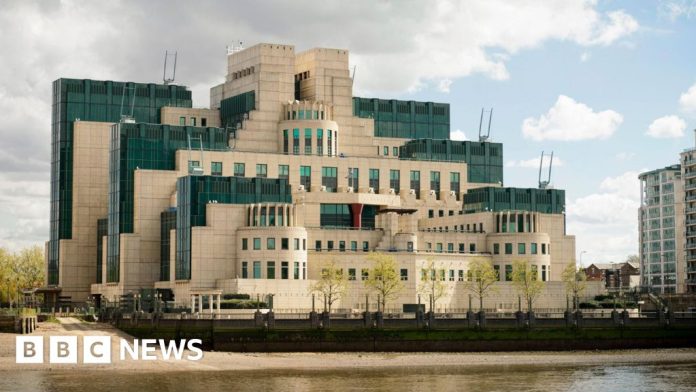
MI6 will be led by a woman for the first time in the foreign intelligence service’s 116-year history.

Blaise Metreweli, who joined the Secret Intelligence Service in 1999, will become the 18th chief of the organisation and take over from Sir Richard Moore later this year.

She is currently responsible for technology and innovation at the service and said she was “proud and honoured” to have been asked to lead.

Prime Minister Sir Keir Starmer called the appointment “historic” at a time “when the work of our intelligence services has never been more vital”.

MI6 is tasked with gathering intelligence overseas to improve the UK’s security, with its core aims being to stop terrorism, disrupt the activities of hostile states and bolster cyber-security.

Its chief, commonly referred to as “C”, is the only publicly named member of the service.

Ms Metreweli, 47, is currently Director General “Q” – head of the crucial technology and innovation division that aims to keep the identities of secret agents secret, and come up with new ways to evade adversaries like China’s biometric surveillance.

“MI6 plays a vital role – with MI5 and GCHQ – in keeping the British people safe and promoting UK interests overseas,” she said.

“I look forward to continuing that work alongside the brave officers and agents of MI6 and our many international partners.”

Ms Metreweli, who studied anthropology at the University of Cambridge, has previously held director level roles in MI5 – MI6’s sister, domestic security agency – and spent most of her career working in the Middle East and Europe.

On the King’s overseas and international birthday honours list in 2024, she received the Companion of the Order of St Michael and St George (CMG) for her services to British foreign policy.

Speaking to the Telegraph in December 2021 when she was at MI5, under the pseudonym of “Director K”, Ms Metreweli said threats to UK national security “really are diverse”.

“The threats we are looking at primarily exist around protecting government, protecting secrets, protecting our people – so counter-assassination – protecting our economy, sensitive technology and critical knowledge,” she said.

She added that “Russian state activity – not Russia itself – remains a threat” and that China was “changing the way the world is and that presents amazing opportunities and threats for the UK”.

The organisation she will be running faces unprecedented and multiple challenges.

Geographically, these emanate primarily from Russia, China, Iran and North Korea, as the four nations co-operate ever more closely to undermine UK and Western interests across the globe.

But there are technical challenges too.

MI6’s role is to recruit human agents to steal secrets from Britain’s adversaries, which include both hostile nations and non-state groups like al-Qaeda.

In an age of rapid digital innovation, MI6 is having to pedal ever faster to stay ahead of its enemies and to remain relevant, when so much intelligence is now gathered online and from space.

Last September, outgoing chief Sir Richard – alongside then-CIA chief William Burns – warned that the international world was “under threat in a way we haven’t seen since the Cold War”.

Writing in the Financial Times, the pair said that beyond the war in Ukraine, the two foreign intelligence services were continuing to “work together to disrupt the reckless campaign of sabotage across Europe being waged by Russian intelligence”.

Sir Richard and Mr Burns added that they saw the rise of China as the main intelligence and geopolitical challenge of the century. They also said they had pushed “hard” for restraint and de-escalation in the Middle East.

On Sunday, Sir Richard, who will step down in the autumn after five years in the role, said he was “absolutely delighted” with the “historic appointment” of his colleague.

“Blaise is a highly accomplished intelligence officer and leader, and one of our foremost thinkers on technology,” he said.

“I am excited to welcome her as the first female head of MI6.”

Foreign Secretary David Lammy, to whom Ms Metreweli will be accountable as MI6’s new chief, said she was the “ideal” candidate and would ensure the UK was able to tackle the challenges of “global instability and emerging security threats”.

“I would also like to pay tribute to Sir Richard Moore for his service and leadership,” he said.

“I have worked closely with him over the past year and thank him for his valuable contribution enhancing our national security and protecting the British public.”

Sir Keir also thanked Sir Richard for his “dedicated service”.

“I know Blaise will continue to provide the excellent leadership needed to defend our county and keep our people safe,” he added.

Additional reporting by Hollie Cole

Obama on DACA anniversary: Dreamers 'being demonized and treated as enemies'

0


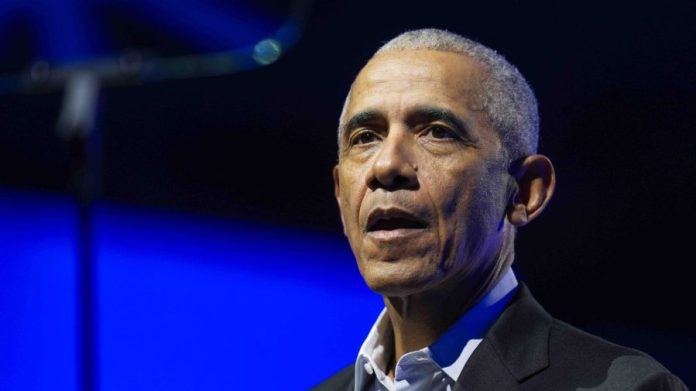
Former President Obama said Dreamers are “being demonized and treated as enemies” in a social media post marking the 13th anniversary of his administration establishing the creation of the Deferred Action for Childhood Arrivals (DACA) program.

“DACA was an example of how we can be a nation of immigrants and a nation of laws,” Obama said of the program, which was implemented to provide young immigrants who grew up in the United States temporary protection from deportation.

“And it’s an example worth remembering today, when families with similar backgrounds who just want to live, work, and support their communities, are being demonized and treated as enemies,” he continued.

The former president’s post comes after authorities conducted several workplace raids across California in recent days, detaining employees and stunning business owners.

In response to the raids, Los Angeles saw a wave of protests against Immigration and Customs Enforcement (ICE), which devolved at times into violence. President Trump deployed the National Guard to address the demonstrations, over the objections and criticism of California Gov. Gavin Newsom and other Democrats.

The Trump administration has since directed Immigration and Customs Enforcement (ICE) to pause raids against select industries, citing a need to protect businesses as they lose “long time workers,” whose jobs are “almost impossible to replace.”

Obama has previously expressed his support for DACA, saying in 2022 that the program has helped recipients to stop living in fear and instead live freely in the country in which they grew up.

There are more than 530,000 active DACA recipients as of December.

“We can fix our broken immigration system while still recognizing our common humanity and treating each other with dignity and respect,” Obama said in his Sunday post. “In fact, it’s the only way we ever will.”

BT boss Kirkby expects AI to deepen job cuts, FT reports

0


(Corrects typographical error in headline)

(Reuters) -BT Group Chief Executive Allison Kirkby said advances in artificial intelligence could deepen significant job cuts under way at the British telecoms company, the Financial Times reported on Sunday.

Kirkby told the newspaper that BT’s plans to cull more than 40,000 jobs and strip out 3 billion pounds ($4 billion) of costs by the end of the decade “did not reflect the full potential of AI”.

“Depending on what we learn from AI . . . there may be an opportunity for BT to be even smaller by the end of the decade,” the FT quoted her as saying.

Britain’s biggest broadband and mobile provider had said in 2023 that it would cut as many as 55,000 jobs, including contractors, by 2030. Its CEO at the time, Philip Jansen, said the company would rely on a much smaller workforce and significantly reduced cost base by the end of the 2020s.

Kirkby, who took over from Jansen a year ago, has also opened the door to a possible future spin-off of Openreach, the company’s network infrastructure business, the FT said.

She said she did not feel the value of Openreach was reflected in the company’s share price and if that persisted, BT “would absolutely have to look at options”.

In an emailed response to Reuters, BT said that Openreach is not something the company is actively looking at right now. It did not provide further comment on Kirkby’s FT interview.

BT said last month that strong demand for fibre broadband and more than 900 million pounds of cost savings had helped to shore up its full-year earnings and boost cash flow.

Resilience at Openreach offset declines in revenue and profit at its business and consumer units, where legacy voice services continued to wane and handset sales fell.

($1 = 0.7372 pounds)

(Reporting by Rishabh Jaiswal in BengaluruEditing by Raju Gopalakrishnan, William Mallard and David Goodman)

Google reportedly plans to cut ties with Scale AI

0


Meta’s big investment in Scale AI may be giving some of the startup’s customers pause.

Reuters reports that Google had planned to pay Scale $200 million this year but is now having conversations with its competitors and planning to cut ties. Microsoft is also reportedly looking to pull back, and OpenAI supposedly made a similar decision months ago, although its CFO said the company will continue working with Scale as one of many vendors.

Scale’s customers include self-driving car companies and the U.S. government, but Reuters says its biggest clients are generative AI companies seeking access to workers with specialized knowledge who can annotate data to train models.

Google declined to comment on the report. A Scale spokesperson declined to comment on the company’s relationship with Google, but he told TechCrunch that Scale’s business remains strong, and that it will continue to operate as an independent company that safeguards its customers’ data.

Earlier reports suggest that Meta invested $14.3 billion in Scale for a 49% stake in the company, with Scale CEO Alexandr Wang joining Meta to lead the company’s efforts to develop “superintelligence.”

Aaron Judge, 1-for-12, blames self as Yanks swept by Red Sox

0


BOSTON — Aaron Judge blamed himself for swinging at pitches outside the strike zone as the New York Yankees were swept in a three-game series against the Boston Red Sox.

“You got to swing at strikes,” Judge said after going 1-for-12 in the series, which Boston completed with a 2-0 victory on Sunday.

Judge struck out three or more times in three straight games for only the third time in his major league career.

“That usually helps any hitter when you swing at strikes,” Judge added. “Definitely some pitches off the edge or off the edge in, you know, taking some hacks just trying to make something happen.”

Judge had a tying solo homer in the opener Friday night but struck out nine times as the Yankees were swept in a series for the first time this season.

New York scored only four runs in the three games, matching its fewest in a three-game series at Fenway Park, on June 20-22, 1916 and on Sept. 28-30, 1922.

“It’s very hard,” Red Sox manager Alex Cora said of facing Judge. “He’s so good at what he does. We used our fastballs in the right spots, we got some swing and misses.”

“Throughout the years we’ve been aggressive with him,” Cora added. “Sometimes he gets us, sometimes we do a good job with that. It’s always fun to compete against the best, and, to me, he’s the best in the business right now.”

Judge’s major league-leading average dipped to .378.

“I don’t think much of it,” teammate Ben Rice said. “If I could have that guy hitting every single at-bat even if he’s not at his best, I would do it. I’m sure he’ll bounce back. He’ll be all right.”

Judge faced Garrett Whitlock with two on in the eighth Sunday and bounced into an inning-ending double play.

“He’s one of the greatest hitters in the world,” Whitlock said. “It’s special to watch him play and everything. We tried to execute and had some execution this weekend.”

90 Day Fiancé’s Juan David Daza, Jessica Parsons Share Wedding Moments

0


‘90 Day Fiancé’s’ Juan David Daza & Jessica Parsons Detail Emotional Wedding Moments

Juan David Daza and Jessica Parsons are trading their fiancé status for something better.

The 90 Day Fiancé stars exchanged vows during the season 11 finale of the TLC reality series June 15, marking a major milestone in their love story.

“It felt like a dream come true,” Jessica exclusively told E! News of her big day. Extra space “We had been waiting for so many years to be together and this was the conclusion to all the hard work we put in.”

As for Juan, the Colombian native described their nuptials as “more than just a celebration.”

“Our wedding day was one of the most meaningful days of our lives,” he gushed. “There was something really special about having our families together in one place.”

The ceremony, which marked the 90th wedding featured on the franchise, also included touching nods to Juan’s family members not in attendance, including his late mother. According to the groom, “Seeing a photo of my mom there, surrounded by my loved ones, made it even more emotional.”

Canadian Grand Prix: George Russell says he is ‘driving better than ever’

0


It was a successful day all round for Mercedes with 18-year-old rookie Kimi Antonelli finishing third for his first podium in Formula 1.

Antonelli – at 18 years and 294 days old – becomes the third-youngest podium finisher of all time behind Verstappen and Lance Stroll.

Starting fourth, he overtook championship leader Piastri at the start and dealt with pressure from the Australian in the closing stages of the race.

“It was so stressful but super happy,” Antonelli said. “The last stint I pushed a bit too hard behind Max and I killed a bit of the front left and I struggled a bit at the end, but I’m really happy to bring the podium home.”

“This track has been good for us and the car has been incredible all weekend. Hopefully we can carry the same momentum into the next few races.”

Russell said Mercedes performed so strongly at Circuit Gilles Villeneuve because a “smooth” track and “low-speed” corners suited the characteristics of the car.

Next on the calendar is Austria from 27-29 June and the Red Bull Ring will be a very different challenge to Montreal.

“It’s going to be on old tarmac, more high-speed corners and it’s going to be hot as well,” Russell said.

“We’ve got three things working against us. I’m not going to sit here and say Mercedes is back because we were the quickest team here last year but we didn’t win the championship. We know where we need to improve.”

Cotton on Trump ICE pause on select industries: 'I don't think we should pull back on any kind of enforcement'

0


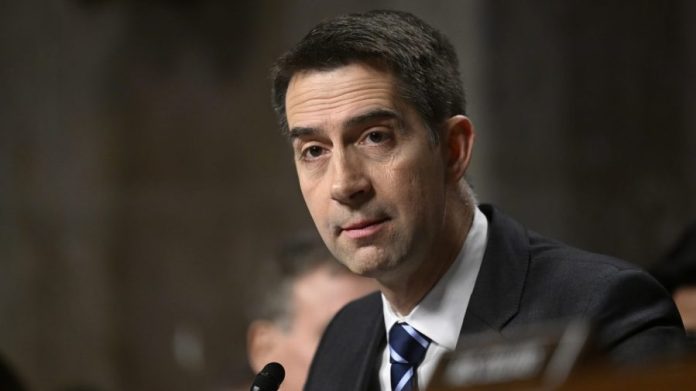
Sen. Tom Cotton (R-Ark.) on Sunday said he doesn’t believe Immigration and Customs Enforcement (ICE) should “pull back on any kind of enforcement” after the Trump administration directed the agency to pause raids against workers in the agriculture, hotel and restaurant industries.

Cotton told CBS News’s Margaret Brennan on “Face The Nation” that “we need to have robust worksite enforcement” after being asked if he agreed with the move given agricultural business in his state.

“I don’t think we should pull back on any kind of enforcement at all,” Cotton said. “I think worksite enforcement in all industries needs to be able to move forward. And I think ICE agents on the front lines need the support of political leadership.”

The Department of Homeland Security (DHS) confirmed a shift in deportation policies in a statement to NewsNation on Saturday, days after President Trump signaled that “changes are coming” in a post on Truth Social.

“Our great Farmers and people in the Hotel and Leisure business have been stating that our very aggressive policy on immigration is taking very good, long time workers away from them, with those jobs being almost impossible to replace,” the president wrote on Thursday.

“This is not good. We must protect our Farmers, but get the CRIMINALS OUT OF THE USA. Changes are coming!” he added.

DHS officials said they would follow the White House’s lead on removals and detainments, according to a report by The New York Times.

“We will follow the president’s direction and continue to work to get the worst of the worst criminal illegal aliens off of America’s streets,” DHS spokesperson Tricia McLaughlin said.

Trump Disclosure Shows $57 Million in Earnings From Early Crypto Push

0


Trump Disclosure Shows $57 Million in Earnings From Early Crypto Push

Alexa von Tobel has high hopes for ‘fintech 3.0’

0


It’s been 10 years since Alexa von Tobel sold her financial planning startup LearnVest to Northwestern Mutual for a reported $375 million.

Since then, von Tobel became Northwestern Mutual’s first chief digital officer, then chief innovation officer, before launching an early-stage venture firm of her own, Inspired Capital, with former U.S. Secretary of Commerce Penny Pritzker. She’s also a New York Times bestelling author, and she’s about to launch a new interview podcast, “Inspired with Alexa von Tobel.”

In a conversation with TechCrunch, von Tobel recalled the hectic period around the acquisition, which closed literally days before the birth of her first child, and when she knew it was time to start her own firm.

Von Tobel explained that she created Inspired to be the investor she’d dreamed of — one with a “cultish commitment to entrepreneurship” — when she was a founder herself. And while Inspired is a generalist firm, she said she feels both “urgent and optimistic” about fintech, the sector where she launched her career. (One of her pre-Inspired fintech investments, Chime, just went public.)

“We think of this wave as fintech 3.0,” von Tobel said. “The next wave of innovation won’t come from superficial tweaks but from fundamental deep product reinvention — tools that meet the needs of a changing economy and a more diverse, digitally native population.”

The following interview has been edited for length and clarity.

Congratulations on the 10-year anniversary of the acquisition. Looking back, what do you feel proudest of?

First, Northwestern Mutual is an incredible company, and our software became an incredibly important part of the customer experience. And I am so proud that so many of the LearnVest team stayed at Northwestern Mutual for so long, and it really was just a merger of actual values. It’s just amazing how simple some things are, it comes down to the values of two companies and the missions of two companies.

I sold on a Wednesday and went into labor with my first child that weekend. All jokes aside, I always say it took me about a year to mentally just recover from being, like, all systems were go, my brain was being pushed to manage so many things. Literally, I was having my first child. It was like the world threw a bus at me and I caught it.

So when you were closing the deal, was there a ticking clock in your mind, that you had to finish everything before this whole other thing happens?

Of course. If you think about it, we literally signed on, I think, 11am on March 25 and then we did a press tour with the CEO, and then the next day, we did a stand up with the entire team, and then I went to sleep and literally woke up in labor.

Having your first child is priceless. There’s nothing in the world that is more valuable to me than having my children, nothing. And so I kept being like, “We have to get this done, because I’m not leaving the hospital to come back and close a deal. I actually need to focus on this human being that I’m bringing into the world.” I always joke that the lawyers took me very seriously.

When people on the outside talk about an acquisition, obviously, the first thing they talk about is usually the financials, and then one of the signs of success is the product. LearnVest as a product doesn’t exist anymore, but it sounds like it was less about having LearnVest as a standalone product and more about transforming Northwestern Mutual.

It was so much bigger than a product. [Northwestern Mutual’s] John Schlifske, he’s no longer CEO, but he is one of the people I look up to most in the world, just a formidable human being. And he kept being like, “We’re gonna merge the companies.” And I would laugh — one is a $40-billion-a-year company, and [the other is] little tiny LearnVest. But he really meant it. He was like, “We’re gonna use this as a catalyst.” It was a catalyst for an entire digital transformation.

I became the company’s first ever chief digital officer, and then chief innovation officer, and it was really about taking everything and merging it into the broader parent company. My CTO of LearnVest became the CTO of the parent company.

You stayed for four years? 

Yeah, [my last day] was basically end of January 2019, and that day we launched Inspired.

How did you know it was time to leave, and where did the idea for Inspired come from?

I’m always at my best when I’m building something that I wish existed for me. And I’ve said many times that the idea for Inspired actually happened when I dropped out of business school, and I was a really all-in entrepreneur in every way — I dropped out basically December 18 of 2008, at the bottom of the worst recession in 81 years, not necessarily the the the most inviting time to start a company.

And I really was looking for a capital partner that didn’t exist. I had this vision of what it should look and feel like, this sort of rigor and camaraderie and in-the-trenches-ness of what an early stage capital partner could be, and I didn’t see it in the market. That was New York in 2008, 2009, and I had this long-term plan of one day, I want to come back and build that.

Fast forward to 2018, 2019 I’d started really actively dreaming about what that could look like. And one day I was like, it has to happen, it’s now.

We’re now almost seven years in. We’re a dedicated early stage venture fund, generalist, headquartered in New York, but investing everywhere. And I feel like I’ve been here for one minute. It literally is the best job I’ve ever had.

You mentioned having this idea of a capital partner that you wished you’d had. How do you put that into practice?

What was I looking for in that capital? 

What were you looking for, and how did you get everyone at the on-board with that vision?

So, when I talk to entrepreneurs, I always say Inspired is different for four key reasons. The first reason is that we are extremely long duration capital. It means when we back a founder, we truly put blinders on for 20 years. When you’re building a company, there’s choices you have to make as a CEO, which is, “Do I do the thing for next month so that things look good, or do the harder thing that won’t look good next month, maybe it pays off in three years, or not?” And what we always say is, “Do the harder thing, do the thing that’s creating far more long-term value and worry less about synthetic results.”

The second thing is, our team’s pretty unique in that we’ve built and scaled more than 10 businesses that have touched hundreds of millions of users around the world. That mentality is so different when you’re sitting in the seat working with an entrepreneur, because we haven’t necessarily lived every experience, but we’ve lived a lot, and we appreciate the contours. It’s almost like seeing 3D versus 2D.

The third thing is that our team operates like one unit. So when we back a company, you actually get the entire team. At many firms, you get one partner, that’s the person they know, they know you, and if, God forbid, that partner leaves, it’s like you’ve evaporated your social equity that you built up with that partner. We operate like a swarm, where you get all of us and we actively do weekly stand ups on the entire portfolio, so that everybody’s up to speed. 

And then the final thing, because of [Inspired co-founder Penny Pritzker], she’s on the board of Microsoft, was U.S. Secretary of Commerce. So we like to say that, there are many, many, many, many ways that we can help companies get access to things that are really hard to get as just a sole founder in your 20s or 30s, where we can actually be a tremendous business accelerant to our companies in a pretty unique way, with access to tech and government and many other vectors.

So in short, that was the firm I wanted.

I wanted a deeply cultish commitment to entrepreneurship. We always talk about this Inspired future — one of the things I love so much about entrepreneurship is, no great entrepreneur shows up and is like, “Let’s make the world worse,” right? They show up and they’re like, “Here’s a big problem that’s facing a billion people. Let’s go fix it.”

I think some of the biggest founders in the world, their companies poured out of their DNA. I started LearnVest because my father had passed away, and my mom overnight had to manage our finances. And I [thought], I never want a family to feel financially destabilized, and I wanted to go build the solution.

When we look back at the broader ecosystem over the last 10 years, one of the big transitions is leaving behind that period of zero interest rate policy (ZIRP) for VC and startups. Have you seen a change in the venture ecosystem in the last few years, and has that affected the way you approach investing at Inspired?

So just a helpful framework — Inspired is a full generalist fund. We will touch everything from deep tech to health tech to consumer, looking for the biggest, most important ideas of the next 15 years. Every day, when I come to work, I literally mentally walk into this office in 2035. And that’s how we’re thinking about where the world is going and the problems to be solved.

And I think when ZIRP existed, many things that I would say weren’t venture bets, would get backed. And I almost think it would be confusing, because you’d be like: What categories are not venture categories? Lots of categories are not venture categories by nature — if you think about power law, everything that we back ideally has a real chance to be worth $10 billion. There’s not a lot of those.

I built LearnVest at the bottom of the worst recession in 81 years, and actually LearnVest was not an easy business. It was regulated, there were so many other things that were really hard about what we were doing. I really like hard businesses, because they have defensibility. They have reasons to exist. They have less copycats.

I think a lot of things got funded over the last period of, like, 2014 to 2021, that should’ve been getting a different source of capital.

How are you feeling about the state of fintech in 2025? Where are there still opportunities for startups?

I’m feeling both urgent and optimistic about the state of fintech today. Financial services remain foundational to a functioning society, but they haven’t kept pace with the rapid technological, demographic, and social shifts we’re experiencing. The growing federal debt, rising income inequality, and increasing poverty — especially among older Americans — underscore the need for more adaptive and inclusive financial tools. Not to mention the rapid job loss due to AI.

This moment presents a major opportunity for startups to reimagine financial products from the ground up. We think of this wave as fintech 3.0. The next wave of innovation won’t come from superficial tweaks but from fundamental deep product reinvention — tools that meet the needs of a changing economy and a more diverse, digitally native population. We’re excited by founders who see this challenge clearly and are building bold solutions to address it.

You launched LearnVest on-stage at the TechCrunch 50 conference in 2009. If you were a judge at our Startup Battlefield in 2025, what would you be looking for in the winning team? 

I would be looking for a founder who, based on who they are and their lived experience, has a powerful, unique insight to a problem that touches hundreds of millions of people, if not more. Two, I would be looking for something that is non-obvious. You know, I think some of the biggest and best ideas are non-consensus, people don’t think they’re interesting. Third, I would look for an entrepreneur who’s living and breathing a decade out. They see this very powerful future. 

And the final thing I would look for is the founder who has — there’s a spikiness, there’s a grit and resilience, but also a command, that you can sit with them and it’s palpable, that they will figure out a way to succeed. Those are the key ingredients that you look for.