2.8 C
New York
Saturday, March 7, 2026
Home Blog Page 98

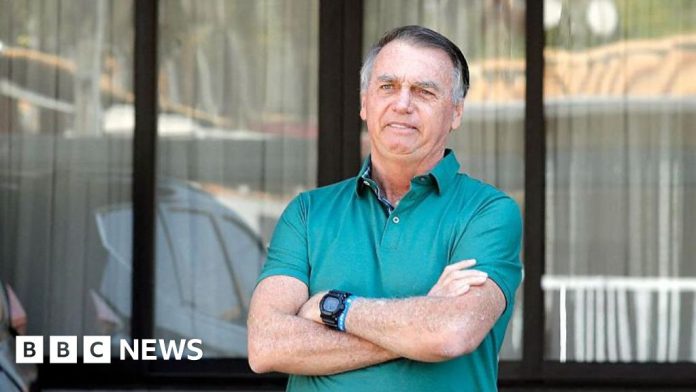
Brazil’s former president Bolsonaro found guilty of coup plot

0


The former president of Brazil, Jair Bolsonaro, has been convicted of plotting a military coup.

Three out of five Supreme Court justices found the 70-year-old guilty of leading a conspiracy aimed at keeping him in power after he lost the 2022 election to his left-wing rival, Luiz Inácio Lula da Silva.

While the plot failed to enlist enough support from the military to go ahead, it did culminate in the storming of government buildings by Bolsonaro’s supporters on 8 January 2023, the justices found.

One justice acquitted Bolsonaro and a final one is yet to vote, but the simple majority is enough to convict the former president, who could now face decades in jail. He will be sentenced on Friday.

The former president’s fate was sealed on Thursday when Justice Carmén Lúcia cast her vote.

She found him guilty on all the five charges: attempting to stage a coup, leading an armed criminal organisation, attempted violent abolition of the democratic rule of law, and two more charges related to the damage of property during the storming of buildings in Brasília on 8 January 2023.

Words over bullets: America must change 

0


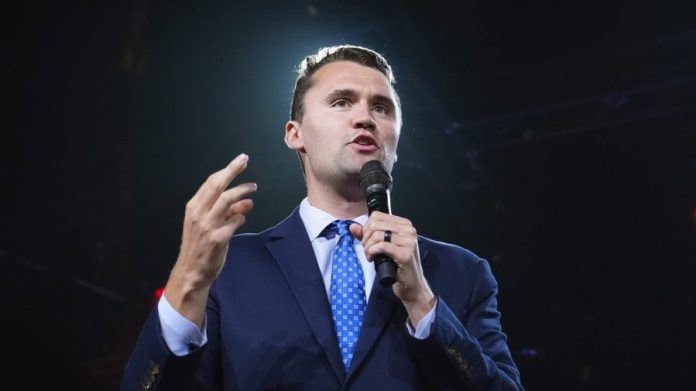
Charlie Kirk’s death is heartbreaking. Any loss of life to gun violence is. But what strikes me most is not only the grief, but the imbalance. In the weeks ahead, his story will dominate the headlines, the panels, the airwaves. His face will be on every screen, his legacy dissected endlessly. And yet, just two weeks ago, two children at Annunciation Catholic School were shot and killed, and already their names are already fading from memory.  

It is all one and the same: lives ended by bullets in a country where violence has become routine. But we will act as if one life mattered more — not because he was more important than those children, but because his death was louder. That is the spectacle of political violence. 

This is not to say Charlie Kirk deserved this fate. He did not. Violence is never justified. But we cannot ignore that his death fits neatly into the narrative of America’s culture wars. He was on the front lines of many of the issues that divided us. He thrived in the friction of division, even if his intentions were pure. And in today’s America, populism is met with populism. That is the dangerous cycle we are living through.  

Make no mistake, the left has not been innocent in this. Democrats, too, have greatly contributed to the cycle of division. But this is not about tallying blame or keeping score. It’s about survival of civil society itself, where political conflict must stay in the realm of speech, not bloodshed.  

This is no different from what we have already seen. Just recently, two politicians in Minnesota were killed. Before that, Donald Trump narrowly escaped an assassination attempt. These are not isolated events. They are symptoms of the same disease: a nation where political violence, once unthinkable, is becoming routine. 

It is often said that the definition of insanity is doing the same thing over and over and expecting different results. Until we make structural changes, this cycle will continue. And now, I worry not only that it will continue, but that its pace and its scale will grow. 

In 2023 alone, more than 46,000 Americans were killed by guns, the third highest number ever recorded, according to the CDC. About 18,000 were homicides, the rest suicides, accidents or undetermined. The Gun Violence Archive also tracked more than 600 mass shootings that year, nearly two a day. 

Against those numbers, no single story should feel surprising anymore. And yet every time, we act shocked. 

If the violence is relentless, then the guardrails of our democracy must be even stronger. That begins with remembering what sets America apart: the primacy of words over weapons.  

We have a First Amendment in this country. Words should be answered with words, not bullets. James Madison wrote that freedom of speech was not only a right but the “guardian of every other right.” To forget that is to undermine the very idea of America. 

A recent Pew survey found that 66 percent of Americans see political violence as a threat to democracy, yet nearly a quarter believe it may be justified in some cases. That is the road to ruin. It proves that the danger is not only in our weapons but in our minds, in the slow erosion of boundaries that once kept political conflict within the realm of speech. 

I want to address one point of division that emerged almost immediately after Kirk’s death, when Speaker Mike Johnson called for a moment of prayer in Congress. Democrats rejected it, and Republicans were outraged. But here we must remember our Constitution. The Establishment Clause of the First Amendment bars government institutions from endorsing or mandating religious expression. That doesn’t forbid private prayer, but it prevents Congress from appearing to privilege one faith, leader or moment of worship over others. To truly honor Kirk’s legacy, we must respect the Constitution itself, even when it contradicts the beliefs he often proclaimed. 

Maybe this is the moment for all of us to go back and read the words of our founding fathers, the basis and the philosophy of this country.  

George Washington, in his farewell address, cautioned against “the spirit of party,” which he said would distract public councils and enfeeble government. Abraham Lincoln warned that if America were to fall, it would not be from foreign enemies but from within, through our own self-destruction. 

More than two centuries later, we are living in the world they warned about. 

I don’t pretend to have the answer on a policy level. I don’t think anyone does. But we need to look at everything objectively, whether that means stronger gun laws, better mental health support, harsher criminal penalties, or reforming political rhetoric. 

What I can say is this: go to someone with differing opinions and tell them you respect their views. Tell them that this needs to stop. Tell them we must begin to put country over party, and have a civil conversation about this issue. It is OK to agree to disagree. It is not OK to abandon respect. 

We must demand better. This is the United States, the greatest country in the world. We are a melting pot, and differences will always be present. But we must never forget we are Americans first — that is how a nation survives. 

Corey Kvasnick is an entrepreneur, investor, philanthropist, and a contributor to Common Ground Thinking.   

Analyst Report: Monster Beverage Corp.

0


Analyst Report: Monster Beverage Corp.

NASA found clues of life on Mars, but budget cuts threaten future missions

0


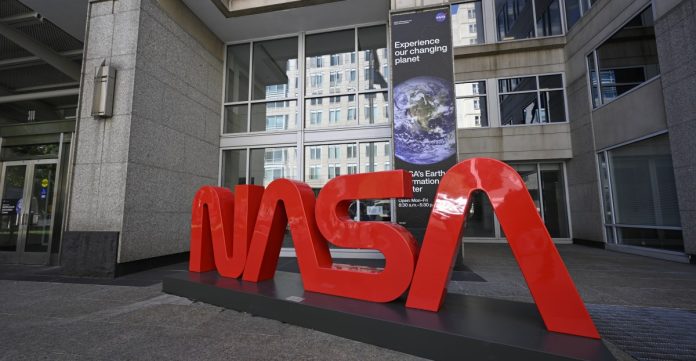
An exciting discovery on Mars is being overshadowed by turmoil at NASA, with budget cuts threatening to destroy a scientific legacy that has been built over decades.

Yesterday, the agency shared a finding, published in Nature, of potential biosignatures identified by the Mars Perseverance rover in a 3.5 billion-year-old rock.

“This very well could be the clearest sign of life that we’ve ever found on Mars,” said Transportation Secretary and Acting NASA Administrator Sean Duffy in a press conference.

Scientists involved in the research were careful to emphasize that the findings — related to unusual textural features of rocks sampled in the Neretva Vallis region in Mars’ Jezero crater — are a possible, but certainly not definitive, indicator that microbial life could have existed on Mars billions of years ago.

The features observed in the rock on Mars, nicknamed “poppy seeds” and “leopard spots” due to their appearance as black dots and ring shapes with dark rims, are typically seen on Earth as the result of microbial life. But there could be other, non-biological explanations for how these features were formed.

“This is the kind of signature that we would see, that was made by something biological,” said Nicky Fox, associate administrator of NASA’s Science Mission Directorate. “In this case, it’s kind of the equivalent of seeing leftover fossils.”

The announcement, while certainly intriguing, comes at a troubled time for NASA. These findings were initially announced in July 2024 and have been going through the usual slow and steady process of scientific peer review. For the agency to hold a press conference to reiterate findings that have already been announced is somewhat unusual — and, a cynic may argue, an attempt to divert criticism away from the issues currently roiling the agency.

Donald Trump’s administration continues to push for enormous cuts to NASA’s budget, including a 47 percent cut to the overall space science budget; termination of two supporting Mars missions, the MAVEN and Mars Odyssey orbiters; pulling out of a joint project with Europe’s space agency to look for further evidence of biosignatures on Mars; and slashing the Perseverance budget by nearly a quarter.

Experts say these budget reductions could have brutal consequences on the agency’s ability to do space science. The cuts are “draconian,” The Planetary Society’s Casey Dreier tells The Verge, particularly as the new potential biosignature detection “only underlines the unique value of space science at NASA.”

To return or not to return

But the most glaring elephant in the room is the administration’s proposal to entirely cancel Mars Sample Return, the mission designed to return the very samples that Perseverance has been collecting to Earth for further study. Though scientists have long debated whether sample return should be a priority for Mars science, most agree that with the samples already collected by Perseverance, it would be unforgivably wasteful to give up on the mission now.

<em>NASA’s Perseverance rover discovered leopard spots on a reddish rock nicknamed “Cheyava Falls” in Mars’ Jezero crater in July 2024. </em>
<em>The Perseverance rover next to the Cheyava Falls rock.</em>

1/2

NASA’s Perseverance rover discovered leopard spots on a reddish rock nicknamed “Cheyava Falls” in Mars’ Jezero crater in July 2024.
Image: NASA / JPL-Caltech / MSSS

That’s because it’s simply not possible for a current-generation rover, even with its impressive array of instruments, to determine whether a given rock contains definite indications of life — a point emphasized by the lead author of the new research, Joel Hurowitz of Stony Brook University.

“What we need to do from here is continue to do additional research in laboratory settings here on Earth, and ultimately bring the sample we collected from this rock back home to Earth to make the final determination for what process actually gave rise to these fantastic textures,” Hurowitz said.

When pushed on whether the administration would therefore reassess its priorities and support Mars Sample Return, Duffy equivocated. Referring to “manned” exploration, an outdated term that NASA itself has not used in decades, he said that Mars science was important for future human exploration, and that “this is consistent with the president’s vision and mission of continuing the science to support human exploration beyond Earth.”

There is arguably some connection between robotic Mars exploration and human exploration of the moon — the Perseverance rover carries small samples of spacesuit materials to see how they withstand wear from exposure to the Mars environment, for example — but the link is tenuous. The missions to determine whether microbial life was ever present on Mars billions of years ago, and the aim to send astronauts to the moon today, are vastly different projects requiring separate technologies and approaches.

This points to a broader schism that appears to be developing within NASA: whether the focus of the agency should be on human exploration and sending astronauts to distant locations for the sake of bragging rights over China, or whether it should be on the less flashy but ultimately more important path of scientific discovery, primarily through the more efficient means of robotic exploration.

Even the administration’s plans for human exploration of space have not been without controversy. At an internal employee town hall this week, Duffy reportedly warned NASA staffers that they should not “let safety be the enemy of progress,” with a priority of beating China to the moon.

This outlook has experts like astronomer Phil Plait deeply worried. “This attitude blows up rockets and kills the crew,” Plait wrote, recalling previous NASA disasters such as the loss of the Challenger and Columbia shuttles and their crews, which were blamed in part on an agency culture that discouraged staff members from raising concerns.

Though the administration may continue to claim it is promoting American excellence in space, the budget cuts it is attempting to push past Congress tell a different story.

“The contrast here is striking — we are capable of pursuing the historic breakthrough science. And we see hints of such astonishing discoveries today,” Dreier said. “Instead, the White House has proposed to unilaterally abandon this effort … I hope that this causes some reflection within the Administration about the unique capability they are proposing to eviscerate, and how much would be lost if we did so.”

0 Comments

Follow topics and authors from this story to see more like this in your personalized homepage feed and to receive email updates.


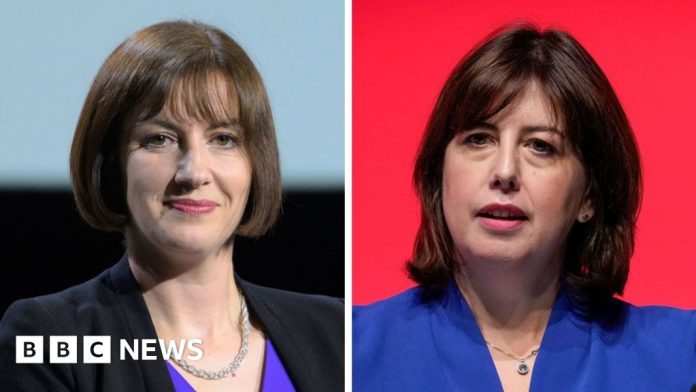
Bridget Phillipson and Lucy Powell set for Labour deputy showdown

0


Education Secretary Bridget Phillipson and former Commons leader Lucy Powell look set for a showdown for Labour’s deputy leadership, after the only other remaining candidate failed to get enough support.

Left-wing backbencher Bell Riberio-Addy said she had not secured the 80 MP nominations needed by 17:00 on Thursday to progress.

Phillipson had already got enough supporters a day before the deadline, while Powell was just three short by Wednesday evening.

In the next stage, the contenders have to win the backing of 5% of local parties or three Labour-affiliated groups, such as a trade union, to go through to a ballot of members.

Posting on social media after nominations closed, Ribeiro-Addy said: “Unfortunately, I have not secured the high number of nominations required to proceed in the deputy leadership contest.

“I am disappointed that the full range of Labour members’ views will not be represented on the ballot paper.”

The contest was triggered by the resignation of Angela Rayner, after she failed to pay enough tax on her £800,000 flat in Hove.

The winner will not become deputy prime minister, as Rayner was, because that position has been handed to Justice Secretary David Lammy.

But the position of deputy leader is a potentially powerful one, as a link between the Labour membership and the party leadership – and whoever wins will be at the forefront of Labour election campaigns.

Crucially, they cannot be sacked by the party leader, Sir Keir Starmer, as they will have their own mandate.

Voting for the next deputy leader is likely to open for Labour members on 8 October and close on 23 October, with the winner being announced two days later.

The remaining candidates will have an opportunity to woo Labour members at hustings during the party’s conference in Liverpool at the end of September.

The contest opens up chances for unhappy MPs and party members to express their discontent with the leadership, potentially overshadowing the big ministerial speeches.

Phillipson – the only cabinet member left in the race – emerged as the early frontrunner after attracting support from MPs who are loyal to the government.

But party members may prefer a candidate who is prepared to challenge Sir Keir, potentially harming Phillipson’s chances.

Powell – who was recently sacked from her cabinet role in a ministerial reshuffle – may attract the support of Labour MPs dissatisfied with the performance of Sir Keir’s government and its policies.

Many senior Labour figures have said the next leader should be a woman and from outside London to counter what they see as the London-centric and male-dominated party leadership.

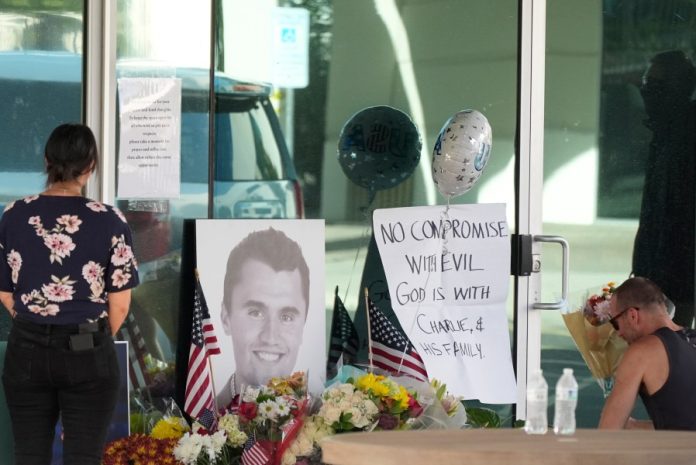
Charlie Kirk's murder is an attack on the very right to free speech

0


America has lost more than a man this week. We lost a voice that embodied one of the most quintessentially American acts imaginable: peacefully debating ideas in the public square.

Charlie Kirk was not engaged in violence. He was not plotting destruction. He was doing something that has been at the very heart of our national identity since the founding of this Republic — exchanging perspectives with fellow citizens in spirited conversation.

That is why his murder cuts so deeply. It was not simply the silencing of a conservative or an assault on a Christian leader. It was an attack on the very principle of free speech — the cornerstone of liberty.

“Come now, and let us reason together, says the Lord,” reads Isaiah 1:18. That invitation is both divine and democratic. God Himself invites us to bring our disagreements and differences to our brothers and sisters peacefully. In the same way, our nation was built on the premise that we can come together, challenge one another’s ideas, and remain neighbors, citizens, and fellow Americans.

When I speak to my congregation on Sunday morning, I am blessed to freely say what I believe in my heart to be right and true. When I take an interview or when someone challenges my faith or my perspective, I have the God-given right to say what’s on my heart, as does anyone who disagrees with me.

What happened in Utah was the antithesis of that. Instead of reasoning together, someone chose to end the conversation with violence. Instead of persuasion, he reached for a weapon. This wasn’t only a political assassination, but an assault on the American experiment itself.

For generations, our colleges and universities have been forums where ideas are tested, sharpened, and sometimes even overthrown. Today, they’ve become a place to get heckled, canceled, or chased out by a mob. And if disagreement becomes grounds for murder, then none of us is safe. Our entire way of life begins to unravel the moment we cannot sit in a lecture hall, on a campus lawn, or in a town square and speak our minds without fear of being silenced by a bullet.

The First Amendment was written precisely for this very reason. Freedom of speech is not merely the right to agree with popular ideas; it is the right to voice unpopular ones. It is the right to question, to provoke, even to offend. Without that freedom, we descend into tyranny—where only the loudest student or the angriest activist dictates what may be spoken.

Kirk understood that. He spent his career engaging young people in dialogue, challenging them to think, and encouraging them to stand firm in their convictions. Whether one agreed with him or not, he was committed to the American promise that debate is not dangerous, but essential.

Today, after the murder of an innocent husband and father, we face a chilling question: Will we allow violence to define our discourse? Will we allow fear to govern our speech? If so, then the murderer who pulled the trigger yesterday succeeded in more than ending one man’s life — he ended the freedom of each and every American.

We cannot allow that to happen. Now more than ever, we must recommit ourselves to the simple but profound truth that disagreement is not hatred. If we cannot learn to debate without violence, then our Republic will not survive.

Our nation was born in debate. The Continental Congress was one long debate about what independence meant. The Constitutional Convention was a collection of feisty disagreements that ended up birthing our foundational documents. Even within the church, the Apostle Paul writes in his letter to the Ephesians to “speak the truth in love.” We sharpen one another through dialogue, not through death and destruction.

Any honorable, principled human being should be grieving Kirk’s death today. And the best way to honor his death is to recommit ourselves to the freedom he exercised on his final day—the freedom of speech. We can heal our wounds by sitting side by side with those we disagree with, listening to them, reasoning with them, and showing the world that Americans do not fear debate. We embrace it. 

Kirk’s voice has been silenced, but his death must not silence the principle he embodied. 

Pastor Jentezen Franklin is a bestselling author, the senior pastor of Free Chapel and founder of Jentezen Franklin Media Ministries. He was recently appointed to President Trump’s Religious Liberty Commission. 

Technical Assessment: Bullish in the Intermediate-Term

0


Technical Assessment: Bullish in the Intermediate-Term

Vuelta a Espana: Filippo Ganna wins shortened time trial as Joao Almeida closes on Jonas Vingegaard

0


Italy’s Filippo Ganna won a shortened individual time trial on stage 18 of the Vuelta a Espana as Britain’s Tom Pidcock retained his third place in the overall standings.

UAE Team Emirates-XRG’s Joao Almeida, who is second in the general classification, took 10 seconds off the advantage of overall race leader Jonas Vingegaard.

The stage was reduced from 27.2km to 12.2km to ensure “greater protection” for riders because of security concerns resulting from a series of pro-Palestinian protests during the three-week race.

Police numbers were also ramped up, with hundreds of protestors waving flags along the route and whistling riders from Israel-Premier Tech.

And French news agency AFP reported that two protestors were detained for trying to jump over barriers.

Two-time world time trial champion Ganna, 29, lived up to his billing as the favourite, with the Ineos Grenadiers rider edging out Australian Jay Vine by a second in Valladolid.

“Obviously, with the news of the change in the parcours [route] last night it was a bit strange, but I tried to do the best today,” said Ganna, who was 10 seconds quicker than anyone else over the final four kilometres.

“The first part I didn’t find the correct rhythm and in the final I tried to push over without thinking of the numbers. I am really happy for today.”

While Ganna’s fast finish ensured he pipped Vine, all eyes were focused on the battle at the top of the general classification.

Almeida finished strongly to put time into Visma-Lease A Bike’s Vingegaard and the Portuguese rider now sits 40 seconds behind the Dane with two competitive stages of racing remaining.

Q36.5 Pro Cycling’s Pidcock finished 29 seconds behind Ganna but managed to extend his advantage over Australian Jai Hindley in the battle for the final podium spot by three seconds.

With a relatively flat 161.9km run from Rueda to Guijuelo scheduled for Friday, it raises the prospect of a huge day in the mountains on Saturday’s penultimate stage with a summit finish on the Bola del Mundo.

FBI offering $100K reward in Charlie Kirk death

0


The FBI is offering up to a $100,000 reward for information leading to the arrest of the shooter of right-wing activist Charlie Kirk.

Kirk, 31, was assassinated Wednesday during an event at Utah Valley University. The offer of a reward comes after the FBI released photos of a person of interest in the case.

The images show what the FBI described as someone of an age to have “blended in well with a college institution.” The individual in a photo provided by law enforcement was wearing a hat and sunglasses along with an American flag t-shirt with an eagle on it.

“The FBI is offering a reward of up to $100,000 for information leading to the identification and arrest of the individual(s) responsible for the murder of Charlie Kirk,” the bureau wrote on X.

 “We do have good video footage of this individual,” Utah Department of Public Safety Commissioner Beau Mason said in an early Thursday morning press conference.

“If we’re unsuccessful in identifying them, immediately, we will reach out for the public’s help and the media’s help in pushing those photos.”

SurgePays Inc. Deploys AI-Powered Retail Media Platform

0


SurgePays Inc. (NASDAQ:SURG) is one of the most undervalued telecom stocks to invest in. On August 28, SurgePays announced the complete deployment of its ClearLine SaaS platform across all 17 Market Basket Food Stores in North Carolina. The initiative marks a key milestone in SurgePays’ strategy to generate recurring, high-margin SaaS revenue through a nationwide rollout of its retail media solution.

The ClearLine platform transforms mounted flat screens into retail media hubs that can display video ads, dynamic promotions, coupons, and QR codes in real-time. The technology is designed to engage shoppers, foster brand loyalty, and create new advertising revenue streams for retailers.

SurgePays Inc. Deploys AI-Powered Retail Media Platform

The company’s future goal includes using AI to power marketing decisions based on factors such as the day, time of day, inventory, and marketing budgets. The ClearLine software now allows for the easy upload and real-time management of content.

SurgePays Inc. (NASDAQ:SURG) is a financial technology and telecom company in the US. It has 2 segments: Mobile Virtual Network Operator/MVNO Telecommunications and Comprehensive Platform Services.

While we acknowledge the potential of SURG as an investment, we believe certain AI stocks offer greater upside potential and carry less downside risk. If you’re looking for an extremely undervalued AI stock that also stands to benefit significantly from Trump-era tariffs and the onshoring trend, see our free report on the best short-term AI stock.

READ NEXT: 30 Stocks That Should Double in 3 Years and 11 Hidden AI Stocks to Buy Right Now.

Disclosure: None. This article is originally published at Insider Monkey.