8.6 C
New York
Sunday, March 8, 2026
Home Blog Page 112

Contactless card payments could become unlimited under new plans

0


Kevin PeacheyCost of living correspondent, BBC News

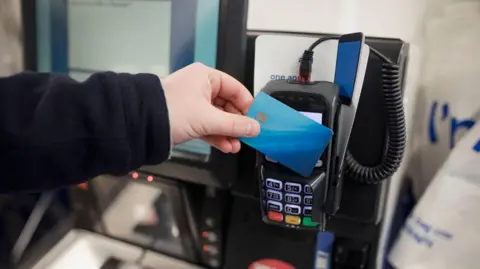
Getty Images Man presses a payment card to a reader at a self-service till in a supermarket.Getty Images

Contactless card payments are set to exceed £100 and potentially become unlimited under new proposals to allow banks and other providers to set limits.

The proposals from the Financial Conduct Authority (FCA) mean entering a four-digit PIN to make a card payment could become even more of a rarity for shoppers.

If approved, purchases which can cost more than £100 – such as a big supermarket shop, or large family meal in a restaurant – could be made with a tap of a card.

The move would bring cards in line with payments made through digital wallets on smartphones which have no restriction, and reflects the ongoing changes in the way people pay.

When contactless card payments were introduced in 2007, the transaction limit was set at £10. The limit was raised gradually, to £15 in 2010, to £20 in 2012, then to £30 in 2015, before the Covid pandemic prompted a jump to £45 in 2020, then to £100 in October 2021.

If approved, the latest plan could be put in place early next year.

Every rise has been met with concerns about theft and fraud, and the FCA said card providers would only permit higher-value contactless payments for low-risk transactions and would carry the burden if things went wrong.

However, the freedom for banks to raise or even scrap the contactless limit suggests the four-digit PIN could soon become relatively redundant.

The FCA has proposed the changes, despite the majority of consumers and industry respondents to a consultation favouring the current rules.

Some 78% of consumers who responded said they did not want any change to the limits.

The FCA said it did not expect any quick changes, but providers would welcome the flexibility over time when prices rise and technology advances. They could also give customers the option to set their own limits.

Fraud and theft fears

The idea of high-value payments being made with a tap of a card will raise concern that thieves and fraudsters will target cards.

Various protections are already in place. In addition to the £100 single payment limit, consumers are often required to enter a PIN if a series of contactless transactions totals more than £300, or five consecutive contactless payments are made.

The FCA’s own analysis suggests raising the limits would increase fraud losses, but said detection was improving and would continue to get better.

It said any change would be reliant on providers ensuring payments were low-risk, through their fraud prevention systems.

Consumers would still get their money back if money was stolen by fraudsters, according to David Geale, from the FCA.

“People are still protected. Even with contactless, firms will refund your money if your card is used fraudulently,” he said.

Many banks already allow cardholders to set a contactless limit of lower than £100, or switch it off completely, and the FCA expected this option to be made widely available.

It argued that time savings, less “payment friction”, and a reflection of rising prices over time would make changes in the limits worthwhile.

Payment terminals would also need to be altered, as most are programmed to automatically refuse payments of more than £100 by card.

‘I only use my phone to pay’

Smartphones already have an extra layer of security, through thumbprints or face ID. That allows people to pay without limits.

Nearly three-quarters of 16 to 24-year-olds regularly use mobile payments, according to industry research.

Near the appropriately named Bank Street in Sevenoaks, 24-year-old Demi Grady said she rarely bothered carrying her cards around anymore because she used her phone for everything.

“I was in London the other day, my phone died and I couldn’t pay for stuff because I couldn’t remember my card details,” she said.

Her mum, Carrie, in contrast, uses her card when shopping.

“It would worry me more than be of benefit if they were to lose the limit of £100,” she said.
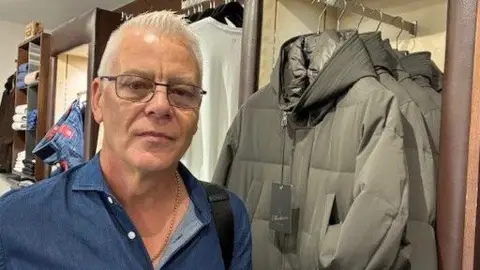
Robert Ryan in a menswear shop with coats and tops on hangers and shelves behind him.

Robert says the contactless limit can be a useful budgeting reminder

Robert Ryan, who had just bought a “winter-ish jacket” at a Harveys Menswear on Bank Street said he did not regard entering a four-digit number when paying as a hassle. Instead it could be a useful budgeting tool.

“I feel more secure in what I’m buying and it does give me a bit of a prompt to make sure I’m not overspending on my tap-and-go,” he said.

Richard Staplehurst, the owner of the store, said the majority of his customers were paying via a device.

He said that removing any obstacles to payment was great, but he did not want to be landed with a bill if a card was used fraudulently.

Stimulating the UK economy

The idea of removing the contactless limit was highlighted as one way the FCA was responding to the prime minister’s call to regulators to remove restrictions to create more economic growth.

The government has been striving to improve the UK’s economic performance, which has been slow for some time.

Other countries, such as Canada, Australia and New Zealand allow industry to set contactless card limits.

The FCA will consult on its proposals until 15 October.
Most say personal choices drive poverty: Survey

0


Most Americans say people’s personal choices play a major role in determining whether they stay in poverty, according to a new poll released Monday.

In the UChicago Harris/AP-NORC poll, 62 percent of respondents say personal choices are a “major factor” in why people stay in poverty, while 31 percent say they’re a “minor factor” and 6 percent say they’re not a factor.

Those who say people’s personal choices play a major role in poverty include 77 percent of Republicans, 56 percent of independents and 49 percent of Democrats.

No other option is deemed significant by a majority of respondents.

A plurality of respondents, at 46 percent, say “systems that are unfair” play a major role in keeping people in poverty — including 66 percent of Democrats, 52 percent of independents and 27 percent of Republicans.

Meanwhile, 37 percent overall say unfair systems play a minor role, and 15 percent say they play no role.

Just as many people say a “lack of government support’ plays a major role as those who say it plays a minor role, at 41 percent each, while 17 percent say it’s not a factor.

Among those who say insufficient government aid drives poverty include 61 percent of Democrats, 45 percent of independents, and 21 percent of Republicans.

And only 19 percent say “bad luck” plays a major factor—including just 25 percent of Democrats, 17 percent of Republicans and 14 percent of independents.

At the same time, however, a slim majority — at 54 percent — say the government is spending too little on assistance for those in need, while 22 percent say the government is spending too much, and the same share say the government is spending the right amount.

Bruce Meyer, a professor at the University of Chicago Harris School who helped craft and analyze the poll, told The Associated Press, “It seems like people are a little conflicted.”

“I think people probably realize, in part at least, the complexity of what leads people to get in trouble in terms of their economic circumstances,” he continued. “And I think a lot of people are generous at heart and will help people out and think the government should as well, even when individuals aren’t blameless.”

The survey includes 1,121 adults and was conducted by the University of Chicago Harris School of Public Policy and The Associated Press-NORC Center for Public Affairs Research on Aug. 21-25. The margin of error is 4 percentage points.

“You Buy it, But You Recognize That it’s Your Spec”

0


Richtech Robotics Inc. (NASDAQ:RR) is one of the stocks Jim Cramer shared insights on. During the lightning round, a caller asked for Cramer’s thoughts on the stock, and he remarked:

“Okay, here’s what you do with a stock like that: you buy it, but you recognize that it’s your spec. You’re allowed to have one real spec when you say you do a six or five-stock portfolio… And accept the fact that you could lose everything.”

Stock market data. Photo by Photo by Alesia Kozik

Richtech Robotics Inc. (NASDAQ:RR) designs and sells robotic solutions for service industry automation, including delivery, cleaning, and food and beverage systems. Its portfolio features robots like Matradee, Medbot, Titan, and Skylark, along with a self-owned cafe brand and related support services. On August 27, Freedom Brooker downgraded Richtech Robotics Inc. (NASDAQ:RR) to Sell from Buy while maintaining a price target of $2.50. The firm said the recent stock rally is ahead of the company’s fundamentals and expects a possible pullback as momentum slows.

While we acknowledge the potential of RR as an investment, we believe certain AI stocks offer greater upside potential and carry less downside risk. If you’re looking for an extremely undervalued AI stock that also stands to benefit significantly from Trump-era tariffs and the onshoring trend, see our free report on the best short-term AI stock.

READ NEXT: 30 Stocks That Should Double in 3 Years and 11 Hidden AI Stocks to Buy Right Now.

Disclosure: None. This article is originally published at Insider Monkey.

Trump says Doha strike ‘does not advance Israel or America’s goals’

0


Watch: Trump feels “very badly” about location of Israeli strike on Doha – White House

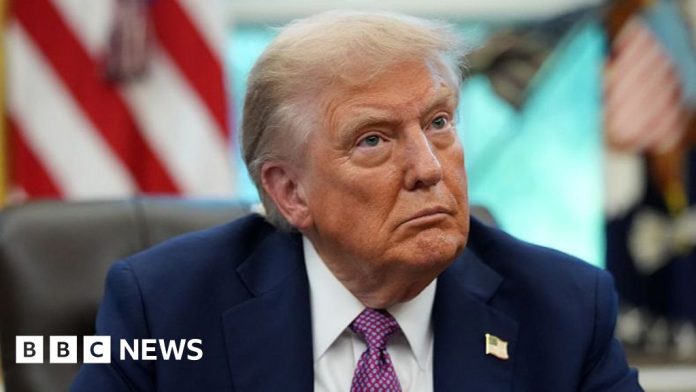
US President Donald Trump has said Israel’s strike on Hamas targets in Qatar “does not advance Israel or America’s goals”, adding that he feels “very badly” about the location of the attack.

In a Truth Social post on Tuesday, Trump said he was notified that Israel was attacking Hamas in the capital Doha by the US military, but it was “unfortunately, too late to stop the attack”.

“This was a decision made by [Israel’s] Prime Minister Netanyahu, it was not a decision made by me,” he said, before praising Qatar as a “strong ally and friend”.

Six people were killed in the strike, Hamas said, including one member of the Qatari security forces, but the group said its leadership team survived.

The Israeli military said it had conducted a “precise strike” targeted at Hamas senior leaders using “precise munitions”. Israeli media reported the operation involved 15 Israeli fighter jets, which fired 10 munitions against a single target.

Israel’s Prime Minister Benjamin Netanyahu said he authorised the strike and there would be “no immunity” for Hamas leaders.

In his statement on Tuesday, President Trump issued a rare rebuke of Netanyahu. “Unilaterally bombing inside Qatar, a Sovereign Nation and close Ally of the United States, that is working very hard and bravely taking risks with us to broker Peace, does not advance Israel or America’s goals,” he wrote.

White House spokesperson Karoline Leavitt said earlier that “The president also spoke to the emir and prime minister of Qatar and thanked them for their support and friendship to our country.”

“He assured them that such a thing will not happen again on their soil,” she added.

Trump said, however, that “eliminating Hamas, who have profited off the misery of those living in Gaza, is a worthy goal” and reiterated that he wants “ALL of the hostages, and the bodies of the dead released and this War to END, NOW!”.

The attack took place on early Tuesday afternoon, with footage showing a badly damaged building in Doha.

Qatar’s foreign ministry condemned the strike “in the strongest possible terms,” and said the attack was a “blatant violation” of international law.

It later said that Qatari officials were not notified of the Israeli strike ahead of time.

“The communication received from one of the US officials came during the sound of explosions,” said Qatar’s foreign ministry spokesperson Majed Al-Ansari in a post on X.

Qatar has hosted Hamas’s political bureau since 2012 and played a key role in facilitating indirect negotiations between the group and Israel since the 7 October attacks.

It has also been a close ally of the US. Around 10,000 American troops are stationed at a US airbase in al-Udeid, just outside Doha. In May, Trump announced a “historic” economic agreement signed between the two countries that he said is valued at least $1.2 trillion (£890bn).

Qatar has also recently gifted Trump a plane – valued at $400m – as an “unconditional gift” to be used as the new Air Force One, the official aircraft of the US president.

Hamas said their negotiating team in Doha survived Tuesday’s attack, adding that the action “confirms beyond doubt that Netanyahu and his government do not want to reach any agreement” for peace.

It said it holds the US administration “jointly responsible” due to its ongoing support of Israel.

The office for Israeli Prime Minister Netanyahu put out a statement shortly after the strike, which said the attack was “a wholly independent Israeli operation”.

“Israel initiated it, Israel conducted it, and Israel takes full responsibility,” the statement said.

A few days prior to the attack, Hamas said it welcomed “some ideas” from the US on how to reach a Gaza ceasefire, and that it was discussing how to turn them “into a comprehensive agreement”.

In its statement, the White House said Trump believes the “unfortunate” attack “could serve as an opportunity for peace,” and that Netanyahu had expressed to him after the attack that “he wants to make peace and quickly”.

Meta in hot seat again over whistleblower safety allegations

0


Meta is facing Congress’s ire once again over its approach to online safety, after several current and former employees came forward with allegations that the tech giant attempted to “bury” findings about safety concerns across its platforms — particularly newer virtual and augmented reality products. 

Six current and former Meta employees detailed concerns about the company’s handling of user data and its approach toward safety research following previous whistleblower complaints in documents shared with Congress. 

“Meta has knowingly, willfully, intentionally swung the door wide open on exposing these children to social media harms when they are on their platform,” Sen. Marsha Blackburn (R-Tenn.) said Tuesday ahead of a hearing with two of the whistleblowers, former Meta researchers Jason Sattizahn and Cayce Savage. 

They have accused Meta of doctoring and restricting research into safety concerns in an effort to avoid legal liability, noting a “vast and negative change” following the revelations by Facebook whistleblower Frances Haugen in 2021. 

Haugen appeared before Congress nearly four years ago, alleging the company was aware of the negative impacts of its platforms on young users but chose to prioritize profits over people.  

After these revelations, the whistleblowers said several research areas, including youth and product harm issues, were deemed “sensitive” and came under the scrutiny of Meta’s legal team. 

“Put differently: after Ms. Haugen exposed Meta’s internal research which established leadership’s explicit knowledge about the platform’s harms toward children, Meta redefined the scope of the research in order to establish plausible deniability while simultaneously publicly stating that it has increased tools and systems to mitigate those harms,” a disclosure to Congress reads. 

One whistleblower, referred to as Alpha to protect their anonymity, sought to study virtual reality (VR) users’ understanding of safety tools but was allegedly told by Meta’s legal team not to record data from participants who discussed harms. If this was captured, they were directed to delete the data or eject the participants from the study. 

Shortly after, Alpha’s manager reportedly insisted on running a VR study through a third-party vendor, which they said was “necessary to erase risky data collected in the study.” 

Amid a push to lower the minimum age for its VR products to children as young as 10 years old, another whistleblower, referred to as Beta, alleged that Meta’s legal team slowed down research into age verification and eventually canceled the project with no explanation. 

Another survey about Meta VR harms conducted by Alpha allegedly faced “heavy restrictions,” including requirements that it be run through a third-party vendor, eliminate questions and responses deemed risky and avoid data collection on harms to young users. 

They were reportedly later directed to remove survey questions about emotion, well-being and psychological harm, in addition to removing or editing responses about sexual harm. 

A Meta legal team member, Kristen Zobel, justified the restrictions “by stating that the company did not want to have data showing the psychological and emotional harm its products generate if Meta was audited and in light of public opinion and previous ‘leaks,’” according to the disclosure. 

A separate whistleblower, referred to as Charlie, raised concerns to Meta’s director of VR research, Tim Loving, about a directive from the legal team not to collect data on mentions of VR users younger than 13.  

After saying this made them feel “icky,” Loving reportedly responded that they were “going to have to swallow that ick.” 

Sen. Richard Blumenthal (D-Conn.) on Tuesday took aim at the Metaverse, the company’s virtual world accessible through its virtual and augmented reality products. 

“Metaverse is a cesspool, filled with pedophiles, exploiters, groomers, traffickers. And Meta knows it,” he said. “They know it, and they have stifled and suppressed the research and truth telling that would provide Congress with all of the facts that are needed to support the Kids Online Safety Act and other measures that will protect children.” 

Blumenthal and Blackburn have led the push to pass the Kids Online Safety Act, legislation that aims to regulate the features offered to children online and reduce the addictive nature and mental health impacts of platforms. 

“Meta took a lesson from Frances Haugen,” Blumenthal added. “It was the wrong lesson. Their lesson was no more documents, no more research, no more truth telling. We don’t want to see it, hear it.” 

Meta spokesperson Andy Stone pushed back on the allegations, arguing the claims are “nonsense” and based on “selectively leaked internal documents” selected to “craft a false narrative.” 

“The truth is there was never any blanket prohibition on conducting research with young people and, since the start of 2022, Meta approved nearly 180 Reality Labs-related studies on issues including youth safety and well-being,” he said in a statement. 

The recent revelations come as the company, which has previously faced scrutiny over its approach to kids’ safety, has separately faced backlash over how its AI chatbots interact with children.  

Reuters reported last month that a Meta policy document featured examples suggesting its AI chatbots could engage in “conversations that are romantic or sensual” with children. 

Meta said this was an error and that it removed the language. It also told TechCrunch it was adjusting its approach to teen safety, training chatbots not to engage with young users on self-harm, suicide, disordered eating or inappropriate romantic conversations. 

Just last year, Meta CEO Mark Zuckerberg was hauled before Congress, alongside several other tech leaders, to discuss kids’ safety concerns. Following a heated exchange, Zuckerberg turned around to face parents and activists and apologized. 

“It was in this very room with this very committee, maybe it was in a different room but the same committee, where Mark Zuckerberg actually turned to some families who had lost children to drugs and said, ‘I’m sorry, I’m sorry this happened,’” Sen. Amy Klobuchar (D-Minn.) said at Tuesday’s hearing. “Well, sorry is not enough anymore.” 

Technical Assessment: Bullish in the Intermediate-Term

0


Technical Assessment: Bullish in the Intermediate-Term

Cozy, Stylish Layers From Top Brands

0


This fall, you can expect to see everyone rocking brown sneakers, collegiate-inspired rugby shirts, and dark academia-themed looks.

But there’s another fashion trend that you’re bound to see everywhere this fall, and that trend is ponchos.

True fashionistas will know that ponchos made a huge splash this summer, but the accessory is now proving that it can transcend seasons. 

That’s because ponchos make the ideal summer-to-fall (or fall-to-winter) transitional piece. They provide just enough warmth to tough out those in-between months when the weather is confused about which season it is.

I find ponchos an extremely chic way to layer, whether you style it atop a tank top, long-sleeve bodysuit, or even a turtleneck when the temperatures really start to plummet. We love a versatile piece!

Additionally, ponchos come in tons of different styles— there are chunky knits (which make great alternatives to sweaters), luxe cashmere ones you can swaddle yourself in, cropped crochet styles, and even chiffon ones you can wear on a night out.

Ready to embrace all of the cold weather trends? Shop the best fall and winter ponchos from Anthropologie, Free People, Quince, and so much more.

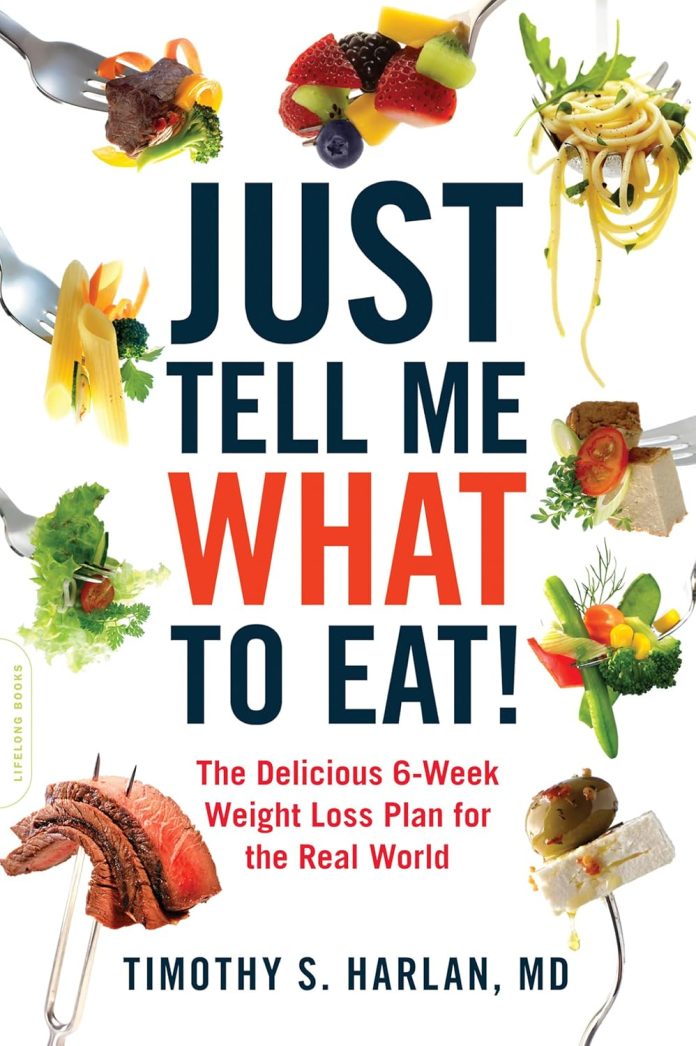
Just Tell Me What To Eat!

0


Price: $15.00 - $10.74
(as of Sep 09, 2025 21:54:44 UTC – Details)


Dr. Timothy Harlan has counseled thousands of overweight patients searching for weight-loss answers. He noticed that patients were usually told what they could not eat, rather than all the wonderful foods they could eat. Now, physician-chef Harlan provides a solution: an exact prescription for what to eat, how to cook it, when to eat it, and, best of all, why eating great food is the best health decision you will make.
Just Tell Me What to Eat! is a medically based weight-loss plan for the real world, for anyone tired of dubious fad diets, restricted meals, and unappetizing strategies. It emphasizes a Mediterranean diet with high-quality calories and home cooking whenever possible. Dr. Harlan offers a “food mantra” for each day, paired with a menu and easy recipes. By the time you incorporate all the lessons in your diet, you will have naturally slimmed down and changed your eating habits for the better
With chapters like “What You Should Eat for Breakfast,” “How to Arrange Your Dinner Plate,” and “Carbs are Good for You Too!” this unique day-by-day plan will help even the most frustrated dieters achieve a slimmer, healthier, and happier lifestyle.
Publisher ‏ : ‎ Balance
Publication date ‏ : ‎ September 11, 2012
Language ‏ : ‎ English
Print length ‏ : ‎ 319 pages
ISBN-10 ‏ : ‎ 0738215597
ISBN-13 ‏ : ‎ 978-0738215594
Item Weight ‏ : ‎ 13.6 ounces
Dimensions ‏ : ‎ 6 x 0.8 x 9 inches
Best Sellers Rank: #984,076 in Books (See Top 100 in Books) #3,145 in Weight Loss Diets (Books) #3,400 in Other Diet Books
Customer Reviews: 3.8 3.8 out of 5 stars 197 ratings var dpAcrHasRegisteredArcLinkClickAction; P.when(‘A’, ‘ready’).execute(function(A) { if (dpAcrHasRegisteredArcLinkClickAction !== true) { dpAcrHasRegisteredArcLinkClickAction = true; A.declarative( ‘acrLink-click-metrics’, ‘click’, { “allowLinkDefault”: true }, function (event) { if (window.ue) { ue.count(“acrLinkClickCount”, (ue.count(“acrLinkClickCount”) || 0) + 1); } } ); } }); P.when(‘A’, ‘cf’).execute(function(A) { A.declarative(‘acrStarsLink-click-metrics’, ‘click’, { “allowLinkDefault” : true }, function(event){ if(window.ue) { ue.count(“acrStarsLinkWithPopoverClickCount”, (ue.count(“acrStarsLinkWithPopoverClickCount”) || 0) + 1); } }); });

Customers say

Customers find the book informative and helpful for weight loss, with one noting it provides a 6-week meal plan with actual food. The recipes receive positive feedback, and customers describe the meals as delicious. While customers find the content clear, they mention it can be a bit cumbersome to use.

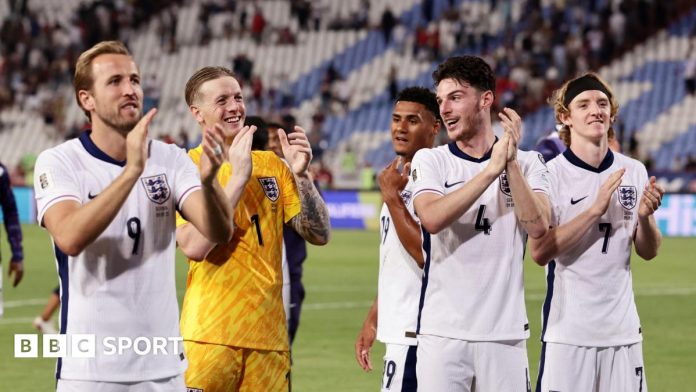
England player ratings: How players got on in World Cup qualifier against Serbia

0


Jordan Pickford: Had very little to do as England dominated pretty much from start to finish. He won’t be complaining. 6

Reece James: Always provides quality down the right and the fact he has played two games in quick succession bodes well for his fitness given his history of injury. 6.5

Ezri Konsa: One error in the first half when England were 2-0 up, but otherwise a professional performance from the central defender – and his first international goal to boot. 7

Marc Guehi: Is he England’s most influential central defender now given John Stones’ injury problems? Didn’t put a foot wrong here and got off the mark for England. 7.5

Tino Livramento: The versatile full-back linked well with Newcastle team-mate Anthony Gordon down the left. Full of energy and found a good balance between defence and attack. 7

Elliot Anderson: Controlled performance in central midfield and looks to have cemented his place in the squad. Encouraging week for the Nottingham Forest man. 8

Declan Rice: Appears to have made the permanent switch to number eight for club and country with a licence to break forward at will. His dead-ball delivery assisted two of England’s five goals. 8.5

Noni Madueke: Emerging as a very important player for Thomas Tuchel – an assist against Andorra and his first England goal here. An important few days for the Arsenal winger. 7.5

Morgan Rogers: A very promising display from the Aston Villa man. Made things happen in the final third and Serbia had problems picking him up between the lines. Laid on England’s second for Madueke. 7.5

Anthony Gordon: Bright down the left and provided the sort of penetration England lacked against Andorra. Justified his selection. 7

Harry Kane: Keeps scoring goals for club and country. Just as important for the national team as he was five years ago. 7

John Roberts temporarily allows Trump admin to freeze billions in foreign aid

0


U.S. Chief Justice John Roberts temporarily allowed the Trump administration to freeze billions of dollars in foreign aid as the Supreme Court considers the president’s emergency appeal.

The temporary, administrative stay puts on hold a lower court’s ruling directing the administration to spend some $4 billion in funds Congress approved for aid programs worldwide by the end of the month.

Roberts issued the temporary order because he handles emergency appeals arising from the nation’s capital by default.

It comes after the Justice Department filed an emergency application at the high court, contending that the lower court’s injunction would force the administration to obligate those funds at “breakneck speed” to meet the Sept. 30 deadline — even as it has asked Congress to rescind them.  

One of Trump’s first acts back in the White House was pausing about $30 billion in foreign aid. The move prompted swift legal action from global health and aid groups that said the funds are vital to humanitarian efforts and Trump exceeded his authority in halting them.

An estimated $10.5 billion of the total $30 billion at stake is set to expire on Sept. 30, Solicitor General D. John Sauer said in the government’s application, but the government planned to obligate $6.5 billion of those funds by the deadline.

That left the roughly $4 billion, which Sauer said spending would run contrary to U.S. foreign policy. Last month, Trump notified Congress he would move to cancel the aid using a rare “pocket rescission.”  

Trump asked Congress to cancel the funds under the Impoundment Control Act (ICA), and while lawmakers consider that request, the administration may withhold the funds for 45 days. The funds must be released if lawmakers reject the request.

The Trump administration argued to the Supreme Court that U.S. District Judge Amir Ali’s preliminary injunction would force the release of those funds. 

Roberts’s temporary order, which contained no explanation and does not necessarily indicate how the court will decide the case, only pauses the lower court’s order regarding the funds subject to Trump’s Aug. 28 recission proposal to Congress.

The plaintiffs opposed an administrative stay. He directed them to respond to the Trump administration’s application by Friday afternoon.