Vaccine policy is rapidly fracturing along party lines under Health and Human Services Secretary Robert F. Kennedy Jr., and states are prepping for more upheaval following a meeting of the CDC’s Advisory Committee on Immunization Practices (ACIP) in Atlanta next week.
Public health leaders are anticipating that the panel, which Kennedy stacked withvaccine skeptics, could roll back coverage of key vaccines ahead of the winter respiratory season.
To bolster vaccine access and insulate themselves as much as possible, legislators, governors and health officials are passing bills and issuing orders to clarify that pharmacists can administer COVID-19 and other vaccines.
A patchwork of regulations across the United States has added to confusion around vaccines. To date, at least Virginia, Delaware, Maryland, New Jersey, New York, Connecticut, Massachusetts, Colorado, and Pennsylvania have taken steps to try to ensure that people who want a COVID-19 vaccine can get the shot.
The Food and Drug Administration recently approved updated COVID-19 vaccines, but only for adults 65 years and older or those with certain underlying medical conditions that put them at greater risk for developing severe illness from the disease.
But the agency did not specify what conditions place a person at greater risk, sparking widespread confusion over who is eligible to get the shot, how to get them, and in some cases, how to pay for them.
States have always been able to make their own public health policies, but the federal government’s recommendations have helped align and standardize guidance.
At least 18 states and Washington, D.C., base their pharmacists’ vaccination authority on ACIP recommendations. A positive recommendation from the panel means that virtually all insurers will cover the vaccines for free. But if they don’t make a recommendation, there’s no guarantee insurers will cover the shots.
Blue state leaders are wary of the panel and have been outspoken against the changes Kennedy has made.
Welcome to The Hill’s Health Care newsletter, we’re Nathaniel Weixel, Joseph Choi and Alejandra O’Connell-Domenech — every week we follow the latest moves on how Washington impacts your health.
More than 70 reproductive groups are asking the Trump administration to call off the planned destruction of roughly $10 million of usable birth control products. Planned Parenthood is leading the most recent charge to save the contraceptives and sent a letter Friday to Secretary of State Marco Rubio with 77 co-signers. In the letter, the groups write that they “strongly oppose” the administration’s “cruel and wasteful” decision …
Sen. Bill Cassidy (R-La.), chair of the Senate Committee on Health, Education, Labor and Pensions, called on Health and Human Services Secretary Robert F. Kennedy Jr. to publicly support the whooping cough vaccine as Louisiana experiences one of the worst outbreaks in recent history. In 2024, six times the number of whooping cough — or pertussis — cases were recorded than the prior year. According to the Centers for Disease …
The Los Angeles County Department of Public Health this week reported the death of a school-aged child due to a rare complication occurring from a measles infection they experienced as an infant. In a statement Thursday, the health department said the child had become infected before they were eligible to receive the measles vaccine. Their death was due to subacute sclerosing panencephalitis (SSPE). The department described …
Cox: ‘Social media is a cancer on our society right now’
Utah Gov. Spencer Cox (R) on Friday urged people to turn away from social media, calling it a “cancer on our society” after announcing that the suspected gunman in the killing of Charlie Kirk is in custody. At the end of his press conference announcing 22-year-old Tyler Robinson as the suspected gunman in the shooting at Utah Valley University, Cox urged people to log off of social media, citing the violent imagery …
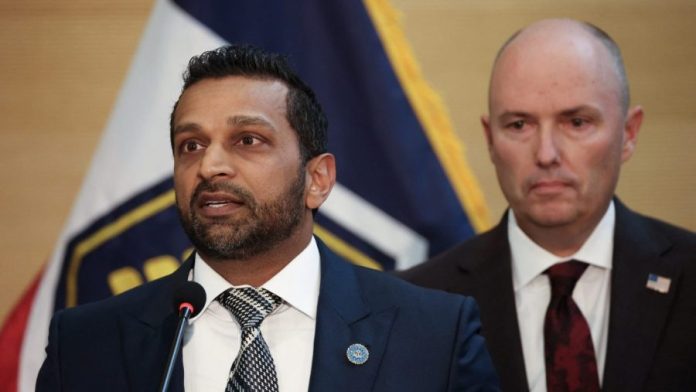
FBI Director Kash Patel reportedly criticized subordinates in a tense Thursday morning meeting over their handling of the investigation into Charlie Kirk’s killer.
More than 200 agents joined the online call, which was first reported by The New York Times. An official attending the meeting told the Times that Patel criticized the agency’s “Mickey Mouse operations,” saying it was one of the few times in the call that he wasn’t cursing.
During the call, Patel and FBI Deputy Director Dan Bongino emphasized the need to catch Kirk’s killer. Patel also criticized Salt Lake City agents for not providing him with a photo of the suspected killer until 12 hours later, the Times reported.
Both Patel and Bongino flew to Utah on Thursday to personally oversee the investigation.
The FBI arrested Tyler Robinson, 22, the suspect in Kirk’s shooting, on Friday. According to Utah Gov. Spencer Cox (R), Robinson was apprehended after a family friend reached out to the Washington County Sheriff’s Office, stating Robinson “confessed to” his family “or implied that he had committed the incident.”
Kirk was shot Wednesday at an event at Utah Valley University. Patel said in a Wednesday evening post on social platform X that the FBI had taken a “subject for the horrific shooting” into custody, only to later announce the subject had been released after being interrogated by law enforcement.
The Wednesday blunder has cost Patel. Several MAGA allies criticized the director over his leadership, casting doubt on whether he was the right person to head the FBI.
“He performed terribly in the last few days, and it’s not clear whether he has the operational expertise to investigate, infiltrate, and disrupt the violent movements—of whatever ideology—that threaten the peace in the United States,” conservative activist Chris Rufo wrote on X.
Patel joined the FBI after a career as a federal prosecutor and Defense Department chief of staff. His lack of law enforcement experience led to some former GOP officials’ reservations against him stepping into the position.
Steve Bannon, a former Trump administration adviser, said he didn’t see the shooter’s apprehension as “great law enforcement work” speaking on his “Bannon’s War Room” show directly after the conference.
“I don’t know why Kash flew out there, you know, thousands of miles, to give us, ‘Hey, working partnerships and our great partnership in Utah’ — OK, got that,” Bannon said.
More Nato countries will move troops and fighter jets eastwards after more than a dozen drones entered Polish airspace on Wednesday.
Denmark, France and Germany have joined a new mission to bolster the military alliance’s eastern flank. Other Nato allies are expected to take part later.
Tensions have been high across Europe since Poland accused Russia of an unprecedented incursion. Some of the 19 drones that entered Polish territory were shot down, while others crashed into fields and even a house in eastern Poland.
Warsaw said the incursion was deliberate, but Moscow downplayed the incident, saying it had “no plans to target” facilities in Poland.
Drones and missiles have occasionally veered into countries bordering Ukraine, including Poland, during Russia’s full-scale invasion – but this was the most serious incident of its kind since the war began in February 2022.
Polish Prime Minister Donald Tusk said it was “the closest we have been to open conflict since World War Two”.
Denmark will contribute two F-16 fighter jets to support Poland’s air defence, as well as a warship, its defence ministry said.
Danish Prime Minister Mette Frederiksen said: “We must not be naive. Putin will stop at nothing, and he is testing us. Therefore, it is crucial… Denmark is contributing to this.”
France has already said it will contribute three Rafale fighter jets, and Germany has pledged four Eurofighters.
The UK is “fully committed” to help strengthen the Eastern Sentry operation, the Ministry of Defence said in a statement, adding that it will provide more details soon.
On Friday, European countries and the US backed Poland during an urgent UN Security Council session in New York discussing the incursion.
“The United States stands by our Nato allies in the face of these alarming airspace violations,” acting US Ambassador to the UN Dorothy Shea said. “And rest assured, we will defend every inch of Nato territory.”
She noted that since US President Donald Trump and his Russian counterpart Vladimir Putin had held their peace summit in Alaska nearly a month ago, Moscow had intensified its bombing of Ukrainian cities and infrastructure.
European allies have said these large-scale aerial assaults indicated Putin had no interest in bringing the war in Ukraine to a close. Kyiv has itself probed deeper into Russian territory, hitting refineries, fuel depots and logistics hubs.
Kremlin spokesman Dmitry Peskov told reporters on Friday that there had been a “pause” in peace negotiations, blaming Ukraine’s European allies for “hindering” the process.
Trump – who has so far resisted calls for greater sanctions on Russia while pursuing a peace deal – also warned that his patience was “running out fast”.
He told Fox News: “It’s amazing. When Putin wants to do it, [Ukrainian President Volodymyr] Zelensky didn’t. When Zelensky wanted to do it, Putin didn’t.
“Now Zelensky wants to and Putin is a question mark. We’re going to have to come down very, very strong.”
While addressing the UN on Friday, Poland’s Secretary of State Marcin Bosacki held up photos of one of the downed drones and a house one had damaged.
“We know – and I repeat – we know that it was not a mistake,” he said.
But Russia continued to insist it had not targeted Poland, with ambassador to the UN Vasilly Nebenzia saying: “The maximum range of the drones used in this strike did not exceed 700 kilometers, which makes it physically impossible for them to have reached Polish territory.”
He said Moscow was willing to discuss the matter with Poland “if the Polish side indeed is interested in reducing tensions rather than fomenting tensions”.
Belarus – which sits between Poland, Russia and Ukraine, and is allied to Moscow – has previously said the drones had veered off course after their navigation systems were jammed.
The Netherlands and Czech Republic have already said they would send defences to Poland, while Lithuania will receive a German brigade and greater warning of Russian attacks on Ukraine that could cross into its airspace.
Meanwhile, Russia and Belarus began joint military drills on Friday, which they stage every four years.
They again rejected accusations that these posed a danger to neighbouring countries. The drills include exercises close to the border with Poland and Lithuania and in the Baltic and Barents seas.
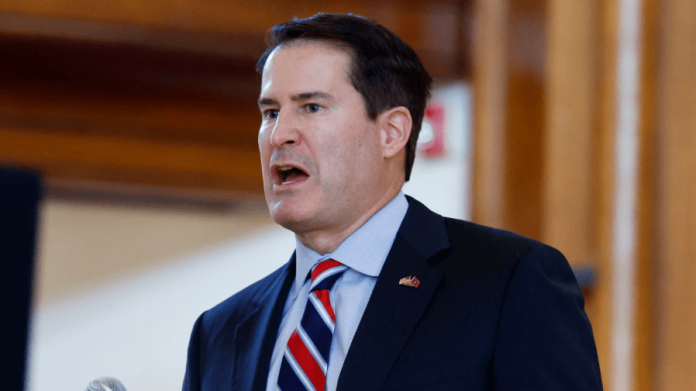
Rep. Seth Moulton (D-Mass.) said he’s received threats over his Thursday statement urging the Trump administration to help cool the nation’s political temperature after the shooting of conservative activist Charlie Kirk.
“My office has received an extraordinary number of violent and graphic threats yesterday and today from right-wing individuals online and over the phone—directed toward me, my family, and my staff—after I pointed out the simple fact that President Trump should join [House] Speaker [Mike] Johnson [R-La.] and other level-headed Republicans in condemning political violence, not inciting it further,” Moulton wrote in a Friday statement on social platform X, with a screenshot of hateful comments under his social media posts.
The Massachusetts Democrat said the “solution” to political disagreement in America is “never violence.”
“It should be easy for everybody to say that,” he told his followers, urging GOP lawmakers to condemn violence “just as I and many other Democrats condemn violence by the left.”
Lawmakers across the aisle condemned the assassination of Kirk at Utah Valley University on Wednesday. Several high-level Democrats, including former Presidents Biden and Obama, also spoke out against the violence.
“We don’t yet know what motivated the person who shot and killed Charlie Kirk, but this kind of despicable violence has no place in our democracy. Michelle and I will be praying for Charlie’s family tonight, especially his wife Erika and their two young children,” Obama wrote in a public statement.
President Trump, however, blamed the political left for the loss of Kirk in a Wednesday night video message from the Oval Office.
“Radical left political violence has hurt too many innocent people and taken too many lives. Tonight, I ask all Americans to commit themselves to the American values for which Charlie Kirk lived and died,” Trump told the public.
Shortly after the shooting, GOP Rep. Thomas Massie (Ky.) called on Trump to tone down his rhetoric.
“I think that’s ridiculous rhetoric,” Massie told The Hill.
“It’s amusing,” he added. “It doesn’t offend me that he’s over the top with the rhetoric, but some people take it literally, and he should probably tone that down himself.”
Still, some Republican lawmakers, such as Rep. Nancy Mace (S.C.), have openly blamed those with differing political views for Kirk’s assassination.
“Democrats owned what happened today,” Mace told reporters outside the Capitol shortly after the news of the shooting broke. “Just because you speak your mind doesn’t mean you get shot.”
Kang is a slight figure but when she walks into the canteen room in heels at Cobdown Park for the exclusive interview with BBC Sport, her presence can’t be ignored.
She shakes hands with everyone, introducing herself warmly before taking her seat, careful not to ruin her glamorous dress.
It is clear Kang is a highly-intelligent woman from early conversations. She has humour, compassion and a lot of knowledge in what she talks about.
Her multi-club ownership model has become a topic of conversation as women’s football continues to grow and explores new ways to seek revenue.
She has invested heavily in London City Lionesses’ infrastructure, playing staff and female-specific research and it has paid off so far.
Will it become a model that others follow?
“I don’t know if they say ‘we will follow this model’ but I think if you come into women’s football and have real, genuine interests of supporting women’s football, it’s a no-brainer conclusion,” says Kang.
“We don’t have the huge media deal that the men have. We don’t sell-out stadiums yet. We don’t have hundreds and millions of dollars of corporate sponsorships. But we still want to advance women’s football by investing in it.
“So what’s the natural conclusion? You have to build a scale. There is no reason why every team should invest in female research. We should pool that research together and share it. It’s the same with global scouting.
“I know it has bad connotations on the men’s side with greed and all those things, but in women’s football it’s a necessity until we have decent commercial resources available.”
Kang glows with pride at the work being done behind her, turning to point at the training ground’s construction work to improve facilities.
She has used the Premier League as a benchmark on the standards required for success and has designed, with architects, a plan she wants to replicate across all her clubs to provide the best environment.
Kang returns to this when asked if it is upsetting that some suggest she signs players from her other clubs in a way of manipulating the market.
Does she sign players from Paris St-Germain, Lyon’s rivals, to benefit her French club? It is one of the main criticisms of multi-club ownership – a model which is not universally liked.
“I understand it because they haven’t seen this yet so it’s only natural for people to assume that because in the men’s world, [it is perceived that] teams buy players so they can sell them for a much higher price,” adds Kang.
“In the absence of any other alternative, it’s not unreasonable to think, ‘oh, that is what she is doing’. I get that. My job is to ensure I don’t do that so they can appreciate they are not the same models.
“It is not about building a feeder system – that is not the purpose. It is to bring critical scale so we can invest in all the necessary infrastructure and research how our players need to be the best athletes. So we can put out the best product, so we can bring more people into the stadiums, and the media finds women’s sport attractive.
“It’s all related and all necessary. While we’re talking about comparisons… women’s football is very different to men’s football. We should really treat this differently.”
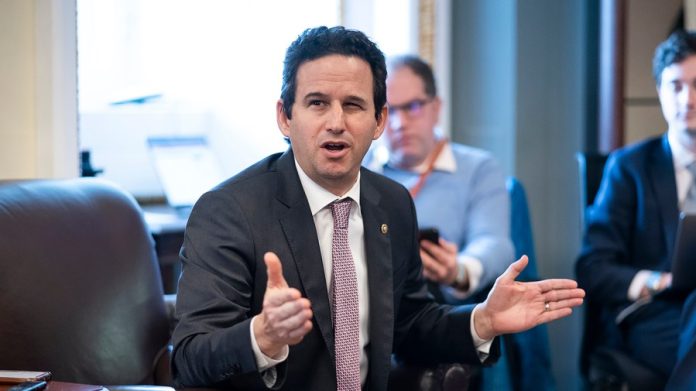
Sen. Brian Schatz (D-Hawaii) on Friday urged the public not to focus on the political alignment of the suspected Charlie Kirk shooter but to focus on mental well-being instead.
“What f****** difference does it make if this murderer was left or right. Pull yourself together, read a book, get some exercise, have a whiskey or walk the dog or make some pasta or go fishing or just do anything other than let this algo pickle your brain and ruin your soul,” Schatz posted on the social platform X.
He later quoted a post from Utah Gov. Spencer Cox (R), who referred to social media as a “cancer.”
“I know this guy is a Republican and all but I swear you could win all the electoral votes with this message in 28,” Schatz wrote in a follow up post on X.
Online discourse has fermented with theories about the motive behind Kirk’s shooting and graphic footage of his death.
Prior to Kirk’s death, Robinson shared disdain for Kirk’s rhetoric with family members at dinner, according to law enforcement officers.
Robinson is currently registered as an unaffiliated voter in Utah, but allegations about his political alignment has been publicly debated by Democrats and Republicans in recent days.
“Radical left political violence has hurt too many innocent people and taken too many lives. Tonight, I ask all Americans to commit themselves to the American values for which Charlie Kirk lived and died,” Trump told the public on Wednesday.
Illinois Gov. JB Pritzker later addressed reporters telling them, “The president’s rhetoric often foments” violence in the country.
However, Rep. Jared Moskowitz (D-Fla.) condemned divisive statements blaming either party for recent threats against elected officials.
“If the left is going to blame the right, and the right is going to blame the left, and we’re going to continue to say ‘It’s your fault,’ and we’re not collectively going to try to bring it down together, then this cycle is just going to continue to go on,” he told Fox News Digital.
Three series of The Summer I Turned Pretty have been building up to which brother Belly chooses
“Please tell me one of you watches The Summer I Turned Pretty???” reads a text from one of my best friends in our group chat.
We’re both in our 30s, married, have busy careers, and yet we’re hooked on a TV series about a teenage love triangle. The kind of obsession that involves shouting at the screen like it’s a football match, and then taking a week to recover from the emotional turmoil.
The third series of The Summer I Turned Pretty (TSITP) follows Isabel Conklin (Belly to her friends) as she makes what’s expected to be her final decision about which brother – Conrad or Jeremiah Fisher – she will end up with.
It’s Prime Video’s most popular show in the UK right now and social media is full of fan-made clips and opinions about whom she should choose. The much-anticipated finale airs on 17 September.
So, what is it that’s making us so emotionally invested in a romantic dilemma that doesn’t even exist?
Everyone loves a love triangle
Erika Doss/Prime
Conrad (in the black shirt) was Belly’s first love, Jeremiah came later
Love triangles aren’t a new storytelling device. TSITP could be compared to throwback TV shows such as The Vampire Diaries and One Tree Hill (though the latter features half-brothers rather than full brothers like Conrad and Jeremiah).
Warning: The below may contain potential spoilers – especially if you haven’t watched series three of the show
“It very much [encapsulates] everything that was really good about 2000s romcoms and those angsty, yearning dramas,” says fan Nathan Scott (no, not the One Tree Hill character). “All the looks across the room, the forbidden little touches and everything – it’s all there.”
Nathan used to see his fiancee Oliwia Netter, both aged 25 and living in London, watching TSITP, and initially his attitude was “this is rubbish and I’m not watching it”.
But after he glimpsed more and began asking questions, Nathan admits he binge-watched the first series in three days.
Nathan Scott
Nathan credits fiancee Oliwia for introducing him to both Taylor Swift and TSITP
Superfan Varun Lobo, 26, got into TSITP a couple of years ago but had not read any of the books, written by US author Jenny Han, on which the show is based.
He agrees it builds on storytelling elements that have worked well before.
“It really kind of evokes a nostalgia that takes you back to your first teenage crushes and teenage romances,” he says. Controversially, Varun is Team Jeremiah.
Becca Kittler, 30, read the books as a teenager in the US and has been Team Conrad from the start.
“I think everyone has their person and I know that Conrad is Belly’s. There’s that spark, that tie they have with each other, the history.”
Varun Lobo
Varun is proud of his posters that he says bring a little bit of Cousins to Nottingham
But isn’t a love triangle involving brothers a bit much, even for fiction?
“At the end of the day, it’s about escapism,” Varun explains, pointing to how he feels about the current state of the world. “Sometimes it’s nice to just take yourself out of it and go to Cousins Beach.”
Unafraid to discuss serious issues
Michelle Elman, 32, is also an avid TSITP viewer and works as a life coach in London. Despite the show skipping over some of the moral quandaries that arise from dating a pair of brothers, she appreciates how it deals with significant issues.
Death – a theme that also features in Dawson’s Creek, another popular show from the turn of the millennium – hangs over the second and third series of TSITP.
“It has a lot of threads around grief, as the boys lose their mum, and so there are some really serious undertones to it,” Michelle says. “But they are presented in quite a digestible way – I think that’s also where it’s resonated with some people.”
Michelle knows of mothers and daughters who watch the show together and use it as an opportunity to discuss how to deal with difficult situations – whether it be grief, dating problems or hurt feelings.
There is plenty of this to go around: for example, when Jeremiah gets drunk and makes unpleasant comments, or when Conrad fails to communicate his feelings.
The hype around TSITP has been fuelled by social media, particularly on TikTok where fans of the books speculate about the ending of the TV series.
This became more frenzied when Han teased the seriescould end differentlyto the book.
Others have created videos dedicated to the couple they’d like to see get together and many of these are set to songs by Taylor Swift, whose music features prominently in the show’s soundtrack.
Fans of Swift – who famously drops hidden messages and hints about future projects – have also become convinced Han has been planting seeds throughout the series to foreshadow the outcome.
Erika Doss/Prime
The bathtub scene – that’s all
Varun has had posters used to advertise the show reproduced at a print shop near his home in Nottingham. He’s framed them and they now adorn his dining room.
“That is how much I love the show,” he laughs.
Becca is particularly grateful for the online community that has built up around TSITP on forums like Reddit.
“I will forever be eternally grateful to this show. Because of it, I’ve been able to find some of my best friends and break out of my comfort zone,” she says.
Meanwhile, my group chat is bound to be pinging come finale day when it will become clear if my friends and I have backed the winning team (Team Conrad) – or not.
Like me, Nathan also feels watching the show is a bit like following a sport.
“The hype is like a Super Bowl or Champions League final,” he tells the BBC.
“I get the same feeling watching Conrad and Belly moments as I do when watching Liverpool… The feeling I got for the bathtub scene, or the peaches scene, is the same to me as a last-minute winner at Anfield.
Widely seen as a nightmare economic scenario, it’s the rare double blow of rising prices and weak growth, squeezing consumers at the checkout line and in the job market.
“The whiff of stagflation is getting stronger,” Harvard economics professor Jason Furman wrote on the social media platform X Thursday. “There are no good options for the Fed given the set of circumstances we’re facing.”
Furman’s warning followed new Labor Department data showing consumer prices rose 2.9 percent in August from a year earlier, the fastest annual pace since January. At the same time, hiring has slowed sharply, and the unemployment rate — now 4.3 percent — is at its highest level in four years.
Those conditions have put Fed policymakers in a tough spot: ease interest rates to support the labor market or keep them higher for longer to bring inflation down to the 2 percent target.
It’s a version of the same dilemma that haunted monetary officials in the 1970s and early 1980s, when stagflation emerged, eventually driving both inflation and unemployment into double digits.
Today’s picture isn’t nearly as dire, and stagflation — if it comes back — could look different. Here’s what to know.
What is ‘stagflation’?
“Stagflation,” a mash-up of “stagnation” and “inflation,” describes the unusual situation where the economy stalls while the cost of living keeps surging.
It’s uncommon because it defies conventional economic logic: a slowing economy typically cools demand, which helps keep prices in check. Stagflation flips that script — costs rise even as growth sputters.
The term itself was coined in 1965 by British politician Iain Macleod, who described it as “the worst of both worlds.”
Roughly a decade later, Americans became familiar with the concept when inflation ran above 9 percent and unemployment hovered near that level in 1975. Several factors drove the spike, but a series of oil price shocks and loose monetary policy were key drivers, and the problem lingered for years.
Today’s 2.9 percent inflation and 4.3 percent unemployment look tame by comparison, but both are currently trending the wrong way, tying the Fed’s hands.
There’s no clear line for when stagflation starts, and it’s possible the U.S. could see a milder version that never reaches the extremes of the 1970s and early 1980s.
Why is stagflation a concern?
Stagflation hurts consumers by straining wallets when times are already tough, and it’s a headache for the Fed because it’s so hard to fight.
Policymakers have two main goals: maximum employment and stable prices, but stagflation pits them against each other.
Normally, the Fed hikes interest rates to tame inflation and cuts them to fight job losses, but when both problems flare at once, there’s no simple playbook.
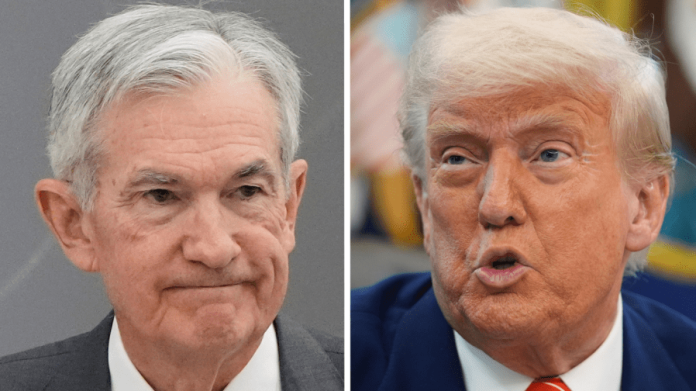
In April, Fed Chair Jerome Powell warned that President Trump’s new tariffs were “significantly larger than expected” with likely effects that included “higher inflation and slower growth” — a recipe for stagflation.
Since then, inflation has ticked up, and the job market has softened, with the economy shedding positions in June for the first time in 4.5 years. Separate data released this week showed the labor market has been weaker than previously thought for some time, even before Trump took office.
The Fed is expected to cut rates at its meeting next week, a move to shore up jobs even though inflation is still running above its 2 percent goal.
“The harder question they’re going to start debating: How much conviction do they really have to keep cutting, as inflation inches further away from target?” Bankrate analyst Sarah Foster wrote in a note Thursday, warning of stagflation risks.
Why stagflation may look different this time
Stagflation could return, but that doesn’t mean it will be as severe — or last as long — as it did decades ago.
A recent Fidelity Viewpoints piece, “Stagflation: Not the 1970s,” argued that several of the forces behind the past crisis, such as oil supply shocks and union-driven wage inflation, aren’t in play today.
“We believe that while things aren’t perfect, they’re hardly bad, and the economy is still expanding,” Bradford Pineault of Fidelity’s Capital Markets Group said.
Inflation has risen since Trump’s April tariff announcements but so far not with the sharp spike many economists feared. In August, Powell suggested the effect of tariffs on inflation could be relatively short-lived, a view he called a “reasonable base case.”
Unemployment has crept up to 4.3 percent, and outside of health care, job seekers are having a hard time. But the 10 percent levels of the early 1980s are still a long way off.
The eventual result could be a kind of “stagflation-lite,” with inflation lingering above the Fed’s 2 percent target without spiking, while growth loses momentum. That’s hardly good news, but it’s better than the worst-case scenario.
“Full-blown stagflation is rare and likely to stay that way,” Chengjun Chris Wu, vice president and senior portfolio manager at Federated Hermes, wrote in an August blog post.
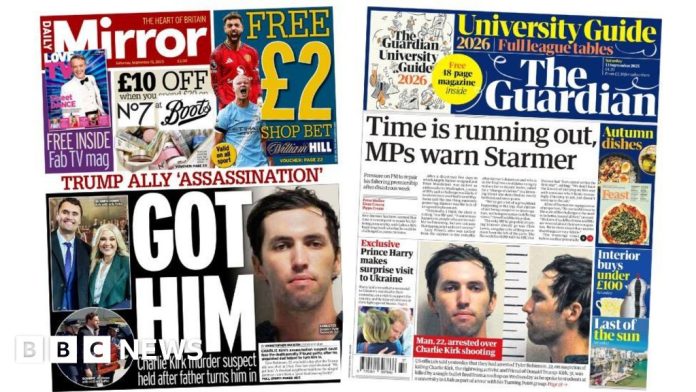
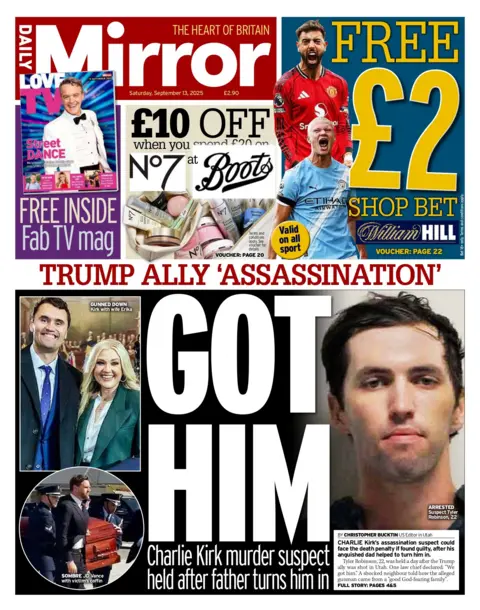
Several papers lead with the arrest of Tyler Robinson, the 22-year-old man suspected of fatally shooting conservative activist Charlie Kirk in Utah. Robinson was arrested after his “anguished dad” helped turn him in, the Daily Mirror reports. Robinson, who a neighbour says came from a “good God-fearing family”, could face the death penalty if found guilty.
Tyler Robinson’s arrest also leads the Daily Mail, which reports on engravings found on a rifle believed to have been used in the shooting, including: “Hey, fascist, catch!” US President Donald Trump says Kirk’s killer “deserves” the death penalty, the paper also reports.
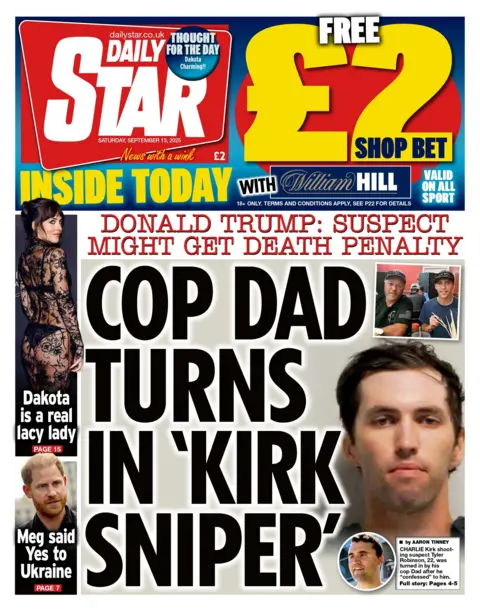
Tyler Robinson was turned in by his “cop dad” after his son “confessed” to him, the Daily Star reports.
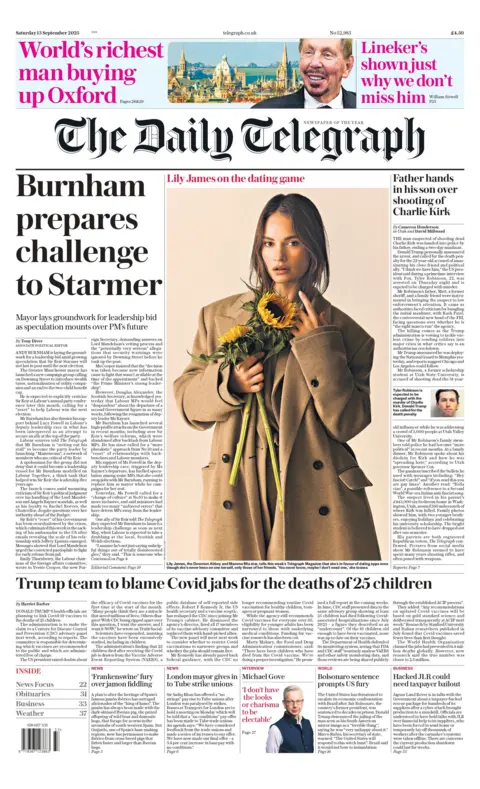
The Daily Telegraph also features Tyler Robinson’s arrest on its front page, but the paper leads with Labour sources saying that Greater Manchester Mayor Andy Burnham is “laying the groundwork” for a leadership bid. It comes as “speculation mounts” about the prime minister’s future, the paper reports.
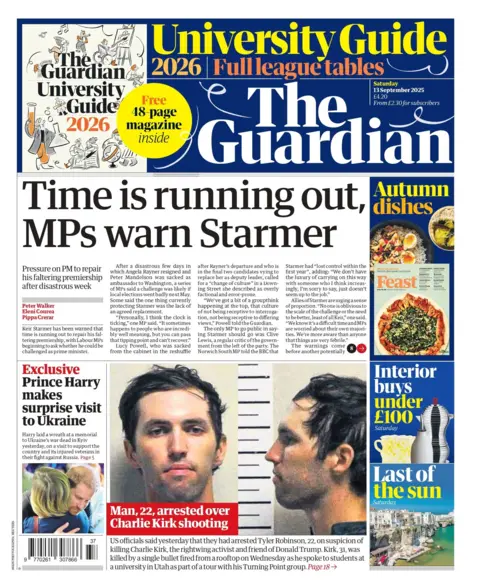
Time is running out for Prime Minister Sir Keir Starmer to “repair his faltering premiership”, leads the Guardian. The paper reports that a challenge to Sir Keir’s leadership was likely if Labour perform poorly in local elections next May. “The clock is ticking,” said one unnamed MP.
Conservative Party leader Kemi Badenoch describes Sir Keir’s government as one of “scandal and crisis” in the lead for the Daily Express. Badenoch warns that the prime minister is “too distracted” to deal with economic turmoil and threats posed by Russia to the UK.
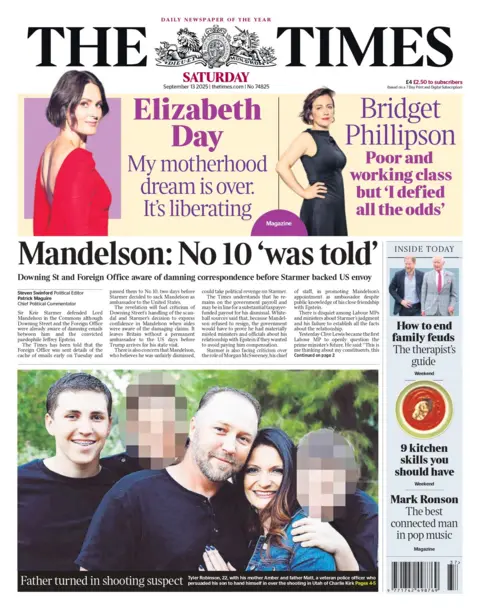
Downing Street “was told” about Lord Mandelson’s emails with the late disgraced financier Jeffrey Epstein two days before Starmer removed him as ambassador to the US, the Times reports. The revelation “will fuel criticism of Downing Street’s handling of the scandal”, the paper reports, and leaves London without an ambassador in Washington just days before Trump makes a state visit to the UK.
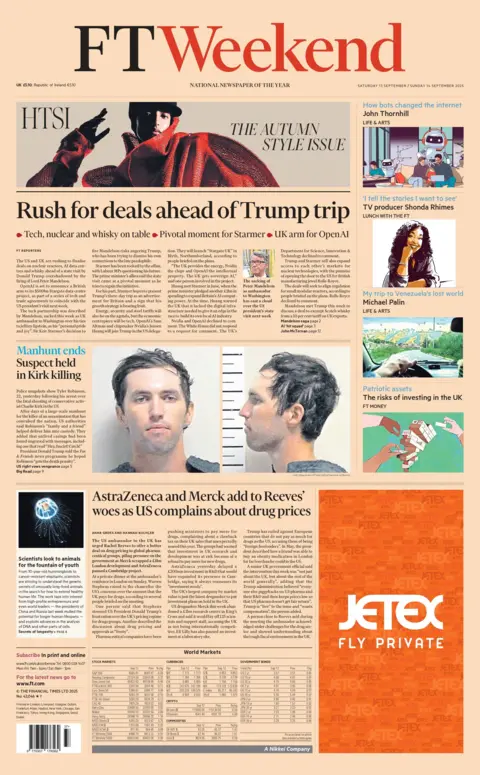
Despite Trump’s state visit to the UK being “overshadowed” by Lord Mandelson’s sacking, the US and UK are still “rushing” to finalise deals on nuclear reactors, AI data centres and whisky, according to the Financial Times. OpenAI is set to announce a British arm to its $500bn Stargate data centre during Trump’s visit, when he will be accompanied by OpenAI’s Sam Altman and Nvidia’s Jensen Huang.
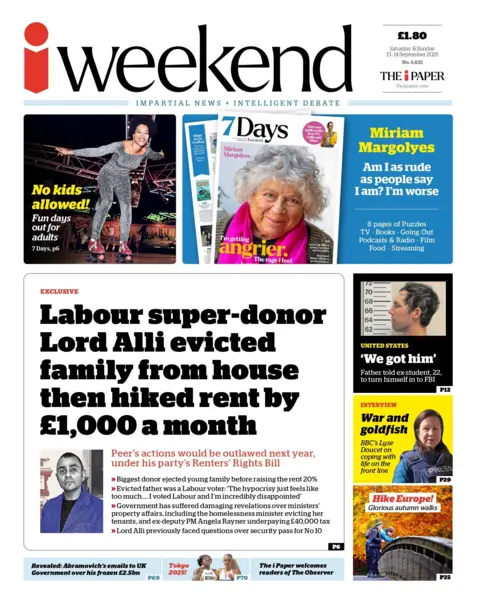
Lord Alli, a Labour “super-donor”, evicted a family from a house before hiking the rent by £1,000 a month, according to the i Paper. His actions would be outlawed next year under his own party’s Renters’ Rights Bill, the paper reports. A spokesperson for Lord Alli said “Lord Alli is not a commercial landlord and he doesn’t manage – and has never managed – this property.” They added that it was his former home, and the situation involved one tenant being “replaced with another for less money than the former tenant offered and at an amount lower than the market price”, and that it was “clearly… not about money”.
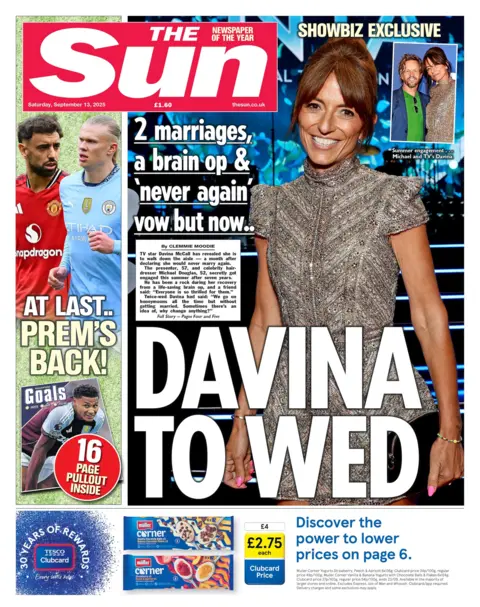
TV presenter Davina McCall got secretly engaged to her partner this summer, despite previously declaring that she would “never” marry again. “Davina to wed” is the Sun’s headline.
Many of the papers lead on the authorities in the US detaining a suspect in connection with the murder of Charlie Kirk. “Got him” says the front page of the Daily Mirror, quoting the Utah state governor. The Daily Telegraph says Tyler Robinson’s father and a friend were “instrumental” in persuading the 22-year-old to hand himself in, while the Times puts a family snapshot on its front page. “Turned in by Dad” is the headline in the Sun.The Daily Mail leads on President Trump’s call for Charlie Kirk’s killer to face the death penalty.
The front page of the Guardian focuses on a warning from Labour MPs to Sir Keir Starmer that “time is running out” to repair what the paper calls his “faltering premiership”. The Guardian says a leadership challenge is likely if Labour performs poorly in local elections in May. The Telegraph reports that the Mayor of Greater of Manchester Andy Burnham is “laying the groundwork” for a leadership bid.
According to the i Weekend the Labour donor, Lord Alli, evicted a family from a property he owns in north London, before relisting the home and increasing the rent by £1,000 a month. This practice is due to be outlawed by the government next year. The family living there were reportedly told to leave at the end of their tenancy. A spokesperson for Lord Alli tells the paper the property was managed on his behalf and a source close to him says he wasn’t involved in the decision-making process.
Many of the papers feature photographs of Prince Harry during his unexpected visit to Ukraine yesterday. The Guardian shows the prince holding a flag presented to him by a Ukrainian veteran. Most of the papers pick up on Prince Harry saying he’d been given the green light for the trip after checking with the British government, and his wife.
And the Times reports that the governor of the Bank of England, Andrew Bailey, has been using artificial intelligence software to help cut down his speeches. In a statement, the bank says it believes AI will have a “profound impact” on the way it works and it wants to make AI tools and services easily accessible to all staff.
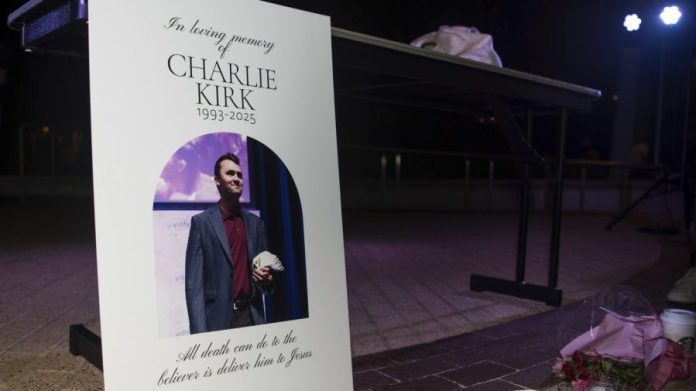
Charlie Kirk’s widow on Friday said she will work to preserve the legacy of the conservative activist and carry on the mission of Turning Point USA.
“To everyone listening tonight across America, the movement my husband built will not die. It won’t. I refuse to let that happen. It will not die,” Erika Kirk said in a Friday night livestream, making her first public comments since her husband’s death.
“All of us will refuse to let that happen,” she continued. ” No one will ever forget my husband’s name, and I will make sure of it.”
Charlie Kirk was shot and killed on Wednesday in Utah. On Friday, state and federal law enforcement identified the suspected shooter as 22-year-old Tyler Robinson.
Turning Point USA, a high school and college conservative nonprofit, was founded by Charlie Kirk in 2012. During the decade since, Kirk became a leading right-wing commentator.
After Kirk’s assassination President Trump, Vice President Vance and House Speaker Mike Johnson (R-La.) all shared personal memories of Kirk as a champion on the campaign trail and a closed door adviser.
Erika Kirk said Friday her husband was a “martyr” for the nation and pledged to expand Turning Point USA in his honor.
“I promise I’ll make Turning Point the biggest thing this nation has ever seen,” Erika said during the livestream. “I promise Charlie.”
The non-profit hosts a watch list to identifying professors who “discriminate against conservative students and advance leftist propaganda in the class-room,” and also backs student government candidates.
Kirk frequently traveled to campuses across the country to debate students with opposing political views. He was speaking to a group at Utah Valley University when he was shot this week.