8.3 C
New York
Sunday, May 3, 2026
Home Blog Page 163

OPEC+ will likely agree to further oil output hike on Sunday, sources say

0


By Alex Lawler, Olesya Astakhova and Ahmad Ghaddar

LONDON/MOSCOW (Reuters) -Eight OPEC+ countries will likely raise oil output on Sunday but probably add less oil from October than in recent months as global demand might be slowing with the end of the driving season, OPEC+ sources said on Saturday.

OPEC+ has reversed its strategy of output cuts from April and has already raised quotas by about 2.5 million barrels per day, about 2.4% of world demand, to boost market share and under pressure from U.S. President Donald Trump to lower oil prices.

But those increases have failed to significantly dent oil prices, which are trading near $66 a barrel supported by Western sanctions on Russia and Iran, encouraging further production gains in rivals such as the United States.

Another output boost would mean OPEC+, which pumps about half of the world’s oil, would be starting to unwind a second layer of cuts of about 1.65 million bpd, more than a year ahead of schedule.

Talks are focusing on unwinding that whole cut in gradual monthly increments, two sources said on Saturday. Eight OPEC+ countries are to hold an online meeting on Sunday at 1230 GMT, at which the focus is expected to be on October output.

The countries may raise output by 135,000 bpd for October, an OPEC+ source said, while another said October’s hike could be closer to 200,000-350,000 bpd.

At their last meeting in August, the eight members raised production by 547,000 bpd for September, completing a total increase in output for the year of 2.5 mln bpd. That included a 300,000 bpd additional production allocation for the UAE.

OPEC headquarters and authorities in Saudi Arabia did not respond to requests for comment made on Wednesday.

OPEC+ includes the Organization of the Petroleum Exporting Countries plus Russia and other allies.

Brent crude futures settled at $65.50 a barrel on Friday, down 2.2%, pressured by a weak U.S. jobs report and expectations of an OPEC+ output hike. This is still up from a 2025 low of near $58 in April.

As well as sanctions, the OPEC+ hikes falling short of the pledged amounts have also supported prices, analysts have said.

Until April, OPEC+ had been curtailing production for several years to support oil prices.

The next output cut layer of 1.65 million bpd is in place until the end of 2026, as is another 2 million bpd of cuts by the whole group.

(Reporting by Olesya Astakhova, Alex Lawler, Ahmad Ghaddar and Dmitry Zhdannikov, editing by Alexandra Hudson)

Home Office clearout as Starmer reshuffles top team

0


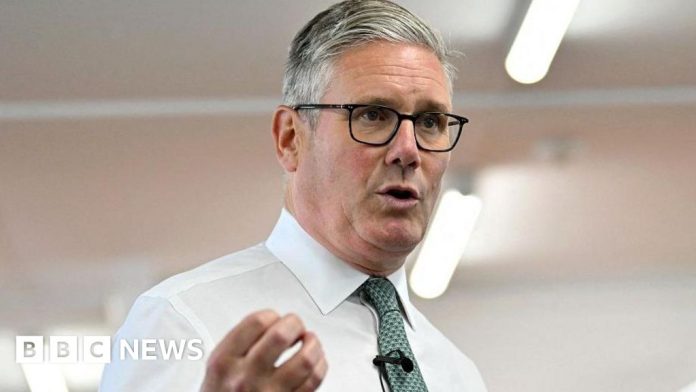
Ministers Dame Angela Eagle and Dame Diana Johnson have followed Yvette Cooper out of the door at the Home Offfice as Sir Keir Starmer continues his reshuffle.

The prime minister shifted Cooper to the Foreign Office on Thursday in a major shake-up of his top team prompted by the resignation of deputy prime minister Angela Rayner.

Now he is reshuffling other key ministerial posts, as he seeks to regain the initiative after the most tumultuous week of his premiership.

Ministers of state and junior ministers are given specific areas of responsibility in government departments, while cabinet ministers are in charge of the department as a whole and take part in cabinet meetings for major decisions.

Dame Angela and Dame Diana have been moved to roles in other departments, with Sarah Jones and Alex Norris brought into the Home Office, to work with new Home Secretary Shabana Mahmood.

The moves reflects the importance the PM places on tackling illegal immigration and stopping small boat crossings.

Anna Turley has been promoted from the Whips Office to minister without portfolio in the Cabinet Office, and will attend cabinet. She will also become Labour Party chair, replacing Chancellor Rachel Reeves’s sister Ellie.

Ellie Reeves becomes Solicitor General, replacing Lucy Rigby, who is moving to the Treasury to become economic secretary, effectively third in command to Rachel Reeves.

Sir Keir has sacked farming minister Daniel Zeichner, having also moved environment secretary Steve Reed to Rayner’s old housing brief – perhaps a sign that he wants to reset the government’s shattered relationship with the farming community.

Another appointment that stands out is Jason Stockwood, vice-chairman Grimsby Town football club.

Stockwood is a local boy done very well in business, that some in the party were keen to see run as a candidate in a parliamentary seat.

He was not interested, but has been lured into the Lords and becomes a business minister.

For a government frequently criticised for lacking voices with long-standing private sector experience, the soon-to-be Lord Stockwood could prove something of an asset.

Former investment minister Poppy Gustaffson and former local government minister Jim McMahon have also left government, Downing Street confirmed.

Zelensky on Putin’s Moscow invitation: ‘He can come to Kyiv’

0


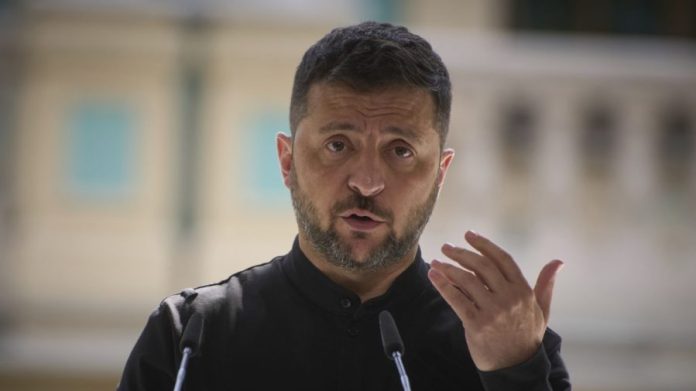
Ukrainian President Volodymyr Zelensky rebuffed Russian President Vladimir Putin’s invitation for a summit in Moscow, saying Friday that the Kremlin leader “can come to” Kyiv instead. 

“He can come to Kyiv. I can’t go to Moscow when my country’s under missiles, under attack, each day,” Zelensky said in an interview with ABC News that was released Friday evening. “I can’t go to the capital of this terrorist.”

The Ukrainian leader said that Putin’s offer for a summit on his own turf was meant to “postpone the meeting” and he reiterated that he is ready to meet with the Russian president in “any kind of format.”

Still, Putin has questioned the need for a meeting as Russian officials have suggested direct peace talks in the more than three-year-long war are still a way off. On Wednesday, the Kremlin leader suggested Zelensky come to Moscow instead.

“We could do — I’ve never refused to do that if that leads to some positive outcomes,” Putin said of a potential huddle. “[President Trump] asked me if it was possible. I said, ‘Yes, it was possible.’ I said, ‘Let him come to Moscow.'”

As part of his quest to end the war in Eastern Europe, Trump has pushed for Zelensky and Putin to schedule an in-person meeting, particularly after meeting with both leaders in the U.S., separately, last month. 

Recently, the president cast doubt about the prospects of a summit, suggesting that “maybe they have to fight a little longer,” but expressed more confidence in a trilateral meeting between the three world leaders.

“A [trilateral] would happen. A [bilateral], I don’t know about, but a tri will happen. But, you know, sometimes people aren’t ready for it,” the president said in last week’s interview with The Daily Caller. 

German Chancellor Friedrich Merz also suggested last week that it is “clear” that a meeting between Putin and Zelensky will not take place. 

Zelensky told ABC News’ Martha Raddatz in Friday’s interview that the Russian president is “playing games” with the U.S. 

“If a person doesn’t want to meet during the war, of course, he can propose something which can’t be acceptable by me or by others,” he said.

New to Growth Stocks? Here’s 1 Every Investor Should Have on Their Radar.

0


  • MP Materials owns the Mountain Pass mine, where rare earths are produced.

  • The company is developing a rare earth magnet production facility.

  • Potential investors should do their due diligence to ensure MP Materials is the right stock for them with respect to risk exposure.

  • 10 stocks we like better than MP Materials ›

Whether you’re an investor with decades of experience or you’re just starting out on your investing journey, venturing into the field of growth stocks can be an overwhelming endeavor right now. From artificial intelligence (AI) specialists to companies pioneering next-generation nuclear energy reactors, there’s no shortage of stocks that offer serious growth potential to consider.

But of all the candidates, it’s a rare earth stock that warrants serious attention from growth investors right now.

seedling growing in soil.
Image source: Getty Images.

One of the distinguishing attributes of quality growth stocks is competitive advantages. When a company retains a significant competitive advantage — such as rare earth producer MP Materials (NYSE: MP) has over its mining peers — it makes the company’s growth potential a lot more alluring.

With the issuance of President Trump’s executive orders in May, it’s clear that there’s strong interest in shoring up the national supply of rare earths. This may suggest to mining companies that getting into the rare earths business would be a wise strategy right now. However, unlike with other minerals, there’s hardly a trove of rare earth deposits identified. This steep barrier to entry represents a key competitive advantage for MP Materials which own the Mountain Pass mine, a rich deposit of rare earths located in California.

Similarly, there’s a limited number of companies producing rare earth magnet — components critical to various industries from tech to defense. This represents yet another reason why MP Materials is so appealing. The company is developing a rare-earth magnet production facility that’s supposed to commence operations in 2027. Already, MP Materials is receiving interest with respect to the facility. Apple, for example, signed a long-term agreement with MP Materials this summer related to rare earth magnets produced at the facility.

With formidable competitive advantages and the prospect of catalysts on the horizon, MP Materials is a must-watch growth stock right now. Risks still exist with the stock, however, so investors must investigate MP Materials thoroughly to ensure it’s right for them.

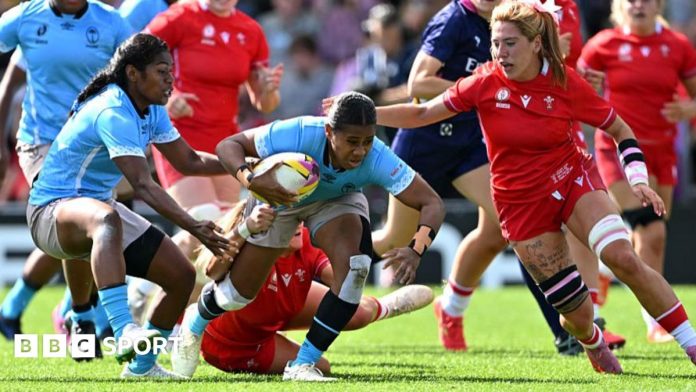
Rugby World Cup 2025: Wales suffer tournament whitewash in defeat by Fiji

0


Wales: Kayleigh Powell; Lisa Neumann, Carys Cox, Courtney Keight, Nel Metcalfe; Lleucu George, Keira Bevan; Maisie Davies, Carys Phillips, Sisilia Tuipulotu, Georgia Evans, Gwen Crabb, Kate Williams (co-capt), Bethan Lewis, Alex Callender (co-capt)

Replacements: Molly Reardon, Gwenllian Pyrs, Donna Rose, Abbie Fleming, Bryonie King, Seren Lockwood, Hannah Dallavalle, Jasmine Joyce-Butchers

Fiji: Litiana Vueti; Repeka Tove, Verenaisi Ditavutu, Josifini Neihamu, Kolora Lomani; Salanieta Kinita, Setaita Railumu, Karalaini Naisewa, Keleni Marawa, Vika Matarugu, Jade Coates, Asinate Serevi, Nunia Daunimoala, Alfreda Fisher (capt), Manuqalo Komaitai

Replacements: Selai Naliva, Carletta Yee, Tiana Robanakdavu, Mereoni Nakesa, Sulita Waisega, Repeka Mata, Kelerayani Luvu, Salote Nailolo.

‘Kennedy Derangement Syndrome’ is endangering America’s health

0


There is stepping into a lion’s den, and then there is the much more dangerous option: stepping into a congressional hearing before a pride of attention-seeking senators looking to rip a fellow human apart for a multitude of self-serving reasons.

Health and Human Services Secretary Robert F. Kennedy Jr. chose the much more dangerous option this week, and has the rhetorical scars to prove it.

Kennedy appeared before the Senate Finance Committee on Thursday, and it went as expected for anyone with even a day of experience in Washington. Although he took some bipartisan heat, it was mostly Democratic senators who went out of their way to smear Kennedy, brow-beat him, interrupt him incessantly whenever he did try to answer their questions or defend himself, and preen before the cameras.

There is only one other person who brings out a greater unhinged reaction among Democrats and the far left: President Trump. Over the last decade or so, the rage directed at him has accurately been described as “Trump Derangement Syndrome.” Over the decades — and especially as president — Trump has been correct about multiple issues and has done great good. Most of the left will acknowledge none of it.

Much of that irrational hatred and denial of basic facts for partisan advantage has now seemingly been directed at Kennedy. Many who watched Democratic senators’ vicious and relentless attacks on Kennedy might surmise that some are now afflicted with “Kennedy Derangement Syndrome.”

Ironically, it is Kennedy himself who can offer them the cure for what ails them: a fair and reasoned discussion regarding the health of the American people, free of partisan histrionics.

Soon after hearing about the gauntlet Kennedy had to run, Trump defended his HHS secretary at a luncheon at the White House, saying, “he’s a very good person … He means very well … I guarantee a lot of the people at this table like RFK Jr., and I do … I heard he did very well today. It’s not your standard talk, I would say that, and that has to do with medical and vaccines. But if you look at what’s going on in the world with health and look at this country also with regard to health, I like the fact that he’s different.”

Trump may like “different,” because he and Kennedy share many of the same traits when it comes to a positive interpretation of that word. Three years ago, I authored a book, “The 56: Liberty Lessons From Those Who Risked All to Sign the Declaration of Independence.” I wrote it to defend those men from being smeared and “canceled” by leftists during the woke era, and also to inform readers of the immense courage, vision and sacrifice of those Founding Fathers.

While doing research, I learned that many of the men who signed the Declaration of Independence would have been considered quite wealthy by today’s standards — just as I learned that the vast majority of the wealthy in 1776 chose to side with the tyrannical British crown rather than risk their money and status. Not so among the 56, who instead asked themselves the two most critically important questions of their lives: “If not now, when? If not me, who?”

Those Founding Fathers could have remained in the shadows, like so many of the wealthy of their time, enjoying the good life while remaining out of harm’s way.

The same applies today to Trump and Kennedy. Both men knew that if they dared to step into the political arena to fight for their values, they would be mercilessly attacked by entrenched elites and special interests whose policies and grifts they threatened. And so they have been — Trump most of all.

Attacking Trump and Kennedy is great for fundraising and appeasing the radical left, but the name-calling, the smears, the lawfare, the partisan raids and denial of facts do the American people no good. This is especially so for those who may be sick or teetering on the edge of major health issues.

For decades, the chronic disease epidemic in our nation has mutated unchecked, costing millions of Americans their lives. To that greater point, during the hearing and after being harassed and insulted by Sen. Ron Wyden (D-Ore.), Kennedy decided he had enough and fired back. “Senator, you’ve sat in that chair how long?” he asked. “Twenty to 25 years while the chronic disease of our children went up to 76 percent. And you said nothing. You never asked the question why it’s happening. Why is this happening?”

Again, like Trump, Kennedy needed none of this. He could have been living the good life in peace. Instead, he shoulders ever-increasing insults and accusations each day because of his quest to “Make America Healthy Again.”

Like it or not, the government-created and government-run health agencies have become bloated, politicized, massively bureaucratic and wasters of trillions of tax-payers’ money.

Trump and Kennedy want to reverse that so those agencies can once again focus entirely on the mission of making Americans healthier. The people’s representatives need to climb out of the sandbox and help them achieve that desperately needed goal.

Cooperation instead of defamation. Just what the doctor ordered.

Douglas MacKinnon is a former White House and Pentagon official.

Analysts revamp Broadcom price target on OpenAI deal

0


Nvidia defends its dominance in the artificial intelligence space with its software moat. Many companies have built their AI software stacks based on Nvidia CUDA to harness the power of GPUs, and because Nvidia’s software only works with its GPUs, they can’t switch to competitors’ GPUs.

This strategy has worked well for the company; however, things are changing, and Broadcom just took a slice of Nvidia’s AI pie.

Broadcom’s increase in AI market share can only surprise people who don’t know that it already has a long-standing partnership with Google, which birthed its tensor processing units (chips specialized for AI work).

Related: Agentic AI already makes major impact on jobs at leading tech company

The company also works with Meta Platforms and ByteDance on their custom AI chips. During the earnings call, Broadcom announced a partnership with another major AI company.

Broadcom is now making AI chips for 4 major companies.Shutterstock

On September 4, Broadcom  (AVGO)  reported its results for Q3 of fiscal 2025.

Hock Tan, president and CEO of Broadcom, expects AI semiconductor revenue to grow to $6.2 billion in the next quarter.

  • Revenue of $15.95 billion for the third quarter, up 22% YoY.

  • Net income of $4.14 billion for the third quarter.

  • Adjusted EBITDA of $10.7 billion for the third quarter, or 67% of revenue.

  • Diluted earnings per share of $0.85 for the third quarter;

  • Quarterly common stock dividend of $0.59 per share.

  • Revenue guidance of approximately $17.4 billion, an increase of 24% YoY.

  • Adjusted EBITDA guidance of 67% of projected revenue.

During the earnings call, Tan said that the company made a deal with a new customer to build their AI accelerators, and the customer committed to over $10 billion in orders of AI racks based on the company’s XPUs.

Broadcom didn’t reveal who the new customer is, but Financial Times’ contacts confirmed that OpenAI is the new client.

With OpenAI joining Google, Meta, and ByteDance in search of cheaper AI chips, it is clear that most companies would switch from Nvidia to something else if it weren’t for CUDA. Nevertheless, since they are investing in these chips, they must also slowly make changes to their software stacks.

More AI Stocks:

Another piece of tech that helps Nvidia dominate the market is NVlink. It helps connect multiple GPUs and communicate at very high speeds. Many companies have teamed up to work on an alternative called Ultra Accelerator Link, including Google, AMD, Intel, Meta, Apple, Hewlett Packard Enterprise, Microsoft, Broadcom, and many more.

Royal Catholic funeral for Duchess of Kent

0


Sean CoughlanRoyal correspondent

Reuters Duchess of Kent in a photo from 1995Reuters

The Duchess of Kent was praised for her kindness and interest in music

The funeral of the Duchess of Kent will be held at Westminster Cathedral on 16 September, with the King and Queen among the senior royals who will be in attendance, Buckingham Palace has announced.

The duchess, Katharine, died on Thursday aged 92, prompting tributes for her kindness and support for tennis and music – including working as a primary school music teacher.

The duchess was a Catholic and there will be a Requiem Mass for her funeral, which will be the first royal Catholic funeral in the UK in modern history.

It will be a private family service, after which the coffin will be taken to the royal burial ground in Frogmore in Windsor.

The duchess, who had been the oldest member of the Royal Family, died in Kensington Palace and her coffin will remain in the chapel there until the evening before the funeral, when she will be brought to Westminster Cathedral.

In the Catholic tradition, there will be a service to mark the reception of the coffin into the cathedral, attended by her close family, with the duchess being survived by her husband, the Duke of Kent, and their two sons and a daughter.

The coffin will remain in the Lady Chapel overnight, before the funeral the following day.

This first royal funeral at Westminster Cathedral, at 2pm on Tuesday 16 September, will be presided over by Cardinal Vincent Nichols, with the Anglican Dean of Windsor participating, before accompanying the coffin to Frogmore.

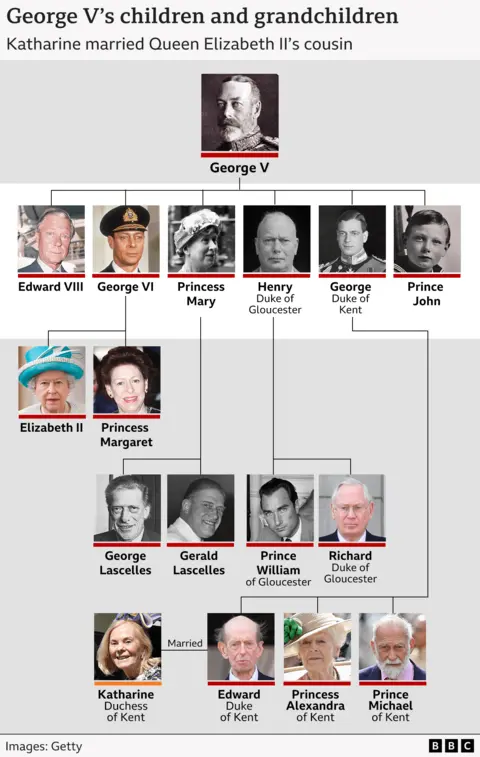
Family tree of King George V, showing his children and grandchildren. His children are Edward VIII, George VI (father of Elizabeth II and Princess Margaret), Princess Mary (mother of George and Gerald Lascelles), Henry, Duke of Gloucester (father of Prince William of Gloucester and Richard, Duke of Gloucester), George, Duke of Kent (father of Edward, Duke of Kent, Princess Alexandra of Kent and Prince Michael of Kent) and Prince John. Edward, Duke of Kent is shown married to Katharine, Duchess of Kent. The graphic includes small headshots of all the family members shown.

Prince Harry will be in the UK next week for charity events, but it is not known if he would stay for the funeral, which is expected to be attended by many senior royals.

The Prince and Princess of Wales said she would be a “much missed member of the family” who had “worked tirelessly to help others and supported many causes, including through her love of music”.

Prime Minister Sir Keir Starmer said the Duchess of Kent brought “compassion, dignity and a human touch to everything she did”.

The duchess supported music charities and taught music at a Hull primary school, where pupils knew nothing of the royal background of “Mrs Kent”.

She will be remembered as a familiar figure at the Wimbledon tennis championships, where she handed over trophies – and consoled those who had lost, famously including a tearful Jana Novotna in 1993.

Tennis player Martina Navratilova posted a tribute with a picture of herself and the duchess at Wimbledon, saying it was “amazing how many millions of people around the globe she affected in a positive way”.

The duchess, who stepped back from her royal life in her later years, had supported charities including Childline and the Passage, which supports homeless people, based in Westminster not far from where her funeral will be held later this month.

Thin, purple banner promoting the Royal Watch newsletter with text saying, “Insider stories and expert analysis in your inbox every week”. There is also a graphic of a fleur-de-lis in white.

Trump went too far on tariffs — the Supreme Court can give him a political out 

0


Unless the Supreme Court rules otherwise, President Trump will soon require approval from Congress to keep in place the broad-based tariffs he has imposed, altering the nation’s social contract and increasing economic inequality.

Trump and his Cabinet have boasted that tariffs, now averaging almost 20 percent, will bring in tens or even hundreds of billions annually in new revenue into federal coffers. Alongside this narrative, administration officials claim that the tariff revenue can replace income taxes to fund government operations and pay interest on the national debt.

But the U.S. Court of Appeals underscored just before Labor Day that tariffs are taxes — and that only Congress has the power to raise taxes.

The International Emergency Economic Powers Act upon which Trump hinges most of his tariffs does not authorize the president to impose tariffs or any other tax, the court ruled. Trump’s unconstitutional use of these emergency powers is particularly poignant because his tariffs, which are expected to raise as much as $3.3 trillion over 10 years, affect a major part of the U.S. economy.

For most of our country’s early history, tariffs served as the federal government’s primary source of revenue. Congress set tariffs, not the president; income and other taxes were later added to cover the cost of major wars and expanding government services. “In the late nineteenth and early twentieth centuries,” according to the majority opinion, “Congress began to delegate to the Executive limited authority to ‘activate or suspend’ tariff rates through international agreements,” as the U.S. became more engaged in global affairs.

Today, in their 7-4 ruling, the judges join a growing number of economists and business analysts who conceptualize tariffs as sales taxes passed along to the citizenry in the form of higher prices. This year’s historic spike in tariffs — coupled with the tax cuts just made permanent by Congress — make the U.S. tax system more regressive by shifting the tax burden toward the lower-income end of the scale.

“Heavy reliance on sales and excise taxes makes tax systems more regressive,” the Institute on Taxation and Economic Policy states in its annual Who Pays? report. “A progressive, graduated rate income tax makes overall tax systems less regressive or more progressive.”

Federal tax policy analysts measuring the effects of suddenly higher and fast-changing tariffs are in a whole new territory. But they can look to states’ experience in weighing the impact and fairness of a variety of taxes, including those on sales, income and property.

At the state level, a proposal to impose a 20 percent sales tax and flatter income tax, as Trump and Congress have essentially just done, would be decried as unfair, because the burden would fall disproportionately on people with lower incomes.

By affirming the appeals court decision, the Supreme Court could provide an off-ramp with political cover for Trump’s administration to back away from tariffs increasingly perceived as harmful to Trump’s working-class base — and bring back the Constitution’s intent that lawmakers control the power of the purse.

To control the national debt, for example, Congress could replace Trump’s jumbled high tariffs with a smaller national sales tax covering both foreign and domestic products. It could also impose a value added tax, as many other countries do. Or national sales taxes could be set slightly higher for imports.

The important thing is that Congress needs to act — and a ruling to that effect could be a win-win if it preserves the separation of powers and gives Trump an escape route from a misguided tariff scheme.

Karl Polzer is founder of the Center on Capital and Social Equity.

Zscaler Stock Falls Despite Strong Outlook. Is It Time to Jump Into the Stock?

0


  • The cybersecurity provider turned in solid results for its fiscal fourth quarter.

  • Zscaler is seeing strong momentum in newer vectors, such as AI security.

  • A closer look points to revenue growth accelerating in the new fiscal year.

  • 10 stocks we like better than Zscaler ›

While Zscaler (NASDAQ: ZS) stock has had a strong run this year, the momentum shifted after the cybersecurity company reported its fiscal 2025 fourth-quarter results following the close of trading Tuesday. Though the period’s numbers were good, and management issued upbeat guidance, the stock sank 4% in Wednesday trading. However, even after the pullback, the stock is still up by about 50% year to date.

Let’s take a closer look at the company’s results and guidance to see if Wednesday’s dip has created a buying opportunity.

While endpoint cybersecurity companies like CrowdStrike (NASDAQ: CRWD) and Palo Alto Networks (NASDAQ: PANW) tend to get more attention from investors, Zscaler has carved out an important niche in a fast-growing part of the cybersecurity sector. It’s focused on zero trust security, which is built around the idea that no individual user or device should automatically be trusted, even if it was previously found to be trustworthy. That means that all users’ access to various platforms must be verified, authorized, and then regularly revalidated.

The rise of artificial intelligence (AI) and AI agents, meanwhile, has only added to the complexity of the cyberthreat landscape. This is leading to growth in newer areas for Zscaler, including AI Security, Zero Trust Everywhere, and Data Security Everywhere, which combined to exceed $1 billion in annual recurring revenue (ARR) in its fiscal Q4, which ended July 31. The company is also working on solutions to secure agent-to-agent and agent-to-application communications.

All of this helped Zscaler achieve robust revenue growth. In the quarter, its revenue climbed 21% year over year to $719.2 million, easily surpassing management’s prior guidance for revenue of between $705 million and $707 million. Adjusted earnings per share (EPS) climbed to $0.89 from $0.72 a year earlier. That was also well ahead of the company’s $0.79 to $0.80 forecast.

Zscaler generated operating cash flow of $250.6 million and free cash flow of $171.9 million. It ended the period with $3.6 billion in cash and short-term investments on its balance sheet and $1.7 billion in debt in the form of convertible notes. It also completed the acquisition of managed detection and response specialist Red Canary for an undisclosed sum right after the quarter ended, so that cash position is likely to come down.