8.3 C
New York
Sunday, May 3, 2026
Home Blog Page 165

What other cities can learn from Kansas City’s failed progressive experiments  

0


Kansas City’s recent experiments in progressive policymaking — from fare-free transit to subsidized grocery stores — offer a cautionary tale for cities nationwide. 

When well-intentioned policies are launched without data, oversight or a clear theory of change, the result isn’t progress but dysfunction. Kansas City’s experience also shows how symbolism without substance can backfire, especially when federal aid masks poor local decision-making. 

Take fare-free buses. In 2020, Kansas City became the first major U.S. city to eliminate bus fares — without analysis or transparency. The Kansas City Area Transportation Authority based its decision on a flawed and unpublished study that overstated benefits and leaned on philosophical musings more than data. Since then, ridership has declined. Assaults on operators have also surged, driving up security costs. 

Federal COVID relief funds masked the true cost, but they expire this year, leaving a $10 million budget hole. In April, the city council authorized a short-term fix and reinstated a $2 base fare. They also mandated financial audits to improve accountability. The transportation authority has confirmed that fares will be returning

None of this should have been surprising. A 2002 study from the Center for Urban Transportation Research warned that fare-free transit in large cities triggered more crime, drove up costs and discouraged ridership. 

A recent proposal in New York by transportation analyst Charles Komanoff imagines fare-free buses boosting equity and cutting car use, at a projected cost of $630 million annually. But that ignores Kansas City’s experience, in which the theoretical service improvements never materialized. The policy applied universally, benefiting even higher-income riders who didn’t require subsidies, while ignoring what low-income riders actually value: reliability and safety.  

Fare elimination also removed a key source of accountability. When riders pay, they expect results. New Yorkers should take note. 

Kansas City’s subsidized grocery experiment followed a similar trajectory. In 2018, the city spent $17 million to renovate a shopping center and open a Sun Fresh on the East Side, hoping to improve food access in a struggling community. 

By 2024, the city had poured in another $750,000 just to pay debts and restock shelves. Aisles remain empty, foot traffic has collapsed from 14,000 to 4,000 a week, and crime is rampant. A 2023 security report described disorder ranging from shoplifting to drug use. 

The store recently closed

Before the city acted, private investors had passed on renovating this store for a decade — hardly a vote of confidence. Yet the city proceeded anyway. Even the editorial board of The Kansas City Star called it “a financial gamble for taxpayers,” warning that isolated projects can’t transform communities. The “food desert” framing has also proven underwhelming, as there were other grocery stores already serving the area. As it turned out, food access was less about supply than demand

Faced with the chance to address deeper issues like nutrition or safety, the city chose instead to subsidize one store. Today, it has little to show for it. Fresh produce doesn’t help much when public safety is in freefall. 

There is one other area where Kansas City should serve as a warning to others. In 2021, Mayor Quinton Lucas and the city council attempted to cut the police budget and created a new community fund. Homicides rose every year through 2023, hitting a record 185. Although the numbers drew back in 2024, this year is on pace to be the second-deadliest. By the time officials reversed course, increasing funding and offering raises to attract officers, much damage had already been done. 

Kansas City’s recent forays into progressive policymaking — whether fare-free buses, subsidized grocery stores or shifting police budgets — reveal a troubling disconnect between intent and outcome. These policies often begin with great fanfare but end in diminished services, wasted funds and greater public frustration. The reversals and failures suggest a poor grasp of sound public policy, with strategies that shift even as outcomes worsen. 

Other cities should take note: policies rolled out with high-minded rhetoric have too often delivered broken services, squandered funds, and fueled frustration. If mayors and city councils want to build trust and improve services, they must match ambition with accountability. 

As hometown hero Calvin Trillin once joked, the New York strip is just a rebranded Kansas City strip. If other cities are to borrow something from my beloved cowtown, let it be the beef and the barbecue, not the policy misfires. 

Patrick Tuohey is co-founder of Better Cities Project and a senior fellow at the Show-Me Institute. 

Apple, Meta, Google CEOs Dined With Trump. Where AI Trade Goes From Here.

0


Apple, Meta, Google CEOs Dined With Trump. Where AI Trade Goes From Here.

Matt Tebbutt to replace Gregg Wallace on MasterChef: The Professionals

0


Noor NanjiCulture reporter

BBC/Getty Side by side images of Matt Tebbutt and Gregg WallaceBBC/Getty

The Saturday Kitchen presenter will replace the sacked Masterchef host

Chef and television presenter Matt Tebbutt will replace Gregg Wallace as a judge on the next series of MasterChef: The Professionals, the BBC has confirmed.

The Saturday Kitchen host will join Marcus Wareing and Monica Galetti on the programme.

Tebbutt said it was “an absolute honour” to be working alongside “two titans of the food world”.

He replaces Wallace, who was sacked in July after a report upheld 45 allegations about his behaviour on the programme, including one of unwelcome physical contact and three of being in a state of undress.

The inquiry, conducted by an independent law firm, was ordered by MasterChef’s production company Banijay in the wake of a BBC News investigation which first revealed claims of inappropriate sexual comments.

Wallace said he was “deeply sorry for any distress” he caused, but that he had “never set out to harm or humiliate”.

The report also upheld a separate claim of using a severely offensive racist term against fellow MasterChef host John Torode, who did not present on spin-off series MasterChef: The Professionals.

Both hosts were sacked and the BBC has not yet announced who will replace them on the main amateurs series of the show.

Tebbutt, who has years of experience in the restaurant industry and is a regular contributor to food and travel magazines, has been seen as a potential replacement.

Commenting on his new role on the spin-off, he said he was looking forward to his co-judges “taking me under their wing and seeing the chefs get off to a flying start in the competition”.

Wareing said Tebbutt’s experience “speaks for itself”, while Galetti said it was “really exciting” to have him join the show.

The transmission date has not yet been confirmed.

Marcus Wareing, Matt Tebbutt and Monica Galetti in the MasterChef kitchen

(From left to right) Marcus Wareing, Matt Tebbutt and Monica Galetti will front the next series of MasterChef: The Professionals

The controversy over MasterChef started last year, when claims of misconduct against Wallace were first revealed.

The show’s production company Banijay launched an immediate inquiry into the allegations. This summer, the report revealed that 83 claims had been made against Wallace, with more than 40 upheld.

Following that report, Wallace issued a statement to the PA news agency insisting that “none of the serious allegations against me were upheld”.

“I challenged the remaining issue of unwanted touching but have had to accept a difference in perception, and I am deeply sorry for any distress caused. It was never intended.”

The upheld complaint against Torode related to a severely offensive racist term allegedly used on the set of MasterChef in 2018.

Torode said he had “no recollection” of it and that any racist language is “wholly unacceptable”.

The BBC decided to broadcast this year’s amateurs series of MasterChef – with both Wallace and Torode in it – for the sake of the chefs who had taken part in it.

Wallace will be replaced by Irish chef Anna Haugh in the final episodes, as that is when the allegations against him first emerged during filming in November.

The BBC has also not yet announced what it plans to do with the completed celebrity series and Christmas special – which were filmed with Torode and restaurant critic Grace Dent.

Google faces new curbs on search dominance after DOJ challenge

0


Google has avoided the worst-case scenario of being forced to sell off its Chrome browser, but legal experts say the court’s remedies to the Justice Department’s (DOJ) antitrust win could still loosen the company’s grip over online search. 

The tech giant, which a judge ruled last year to have illegally monopolized the search market, can no longer enter into exclusive agreements that prioritize its products and must share some of its data with competitors. 

While antitrust advocates have dismissed this approach as inadequate, it may still give search rivals an opening, experts said.

“There’s been a tendency to underestimate the impact of conduct-oriented remedies and to think that the only worthy solution is the big bang of a breakup,” said William Kovacic, a George Washington University law professor and former chair of the Federal Trade Commission (FTC). 

U.S. District Judge Amit Mehta ruled Tuesday that Google would be allowed to hold onto Chrome, rejecting many of the remedies proposed by the DOJ.  

The decision marked a much-needed win for the tech giant, which lost two antitrust cases in the past year. Following the search decision, another federal judge also found that Google had an illegal monopoly over advertising technology. 

Mehta’s ruling was cheered by many in and around the tech industry, with longtime tech analyst Dan Ives calling it a “monster win” for both Google and Apple, as the decision appears to permit the iPhone maker to retain its multibillion-dollar deal to make Google Search the default on Safari.  

Meanwhile, antitrust advocates lamented that it amounted to a “slap on the wrist,” allowing Google to effectively maintain its monopoly over search. But Kovacic cautioned both ends of the spectrum from getting ahead of themselves. 

“That strikes me as mourning and celebrating way too early,” he told The Hill. 

While the judge declined to order a breakup, he restricted Google’s ability to enter into exclusive agreements that would prioritize its search engine, as well as its browser and artificial intelligence (AI) chatbot. 

“This obviously is not the big structural change that the Department of Justice was looking for, but it’s an impactful decision, even if it’s a bit cautious,” said Paul Swanson, head of law firm Holland & Hart’s antitrust and competition practice. 

He underscored the judge’s decision to extend his remedies to Google’s AI. Mehta, who said in his opinion that the emergence of generative AI “changed the course of this case,” barred Google from entering into exclusive agreements related to its Gemini chatbot.  

The judge also included generative AI products within his definition of a qualified competitor, which means they will be able to benefit from his data-sharing remedies. 

“It seems like Judge Mehta is trying to be narrow in some ways,” Swanson said. “He’s not going to sweep in Chrome and say that that has to be divested. He’s not going to put the Department of Justice in charge of enforcing this judgment.”  

“But he is also being a little bit broader than he probably would have been right at the end of the trial to take account of real market dynamics that generative AI chatbots are quickly taking market share away from general search tools,” he continued. 

Under the Tuesday ruling, Google is also required to share search index and user interaction data with qualified competitors, as well as provide search syndication services. 

Jeff Cross, an antitrust lawyer at Smith, Gambrell & Russell, argued this data-sharing requirement is the “most important element to restore competition.” He suggested Google’s user data is the “fruit” of the conduct at issue and has made its search engine a “superior product.” 

“User data improves the quality of a general search engine. Higher quality means more users. More users mean more user data. More user data means higher quality,” he explained, describing it as a “network effect.” 

Cross underscored that he has long been skeptical Mehta would take the drastic step of breaking up Google, especially given the judge’s previous writings acknowledging the company’s lawful efforts to compete and that it has the “highest quality search engine.” 

“Even a monopolist gets to compete, as long as it’s competition on the merits,” Cross said. “The exclusive contracts were not competition on the merits. So that sort of is consistent with his view that he’s not going to crush Google.” 

Google appeared cognizant of the potential impacts of the ruling Tuesday, striking a much more reserved tone than some others in the industry. 

While the company touted the judge’s decision not to order a breakup, it also voiced concerns about how his other remedies “will impact our users and their privacy.” 

“I imagine they’re somewhat anxious and nervous about that because the industry has unfolded in unpredictable ways,” Kovacic said. “And maybe if you open a path a bit there, maybe that’s all that known and unknown rivals will need to make a great step ahead.” 

Despite potentially opening the door to rivals, Swanson argued that Mehta’s decision is not aiming to punish Google. 

“There are large portions of society that are less interested in promoting competition and more interested in knocking Big Tech down a notch, they want to see Big Tech suffer,” Swanson said. “This is not an order that is driven by schadenfreude.” 

“This is an order that is trying to carefully remove the monopolistic conduct, especially those exclusive deals, and then remove some of the fruits of Google’s monopolistic conduct by forcing it to hand over some of its secret sauce so that others can come back up to where the court roughly thinks they might have been had Google not acted monopolistically,” he added. 

In a holding pattern until the Fed rate decision

0


HELOC rates today remain steady. Wall Street is convinced that the Federal Reserve will cut interest rates on September 17. That might move home equity line of credit interest rates slightly lower.

Dig deeper: How to use a HELOC to pay off debt (and when it makes sense)

According to Bank of America, the country’s highest-volume HELOC lender, today’s average APR on a 10-year draw HELOC is 8.72%. That is a variable rate that kicks in after a six-month introductory APR, which is 6.49% in most states.

Homeowners have an abundant amount of value tied up in their houses — more than $34 trillion at the end of 2024, according to the Federal Reserve. That’s the third-largest amount of home equity on record.

With mortgage rates lingering in the high 6% range, homeowners are not going to let go of their primary mortgage anytime soon, so selling a house may not be an option. Why let go of your 5%, 4% — or even 3% mortgage?

Accessing some of that value with a use-it-as-you-need-it HELOC can be an excellent alternative.

Read more: How to get a HELOC in 6 steps

HELOC interest rates are different from primary mortgage rates. Second mortgage rates are based on an index rate plus a margin. That index is often the prime rate, which today is 7.50%. If a lender added 1% as a margin, the HELOC would have a rate of 8.50%.

Lenders have flexibility with pricing on a second mortgage product, such as a HELOC or home equity loan, so it pays to shop. Your rate will depend on your credit score, the amount of debt you carry, and the amount of your credit line compared to the value of your home.

And average national HELOC rates can include “introductory” rates that may only last for six months or one year. After that, your interest rate will become adjustable, likely beginning at a substantially higher rate.

You don’t have to give up your low-rate mortgage to access the equity in your home. Keep your primary mortgage and consider a second mortgage, such as a home equity line of credit.

The best HELOC lenders offer low fees, a fixed-rate option, and generous credit lines. A HELOC allows you to easily use your home equity in any way and in any amount you choose, up to your credit line limit. Pull some out; pay it back. Repeat.

Meanwhile, you’re paying down your low-interest-rate primary mortgage like the wealth-building machine you are.

Today, FourLeaf Credit Union is offering a HELOC rate of 6.49% for 12 months on lines up to $500,000. That’s an introductory rate that will convert to a variable rate later. When shopping lenders, be aware of both rates. And as always, compare fees, repayment terms, and the minimum draw amount. The draw is the amount of money a lender requires you to initially take from your equity.

The power of a HELOC is tapping only what you need and leaving some of your line of credit available for future needs. You don’t pay interest on what you don’t borrow.

Rates vary so much from one lender to the next that it’s hard to pin down a magic number. You may see rates from nearly 7% to as much as 18%. It really depends on your creditworthiness and how diligent a shopper you are.

For homeowners with low primary mortgage rates and a chunk of equity in their house, it’s probably one of the best times to get a HELOC. You don’t give up that great mortgage rate, and you can use the cash drawn from your equity for things like home improvements, repairs, and upgrades. Of course, you can use a HELOC for fun things too, like a vacation — if you have the discipline to pay it off promptly. A vacation is likely not worth taking on long-term debt.

If you take out the full $50,000 from a line of credit on a $400,000 home, your payment may be around $395 per month with a variable interest rate beginning at 8.75%. That’s for a HELOC with a 10-year draw period and a 20-year repayment period. That sounds good, but remember, it winds up being a 30-year loan. HELOCs are best if you borrow and pay back the balance in a much shorter period of time.

‘Understated start shows Clarke’s Scotland are back in the game’

0


As ever, Steve Clarke was heroically deadpan, talking up his team’s honesty and work-rate in securing a valuable World Cup qualification point against Denmark in Copenhagen, but only going so far.

Clarke does praise, but in moderation. He approaches such things with suspicion. He can smell hype at a thousand paces. He salutes his players for their endeavour and their pride, but perspective is never far away when he’s around.

He smiled – we think – at a promising start to Scotland’s bid to make a first World Cup since 1998. He said nothing of the potential psychology of the night, but it was obvious.

In taking a point from the Parken, Scotland have damaged one of their two main rivals in the group. In what is more of a sprint than a marathon – six games all told – they’ve already put Denmark on the back foot.

The Danes have to go to Greece on Monday and they’ll be underdogs now. Greece are an emerging force who did Scotland 3-0 at Hampden in March before taking care of Bulgaria 4-0 and Slovakia 4-1. They hammered Belarus 5-1 on Friday.

Come Monday, if Greece continue their excellent form, Denmark’s campaign might be in considerable trouble with one point from a possible six. Scotland could have four, if they do the necessary against Belarus in Budapest.

We’re projecting here, but there’s no harm in that. Clarke’s team have Greece and Belarus at home in the next window. If they go into it with four points from six they’ll be feeling good about themselves. There’s no need to be giddy, but there are reasons to be hopeful.

This is not all that normal when it comes to Scotland and World Cup qualification. Too often since their last nod in 1998, their aspirations have suffered early on.

In the qualification for the 2018 World Cup they won one of their first four games. Four years before that they started with two home draws and effectively took themselves out of the running. Four years before that they lost to Macedonia in their first game and won only one of their first four.

It was even worse in qualifying for the 2006 World Cup – the lights went out early with a home draw against Slovenia, a home loss against Norway and one from their next two games. Done.

Adam Schiff readies for battle as prime target on Trump enemies list

0


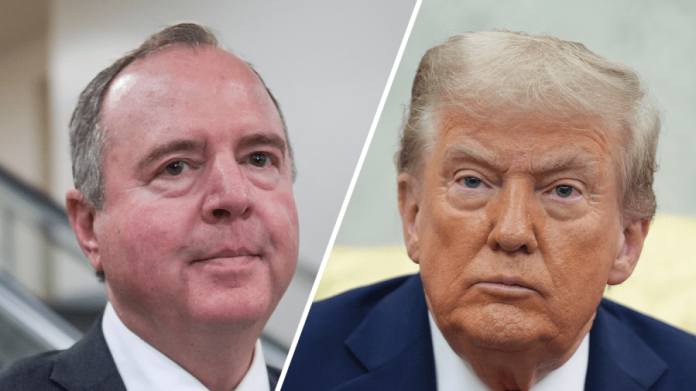
Among President Trump’s long list of perceived political enemies, one lawmaker has drawn outsize scrutiny from the administration: Sen. Adam Schiff (D-Calif.).

Trump has routinely fixated on the California senator, who investigated Russia’s 2016 election interference and served as the lead manager on Trump’s first impeachment.

Schiff was also a member of the House committee that investigated the Jan. 6 attack on the Capitol, laying blame for the riot with Trump.

Since taking office for the second time, Trump has not just repeatedly bashed Schiff but tapped his powers to go after his adversary.

The administration has launched a probe into the lawmaker, suggesting he wrongly obtained more favorable lending conditions for his Washington-area home — a claim the lawmaker denies.

The Justice Department has also released to Congress other documents the administration says back Trump’s claims that Schiff is a leaker. Schiff has denied any improper release of classified information, while his team has said it’s an accusation from one disgruntled former employee.

Schiff appears to realize he may be in for a long-term battle.

Last month he created a legal defense fund as he prepares to fight the investigation into his Maryland home.

“It’s clear that Donald Trump and his MAGA allies will continue weaponizing the justice process to attack Senator Schiff for holding this corrupt administration accountable,” Marisol Samayoa, a spokesperson for Schiff, said in a statement. 

“This fund will ensure he can fight back against these baseless smears while continuing to do his job.”

To Democrats, the reason for focusing on Schiff is obvious and alarming.

“There’s probably no one they hate more than Adam Schiff – and personally, just genuinely hate,” said Rep. Mike Quigley (D-Ill.), who was on the House Intelligence Committee as Schiff, then the top Democrat on the panel, was investigating Trump.

“I was part of those investigations – side by side. And I think the fact that [Schiff] was so good at it as a former prosecutor, and so articulate and, more importantly, effective, is what Trump could never let down,” he added.

Quigley also sees the investigation into Schiff as a warning sign to other lawmakers.

“I think they’re using it to intimidate, to chill, to scare away and to silence people before they even say anything at all,” Quigley said.

As evidence of the testy relationship, Trump has attacked Schiff in more personal ways than many of his other foes.

Even for a president not reticent about hurling insults, Schiff has been a routine punching bag for Trump, who has called him: “a sleazebag,” “a major low life,” “shifty,” “one of the least attractive human beings I’ve ever seen,” a “pencil neck,” “sick,” and one of the “enemies from within.”

One source close to the White House cited many events to describe why Schiff was among the most universally disliked figures among Trump and his top aides. The source said they view the California Democrat as a chief antagonist in key episodes that threatened the president’s political future. 

“There’s no love lost there,” the source said.

There was a sense of frustration among some Trump allies that Schiff did not face any consequences, politically or otherwise, for being at the forefront of pushing allegations of potential wrongdoing by Trump and his campaign with Russia, the source said.

The White House, when asked about Trump’s relationship with Schiff, blamed the senator.

“Adam Schiff is a sleazy and corrupt politician who betrayed his oath to the Constitution by prioritizing his selfish and personal animosity toward the President over the interests of the American people,” the administration said in a statement.

Schiff has said the mortgage investigation, sparked by a criminal referral from the Federal Housing Finance Authority, is baseless.

“So the president today is accusing me of fraud. And the basis of his accusation is that I own a home in Maryland, and I own my home in California. Big surprise—members of Congress, almost all of them, own more than one home or rent more than one home because we’re required to be on both coasts. So he is using my ownership of two homes to make a false claim of mortgage fraud,” Schiff said in a July video when Trump first raised the charge.

Schiff’s office said his lender was aware he also owned a home in California, and that he considered both homes to be a principal residence. He has only claimed the homestead exemption once, in California. 

Schiff has tapped Preet Bharara, a former U.S. attorney under Obama, to represent him in the matter.

The Justice Department has appointed a special attorney to oversee the probe, Ed Martin.

Martin was also named U.S. Pardon Attorney and head of the newly-formed Weaponization Working Group after the Senate failed to approve his nomination for a U.S. attorney post.

In addition to Schiff, Martin is also investigating a mortgage taken out by New York Attorney General Letitia James as well as Federal Reserve Board of Governors member Lisa Cook.

All of the targets have bashed the mortgage investigations, saying they did not do anything improper while casting the move as politically motivated. Cook, the third to be targeted in a mortgage probe, described them as “cut-and-paste” allegations.

Martin also has his own history with Schiff, who serves on the Senate Judiciary Committee and placed a hold on Martin’s nomination, which later fell apart under broader Senate scrutiny.

“Mr. Martin is a January 6-defending lawyer who has repeatedly pursued baseless and politically-motivated investigations to fulfill demands to investigate and prosecute perceived enemies. Any supposed investigation led by him would be the very definition of weaponization of the justice process,” Bharara said when the probe was first confirmed.

Also swirling around Schiff are Trump’s claims he has leaked classified documents.

Documents obtained by The Hill show just one former House Intelligence Committee staffer made the allegation – but those suspicions were never backed by the FBI.

After its investigation, the Bureau determined there were at least 192 potential subjects that might have leaked classified information, something they said “certainly undercounts the actual number of persons who had access to the classified information given how widely the information had been disseminated to the FBI, the White House, and to Congress.”

“These baseless smears are based on allegations that were found to be not reliable, not credible, and unsubstantiated from a disgruntled former staffer who was fired by the House Intelligence Committee for cause in early 2017, including for harassment and potentially compromising activity on official travel for the Committee,” a spokesperson for Schiff said in a statement.

“Even Trump’s own Justice Department and an independent inspector general found this individual to not be credible, have ‘little support for their contentions’ and was of ‘unknown reliability,’ and concluded that his accusations against Members of Congress and congressional staff ‘were not ultimately substantiated.’” 

Schiff does have some protections not afforded to others who have been targeted by Trump.

Former President Biden signed a preemptive pardon for Schiff and the other members of the Jan. 6 committee – something Schiff said at the time was “unwise.”

“I continue to believe that the grant of pardons to a committee that undertook such important work to uphold the law was unnecessary, and because of the precedent it establishes, unwise,” Schiff said on Inauguration Day as the move was signed.

“But I certainly understand why President Biden believed he needed to take this step in light of the persistent and baseless threats issued by Donald Trump and individuals who are now some of his law enforcement nominees.”

Lawmakers also have Speech and Debate Clause protections in connection with their work, which would limit the potential for some charges.

Quigley said that is top of mind for some of his colleagues.

“It’s a classic playbook, and honestly, I think it’s having an effect. I know members who are afraid of leaving Congress because they are afraid they’ll lose whatever protections they have,” he said of Speech and Debate Clause protections.

He added that many in the lawmaker’s circles ask him if he’s scared to speak out against the president.

“Friends and family are afraid that, you know, you’ll be next.”

Brett Samuels contributed.

American Exceptionalism May Be Dying. How to Make the Best of It.

0


American Exceptionalism May Be Dying. How to Make the Best of It.

ICE raid on Hyundai plant in Georgia swept up workers on visitor visas

0


Watch: ICE was ‘just doing its job’ with Hyundai arrests, Trump says

Many of the car workers arrested in a huge US workplace immigration raid had violated their visitor visas, officials say.

Immigration and Customs Enforcement (ICE) said 475 people, mostly South Korean citizens – were found to be illegally working at a Hyundai battery plant in the state of Georgia on Thursday.

“People on short-term or recreational visas are not authorized to work in the US,” ICE said, adding that the raid was necessary to protect American jobs.

South Korea, whose companies have promised to invest billions of dollars in key US industries in the coming years, partly to avoid tariffs, has sent diplomats to Georgia, and called for its citizens’ rights to be respected.

Official: Raid at US Hyundai factory “biggest” in Homeland Security history

The arrested workers were being held at an ICE facility in Folkston, Georgia, until the agency decides where to move them next.

Of those detained, more than 300 are reported to be Korean nationals. Hyundai said in a statement that none of them were directly employed by the company.

LG Energy Solution, which operates the plant with Hyundai, told the BBC its top priority was to ensure the safety and wellbeing of its employees and partners and that it “will fully cooperate with the relevant authorities”.

South Korea’s Minister of Foreign Affairs Cho Hyun said he felt a “great sense of responsibility for the arrest of our citizens” as he presided over an emergency meeting about the issue on Saturday.

In a statement on Friday, the ICE office in the city of Savannah had said the raid was “part of an active, ongoing criminal investigation”.

“The individuals arrested during the operation were found to be working illegally, in violation of the terms of their visas and/or statuses,” the statement added.

But Charles Kuck, an immigration lawyer in Atlanta, told the New York Times that two of his clients were wrongly caught up in the raid.

He told the newspaper the pair were in the US under a visa waiver programme that allows them to travel for tourism or business for up to 90 days.

“My clients were doing exactly what they were allowed to do under the visa waiver – attend business meetings,” he said on Friday.

He said one of them only arrived on Tuesday and was due to leave next week.

ICE said one of those detained was a Mexican citizen and green card holder with a lengthy rap sheet.

The individual had previously been convicted of possession of narcotics, attempting to sell a stolen firearm and theft, according to ICE.

Homeland Security Investigations (HSI) Special Agent Steven Schrank said: “We welcome all companies who want to invest in the US.

“And if they need to bring workers in for building or other projects, that’s fine – but they need to do it the legal way.

“This operation sends a clear message that those who exploit the system and undermine our workforce will be held accountable.”

South Korea’s foreign ministry responded to the raid with a statement saying: “The economic activities of Korean investment companies and the rights and interests of Korean citizens must not be unfairly infringed upon during US law enforcement operations.”

The raid raises a possible tension between two of President Donald Trump’s top priorities – building up manufacturing within the US and cracking down on illegal immigration. It could also put stress on the country’s relationship with a key ally.

President Trump said in the Oval Office on Friday: “They were illegal aliens and ICE was just doing its job.”

Asked by a reporter about the reaction from Seoul, he said: “Well, we want to get along with other countries, and we want to have a great, stable workforce.

“And we have, as I understand it, a lot of illegal aliens, some not the best of people, but we had a lot of illegal aliens working there.”

Trump has worked to bring in major investments from other countries while also levying tariffs he says will give manufacturers incentives to make goods in the US.

The president also campaigned on cracking down on illegal immigration, telling supporters he believed migrants were stealing jobs from Americans.

The factory, which makes new electric vehicles, had been touted by Georgia’s Republican governor as the biggest economic development project in the state’s history, employing 1,200 people.

Weak jobs report shows even this hot sector may be cooling

0


 August job growth fell short of expectations, and even health care, the steadiest source of new jobs, lost steam.

U.S. employers added just 22,000 jobs last month as unemployment rose to 4.3 percent, the Labor Department said Friday — well below economists’ forecast of 80,000 and July’s gain of 79,000.

Health care has fueled hiring in recent years, but the latest report suggests that momentum may be slowing. The Labor Department said the industry added 31,000 jobs last month, well below its 42,000 monthly average over the past year. Social assistance, which includes child care services, added 16,200 jobs.

Which industries added jobs?

Major industries that added jobs in August 2025 (preliminary data):

  • Health care and social assistance: +46,800
  • Leisure & hospitality: +28,000
  • Other services: +12,000
  • Retail trade: +10,500
  • Transportation and warehousing: +3,600

Together, health care and social assistance still led all sectors in August, adding 46,800 jobs, but that’s the smallest monthly increase since January 2022, Bloomberg noted. The slowdown is striking, since those roles have accounted for nearly 90 percent of all the private sector jobs added in 2025.

Earlier this week, a separate government report showed that job openings in health care and social assistance plunged by 181,000 in July, the biggest decline of any sector.

An aging population will keep those jobs in high demand over the long run, but the latest data suggests even the labor market’s most resilient areas are slowing.

Which industries cut jobs?

Major industries that shed jobs in August 2025 (preliminary data):

  • Professional and business services: -17,000
  • Government: -16,000
  • Manufacturing: -12,000
  • Wholesale trade: -11,700
  • Construction: -7,000

Outside of health care, major sectors shed jobs in August. Professional and business service companies cut 17,000 jobs, and construction companies lost 7,000.

Manufacturing jobs fell by 12,000 and are now down by 42,000 since April, a month when President Trump announced sweeping tariffs. The federal government shed an additional 15,000 jobs last month, now down 97,000 since the start of the year.

Revisions from the Labor Department on Friday pointed to further cooling, with 21,000 jobs chopped from June and July payrolls. June now shows a loss of 13,000 jobs, the first monthly losses since December 2020.

Overall, the U.S. economy has created about 75,000 jobs a month so far this year, less than half the 2024 average of 186,000. The three-month average is now just 29,000 jobs per month.

“On a percentage basis have not seen job growth this slow outside of recessionary periods in more than sixty years,” Harvard University economist Jason Furman wrote on the social media platform X.

Will the Federal Reserve cut interest rates?

The weak jobs report makes it likely the Federal Reserve will slash its benchmark interest rate at its next meeting. So far, chair Jerome Powell has been reluctant to do so until the inflationary effects of Trump’s tariff policy are clearer.

Trump has repeatedly pressured Powell to lower rates and blasted him on social media after Friday’s jobs report, writing, “Jerome ‘Too Late’ Powell should have lowered rates long ago. As usual, he’s ‘Too Late!'”

Last month, the president fired Erika McEntarfer, head of the Bureau of Labor Statistics, after an underwhelming jobs report, claiming without evidence that the numbers had been rigged to make him look bad.

Trump has nominated E.J. Antoni, an economist at the conservative Heritage Foundation, to replace McEntarfer, but he still needs to be confirmed by the Senate before taking over. For now, the jobs report is in the hands of the acting BLS commissioner, Bill Wiatrowski, a career Labor Department official, according to The Associated Press.

The Associated Press contributed to this report.