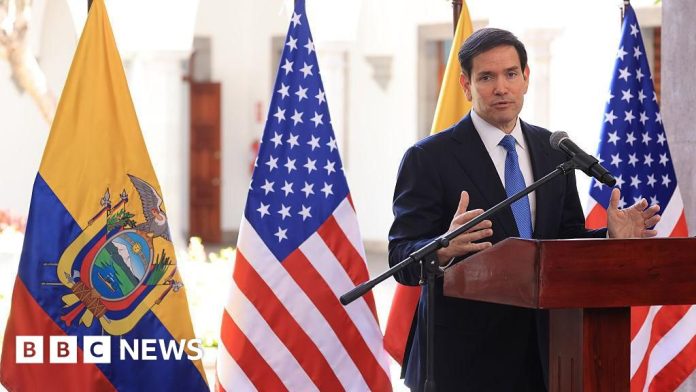
Secretary of State Marco Rubio has said the US will “blow up” foreign crime groups if needed, possibly in collaboration with other countries.
“Now they’re gonna help us find these people and blow them up, if that’s what it takes,” Rubio said during a visit to Ecuador.
He also announced the US will designate two of Ecuador’s largest criminal gangs, Los Lobos and Los Choneros, as foreign terrorist organisations.
The comments come days after US forces carried out a strike on a boat in the Caribbean Sea. The White House says it killed 11 drug-traffickers, though it did not release their identities.
Asked whether smugglers coming from US allies, like Mexico and Ecuador, could face “unilateral execution” from US forces, Rubio said “co-operative governments” would help identify smugglers.
“The president has said he wants to wage war on these groups because they’ve been waging war on us for 30 years and no-one has responded.
“But there’s no need to do that in many cases with the friendly governments, because the friendly governments are going to help us.”
The Ecuadorian and Mexican governments have not said they would assist with military strikes.
In the wake of Tuesday’s strike on the vessel in the southern Caribbean, President Donald Trump said the military operation had targeted members of the Venezuelan gang Tren de Aragua as they transported illegal narcotics towards the US.
On Thursday, the secretary of state also announced Washington would issue $13.5m (£10m) in security aid and $6m in drone technology to help Ecuador crack down on drug trafficking.
Violence in Ecuador has soared in recent years as criminal gangs battle for control over lucrative cocaine routes
According to government data, about 70% of the world’s cocaine now passes through Ecuador in transit from neighbouring producing countries, like Colombia and Peru, to markets in the US, Europe and Asia.
This designation was desired by the Ecuadorian President Daniel Noboa, who described his clampdown on criminal gangs as a “war.”
In an interview with the BBC earlier this year, he said he would be “glad” if the US considered Los Lobos and Los Choneros, as terrorist groups because “that’s what they really are”.
He also said he wanted US and European armies to join his fight.
Noboa is trying to change Ecuador’s constitution to allow foreign military bases in the country again – after the last US one was closed in 2009.
The designation means the US can target the assets and properties of anyone associated with the groups and share intelligence with the Ecuadorian government without limitations so it could take “potentially lethal” actions.
Soaring cartel violence in Ecuador has been a driver behind migration from the South American country to the US, too.
According to immigration law experts, it is unclear whether designating cartels as terrorist organisations may help or hinder their victims who seek asylum in the US.
On the one hand, it may mean they are now considered victims of “terrorism’, but on the other hand some fear those who have had to pay extortions to gangs could be penalised for ‘materially supporting’ them.
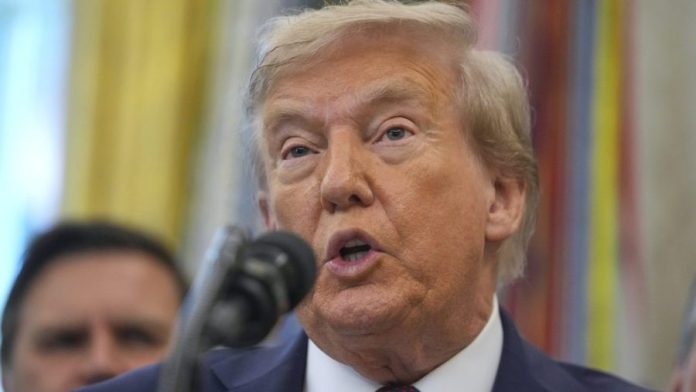
President Trump on Thursday night hosted top tech executives in a one-of-a-kind White House event, during which he asked attendees to say how much their companies were investing in U.S. manufacturing.
The president sat beside Meta CEO Mark Zuckerberg at a long table, with first lady Melania Trump on the other side. Microphones and place sittings sat in front of each attendee in the State Dining Room, after the event was moved inside due to rain.
“We don’t often get together as the CEOs of the different companies but it’s good to,” Zuckerberg said.
Trump asked him how much he’s spending over the next few years, and he said at least $600 billion in the U.S. through 2028.
Trump asked Sundar Pichai, CEO of Google, about the win he had when a federal judge ruled Google could hold onto its Chrome browser on Tuesday. Instead of discussing the court decision, Pichai turned to discuss AI, saying that the Trump administration’s AI action plan is “a great start.” Pichai, when asked, said Google is investing $250 billion.
Apple CEO Tim Cook thanked Trump for including him in the event and when Trump asked how much his company will be investing in the U.S., he said $600 billion. Cook joined Trump in the Oval Office last month to announce the latest investment to bring the total to $600 billion.
Notably absent was Elon Musk, the Tesla CEO and SpaceX founder, who served as a special government employee and top Trump adviser for the first few months of the year before feuding with Trump. A representative for Musk’s companies also did not attend.
“I know all of them indirectly, and I know some of them very well, but I know everybody at the table indirectly through reading about you and studying, knowing a lot about your business,” Trump said at the beginning of the event. He added that he is “making it very easy” for businesses “in terms of electric capacity and getting it for you, getting your permits.”
While moving around the table, Microsoft founder Bill Gates, sitting next to the first lady, said he is working on innovating on health— touting his work on vaccines and on providing health care to Africa through AI.
Gates was critical of Musk in May for his work for the Department of Government Efficiency (DOGE), especially for slashing the budget of the U.S. Agency for International Development (USAID). He accused him of “killing the world’s poorest children.”
Sitting next to Zuckerberg was David Sacks, a venture capitalist who has been tasked as the White House czar on artificial intelligence and cryptocurrency, who said there a “boom in AI because of what President Trump has done.”
Google founder Sergey Brin said it’s “phenomenal” that an American president is putting pressure on Venezuelan leader Nicolás Maduro and called it “civil rights work.” When Trump asked him to speak, he praised “his really wonderful MAGA girlfriend,” Gerelyn Gilbert-Soto, who was sitting next to him.
Lisa Su, CEO of advanced Micro Devices, around the table, said she’s “grateful” for the support on AI.
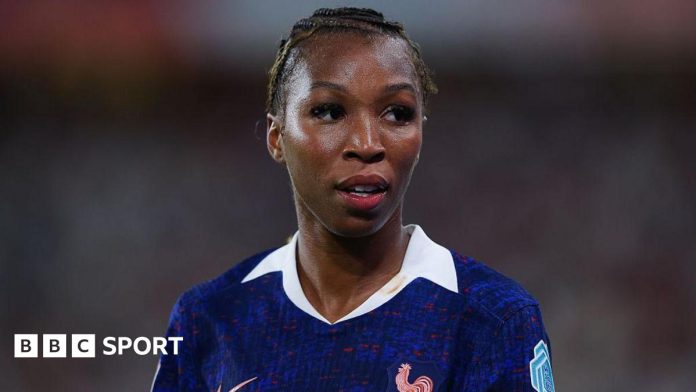
London City Lionesses agreed a £1.4m world record deal to sign Paris St-Germain midfielder Grace Geyoro on deadline day in the Women’s Super League.
The WSL newcomers also activated teenage Spain international Lucia Corrales’ release clause and paid around £430,000 to bring her in from Barcelona.
The addition of Geyoro, once confirmed by the clubs, would mean London City have made 16 permanent signings during a busy summer in which wealthy American owner Michele Kang showed she was willing to invest in her side.
Geyoro’s anticipated arrival comes after London City made a late move for the France international in the window, adding further stardust to an impressive squad.
The agreed fee beats the £1.1m ($1.5m) paid by Orlando Pride to Tigres UANL for Mexico winger Lizbeth Ovalle last month, which at the time was the highest fee paid for a player in the women’s game.
The 28-year-old Geyoro, who has 103 caps for France, was a key player for PSG and has until now spent her entire senior career there, picking up valuable experience in the Champions League.
She is widely considered one of the most exciting midfielders in Europe and started three of France’s four matches at Euro 2025, scoring twice as they reached the quarter-finals.
Meanwhile, Corrales, 19, who made her full Spain debut in March but was not called up for Euro 2025, joins London City on a four-year deal.
Corrales was one of the first female graduates of Barcelona’s renowned La Masia academy, making her Liga F and Champions League debuts in the 2022-23 campaign, before spending last season on loan at Sevilla.
Since securing promotion, London City have signed several high-profile players including Jana Fernandez from Barcelona, Danielle van de Donk from Lyon, former Manchester United captain Katie Zelem and 74-cap England forward Nikita Parris.
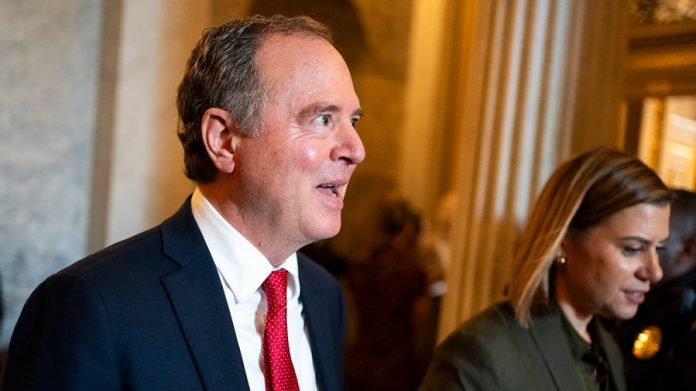
Sen. Adam Schiff (D-Calif.) on Thursday responded to ProPublica reporting about Trump Cabinet members’ mortgages, saying that “the hypocrisy of the Trump administration is nothing short of staggering.”
“Donald Trump has made mortgage fraud accusations his weapon of choice to attack people standing in his way and people standing up to him, like me,” Schiff said in a post on the social platform X later Thursday.
“Now the news about Trump’s own Cabinet and their mortgages. Should we expect Trump and his enablers at DOJ to make sensational accusations against and investigate his own Cabinet?” he added, with a link to a Thursday ProPublica report.
A minimum of three Trump Cabinet members on mortgages say that multiple homes are their primary residences, according to ProPublica’s report.
ProPublica reported that there are primary-residence mortgages for Sean Duffy, the secretary of Transportation, in New Jersey and Washington D.C. Labor secretary Lori Chavez-DeRemer, according to the outlet, rapidly went into two primary-residence mortgages. Environmental Protection Agency Administrator Lee Zeldin, per loan records, has Washington, D.C. and Long Island primary-residence mortgages, the outlet reported.
When reached for comment, an EPA spokesperson told The Hill that “this is more fake news from dark money ProPublica.”
“Administrator Zeldin’s primary residence is currently in Washington, DC, since being confirmed as EPA Administrator earlier this year,” the spokesperson continued. “Previously, Administrator Zeldin’s primary residence was in Shirley, NY, since he departed active duty in 2007. Administrator Zeldin followed ALL steps to complete the move in accordance with all laws, rules, and contracts, notifying his mortgage company, insurance company, and local government.”
A spokesperson for the Transportation Department also said that in the wake of “being confirmed as the Secretary of Transportation, Sean purchased a home in Washington D.C. where he works full-time.”
“The home in DC is not a rental, investment or vacation property. The same bank holds both mortgages and was fully informed of Secretary Duffy’s new employment location and need for a DC residence,’ the spokesperson continued.
At least three notable adversaries to President Trump have been targeted with probes from the Justice Department on their personal real estate dealings. Trump recently noted allegations against Federal Reserve board of governors member Lisa Cook to back up his effort to remove her from her position.
New York Attorney General Letitia James (D) and Schiff have dealt with investigations linked to their mortgage records as well.
The Hill has reached out to the White House, Justice Department and Department of Labor for comment.
Sir John CurticeProfessor of politics at the University of Strathclyde
BBC
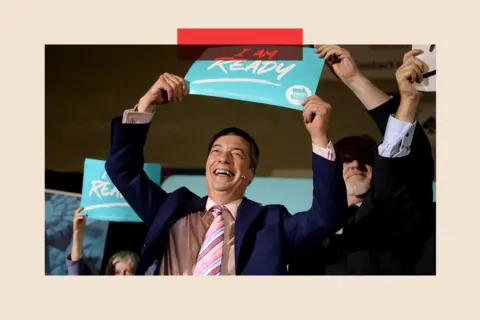
On 3 October 2021, Reform UK held its first conference – a modest one-day get-together in Manchester – only a short distance from the much larger Conservative Party gathering, taking place nearby at the city’s Convention Complex at the same time.
At the Reform event, only a few hundred activists were present in the function room – and Nigel Farage, not yet party leader, was reportedly not among them. Reform was polling around 3% and had won just two councillors in that May’s local elections.
What a difference four years makes.
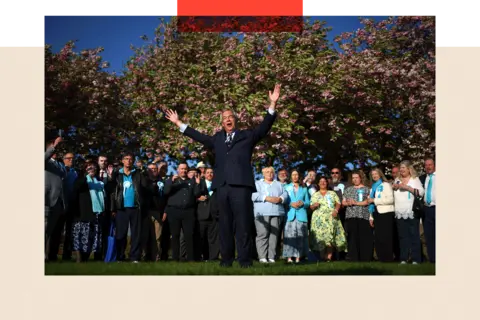
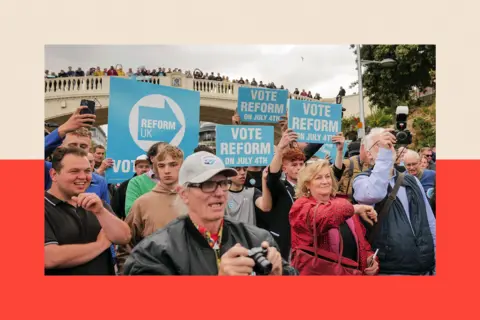
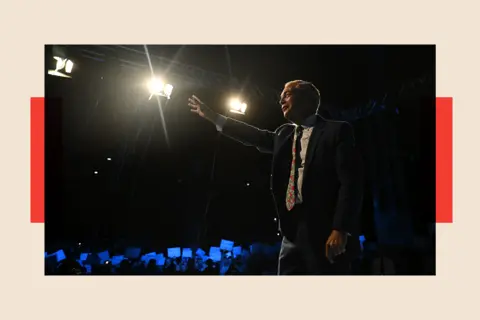
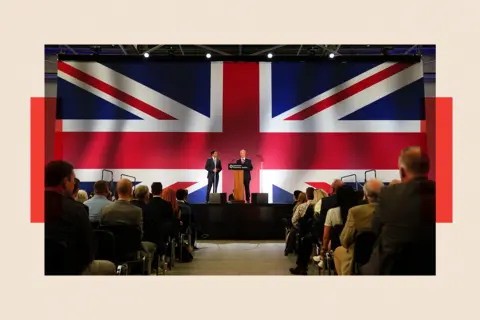
Reform’s annual conference takes place this weekend in Birmingham, with 5,500 tickets reportedly already sold. It is thought that one in five of the nation’s lobbyists will be there too. The party has now been ahead in the polls for five months.
Never before has a party other than Conservative or Labour been ahead in the polls for so long. Indeed, since the party’s success in English local elections in May, it has consistently been averaging 30% to 31%, enough to put it well ahead of all its rivals.
EPA-EFE/REX/Shutterstock
Reform’s rise marks the longest time in history that a party outside Labour or the Conservatives has led in the polls
Recent attempts by YouGov and More in Common to estimate what the party’s support might mean in terms of MPs suggest that if an election were held now, Reform would be the largest party by far, albeit probably short of an overall majority. At the moment, Nigel Farage – now firmly in place as Reform’s leader - appears potentially on course to become the UK’s next prime minister.
The question hanging over the party is – can they sustain this?
The next general election could be almost four years away. Much could happen between now and then. A year into the last parliament the Conservatives were narrowly ahead in the polls – only to crash to a heavy defeat in last summer’s election.
But what could make a difference – one way or the other – to Reform’s prospects? Analysis of who is – and who is not – backing the party, and why, provides us with vital clues.
So too does an understanding of the broader UK political landscape, one in which a fragmentation of the vote away from the main parties is offering Reform an unprecedented opportunity.
A plague on both their houses?
Support for Reform might be thought to be simply a protest vote by an electorate fed up with slow growth, an ailing health service, and high levels of immigration. If so, the party’s popularity would seem likely to wane should the country’s prospects look brighter in four years.
Dissatisfaction with the state of the country certainly underpins support for Reform. For example, according to Ipsos, 68% of voters feel that the economy will get worse over the next year, up from 43% at the time of last year’s election and as high as it has ever been a year into a new Parliament. Among those whose current party preference is Reform, a remarkable 89% are pessimistic about the prospects for the economy.
Bloomberg via Getty Images
Dissatisfaction with the economy, NHS and immigration is driving voter support for Reform
Meanwhile the most recent British Social Attitudes survey, conducted last autumn, showed that a record 59% are dissatisfied with the NHS. Among those who voted Reform last year, the figure is even higher – 69%.
Most voters think that immigration is too high. An Opinium poll in August found that 71% feel that way. But nearly everyone who is now backing Reform (97%) expresses that view.
Reform supporters have little confidence in the ability of either Labour’s leader, Prime Minister Sir Keir Starmer, or the Conservative leader, Kemi Badenoch, to address these issues. Most lack confidence in Sir Keir’s ability to handle the economy, the NHS, and immigration. However, at the same time, on balance their judgement of Badenoch’s abilities is a negative one too.
Indeed, Reform supporters have even less confidence than Conservative supporters in Sir Keir’s abilities. At the same time, they have less confidence than Labour supporters in Badenoch’s capabilities.
For example, 58% of Conservatives lack confidence in Sir Keir’s ability to turn the economy around – well short of the 76% of Reform supporters who express that view. Meanwhile, 40% of Labour supporters doubt that Badenoch can tackle the economy, less than the 47% figure among Reform supporters.
A powerful magnet
Reform supporters seem to have lost faith in the ability of either of Britain’s two traditional governing parties to address the country’s most pressing problems.
In contrast, they do have confidence in Farage. This is especially so for immigration, but he also scores well on the economy and the NHS.
Among those currently backing Reform, 84% approve of the job Farage is doing – far higher than the equivalent figure for Sir Keir among Labour supporters (62%) or Badenoch (46%) among Conservatives.
While Farage is not so widely admired in the wider population, his ratings among voters in general still compare favourably with those of his rivals.
In Opinium’s most recent poll, for example, rather more say they disapprove (40%) than approve (30%) of how Farage is handling his job as Reform leader. But that still means that more approve of the job he is doing than approve of Sir Keir (21%) or Badenoch (16%).
The Reform leader is proving a powerful magnet that is attracting discontented voters into his party’s camp.
The party’s future prospects seemingly rest heavily on Farage remaining its leader. The party might struggle to keep its support if Farage departed the political scene. At the same time, voters might drift away if the country’s prospects improve under Labour or if Badenoch can persuade them that she and her party have better solutions than Farage.
The Brexit factor
Politicians do not talk much about Brexit these days. Yet, Brexit is a major fault line that sharply distinguishes those who do and do not support Reform. The party’s support stands at no less than 53% among those who voted Leave in 2016. In contrast, just 11% of those who backed Remain are to be found in the ranks of current Reform supporters.
But to misquote a former prime minister, Brexit means more than Brexit. Those who voted Leave in 2016 have distinctive views on a range of so-called cultural issues.
They are especially concerned about immigration, they are doubtful about many equalities policies, and they are more inclined to be sceptical about climate change.
Getty Images
Reform is especially popular with Leave voters, winning more than half their support
These views are widely prevalent among those currently inclined to vote for Reform but are often out of kilter with the population as a whole.
According to the latest British Social Attitudes survey, 81% of those who voted Reform last year believe that migrants have undermined rather than enriched the country’s culture. Equally 73% feel that migrants have been bad for the country’s economy. These figures are very different from those among voters in general, just 31% of whom believe that migration has undermined Britain’s culture, and only 32% feel it has been bad for the economy.
Meanwhile, 53% of Reform voters believe that attempts to give equal opportunities for lesbians, gay men and bisexuals have “gone too far”. Some 49% say the same of equal opportunities for black and Asian people, while 71% express that view in the case of transgender people. The equivalent figures among the general public are 33%, 18% and 50% respectively.
Only 33% of Reform voters believe that climate change is being caused mainly by human activity, far fewer than the 54% figure among the public in general. As many as 25% state that the climate is largely changing as a result of natural processes, a view shared by just 8% of all voters. Reform voters are less supportive than other voters of virtually any measure designed to address climate change.
AFP via Getty Images
Opposition to immigration, equal opportunities policies, and climate change measures feature prominently in Reform’s campaigning
Opposition to immigration, equal opportunities policies, and climate change measures feature prominently in Reform’s campaigning – which often cites spending on these issues as alleged examples of government waste. Indeed, Reform voters are noticeably less keen on government spending too. Only one in four (25%) believe taxes should be increased in order to spend more on “health, education and social benefits”, much lower than the 46% of all voters who take that view.
The party is singing a tune that is widely popular among the many Brexiteers who have been recruited into the ranks of its supporters.
Doing so has enabled the party to capture much of the coalition of Leave voters that gave Boris Johnson his mandate in 2019 to deliver Brexit. The Conservatives lost one in four of their 2019 supporters to Reform at the last election – and now, on top of that, Badenoch’s party has lost another three in 10 of those who were still loyal to the Conservatives last year. In total, that means half of those who voted for Johnson in 2019 are now backing Farage.
Consequently, support for the Conservatives among 2016 Leave voters (23%) is only a little higher now than among Remain supporters (14%). In 2019, 75% of Leave voters (and just 20% of Remainers) backed Johnson.
At the heart of Reform’s success is a fundamental realignment of the party preference of Brexit supporters.
EPA/Shutterstock
Even if Labour makes gains, analysts say Reform’s support is unlikely to fade quickly
This suggests that, even if Labour is able to address the country’s policy challenges successfully between now and the next election, support for Reform will not simply disappear. After all, in contrast to the Conservatives, Labour have lost only one in eight of its 2024 voters to Reform.
Rather, what will be key to Reform’s fortunes and specifically its vote share will be the outcome of a battle with the Conservatives for the support of pro-Brexit, socially-conservative and climate-sceptic Britain. Such voters are far from representative of the country. However, they are providing Farage with a niche market of support that, presently at least, is enabling him to make much of the political weather.
A fragmented landscape
There is one other potential obstacle facing Reform. The party is currently benefiting from a fragmentation of support among its rivals.
We have heard lots about Labour and the Conservatives both losing votes to Reform. But on the socially-liberal side of politics, too, support has been seeping away from the historically mainstream parties.
The most recent polls suggest 9% of Labour’s 2024 vote has gone to the Liberal Democrats and 6% to the Greens.
Reform’s current tally of 31% has never been sufficient to win an election. But in today’s fragmented political landscape in which the combined poll ratings for Conservative and Labour are at an historic low, it could be.
Should Labour or the Conservatives recover, however, the picture would be very different.
For instance, if Labour could match Reform on, say, 30%, perhaps by squeezing the Liberal Democrats, the Greens and the nationalist parties, they would probably win many more seats than Reform. Labour’s vote is more geographically concentrated which means it is better able than Reform to turn votes into constituency seats.
PA Media
Reform now polls at 31% — a level normally seen as not enough to win with but potentially sufficient in today’s divided politics
Whether those with little appetite for Farage remain fragmented in their loyalties or become consolidated behind one party could therefore be crucial in determining Reform’s chances of power.
Meanwhile, given how much of Reform’s support comes from former Conservative voters, any recovery by the Tories would be an even bigger problem for Farage because it would most likely involve them taking votes directly from his party.
If the political scene does become less fragmented, Reform would need to think about broadening its appeal beyond its core issues of immigration, equalities and climate change. Despite widespread pessimism about the country’s financial health, at the moment voters beyond the ranks of the party’s existing supporters are less willing to trust the party on economy than they are on immigration.
Whether Farage can reach out beyond the ranks of socially-conservative Britain could yet be crucial if the party is eventually to succeed in its bid for power.
John Curtice is Professor of Politics, Strathclyde University, and Senior Fellow, National Centre for Social Research and The UK in a Changing Europe.
BBC InDepth is the home on the website and app for the best analysis, with fresh perspectives that challenge assumptions and deep reporting on the biggest issues of the day. And we showcase thought-provoking content from across BBC Sounds and iPlayer too. You can send us your feedback on the InDepth section by clicking on the button below.
sup, sub { font-size: 100% !important; } sup { mso-text-raise:10% } sub { mso-text-raise:-10% }
{beacon}
Technology
Technology
<!–
The Big Story
Blackburn presses for kids online safety bill
Sen. Marsha Blackburn (R-Tenn.) is pushing for the passage of kids’ online safety legislation in the face of growing concern about the impacts of artificial intelligence (AI) chatbots on young users.
Blackburn, who has long advocated for the Kids Online Safety Act (KOSA), is doubling down on her calls to get the legislation across the finish line in the wake of recent revelations that Meta deemed “sensual” chatbot conversations acceptable for children.
KOSA, which the Tennessee Republican reintroduced earlier this year, seeks to regulate the features tech companies can offer kids online and reduce the addictive nature and mental health impacts of their platforms.
“We’ve been on this for five years, trying to get this passed, so that Big Tech has the responsibility to put the safety and well-being of children ahead of profits,” Blackburn said on the latest episode of her podcast “Unmuted with Marsha,” shared first with The Hill.
Meta, the parent company of Facebook and Instagram, came under fire last month, after Reuters reported that an internal policy document featured examples suggesting its chatbots could engage in “conversations that are romantic or sensual” with children.
The revelations drew backlash from both sides of the aisle. Meta said it was an error and that it had removed the offending language.
The company later told TechCrunch it was updating its policies to restrict teenage users from discussing self-harm, suicide, disordered eating or potentially inappropriate romantic conversations with chatbots.
“Meta is using our children as a product,” Blackburn said. “They’re making money off of them. They are selling their information. So, if you have a child or a grandchild, when they are online, they are the product.”
Brian Montgomery, whose son took his life after being a victim of sextortion on Instagram and has since become an advocate for kids’ safety legislation, argued they are not asking for “anything unreasonable” from tech firms.
“We’re not asking for tech to be parents. We’re not asking them to do anything unreasonable,” he told Blackburn on Thursday’s podcast.
“We’re saying, ‘We need you to take a reasonable approach to keeping kids safe and making sure their product is safe. And we know it’s not safe.’”
Other AI chatbots have recently come under fire as well. The family of a 16-year-old boy sued OpenAI last month, alleging that ChatGPT encouraged him to take his life.
OpenAI announced Tuesday that it was adjusting how it models respond to users in crisis and strengthening its protections for teens.
Welcome to The Hill’s Technology newsletter, I’m Julia Shapero — tracking the latest moves from Capitol Hill to Silicon Valley.
How policy will be impacting the tech sector now and in the future:
Trump asks Supreme Court to permit FTC commissioner firing
President Trump took his fight to fire Federal Trade Commission (FTC) leaders without cause to the Supreme Court on Thursday, a move that could prompt the justices to overrule a key precedent blessing removal protections at the agency for decades. Trump’s bid to fire Rebecca Slaughter, a Democrat appointed to the FTC in 2018, comes as part of the administration’s broader effort to eviscerate restrictions that provide …
Melania Trump hosts tech leaders at AI education roundtable
First lady Melania Trump hosted several top technology leaders at the White House on Thursday for a meeting of an artificial intelligence (AI) education task force, as she increasingly takes up the mantle of AI-related issues. She was joined by Google CEO Sundar Pichai and IBM chairman and CEO Arvind Krishna, while OpenAI CEO Sam Altman was spotted in the audience. “I predict AI will represent the single largest growth …
Trump to host tech CEOs for first event in newly renovated Rose Garden
President Trump on Thursday will host two dozen high-profile tech and business leaders for the first event in the newly renovated White House Rose Garden, including Meta founder Mark Zuckerberg, Apple CEO Tim Cook, Microsoft founder Bill Gates and OpenAI founder Sam Altman, according to an invite list obtained exclusively by The Hill. The Rose Garden gathering is set to take place after CEOs and tech leaders attend a White …
American Bitcoin, the bitcoin mining company tied to President Trump’s two eldest sons, made its debut on the stock market Wednesday.
The company’s stock, which opened at $8, initially surged before settling close to the initial price at the close of its first day of trading. As of Thursday evening, the price had dropped to $6.41.
Eric Trump and Donald Trump Jr. joined forces with the bitcoin mining firm Hut 8 to launch American Bitcoin earlier this year. They announced in May that they were merging with Gryphon Digital Mining to go public.
American Bitcoin is one of several crypto ventures launched by the Trump family in the past year, as the president and his sons have embraced the industry.
However, the Trumps’ expanding digital asset portfolio has complicated efforts to pass long-sought crypto legislation in Congress, as Democrats raise concerns about conflicts of interest.
Crypto Corner is a daily feature focused on digital currency and its outlook in Washington.
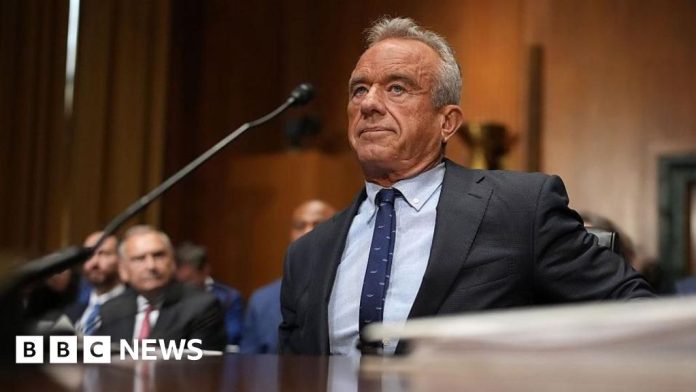
Robert F Kennedy Jr has defended his leadership of US health agencies in a fiery hearing, as lawmakers grilled him over his vaccine policies and other sweeping changes.
During three hours of testimony, Democrats accused the US health secretary of lying and restricting Americans’ access to vaccines. Several Republican senators also raised concerns.
The hearing comes a week after Kennedy fired the leader of the US Centers for Disease Control and Prevention (CDC) in a clash over his vaccine policies.
Since taking the helm at the Department of Health and Human Services (HHS) in February, some of Kennedy’s decisions have alarmed health experts.
In June, he fired every member of a panel of independent vaccine experts that issues recommendations for immunisations.
Public health experts raised concerns about the qualifications of the members – several of whom are vaccine critics – appointed in their place.
Democrats were quick to try to pin the secretary down on the turmoil at the CDC, and on his previous assurances of backing vaccine access.
Enough Republican senators have echoed such criticism to make this a rare showdown that did not immediately devolve into partisan to and fro.
In a Wall Street Journal op-ed published on Thursday, Susan Monarez, the former head of the CDC, said she was fired because she refused to rubber-stamp vaccine recommendations from the new panel.
During Thursday’s hearing, the Senate Finance Committee’s ranking Democrat, Ron Wyden of Oregon, pressed Kennedy on Monarez’s accusation.
The health secretary denied it, saying he had told Ms Monarez to resign after asking her if she was a “trustworthy” person. He said she had responded “no”.
He described the overhaul at the agency – which included the resignations of several top officials – as “absolutely necessary”, and that it had “failed miserably during Covid”.
The vaccine advisory panel was one of several of Kennedy’s policy changes that lawmakers brought up during the hearing, leading to clashes.
As Senator Maggie Hassan accused the health secretary of restricting access to vaccines, Kennedy angrily responded: “You’re just making stuff up.”
Lawmakers repeatedly questioned Kennedy over his stance on the Covid-19 vaccine, including Senator Mark Warner, who asked the health leader how many lives the shots had saved during the pandemic.
Kennedy said he did not know because of “data chaos” under the Biden administration.
“You’ve had this job for eight months and you don’t know the data about whether vaccines saved lives?” Warner asked.
According to the latest CDC figures, there have been 1,231,440 Covid deaths in the US.
The CDC notes that these are provisional numbers and include Americans who died “with Covid” and where Covid-19 was “an underlying or contributing cause of death on the death certificate”.
In what appeared to be a conciliatory shift in tone, Kennedy later said the vaccine saved “quite a few” lives.
Democrats repeatedly pressed Kennedy to resign, and he in turn pushed back hard – the sort of attitude President Donald Trump tends to look for in his political appointees – by accusing them of “just making things up” and “crazy talk”.
Republicans took a more measured tone, with some praising Kennedy’s leadership and others asking him to clarify what they described as contradictory remarks.
Senator Thom Tillis – who said before the hearing that he planned to ask Kennedy why his actions were not “matching up” with his promises – gave him a list of questions to answer at a later time.
The Republican lawmaker noted that Kennedy had accused some scientists of lying in his responses during the hearing.
“I’d just like to see the scientific evidence of that,” he said.
The toughest Republican questioning came from Senator Bill Cassidy, a doctor who gave a key vote to confirm Kennedy only after he gave him assurances that he would uphold several US vaccine policies.
Cassidy pressed Kennedy on his stance on Covid-19 immunisations, accusing him of restricting access to the shots because of conflicting recommendations from health agencies.
Under Kennedy’s leadership, the US Food and Drug Administration recently approved a round of Covid booster shots for fewer groups – only for adults 65 and older and people with medical conditions.
“Effectively, we are denying people vaccines,” Cassidy said.
“You’re wrong,” Kennedy responded.
Kennedy’s hearing comes a week after he fired 600 CDC employees in addition to Monarez.
Just weeks before, a gunman fired 500 rounds at the CDC’s headquarters in Atlanta, Georgia, killing a police officer. Investigators said the shooter blamed the Covid-19 vaccine for making him suicidal.
Afterwards, hundreds of HHS officials wrote a letter to Kennedy, accusing him of fuelling mistrust in public health officials by spreading misinformation.
They pointed to his statements about vaccines, including the Covid-19 shot and the immunisation against measles.
This year, the US has seen its worst outbreak of measles in decades.
While Kennedy has endorsed the vaccine as the best way to prevent the spread of measles, he has also made false claims about the safety and efficacy of the shot.
Polls indicate the American public overwhelmingly supports vaccinations – a sharp contrast with the health secretary’s scepticism.
But unless Kennedy becomes a political liability for Trump, the president’s backing appears solid.
It would take a major shift in public sentiment for the president to accept the blowback he would receive from segments of his own base if Trump were to cut Kennedy loose.
With analysis from the BBC’s North America correspondent Anthony Zurcher