12.6 C
New York
Monday, May 4, 2026
Home Blog Page 188

Topshop plans return to High Street in John Lewis stores

0


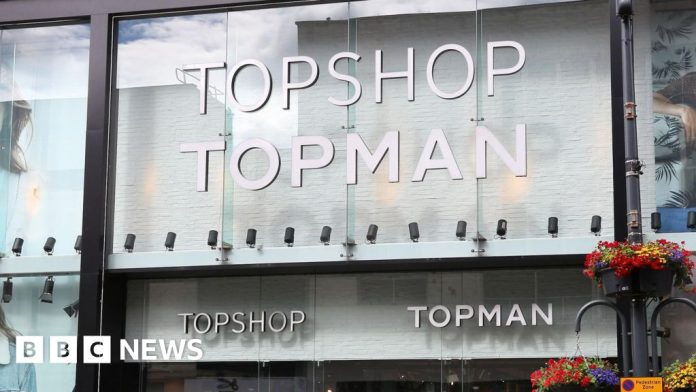
Topshop will return to the High Street, five years after it closed all of its UK stores.

The brand is going to be available in 32 John Lewis shops from February 2026, while its menswear brand Topman will be available in six stores.

The chain disappeared after the collapse of Sir Philip Green’s retail empire, which owned Topshop as well as Burton and Dorothy Perkins.

The Topshop brand was bought by the online retailer Asos, which sold its majority stake last September to the Danish retail tycoon Anders Holch Povlsen and is now in the midst of a major comeback.

Asos currently sells Topshop and Topman products on its website and a standalone Topshop site was recently relaunched, but it was unclear if the brand would ever reappear on the High Street again until recently.

“Customers absolutely want to see us back in stores and we want to bring that nationwide,” said Michelle Wilson, managing director of Topshop and Topman.

The new Topshop spring collection will feature 120 pieces, curated by John Lewis.

The brand will be given a “prime” position in stores, according to Peter Ruis, Managing Director at John Lewis.

He said he hopes the partnering with the iconic brand will bring new customers through the department store’s doors, and believes people will be queueing to get in when range is launched.

“I think the best fashion brands are multi-generational. The brilliance of Topshop is it is so affordable,” he said.

The upmarket store Liberty London in Soho recently started to sell a small Topshop collection.

But the tie up with John Lewis is the first nationwide partnership for the brand, and the fashion retailer, which had its heyday in the 2000s and 2010s, wants to introduce some standalone stores in future.

Topshop struggled during the covid-19 pandemic, when it had to close its physical stores, but it had been having problems for several years.

It failed to keep up with changing shopping habits among its key demographic – teenagers and young adults – primarily the rise of online shopping.

And as its core customers aged out of its products, it struggled to replace them with new shoppers or adapt its products to its old base’s tastes.

Graham Soult, a retail consultant, said the partnership between John Lewis and Topshop was “a canny move for both brands”.

“If you’re Topshop, you’ve got a customer base who have a real affection for the brand,” he said. And for John Lewis, “it gets the name out there in a positive way” and draws in new customers.

“Maybe this will be a template for how you bring back an iconic name.”

How we are making Union Station safe and beautiful again

0


Anyone who has spent time in Washington understands why Union Station is the first stop on President Trump’s crusade to build big, beautiful things again.

What operated for 100 years as a monument to the greatness of American commerce, ingenuity, and connection has now become an embarrassing epicenter of our capital’s crime crisis.

The station had become dilapidated. Stores had been shuttered. Vagrancy was rampant. A lack of leadership had created an environment where tourists and rail passengers no longer feel safe. A central station that once represented a nation on the rise has eroded into a ruin built by a people past its prime.

Trump and I are now working to reverse this decline.

The Department of Transportation has owned Union Station since the 1980s. As of last week, my department is reclaiming station management after decades of bureaucratic inaction. It is past time to restore safety, revitalize economic activity, and deliver overdue repairs.

We will embrace a “one building” approach with the Union Station Redevelopment Corporation and Amtrak to beautify this historic landmark in the heart of our nation’s capital. That means immediate improvements to security, preparing the way for private investment, and working together to maximize the uses of the station and clear the existing backlog of projects.

The capital needs of Union Station — including improvements to elevators, lighting, and security, along with replacing the roof and other major systems — are estimated to cost $170 million. The previous administration planned to pay more than $10 billion over 13 years for a grand expansion without addressing the basic needs of the historic station, all the while reducing critical elements such as parking.

We are going to take immediate action to make Union Station beautiful and safe again, and we are going to do it at a fraction of that cost. The station already smells nicer and looks cleaner just days after we launched our effort.

Fixing Union Station is just one piece of the puzzle to make D.C. great again. Washington D.C.’s transit crime crisis remains deadly. As Transportation secretary, I find the state of our capital metro system to be unacceptable.

Trump was right to call for the nation’s capital to lead by example in public safety. Under his direction, National Guard members are now patrolling the system. But additional leadership must begin with Metro, making it a secure, zero-tolerance environment for violence — regardless of offenders’ age.

Before Trump rightfully deployed the National Guard and federal police, assaults on riders and employees were spiking. So far this year, Metro Transit Police have reported a 33 percent rise in arrests and citations.

I saw the lawlessness myself on a visit to the Metro station right outside my department’s headquarters when a patrol officer was stabbed in the face. Law-abiding citizens are being victimized — many by repeat juvenile offenders who know they face little more than a slap on the wrist. At least one bus driver is assaulted every single day in Washington.

Let’s stop sugarcoating the problem: The District’s juvenile justice system is broken, and this is putting Metro passengers and workers at risk.

Let’s review some recent cases. In March, a 19-year-old shot a stranger aboard a V2 Metro bus in Southeast D.C.—just hours after another shooting on the same route near 22nd and Minnesota Avenue.

In April, gunfire erupted outside the Petworth Metro Station, killing one teen and injuring another.

In June, a triple shooting near Mt. Vernon Square Metro claimed the life of a congressional intern and wounded two others.

Just last month, a 15-year-old was shot in the Navy Yard neighborhood, followed by yet another juvenile firing a stolen gun at teens just blocks away.

These incidents, alongside the statistics, suggest a war zone rather than a transit system. The Trump administration will not tolerate this anarchy any longer.

In the last few weeks, the National Guard and our federal law enforcement have been doing everything they can to restore the peace. So far, the District’s residents are seeing results.

Carjackings are down 83 percent. Robberies are down 52 percent. Violent crime across the board is down 40 percent. Illegal guns, drugs, and criminals are finally being taken off the streets. Even D.C. Mayor Muriel Bowser has said she “greatly appreciate[s] the surge” in law enforcement.

“We know that we have had fewer gun crimes, fewer homicides, and we have experienced an extreme reduction in carjackings,” the mayor said last week.

But D.C.’s incumbent government must do more. Why do local leaders insist on recycling violent offenders — many of them minors — back onto buses and trains to continue terrifying passengers? Although the Metro system’s recently adopted ban on violent offenders represents a step forward, District law often shields juveniles from meaningful penalties. This means that even those who commit serious crimes are released quickly, sometimes within hours, only to return to the same system they endangered.

What kind of message does that send to criminal predators? Easy — commit a crime this morning, be back on the train committing more crimes by dinnertime.

This isn’t just a D.C. problem. This is the nation’s capital. Metro is one of the busiest public transit systems in the country. Tourists ride it. Federal workers rely on it. Our nation runs on it. Union Station is at the center of it.

To protect riders and restore confidence, D.C. leaders must change their juvenile justice laws to ensure that violent crimes — including armed assaults, shootings, and sexual offenses — carry serious, enforceable penalties.

Metro’s ban should also be fortified so that repeat violent offenders, including juveniles, are permanently prohibited from using the system. We must also close loopholes that allow offenders with pending violent charges to return to transit before their cases are resolved.

At the same time, Metro security must be strengthened. An expanded transit police presence in high-risk stations and on late-night routes should focus enforcement against armed juveniles and known repeat offenders.

In addition, WMATA security feeds should be fully integrated with Washington’s Metropolitan Police Department and the U.S. Attorney’s Office, ensuring rapid identification, arrest, and prosecution.

We are going to transform Union Station from an epicenter of crime to a proud center of commerce.

Sean P. Duffy is the 20th secretary of Transportation and a former congressman from Wisconsin.

Sarepta Therapeutics (SRPT) Fell Despite Reporting Good Results

0


Carillon Tower Advisers, an investment management company, released its “Carillon Eagle Mid Cap Growth Fund” second-quarter 2025 investor letter. A copy of the letter can be downloaded here. Mid-cap stocks rebounded in the second quarter, delivering a strong recovery. The Russell Midcap Growth Index (up 18.20%) outperformed the Russell Midcap® Value Index (up 5.34%) in the quarter. In addition, you can check the fund’s top 5 holdings to determine its best picks for 2025.

In its second-quarter 2025 investor letter, Carillon Eagle Mid Cap Growth Fund highlighted stocks such as Sarepta Therapeutics, Inc. (NASDAQ:SRPT). Sarepta Therapeutics, Inc. (NASDAQ:SRPT) is a commercial-stage biopharmaceutical company. The one-month return of Sarepta Therapeutics, Inc. (NASDAQ:SRPT) was 11.69%, and its shares lost 86.53% of their value over the last 52 weeks. On September 02, 2025, Sarepta Therapeutics, Inc. (NASDAQ:SRPT) stock closed at $18.16 per share, with a market capitalization of $1.901 billion.

Carillon Eagle Mid Cap Growth Fund stated the following regarding Sarepta Therapeutics, Inc. (NASDAQ:SRPT) in its second quarter 2025 investor letter:

“Sarepta Therapeutics, Inc. (NASDAQ:SRPT) develops RNA-targeted medicines and gene therapies for rare neuromuscular diseases. The company reported quarterly revenue that exceeded expectations, but posted a larger than expected loss per share and revised its 2025 sales forecast downward. The stock sold off sharply after a second patient died from acute liver failure after being treated with Elevidys, its gene therapy for patients with Duchenne muscular dystrophy.”

Sarepta (SRPT) Jumps Nearly 20% on Corporate Restructuring

Sarepta Therapeutics, Inc. (NASDAQ:SRPT) is not on our list of 30 Most Popular Stocks Among Hedge Funds. As per our database, 41 hedge fund portfolios held Sarepta Therapeutics, Inc. (NASDAQ:SRPT) at the end of the second quarter, which was 47 in the previous quarter. While we acknowledge the potential of Sarepta Therapeutics, Inc. (NASDAQ:SRPT) as an investment, we believe certain AI stocks offer greater upside potential and carry less downside risk. If you’re looking for an extremely undervalued AI stock that also stands to benefit significantly from Trump-era tariffs and the onshoring trend, see our free report on the best short-term AI stock.

In another article, we covered Sarepta Therapeutics, Inc. (NASDAQ:SRPT) and shared the list of Jim Cramer talked about. In addition, please check out our hedge fund investor letters Q2 2025 page for more investor letters from hedge funds and other leading investors.

Free speech laws need to be reviewed after Linehan arrest, says Streeting

0


Health Secretary Wes Streeting has said ministers need to “look at” laws concerning online speech, following the arrest of comedian Graham Linehan.

The health secretary said such laws had put “more expectation on police” and “diluted the focus and priorities of the public”, adding “that’s obviously something we need to look at”.

Streeting told the BBC it was “very easy for people to criticise police” who were only enforcing laws that had been passed by MPs, saying ministers wanted police to focus on street crime rather than posts on social media.

His comments come after the Father Ted co-creator was arrested at Heathrow Airport on suspicion of inciting violence in posts on the X website.

The arrest prompted a backlash from figures such as author JK Rowling and opposition parties including the Conservatives, who branded the arrest an “absurd infringement of free speech”.

Downing Street declined to comment on Linehan’s arrest on Tuesday, saying it was “an operational matter for the police”.

But a No 10 spokesperson added: “The prime minister and the home secretary have been clear about where their priorities for crime and policing are, and that’s tackling anti-social behaviour, shoplifting, street crime, as well as reducing serious violent crimes like knife crime and violence against women.”

When asked about the Linehan case on the BBC’s Today programme, Streeting echoed those words.

“As the prime minister and home secretary have been clear, we want the police to focus on policing streets rather than tweets,” the health secretary said.

“But the thing we are mindful of, as a government that backs the police to keep us safe, is that police are there to enforce the laws that we as Parliament legislate for.

“So if over the years, with good intentions, Parliament has layered more and more expectation on police, and diluted the focus and priorities of the public, that’s obviously something we need to look at.”

Pressed on whether the law should be changed, Streeting said: “When it comes to speech, context is king. We do have to, as legislators, tread really carefully when it comes to boundaries of free speech.”

Streeting said it was “hard for the police sometimes, because they have to apply the law as written, not the law as it was intended”.

He also said “we are all – let’s be honest – quite anxious” about some of the arrests and prosecutions over comments online.

Streeting added: “And you think, is that really what Parliament intended when we wrote these laws? So we’ve got to get the law right. Police are there to enforce the law that parliament makes.”

Mr Linehan, 57, said he had been detained by five armed officers at Heathrow Airport after flying in from the US.

He said in an online Substack article that officials then became concerned for his health and took him to hospital.

The Metropolitan Police said that a man in his 50s had been arrested on 1 September at Heathrow Airport and taken to hospital.

The police said his condition was not life-threatening and he was bailed pending further investigation.

In his Substack article, Mr Linehan said his arrest was related to three posts on X from April.

The first post, from his X feed, called it a “violent, abusive act” for a trans-identified male to be in a female-only space. He suggested: “Make a scene, call the cops and if all else fails punch him in the balls.”

Conservative Party leader Kemi Badenoch was critical of the arrest, saying: “Sending five officers to arrest a man for a tweet isn’t policing, it’s politics. Under Labour, we routinely see burglary, knife crime and assaults go unsolved, while resources are wasted on thought-policing.”

But new Green Party leader Zack Polanski told BBC Newsnight the posts were “totally unacceptable” and the arrest seemed “proportionate”.

Sir Max Hill, the former director of public prosecutions for England and Wales, said police use various laws, such as the Public Order Act, to prosecute people accused of breaking the law through their speech.

Sir Max said people can be prosecuted for inciting violence.

“If you don’t have that mechanism, then I’m afraid chaos ensues,” he said. “It is possible to cross over into criminality by words alone.”

Shami Chakrabarti, a Labour peer and former director of Liberty, a civil liberties group, said “the public order statute book and speech offences in particular do need an overarching review”.

She said some offences related to alarm and distress were “too broad”.

“But inciting violence must always be a criminal offence,” Baroness Chakrabarti added.

Reform UK leader Nigel Farage is expected to raise the Linehan case and rail against “censorship” in the UK, when he gives evidence to the House Judiciary Committee in the US on free speech on Wednesday.

Senior American politicians, including US Vice President JD Vance, have raised concerns about freedom of speech in the UK and prosecutions over comments posted online.

Since coming to office this year, the US vice president has repeatedly criticised measures like the UK’s Online Safety Act and claimed free speech in Europe was “in retreat”.

The case of Lucy Connolly, who was jailed for stirring up racial hatred against asylum seekers following the Southport attack last year, has been highlighted by some politicians in the debate about free speech in the UK.

Separately, Mr Linehan is also facing a separate charge of harassment – which he denies – and is due to appear in court on Thursday.

Republicans dismayed by Trump’s decision to use pocket rescission

0


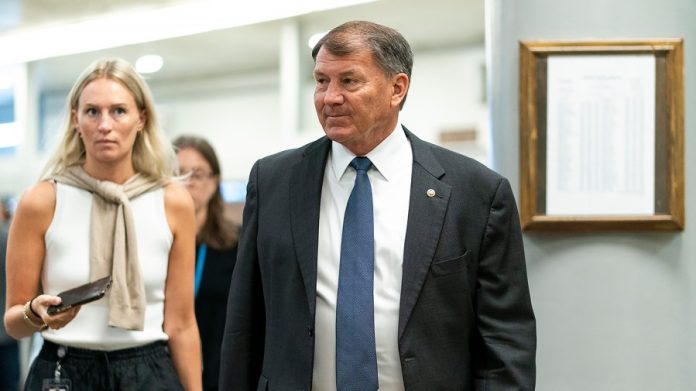
Senate Republicans are signaling their dismay over President Trump’s provocative decision to advance a $5 billion “pocket rescission,” which is becoming a major obstacle to establishing a bipartisan spending deal to avoid a government shutdown at the end of this month.

Sen. Mike Rounds (R-S.D.) expressed his concern that the pocket rescission will give Democrats a reason to oppose funding legislation, putting Washington in danger of blundering into a government shutdown after Sept. 30.

“Anything that gives our Democrat colleagues a reason not to do the bipartisan appropriations process is not a good thing. If they can use that as an excuse, that causes us a problem,” he warned.

“I do not think this is a good idea and I think it’s going to give our Democratic colleagues a reason not to work with us on an appropriations process,” he said

Sen. Lisa Murkowski (R-Alaska), a senior member of the Appropriations Committee, on Tuesday came out “strongly” against Trump’s move to sidestep Congress and claw back funding without a vote, calling it “unlawful.”

“Congress alone bears the constitutional responsibility for funding our government, and any effort to claw back resources outside of the appropriations process undermines that responsibility,” she said in a statement posted on social media.

She warned the “unilateral actions” by Trump’s Office of Management and Budget “risk throwing the entire process into chaos.”

Sen. Shelley Moore Capito (R-W.Va.), another senior member of the Appropriations Committee, said she doesn’t know whether Trump’s pocket rescission is lawful or not but urged the White House to let Congress handle funding clawbacks, something it does routinely.

“I think we need to appropriate and the appropriations process needs to be adhered to and strengthened, which we’re trying to do,” she said.

“I don’t know if it’s legal or illegal, I think that’s going to have to be settled by the court,” she said.

She noted that lawmakers “do rescissions in our appropriations bills all the time.”

“So the appropriations route is my preferable route,” she said.

Senate Appropriations Committee Chair Susan Collins (R-Maine) last week expressed her strong displeasure with the White House’s decision to advance a pocket rescission.

“Any effort to rescind appropriated funds without congressional approval is a clear violation of the law,” she said.

Sen. Kevin Cramer (R-N.D.) said he’s worried about the “separation” of powers between the executive and legislative branches, with the president moving to seize funding already appropriated by Congress and doing it so soon before the end of the fiscal year that senators have little chance to respond.

“Do I worry about the separation issue? Sure I do. I think that Congress has every right to defend its Article I role,” he said. “At the same time we have a powerful presidency.”

The North Dakota Republican questioned whether it’s a worthwhile expenditure of Trump’s political capital to pick a fight with Congress.

“The political capital expended by on some causes is not worth” the potential victory, he said. “I’m just not sure it’s worth it.”  

Senate Majority Leader John Thune (R-S.D.) said Tuesday that while Republican senators might support Trump’s proposal to cut $5 billion in funding from the State Department and the U.S. Agency for International Development, which Trump dismantled, he indicated that Republicans are not thrilled with the process of a pocket rescission.

Thune said Republican lawmakers should be able to enact spending cuts through the regular appropriations process, something he’s tried to get back on track after years of Congress resorting to massive year-end omnibus packages to get its work done.

“Looking at the composition of the rescissions, I think there are things for the most part that a lot of people would agree with. … But as a matter of process, I think it’s the right thing to have the appropriations process do their work,” he said, revealing that he agrees with fellow Republican senators who say that Congress, not solely the executive branch, should handle funding reductions and rescissions.

“That’s why we tried to move bills on the floor. We’ll try and move some more before the end of the fiscal year and do everything we can to avoid a government shutdown,” he said.

The Senate this summer, before it left for a four-week August recess, passed three appropriations bills funding military construction and veterans’ affairs, agriculture and the legislative branch.

Thune on Tuesday revealed that he plans to move additional spending bills before the end of the month and told reporters he doesn’t plan to negotiate a spending deal with Senate Democratic Leader Chuck Schumer (N.Y.) behind closed doors — something that was a regular practice in past Congresses.

Schumer and House Democratic Leader Hakeem Jeffries (N.Y.) have asked Thune and Speaker Mike Johnson (R-La.) to participate in a “four corners” negotiation between the top leadership members of both chambers to reach a spending deal.

Thune has a different plan: Let the spending bills work their way through the Senate and House Appropriations committees and onto the floor without backroom dealmaking.

“We’re committed to a bipartisan process to fund the government. Chuck’s used to writing these bills behind closed doors in his office, that’s the way it’s been done when he ran the Senate. We’re running the Senate differently,” he said. “We want this to be in the light of day. We think these debates ought to be on the floor in public.”

Jeffries told reporters earlier Tuesday that House Democrats will vote against funding bills if they’re not included in the process of drafting them.

“We will not support a partisan spending bill put forward by Republicans that hurts everyday Americans,” he said

Jeffries said he communicated that message directly to the Speaker last week.

The Democratic leader said he told Johnson he wants to “find common ground where possible” but “also made clear we’re not going to support partisan funding legislation. Period. Full stop.”

Schumer warned in a “Dear Colleague” letter Tuesday of the growing chance of a government shutdown in part because of Trump’s bid to claw back funding without congressional approval.

“As we near the funding deadline, Republicans are once again threatening to go-at-it-alone — heading our country towards a shutdown,” he wrote.

“With the Trump administration’s attempt of the so-called ‘pocket rescission,’ it is clear that Republicans are prioritizing chaos over governing, partisanship over partnership,” Schumer said.

Sen. Chuck Grassley (Iowa), the most senior Senate Republican, argued that President Jimmy Carter proposed rescissions in July of 1977, which some Republicans now argue was an attempt at a pocket rescission.

Grassley said the issue has become muddled because the Government Accountability Office ruled in 1977 that a pocket rescission was legal but has since changed its view of the matter.

“All I can tell you is in 1977 Carter did it and he did it on the advice of the GAO recommendation and since then GAO has changed their mind, so I guess it’s all up in the air,” he said when asked about Trump’s proposed pocket rescission.

Sen. Dick Durbin (Ill.), a senior Democrat on the Appropriations Committee, warned the proposed “pocket rescission” would serve as a major obstacle to getting Democratic votes for a deal to avoid a government shutdown.

He said if Republicans don’t provide a commitment on rejecting a pocket rescission, “they’re not respecting the appropriations process.”

He urged Republican colleagues to join with Democrats to beat back the president’s proposal.

“If we’re going to respect the appropriations process, then the Congress has to hang together to enforce it. And that means when the president goes too far, we got to say no,” he said.

Access to this page has been denied.

0


Access to this page has been denied because we believe you are using automation tools to browse the
website.

This may happen as a result of the following:

  • Javascript is disabled or blocked by an extension (ad blockers for example)
  • Your browser does not support cookies

Please make sure that Javascript and cookies are enabled on your browser and that you are not blocking
them from loading.

Reference ID: #2f649371-88b3-11f0-b9a9-344525f92c8e

UK cement production drops to lowest levels since 1950s

0


UK cement production has fallen to its lowest level since 1950, putting the government’s house building plan at risk, a trade body has warned.

Cement is the key binding ingredient in concrete, which is the most widely used material in the construction industry, and mortar.

The Mineral Products Association (MPA) said production levels were “increasingly under threat” due to high energy, regulatory and labour costs.

The Department for Business and Trade said it recognised challenges in the sector and its Industrial Strategy was increasing help for energy-intense companies, which include cement manufacturers.

The Labour government has pledged to build 1.5 million new homes in England by 2029 as part of efforts to solve the housing crisis and boost economic growth.

Under a separate investment strategy unveiled in June, Chancellor Rachel Reeves pledged to pour £725bn over the next decade into maintaining existing infrastructure and building new projects.

But the UK made just 7.3 million tonnes of cement in 2024, according to the MPA, which represents manufacturers of products such as asphalt and cement.

The trade body said that was about half of that produced in 1990 and similar to production levels seen when rationing was still in place following the World War Two.

MPA executive director Dr Diana Casey said the decline threatened to derail the government’s ambitions for housing, infrastructure and clean energy projects.

“[You] can’t build houses, bridges or railways without us,” she told the BBC.

“So the fact production has declined so much at a level since 1950 is worrying,” she continued, adding that it “could impact government targets like homes and hospitals and power plants that are due to be built”.

The MPA said a project such as the Sizewell C nuclear power plant could need up to 750,000 tonnes of cement and a new hospital would require nearly 8,000 tonnes.

A traditional four-bedroom home needs between three and five tonnes.

The MPA said production had fallen due to rising costs and changes to carbon taxation, which reduced market competitiveness and was a major concern to the sector.

It also highlighted the growth of cheaper cement import sales nearly tripling over the past 16 years, from 12% in 2008 to 32% in 2024.

Ms Casey said more action was needed to cut electricity prices, which were “disproportionately affecting the industry”.

“[The] UK is uncompetitive because of high costs – energy particularly – and regulatory burden because of carbon, therefore it is cheaper to import cement,” she said.

“We’re calling on the government to help put domestic production on a level playing field so that it can compete fairly with imports.”

In a statement, the Department for Business and Trade said: “We recognise the cement sector faces challenges which is why our modern Industrial Strategy is increasing support for energy-intensive firms through our Supercharger scheme, which will slash energy prices for eligible businesses.”

According to the MPA, about 40% of British cement is manufactured in the Peak District, with the rest of the production spread across the UK.

The trade body fears jobs could be at risk and “disappear in the future” if imports rise.

Rico Wojtulewicz, head of policy and market insights at the National Federation of Builders, said it was getting harder for construction firms, because there were many stalled projects which meant there was a reduced need for locally manufactured cement.

Building costs had also continued to rise, he added, which was pushing smaller builders out of the sector and driving others to find savings.

“They are all looking for better priced materials,” he said.

Eddie Tuttle, director of policy, public affairs, and research at the Chartered Institute of Building, said there were “ongoing problems with labour shortages” in addition to the rising material costs.

“This is concerning at a time when the government has put construction and housebuilding at the forefront of its plans for growth.”

More than 1,000 HHS staff call on RFK Jr. to resign

0


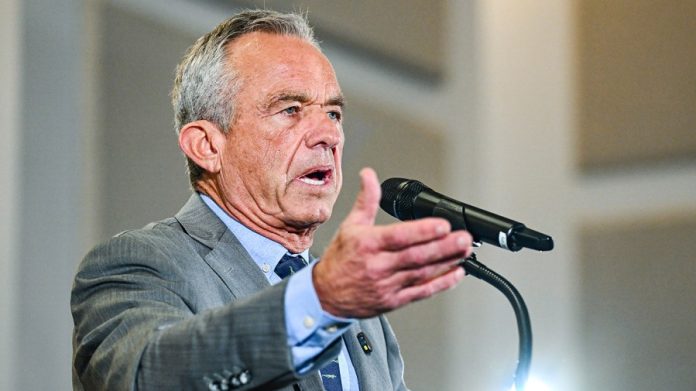
More than 1,000 current and former employees of the Department of Health and Human Services (HHS) are demanding that Secretary Robert F. Kennedy Jr. resign, following his ousting of the director of the Centers for Disease Control and Prevention and other actions they say are “compromising the health of the nation.” 

“Should he decline to resign, we call upon the President and U.S. Congress to appoint a new Secretary of Health and Human Services, one whose qualifications and experience ensure that health policy is informed by independent and unbiased peer-reviewed science. We expect those in leadership to act when the health of Americans is at stake,” a letter by the group of former and current employees, sent to Kennedy and members of Congress on Wednesday, states. 

The letter builds on an effort from last month when HHS staff called on Kennedy to do more to protect public health professionals following the Aug. 8 shooting at the CDC headquarters in Atlanta. 

Since the letter’s release on Aug. 20, an additional 887 HHS staff have signed on, according to the organizing group Save HHS. The group said Kennedy has not responded to the letter; HHS released a statement accusing them of politicizing the tragedy. 

The latest letter cited Kennedy’s ousting of Susan Monarez and the subsequent resignations of four top agency leaders in response to her ousting.

The HHS employees also slammed Kennedy for appointing “political ideologues who pose as scientific experts and manipulate data to fit predetermined conclusions,” as well as for continuing to verbally attack his own agency workforce.  

“We believe health policy should be based in strong, evidence-based principles rather than partisan politics. But under Secretary Kennedy’s leadership, HHS policies are placing the health of all Americans at risk, regardless of their politics,” the letter stated.  

The staffers emphasized they signed the letter in their personal capacities, and some remained anonymous “out of well-founded fear of retaliation and threats to personal safety.” 

Yunfeng Financial invests US$44 million in ether amid Hong Kong’s virtual asset push

0


Yunfeng Financial Group, backed by Alibaba Group Holding founder Jack Ma, said it was investing in the cryptocurrency ether as part of its reserve assets, as the company expands into Web3 amid Hong Kong’s digital asset initiative.

To date, Hong Kong-listed Yunfeng has invested US$44 million to acquire 10,000 ether for its “strategic reserve”, according to an exchange filing on Tuesday. Ether would provide “key infrastructure support” for real-world asset (RWA) tokenisation activities, Yunfeng said, adding that it was exploring potential applications of ether within its insurance business.

The group derives most of its revenue from its insurance business, which generated nearly HK$2.8 billion (US$359 million) last year. The company’s net profit reached HK$471 million.

Do you have questions about the biggest topics and trends from around the world? Get the answers with SCMP Knowledge, our new platform of curated content with explainers, FAQs, analyses and infographics brought to you by our award-winning team.

Hong Kong-headquartered Yunfeng is a subsidiary of Cayman Islands-incorporated Yunfeng Financial Holdings, which is 29.85 per cent owned by Ma and 70.15 per cent by Yu Feng, chairman of Yunfeng Financial Group. The companies’ names combine the Chinese given names of its two founders.

Shares of Yunfeng fell more than 5 per cent on Wednesday morning.

Yunfeng founders Jack Ma (left) and Yu Feng. Photo: Handout alt=Yunfeng founders Jack Ma (left) and Yu Feng. Photo: Handout>

Last month, Yunfeng announced a major push into what it called “frontier areas”, which included Web3. The company planned to increase investments in digital currencies such as stablecoins and “actively explore” RWA tokenisation, according to its filings.

RWA tokenisation is the process of converting tangible assets into digital tokens on a blockchain.

Yunfeng’s securities subsidiaries have applied to Hong Kong’s Securities and Futures Commission for upgrades to their licences, which would enable them to “offer comprehensive virtual asset trading services” and manage portfolios with digital assets.

The company’s foray into digital assets coincides with rising cryptocurrency prices. Ether has increased 70 per cent since last year, while bitcoin is trading nearly 90 per cent higher than a year ago.

More mainland Chinese companies have launched digital asset initiatives in Hong Kong, where the government has established regulatory frameworks to promote the city as a hub for such businesses.


Asylum protests putting police under chronic pressure, chief says

0


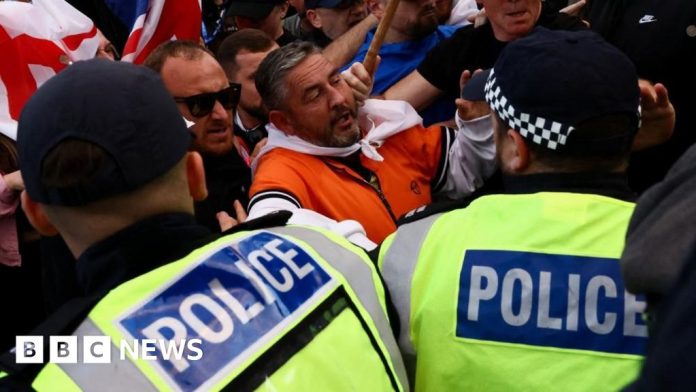
Protests over the use of hotels for housing asylum seekers have put police forces under “chronic pressure” when combined with other duties this summer, a senior police chief has said.

Chief Constable Gavin Stephens, chair of the National Police Chiefs’ Council, told the BBC people in leadership positions in the UK needed to think about how to “reduce and diffuse tension and not sow division”.

Senior officers are concerned about political and business leaders commenting on social media, sometimes spreading misinformation, though Mr Stephens didn’t give names.

Police were notified about 3,081 protests between the start of June and 25 August, compared with 2,942 last summer and 928 in 2023.

The number has been pushed up by campaigns against asylum hotels, sometimes attended by hundreds of protesters on both sides of the debate.

For every protest police have at least to assess what level of resources to commit, whether it goes ahead or not.

Mr Stephens said it was everybody’s responsibility, including the police, to “set the tone”, but he continued to defend the right to protest.

“We all want to live in places where we can be safe, and where we feel safe,” he said.

Police forces all over the country have been responding to protests this summer, pulling in officers from neighbourhood roles to do public order duties. Through the system of mutual aid, police forces with fewer protests have have sent reinforcements across the country to back up those under pressure.

In Epping, where protests began outside the Bell Hotel in July, hundreds of police officers have been involved, often keeping pro and anti-migrant groups separated and preventing activists getting into the hotel.

At least 30 more protests are planned this weekend.

On Tuesday, the Conservative leader of Epping Forest District Council said he would be asking campaigners demanding the closure of the Bell Hotel to halt their protests.

Councillor Chris Whitbread said in a statement: “I am approaching the other group leaders on Epping Forest District Council and other community leaders to jointly ask protesters to reflect on whether they continue with the twice-weekly local protests.

“If you choose to continue, it should be done considerately and calmly, with awareness of the impact on local residents and the local economy.

“The people of Epping are under great strain. As schools return this week, I appeal to the protest organisers to show restraint and give our families and children some much needed respite.”

Mr Stephens said the demand on policing could be reduced by better integration of refugees.

“Where there’s a lack of integration, whether that’s through accommodation or placement in local communities, to a certain extent, the model doesn’t matter. It’s the effort that we go to work together as a community that reduces the demand on policing,” he said.

Police chiefs are waiting for the government to publish plans to reform the service so it can cope better with modern challenges. They’re hoping for a radical long-term strategy.

Last year, Home Secretary Yvette Cooper argued that the co-ordinated national response to the disorder in summer 2024 in the wake of the Southport attack had demonstrated the need for more centralisation.

She announced a National Centre of Policing to bring together support services for local forces, including national IT systems, shared police helicopters and a centralised forensics service.

The Home Office has been approached for comment by the BBC.