14.9 C
New York
Tuesday, May 5, 2026
Home Blog Page 204

Why Mississippi declared infant deaths a public health emergency 

0


The Mississippi Department of Health recently declared a public health emergency in response to rising infant deaths in an unusual move to help speed up efforts to cover gaps in care.  

Lowering the state’s infant mortality rate won’t be easy, health experts warn, and will potentially be made trickier by the ongoing overhaul of the federal public health system.  

“This declaration by Mississippi is a bold and necessary step to elevate infant mortality to the level of urgent crisis response,” said Michael Warren, chief medical and health officer for the March of Dimes. “Declaring a public health emergency shines a spotlight on the severity of this crisis.”  

The overall infant mortality rate in Mississippi rose to 9.7 deaths per 1,000 live births in 2024, according to the state’s Department of Health, the highest it’s been in more than a decade.  

Since 2014, more than 3,500 babies in the state have died before turning 1.  

Mississippi’s public health crisis reflects a wider trend, and other states like California and New Jersey have launched initiatives to address maternal and infant health.

Mississippi, however, has had the highest infant mortality rates in the nation since 2017, data from the Centers for Disease Control and Prevention (CDC) show. The most common causes of infant death in the state are congenital malformations, low birth weight, and accidents, according to state health data shared with The Hill.  

Mississippi State Health Officer Dan Edney declared a public health emergency to expedite plans the agency already had in the works to mitigate infant deaths, according to a spokesperson.  

Some of those plans included educating families on safe sleep practices to reduce preventable infant deaths, while others focus on pregnant women’s health, like a plan to prepare county health departments to offer prenatal and postpartum services in communities without obstetric or gynecologic services.  

“Improving maternal health is the best way to reduce infant mortality,” Edney said in a statement. “Healthy women of childbearing age are more likely to have healthy pregnancies, which in turn lead to healthier babies.”  

Joia Crear-Perry, an OB-GYN and the founder and president of the National Birth Equity Collaborative, agrees that investing in maternal health is a direct way to improve infant health.  

“The United States has the worst maternity health outcomes of any high-income nation and what happens to mom also happens to baby,” she said.  

Health experts said the impacts of abortion restrictions on fetal death rates cannot be overstated.  

Infant deaths have gone up in states that enacted abortion bans in the months following the 2022 overturning of Roe v. Wade, according to two studies published earlier this year.  

One of the studies found a rise in deaths among Black babies and infants due to congenital anomalies — the most common cause of infant deaths in the U.S. — in those states.

Alison Gemmill, a perinatal epidemiologist at Johns Hopkins Bloomberg School of Public Health and author of the study, said the data and anecdotal evidence show that abortion bans are forcing some people to carry “doomed pregnancies” to term.  

“People get that diagnosis in pregnancy and usually they would have an option to terminate, and that option is no longer there,” she said.  

The most common cause of infant death in Mississippi between 2022 and 2024 was congenital abnormalities, according to state health data. A total of 172 infants died because of congenital malformations, deformations or chromosomal abnormalities during that time.  

Health experts said they believe Mississippi officials may be able to knock down the infant mortality rate, but that recent changes within the federal Department of Health and Human Services (HHS) might make the process challenging.   

Mass layoffs at HHS have gutted divisions within the Centers for Disease Control and Prevention dedicated to improving the health of pregnant people and infants.  

One of the impacted programs was the Pregnancy Risk Assessment Monitoring System (PRAMS), which collects state-level data on maternal and infant death. The Trump administration indefinitely suspended the survey early this year and then placed the entire staff overseeing the program on administrative leave in April.  

Health experts stressed that the survey examines a wide range of factors that could influence maternal and infant health outcomes, like insurance coverage, income, and prenatal care, and that it is essential to figuring out where high-risk maternal groups are located. State and local governments have used PRAMS data to develop or implement changes to policies meant to help maternal or infant health.  

The Senate Committee on Appropriations approved a provision in a 2026 appropriations bill that includes a $3 million increase in the CDC’s Safe Motherhood program, which helped pay for agency programs aimed at improving maternal and infant health outcomes and surveillance.  

But the Trump administration has not expressed an interest in bringing fired CDC employees back, leaving the future of maternal and infant health work at the agency up in the air. Even if the administration wanted to replace fired employees, it would be difficult to undertake. 

“You can’t replace the knowledge that those staff had,” one former CDC employee told The Hill. “It takes decades to build up that comprehensive understanding of the interplays between sociodemographics and the health care system and local and state and national health departments.”  

Health experts also noted that forthcoming Medicaid changes will also make it challenging to combat rising infant mortality, especially in states that heavily rely on the program, like Mississippi.  

Nearly 24 percent of Mississippians received their health insurance coverage through Medicaid in 2023, according to the health care policy nonprofit KFF. That same year, Medicaid covered about 57 percent of births in the state.   

The Trump administration’s enormous tax and spending package is projected to cost the federal government $3 trillion, which will be offset in part by nearly $1 trillion in cuts to Medicaid.  

More than 12 million low-income Americans could lose their health insurance coverage by 2034 as a result, according to an analysis from the Congressional Budget Office. Medicaid cuts would force states to make difficult decisions on how to offset reductions and choose to make cuts to their Medicaid programs by “reducing coverage, restricting benefits, or lowering provider reimbursement rates,” according to KFF.  

Decreased coverage and reimbursement rates could also lead to rural hospital closures, reducing access to OB-GYNs and other maternal health care providers in states like Mississippi.  

“The vast majority of infant mortality events are because of social factors and maternal health conditions, not just health care itself,” said the former CDC employee. “And the people who know that are the people whose jobs have been cut.”  

An HHS spokesperson said the CDC “stands ready to assist” all states with public health emergencies to “safeguard the health and wellbeing of Americans.” 

Russian miner Mechel makes production cuts amid deepening losses

0


Russian mining company Mechel has reportedly suspended some of its coal operations amid deepening financial losses.

The company has temporarily halted operations at one mine as well as certain open-pit coal mine sections, while significantly reducing production of unprofitable coal grades, according to a report by Reuters.

In its half-year report, Mechel stated: “Under the current circumstances, we have decided to suspend production of unprofitable product types, partially redirecting resources toward products that are more in demand in today’s realities.”

The move comes as the country’s coal sector grapples with low prices, international sanctions and a strong rouble, which is undermining the competitiveness of its exports, highlighted the news agency.

Mechel reported a 28% decline in coal output to 3.66 million tonnes (mt) in the first half of 2025 (H1 2025).

Sales of coking coal concentrate dropped 15% to 1.7mt and thermal coal sales slumped 21% to 1.37mt.

Its H1 loss widened to Rbs40.5bn ($501.17bn), compared to Rbs16.7bn in the previous year.

The company’s financial position is also strained by a net debt burden of Rbs252.7bn, exacerbated by high interest rates.

The Russian Government introduced measures in May to support the country’s coal sector, including deferring tax payments.

Mechel secured a three-year deferral on payments of tax arrears, fees and insurance premiums totalling Rbs13.8bn.

Despite these efforts, the industry continues to face significant headwinds.

Mechel attributed the industry’s struggles to declining coking coal concentrate prices, rising operational costs, rouble appreciation and sanctions-related constraints.

The company is in ongoing discussions with creditors to secure further deferrals on principal debt repayments.

According to the Rosstat statistics service, the combined net losses of Russian coal companies surged to Rbs185.2bn in H1 2025, up from Rbs7.1bn in the same period last year.

Industry officials have warned that around 30 enterprises with a collective annual output of approximately 30mt are at risk of bankruptcy.

“Russian miner Mechel makes production cuts amid deepening losses” was originally created and published by Mining Technology, a GlobalData owned brand.


The information on this site has been included in good faith for general informational purposes only. It is not intended to amount to advice on which you should rely, and we give no representation, warranty or guarantee, whether express or implied as to its accuracy or completeness. You must obtain professional or specialist advice before taking, or refraining from, any action on the basis of the content on our site.

Vladimir Putin says he reached ‘understandings’ with Donald Trump over war’s end

0


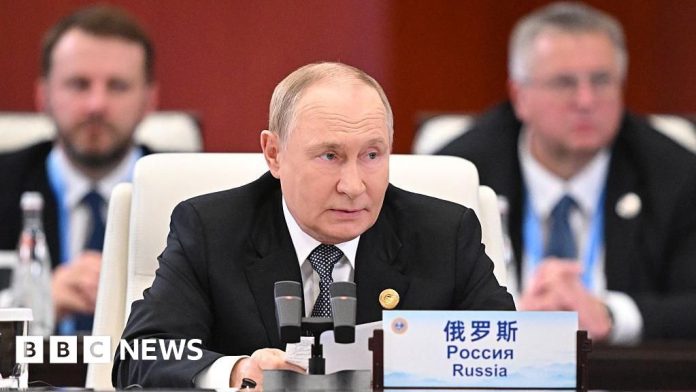
Russian President Vladimir Putin says he reached “understandings” with US President Donald Trump over the end of the Ukraine war, at their meeting in Alaska last month.

But he did not say whether he would agree to peace talks with Ukrainian President Volodymyr Zelensky brokered by Trump, who had apparently given Monday as a deadline for Putin’s response.

Speaking during a summit in China, Putin continued to defend his decision to invade Ukraine, once again blaming the war on the West.

Following the Alaska meeting, US special envoy Steve Witkoff said Putin had agreed to security guarantees for Ukraine as part of a potential future peace deal, though Moscow has yet to confirm this.

Putin was speaking in Tianjin at the Shanghai Cooperation Organisation summit, where he met Xi Jinping and Narendra Modi.

He thanked the Chinese and Indian leaders for their support and their efforts to “facilitate the resolution of the Ukrainian crisis”.

China and Russia are the biggest buyers of Russian crude oil, attracting criticism from the West that they are propping up the Russian economy which has been battered by the war effort.

In his speech, Putin also said that the “understandings reached” at his meeting with Trump in Alaska are “I hope, moving in this direction, opening the way to peace in Ukraine”.

At the same time, he reiterated his view that “this crisis wasn’t triggered by Russia’s attack on Ukraine, but was a result of a coup in Ukraine, which was supported and provoked by the West”.

He also attributed the war to “the West’s constant attempts to drag Ukraine into Nato”.

The Russian president has consistently opposed the idea of Ukraine joining the Western military alliance.

It was in 2014 that Putin seized Crimea and Russian proxies grabbed part of eastern Ukraine. Years later, in February 2022, Putin then ordered Russia’s full-scale invasion of Ukraine.

Putin’s comments come days after Russia launched its second biggest aerial attack on Ukraine in the war.

On Friday, French President Emmanuel Macron said that Putin faced a Monday deadline set by Trump to agree to peace talks with Zelensky.

If the Russian leader does not agree, “it will show again President Putin has played President Trump”, said Macron.

But in an interview with CNN, on 22 August, Trump himself again gave Putin “a couple of weeks” to give a response before the US takes action, in the latest of a series of ultimatums and deadlines he has issued to the Russian leader.

Trump had previously said he could solve the Ukraine war in one day.

Following his meeting with Putin last month, Trump dropped a demand for a ceasefire and called instead for a permanent peace deal.

He also met Ukrainian President Volodymyr Zelensky along with top European leaders who paid an urgent visit to Washington DC.

Trump insisted there would be “no going into Nato by Ukraine” as part of a peace deal.

But he also hinted there would be security guarantees, saying Europe was the “first line of defence” and that the US would be involved.

“We’ll give them good protection,” he said, though he clarified it would not mean sending US troops to Ukraine.

The president’s special envoy Steve Witkoff also told CNN that Putin had agreed to security guarantees.

He said this would see the US and Europe “effectively offer Article 5-like language to cover a security guarantee”, referring to the Nato clause which states that member states should defend another member that has come under attack.

Zelensky said he expected a framework for security guarantees to be set out on paper as soon as this week.

But last Friday Russia criticised Western proposals as “one-sided and clearly designed to contain Russia”, adding that it turned Kyiv into a “strategic provocateur”.

Russian attacks have also continued. Last Thursday Moscow fired 629 drones and missiles at Kyiv, killing 23 people in one of the biggest aerial assaults of the war so far that prompted outrage from European leaders.

Germany and France have since pledged to put pressure on Russia to agree to a deal.

Meanwhile, Zelensky has rejected proposals for a buffer zone with Russia as part of a peace deal.

He has accused Russia of not being ready for diplomacy and seeking ways to postpone the end of the war.

600,000 Chinese college students admitted to the US? Don’t count on it.

0


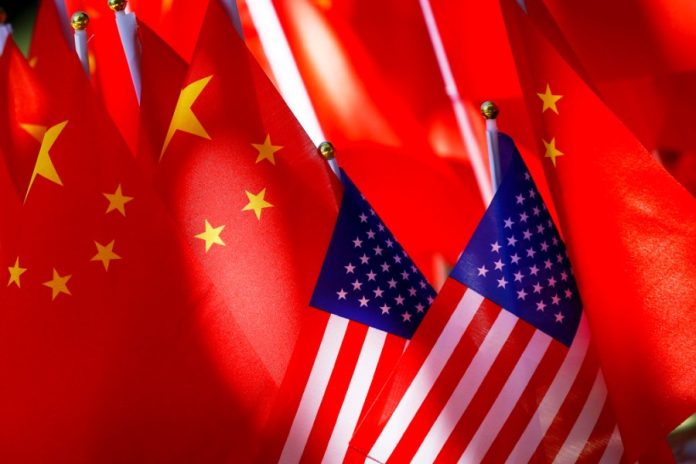
President Trump’s recent remarks tying U.S.-China trade talks to the admission of 600,000 Chinese students have caused uproar among his restrictionist base. But there are reasons to treat this claim with skepticism.

First, there are currently only about 277,000 Chinese students in the U.S. Admitting 600,000 would represent a twofold increase at a time when Chinese enrollment is trending downwards.

Second, while it is clear that China does not want to be cut off from U.S. higher education entirely, it has also begun to implement policies that incentivize its citizens to pursue degrees at home. Some provinces in China are beginning to exclude holders of foreign degrees from government jobs altogether. And China’s demographic woes will only accelerate the government’s need for young Chinese people to stay at home lest they potentially put down roots elsewhere.

Many of the objections to the admission of large numbers of Chinese students have to do with the potential national security risks of having large numbers of students from a foreign adversary inside the U.S., where they might be able to commit acts of espionage or even sabotage.

It is true that Chinese students carry potential risks, and the U.S. should not turn a blind eye to these possibilities out of well-meaning but misguided attempts to avoid seeming prejudiced. Chinese students in the U.S. have been credibly charged with engaging in espionage. Others have actively intimidated their peers here and reported back on their activities to the Chinese Communist Party.

An even greater but unknown number have likely abused the U.S. student visa system by cheating on their English literacy tests. Reports of academic dishonesty perpetrated by Chinese nationals at U.S. colleges and universities are also widespread.

These downsides should not be dismissed or ignored, but they can be mitigated with stricter monitoring and accountability measures. Responsible policymakers must also weigh these risks against how U.S. national security is served by having large numbers of Chinese students in our universities. These benefits frequently go unmentioned because pro-immigration advocates tend to focus on the humanitarian and moral arguments for international student enrollment, but the national security case presents clearer advantages for the national interest.

The most immediate advantage of having Chinese students study in the U.S. is that it keeps them out of China for at least four years. This helps us widen our demographic advantages over China, as some of their young people will choose to settle down in the U.S., contributing to China’s rapidly collapsing birth rate. Chinese students also disproportionately come from wealthy families, which means they will be spending money in local U.S. economies instead of helping to keep China’s economy afloat.

In recent years, the U.S. has also struggled to infiltrate China. The espionage risk of Chinese students runs both ways — while it allows the Chinese Communist Party to potentially plant intelligence assets in the U.S., it also gives our intelligence agencies a large population of potential recruits to draw from on home soil where the risks of interception are reduced.

The idea that Chinese students have ultimate and unyielding loyalty to the Chinese Communist Party is itself propaganda disseminated by the party to discourage attempts to recruit students studying abroad. But in private, they are more candid about their concerns of U.S.-educated students being recruited.

At a broader level, having large numbers of Chinese students study in the U.S. allows us to directly influence a section of Chinese society primed for future leadership with American ideals and cultural habits. We could do a much better job of this by breaking up the influence of Confucius Institutes and creating targeted programs of our own, but the way to maximize this opportunity is through greater integration and assimilation of Chinese students instead of pursuing blanket exclusions.

President Trump’s comment about 600,000 Chinese students is unrealistic for a number of reasons, and enrollment levels should not rise above historical levels. But policymakers would be wise to weigh both the risks and the benefits that Chinese student enrollment has for U.S. national security during forthcoming negotiations.

Gil Guerra is an Immigration Policy Analyst at the Niskanen Center, and was named the 2024 Rising Expert in Latin America by Young Professionals in Foreign Policy.

Clarivate Plc (CLVT) Gets Selected for Impactful Research and Innovation by Sinopec Group

0


Clarivate Plc (NYSE:CLVT) is one of the best long-term penny stocks to buy right now. On August 27, Clarivate Plc (NYSE:CLVT) announced that it signed agreements for the provision of its leading academic research and intellectual property (IP) solutions to China Petrochemical Corporation (Sinopec Group).

Clarivate Plc (CLVT): Among Mid-Cap Stocks Insiders Were Buying in Q1 2025

The collaboration aims at bolstering the “research and development goals of Mainland China’s largest oil and petrochemical products supplier”, ultimately delivering impactful innovation and research.

Clarivate Plc (NYSE:CLVT) provides global information, workflow solutions, and analytics. The company operates through the following segments: Academia and Government (A&G), Intellectual Property (IP), and Life Sciences and Healthcare (LS&H).

While we acknowledge the potential of CLVT as an investment, we believe certain AI stocks offer greater upside potential and carry less downside risk. If you’re looking for an extremely undervalued AI stock that also stands to benefit significantly from Trump-era tariffs and the onshoring trend, see our free report on the best short-term AI stock.

READ NEXT: 30 Stocks That Should Double in 3 Years and 11 Hidden AI Stocks to Buy Right Now.

Disclosure: None. This article is originally published at Insider Monkey.

LIVE Transfer rumors, deadline day news: Isak to Liverpool agreed

0


The summer transfer window closes today! Join us for the latest news, rumors and gossip on deadline day from around the globe.

Window closes: Premier League, Ligue 1, Serie A, Bundesliga (7 p.m. BST/2 p.m. ET), La Liga (10.59 p.m. BST/ 5.59 p.m. ET.)

Transfers homepage | Done deals | Men’s grades | Women’s grades

LIVE BLOG

Jadon Sancho: Aston Villa exploring deal for Manchester United winger

0


Aston Villa are exploring a move for Manchester United’s out-of-favour winger Jadon Sancho.

The 25-year-old turned down a move to Italian side Roma earlier in the window while there had also been interest from Juventus.

Sancho has spent the past 18 months on loan at Borussia Dortmund and Chelsea but neither club made the deal permanent.

Chelsea paid a £5m penalty to United for reneging on an obligation to sign the England attacker.

Sancho joined United for £73m four years ago but last played for the club in August 2024 in the Community Shield.

Any deal for Sancho will not be connected to United’s interest in Villa goalkeeper Emiliano Martinez.

United sources are stressing they will not sign both Martinez and Royal Antwerp keeper Senne Lammens, who they have also discussed.

There is currently no clarity around which player, if either, they will choose to bolster their goalkeeping ranks.

Khanna says Fed board member Lisa Cook should release mortgage documents amid Trump fight

0


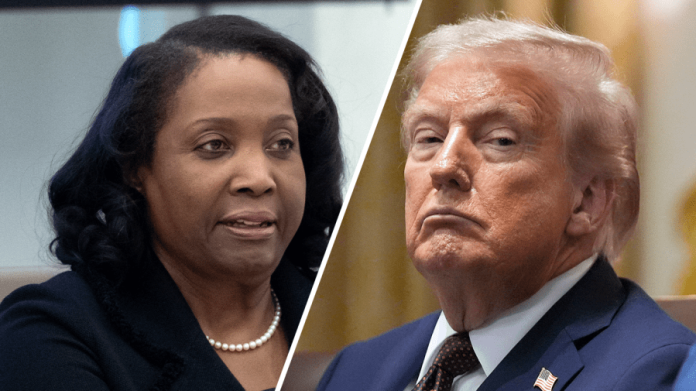
Rep. Ro Khanna (D-Calif.) said in a Sunday interview that Federal Reserve board member Lisa Cook should release her mortgage documents to dispel claims of fraud coming from the Trump administration, which is seeking her ouster.

Pressed in an interview on NBC News’s “Meet the Press,” Khanna said Cook should release the documents to prove that the claims are nothing more than political.

“Well, sure, she should release them,” he said when asked whether he would advise Cook to do so. “She should be transparent so that we see that this is just a political football.”

Khanna added, however, that the mortgage fraud claims are really just President Trump “hiding an economic record” that the progressive lawmaker said he should not be proud of, citing falling consumer confidence, an uptick in farm closures, shrinking manufacturing and higher unemployment for young adults.

“This is a record of economic failure, and the reason it is failing is because of blanket tariffs, because of mass deportation, including immigrants who are paying taxes, and because of interference with the Fed and expertise,” Khanna said. “It’s time for a new economic direction.”

Trump moved to fire Cook earlier this week after she refused to resign following allegations by Bill Pulte, a Trump ally and the head of the Federal Housing Finance Agency, that she committed mortgage fraud by listing two primary residences. Trump said he would try to fire Cook if she did not resign.

The Federal Reserve Act says the president can only remove members of the governing board “for cause.” The courts have never weighed exactly what that means because no president has sought to remove a Fed board member, until earlier this week.  

In his letter to Cook on Monday, Trump pointed to the mortgage fraud allegations as “cause” to fire her.

She subsequently sued the president on Thursday over his “unprecedented and illegal attempt” to remove her from her position. Cook argues in her complaint that the allegations, which she has not had a chance to respond to, outside the legal action, don’t meet the legal requirements to cut her loose.  

“President Trump does not have the power to unilaterally redefine ‘cause’ — completely unmoored to caselaw, history, and tradition — and conclude, without evidence, that he has found it,” the complaint reads. 

HSBC Upgrades Eli Lilly (LLY) to Hold, Lifts Price Target to $700

0


Eli Lilly and Company (NYSE:LLY) is one of the best stocks for a 20-year long-term stock portfolio. Eli Lilly has substantially underperformed this year with YTD decline of over 5%. On August 8, its shares touched $625-$626, levels last seen in 2024. However, it has since appreciated by nearly 17% as investor sentiment improved. August 27, HSBC analyst Rajesh Kumar upgraded Eli Lilly and Company (NYSE:LLY) to Hold from Sell and lifted his price target to $700 from $675, citing progress on the company’s oral weight-loss drug. HSBC, previously bearish on the stock, acknowledged that the bear case has now played out following positive late-stage trial results.

Photo by Myriam Zilles on Unsplash The trial showed meaningful weight loss in patients with obesity and type 2 diabetes, coming in ahead of expectations and performing better than a rival’s oral treatment. This result strengthens Eli Lilly’s position in both U.S. and overseas markets. FDA approval is expected in 2026 and street forecasts suggest the drug could generate $15.5 billion in annual sales by 2032. With that upgrade, the majority of analysts now have a Buy or equivalent rating on Eli Lilly and Company (NYSE:LLY), with no Sell ratings. The consensus 1-year median price target of $900 indicates a 23% potential upside. Eli Lilly and Company (NYSE:LLY) is a global pharmaceutical company focused on the development, manufacture, and marketing of medicines for diabetes, oncology, immunology, and neuroscience. While we acknowledge the potential of LLY as an investment, we believe certain AI stocks offer greater upside potential and carry less downside risk. If you’re looking for an extremely undervalued AI stock that also stands to benefit significantly from Trump-era tariffs and the onshoring trend, see our free report on the best short-term AI stock. READ NEXT: Top 10 Stocks to Buy and Hold Foreverand 12 Overlooked Large-Cap Stocks with Low Multiples. Disclosure: None. This article is originally published at Insider Monkey.

Women’s Rugby World Cup: Five talking points as Scotland, England and Ireland qualify

0


Wales knew that the opening game against Scotland would likely decide their World Cup fate.

A disappointing 38-8 defeat left an uphill task to qualify for the knockout stages, and a win on Saturday over the world’s number two ranked side Canada was required.

Sean Lynn, who took over as Wales head coach before this year’s Women’s Six Nations, made seven changes to his starting XV.

Wales’ front row had average age of just 20, with back rower Branwen Metcalfe, 18, also making her Test debut from the bench.

Despite falling to a 42-0 defeat by one of the World Cup favourites, Lynn’s youthful side showed plenty of green shoots to work with moving forward.

“I am glad the Wales women showed their respect for the jersey and the effort they are willing to put in,” former Wales captain Philippa Tuttiett told BBC’s Rugby Union Weekly.

“If you bring that to Sean Lynn with his coaching prowess then he will be able to move forward with that team.”

However, Wales must first keep an eye on the emerging nations behind them, with Fiji, who are ranked four places below them in 14th, likely to offer a tough final pool game on Saturday in Exeter.

Spain, ranked 13th, suffered a 43-27 defeat by Ireland on Sunday and are another side that are showing signs of progress.

“Let’s put Spain in the Six Nations,” former England captain Maggie Alphonsi told BBC Sport.