
12.8 C
New York
Sunday, May 10, 2026
Home Blog Page 251

Indonesia eliminates benchmark price requirements for minerals and coal sales

0


The Indonesian Government has issued a decree that removes the obligation for miners to use government benchmark prices as the minimum price in minerals and coal sales, according to a Reuters report.

Previously, Jakarta mandated the use of a coal benchmark price for transactions, starting from 1 March, aiming to exert greater control over the value of domestic and export transactions for the fuel commodity. This benchmark had also been used to calculate royalties.

Despite this, the decree now permits miners to sell minerals and coal at prices below the government-set benchmarks.

However, production levies and tax obligations derived from these transactions will still be calculated based on the benchmark prices.

The feedback from the industry indicated a preference for using the “Indonesian Coal Index” to price shipments.

This index is favoured due to its transparency, more frequent updates and generally lower price points compared to the government benchmark.

The Indonesian Government also sets benchmark prices for various other minerals including nickel products, copper, tin, cobalt and bauxite.

In the first half of this year, the country exported 238 million tonnes of thermal coal, a 20% increase from the previous year.

Furthermore, the Indonesian mining ministry has identified 18 projects, with a combined value of $38.6bn, that are aimed at developing the nation’s natural resources. These projects have been highlighted for potential investment by Indonesia’s sovereign wealth fund, Danantara.

This fund plays a pivotal role in President Prabowo Subianto’s strategy to achieve an economic growth target of 8% by 2029. Launched earlier this year, Danantara is tasked with managing the shares of state-owned enterprises and reinvesting dividends into commercial ventures.

“Indonesia eliminates benchmark price requirements for minerals and coal sales” was originally created and published by Mining Technology, a GlobalData owned brand.


The information on this site has been included in good faith for general informational purposes only. It is not intended to amount to advice on which you should rely, and we give no representation, warranty or guarantee, whether express or implied as to its accuracy or completeness. You must obtain professional or specialist advice before taking, or refraining from, any action on the basis of the content on our site.

Who is Lisa Cook, and what is Federal Reserve governor accused of?

0


Tom Geoghegan and James FitzGerald

BBC News

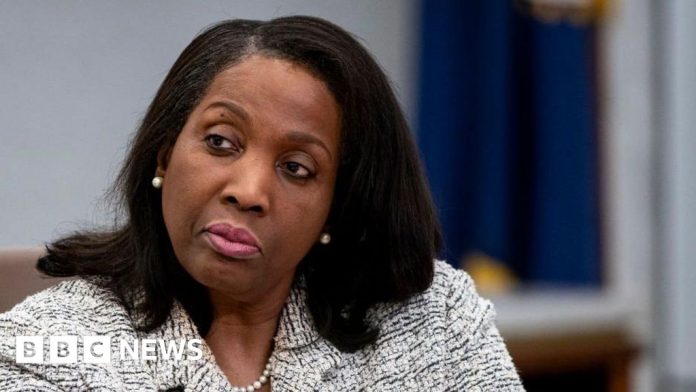
Getty Images File image of Lisa CookGetty Images

President Donald Trump has demanded the removal of one of the governors of the US central bank, a move that escalates his long-running feud with the institution.

Late on Monday, he posted on his Truth Social account a letter addressed to Lisa Cook, saying she was being removed from the Federal Reserve Board of Governors due to mortgage fraud allegations.

The move has caused an outcry from Democrats who say it amounts to unprecedented political interference.

Who is Lisa Cook and what does she do?

Ms Cook was appointed as governor of the Federal Reserve in 2022 by Democratic President Joe Biden, becoming the first African American to serve in the role. Her term was due to end in 2038.

She previously served on Barack Obama’s Council of Economic Advisers and worked at the US Treasury.

There are seven governors on the board of the Fed and they play a key role in setting the monetary policy of the US.

They make up the majority of the committee that decides the level of US interest rates and aims to keep prices stable and unemployment as low as possible.

Ms Cook has voted in recent months to keep interest rates on hold this year.

What has Trump accused Lisa Cook of?

In his Truth Social post, the president cited allegations that Ms Cook may have falsified records to obtain a mortgage.

He said she signed two documents, two weeks apart, attesting that two homes in different states were both her primary residence.

“It is inconceivable that you were not aware of your first commitment when making the second. It is impossible that you intended to honor both,” he wrote.

CNN has obtained and reviewed the mortgage documents in question and found she did claim two primary residences but it is unclear whether she informed either lender of the fact.

Ms Cook has not been charged with any wrongdoing and in statement she said she would fight her dismissal because Trump did not have just cause to fire her.

What does the Fed do?

As the central bank of the US, the Federal Reserve is responsible for running the nation’s monetary policy, promoting stability in the financial system, regulating institutions and other tasks.

One of the most visible activities it undertakes is to set interest rates. This has a big impact on the nation’s financial conditions by influencing how much money people can borrow.

The Fed functions as a federal agency and is considered to be independent within government – its decisions do not require the president’s approval, though it is accountable to Congress.

Can Trump actually fire her?

This question could become the subject of an intense legal battle.

The Federal Reserve Act does not give the president license to remove a Fed official at will but, as Trump noted in his letter to Ms Cook, it does allow him to do so “for cause”.

Trump cited a “criminal referral” against Cook – after his ally, the housing finance regulator, recently called for Ms Cook to be investigated for mortgage fraud. But it is not clear whether an investigation has been opened, and Ms Cook has not been charged with any crime.

As well as Ms Cook’s denial that there is any cause to sack her, legal experts have shown scepticism.

Shan Wu, a former federal prosecutor, told CNN: “As of right now, I think it’s kind of questionable for cause, but obviously that’s what [Trump] is relying on, and I would expect her to challenge it.”

Market reaction to Trump’s move has been relatively tame so far – as investors, too, appear to be sceptical and are waiting to see if the sacking actually comes to pass.

Why does Trump want lower interest rates?

Trump has spent much of his second presidency putting pressure on the Fed, demanding that Powell cut interest rates to lower the cost of borrowing for American businesses and consumers. The target range is currently 4.25 to 4.5%.

Central banks typically cut rates in an effort to boost growth. But there is a balancing act, because higher interest rates help to keep inflation in check. Tackling inflation is another Trump priority.

Lower rates can also help US exporters and easing trade deficits is a central plank of Trump’s economic policy.

Powell has so far steadfastly refused to reduce rates since Trump took office, but has hinted at a cut in September.

House Democrat tells Trump to treat Russia like DC, Chicago

0


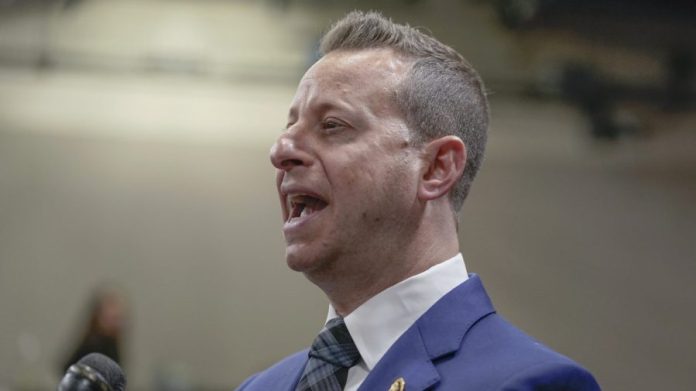
Rep. Jared Moskowitz (D-Fla.) told President Trump on Monday to pressure Russia with the same intensity he has used against Washington, D.C., and Chicago.

“Maybe just treat them like you’re treating Washington, D.C., or how you treated Greenland when you came into office, or how you treated Canada when you came into office,” Moskowitz said in an interview on “Morning Joe.”

“Like, where is that President Trump with the Russians? It seems like he’s tougher on these other things. And he’s tougher on Chicago than he is dealing with Putin. So maybe just take that attitude,” he added.

Since the start of his second term, Trump and his administration have been pushing for an end to the war in Ukraine, at times threatening sanctions on Russia, but so far taking no punitive action toward Moscow.

Earlier this month, Trump rolled out the red carpet for Russian President Vladimir Putin in Alaska, then met with Ukrainian President Volodymyr Zelensky in Washington a few days later.

At the same time, Trump was deploying federal law enforcement agents and National Guard troops throughout Washington in what he claims is an effort to curb crime in the capital.

The White House said Monday more than 1,000 arrests have taken place since federal agents were deployed two weeks ago.

Trump on Monday also signed a series of executive orders targeting D.C., including efforts to end cashless bail, increase penalties for desecrating the American flag and establish “specialized units” in the National Guard equipped to deal with public order issues.

Trump announced Aug. 11 he would take federal control of the D.C. police department and deploy the National Guard. He has repeatedly suggested other Democrat-run cities would be next, and he said Friday that Chicago would be next.

On Monday, Trump seemed to back away from this threat, saying it would be better to be asked for federal assistance from state and local officials.

“I was telling some of the people that in a certain way you really want to be asked to go. I hate to barge in on a city and then be treated horribly by corrupt politicians and bad politicians,” Trump said in the Oval Office.

The Hill was directed by The White House to comments from Trump on Monday in which he said there could be “very big consequences” if Putin and Zelensky do not meet to talk about ending the war in Ukraine.

Updated at 7:47 p.m. EDT

Applebee’s appoints new COO and CMO amid focus on growth

0


Applebee’s Neighborhood Grill + Bar, part of Dine Brands, has announced the appointment of Michelle Chin as its chief marketing officer (CMO) and Jerrold Wong as its chief operations officer (COO).

Chin will assume her position on 2 September 2025 and Wong will officially join the company on 15 September.

Chin brings 20 years of experience in marketing and brand strategy, having worked with brands such as Starbucks, Godiva and Unilever.

She will be responsible for overseeing Applebee’s marketing initiatives, including national advertising, digital engagement and menu-related campaigns.

Her work will be focused on using data to improve brand positioning and foster stronger connections with customers.

Chin stated: “Applebee’s has a unique place in American culture — welcoming, familiar, and full of heart.

“I’m energised by the opportunity to build on that legacy by deepening guest engagement, evolving our brand presence and driving bold, creative marketing that keeps Applebee’s top of mind and top of table.”

Wong’s appointment as COO will support the brand’s operational efforts.

He will concentrate on ensuring consistency, fostering growth and collaborating closely with his team and franchisees to enhance restaurant performance and provide a smooth guest experience throughout the system.

The appointments come as Applebee’s has seen a positive shift in its performance, with an uptick in customer traffic and sales during the second quarter of 2025.

The leadership changes are part of a broader strategy aimed at strengthening Applebee’s marketing capabilities, refining its menu offerings and improving customer experiences.

Applebee’s president and Dine Brands CEO John Peyton stated: “Applebee’s is an iconic brand, beloved by our guests, with one of the largest footprints of any restaurant brand.

“This year, our team and franchisees have worked diligently against our key areas of focus to continually enhance the guest experience and attract the next generation of loyal Applebee’s fans – reimagining our restaurants, enhancing our menu and value offerings, and connecting with our guests in deeper, more impactful ways.

“With these appointments, we’re looking to accelerate that strategy, creating efficiencies and returning to growth.”

In April 2025, Applebee’s selected Toast, a comprehensive digital technology platform for the hospitality sector.

“Applebee’s appoints new COO and CMO amid focus on growth” was originally created and published by Verdict Food Service, a GlobalData owned brand.


The information on this site has been included in good faith for general informational purposes only. It is not intended to amount to advice on which you should rely, and we give no representation, warranty or guarantee, whether express or implied as to its accuracy or completeness. You must obtain professional or specialist advice before taking, or refraining from, any action on the basis of the content on our site.
Police apologise at grave of wrongfully accused businessman

0


Japanese authorities bowed and offered flowers at the grave of a businessman to apologise for wrongfully charging him with exporting potentially sensitive industrial machines.

Shizuo Aishima and three other executives were arrested for illegal exports in March 2020. He died of stomach cancer in February 2021, five months before the indictments were dropped.

His family was at his grave in Yokohama on Monday to accept the apology. However, his wife said she could not forgive those who were behind the charge.

Aishima’s company sued for damages before a Tokyo court in September 2021, which ruled that the indictments were illegal and ordered compensation of 166 million yen ($1.12m; £835,000).

The charges stemmed from Ohkawara Kakohki’s export of spray dryers, a machine that can turn liquids into powder, and which can be used in the military.

The company said their business was not covered by export restrictions. Prosecutors withdrew the indictments in July 2021 citing “doubts” on the guilt of the accused.

“We sincerely apologise for the serious human rights violation caused by illegally requesting his detention and filing a prosecution, and for depriving Aishima of opportunities for medical treatment by inappropriately rejecting his bail request,” said prosecutor Hiroshi Ichikawa.

Aishima filed eight bail requests, all of which were denied.

The Tokyo Metropolitan Police Department and the Tokyo District Public Prosecutors Office did not appeal court ruling that ordered them to pay compensation. The ruling became final last 11 June.

They also investigated the cause of the wrong indictment. However, the families of the wrongfully accused said it failed to determine the real cause of the error and that the recommended punishments were too light.

Vaccine skeptic to lead CDC COVID immunization working group

0


The Centers for Disease Control and Prevention (CDC) has chosen a known vaccine skeptic to lead its COVID-19 working group, which was originally established to discuss immunization recommendations at the start of the pandemic.

A spokesperson for the Department of Health and Human Services (HHS) confirmed to The Hill that Retsef Levi, professor of operations management at the Massachusetts Institute of Technology’s Sloan School of Management, had been selected to lead the working group.

Levi was among the eight new members of the CDC’s Advisory Committee on Immunization Practices (ACIP) selected by HHS Secretary Robert F. Kennedy Jr. after he fired all standing members earlier this year.

The CDC’s COVID-19 working group was created in 2020 to discuss immunization recommendations as the pandemic evolved. The group is meant to support the work of the ACIP through the review of available data and scientific knowledge.

In 2023, Levi spoke out against mRNA COVID-19 vaccines and called for their usage to be stopped “immediately.”

“All COVID-19 vaccination program should stop immediately. They should stop because they completely fail to fulfill any of their advertised promises regarding efficacy,” Levi said in a video posted on social platform X, further claiming mRNA vaccines were behind the deaths of young people and children.

He cited the risk of myocarditis, inflammation of the heart muscle, after administration of COVID-19 mRNA vaccines. Proponents of COVID-19 vaccinations have argued that the risk of myocarditis is far greater in the case of SARS-CoV-2 infections than immunizations.

Coca-Cola explores potential sale of Costa Coffee

0


Coca-Cola is working with investment bank Lazard to explore options for its British coffee chain, Costa Coffee, including a potential sale, as reported by Sky News.

The soft drinks giant has initiated discussions with potential bidders, including private equity companies.

Indicative offers for Costa Coffee, which operates in 50 countries worldwide, are expected to be made by early autumn 2025, but a sale is not yet a certainty.

In 2018, Coca-Cola acquired Costa Coffee for more than $5bn, as part of its strategy to strengthen its position in the competitive global coffee market, aiming to challenge rivals such as Starbucks and Nestlé.

The acquisition was reported to be aimed at helping it reduce its reliance on sugary soft drinks.

The potential sale of Costa would align with broader trends in the packaged food sector, where companies are pursuing strategic deals to achieve scale and better cope with the pressures of rising inflation and evolving consumer preferences for healthier options, as reported by Reuters.

During an earnings call in July 2025, Coca-Cola CEO James Quincey hinted that the company’s investment in Costa had not delivered the anticipated returns.

“Our investment in Costa is not where we wanted it to be from an investment hypothesis point of view,” he stated.

In line with changing consumer tastes, Coca-Cola is also responding to growing health-conscious trends. In July, the company agreed to use real cane sugar in its US products, following growing demands for healthier alternatives in the food and beverage industry.

“Coca-Cola explores potential sale of Costa Coffee” was originally created and published by Verdict Food Service, a GlobalData owned brand.


The information on this site has been included in good faith for general informational purposes only. It is not intended to amount to advice on which you should rely, and we give no representation, warranty or guarantee, whether express or implied as to its accuracy or completeness. You must obtain professional or specialist advice before taking, or refraining from, any action on the basis of the content on our site.
Rising chocolate and egg prices drive up rates

0


Amy Walker & Mitch Labiak

Reporters, BBC News

Getty Images A woman looking at the quality of a box of eggs in the supermarket by opening the lidGetty Images

The rising cost of chocolate, butter and eggs has helped drive food price inflation to its highest in 18 months, a survey says.

Food inflation hit 4.2% in the year to August, up from 4% in July, according to the British Retail Consortium’s latest shop price monitor. It said shop prices overall were rising at the fastest rate since March of last year.

The figure echoes separate recent data from the Office for National Statistics, which found the cost of everyday food items rising by a similar amount over the last year.

Helen Dickinson, the BRC’s chief executive, said there was some respite for parents as the new academic year approaches, with cheaper clothing, books and stationery.

Ms Dickinson said staples including butter and eggs had seen “significant increases” due to high demand, tightening supply and increased labour costs.

“Chocolate also got more expensive as global prices of cocoa remain high owing to poor harvests,” she said.

Poor cocoa harvests have been caused by climate change and crop disease.

“There was some respite for parents ahead of the new academic year, with lower prices for clothing, books, stationery, and computing.”

Mike Watkins, head of retailer and business insight at NIQ, which compiles the BRC’s shop price monitor, said the uptick reflected “several factors”.

These included global supply costs, seasonal food inflation driven by weather conditions and a rise in underlying operational costs.

“As shoppers return from their summer holidays, many may need to reassess household budgets in response to rising household bills,” he added.

‘We’ve had to take some products off our menu’

Kate Rumsey, owner of Rumsey’s Chocolaterie in Thame, Oxfordshire, said chocolate inflation had been “consistently high” for a couple of years.

Her business bought chocolate at around £4,000 a tonne in 2023 but prices have since trebled to about £13,000 a tonne.

The shop has also been hit by higher staff costs, as well as ingredients, such as eggs and butter, becoming more expensive.

Ms Rumsey said the business absorbed most of the higher costs, but added she had to pass some costs onto customers, with prices up 10 to 20% depending on the product.

In some cases, she said the business had removed some products off its menu due to them becoming too expensive to produce.

Increasing food prices added to increase in overall inflation in the year to July.

The latest official figures from the ONS put UK inflation – as measured by the Consumer Price Index (CPI) – at 3.8%, up from 3.6% in June.

Looking over the longer term, the picture is even more stark.

In the five years to July, food prices increased by around 37%. That compares with a rise of 4.4% over the previous five-year period.

Trump's Intel stake turns heads

0


96
<!–

*{box-sizing:border-box}body{margin:0;padding:0}a[x-apple-data-detectors]{color:inherit!important;text-decoration:inherit!important}#MessageViewBody a{color:inherit;text-decoration:none}p{line-height:inherit}.desktop_hide,.desktop_hide table{mso-hide:all;display:none;max-height:0;overflow:hidden}.image_block img+div{display:none}sub,sup{font-size:75%;line-height:0}#converted-body .list_block ol,#converted-body .list_block ul,.body [class~=x_list_block] ol,.body [class~=x_list_block] ul,u+.body .list_block ol,u+.body .list_block ul{padding-left:20px} @media (max-width:620px){.desktop_hide table.icons-outer{display:inline-table!important}.image_block div.fullWidth{max-width:100%!important}.mobile_hide{display:none}.row-content{width:100%!important}.stack .column{width:100%;display:block}.mobile_hide{min-height:0;max-height:0;max-width:0;overflow:hidden;font-size:0}.desktop_hide,.desktop_hide table{display:table!important;max-height:none!important}.reverse{display:table;width:100%}.reverse .column.first{display:table-footer-group!important}.reverse .column.last{display:table-header-group!important}.row-11 td.column.first .border,.row-7 td.column.first .border,.row-9 td.column.first .border{padding:5px 5px 15px 25px}.row-11 td.column.last .border,.row-7 td.column.last .border,.row-9 td.column.last .border{padding:5px 20px 25px 5px}}

sup, sub { font-size: 100% !important; } sup { mso-text-raise:10% } sub { mso-text-raise:-10% }

{beacon}