12.3 C
New York
Monday, May 11, 2026
Home Blog Page 280

Belkin’s first 25W Qi2 chargers power up multiple devices

0


It features an AirPods charger on its weighted base, an Apple Watch charger sticking out the back, and an adjustable magnetic smartphone charger in the front – although that’s the only one that offers 25W charging speeds for supported devices. Wireless charging speeds will drop to 15W for devices that aren’t Qi2.2 compatible. A 45W USB-C power adapter is included so all three wireless charging pads can be used at the same time.

Slightly cheaper is the $99.99 Belkin UltraCharge 3-in-1 Foldable Magnetic Charger, which offers similar functionality to the Pro but in a design that completely folds flat for travel. Unfolding its magnetic 25W smartphone charger reveals a spot to charge AirPods on its base, while a compact Apple Watch charger folds out from behind its Qi2.2 pad.

It also comes with a 45W USB-C power adapter, and will be available in two versions: one with a squared-off design and an alternate with more rounded corners.

The $59.99 Belkin UltraCharge 2-in-1 Foldable Magnetic Charger is nearly identical to the 3-in-1 travel model but skips the pop-up Apple Watch charger. In its place is a 5W USB-C port on the base for plugging in the charging cable for other smartwatch models. It will also be available in two different designs and include a 45W power adapter.

Royal Mail and DHL halt US deliveries over de minimis rule change

0


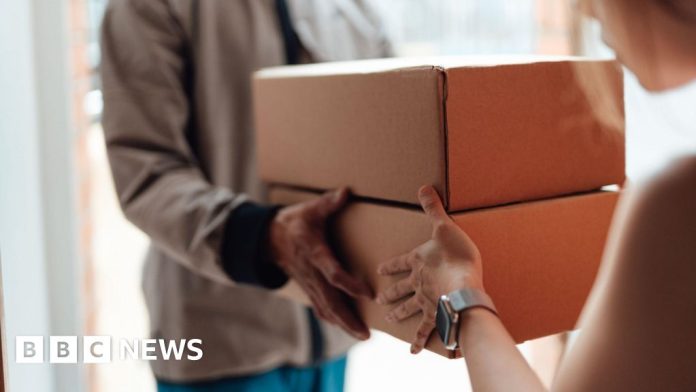
Postal services around the world are pausing deliveries to the US over confusion around new import taxes that must be paid on parcels from the end of the month.

US President Donald Trump signed an executive order last month ending the global import tax exemption on low-value parcels, which takes effect from 29 August.

While gifts worth less than $100 will remain duty-free, the changes mean all other packages will face the same tariff rate as other goods from their country of origin.

Postal services, including Royal Mail and Germany’s DHL, said they would suspend deliveries until they had proper systems in place to deal with the new rules.

Royal Mail said it was withdrawing its current US export services from Tuesday, but added it hoped to have a new system up and running within two days to allow it to comply with the new rules before they kick in.

“Royal Mail is working closely with the US authorities and international partners to manage the impact of these changes which will affect everyone who sends goods to the USA,” the company said.

The US had a so-called de minimis exemption on packages worth up to $800, which allowed consumers to buy cheap clothing and household goods from sites such as Shein and Temu without paying import duties.

But the duty-free rule ended on Chinese goods ended on 2 May, and is now being extended to the rest of the word.

The White House said ending the duty-free exemption would combat “escalating deceptive shipping practices, illegal material, and duty circumvention”, claiming some shippers had “abused” the exemption to send illicit drugs into the US.

The Trump administration said de minimis shipments had skyrocketed from 115 million in the 2023/24 financial year, to 309 million by 30 June this year.

While China is a major source of shipments that use the exemption, Canada and Mexico are also significant sources of low-cost parcels being sent to the US.

Deutsche Post and DHL Parcel Germany said it was temporarily suspending parcel delivery for business customers to the US from Saturday, as “key questions remain unresolved” about how duties would be paid, and by whom.

DHL sad it was “closely monitoring the further developments” and remained in contact with US authorities, and said shipping via its DHL Express services “remains possible”.

“The company’s goal is to resume postal goods shipping to the US as quickly as possible,” it said.

Earlier this week PostNord announced it was also suspending services as the US authorities only provided details about the required changes on 15 August.

“This decision is unfortunate but necessary to ensure full compliance of the newly implemented rules,” said Bjorn Bergman, PostNord’s head of group brand and communication.

Online marketplace Etsy said it was suspending shipping label purchases from 25 August for Australia Post, Canada Post, Royal Mail and Evri for US-bound packages while couriers adjusted services.

“The state of tariffs is evolving, so please be sure to keep an eye on recommendations from your preferred shipping carrier,” Etsy said in advice to its sellers.

In Trump’s “big beautiful bill”, passed by Congress on 3 July, the change to de minimis was due to come into effect on 1 July 2027, but a recent executive order sped up the process by two years.

The new rule does not affect personal items Americans carry with them from foreign travel valued at $200 or less and it does not affect gifts valued at $100 or less.

Education Department says George Mason violated Title VI with 'unlawful DEI policies'

0


The Education Department announced Friday that it found George Mason University in violation of Title VI due to “unlawful DEI policies.” 

The department said George Mason University used race and other immutable characteristics in hiring and promotion practices at the institution.

“In 2020, University President Gregory Washington called for expunging the so-called ‘racist vestiges’ from GMU’s campus. Without a hint of self awareness, President Washington then waged a university-wide campaign to implement unlawful DEI policies that intentionally discriminate on the basis of race. You can’t make this up,” said Acting Assistant Secretary for Civil Rights Craig Trainor.

“Despite this unfortunate chapter in Mason’s history, the University now has the opportunity to come into compliance with federal civil rights laws by entering into a Resolution Agreement with the Office for Civil Rights. In the last seven months, this much is clear: The Trump-McMahon Department of Education will not allow racially exclusionary practices—which violate the Civil Rights Act, the Equal Protection Clause, and Supreme Court precedent—to continue corrupting our nation’s educational institutions,” he added. 

The department has proposed six conditions to resolve the violation that it said George Mason must decide to agree to within the next 10 days.  

The federal agency wants the president of George Mason to release a statement to the campus community ensuring hiring and promotions will comply with Title VI, a personal apology for the violation and ensure it is displayed prominently on the university’s website.  

George Mason would also have to agree to revise its policies and documents for hiring, conduct annual training that emphasizes GMU will not give preferences based on race and make records available upon request to the government to prove the university is complying with the agreement. 

If the university does not agree to the resolution, it is likely the Trump administration will move to pull federal funding from the institution.  

The administration has already pulled billions of dollars, collectively, from multiple universities such as Harvard and the University of California, Los Angeles, demanding big payouts and access to admissions data to release the funds. 

The Hill has reached out to George Mason for comment.

China’s wary consumers saved tons of cash. Now, they’re pouring it into stocks.

0


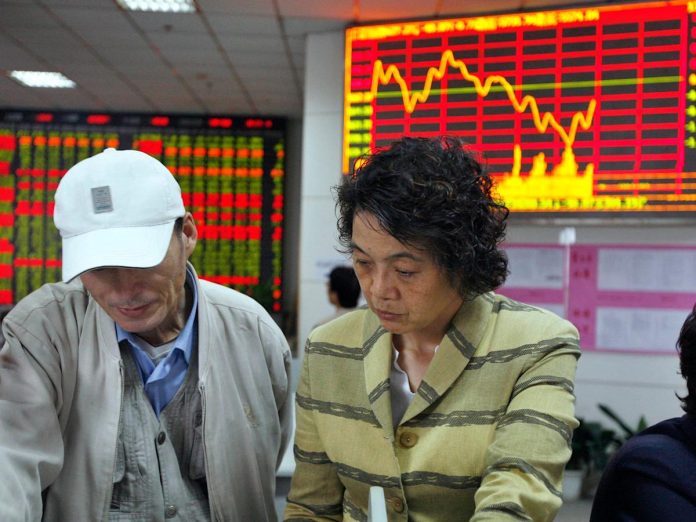
Investors check their stocks value at a stock exchange market in Shanghai.
Investors check their stocks value at a stock exchange market in Shanghai.Reuters
  • Chinese consumers are channeling record savings into stocks as the property market slumps.

  • Shanghai and Hong Kong indexes have surged on a flood of mainland money

  • The market rally masks a weak economy with deflation, sluggish retail sales, and trade tensions

China’s consumers have been holding back on spending as the property market imploded — but they are now channeling their hoarded cash into the stock market.

After years in the dumps, Chinese equities are surging. The Shanghai Composite Index — dominated by retail investors — is up about 13% this year to date, while the blue-chip CSI 300 has gained 10%.

The rally isn’t confined to the mainland. The Hang Seng Index in Hong Kong is up about 30% this year, fueled by a flood of mainland money.

Investors poured a record $90 billion into Hong Kong stocks in the first half of 2025, according to a Reuters analysis.

There could be more gains ahead. Consumers have amassed vast savings — nearly 162 trillion Chinese yuan, or $22.5 trillion, almost double 2020 levels — but remain reluctant to buy property.

“Markets have come a long way, but there is plenty of cash on the sidelines,” wrote Rory Green, the chief China economist at GlobalData.TS Lombard, on Thursday.

The rally got an early boost from the hype around Chinese AI DeepSeek’s R-1 model, which sent Chinese and Hong Kong stocks roaring this year.

Yet stock valuations still look cheap, and the ratios of market value to GDP and household savings are below historical averages, wrote Green.

“Adjusting for political uncertainty and structurally slower growth, we think there is still room for equity gains,” he added.

Equally important is the momentum trade, as bull markets in China tend to be “fast and furious,” wrote Green.

Despite the blitz in equities, China’s already weak economy looks vulnerable amid President Donald Trump’s trade war.

Property prices slid again in July, while retail sales growth slowed to just 3.7% from a year ago, the weakest pace this year. Deflationary pressures linger.

Beijing has signaled it is ready to act, pledging to tackle deflation and rein in destructive price wars.

“Of course, the stock market is not the economy, particularly in China, where the latter tends to grow faster than the former,” wrote Green.

“Nevertheless, owing to the sheer volume of retail participants, equities can be a leading indicator of consumer confidence; and right now, inevitably, that signal is strongly positive,” he added.

Assaults on public-facing workers should be specific offence, bosses say

0


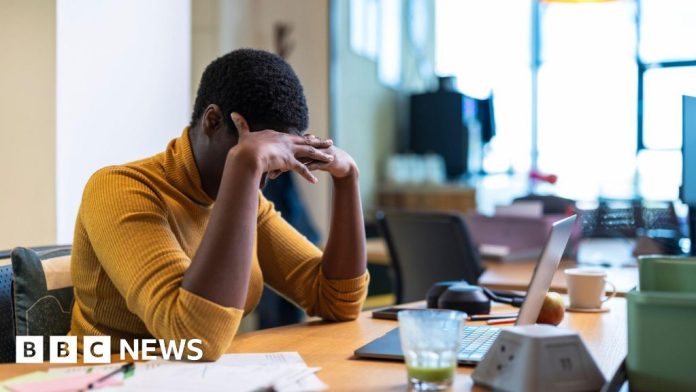
More than 100 business leaders have urged the government to make the assault of any public-facing worker, from transport staff to call centre agents, a standalone offence.

The Institute of Customer Service, a professional body, has reported a big rise in abusive incidents aimed at employees and says many are considering leaving their jobs.

The Crime and Policing Bill, which is moving through Parliament, has proposed making assault of a retail worker a new specific offence in England and Wales. But bosses, including the CEOs of Nationwide and DPD, want the law to go further and cover all sectors to act as a deterrent.

The Home Office said it backs police to “use their full range of powers”.

“It is a criminal offence to assault or threaten someone and we back the police to use their full range of powers to protect the public,” a Home Office spokesperson told the BBC.

Pointing to the Crime and Policing Bill, they added: “Abuse faced by retail workers has risen sharply and consistently over the past few years and our new offence will provide the legal clarity needed to prosecute this vile crime effectively.”

Around 60% of the UK’s workforce are in some form of customer-facing role across sectors such as retail, transport and hospitality, according to the Institute.

In its survey, 43% of customer-facing workers questioned said they have experienced customer hostility over the past six months – a 20% rise on the year before.

It also found 37% of customer service workers are considering leaving their jobs due to aggressive customer behaviour, with 26% taking time off work as a result of abuse.

“The government must act now to enshrine vital protections for all our service workers; without action now to create a strong deterrent, this problem will continue to grow,” the open letter, published earlier this month, said.

Currently, an amendment to the Police, Crime, Sentencing and Courts Act 2022 created an aggravating factor when an assault is committed against a person who is providing a public service, performing a public duty, or providing services to the public.

Business leaders say that with the high level of public-facing workers reporting abuse and assault, a stronger deterrent is needed.

The standalone offence of assaulting a retail worker proposed under the Crime and Policing Bill will have a maximum penalty of six months in prison and/or an unlimited fine. Upon first conviction, there is also a presumption on the courts to impose a criminal behaviour order (CBO), which could bar offenders from visiting the affected premises.

The government says the bespoke offence will send a clear signal that assaults on retail workers are unacceptable and will ensure assaults on retail workers are separately recorded so the true scale of the problem is known.

The BBC understands the definition of retail worker is intentionally narrow to ensure there is no confusion for courts, and people working in other sectors will be covered by other general legislation for assault offences.

One sector that has seen a rise in assaults and abuse of staff is the transport industry, with the Rail Delivery Group saying more needs to be done to protect those working on railways.

LNER train manager Phil Banks encountered an aggressive passenger on a train last year whilst doing ticket checks.

“It’s not nice to be faced with something like that… you’ve got to try and keep yourself calm which can be difficult when faced with that hostility,” he told BBC News.

“If people are being faced with such hostility on a day-to-day basis, I can understand why they would consider looking for something which is less public-facing. You shouldn’t have to put up with any kind of abuse.”

Powell: Fed faces 'challenging situation' as Trump policies shake economy

0


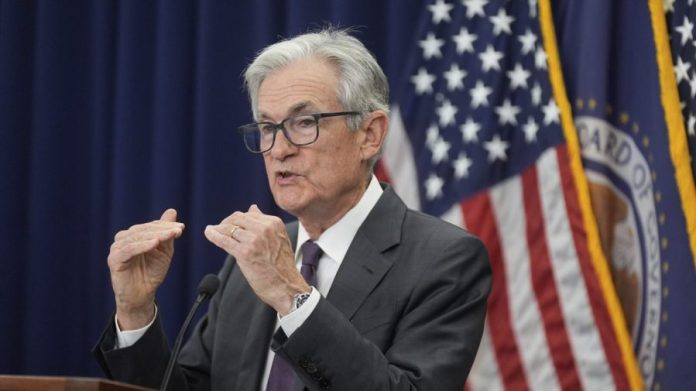
Federal Reserve Chair Jerome Powell said Friday the central bank faces “significant uncertainty” as it attempts to navigate how Trump administration policies are shaping the economy.

In remarks at the Fed’s annual summit in Jackson Hole, Wyo., Powell said the Fed needs to determine whether the impact of Trump’s tariffs, immigration restrictions and tax cuts will be temporary, or lead to permanent changes in the U.S. economy.

“There is significant uncertainty about where all of these polices will eventually settle and what their lasting effects on the economy will be,” Powell said.

The Fed, Powell said, is facing two conflicting trends: rising inflation, which would call for higher rates, and a weakening labor market, which would lend support for cuts.

“In the near term, risks to inflation are tilted to the upside, and risks to employment to the downside—a challenging situation. When our goals are in tension like this, our framework calls for us to balance both sides of our dual mandate,” Powell said.

Powell said that while the impact of Trump’s tariffs are “clearly visible,” it is not yet clear if they will lead to a one-time increase in prices or trigger a longer-term inflation surge.

“We expect those effects to accumulate over coming months, with high uncertainty about timing and amounts,” Powell said.

Powell’s final Jackson Hole speech as Fed chief comes as the central bank faces enormous pressure from President Trump to deeply slash interest rates.

Trump has raged against the Fed and Powell, specifically, for holding rates steady through the year after cutting them twice under former President Biden. While the Fed had anticipated cutting rates this year, Powell and other Fed officials blamed the delay on Trump’s steep tariffs.

Powell has defended the Fed’s decisions to keep rates steady as the banks waits to see how Trump’s tariffs will affect the economy — whether by boosting prices temporarily, causing a long-term increase in inflation, slowing growth or having little overall impact.

Inflation has also crept higher over the summer as the full weight of Trump’s tariff regime takes effect and ripples through the economy.

Even so, Powell has faced increasing opposition from within the Federal Open Market Committee — the panel of Fed officials responsible for setting rates — as the summer has worn on and Trump gets closer to choosing his successor.

Fed Governor Christopher Waller and Vice Chair of Supervision Michelle Bowman both voted against the FOMC’s decision to keep rates steady last month, calling instead for a 0.25 percentage point rate cut.

Waller and Bowman, both Trump appointees, are in the running to succeed Powell as chair when the latter’s term expires next year.

While both have been more sympathetic to Trump’s calls for rate cuts, they have not come close to supporting the crisis-level reductions the president is seeking.

Developing

Access to this page has been denied.

0


Access to this page has been denied because we believe you are using automation tools to browse the
website.

This may happen as a result of the following:

  • Javascript is disabled or blocked by an extension (ad blockers for example)
  • Your browser does not support cookies

Please make sure that Javascript and cookies are enabled on your browser and that you are not blocking
them from loading.

Reference ID: #f4465c7a-7f63-11f0-8cb9-bf40425cdfab

TikTok to lay off hundreds of UK content moderators

0


Tom Gerken

Technology reporter

Getty Images TikTok logo on a phoneGetty Images

TikTok is planning to lay off hundreds of staff in the UK which moderate the content that appears on the social media platform.

According to TikTok, the plan would see work moved to its other offices in Europe as it invests in the use of artificial intelligence (AI) to scale up its moderation.

“We are continuing a reorganisation that we started last year to strengthen our global operating model for Trust and Safety, which includes concentrating our operations in fewer locations globally,” a TikTok spokesperson told the BBC.

But a spokesperson for the Communication Workers Union (CWU) said the decision was “putting corporate greed over the safety of workers and the public”.

“TikTok workers have long been sounding the alarm over the real-world costs of cutting human moderation teams in favour of hastily developed, immature AI alternatives,” CWU National Officer for Tech John Chadfield said.

He added the cuts had been announced “just as the company’s workers are about to vote on having their union recognised”.

But TikTok said it would “maximize effectiveness and speed as we evolve this critical function for the company with the benefit of technological advancements”.

Impacted staff work in its Trust and Safety team in London, as well as hundreds more workers in the same department in parts of Asia.

TikTok uses a combination of automated systems and human moderators. According to the firm, 85% of posts which break the rules are removed by its automated systems, including AI.

According to the firm, this investment is helping to reduce how often human reviewers are exposed to distressing footage.

Affected staff will be able to apply to other internal roles and will be given priority if they meet the job’s minimum requirements.

‘Major investigation’

The move comes at a time when the UK has increased the requirements of companies to check the content which appears on their platforms, and particularly the age of those viewing it.

The Online Safety Act came into force in July, bringing with it potential fines of up to 10% of a business’ total global turnover for non-compliance.

TikTok brought in new parental controls that month, which allowed parents to block specific accounts from interacting with their child, as well as giving them more information about the privacy settings their older teenagers are using.

But it has also faced criticism in the UK for not doing enough, with the UK data watchdog launching what it called a “major investigation” into the firm in March.

TikTok told the BBC at the time its recommender systems operated under “strict and comprehensive measures that protect the privacy and safety of teens”.

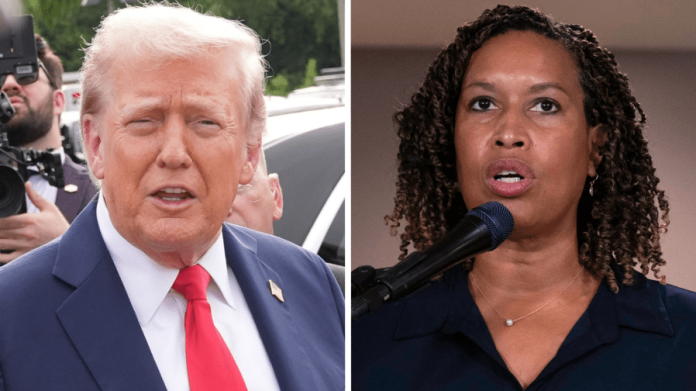
Trump threatens Bowser with expansion of DC takeover over crime stats

0


President Trump sent a warning to D.C. Mayor Muriel Bowser (D) early Friday, threatening to extend the federal takeover of local police in the nation’s capital citing “inaccurate” crime reporting data.

“Washington, D.C. is SAFE AGAIN! The crowds are coming back, the spirit is high, and our D.C. National Guard and Police are doing a fantastic job. They are out in force, and are NOT PLAYING GAMES!!!” the president wrote on Truth Social just after midnight Friday. “As bad as it sounds to say, there were no murders this week for the first time in memory.”

“Mayor Muriel Bowser must immediately stop giving false and highly inaccurate crime figures, or bad things will happen, including a complete and total Federal takeover of the City,” he added. “Washington D.C. will soon be great again!!!” 

The Justice Department (DOJ) opened an investigation this week into the district’s crime reporting data. The probe is headed by the Office of the U.S. Attorney for D.C., the same office that said earlier this year that violent crime in Washington has reached a 30-year low.

The president visited federal law enforcement at a U.S. Park Police center in Anacostia on Thursday evening, arguing the administration’s takeover of local police is already paying off. 

“It’s like a different place, different city,” Trump told the crowd. “Now, I think right now it’s better than it has been in years and in a couple of weeks, it’s going to be far better.”

The Trump administration launched its crackdown on crime in D.C. earlier this month, announcing that the Justice Department (DOJ) would take control of the Metropolitan Police Department (MPD). Trump also deployed National guard troops to the area.

Since the Aug. 11 announcement, around 630 arrests were made, including the detainment of 250 migrants without legal status, according to the White House’s data. 

Local officials and residents have pushed back on the administration’s moves.

An extension of the federal takeover would require Congressional approval under the district’s Home Rule Act.

Daily Spotlight: The Message from the Dollar

0


Daily Spotlight: The Message from the Dollar