10.6 C
New York
Tuesday, May 12, 2026
Home Blog Page 300

'Cornhusker Clink': DHS to open new ICE migrant detention facility in Nebraska

0


The Department of Homeland Security (DHS) announced on Tuesday the opening of a migrant detention facility in Nebraska as President Trump’s administration ramps up the expansion of Immigration and Customs Enforcement’s (ICE) detention capabilities. 

The new facility, located in the southwest part of the state, was dubbed “Cornhusker Clink” and will house “criminal illegal aliens” arrested by ICE, DHS said in a press release. The detention center came as a result of a partnership between the Nebraska Department of Correctional Services and ICE, expanding the capacity by up to 280 beds. 

The officials are using the existing minimum security prison work camp in McCook, located around 210 west of Lincoln. 

Today, we’re announcing a new partnership with the state of Nebraska to expand detention bed space by 280 beds,” Noem said in a statement. “Thanks to Governor [Jim] Pillen [R] for his partnership to help remove the worst of the worst out of our country. If you are in America illegally, you could find yourself in Nebraska’s Cornhusker Clink. Avoid arrest and self-deport now using the CBP Home App.”

The administration has continued adding detention buildings nationwide to help hold migrants that agencies have arrested. DHS opened “Alligator Alcatraz” in the Florida Everglades last month and an East Montana detention facility in El Paso, Texas, this week. DHS will also hold up to 1,000 migrants in a “Speedway Slammer” detention facility in Indiana.

Pillen announced Tuesday that the Nebraska National Guard will provide “administrative and logistical” support to ICE officials based in Nebraska to help enforce immigration laws. About 20 Army National Guard soldiers will be a part of the mission, with training beginning next week, according to DHS. 

“I am also proud that the Nebraska State Patrol and National Guard will be assisting ICE enforcement efforts, as well,” Pillen said in a statement. “Homeland security starts at home, and, just as when I twice deployed troops to secure our southern border during the failed Biden administration, Nebraska will continue to do its part.”

Google Is Betting Big on Terawulf Stock. Should You?

0


TeraWulf (WULF), a Bitcoin (BTCUSD) mining and data center company, saw shares soar last week following a transformative deal backed by Alphabet (GOOGL). The company has signed two 10-year high-performance computing (HPC) colocation agreements with Fluidstack, a premier artificial intelligence (AI) cloud platform. Worth roughly $3.7 billion with optional extensions lifting the total to $8.7 billion, the agreements leverage TeraWulf’s Lake Mariner campus’ 200 megawatts (MW) of capacity.

Google is underwriting $1.8 billion in Fluidstack’s lease obligations and, in exchange, will acquire about 41 million shares of WULF stock, equating to an approximately 8% equity stake. While analysts have raised their price targets as high as $13, the deal signals TeraWulf’s pivot into AI infrastructure and adds credibility.

So, does this news make WULF stock worth buying now?

Headquartered in Easton, Maryland, TeraWulf is a digital asset technology company that develops, owns, and operates environmentally sustainable Bitcoin mining facilities specializing in high-performance computing hosting. TeraWulf’s market capitalization stands at approximately $3.5 billion.

WULF stock has staged a remarkable rally of late, surging 59% in a single day on Aug. 14 following the announcement of the AI hosting deal with Fluidstack backed by Google, triggering a dramatic rebound from its April low of $2.06. The momentum extended into the next trading day, adding further gains and leading shares to hit a high of $9.23 on Aug. 15.

WULF stock has delivered an impressive 78% return year-to-date (YTD). Over the past month alone, the stock has surged 96% amid its strategic focus toward AI.

www.barchart.com
www.barchart.com

TeraWulf currently trades at a premium compared to the sector median at 24.37 times forward sales.

TeraWulf released its second-quarter 2025 financial results on Aug. 8, showcasing a strong rebound with revenue surging 33.9% year-over-year (YOY) to $47.6 million. Meanwhile, cost of revenue rose to $22.1 million.

The company’s Bitcoin mining capacity climbed 45.5% YOY to 12.8 EH/s, although self-mined Bitcoin dropped to 485 BTC due to the April 2024 halving and prior divestiture of a facility. On a brighter note, value per Bitcoin soared to $98,219 from $65,984, while power cost per Bitcoin rose to $45,555, reflecting higher difficulty and energy volatility.

What ‘security guarantees’ for Ukraine would actually mean

0


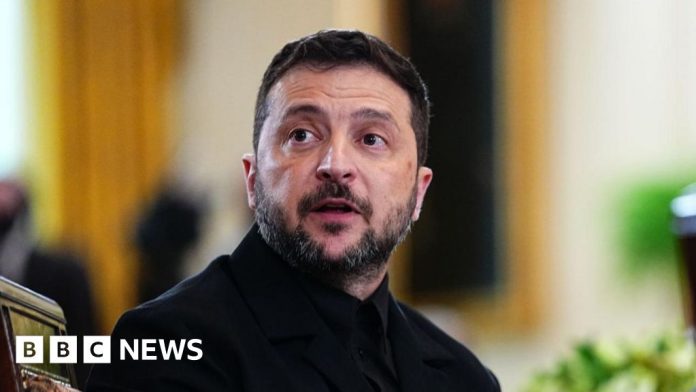
In the wake of this week’s historic White House meetings, President Volodymyr Zelensky says Ukraine and its allies are “already working on the concrete content of the security guarantees”.

Sir Keir Starmer has been chairing a virtual meeting of those nations prepared to help secure Ukraine after a peace deal – the so-called “Coalition of the Willing”.

And Britain has dispatched its Chief of Defence Staff, Admiral Sir Tony Radakin, to Washington to work out how the US can help. The cogs are clearly turning.

But what do “security guarantees” actually mean in practice?

There is a wide spectrum here, ranging from the much overused “boots on the ground” to the threat of crippling economic sanctions on Russia’s oil exports.

Let’s start with what Ukraine wants, and isn’t going to get, at least not for the foreseeable future, and that’s membership of Nato.

US President Donald Trump has ruled that out but there are plenty of other Nato members who also quietly oppose it, such as Slovakia, mainly on the grounds it would dramatically raise the chances of the transatlantic alliance getting dragged into a shooting war with Russia.

Clearly Ukraine will need strong security guarantees after a peace agreement is reached, to prevent Russia from coming back and taking a second, or third, bite.

This is why Sir Keir and President Emmanuel Macron of France have been putting together the 30-plus nation Coalition of the Willing with the aim of providing Ukraine with some international reassurance after a peace deal is signed.

Policing Ukraine’s airspace is one likely option. This could be done by basing planes at existing airbases in neighbouring Poland or Romania, with US participation.

But they would still need clear and robust rules of engagement if they are to be anything more than a symbolic gesture.

In other words, pilots need to know whether or not they can shoot back if Russia violates the peace deal by say, firing a cruise missile at a Ukrainian city.

The Black Sea is another area where Western security guarantees could help keep Russia’s fleet at bay and ensure the free flow of commercial vessels out of ports such as Odesa.

On land, the situation becomes more problematic. Ukraine is a vast country and the front line currently stretches for more than 600 miles, or 1000km-plus.

The Coalition of the Willing cannot possibly muster enough troops to deploy to safeguard that line of contact, even if Russian President Vladimir Putin would agree to that, which he won’t.

The Kremlin has reiterated its absolute opposition to the presence of any Nato troops in Ukraine, under whatever badge. So military support here is likely to be more in the areas of training, intelligence and logistic support, helping Ukraine to rebuild its bruised army, along with an ongoing supply of weapons and ammunition.

A big question mark, though, remains over what Russia will accept as security guarantees for Ukraine. Plenty of commentators online have suggested that Moscow should have no say in this matter at all.

But no countries in the Coalition of the Willing are prepared to send troops into Ukraine opposed. Nobody wants to start World War Three.

John Foreman, a former British military attaché in Moscow who has been following every twist and turn of this conflict, told me: “Russia might accept a US security guarantee for Ukraine in return for formal recognition of the occupied territories, effectively partitioning Ukraine for the long term, and no NATO (troops) in Ukraine and no Ukraine in NATO…Whatever happens, the Coalition of the Willing is no substitute for US power.”

Numerous military experts have said any future “reassurance force” provided by the Coalition of the Willing must have input from the US, something that up until the Alaska summit last week, Donald Trump had declined to commit to.

He has now said the US will be involved, but with no boots on the ground in Ukraine.

In an ideal world, what Ukraine and its allies would like from Washington is both US support for this notional future force but also, more crucially, a solid undertaking that if Russia breaches the peace deal and looks like renewing its assault on Ukraine then US military muscle – especially air power – will be on-hand to back up the Europeans.

Trump has hinted that US air support will be available in some form but given how many times he has changed his position over how to end this war, this is less than reassuring.

Lt.Gen (retd) Ben Hodges, who commanded US Army forces in Europe, says he is sceptical that the “US is really serious about security guarantees for Ukraine and will deliver more than just words”.

He adds: “The Europeans do not trust Vladimir Putin and they are not confused about who the aggressor is in this war. They are concerned that Trump is unable or unwilling to acknowledge that Russia is the aggressor. Putin will not abide by any agreement unless he is forced to do so”.

And here lies the inherent contradiction about security guarantees. How do you make them robust enough to put Russia off attacking Ukraine again, yet not so robust that Russia opposes them and threatens to target Western assets if they go ahead without Moscow’s consent?

The former British Defence Secretary Sir Ben Wallace believes the West, collectively, has not been firm enough in standing up to Vladimir Putin.

“The reality that everyone seems to want to avoid admitting or doing anything about is that Putin shows no sign of wanting to stop the killing,” he says.

“Until Trump or Europe or both are prepared to do something to make Putin want a change then little will be achieved.”

Edward Arnold, senior research fellow for European security at the London-based thinktank RUSI, concludes the Coalition of the Willing has been “successful in providing a format which is flexible and can engage with Trump in a constructive way while supporting Ukraine”.

But he cautions: “It remains a political aspiration, rather than a hardened military construct. The next couple of months will really test its resolve and political risk appetite”.


Noem: Trump wants border wall painted black so it is too hot to climb

0


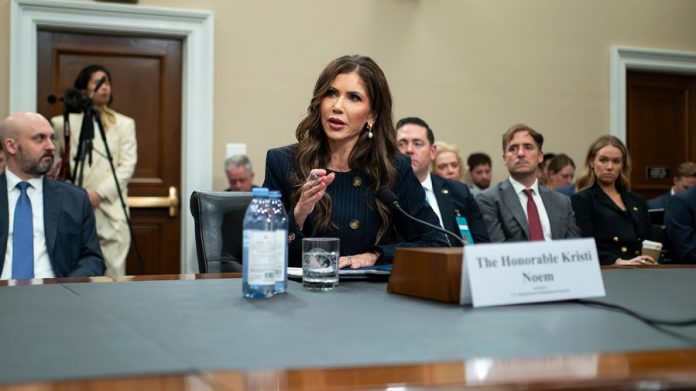
Department of Homeland Security (DHS) Secretary Kristi Noem said on Tuesday that President Trump wants the U.S.-Mexico border wall to be painted black so that it would be too hot for migrants to climb over. 

“Now, if you look at the structure that’s behind me, it’s tall, which makes it very, very difficult to climb, almost impossible. It also goes deep into the ground, which would make it very difficult, if not impossible, to dig under. And today, we are also going to be painting it black. That is specifically at the request of the president, who understands that in the hot temperatures down here, when something is painted black, it gets even warmer, and it will make it even harder for people to climb,” Noem said during a press conference in Santa Teresa, N.M.

Trump signed the “Big, Beautiful Bill” into law last month, which provided $165 million to DHS, with the majority of the funds going toward securing the southern border and deporting migrants who are in the country illegally. Out of the total sum, $46.5 billion was included for the construction of the new border wall, parts of which were starting to be built during the president’s first White House term. 

The DHS chief said that the wall would be getting a makeover by adding more “technology, cameras, sensors.” 

The president also wanted to paint the border wall black during his first Oval Office term.

Noem said the change would help encourage migrants not to come into the U.S. without authorization, “but that they will abide and come to our country the right way, so that they can stay and have the opportunity to become United States citizens and pursue the American dream.” 

She added, “I remember that a nation without borders is no nation at all, and we’re so thankful that we have a president that understands that and understands that a secure border is important to our country’s future.”

Daily – Vickers Top Buyers & Sellers for 08/19/2025

0


Daily – Vickers Top Buyers & Sellers for 08/19/2025

US Open 2025 mixed doubles: Emma Raducanu and Carlos Alcaraz lose to Jessica Pegula and Jack Draper in New York

0


An excitable atmosphere continued as the fans – who paid between $25 (£18.50) and $145 (£107) for what British doubles player Jamie Murray described as a “glorified exhibition” – danced to tunes played by an on-court DJ and acted up when appearing on the big screen.

Both sets of players smiled and laughed throughout, further illustrating how the stars are using the event to tune up for their greater priority of the singles.

For some, it underlined the view of the doubles specialists sidelined that a Grand Slam tournament had lost value.

Pegula, who has been ranked world number one in the women’s doubles, and Draper were also a scratch pairing but had too much quality against a pair who are less experienced in tour-level doubles.

For Draper, it was third time lucky – having seen previous planned partners Zheng Qinwen and Paula Badosa withdraw through injury.

Pegula and Draper’s mutual will-to-win was more evident than some of the pairings, looking focused as they later beat Mirra Andreeva and Daniil Medvedev to reach the last four.

The Russian pair earlier knocked out 24-time major singles champion Novak Djokovic and his fellow Serb Olga Danilovic in the first round,

There was the loss of another star name before Tuesday’s play started, when men’s world number one Jannik Sinner withdrew through illness.

7 in 10 fear AI causing permanent job loss: Poll

0


More than 7 in 10 Americans are concerned that the improvements within artificial intelligence (AI) will spark permanent job losses for a large number of people in the U.S., according to a new poll that was released Tuesday. 

The new Reuters/Ipsos survey found that 71 percent of U.S. adults are worried that AI will put “too many people out of work permanently.”

The large majority of respondents, 77 percent, said they have concerns that, as AI technology improves, it could be utilized to provoke political turmoil. 

Americans also have reservations about the government’s potential use of AI in warfare, according to the survey. Nearly half of Americans, 48 percent, said the federal government should never utilize AI to locate a potential target of a military attack. Around a quarter, 24 percent, said that the government should use AI to locate targets for military strikes, while another 28 percent were not sure when asked. 

Other topics respondents were polled about include energy and interpersonal relationship concerns. More than 6 in 10 Americans, 61 percent, have expressed concerns about the amount of electricity necessary to power AI. Around two-thirds of Americans in the survey said they are concerned people will flee relationships with other individuals and pivot to relationships with digital AI characters. 

On the education front, respondents were split on whether AI will help improve the field. About 4 in 10, 40 percent, said that AI will not improve education, while another 36 percent argued it will. Some 24 percent were not sure when asked. 

A January survey from the World Economic Forum’s (WEF) “Future of Jobs Report” found that 41 percent of employers worldwide said they are likely to cut jobs as AI continues to improve. 

The Reuters/Ipsos poll was conducted among 4,446 Americans and had a margin of error of around two percentage points. 

Epping ruling creates practical and political pain for Home Office

0


Iain Watson

Political correspondent

Getty Images A protest outside the Bell Hotel. Two women are holding St George and Union flags. On one flag is written the message: "Keep our children safe". Getty Images

A protest outside the Bell Hotel in Epping that took place earlier this month

The High Court judgment granting a temporary court injunction to prevent asylum seekers from being housed at a hotel in Epping will be a political and practical headache for the government.

Practically, the Home Office has less than a month to find alternative accommodation for the asylum seekers housed at Epping’s Bell Hotel.

The hope – though perhaps not the expectation – is that Tuesday’s judgement doesn’t set a precedent.

Epping council has to return to court in the autumn and it is possible the temporary ban on housing asylum seekers will not be made permanent.

But the Home Office’s lawyers have acknowledged that this is more than a local difficulty on the outskirts of Greater London.

They have said that the decision could “substantially impact” the government’s ability to house asylum seekers in hotels across the UK.

The use of hotels has halved from 402 at their peak to 210 now but some contracts are in place until 2029, and pressure will grow on ministers to find alternative accommodation at a greater pace than envisaged.

And although the number of asylum seekers in hotels fell by 6,000 in the first three months of the year, 32,000 remain.

But this practical re-housing headache could escalate into a political migraine.

The Home Office lawyers had suggested preventing the use of the Epping hotel “runs the risk of acting as an impetus for further violent protests”.

The Reform UK leader Nigel Farage has praised what he described as the bravery of the local community and expressed his hope that Epping would provide inspiration to others across the country.

He certainly is not advocating violent demonstrations but even a profusion of peaceful protests elsewhere would still require an increase in public-order policing.

There are concerns in government that this, in turn, could draw resources away from other crime fighting priorities.

And Mr Farage’s colleague Richard Tice has said Reform-run councils will urgently explore taking legal action similar to Epping

The shadow home secretary Chris Philp said he would welcome other councils following Conservative-controlled Epping’s lead.

Broxbourne council in Hertfordshire, also Conservative controlled, has said it will be doing just that.

There is a wider political cost to the government too.

While asylum seekers were housed in Epping’s Bell Hotel under the last Conservative government – although moved out in 2024 – the publicity around the legal challenge has enabled opposition politicians to focus on the government’s record on immigration and asylum.

The government has pledged to no longer use hotels by the end of this parliament, but questions are now being raised about whether they are proceeding quickly enough, and whether they are doing enough to prevent asylum seekers arriving by irregular routes in the first place.

And all this maintains the spotlight on what is a politically toxic topic for ministers.

Malaria case in New Jersey resident who hasn't traveled under investigation

0


New Jersey health officials said they are investigating what could be the state’s first locally acquired case of malaria in more than three decades.

The New Jersey Departments of Health (NJDOH) and Environmental Protection (NJDEP) announced on Monday that they are looking into a case of malaria reported in a Morris County, N.J. resident who has no recent history of traveling outside the United States.

While approximately 100 cases of malaria are reported in New Jersey each year, the Morris County resident would be the first locally acquired case reported in the state since 1991.

The state health officials said they are working closely with the U.S. Centers of Disease Control and Prevention (CDC) “to investigate potential sources of infection,” but “it is possible the resident was infected with malaria in New Jersey.”

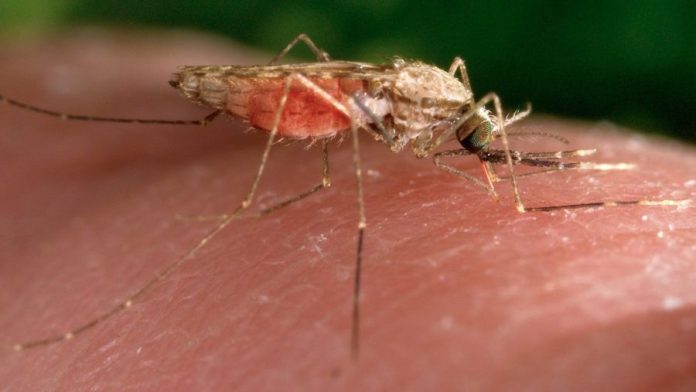
Malaria is transmitted by Anopheles mosquitoes and is caused by a parasite. The disease can be transmitted when a mosquito bites an infected person, acquiring the parasite, and then bites another person, infecting them.

Anopheles mosquitos are found in New Jersey, but health officials said the risk to the general public of non-travel related malaria remains low. The disease is widespread in tropical regions.

“While risk to the general public is low, it’s important to take the necessary precautions to prevent locally acquired malaria in New Jersey. The most effective ways are to prevent mosquito bites in the first place and to ensure early diagnosis and treatment of malaria in returning travelers,” acting health commissioner Jeff Brown said in a statement.

“Anyone traveling to countries with widespread malaria should take appropriate steps to prevent malaria while traveling and monitor for symptoms,” he added.

“I urge the public to continue taking steps to eliminate standing water around their properties, which will go a long way to reducing the risk of mosquito breeding,”

Environmental protection commissioner Shawn LaTourette encouraged the public to guard against mosquito bites by eliminating or covering standing water like birdbaths and pools.

“As the summer winds down, taking this simple but necessary step will help ensure quality of life and protect public health,” LaTourette said.

Malaria often causes fever, chills, headache, muscle aches and fatigue, and it can also cause nausea, vomiting and diarrhea. Symptoms usually appear within seven to 30 days of exposure to the disease. There are prescription antimalarial drugs but, if not treated quickly, the disease can be life-threatening.

The development of malaria vaccines has been slow, but the World Health Organization (WHO) began recommending widespread use of a vaccine in children who live in sub-Saharan African and other regions with high transmission.

Daily – Vickers Top Insider Picks for 08/19/2025

0


Daily – Vickers Top Insider Picks for 08/19/2025