8.3 C
New York
Tuesday, May 12, 2026
Home Blog Page 303

IASB adds new member to Global Preparers Forum

0


The International Accounting Standards Board (IASB) has announced Elena Poeschl as a new member of its Global Preparers Forum (GPF) for an initial five-year term.

Separate from the IASB and the IFRS Foundation, the GPF aims to provide regular input from the international community of financial statement preparers.

It comprises members with extensive practical experience in financial reporting.

These members are recognised commentators on accounting matters, either individually or through their work with representative bodies, the accounting body explained.

They are selected based on professional competence and practical experience to contribute to the development of global accounting standards.

Poeschl will contribute her expertise in accounting, financial reporting and regulatory frameworks, particularly within the insurance, banking and asset management sectors.

She is currently the head of financial accounting and reporting at Zurich Insurance Company, where she oversees the preparation of group consolidated financial statements in accordance with IFRS Accounting Standards.

IASB said that with more than 20 years of experience, Poeschl is “recognised for her strategic leadership, cross-functional collaboration, and ability to drive complex initiatives such as IFRS implementation and regulatory transformation”.

“She is a trusted adviser to senior executives and a strong advocate for clarity and impact in financial communication,” it added.

Poeschl holds a diploma with honours in International Economics from St Petersburg State University and is fluent in three languages.

Last month, the IFRS Foundation published a set of near-final examples to guide companies in reporting financial uncertainties, particularly in climate-related situations.

These examples aim to assist companies in applying existing IFRS Accounting Standards.

They were developed collaboratively by the IASB and the International Sustainability Standards Board and are expected to be finalised by October 2025.

“IASB adds new member to Global Preparers Forum ” was originally created and published by The Accountant, a GlobalData owned brand.


The information on this site has been included in good faith for general informational purposes only. It is not intended to amount to advice on which you should rely, and we give no representation, warranty or guarantee, whether express or implied as to its accuracy or completeness. You must obtain professional or specialist advice before taking, or refraining from, any action on the basis of the content on our site.

Michelle Agyemang: Euros winner returns on loan to Brighton

0


Brighton have re-signed England striker Michelle Agyemang on loan from Arsenal for the 2025-26 Women’s Super League campaign.

Agyemang played a key role in helping the Lionesses to win Euro 2025 and was named Young Player of the Tournament.

The 19-year-old is a graduate of Arsenal’s academy but spent last season on loan with the Seagulls, scoring five goals in 22 appearances across all competitions.

“What she achieved during the summer with England was incredible but not surprising,” Brighton head coach Dario Vidosic said.

“She has the character, work ethic and relentless nature of a champion. As a club, we’re incredibly proud of her.

“She was a pivotal part of our record-breaking season last year and we’re excited for what this new season looks like with her in our attack.”

Agyemang made her senior debut for Arsenal in 2022 but has been unable to secure a regular role in the first team – featuring just six times in all competitions.

Putin must change his behavior on Ukraine, or face regime change 

0


Vladimir Putin is learning again, on Ukraine, an important cautionary lesson: Be careful what you wish for.

His first major miscalculation was in believing that getting a green light from President Biden for “a minor incursion” into Ukraine in February 2022 would all but ensure the success of his full-scale invasion.  

He was not alone in that view — global expectations, including those of the Biden administration, were that Ukraine would collapse immediately under the Russian onslaught. But the U.S. and the West had already accepted Putin’s invasion and occupation of eastern Georgia in 2008 during the administration of George W. Bush, who had just persuaded NATO to commit to eventual membership for Georgia and Ukraine. Bush had said he had “looked into Putin’s eyes and saw his soul,” and he did nothing to reverse Russia’s aggression.  

This pattern of acquiescence to a new world order modeled on the old, pre-WWII order that might makes right was repeated in 2014. Russia invaded eastern Ukraine and Crimea to collect on President Obama’s 2012 promise to Putin of more U.S. “flexibility” once he had been safely re-elected. Putin clearly expected Biden as president would follow the model that he and Obama had already established in 2014 — that major parts of Ukraine are expendable in the cause of “peace” and avoiding World War III.  

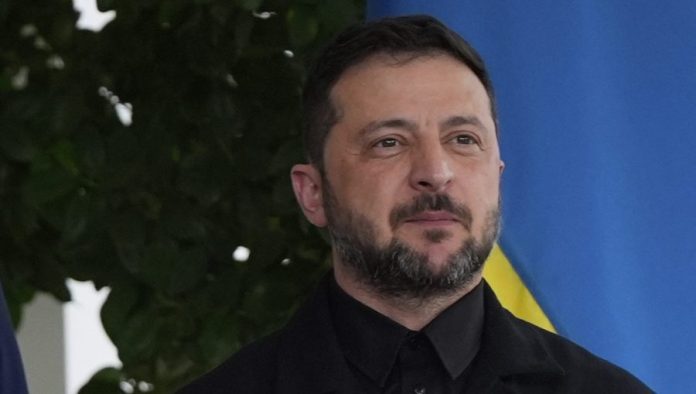
But President Volodymyr Zelensky and the Ukrainian people understood the reality that Russia’s invasion was ultimately existential. They resolved to resist and sought the West’s help — not in fighting forces, but in diplomatic, intelligence and weapons support. Today, after three and a half years, Russia has suffered a million deaths and injuries, lost billions of dollars’ worth of equipment, and crushing Western sanctions, without significant territorial gains beyond the 20 percent of Ukraine it seized with its initial blitzkrieg. Worse in Putin’s worldview, Russia now faces a revived and strengthened NATO, with two new members, Sweden and Finland, close to its borders.

After outlasting the Biden administration, which had (accurately) called him “a thug” and “war criminal,” Putin has found a more congenial and cooperative negotiating partner in Donald Trump, whose admiration bordering on adulation has been palpable. But, once again. over-reliance on an initially pliable American president has seduced Putin into overplaying his hand.  

After Trump, following the lead of his vice president, JD Vance, disrespected and humiliated Zelensky in their White House meeting, former Russian President Dmitry Medvedev applauded the disgraceful performance. “The insolent pig finally got a proper slap down in the Oval Office,” he wrote on X. “Donald Trump is right: The Kiev regime is ‘gambling with WWIII.’” From that point on, Putin felt empowered to slough off Trump’s repeated overtures and deadlines to end the carnage.  

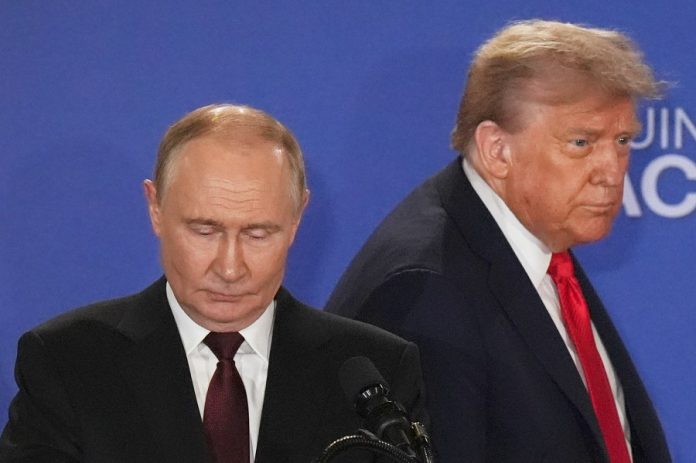
The much-touted Alaska summit was supposed to be a showdown, with “severe consequences” threatened if Putin failed to agree to an immediate ceasefire. Instead, the Russian leader yet again defied Trump, smugly dominating the high-visibility meeting he had demanded — all while intensifying his bombing of Ukrainian civilians. Putin’s international isolation for aggression and war crimes ended with Trump’s effusively warm, red-carpet welcome on U.S. — formerly Russian — soil and without a single public concession.  

In some ways, the summit was the converse of the bullying put-down of Zelensky by Vance and Trump. But this time the American president was the diminished participant, and it was carried out not with angry scowls but with Putin’s sly smiles.  

After the false start in Alaska, the next step in Trump’s epic effort to end the war and boost his chances for a Nobel Peace Prize was an invitation to Zelensky to return to the White House to hammer out the details of an overall peace agreement, including land swaps that Putin wants and issues that Zelensky has raised, such as security guarantees. Considering the tawdry history of past guarantees — the Budapest Memorandum of 1994 when Ukraine surrendered its nuclear weapons, the Minsk I and Minsk II ceasefires and numerous other aborted pauses in fighting — Ukraine will want assurances more reliable and akin to formal security treaties like Article 5 of the NATO Treaty. Trump’s team says Putin has now agreed to an “Article 5-like” security guarantee to Ukraine.  

NATO members have begun stepping up to meet their own obligations to individual and collective self-defense against the common danger Putin poses. As a result, the heads of six European governments joined Zelensky’s visit at the White House yesterday, with the intention of forging a collective Western response to the most dangerous security challenge since the Second World War.

The U.S. and European democracies need to fashion a collective strategy for Ukraine’s victory that includes the following: 

  • the security guarantee that Zelensky and Europe agree is essential for peace; 
  • an increased volume of arms transfers to Ukraine with enhanced range and lethality; 
  • diplomatic declarations of the sovereignty and political independence of Ukraine; 
  • stronger direct economic sanctions against Russia and secondary sanctions on countries funding Putin’s war, such as China; and  
  • seizure of Russian assets for the reconstruction and partial healing of Ukraine, including reparations for families of victims of Russian war crimes.  

After the failed Alaska summit, retired Gen. Philip Breedlove said, “Russia has never been interested in peace in Ukraine, is not now interested in peace in Ukraine, and will never be interested in peace in Ukraine,” except after its own total victory. If Putin’s regime will not change its aggressive behavior, the U.S. and Europe must undertake a campaign for regime change in Russia. 

Joseph Bosco served as China country director for the secretary of Defense from 2005 to 2006 and as Asia-Pacific director of humanitarian assistance and disaster relief from 2009 to 2010. He is a nonresident fellow at the Institute for Corean-American Studies, a member of the advisory board of the Global Taiwan Institute and member of the advisory board of The Vandenberg Coalition.  

Access to this page has been denied.

0


Access to this page has been denied because we believe you are using automation tools to browse the
website.

This may happen as a result of the following:

  • Javascript is disabled or blocked by an extension (ad blockers for example)
  • Your browser does not support cookies

Please make sure that Javascript and cookies are enabled on your browser and that you are not blocking
them from loading.

Reference ID: #acf3b5af-7d06-11f0-af5a-fece779e81df

Starmer hails breakthrough on Ukraine

0


Joe Pike

Political correspondent

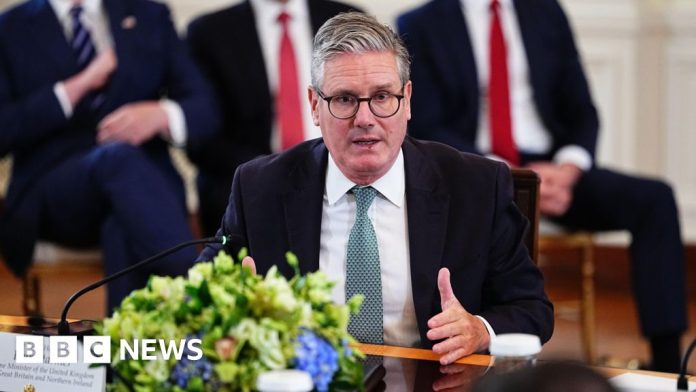
EPA Keir Starmer sitting at glossed wooden table in White House meeting with other leaders. The camera is on him as he speaks. Starmer is gesturing with his left hand and is wearing a black blazer, a white shirt and a patterned blue tie. There are blue flowers in front of him on the table. Behind, sit three men against the wall - the heads are out of shot, but they are wearing suits, white shirts and a stripy navy and white tie, a red tie and a red tie respectively from left to right. EPA

Sir Keir Starmer has called US President Donald Trump’s commitment to security guarantees for Ukraine a breakthrough, as he hailed the movement towards a meeting between Volodymyr Zelensky and Vladimir Putin.

The prime minister joined the leaders’ summit at the White House on Monday, having cut short his family holiday in Scotland. From what Sir Keir said overnight, it seems he believes that small sacrifice was well worth it.

He chaired a virtual meeting of European and Commonwealth allies, the coalition of the willing, on Tuesday to update leaders and to discuss next steps.

Diplomatic risks

Sir Keir has long been a proponent of so-called gratitude diplomacy – thanking and praising Donald Trump – so he was hardly likely to be critical about the outcomes.

And while anxiety in UK government circles about Ukraine’s future remains, the prime minister seems happy with what he argues is significant progress.

He told the BBC after the meeting that it “has shown that we have moved forward, and that in the end for me has always been the test – are we making real progress.”

Behind the scenes, European officials had worried the White House meeting was fraught with risk.

One told me they felt there was a danger of President Trump sensing President Zelensky was not committed to a US-led peace process, concluding that European leaders were digging in behind the Ukrainians, and making his frustration clear on camera.

Such division would have been a gift to Moscow so all the leaders involved were at pains to make clear that was not their approach.

Before he left Washington, Sir Keir said there was “a real sense of unity” between them.

The prime minister told the BBC he was “very pleased” with the outcomes, including progress on security guarantees, saying this would “reassure people in Europe, in Ukraine, but particularly in the United Kingdom.”

He also welcomed the “real movement forward” on bilateral and trilateral meetings between Russia, Ukraine and the US, saying this would help achieve a “peace that is lasting and just”.

Ukraine and Europe’s leaders have clearly decided together to go all in on Donald Trump’s peace plans.

The assessment of diplomats from various countries involved is that if the process ultimately fails, they will not have contributed to that failure.

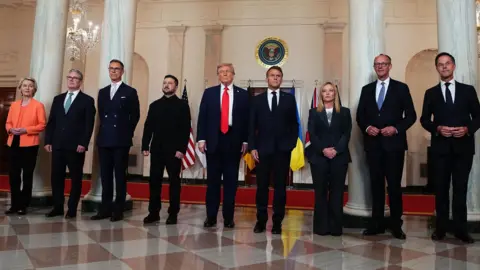
PA Media All the leaders standing in line for a photo ahead of the meeting. They are in the White HousePA Media

Negotiation preparations

The UK government now seems focused on ensuring Ukraine is in the strongest possible position for any possible peace negotiations.

From my conversations with UK officials, they believe yesterday’s White House meeting was helpful in this effort on two points.

Firstly, Trump did not echo Putin’s demands for Ukrainian territory and put Zelensky on the spot on what is a sensitive and emotive issue – at least in front of the cameras.

There now seems to be an unspoken acceptance in the White House that Ukraine will need to move carefully and slowly on any discussions over land. No 10 has repeatedly said that questions of territory are a matter for Ukraine, and Ukraine alone.

“No decision should be made about Ukraine without Ukraine,” the prime minister stressed after Monday’s talks.

Secondly, flexibility is important in any negotiation. UK officials argue that Trump’s commitment to US involvement in “cast iron” security guarantees means Zelensky can now be far more flexible in his approach knowing that Ukraine will be protected by its allies.

Prospects of a pre-negotiation ceasefire seem to have been junked. Trump has dismissed the need for ceasefire and wants to move directly to agreeing peace terms.

The importance of having a ceasefire was mentioned in the White House talks by the German Chancellor Friedrich Merz and French President Emmanuel Macron.

The UK’s assessment is that a ceasefire was never a central aim of the US administration and therefore Sir Keir should not risk being what one source called a “lone point of tension” on the issue.

The prime minister has returned to the UK, but military officials are travelling in the opposite direction ahead of detailed discussions about US involvement in security guarantees.

Trump has yet to provide much detail on what US forces might offer, but European leaders seem content to take his public commitment as important progress.

The major unknown is what Moscow will do next.

One involved argues Putin could retreat from the pathway towards peace that has been created for him. If he does so they are hoping the US sides with Europe and not Russia.

Zelensky suggests security guarantees could be ironed out in next 10 days

0


Ukrainian President Volodymyr Zelensky said peace negotiations could be finalized with security guarantees in the next 10 days following his meeting Monday with President Trump at the White House.

“Security guarantees will probably be ‘unpacked’ by our partners, and more and more details will emerge,” Zelensky told reporters after his conversation with Trump in the Oval, according to Reuters. “All of this will somehow be formalized on paper within the next week to 10 days.”

The Ukrainian leader added that he was ready to meet with Russian President Vladimir Putin in “any format” to discuss bringing an end to the more than three-years-long war.

Zelensky, after Trump’s bilateral summit with Putin last week in Alaska, officials agreed to a follow up trilateral that would include all three world leaders as they press toward a ceasefire in Eastern Europe.

However, the Ukrainian leader said he wants to meet with his Russian counterpart one-on-one before group negotiations convene. 

“We are ready for any formats at the level of leaders, because only at the level of leaders can we resolve all those complex, painful issues,” Zelensky said. “At least for us they are important and painful.”

“Therefore, I confirmed – and all European leaders supported me — that we are ready for a bilateral meeting with Vladimir Putin, and after that we expect a trilateral meeting,” he added.

Zelensky also highlighted that potential security guarantees would include the release of all Ukrainians captured amid the war, which began with Russia’s invasion in 2022.

“We discussed security guarantees,” the Ukrainian leader wrote in a Monday post on social platform X. “This is a key issue, a starting point towards ending the war. We appreciate the important signal from the United States regarding its readiness to support and be part of these guarantees.”

“A lot of attention today was given to the return of our children, to the release of prisoners of war and civilians held by Russia,” he continued. “We agreed to work on this.”

The White House said the issue of children being held captive has been weighing heavily on the mind of first lady Melania Trump. 

“Every child shares the same quiet dreams in their heart, whether born randomly into a nation’s rustic countryside or a magnificent city-center. They dream of love, possibility, and safety from danger,” Melania Trump wrote in a letter, dated Aug. 15, and given to Putin at Friday’s Alaska summit.

“As parents, it is our duty to nurture the next generation’s hope. As leaders, the responsibility to sustain our children extends beyond the comfort of a few,” she continued. “Undeniably, we must strive to paint a dignity-filled world for all – so that every soul may wake to peace, and so that the future itself is perfectly guarded.”

European leaders, who also met with Trump on Monday, reupped their commitment to supporting Ukraine following the president’s summit with Putin. The leaders stressed that security guarantees were necessary in any ceasefire negotiations.

In a hot mic moment, speaking with French President Emmanuel Macron, Trump suggested Putin was ready “to make a deal.”

Will Nelnet (NNI) be Able to Compound Book Value Attractively Over the Long Term?

0


Investment management company First Pacific Advisors recently released its “FPA Queens Road Small Cap Value Fund” second-quarter 2025 investor letter. A copy of the letter can be downloaded here. In the second quarter, the fund returned 8.60% compared to a 4.97% return for the Russell 2000 Value Index. Moreover, the Fund returned 5.87% YTD, compared to -3.16% for the index. Additionally, you can check the fund’s top 5 holdings to determine its best picks for 2025.

In its second-quarter 2025 investor letter, FPA Queens Road Small Cap Value Fund highlighted stocks such as Nelnet, Inc. (NYSE:NNI). Nelnet, Inc. (NYSE:NNI) is a financial services company that engages in loan servicing, education technology services, and payment businesses. The one-month return of Nelnet, Inc. (NYSE:NNI) was 5.54%, and its shares gained 16.29% of their value over the last 52 weeks. On August 18, 2025, Nelnet, Inc. (NYSE:NNI) stock closed at $127.11 per share, with a market capitalization of $4.598 billion.

FPA Queens Road Small Cap Value Fund stated the following regarding Nelnet, Inc. (NYSE:NNI) in its second quarter 2025 investor letter:

“We added two new positions to the Fund during the second quarter. Nelnet, Inc. (NYSE:NNI) is a financial conglomerate based in Lincoln, NE and chaired and controlled by Michael Dunlap. From its core business of holding a levered portfolio of federally guaranteed FFELP student loans, Nelnet has built sizable operations in loan servicing and education software and payments. Mr. Dunlap has built a culture that is entrepreneurial, opportunistic, and aligned, and Nelnet has successfully found ways to reinvest the earnings and runoff from its loan portfolio. Like Ingles, Nelnet is asset-rich and we think should compound book value at an attractive rate over the long term.”

An accountant in their office, taking notes on a sophisticated ledger.

Nelnet, Inc. (NYSE:NNI) is not on our list of 30 Most Popular Stocks Among Hedge Funds. As per our database, 15 hedge fund portfolios held Nelnet, Inc. (NYSE:NNI) at the end of the first quarter, which was 18 in the previous quarter. While we acknowledge the potential of Nelnet, Inc. (NNI) as an investment, we believe certain AI stocks offer greater upside potential and carry less downside risk. If you’re looking for an extremely undervalued AI stock that also stands to benefit significantly from Trump-era tariffs and the onshoring trend, see our free report on the best short-term AI stock.

In another article, we covered Nelnet, Inc. (NYSE:NNI) and shared a bullish thesis on the stock. In addition, please check out our hedge fund investor letters Q2 2025 page for more investor letters from hedge funds and other leading investors.

Mediators await Israeli response to new Gaza ceasefire proposal

0


Reuters People hold photos of Israeli hostages and banners during a demonstration demanding an end to the Gaza war and the release of all the hostages held by Hamas, in Tel Aviv, Israel (19 August 2025)Reuters

Hostages’ families and their supporters want the Israeli government to agree a deal to end the war and bring them all home

Arab mediators are awaiting a formal response from Israel after Hamas said it had accepted a new proposal for a Gaza ceasefire and hostage release deal.

The plan was presented by Qatar and Egypt, which are trying to avert a major new Israeli offensive to occupy Gaza fully.

Qatar said it was “almost identical” to a US proposal for a 60-day truce, during which around half of 50 hostages held in Gaza – 20 of whom are believed to be alive – would be handed over and the two sides would negotiate a lasting ceasefire and the return of the rest.

In recent days, Israel’s government has said it would no longer accept a partial deal – only a comprehensive one that would see all the hostages freed.

Local media quoted a senior Israeli official saying: “Israel’s position hasn’t changed – release of all hostages and fulfilment of other conditions defined for ending the war.”

Later this week, the Israeli cabinet is expected to approve the military’s plan to occupy Gaza City, where intensifying Israeli strikes have already prompted thousands of people to flee.

Prime Minister Benjamin Netanyahu announced Israel’s intention to conquer all of Gaza – including the areas where most of its 2.1 million Palestinian residents have sought refuge – after indirect talks with Hamas on a ceasefire deal broke down last month.

On Monday night, a Hamas statement announced that the armed group and other Palestinian factions had approved a ceasefire proposal presented by Egyptian and Qatari mediators to their delegations in Cairo the previous day.

Hamas official Taher al-Nunu told Al-Araby TV that they had not sought any amendments to the proposal, which he described as “a partial deal leading to a comprehensive deal”.

He also emphasised that on the first day of its implementation, negotiations would begin with the aim of agreeing a permanent ceasefire.

“We hope that the 60 days of ceasefire will be sufficient to conclude a final agreement that will completely end this war,” he said.

Qatar’s foreign ministry spokesman, Majed al-Ansari, told reporters in Doha on Tuesday that the proposal was “98%” similar to the one presented by US Middle East envoy Steve Witkoff.

“I won’t go into the details of the language that is on the table right now. But what I can say is that it is very close, almost identical to what was there on the table,” Ansari said.

“It is within the confines of the Witkoff plan… It’s a continuation of that process. Obviously, it’s in the details where the devil lies.”

Witkoff had proposed a 60-day truce that would see Hamas release 10 living hostages and the bodies of 18 dead hostages in two phases, in exchange for hundreds of Palestinian prisoners and detainees held in Israeli jails. He also said that negotiations on a final agreement to end the war would begin on the first day of the deal.

Israel accepted Witkoff’s plan, but Hamas rejected it, partly because it did not include a guarantee that the temporary ceasefire would lead to a permanent one.

Reuters A Palestinian woman inspects the site of an overnight Israeli strike, in Khan Younis in the southern Gaza Strip (19 August 2025)Reuters

Prime Minister Benjamin Netanyahu said the Israeli military’s actions in Gaza were putting Hamas under “immense pressure”

Israeli media reported that Israeli officials were examining the new proposal and Hamas’s response.

According to public broadcaster Kan, Netanyahu has not ruled out the possibility of a partial deal despite his recent statements that he will only accept a comprehensive deal.

On Saturday night, his office put out a statement saying that Israel would “agree to a deal on condition that all the hostages are released in one go, and in accordance with our conditions for ending the war”.

Those conditions included the disarming of Hamas, the demilitarisation of Gaza, Israeli control of the Gaza perimeter, and the installation of a non-Hamas and non-Palestinian Authority governance, it added.

Netanyahu said in a video on Monday that he had discussed with senior Israeli military commanders their “plans regarding Gaza City and the completion of our missions”.

“Like you, I hear the reports in the media, and from them you can get one impression – Hamas is under immense pressure,” he added.

US President Donald Trump meanwhile wrote on social media: “We will only see the return of the remaining hostages when Hamas is confronted and destroyed!!! The sooner this takes place, the better the chances of success will be.”

However, the families of hostages fear the new offensive in Gaza City could endanger those being held there.

On Sunday night, hundreds of thousands of Israelis gathered in Tel Aviv to demand that their government agree a deal with Hamas to end the war now and bring all the hostages home. Netanyahu accused the demonstrators of hardening Hamas’s negotiating position.

The Israeli military launched a campaign in Gaza in response to the Hamas-led attack on southern Israel on 7 October 2023, in which about 1,200 people were killed and 251 others were taken hostage.

At least 62,004 people have been killed in Gaza since then, according to the territory’s Hamas-run health ministry.

Most of Gaza’s population has also been displaced multiple times; more than 90% of homes are estimated to be damaged or destroyed; the healthcare, water, sanitation and hygiene systems have collapsed; and UN-backed global food security experts have warned that the “worst-case scenario of famine is currently playing out” due to food shortages.

Homes are selling at the slowest summer pace in a decade: Redfin

0


High prices and economic uncertainty are keeping homes on the market longer, making last month the slowest July in a decade.

The typical home that went under contract in July spent 43 days on the market — up from 35 days a year earlier and the longest span for any July since 2015, according to new Redfin data.

It’s another sign that buyers are gaining leverage after years of tight inventory, though the extent of that advantage varies by region.

In Florida, homes are taking much longer to sell, over 90 days in some cities. West Palm Beach (95 days), Fort Lauderdale (92 days) and Miami (86 days) were the slowest major markets in the country last month.

Demand in the Sunshine State has eased after a red-hot pandemic-era surge pushed prices higher and fueled a construction boom. Rising insurance costs and the threat of natural disasters have also deterred buyers.

Homes in other Sunbelt boom towns, including Austin, Texas (68 days), Phoenix (67 days) and San Antonio (66 days), are also lingering on the market longer than the national average.

Elevated mortgage rates and high prices dampened the spring homebuying season. Coupled with uncertainty over President Trump’s tariffs and a cooling job market, it’s no surprise families are staying put.

One silver lining: slower demand has helped boost the housing supply across much of the country, giving buyers more bargaining power than they’ve had in years. Sellers are making concessions, and fewer homes are going above asking price compared to just a few years ago.

That said, many cities — especially more affordable markets in the Midwest — remain hot.

In Indianapolis, the typical home that went under contract last month spent just 17 days on the market — the shortest span for any major market, according to Redfin. Homes also sold quickly in Kansas City, Mo. (18 days), Warren, Mich. (18 days) and Detroit (19 days).

July’s time on the market reflects more of a return to normal than a historic slowdown. At 43 days, it was roughly in line with the national July norm from 2014 to 2016, Redfin data shows.

Back in the summer of 2012, in the aftermath of the Great Recession, the typical U.S. home lingered for 69 days.

The 10 major metros where homes lingered the longest in July, according to Redfin

  1. West Palm Beach, Fla.: 95 days
  2. Fort Lauderdale, Fla: 92 days
  3. Miami: 86 days
  4. Jacksonville, Fla: 75 days
  5. Austin, Tex: 68 days
  6. Phoenix: 67 days
  7. San Antonio: 66 days
  8. Nashville, Tenn.: 60 days
  9. Las Vegas: 55 days
  10. Charlotte, N.C.: 55 days

Redfin’s median days-on-market calculation excludes homes that spent more than a year listed before going under contract.

How To Earn $500 A Month From Toll Brothers Stock Ahead Of Q3 Earnings

0


Toll Brothers, Inc. (NYSE:TOL) will release earnings results for the third quarter, after the closing bell on Tuesday, Aug. 19.

Analysts expect the Fort Washington, Pennsylvania-based company to report quarterly earnings at $3.60 per share, down from $3.64 per share in the year-ago period. Toll Brothers projects to report quarterly revenue of $2.86 billion, compared to $2.73 billion a year earlier, according to data from Benzinga Pro.

The company beat analyst estimates for earnings per share in the second quarter and has beaten analyst estimates in eight of the last 10 quarters overall.

With the recent buzz around Toll Brothers, some investors may be eyeing potential gains from the company’s dividends too. As of now, Toll Brothers offers an annual dividend yield of 0.76%, which is a quarterly dividend amount of 25 cents per share ($1.00 a year).

So, how can investors exploit its dividend yield to pocket a regular $500 monthly?

To earn $500 per month, or $6,000 annually from dividends, you need an investment of about $787,080. That’s around 6,000 shares. For a more modest $100 per month or $1,200 per year, you would need $157,416 or around 1,200 shares.

To calculate: Divide the desired annual income ($6,000 or $1,200) by the dividend ($1.00 in this case). So, $6,000 / $1.00 = 6,000 ($500 per month), and $1,200 / $1.00 = 1,200 shares ($100 per month).

View more earnings on TOL

Note that dividend yield can change on a rolling basis, as the dividend payment and the stock price both fluctuate over time.

How that works: The dividend yield is computed by dividing the annual dividend payment by the stock’s current price.

For example, if a stock pays an annual dividend of $2 and is currently priced at $50, the dividend yield would be 4% ($2/$50). However, if the stock price increases to $60, the dividend yield drops to 3.33% ($2/$60). Conversely, if the stock price falls to $40, the dividend yield rises to 5% ($2/$40).

Similarly, changes in the dividend payment can impact the yield. If a company increases its dividend, the yield will also increase, provided the stock price stays the same. Conversely, if the dividend payment decreases, so will the yield.

TOL Price Action: Shares of Toll Brothers rose 0.5% to close at $131.18 on Monday.

Read More:

Image: Shutterstock

UNLOCKED: 5 NEW TRADES EVERY WEEK. Click now to get top trade ideas daily, plus unlimited access to cutting-edge tools and strategies to gain an edge in the markets.