In his new book, “Coming Into View: How AI and Other Megatrends Will Shape Your Investments,” Joseph Davis, Vanguard’s global chief economist and head of Vanguard’s Investment Strategy Group, lays out how the coming decade is likely to shape how investors and retirement savers prepare for a range of economic scenarios — declining population growth, increasing geopolitical and trade tensions, and mounting national debt.
“These megatrends are more like tectonic plates,” he writes, “grinding against each other rather than a seesaw balancing itself.”
Davis reaffirms the wisdom of Vanguard’s founder, Jack Bogle, and explains why it still resonates a half-century later.
Here are edited excerpts of our conversation:
Kerry Hannon: Can you tick off what you view as the megatrends?
Joe Davis: Technology and how it improves our work and raises growth. Deficits and debt levels of governments, which can affect the bond markets and economic growth and inflation. The third is globalization. That’s in the headlines for tariffs, but there are other aspects of globalization, such as where good ideas come from, an underrated part of globalization. The fourth is the two dimensions of demographics. It’s population growth, which includes immigration, as well as the aging of society.
Even if AI delivers extraordinary breakthroughs, there is still the real possibility that technology will not rescue us from the headwinds the economy faces.
How does someone build a resilient retirement portfolio taking all that into account?
There’s a lot of change (coming) in the years ahead from the economic perspective. Focus on the things that you can control.
Create clear, realistic investment goals for your portfolio, incorporating your time horizon and an honest assessment of your tolerance for risk. And stick with a research-based investment plan through good times and bad. Investing evokes strong emotions that can lead to impulsive decisions.
Max out your savings and stay invested in the market. There’s going to be a lot of concern in terms of what interest rates may do and what the stock market may do. But in virtually all scenarios, everyone will heavily benefit from compounding and staying invested in the markets.
Maintain a diversified mix of broad investments across different kinds of investments to reduce a portfolio’s exposure to the risk common to an entire asset class, such as stocks and bonds.
Minimizing cost and fees was perhaps Bogle’s greatest contribution to investors and the financial services industry, and it’s not going away. As Bogle often said, “in investing, you get what you don’t pay for.” Assume an annual return of 6%. With annual costs equal to 0.1% of assets, a $100,000 investment will grow to $557,383 after 30 years. If annual costs are 2.0%, the total will be just $317,081, some $240,000 less. When higher costs compound, the differences in your wealth can be staggering.
How will Bogle’s mantra ‘stay the course’ hold up?
As someone who has spent over 20 years at Vanguard, I firmly believe in the power of “staying the course” when navigating economic and financial uncertainty, but it doesn’t mean that you never adjust your portfolio.
It has been misinterpreted as “I should ignore all headlines and not care about risks that may emerge.”
Staying the course by being continually invested in the markets is correct, but be prudent. There’s always risk in tilting your portfolio too far in one way or the other. Everything in moderation is good. Jack was clearly of that mind, and I try to channel that.
You write that an aging society can be productive. Could you elaborate?
Older consumers do not spend less as they age, although what they spend on changes — for instance, healthcare.
Academic research and our analysis both show that over the past 20 years, as we moved more jobs in the United States to service-based ones — finance, education, healthcare, business services, where there’s somewhat less of a physical demand — it opens the door to working longer for people. And that’s a positive. Experience matters a lot, what economists call human capital. It’s very valuable.
For those choosing to work longer, it’s a good thing for the economy. Economists are underestimating this aspect of the US labor force, which is its fastest growing segment at this very moment.
Should alternative investments be held in retirement plans over the next decade? There’s so much buzz with the president signing the executive order recently encouraging the use of these investments in our 401(k)s.
Costs will have to be reduced to improve the odds of success investing in them. And secondly, I cannot index all private investments. I don’t get the full pool. I can only buy individual strategies. Unlike the public markets, I can’t buy all of the investments and diversify my risk. I have to put my eggs in a few managers, and that’s going to be much like if I was just picking individual stocks.
“Minimizing cost and fees was perhaps Bogle’s greatest contribution to investors and the financial services industry, and it’s not going away,” said Joseph Davis, Vanguard’s global chief economist. (Photo courtesy of Joseph Davis)
So these types of investments are not a great idea for the typical retirement saver?
I’m not saying you shouldn’t do it. What does this mean for investors? Eyes wide open. It’s who you pick as the manager that determines your success along the way. Investors have to understand that.
These can clearly add value, but not all boats rise in the ocean. If you select a manager that’s not among the best, your investments are going to trail the public markets.
Manager selection is really critical, and why we view these kinds of investments as an extension of active management. The good news is some private investments, based upon skill of the managers, can do exceptionally well in outperforming the broad public markets.
That has been true for 20 years. It’ll be true in the next 20 years.
When you consider that the top 20 stocks make up half of the market cap of the S&P 500 Index, what should investors like me be thinking? Should I be diversifying out of this index fund?
If someone has only been invested in the S&P 500 in their retirement account, congratulations. It has done exceptionally well.
I would not urge anyone to do drastic selling. This is where I say “stay the course,” but start thinking about diversifying. It could be smaller-cap companies in the United States, which have trailed over the past 10 or 15 years, as well as non-US investments. Every market has trailed the United States almost without exception.
Some of the next great companies may be small today, or may be located outside the US. That has not been the case in the past 10 or 15 years, but I don’t think investing should be looked at through the rearview mirror.
Parting thoughts?
My goal is to demystify these trends and how they relate to investing, not sugarcoat it.
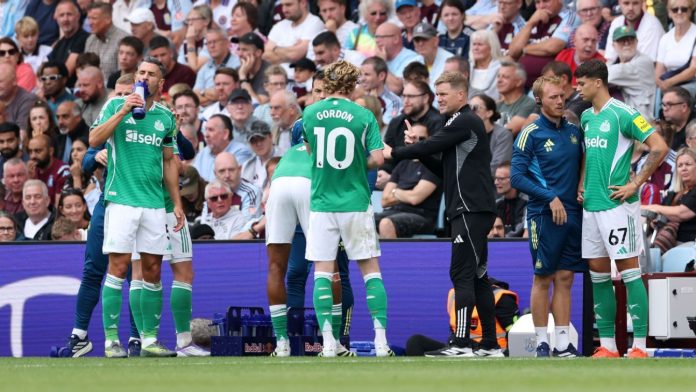
After Liverpool‘s emotional win over Bournemouth on Friday night, the first Saturday game of the 2025-26 Premier League season saw 10-man Aston Villa hold Newcastle United to a 0-0 draw after Ezri Konsa was sent off and the visitors struggled without star striker Alexander Isak, who is courting a move to Liverpool.
Later, Brighton and Hove Albion face Fulham, Sunderland are at home to West Ham United and Tottenham Hotspur face off against Burnley, before Manchester City take on Wolves in the late game. Can Tottenham overcome the disappointment of losing a two-goal lead to Paris Saint-Germain to miss out on another trophy in the UEFA Super Cup? How will Sunderland and Burnley fare back in the Premier League? And how will Pep Guardiola’s Man City start their season after a pretty poor campaign last time out?
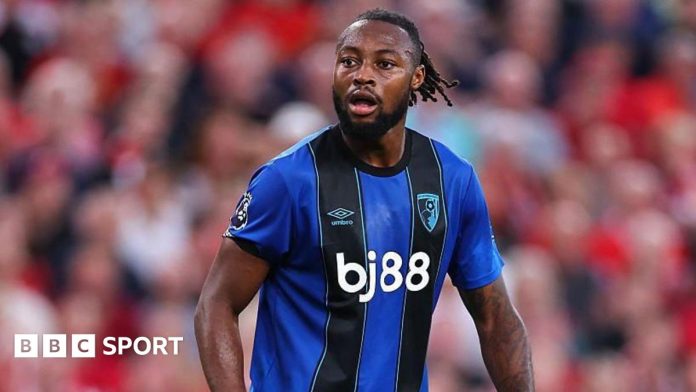
“To my Bournemouth team-mates who supported me in that moment, to the Liverpool players and fans who showed their true character, to the Premier League officials who handled it professionally – thank you. Football showed its best side when it mattered most.
“Scoring those two goals felt like speaking the only language that truly matters on the pitch. This is why I play – for moments like these, for my team-mates, for everyone who believes in what this beautiful game can be.
“The overwhelming messages of support from across the football world remind me why I love this sport. We keep moving forward, together.”
Liverpool captain Virgil van Dijk called the incident “a disgrace”, and said anti-racism campaigns need to do more to eradicate it from the game.
“The only thing we can do is deal with it by dealing with him personally and try to educate the next generation,” he said. “That is the only way to try and kick it out, in my opinion.
“I can’t believe it. These things shouldn’t happen but unfortunately it does and it is an absolute disgrace in my eyes.”
Premier League chief executive Richard Masters says anyone guilty of racist abuse will be banned from stadiums and could face prosecution.
“No Premier League footballer should ever have to, in their workplace or online, suffer that sort of abuse. It is important that we keep saying that,” Masters told BBC Sport.
“It is a problem for society. It leaks into football, and it shouldn’t happen in a football stadium. It shouldn’t happen online.
“It makes people like me and other football people in charge of the game think twice about what else we can do to ensure that these things don’t happen in the future.
“If you are found to be using discriminatory language inside a football ground you will be ejected, second you will be banned, and third you may face criminal charges.”
The Premier League says it is investigating the incident and has offered its support to Semenyo and both clubs.
Instagram’s owner Meta said it is investigating and will take action against any offending comments and accounts.
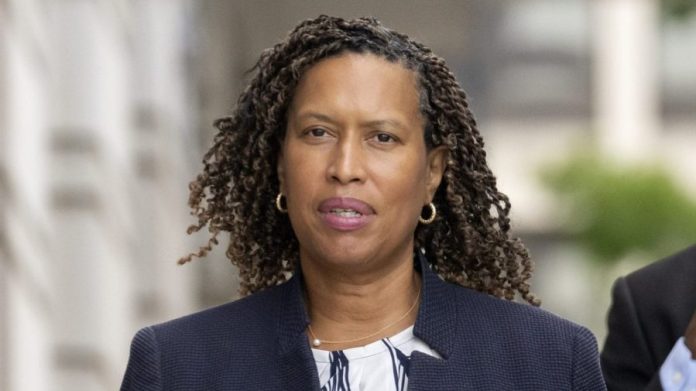
D.C. Mayor Muriel Bowser (D) wrote a letter to local residents Friday seeking to quell anxiety over the Trump administration’s federal takeover of Washington’s law enforcement.
Under a provision in the district’s Home Rule Act, President Trump earlier this week deployed National Guard troops and federal officials to patrol the streets in the nation’s capital. Bowser has blasted the move as “unsettling and unprecedented.”
“It has been an unsettling and unprecedented week in our city. Over the course of a week, the surge in federal law enforcement across DC has created waves of anxiety,” she wrote in the memo. “I was born one year before Home Rule became law, and while our autonomy has been challenged before, our limited self-government has never faced the type of test we are facing right now.”
“My jobs are many right now. Part of my job is just managing us through this crisis and making sure that our government continues to operate in a way that makes DC residents proud,” she added. “The first day of school is just over a week away, and our kids deserve a strong and joyful start to the year no matter what is happening in our city.”
Bowser in her letter vowed to defend the autonomy of Washington, including the local police department.
“We know that our access to democracy is different than anywhere else in America,” she wrote. “That said, while our Home Rule is limited, we still have rights as American citizens and we still have powers of local self-government.”
The comments come after the Trump administration made waves Thursday after announcing Drug Enforcement Administration (DEA) chief Terry Cole would take over the Metropolitan Police Department (MPD) as “emergency police commissioner.”
Following a lawsuit brought on by D.C. Attorney General Brian Schwalb, alleging the Justice Department (DOJ) overstepped its authority, the administration walked back the effort.
The mayor celebrated the decision in her letter to residents and praised MPD Chief Pamela Smith for her resilience.
“I am pleased to be able to report that, after a day in court and in accordance with Home Rule, Pamela Smith remains our Chief of Police, in command and control of the 3,100 men and women at the Metropolitan Police Department. I am incredibly proud of how the Chief has handled this experience,” she wrote. “Our city has also spent more than two decades building trust between MPD and the community, and it is important to all of us – and to the safety of our city – that we keep that trust.”
Bowser concluded the memo by touting a list of the city’s accomplishments and commended the residents for always sticking together.
“And what I have seen over this past week is a city that knows how to stick together,” the mayor continued. “I know that if we keep sticking together, we will make it to the other side of this, we will make future generations of Washingtonians proud, and we will show the entire nation what it looks like to fight for American democracy – even when we don’t have full access to it.”
She also received flack days earlier for leaving D.C. amid the turmoil — a trip she said was to pick up her daughter from summer camp. While out of town, federal forces began cleaning out local homeless encampments.
Trump also announced a plan to work with GOP lawmakers in Congress to approve a joint resolution to extend the federal takeover of MPD beyond the 30 days allotted in the Home Rule Act. Democrats have also introduced a separate bill to relinquish Trump’s authority over local police.
What’s the best way to manage money with a partner?
You’re sitting at the breakfast table with your partner. Gazing into their eyes, you think about how much you love them, how much they — to quote “Jerry Maguire” — “complete you,” and how fortunate you are to have them.
Just as you’re about to fall even deeper in love, they open their mouth to tell you they might have, ahem, put a little more on the credit card than they planned. Or perhaps to chide you for not taking your employer match on your 401(k).
Ah, love. Ain’t it grand? It still can be — even if your money habits clash — when you learn how to balance different financial styles. That process might sound complex and uncomfortable, but according to Emma Johnson, founder of Wealthy Single Mommy and author of “The 50/50 Solution” and “The Kickass Single Mom,” it starts with something simple: listening to each other.
GOBankingRates caught up with Johnson to get her take on how happy couples can stay happy couples when it comes to managing money together.
https://www.youtube.com/shorts/dqyl46S4HvM
One of Johnson’s first pieces of advice is to recognize that you and your partner are, well, your own people. You each had fully formed identities and managed your own money before you got together. Acting like a parent or boss with your partner’s finances can only breed resentment.
“Each partner needs some financial autonomy – money you can spend without checking in first,” Johnson said. “You’re both adults.”
Therapists back this up. Given how often couples argue over money, it’s not surprising that services like Ascencion Counseling include financial advice right on their websites. To keep your financial independence while managing joint responsibilities, you and your partner need to communicate and plan together.
One common approach is to open a joint account for major shared expenses like rent, utilities and groceries, while keeping separate accounts for personal spending. Once you agree on how much each of you will contribute — ideally based on income rather than splitting everything 50/50 — you can still maintain individual control over your own separate accounts.
This kind of setup gives each partner more confidence in their financial abilities while also minimizing potential resentment. That’s a win-win.
Opposites might attract in your favorite rom-com, but in real life, they can cause friction — and not the fun kind. Johnson acknowledges that differing money habits are tough to navigate.
But she wants you both to sit down and ask yourself some hard questions. Do we see our money as shared? How do we feel about keeping separate accounts and spending without checking in? Should joint expenses be split equally or based on income?
“There are no right or wrong answers here, and your feelings may change over time. But it’s important to come to some agreement together,” she said. “Remember, these dynamics can change over time, so think about how you’d feel if the situation flipped, because life is long and it very likely could!”
Timing is everything. Have these conversations when you’re both in a calm and relaxed mood — not when you’re mid-argument or stressed. You might even plan a special date night where you sit at home over a lovely meal and talk openly about your financial experiences. Share what makes you feel triggered or ashamed. Talk about areas where you feel secure and empowered.
This kind of open honesty helps build empathy and prevents unintentional hurt.
You already act as a team in other parts of life, from house training your new puppy to navigating holiday dinners with extended family. Why not do the same with money? Johnson sees financial conversations as a lifelong dialogue, not a one-and-done talk.
“Ask yourselves: What is a short-term goal — in the next year — that we share? What long-term goal – five years, 10 years, retirement – do we share? Remember, the conversation is ongoing,” she said. “It will evolve, change and have surprises and upsets. Keep talking and make future planning a fun, positive part of your partnership.”
Just because you and your partner approach money differently doesn’t mean your relationship is doomed. Far from it. With some honesty, vulnerability and a willingness to keep the conversation going, you can manage your finances as true partners — and even grow stronger in the process.
This article is part of GOBankingRates’ Top 100 Money Experts series, where we spotlight expert answers to the biggest financial questions Americans are asking. Got a question of your own? You could win $500 just for asking — learn more at GOBankingRates.com.
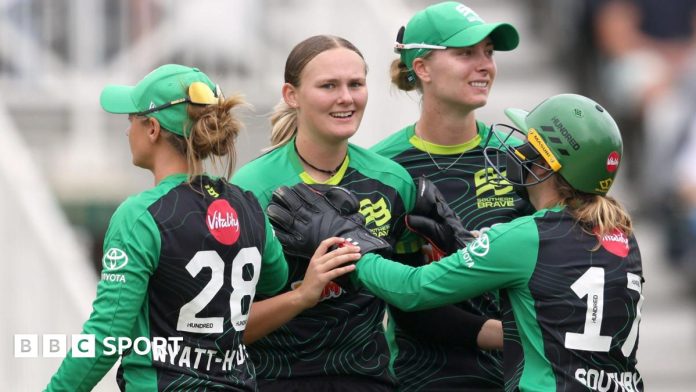
Teenager Tilly Corteen-Coleman claimed 4-13 as Southern Brave moved top of The Hundred standings with a six-wicket victory over Trent Rockets.
The 17-year-old left-arm spinner helped reduce the Rockets to 55-8 before Kirstie Gordon’s battling 32 from 27 boosted their total to 106.
Corteen-Coleman’s victims included England captain Nat Sciver-Brunt as she finished with her best figures in her 12th match of the tournament.
England seamer Lauren Bell was also in the wickets as she snared an impressive 3-16 from her 20 balls to extend her lead as the top wicket-taker in this year’s competition.
Brave had a bit of top-order wobble at the start of the chase at 10-2 when Danni Wyatt-Hodge and Laura Wolvaardt departed for four and one respectively.
Maia Bouchier steadied the ship with 42 off 30 balls in a 69-run stand with Sophie Devine, only to be stumped after dancing down the pitch to Aussie all-rounder Alana King.
Some tight bowling from Ash Gardner, Heather Graham and King ensured the game went down to the final set of five balls but Devine’s unbeaten 41 ensured Brave got home with two balls to spare.
Brave are now four points clear of second-placed Northern Superchargers at the top of the table on 16 points while the Rockets remain in sixth.
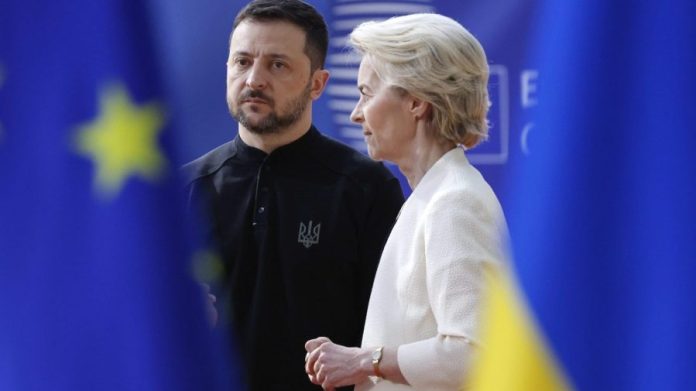
European leaders on Saturday said they welcomed President Trump’s efforts to bring peace to Ukraine but pushed for more “ironclad security guarantees” after his meeting with Russian President Vladimir Putin.
Trump called NATO and European leaders following the summit in Anchorage, Alaska — which did not include Ukrainian President Volodymyr Zelensky — to debrief them on the meeting, which the president said was “productive” but did not end in a ceasefire agreement.
The group of EU leaders, dubbed the “Coalition of the Willing,” added that they are ready to work with the U.S. and Ukraine as the nations prepare for a potential trilateral summit including Putin, Zelensky and Trump.
“We are clear that Ukraine must have ironclad security guarantees to effectively defend its sovereignty and territorial integrity. We welcome President Trump’s statement that the US is prepared to give security guarantees,” the leaders wrote in a statement, but included some caveats.
“The Coalition of the Willing is ready to play an active role,” they continued. “No limitations should be placed on Ukraine’s armed forces or on its cooperation with third countries. Russia cannot have a veto against Ukraine‘s pathway to EU and NATO.”
The group added, “As President Trump said ‘there’s no deal until there’s a deal.’ As envisioned by President Trump, the next step must now be further talks including President Zelenskyy, whom he will meet soon.”
On Friday, Trump and Putin spoke for roughly three hours in a closed-door summit at Joint Base Elmendorf-Richardson. During a news conference following the meeting, they revealed very little of what “progress” the two suggested was made toward bringing an end to the more than three-year-war in Eastern Europe and took no questions from the press.
In an interview with Fox News’s Sean Hannity later Friday, the president said any ceasefire agreement or territory swap must be reached between the two nations, “forget about me.” He added that while he and Putin agreed on many things during their discussion, “it’s really up to President Zelensky to get it done.”
“I would also say the European Nations, they have to get involved a little bit,” Trump told Hannity. “And if they’d like, I’d be at that next meeting. They’re going to set up a meeting now … not that I want to be there, but I want to make sure it gets done.”
Earlier in the day, the president said he would not act as a negotiator for Kyiv, which was not represented at the summit.
In their response Saturday, the EU leaders signaled they were ready to defend Ukraine, threatening to “uphold the pressure” on Moscow.
“Our support to Ukraine will continue. We are determined to do more to keep Ukraine strong in order to achieve an end to the fighting and a just and lasting peace,” the coalition wrote. “As long as the killing in Ukraine continues, we stand ready to uphold the pressure on Russia. We will continue to strengthen sanctions and wider economic measures to put pressure on Russia’s war economy until there is a just and lasting peace.”
“Ukraine can count on our unwavering solidarity as we work towards a peace that safeguards Ukraine’s and Europe’s vital security interests,” the leaders added.
The coalition includes French President Emmanuel Macron, Italian Prime Minister Giorgia Meloni, Germany Chancellor Friedrich Merz, U.K. Prime Minister Keir Starmer, Finnish President Alexander Stubb, Polish Prime Minister Donald Tusk, European Council President António Costa and European Commission President Ursula von der Leyen.
When Ami drove her newly purchased used car off the lot, she thought she was set. Instead, she ended up with a blown engine, a $30,000 loan and a $6,000 warranty that won’t pay up — and now she’s fighting to keep her life from stalling out.
When everything went south, the Tampa resident took it to a mechanic. She was shocked to discover that the warranty company wouldn’t cover repairs to the engine.
“They’re trying to get out of it,” said Ami.
Instead, the company told her she’d have to pay for the teardown to determine the cause of the problem — an out-of-pocket expense she can’t afford.
“Basically, I have no car and I’m stuck with this,” Ami said.
After going back and forth with the dealership and warranty company, she ran out of ideas and turned to The Ramsey Show for advice.
“Does it not cover exploding engines?” asked co-hot John Delony.
The details matter when it comes to car warranties. Depending on the fine print, Ami might have to cover the teardown costs before the warranty pays for certain repairs.
“That is insane,” fellow co-host George Kamel said. “I’ve never heard where you have to pay and then maybe the warranty company will reimburse you later.”
It’s rare for a warranty to cover everything that could go wrong with your vehicle. But many do cover engine problems.
Since Ami paid $6,000 for an extended warranty, you’d think it would. But she may have overpaid. The average extended warranty costs about $1,300 a year, according to MarketWatch. Unless hers lasted at least four and a half years, she paid more than most.
“If you bought that warranty through that dealer, then there may be some liability on their part, that they’re pushing a bad product on you,” Delony said.
A key detail: Ami signed an as-is agreement when purchasing the car. Essentially, this legalese means that she purchased the car in its existing condition.
She’s not alone. Other customers of the same dealership have complained about similar warranty issues. The Better Business Bureau’s shows mixed reviews for the business, but many complaints share the same story. In its responses, the dealership often points to the as-is agreement, saying it doesn’t owe help to customers — even those who bought extended warranties.
Ami’s finances are stretched thin. She has the $30,000 loan on the dead car, another $13,000 loan for her mother’s vehicle, an $8,000 personal loan, a $700 loan, and several credit card balances. She’s driving a work vehicle now, but will eventually need her own car soon to keep her job and make ends meet.
Read more: Nervous about the stock market? Gain potential quarterly income through this $1B private real estate fund — even if you’re not a millionaire. Here’s how to get started with as little as $10
Delony admitted he’s confused by Ami’s lack of “going to war over this.” But she said she has been digging through the details and messaging the companies involved. The hosts encouraged her to dig even deeper.
“Ami, we need to change everything,” Kamel said.
Delony urged her to read the warranty paperwork line by line, looking for anything that could help her case. He told her to stop relying on emails and start phone calls — and in-person visits — until the problem is resolved.
“It would be my part-time job,” said Kamel, “Whenever I’m not working my full-time job, I’m working on this and fighting it. I’m going through the fine print. I’m working with an attorney. I’m showing up in person every day until they know me by name.”
Ideally, the work would push the warranty company to honor the repairs. If not, the hosts suggested she try to get a refund on the warranty.
To improve her financial picture, Kamel suggested reclaiming the car that she gave to her mom. As for what to do with the broken-down vehicle, Kamel told her to get it fixed so she can sell it or trade it in for parts.
Selling the car as-is would leave her with a large loan balance and no transportation, so the stakes are high. Both hosts told Ami to press the warranty company to pay for the repairs or issue a refund, even if it means hiring a lawyer.
For anyone buying a car and considering a warranty, it’s essential to read the fine print before signing. Look closely at all the fees in your contract. If you don’t know what one is, ask and try to get it removed.
When it comes to extended warranties, read carefully for any loopholes. Ami’s case suggests she may have to pay for repairs upfront and seek reimbursement, which is unusual and financially risky. If you don’t like the terms, don’t sign. Either skip the warranty or get help from a savvy friend, financial advisor or lawyer before committing.
Stay in the know. Join 200,000+ readers and get the best of Moneywise sent straight to your inbox every week for free. Subscribe now.
This article provides information only and should not be construed as advice. It is provided without warranty of any kind.
Grace Chambers, 97, has become Europe’s oldest parkrunner to reach the 250 run milestone
Grace Chambers, aged 97, has become Europe’s oldest Parkrunner to reach the 250 run milestone.
She has just completed the 5k run at Ormeau Park in south Belfast.
Grace had heart surgery four weeks ago but that didn’t stop her taking part in the run on Saturday.
On completing the run Grace said she was “over the moon” to have finished.
“I feel glad I’ve done it as there was always a possibility that I wouldn’t but I never look negatively at things, if I set a goal I try to achieve it and if I don’t do it the first time I try it again and again and again,” she said.
Grace was on the start line with her daughter Shireen and friend Cathy
For many people, never mind an 88-year-old recovering from serious, invasive surgery, running is not top of the to-do list.
But Grace’s Parkrun journey began when a staff member on her rehabilitation team, who volunteered at Ormeau Parkrun, suggested she might enjoy coming along.
With a bit of encouragement from one of her daughters, Grace went to do her first Parkrun in 2016 and said she became the talk of the event.
“Everyone kept saying: ‘This woman in her 80s has turned up thinking she can do a parkrun.’ Well I certainly showed them,” she said, laughing.
Ormeau Parkrun
Grace and her friend Sue sitting on ‘Grace’s Bench’ which marks the finish line at Ormeau Parkrun
Grace became a regular at the community event and broke numerous records for runners in her age category in her first year.
“I just love it, all the people you meet, it’s just wonderful – people from all over Northern Ireland come and mix at Parkrun and you wouldn’t have had people from all the communities mixing like that when I was growing up,” she said.
The former teacher, who professed a love of mountain hiking and golf, said not even the suspension of Parkruns in 2020 due to the Covid pandemic slowed her down.
“I just went down and did it myself anyway,” she said.
Grace recorded all of her times and got her daughter to send them all to Parkrun afterwards.
Ormeau Parkrun
Grace said it’s the friends she made at Parkrun, like Cathy, who keep her going
“I’ve probably done a lot more than 250 Parkruns, but the ones during Covid don’t count,” she added.
Not even a broken leg, suffered while out walking during the pandemic, stopped her, as she bounced straight back to Parkruns after recovering.
She’s now assisted around the course by her two friends Cathy and Sue.
“I wouldn’t be here without them, they take me to the run each week and go round with me.”
A ‘local legend’ cheered on by Olympians
Ormeau Parkrun
Grace said Dame Kelly Holmes wanted to chat but she had to tell her to hurry up so they would get a good time
Grace now has a bench named after her on the finish line with a a plaque that says “Grace’s Bench, Park runner extraordinaire”.
On a typical week, you’ll find Grace sitting on it after the run posing for photos with her fans.
Lots of people have come to visit Grace over the years including the Olympian Dame Kelly Holmes, who ran alongside her.
“Kelly wanted to talk as we were going round the course so I had to say, come on Kelly, you’re holding me back.”
Grace’s preparations for her 250th run hit a snag when she had a heart surgery four weeks ago, but she only missed one week during her recovery.
Dr Jonny Mailey, who performed keyhole heart surgery on Grace four weeks ago celebrated with Grace at the finish line
Grace’s preparations for her 250th run hit a snag when she had a heart surgery four weeks ago, but she only missed one week during her recovery.
“I told the surgeon I was going to test out his work, I’ve got a new valve, why would I not use it,” she said.
Dr Jonny Mailey, from the cardiology unit at Belfast’s Royal Victoria Hospital, performed the keyhole valve replacement on Grace in July and came along to support her run.
“She’s fantastic and what she has achieved is unbelievable,” he said.
“It really is testament to her as a person.”
Deirdre McConvey, one of the volunteer run directors at Ormeau Parkrun, said Grace has “become a local legend”.
Volunteer run director Deirdre McConvey said Grace was a “local legend” and people queue for selfies
“We’ve had visitors come specially to meet her, nobody smiles broader than Grace.
“Her warmth and friendliness has endeared her to all the regulars who love to cheer her over the finish line, especially on her birthday.
“Her grit and determination are definitely inspiring and sometimes quite humbling.”
Belfast South MP Claire Hanna is also a regular Parkrunner and cheered Grace on.
“Congratulations to the inimitable Grace,” she said.
“What an inspiration she is to so many.”
However, Grace doesn’t really understand the fuss over her Parkrun record.
“So what!” she said.
“Many people do much more remarkable things than this, but if it inspires some people to start running then that’s great.
“I just hope I get a good time on Saturday with everyone watching me.”
Ukrainian President Volodymyr Zelensky will meet with President Trump on Monday at the White House in the aftermath of Trump’s summit with Russian President Vladimir Putin in Alaska.
Trump spoke with Zelensky and European leaders while on Air Force One returning home from his first face-to-face meeting with Putin since his first term in office.
“It was determined by all that the best way to end the horrific war between Russia and Ukraine is to go directly to a Peace Agreement, which would end the war, and not a mere Ceasefire Agreement, which often times do not hold up,” Trump posted on Truth Social early Saturday morning.
“President Zelenskyy will be coming to D.C., the Oval Office, on Monday afternoon. If all works out, we will then schedule a meeting with President Putin,” he added.
Zelensky signaled his support for a trilateral meeting between the three world leaders in a post on social platform X.
“President Trump informed about his meeting with the Russian leader and the main points of their discussion,” the Ukrainian leader wrote. “It is important that America’s strength has an impact on the development of the situation.”
“On Monday, I will meet with President Trump in Washington, D.C., to discuss all of the details regarding ending the killing and the war. I am grateful for the invitation,” he added.
Trump met Friday in Alaska with Putin to discuss a potential ceasefire deal in Ukraine — more than three years after Russian forces invaded the Eastern European nation after amassing troops near the border.
The president said that the meeting brought progress, but no agreement on a ceasefire was made. He offered few specifics on what the two leaders discussed.
Trump had previously said Friday’s summit in Alaska was setting the table for a potential follow-up meeting involving Zelensky, and that Ukraine would need to be involved in any final decisions about territory.
Monday’s meeting will mark the first time Zelensky visits Washington since the infamous Oval Office spat earlier this year in which Trump and Vice President Vance blasted the Ukrainian leader for not expressing gratitude for U.S. support.
Trump has in recent weeks expressed greater frustration with Putin and his ongoing attacks on Ukrainian cities and has threatened “severe consequences” if a deal is not reached soon, though on Friday he said the two men have a “fantastic relationship.”