12 C
New York
Wednesday, May 13, 2026
Home Blog Page 325

Trump unfroze education funding, but the damage is already done

0


Summer is when superintendents and principals finalize staffing and allocate resources for the year ahead. 

Instead, they’ve spent the past month scrambling to revise budgets and delay decisions after the Trump administration recklessly froze more than $6.8 billion in federal education funds approved by Congress four months ago — a move that unnecessarily threw school planning into chaos with the school year starting in just a few weeks.

On June 30, the Education Department abruptly informed states it would not release key fiscal year 2025 education funds as scheduled, affecting programs like teacher training, English learner support and after-school services. 

After bipartisan backlash — including lawsuits from 24 states and pressure from Republican senators — the administration reversed course on July 25, announcing it would release the remaining funds. But the damage had already been done.

The administration claimed the freeze was part of a “programmatic review” to ensure spending aligned with White House priorities. Yet, the review was conducted without transparency while the funds were only released after intense political pressure.

The Education Department stated “guardrails” would be in place to prevent funds from being used in ways that violate executive orders, which is a vague statement that should raise concerns about future interference.

Districts had built their budgets assuming these funds would arrive by July 1, as they do each year. Instead of preparing for the new school year, states and districts were forced to scramble to minimize the damage.

In my home state of Texas, nearly 1,200 districts faced a freeze of $660 million, which represented about 16 percent of the state’s total K-12 funding.

I have spoken to superintendents, chief academic officers and chief financial officers who described how these unanticipated funding deficits undermined strategic investments into high-quality instruction and mental health services.

In Tennessee, $106 million was frozen, representing 13.4 percent of the state’s K-12 funding. Knox County Schools eliminated 28 central office positions, including staff supporting instruction for English learners.

Florida had $400 million frozen. Pinellas County School District alone stood to lose $9 million. The superintendent reported that they would have to make cuts that directly affect student achievement while the school board chair said the freeze “feels kind of like the straw that broke the camel’s back.”

Kansas saw $50 million frozen. Kansas City, Kan. Public Schools warned families that $4.9 million in lost funding would affect “programs that directly support some of our most vulnerable students — including those from low-income families, English language learners and students with disabilities.”

Even with the funds now being released, the uncertainty and disruption caused by the freeze will have lasting impacts. In some cases, district leaders were forced to make staffing and programming decisions without knowing whether critical federal support would be unfrozen.

All who care about public education must make clear that this kind of reckless disruption is unacceptable and will carry political consequences. 

Governors from both parties should press their congressional delegations to pass legislation preventing future executive overreach. And Congress must require the Education Department to provide advance notice and justification for any future funding delays.

The funding freeze was a reckless policy choice that disrespected educators, destabilized schools and put children at risk. Public education cannot function on the Trump administration’s political whims and such unwarranted actions cannot go unchecked without the risk of normalizing executive overreach at the expense of students. 

Now is the time for all policymakers and educators to stand up for our schools and ensure that no child’s education is ever again held hostage to such problematic politics.

David DeMatthews is a professor in the Department of Educational Leadership and Policy at The University of Texas at Austin.


CEO Says AI Is Taking On ‘Soul-Crushing Jobs’ With Agents That Work 24/7, Never Eat, And Never Need Benefits

0


Artificial intelligence is rapidly reshaping how major companies run their operations, with some executives saying it’s already transforming the workforce. ServiceNow Inc. (NYSE:NOW) CEO Bill McDermott says AI agents are taking over repetitive, draining work—and doing it without lunch breaks or healthcare benefits.

“We’re slowing down the hiring in jobs that are, quite frankly, soul-crushing jobs,” McDermott said in a recent interview with Bloomberg, pointing to IT support as an example. He said 97% of standard software is now generated by AI, and 80% of customer inquiries are fully managed by AI agents. Security and risk management tasks, patchwork, and change management are also handled by these systems.

Don’t Miss:

“They work hard 24 by seven. You don’t have to pay them and they don’t need any lunch and they don’t have any health care benefits,” McDermott said. “AI is affordable and complements our workforce.”

While ServiceNow is still hiring, it’s adding fewer people to these support roles. McDermott predicts other well-run companies will follow the same path, reorganizing around AI and moving away from traditional 20th-century corporate structures.

Salesforce (NYSE:CRM) CEO Marc Benioff told Bloomberg in June that AI now accounts for 30% to 50% of his company’s workload, calling the trend a “digital labor revolution.” The company has restructured around AI and cut more than 1,000 jobs this year. Benioff says Salesforce’s AI operates at about 93% accuracy and is helping employees focus on higher-value tasks.

Trending: ‘Scrolling To UBI’ — Deloitte’s #1 fastest-growing software company allows users to earn money on their phones. You can invest today for just $0.30/share.

Meanwhile, Goldman Sachs (NYSE:GS) has also warned that AI’s effects on the job market are already being felt, especially by younger workers. The bank says unemployment for tech workers ages 20 to 30 has risen nearly 3 percentage points since early 2024. That’s more than four times the increase in the overall jobless rate. According to Business Insider, Goldman Sachs Chief Economist Jan Hatzius estimates generative AI will eventually replace 6% to 7% of U.S. jobs within a decade, though many workers could find roles in other industries.

William and Kate set to move to new Windsor home Forest Lodge for ‘fresh start’

0


Daniela Relph

Royal correspondent

Heritage Images/Getty Images An aerial shot of Forest Lodge in Windsor Great Park, showing a large redbrick country manor house with pillars and cars parked out the front.Heritage Images/Getty Images

William and Kate are moving into Forest Lodge in Windsor

The Prince and Princess of Wales are set to move into a new home in Windsor.

William and Catherine will move to the eight-bedroom Forest Lodge in Windsor Great Park, with their children George, Charlotte and Louis.

The family have been living in Adelaide Cottage in the castle grounds since August 2022 but after a challenging 18 months that has seen the princess deal with a cancer diagnosis and treatment they have now decided to make a change.

“Windsor has become their home. However, over the last few years while they have lived at Adelaide Cottage there have been some really difficult times,” a royal source told the BBC.

“Moving gives them an opportunity for a fresh start and a new chapter.

“It’s an opportunity to leave some of the more unhappy memories behind,” the source said.

The royal couple see this as a move for the long-term and view Forest Lodge as their forever home.

It will be where they plan to live as a family when the Prince and Princess of Wales becomes King and Queen.

As with their four-bedroom Adelaide Cottage, it is understood they will not have any live-in staff as they focus on creating as private a family home as is possible.

William and Catherine announced they were moving from Kensington Palace in London to Windsor in August 2022.

They also have homes at Anmer Hall in Norfolk where they spend much of the school holidays and their offices remain at Kensington Palace.

The move to Windsor has been a successful one and afforded them the privacy and freedom that was more difficult to find in London.

It is understood the family are settled and the children are happy at Lambrook school where all three currently attend.

Any work carried out on Forest Lodge will not come from the Sovereign Grant which provides state funding for the monarchy.

The Prince and Princess of Wales are funding the move privately and they will pay market rent on the property.

Alberto Pezzali/PA Wire The Prince and Princess of Wales at Datchet Road in Windsor, Berkshire, on day one of the French President's state visit to the UK. Kate is smiling for the camera while William is looking away.

Alberto Pezzali/PA Wire

The Prince and Princess of Wales currently live in Adelaide Cottage

In 2001, Forest Lodge underwent £1.5m restoration works and was put on the rental market for £15,000 a month.

Images inside the home taken at the time showed original stonework, elaborate plaster cornices and ceiling decoration, plus a half-barrel vaulted hallway ceiling.

Redacted planning applications lodged with the Royal Borough of Windsor and Maidenhead show permission for minor internal and external alterations was granted earlier this month.

The council’s decision notice refers to the removal of a window and works to a fireplace.

The Royal Family receives funding through a mix of public and private sources.

Prince William’s private income comes from a variety of sources, including the Duchy of Cornwall, the estates which mainly covers land in south-west England and are worth £1bn.

A financial report for the duchy this year showed a profit of £22.9m, slightly down on the previous year when it generated a net surplus of £24m.

Forest Lodge is nestled in the heart of the 4,800-acre Windsor Great Park.

Kate has spoken of her belief in the healing power of the natural world and described nature as her “sanctuary”, while opening up about her “life-changing” cancer treatment.

She further showed her love for nature in the Mother Nature video series, which she launched in May.

The family hopes to move into the new property by Christmas and are said to be looking forward to creating many happy memories in their new home.

Abbott, Rollins announce plans to address screwworm threat on cattle, livestock

0


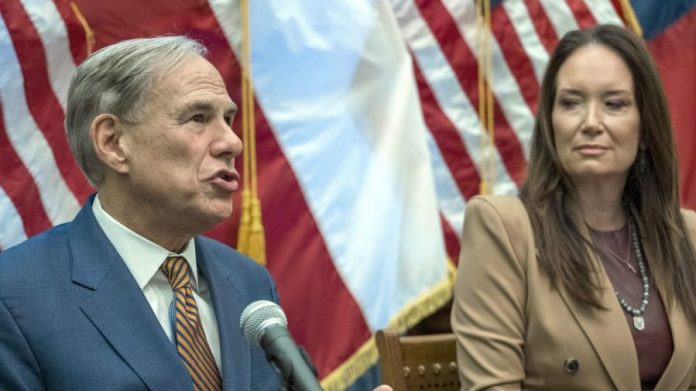
AUSTIN (KXAN) — On Friday, Texas Gov. Greg Abbott (R) and Secretary of Agriculture Brooke Rollins publicly addressed plans to fight against the New World screwworm, which has disrupted the livestock and cattle industries.

According to the U.S. Department of Agriculture, New World screwworms is an invasive species that burrows fly larvae into fresh wounds of living animals like livestock, pets and occasionally people. The damage they cause can be deadly.

During a press conference, Rollins announced a new sterile fly production facility in Edinburg, Texas. The facility will breed three hundred million flies a week.

Additionally, the Trump administration will invest in the development of technology and work closer with Mexico to track the screwworm population.

“We have a lot of data to collect. We have a lot of work to do. But we have to protect our beef and cattle industry in this country,” Rollins said.

Abbott said during the press conference that screwworms, which feed on cattle and deer, could result in billions of losses each year.

“This is an issue that is essential to the cattle industry, to the food supply which are at risk,” Governor Abbott said.

The animal is named after their feeding behavior, with the larvae screwing into the flesh of their victims.

Larry Gilbert, a professor at the Univerosty of Texas and the faculty director of the Brackenridge Field Lab, said he was more concerned about the impact New World screwworms could have on the deer population.

“The deer herds would be very vulnerable to this, and you don’t go around treating wounds on deer. Its hard to find them,” Gilbert said.

In June, the Department of Agriculture reported that screwworms were detected about 700 miles from the southern border. Cattle imports were suspended from Mexico to prevent an infestation in the states.

This drew concern from Abbott earlier in the year. He established a Texas New World Screwworm Response Team.

According to Peyton Schuman, senior director of government relations for the Texas and Southwestern Cattle Raisers Association, a screwworm outbreak could cost Texas around $1.8 billion in damages to livestock annually.

The state’s hunting industry could also face issues. During the 1960s outbreak, 80 percent of Texas’s white tailed deer died as a result of screwworms.

The species originates in Cuba, Haiti, the Dominican Republic and some countries in South America. The pests were mostly eradicated in the U.S. in the 1960s, but they have occasionally reemerged in Central America and Mexico.

According to the Texas A&M Agrilife Extension office, the population is controlled through the release of sterile males into the population. Using sterile populations for control was developed at the University of Texas in Austin by entomologists, Edward F. Knipling and Raymond C. Bushland.

Signs of an animal infested with the New World screwworm include:

  • Foul-smelling wounds with maggots
  • Animals biting or licking their wounds
  • Lesions in bellybuttons, ears and where branding has occured
  • Lethargy

If an infestation is suspected, Texas A&M Agrilife recommends you contact authorities, like the Texas Animal Health Commission and Texas Parks and Wildlife, and notify your veterinarian.

You should then inspect the animal for signs of infestation and collect any samples to give to authorities. There are several treatment options, including topical treatments.

Big changes could mark a housing market ‘sweet spot’ this fall — are you ready to take advantage of them?

0


Maybe you were planning to buy a house this year but haven’t found anything yet — and panic is starting to set in because you’re worried you’ve missed the housing market season.

It’s common you’ll find a higher number of listed properties in late spring and summer. That means, if you’re in the market for a new home, you have more options to choose from, but you also face stiffer competition.

Traditionally, fall and winter are quieter, but if you find a place you like, you may be able to get a better deal on it.

Shop Top Mortgage Rates

Powered by Money.com – Yahoo may earn commission from the links above.

Potential homebuyers, however, may be able to take some comfort from the picture being painted by recent data that suggests this fall may be a great time to buy a new home.

“There’s a lot of uncertainty out there, and some buyers are just waiting to see what happens,” Zillow senior economist Kara Ng said in an article published July 20. “So, if you’re able to buy, fall could be a sweet spot since you won’t be competing against the pool of buyers waiting on the sidelines.”

One of the main reasons this fall is shaping up to be a good one for homebuyers is that, according to Zillow data, the inventory of homes for sale is the highest it’s been since July 2020, with the number of listed homes up 20% from last year.

At the same time, for the past two years, October has seen the highest inventory of the year as homes listed earlier remain unsold. Zillow anticipates this seasonal pattern will repeat this year after a “lackluster spring” during which buyers didn’t show up.

A fall with high inventory and fewer buyers means that if you’re in the market for a new home, “you’re likely to have more time to decide on your options,” Ng said. “You have time to really consider if that home is the right fit for you.”

With fewer buyers, you’re also less likely to endure a bidding war for the home you want and you may have more negotiating power.

In some markets, prices aren’t rising as quickly as they have been over the past few years.

Home values across the U.S. grew by 45.3% between February 2020 to 2025, Zillow reported earlier this year — a rate that’s more than double the historic rate of increase.

Trump’s ceasefire pivot will have caused dismay in Kyiv

0


Paul Adams

BBC Diplomatic Correspondent

Getty Images US President Donald Trump and Ukraine's President Volodymyr Zelensky sitting side by side during a meeting in the Oval Office of the White House on February 28Getty Images

Zelensky and Trump will meet on Monday

No deal in Alaska. It was always the most likely and, in the absence of Ukrainian President Volodymyr Zelensky, perhaps the most desirable outcome.

But US President Donald Trump’s pivot away from the need for an immediate ceasefire, which he said beforehand he wanted, will have caused profound dismay in Kyiv and around Europe.

Russia’s position has long been that a ceasefire can only come in the context of a comprehensive settlement taking account of Russia’s interests – and inevitably implies Ukraine’s capitulation.

That’s the position that Trump, once again, appears to have endorsed.

“It was determined by all that the best way to end the horrific war between Russia and Ukraine,” he wrote on Truth Social, “is to go directly to a peace agreement.”

Ceasefires, he noted, “often times do not hold up”.

This appears to fly in the face of Ukraine’s main demand, endorsed by all its European backers: that an unconditional ceasefire has to come first.

Crucially, it also buys Russia’s Vladimir Putin time on the battlefield, where he is convinced he’s winning.

“If Putin’s military objective was to avoid immediate constraints on Russian operations in Ukraine then he appears to have succeeded,” says Matthew Savill, the director of military sciences at the Royal United Services Institute.

At their brief press appearance last night, Putin warned Ukraine and the Europeans not to “throw a wrench” in the works of the unspecified progress he and Trump had made.

But that, for Kyiv and its allies, is precisely what Trump has done, undoing the achievements of what they all hoped was a successful preceding week of frantic diplomacy aimed at influencing the outcome in Alaska.

It’s a reminder, as if one were needed, of Trump’s tendency to echo the views of the last person to have his ear.

For a short while this morning, European leaders will have held their breath, waiting to see if their efforts had borne fruit or been cast aside.

True to his word before the summit, Trump got on the phone to Zelensky. The two men spoke for an hour, before being joined by European leaders.

Zelensky said the call was “long and substantive” and that he would travel to Washington on Monday for his first visit since the disastrous Oval Office encounter in February.

A lot has happened since then, with Kyiv’s European allies working assiduously to repair the damage and school Zelensky in the best ways of handling the capricious and volatile occupant of the White House.

“I am grateful for the invitation,” Zelensky posted, adding “it is important that America’s strength has an impact on the situation”.

But in a later post, after Trump’s statement on Truth Social, Zelensky adopted a more urgent tone.

“Killings must stop as soon as possible,” he said. “The fire must cease both on the battlefield and in the sky, as well as against our port infrastructure.”

Reuters US President Donald Trump and Russian President Vladimir Putin shake hands during a press conference following their meeting at Joint Base Elmendorf-Richardson, in Anchorage, AlaskaReuters

On his way to Alaska, Trump said he wouldn’t be happy if he left without a ceasefire, but afterwards posted on social media that ceasefires “often times do not hold up”

Europe’s “Trump whisperers” picked up this morning where they left off last week.

They highlighted the vital importance of involving Ukraine in conversations about its future but also paused, as they know they must regularly do, to show appreciation for Trump’s efforts.

“President Trump’s efforts have brought us closer than ever before to ending Russia’s illegal war in Ukraine,” said Sir Keir Starmer, the UK’s prime minister.

Starmer said he welcomed what he called the “openness” of the US, along with Europe, to provide “robust security guarantees” for Ukraine in the event of a deal.

If and when the fighting does eventually end, the precise nature of those guarantees will need to be spelled out in a great deal more detail than has so far been the case.

Getty Images Ukrainian President Volodymyr Zelensky and German Chancellor Friedrich Merz face a screen during a video conference of European leaders with the US President on the Ukraine war ahead of the summit between the US and Russian leadersGetty Images

European leaders held a virtual meeting with Trump on Wednesday ahead of the US president’s meeting with Putin

Despite Europe’s emerging role as Ukraine’s principal military, economic and political backer, everyone knows Ukraine’s future security cannot really be assured without the substantive backing of the US.

In her own comments on the Alaska summit, Italy’s leader, Giorgia Meloni, said guarantees for Ukraine could be “inspired by Nato’s Article 5” – the principle of collective defence signed on to by all Nato members.

Several reports this morning suggested the idea of guarantees outside Nato but equivalent to Article 5 were discussed during the latest call between Trump and European leaders.

But in the wake of Trump’s apparent about-face this morning, you can almost hear the sound of minds spinning across European capitals.

In London, the government appears to be putting on a brave face.

“If you can get that all done [a ceasefire and a peace agreement] in one go or in quick succession that’s obviously a good thing,” said a senior Downing Street source.

“But we all want to see the fighting stop”.

Getty Images US President Donald Trump waving as he boards Air Force One to depart Joint Base Elmendorf-Richardson Getty Images

Trump has walked away from the idea of an immediate ceasefire, no doubt informed by Putin’s highly contentious account of how ceasefires broke down in the past.

The quasi-summit in Alaska already represented a cost-free win for Putin. The return of an international pariah to the international stage (albeit one festooned with unambiguous displays of American military might at the Elmendorf-Richardson airbase) and some of the trappings of a state visit.

The threat of increased US sanctions on Moscow receded too, with Trump saying it may be two or three weeks before he even has to think about it.

All this raises a host of questions about what may greet Zelensky, both on Monday in Washington and when he finally finds himself in the room with Putin and Trump.

What advice does Trump have for the Ukrainian leader, Fox’s Sean Hannity asked.

“Make a deal,” came the blunt reply. “Russia’s a very big power and they’re not.”

Seafood fraud: Are your fish fishy?

0


Seafood is an iconic staple of our summer diets, but that shrimp on your po’boy may not be what it seems.

Despite promises of “fresh Gulf seafood” on menus across the country, many diners are unknowingly served imported products falsely labeled as local catch.  

Stark evidence of this came just last year, when an iconic Mississippi restaurant shocked the Gulf Coast by pleading guilty to selling more than 29 tons of mislabeled seafood, which led to a fine of more than $1 million and a prison sentence for the manager of the restaurant’s seafood distributor. The restaurant served what it called fresh Gulf seafood, like red snapper and grouper, when it was actually selling cheaper foreign imports to unwitting customers.  

This was not an isolated incident, but a warning sign.  

This type of seafood fraud dupes consumers, hides health risks and hurts honest fishermen and seafood businesses. It can occur anywhere throughout the complex seafood supply chain, especially with gaps in traceability requirements for the seafood we import. Without robust traceability systems and consumer labeling in place, dishonest actors can swap out species, hide origins, and lie about catch methods with little fear of being caught.  

This makes it more important than ever for the government to protect consumers and domestic fishermen. Due to shortcomings with the current seafood traceability program in the United States, seafood lovers, businesses and domestic fishermen aren’t comprehensively shielded from fraud.   

States are taking matters into their own hands, and this is especially true on the Gulf Coast. The case in Mississippi led the Magnolia State to adopt a law that went into effect in July requiring all seafood and crawfish sold in every restaurant, grocery store, market and food truck be labeled as either “imported” or “domestic.” Violators face fines of up to $10,000 or up to six months in jail.  

Louisiana and Alabama recently adopted similar laws, and Texas is following suit with a new shrimp-labeling law set to go into effect in September. Now, when you sit down at a restaurant in one of these places, you will be closer to knowing what’s actually on your plate.    

A Southern Shrimp Alliance seafood fraud analysis showed the distinct difference between states that have implemented seafood labeling laws and those that have not. In states that lack restaurant labeling laws, a jaw-dropping 75 percent of restaurants where seafood was tested appeared to offer U.S. wild-caught shrimp when they were selling imported, farm-raised products. That number was 34 percent in the states where seafood labeling laws are in place.  

Although these regional attempts at solutions matter, we know that seafood fraud is an interstate and international problem. State-level fixes are important, but patchwork policies can’t keep up with a product that crosses oceans and borders. The only real solution is strong, nationwide traceability. This includes catch documentation with key information about the origins of our seafood that is tracked from the farm or net to the final point of sale — making it harder to mislabel or defraud customers.  

Fortunately, we already have a tool in place: the Seafood Import Monitoring Program, which requires documentation and traceability for certain at-risk species of illegal, unreported and unregulated fishing, as well as seafood fraud. But this program currently covers less than half of all imported seafood. That’s a gaping hole in our food safety and enforcement system. Expanding it to cover all seafood imports, and enforcing it with robust oversight, would help reduce seafood fraud and keep illegal fishing products from our supply chain.   

This isn’t just about consumer protection; it’s about economic fairness and national food security. The U.S. seafood industry supports 1.6 million jobs and contributes billions to our economy. Our fishers do dangerous, vital work to feed the nation, and their livelihoods are threatened by seafood with a fake backstory and a falsified label.   

We must ensure that all of the seafood coming into our country is safe, legally caught, responsibly sourced and honestly labeled. That requires end-to-end traceability — from the point of catch to the final point of sale — coupled with consumer labeling laws to guarantee that consumers, regulators and businesses alike have access to critical data about their seafood.   

It’s the only way we can truly know what’s on our plate and how it got there.   

Max Valentine, Ph.D., is the campaign director and senior scientist for Oceana’s illegal fishing and transparency campaign in the United States. 

This Growth Stock Is Up 100% in the Last Year, but Still Down 15% From All-Time Highs: Should You Buy Today?

0


  • Shopify is growing quickly as it expands its commerce tools around the globe.

  • It keeps adding new tools for customers, such as cryptocurrency payments and artificial intelligence (AI).

  • Even though the business is great, the stock trades at an expensive valuation.

  • 10 stocks we like better than Shopify ›

Shopify (NASDAQ: SHOP) is still in the middle of its 2021 hangover, as shares are down 15% from all-time highs set during the COVID-19 pandemic stock market bubble. The stock is up over 100% in the last 12 months, but still has not eclipsed previous highs after going through a brutal drawdown in 2022. At the same time, business performance has been rock-solid if not stellar, as management keeps adding new commerce tools and attracting new businesses to join the platform.

With Shopify stock still down from all-time highs, should you buy shares in 2025 for your portfolio? Here’s what the numbers say.

As a software and payments provider for online businesses, Shopify has grown to dominate the North American market. Now, it is moving internationally.

Last quarter, growth in payments volume for its European division was 42%, outpacing overall growth. The company has built up a best-in-class set of tools for entrepreneurs and businesses of all sizes to sell and process payments online. Last quarter, even Starbucks signed a deal with Shopify, which shows the capabilities of the platform for online shopping.

Overall revenue grew 31% year over year in the quarter, with strong growth expected for the rest of the year. Profit margins remain strong, with free cash flow margins of 16% in the quarter. This combination of growth and profitability is impressive and the key reason why Shopify’s stock has soared in the last 12 months.

As more and more businesses sign up for Shopify’s software tools and payment processing, the more growth Shopify will achieve. Add new features such as advertising and the Shop Pay application for consumers, and it looks like growth will continue for many years into the future.

Person sitting at a desk with boxes, selling stuff online.
Image source: Getty Images.

Shopify is embracing new technologies as a way to leverage more usage from its business customers. It now has two artificial intelligence (AI) services called Sidekick and Magic that help analyze trends for a business, create content, and marketing products. Providing more value for enterprises will help customers stay entrenched within the Shopify ecosystem, leading to revenue growth and pricing power.

What’s more, Shopify is now beginning to expand and accept more forms of payment, such as Circle‘s stablecoin USDC. This should help with cross-border transactions and make it easier for shoppers who want to pay in different ways on Shopify’s e-commerce storefronts. It will not only help drive new payment growth (which directly translates to revenue for Shopify), but also adoption of shopping across borders.

What to know as Air Canada flights grounded and attendants strike

0


Reuters Man in blue short-sleeve shirt and camo shorts pushes trolley stacked with suitcases next to a woman with long hair, jeans, red tank top and backpack who pulls a gray suitcaseReuters

As Air Canada’s flight attendants began their strike Saturday, the airline said it has “suspended all operations” while the labour dispute unfolds.

The attendants gave a 72-hour strike notice earlier this week, after contract talks reached an impasse.

Their union said the company was not addressing key issues such as wages and unpaid work, and the strike took effect shortly after midnight on Saturday.

Soon afterwards, the carrier began delaying and cancelling some flights. On Friday, it expected to scrap 500 flights, affecting 100,000 passengers.

With the strike in effect, the airline announced it would halt flights on its Air Canada and Air Canada Rouge service.

Now travellers are scrambling as Canada’s largest airline shuts down during the height of summer season, and the government is pleading with both sides to come to an agreement. Here’s what to know.

Why is Air Canada cancelling flights?

The airline, which operates in 64 countries and has a fleet of 259 aircraft, warned that a “complete cessation of flying” would begin on Saturday, if the labour issues aren’t resolved. Air Canada Express flights, which carry about 20% of Air Canada’s daily customers, will not be affected.

Still, a shutdown could affect 130,000 daily customers, including 25,000 Canadians.

Upon receiving the strike notice, Air Canada issued its own 72-hour lock-out notice and began winding down operations, delaying and cancelling flights over those three days.

Chief Operations Officer Mark Nasr explained the airline’s system was complex and not something “we can start or stop at the push of a button”.

Watch: Moment Air Canada ends news conference after union activists disrupt event

What led to the strike?

The Canadian Union of Public Employees (CUPE), representing 10,000 Air Canada attendants, has asserted that it bargained in good faith with the airline for more than eight months.

The airline said it recently offered flight attendants a 38% increase in total compensation over four years, with a 25% raise in the first year.

But the union said the offer was “below inflation, below market value, below minimum wage” and would leave flight attendants unpaid for some hours of work, including waiting at airports ahead of flights or guiding the boarding process.

They said that wages had not kept up with inflation, so that Air Canada’s suggested pay increase was “in effect, a pay cut”.

Almost all of the attendants – 99.7% – voted to strike earlier this month. The company, meanwhile, has asked the government to intervene.

Government representatives had facilitated some of the negotiations already, but the carrier went further and asked Canada’s jobs minister, Patty Hajdu, to refer the matter for binding arbitration.

How has the government responded?

Earlier this week, Air Canada proposed having a third party step in to develop an agreement through what is called “binding arbitration”, but the union rejected that.

It then asked the government to force the parties into binding arbitration, pointing to recent government interventions in rail, port and other negotiations.

In binding arbitration, an independent third party sets the terms of a contract in an agreement that is legally enforceable.

The union said in a statement on Friday that it had requested that Hajdu not intervene and, instead, allow “the parties to reach a resolution through free and fair negotiations, without undue interference”.

For the flight attendants, the only answer is for both sides to come back to the table.

Should Hajdu side with the company, she would ask Canada’s Industrial Relations Board to impose binding arbitration in order to protect the economy, according to Reuters, which reported that the board typically agrees to such requests, but after it has studied them for a few days.

There is pressure from other parts of Canada, as well. The Board of Trade for the Toronto region has called for a government intervention , while the province of Newfoundland and Labrador released a statement describing the impact of a strike as “catastrophic” for the tourism industry during the summer season.

How long will the strike last?

That’s unclear.

When Air Canada pilots went on strike in September 1998 for 13 days, all of the carrier’s more than 600 daily flights were grounded, stranding passengers and costing the airline C$133m ($96m; £71m) before a negotiated deal was reached.

In recent years, the federal government has stepped in during labour disputes by Air Canada workers by blocking strikes and imposing agreements.

The union said imposing arbitration would stop the first strike by the carrier’s flight attendants since 1985.

What to do if your flight is cancelled?

Air Canada has said it will notify passengers if there is a change to the flight’s scheduled departure time.

As of Saturday, Air Canada was “strongly advising” passengers not to go to the airport unless they had tickets on other airlines.

Customers whose flights are cancelled will be notified and receive a full refund, the airline said. The company has also made arrangements with other Canadian and foreign carriers to provide customers alternative travel options.

If it’s a round trip, return flights are not automatically cancelled in case the passengers reaches the destination.

Those bookings can be cancelled with no fees.

Upset about DC's lack of voting rights? Look to the Democrats.

0


The deployment of the National Guard in Washington, D.C. has led to a media and political meltdown. In the New York Times, a column  lamented that the military had not revolted against the civilian president.

Even, so, commentators declared a “coup” because the federal government reasserted its constitutional power over the federal district. A Justice Department employee went so far as to scream profanities at federal officers on the street and assault one of them with a submarine sandwich. He was declared a “freedom fighter” against “the Gestapo.”

The utter lunacy of the left was again triggered by Trump with an almost Pavlovian predictability. Trump rang the bell, and suddenly thousands of Democratic leaders began to salivate. In addition to denying a very real crime crisis in the district, Democrats immediately pivoted on the issue to renew unpopular demands for D.C. statehood. 

 Rep. Jamie Raskin (D-Md.), the top Democrat on the House Judiciary Committee, insisted that this was only happening because “American citizens lack the protections of statehood.”

Ankit Jain echoed that view. Jain occupies a farcical position as “D.C. shadow senator,” an unpaid position in which he pretends to be a member of the U.S. Senate. Jain wrote that “it’s entirely possible that people will die as a result” of the deployment. He insisted that this would not occur in states where democracy governs: “We may not have it in Washington, but if you live in any of the other 50 states, you do.” 

Over the years, I have testified five times in the House and Senate to argue for the restoration of full representation for residents in Washington, D.C. Residents could have a governor, two real U.S. senators, a voting representative in the House, a state legislature, and every other trapping of statehood. It needs only to go back whence it came.

D.C. needs to return to Maryland through “retrocession.” 

In academic writings, I have advocated for what I called “modified retrocession” where Maryland would take back the land given initially to create what was called “the federal city.”

The Framers did not want the capital under the control of any state, so they created the federal enclave to be under the control of Congress as a whole.  Originally, the outlines of the federal city were laid out by none other than George Washington as the surveyor. It was a diamond shape, with territory ceded by both Virginia and Maryland. Within a few decades, Virginians in what is now Arlington County and Alexandria came to regret not having direct representatives and were allowed to retrocede back to their state.

That left the triangle of territory from Maryland. However, Marylanders did not agree with their Virginian counterparts. They liked living in the federal enclave and decided to remain without direct representation.

Congress previously allowed retrocession and could do so again. Under my prior proposal, the federal enclave would be reduced to the small sliver of land upon which our Capitol, Supreme Court, and the White House rest. 

It would finally give every Washington resident full representation. Also, in a city notoriously mismanaged for years, D.C. residents would be part of a state that excels in areas like education that could materially improve their positions.

So if the lack of representation is so intolerable, why wouldn’t Washington return to Maryland? It would give every Washington resident a voting representative in the U.S. House, two senators, a governor in a sovereign state, and a state legislature.

The reason is politics at its most cynical and hypocritical.

Democrats only want two senators representing D.C. if it boosts their numbers. It’s not good enough to give them Maryland’s senators. What’s more, Maryland Democrats will not suffer a shift in the center of their state’s political gravity from Baltimore to Washington. Finally, D.C. Democratic leaders are not eager to share power with Maryland Democrats, as they might gain all the trappings of a state.

This is why, for decades, Democrats have settled to leave D.C. voters without direct representation in Congress. They decided it is better to lament the lack of representation on license plates than to give residents such representation through retrocession of the residential sections of D.C. to Maryland.

Polling shows that most Americans still oppose statehood for this one city — a Vatican-like city-state. That is why Democrats are not keen on attempting a new constitutional amendment to change the status of the city. They would rather bewail the lack of direct representation while, ironically, trying to achieve effective statehood without a direct vote of citizens on a constitutional amendment. 

The fact is, Trump has every right to deploy the National Guard in Washington and to take over the D.C. police. Those are entirely lawful and constitutional orders. Yet the New York Times appears to have changed its position on the danger of insurrection.

The Times recently ran a bizarre column by former Obama officials Steven Simon and Jonathan Stevenson, “We Used to Think the Military Would Stand Up to Trump. We Were Wrong.” They complain that “it now seems clear to us that the military will not rescue Americans from Mr. Trump’s misuse of the nation’s military capabilities.”

The “rescue” would have meant military personnel disobeying a direct order from the commander-in-chief because they disagreed with the need for the deployment. In fairness to the New York Times, that is not exactly an insurrection — it is more of a mutiny.

What is striking about this debate is how entirely untethered it is from anything that touches upon reality.

Statehood remains easily attainable for Washington, if Democrats would only stop opposing retrocession. Meanwhile, the deployment is clearly constitutional, regardless of how many columns or submarine sandwiches you throw about in another furious fit. 

The only thing that is clear is that Washington residents are again being played. They remain political props left stateless because returning them to full representation is not politically advantageous. They are given make-believe “shadow senators” and protest license plates rather than restoring their prior status. As with the debate over crime, few want to discuss how to solve this problem.

Given the opposition of the Democrats, Trump should take the lead and order federal officials to develop a blueprint for retrocession. He should use his office to fully inform the American people, and particularly D.C. residents, of the benefits of returning to Maryland.

Jonathan Turley is the Shapiro professor of public interest law at George Washington University and the author of the best-selling book “The Indispensable Right: Free Speech in an Age of Rage.