
30.1 C
New York
Saturday, June 13, 2026
Home Blog Page 337

Green Hydrogen Production Group Closes on Major Investment

0


A California-based hydrogen production group said it has completed a funding round in support of the company’s first 100-kilotonne carbon dioxide removal (CDR) commercial facility. Equatic, which is considered a pioneering company in combined carbon dioxide removal and green hydrogen production, on August 11 announced the successful closure of its Series A round, with Catalytic Capital for Climate and Health (C3H) leading an $11.6-million investment. C3H is a catalytic vehicle by Temasek Trust, along with Kibo Invest, a Singapore-based private investment office with a focus on climate technology. The funding round, with participation from a consortium of global investors, will accelerate the engineering scale-up and commercialization of Equatic’s patented seawater electrolysis technology. This substantial capital infusion will support the ongoing engineering of Equatic’s CDR commercial facility, alongside further commercialization, manufacturing, and technological development. Equatic’s proprietary technology is designed to capture atmospheric carbon dioxide and produce green hydrogen in a single, scalable process, advancing two critical net-zero pathways. “This investment marks a pivotal moment for Equatic, enabling us to significantly scale our production capabilities and accelerate our mission to deliver durable carbon removal at scale,” said Gaurav N. Sant, founder and chief technology officer for Equatic. “The Temasek Trust ecosystem has been a foundational partner to Equatic, from early-stage philanthropic backing from Temasek Foundation to catalytic investment through C3H. We welcome Kibo Invest as co-lead and recognize their commitment to invest in companies that are revolutionizing industries and addressing urgent climate challenges.” “Truly innovative carbon management technologies are needed to mitigate climate change before the consequences become irreversible,” said Lord John Browne, chairman of Equatic’s advisory board. Browne also is founder and chairman at BeyondNetZero, and the former CEO of British Petroleum. “By removing carbon dioxide and simultaneously generating green hydrogen, Equatic’s solution provides unique advantages in terms of cost and scalability.” Ryan Tan, head of C3H, said, “Equatic’s technology and approach exemplify the type of bold and scalable innovation that aligns with C3H’s mandate. We are delighted to support Equatic’s goal in advancing promising climate mitigation solutions that offer permanent, durable carbon removal with green hydrogen production for scalable, tangible impact and commercial benefit.” “Equatic represents an exciting opportunity to scale deep-tech innovation that addresses two critical needs: decarbonisation and clean energy. As an investor focused on climate solutions, we are proud to partner with C3H and Equatic to help bring this breakthrough technology to commercial scale,” said James Marshall, CEO of Kibo Invest.


The Pixel 9 Pro Fold is $600 off ahead of the new model’s debut

0


Some people like to stay on the cutting edge of technology. If that’s you, you already know that Google is going to officially unveil its Pixel 10 phones (including a new Fold) during its August 20th event. But if you’re someone who prefers to use these opportunities to save on last-gen tech, you’ve been rewarded with a sweet deal on the Pixel 9 Pro Fold. The base 256GB version in obsidian (black) is down to $1,199 at Amazon and Best Buy, which is 33 percent off its original $1,799 price. It was selling for $100 more just last week.

The Pixel 9 Pro Fold was a big leap forward compared to Google’s first-gen foldable, touting a lightweight design that looks and feels like a normal phone before you unfold it. One of its main drawbacks was that, despite its high original price, you don’t get the same great cameras in the cheaper Pixel 9 Pro (which, by the way, is only $599 at Best Buy). They’re still good, mind you, but reviewer Allison Johnson said during her testing that its telephoto lens produced softer images by comparison, and low-light photos were less detailed. Drawbacks aside, she was eager to recommend the foldable phone at its original $1,800 price.

The Pixel 10 Pro Fold is nearly upon us, and it’ll likely deliver some sizeable improvements. Google itself has already shown off its design in YouTube clips, and it’s very similar to the model on sale now. However, there’s a rumor that it might have an IP68 rating, which would make it dustproof. Dust was the kryptonite for early foldable models, but the tech has apparently come a long way since then, so this would be a huge selling point in favor of the new model if it’s true.

Other Verge-approved deals for your weekend

Wolves 0-4 Man City: Tijjani Reijnders ‘lovely guy’ and ‘top signing’

0


Boss Guardiola has maintained last season’s disappointment was down to the number of injuries his side suffered, particularly losing Ballon d’Or winner Rodri to a serious knee injury for most of the campaign.

The Spaniard’s absence left a gaping hole and the centre of the park lacked real energy, with Nico Gonzalez signed for £50m from Porto in January and Reijnders added from AC Milan for £42.5m in the summer.

The Dutchman showed glimpses of his capabilities at the Club World Cup but gave fans in England a real taste of what to expect in the Premier League.

Reijnders said: “I saw the intensity and it is pretty hard, but it is nice to play in the Premier League and to score on my debut is always nice.

“I’m always trying to find space in the box and work to give assists. My type of game is to be a box-to-box player and help the team with goals and assists.”

Reijnders’ footwork and chipped pass for the opening goal was sublime, while there was nothing Jose Sa could do for his first-half goal which was clipped across goal and into the bottom corner.

There were also early signs of an understanding building up with star striker Erling Haaland as his disguised pass allowed the Norwegian to net his second goal.

As well as his goal contributions, Reijnders’ dominant performance is highlighted by the fact he had 82 touches of the ball and completed 52 of his 57 passes.

Reijnders also completed 22 passes in the final third – the second most in the City team behind Gonzalez (24).

With neither Rodri nor Phil Foden available as they return to full fitness, City’s midfield will be a force to be reckoned with once the duo make a comeback.

“Tijjani Reijnders is the star man for me,” former England full-back Chris Powell said on BBC Radio 5 Live.

“You will see a new-look Man City midfield and you still have Phil Foden and Rodri to come back – they have laid a small marker down.

“For City, it was a disappointing season for them last year, so they have got a lot to play for this year.”

West Virginia deploys National Guard to Washington

0


West Virginia Gov. Patrick Morrisey (R) said Saturday that National Guard troops from his state would aid the Trump administration’s federal police takeover in Washington to help “make D.C. safe and beautiful.”

Morrisey announced the Mountain State would deploy “300-400 skilled personnel” to serve in the nation’s capital at the Trump administration’s request.

“West Virginia is proud to stand with President Trump in his effort to restore pride and beauty to our nation’s capital,” the governor said in a press release. “The men and women of our National Guard represent the best of our state, and this mission reflects our shared commitment to a strong and secure America.”

Trump earlier this week invoked a provision in Washington’s Home Rule Act to launch a crackdown on crime in the district, deploying more than 800 National Guard soldiers and federal officers to patrol the streets of D.C.

West Virginia Maj. Gen. James Seward told The Hill’s sister network NewsNation that the mission “aligns with our values of service and dedication to our communities.”

“We stand ready to support our partners in the National Capital Region and contribute to the collective effort of making our nation’s capital a clean and safe environment,” Seward continued. “The National Guard’s unique capabilities and preparedness make it an invaluable partner in this important undertaking.”

The White House also celebrated the addition of troops.

“The National Guard will protect federal assets, create a safe environment for law enforcement officials to carry out their duties when required, and provide a visible presence to deter crime,” a White House senior official said of the West Virginia National Guard deployment, per NewsNation.

Trump administration officials touted in recent days that hundreds have been arrested, and dozens of firearms seized since the federal takeover.

The Justice Department’s (DOJ) decision to name Drug Enforcement Administration (DEA) chief Terry Cole as the Metropolitan Police Department’s (MPD) “emergency police commissioner” was also heavily criticized as an overreach of the law. DOJ has since walked back the designation after D.C. Attorney General Brian Schwalb sued the administration.

Trump told reporters earlier this week that he hopes to ramp up operations in the district and announced plans to work with Congress to extend the 30-day takeover allotted in the standing law.

Amid the controversy, D.C. Mayor Bowser (D) has sought to calm tensions among local residents, who have protested the administration’s show of force.

“It has been an unsettling and unprecedented week in our city. Over the course of a week, the surge in federal law enforcement across DC has created waves of anxiety,” she wrote in an open letter. “I was born one year before Home Rule became law, and while our autonomy has been challenged before, our limited self-government has never faced the type of test we are facing right now.”

“My jobs are many right now. Part of my job is just managing us through this crisis and making sure that our government continues to operate in a way that makes DC residents proud,” she added.

Dogecoin Investors Remain Bullish Despite Price Decline, Commit About $3.42 Billion to Derivatives Market

0


In the face of a nearly 4% price drop in the past week, Dogecoin (CRYPTO: DOGE) investors have demonstrated unwavering interest, pouring over 15 billion DOGE, or approximately $3.42 billion, into the derivatives market in the last 24 hours.

What Happened: A significant open interest in Dogecoin, pointing to a bullish sentiment among investors. Open interest is a measure of the total value of outstanding active futures contracts that investors have committed to Dogecoin.

Data from CoinGlass shows that Gate investors were at the forefront, with a total open interest of 3.29 billion DOGE, valued at $750.20 million.

This accounts for 21.92% of the total open interest. Binance was a close second with 20.13%, as investors committed 3.03 billion DOGE worth approximately $688.92 million.

Bybit, OKX, and Bitget rounded out the top five, with respective commitments of 2.05 billion DOGE, 1.71 billion DOGE, and 1.58 billion DOGE. These commitments are valued at $467.01 million, $388.56 million, and $358.71 million in fiat currency.

Also Read: Dogecoin Set To Soar 2,600% and Hit $1 Trillion Market Cap, Says This Crypto Analyst

Alongside the rise in open interest, there has been an increase in whale activity, with a large holder transferring 400 million DOGE from Robinhood, indicating potential accumulation moves in anticipation of a bullish rally.

Despite the recent dip in price, the open interest figures ignite hopes for a potential recovery. Should Dogecoin bounce back, market participants are likely to set their sights on the $0.30 price level, as previously hinted by its technical indicator.

Why It Matters: The surge in open interest and whale activity in Dogecoin, despite its recent price decline, indicates a strong belief among investors in the cryptocurrency’s potential for recovery.

This bullish sentiment, coupled with the significant amount of capital committed to the derivatives market, suggests that investors are positioning themselves for a potential rally in the near future.

The movement of a large amount of DOGE from Robinhood further fuels this speculation, hinting at possible accumulation moves in anticipation of a price surge.

Read Next

Analyst Forecasts Mammoth 200% Surge for This Dogecoin and Shiba Inu Competitor

Image: Shutterstock/alfernec

UNLOCKED: 5 NEW TRADES EVERY WEEK. Click now to get top trade ideas daily, plus unlimited access to cutting-edge tools and strategies to gain an edge in the markets.

Get the latest stock analysis from Benzinga?

This article Dogecoin Investors Remain Bullish Despite Price Decline, Commit About $3.42 Billion to Derivatives Market originally appeared on Benzinga.com

© 2025 Benzinga.com. Benzinga does not provide investment advice. All rights reserved.

Trump shifts ceasefire position ahead of Zelensky talks

0


Getty Images Donald Trump and Vladimir Putin stand side by side and speak as they pose for photos after their arrival for the US-Russia summit Getty Images

Donald Trump has said he wants to bypass a ceasefire in Ukraine to move directly to a permanent peace agreement after his meeting with Russian President Vladimir Putin.

In a major shift of position, the US president said on Truth Social following Friday’s summit that this would be “the best way to end the horrific war between Russia and Ukraine”, adding ceasefires often “do not hold up”.

Trump will welcome Volodymyr Zelensky, Ukraine’s president, to Washington on Monday and urged him to agree to a peace deal.

Following a phone call with Trump after the summit, Zelensky called for a real, lasting peace, while adding that “the fire must cease” and killings stop.

Trump’s comments indicate a dramatic shift in his position on how to end the war, having said only on Friday ahead of the summit that he wanted a ceasefire “rapidly”.

Ukraine’s main demand has been a quick ceasefire before talks about a longer-term settlement, and Trump reportedly told European leaders beforehand that his goal for the summit was to obtain a ceasefire deal.

Meanwhile, multiple news outlets reported on Saturday that Putin had presented an offer that involved Ukraine handing over complete control of its eastern Donetsk region, which is 70% occupied by Russia.

In return, Russia would reportedly agree to front lines being frozen and other unspecified concessions were apparently offered.

The US president, who has previously said any peace deal would involve “some swapping of territories”, is said to have relayed the offer to Zelensky in a phone call following the summit.

Just days ago, Ukraine’s president ruled out ceding control of the Donbas region – made up the regions of Luhansk and Donetsk – saying it could be used as a springboard for future Russian attacks.

The BBC’s US partner CBS has reported, citing diplomatic sources, that European diplomats were concerned Trump may try to pressure Zelensky on Monday into agreeing to deal terms he and Putin may have discussed at the summit.

CBS quotes sources as saying that Trump told European leaders in a call after the summit that Putin would make “some concessions”, but failed to specify what they were.

In an interview with Fox News following Friday’s summit, Trump was asked what advice he has for the Ukrainian leader, to which he responded by saying “make a deal”.

“Russia’s a very big power and they’re not,” he added.

Getty Images German Chancellor Friedrich Merz and Ukrainian President Volodymyr Zelensky stand next to each other at podiums as they attend a joint press conference at the Chancellery following a virtual meeting hosted by Merz between European leaders and US President Donald TrumpGetty Images

Ahead of Friday’s summit, German Chancellor Friedrich Merz hosted a virtual meeting with Zelensky, other European leaders and Trump

Trump had previously threatened “very severe consequences” if Putin did not agree to end the war, last month setting a deadline for Moscow to reach a ceasefire or face tough new sanctions, including secondary tariffs.

Little was announced by way of an agreement by either president following Friday’s summit, but Trump insisted progress had been made.

On Saturday, Putin described the summit as “very useful” and said he had been able “set out our position” to Trump.

“We had the opportunity, which we did, to talk about the genesis, about the causes of this crisis. It is the elimination of these root causes that should be the basis for settlement,” the Russian president said.

Meanwhile, the “coalition of the willing” – a group of countries that have pledged to strengthen support for Ukraine that includes the UK, France, and Germany – will hold a call on Sunday afternoon before Zelensky’s visit to the White House on Monday.

Getty Images Keir Starmer shakes hands with Volodymyr Zelensky as he greets him on the steps of 10 Downing StreetGetty Images

Starmer hosted Zelensky at Downing Street ahead of the US-Russia summit in Alaska, with the pair agreeing there was “a powerful sense of unity and a strong resolve to achieve a just and lasting peace in Ukraine”

A group of European leaders, including French President Emmanuel Macron, German Chancellor Friedrich Merz and European Commission President Ursula von der Leyen, said “the next step must now be further talks including President Zelensky”.

The leaders said they were “ready to work” towards a trilateral summit with European support.

“We stand ready to uphold the pressure on Russia,” they said, adding: “It will be up to Ukraine to make decisions on its territory. International borders must not be changed by force.”

UK Prime Minister Keir Starmer praised Trump’s efforts to end the war, saying they had “brought us closer than ever before”.

“While progress has been made, the next step must be further talks involving President Zelenskyy. The path to peace in Ukraine cannot be decided without him,” he said.

And in Kyiv, Ukrainians have described feeling “crushed” by the scenes from Alaska.

“I understand that for negotiations you shake hands, you can’t just slap Putin in the face when he arrives. But this spectacle with the red carpet and the kneeling soldiers, it’s terrible, it makes no sense,” Serhii Orlyk, a 50-year-old veteran from the eastern Donetsk region said.

Amid bitter partisanship, permitting reform is a golden opportunity for bipartisanship

0


With states now fighting over redistricting maps, America’s two political parties will need an opportunity to work together again. Permitting reform is one issue that is just right for this, even amidst an apparent trifecta. Strengthening American energy production has long been a bipartisan issue, as it fosters economic growth, protects national security, and increases the energy supply to drive down or stabilize utility costs for U.S. households in the face of growing demand.

There has never been a better time for it. Done right, it secures American global leadership for another century. While recent debates around tax credits have made this issue seem increasingly partisan, reforming our existing energy permitting process is something on which lawmakers on both sides of the aisle largely already agree. Congress should capitalize on consensus to pass comprehensive permitting reform legislation.

Debates surrounding energy tax credits in the One Big, Beautiful Bill Act, in particular, brought energy production back into the spotlight this year. Reconciliation can leave bitter feelings, but permitting reform has a chance to offer both parties something they dearly want — energy dominance, reduced emissions, fewer arcane rules, and less back and forth political games undermining the development of new energy projects. All energy production would benefit from permitting reform.

America’s permitting system should be a gateway for energy projects. Right now, it’s a bottleneck. Unpredictable processes and delays in approval are bringing new developments to a grinding halt. With the rise of AI and a digital world that increasingly relies on data centers, global energy demand has spiked.

Congress is now tasked with ensuring that American energy production can keep pace with this demand and not fall behind foreign adversaries vying for our position as the global leader in innovation and technology.

But as of late, lawmakers have remained stagnant on addressing permitting reform. Yet, while demand for all energy production is on the rise, Democrats have a lot less to fear from loosening rules than they may think. The vast majority of projects stuck in grid connection queues are renewable — over 95 percent of proposed new generation capacity is solar or wind. Much-needed reform to the approval process could free up all new projects, strengthen American energy dominance and unleash clean energy all at once.

Permitting reform has long been a bipartisan issue. Last year, Sen. John Barrasso (R-Wyo.), then-ranking member of the Senate Energy and Natural Resources Committee, and then-Senate Energy and Natural Resources Committee Chairman Joe Manchin (I-W.Va.), introduced the Energy Permitting Reform Act of 2024 aimed at streamlining and expediting the approvals process. While this legislation was not ultimately passed, it is a prime example of members reaching across the aisle to drive movement on this front.

Most recently, a bipartisan group of governors made an urgent call for permitting reform. “It shouldn’t take longer to approve a project than it takes to build it,” said Oklahoma Gov. Kevin Stitt (R). He also highlighted the bipartisan nature of the issue, “Democrats and Republicans alike recognize permitting delays weaken U.S. economic growth, security and competitiveness. Governors from both parties are working together to inject some common sense into our permitting process.”

Voters in both parties agree. Recent polling conducted by Cygnal found that two-thirds of respondents agree that Congress should modernize permitting rules to accelerate completion of energy projects and reduce long-term cost pressures.

Some conservative stalwarts will never support anything they see as helping clean energy, while some environmental activists are more concerned with punishing fossil fuel companies than they are with actually addressing climate change. These short-sighted visions represent the horseshoe of scarcity, decline and pessimism that has plagued American energy politics for decades.

They believe we can succeed only by taking from the other side. America cannot afford delay. A dangerous world requires energy dominance in all industries, including new ones like clean energy. Moreover, Americans deserve to know that they will have reliable, accessible energy needed to power their businesses and residences. Permitting reform will make energy access more reliable, more abundant, cheaper and much cleaner. All Americans, and our planet, will win. The only losers will be those profiteering from political polarization.

With some energy tax credits phasing out sooner than originally planned, many energy producers want to act swiftly to get new projects up and running. The permitting process, as it stands, is their biggest obstacle. As we head into the fall, our lawmakers should keep the cross-partisan opportunity on permitting reform top of mind.

Liam deClive-Lowe is the co-founder of American Policy Ventures, an organization that builds projects to help policymakers collaborate and get things done.

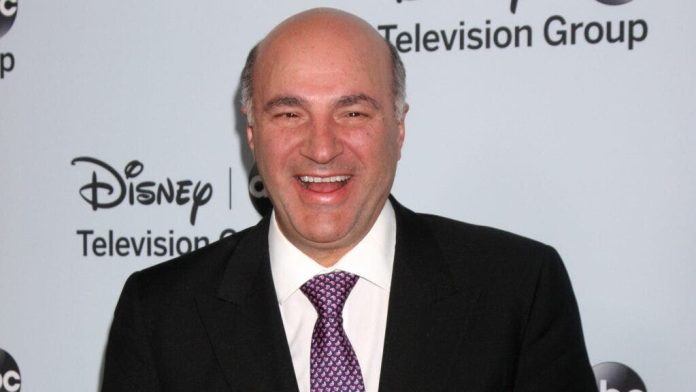
Kevin O’Leary Says New Executives Get No Stock Options, No Benefits, And No Full-Time Title Until They Prove Themselves, Just Like The Swiss

0


Kevin O’Leary says he has completely changed the way he hires executives, and is apparently taking inspiration from Swiss business culture.

The investor and television personality explained in a recent post on X, “No stock options, no benefits, no full-time title… until they prove it. I learned this from the Swiss, and it’s revolutionized our operations.”

O’Leary described the approach in a video, using the example of hiring a new CEO for a growing venture. Once he narrowed the field to two candidates, he asked one: “Would you consider becoming a contractor for six months as opposed to a fully empowered employee, and we’ll pay you 30% more than your base contract’s going to be? No stock options, no benefits for the six-month period. But wouldn’t you like to test us first?”

Don’t Miss:

The idea, he said, is to give both sides the chance to “road test” each other, making sure the candidate integrates well with the existing team and the parent company. “Don’t you want that experience?” he recalled asking. In this case, the candidate agreed.

O’Leary calls it an “apprentice” model, common in Switzerland and across Europe, where the focus is on confirming a cultural fit before offering a permanent position. “We don’t do [this] in America,” he said. “And we should do it.”

He noted that about two-thirds of candidates complete the trial and move on to full-time roles with stock options and benefits. The remaining third leave on good terms, having gained valuable experience but deciding the position isn’t right for them. “We’re not firing anybody,” he said. “Those Swiss guys got it right.”

Trending: ‘Scrolling To UBI’ — Deloitte’s #1 fastest-growing software company allows users to earn money on their phones. You can invest today for just $0.30/share.

For O’Leary, this hiring method is just one example of his direct approach to business. “Business is binary. There are winners and losers. You either make money or you don’t,” he posted on X last year. He believes success requires relentless effort, especially for young entrepreneurs. “If you want to succeed in business you have to work 25 hours a day because there’s someone across the world who will kick your a*s if you don’t.”

'Oh my word!' – Cox reverse scoops Singh Dale for six

0


Watch as Jordan Cox reverse scoops Ajeet Singh Dale for a “ridiculous” six during the Oval Invincibles game agaisnt Welsh Fire.

Obamacare faces a subsidy cliff — don't bail it out without reform

0


The controversy over the 2010 Affordable Care Act dominated Barack Obama’s presidency. The implementation of ObamaCare caused health insurance premiums to soar and nearly collapsed the market entirely. The Biden administration responded by flooding the system with expanded federal subsidies, which are set to expire at the end of 2025.

To stop premiums for older workers with pre-existing conditions from suddenly leaping by $10,000, Republicans will need to extend part of this additional funding. But in return, they should insist on reforms to allow healthy Americans to purchase better value insurance with their own money.

The Affordable Care Act required health insurers to cover individuals with pre-existing conditions at the same price as enrollees who signed up before they got sick. As a result, premiums more than doubled, millions of healthy enrollees dropped coverage and many insurers abandoned the market.   

The Affordable Care Act kept the individual health insurance market from falling apart completely by providing subsidies to low-income enrollees. But individuals earning more than $62,600 in 2025 would have faced full premiums without any assistance. 

Those unsubsidized enrollees felt the full pain of the Affordable Care Act’s premium hikes. The legislation allows insurers to charge older enrollees up to three times what they do the youngest, and so unsubsidized premiums for near-retirees can be huge. This year, the benchmark unsubsidized premium for a 61-year-old individual in Washington, D.C., is $15,402 per year.   

Rather than fix ObamaCare’s structure, the newly-elected Democratic Congress in 2021 threw money at the problem with the American Rescue Plan Act. By expanding eligibility for subsidies to higher earners, the act reduced the cost of health insurance for a 61-year-old earning $70,000 from $15,402 to $5,950 — with federal taxpayers covering the difference. That legislation also expanded the generosity of subsidies for lower earners. Those earning $22,000, who would have contributed $756 to the cost of insurance under the original Affordable Care Act, would get it entirely paid for by the federal government.  

This approach has been hugely expensive. In May 2022, the Congressional Budget Office estimated that subsidies for the Affordable Care Act would cost $67 billion in 2024. Last June, following a renewal of the American Rescue Plan Act’s increased subsidies, the Congressional Budget Office’s revised cost estimate for 2024 surged to $129 billion.   

A recent Paragon Institute report found that this leap in cost owed much to a surge in enrollment among those who received coverage free of charge. Paragon estimated that such enrollees accounted for nearly half of new enrollment, and that 5 million people may have misreported their income to claim free coverage, costing taxpayers an additional $20 billion. 

Insurers eagerly welcomed the influx of new healthy enrollees, who had not deemed it worth purchasing insurance from the individual market until the federal government paid the entire price. Such newcomers proved enormously lucrative, as they used less medical care than existing enrollees but generated the same revenue. Democrats, who received twice as much in campaign contributions as Republicans from Blue Cross Blue Shield in 2024, eagerly boasted about reducing the number of uninsured Americans, with little concern for the cost. 

The expiry of the American Rescue Plan Act subsidies is now looming again, set to expire at the end of 2025. It will be up to a Republican president and Republican-led Congress to find a way forward.   

Fiscal conservatives have little appetite to pay for renewing all the expanded ObamaCare subsidies. But nor will they feel comfortable letting the American Rescue Plan Act’s enhanced subsidies expire entirely, as this would result in a $10,000-per-year premium hike on thousands of middle-income near-retirees.   

Congress should focus on targeted support by eliminating the cap on eligibility for the Affordable Care Act’s original subsidies, which limit premiums at 9.5 percent of income, to avoid a sudden benefit cliff for those with incomes just above $62,600. But they should also let other expansions of subsidies expire. 

In return, Republicans should insist that Americans be allowed to obtain discounted premiums if they purchase insurance before they get sick. In 2017, President Trump allowed Americans to do this by purchasing short-term insurance. However, in 2024, the Biden administration limited the duration of these plans to four months. This came following pressure from big insurers, who claimed that allowing the expansion of such plans would prevent them from cross-subsidizing enrollees with pre-existing conditions by overcharging those who signed up while healthy. 

In reality, the restriction of these affordable plans has served mostly to inflate insurers’ profits. Healthy enrollees remain able to purchase short-term plans afresh every few months; it is only those who subsequently become sick who are deprived of coverage. Regulatory protections for the long-term coverage of enrollees in non-ObamaCare plans should be strengthened; not weakened. 

Furthermore, with the extension of the American Rescue Plan Act’s premium cap, federal subsidies taxpayers directly subsidize most enrollees. It is therefore unnecessary to also prohibit healthy enrollees from obtaining insurance plans which offer long-term coverage at good value for their money. 

Chris Pope is a senior fellow at the Manhattan Institute.