
Watch as Jordan Cox reverse scoops Ajeet Singh Dale for a “ridiculous” six during the Oval Invincibles game agaisnt Welsh Fire.
'Oh my word!' – Cox reverse scoops Singh Dale for six

Obamacare faces a subsidy cliff — don't bail it out without reform
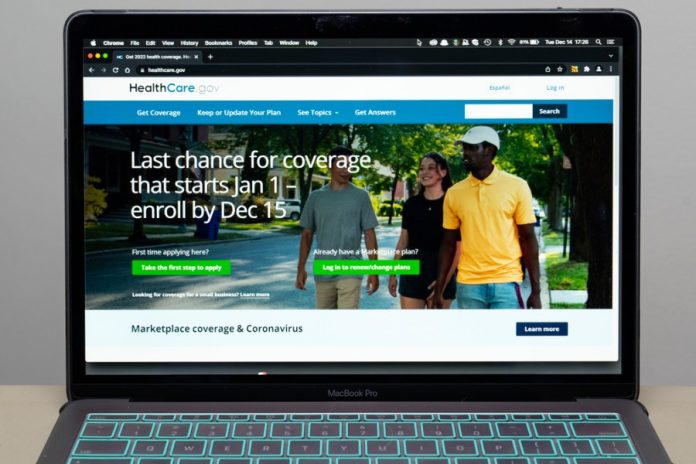

The controversy over the 2010 Affordable Care Act dominated Barack Obama’s presidency. The implementation of ObamaCare caused health insurance premiums to soar and nearly collapsed the market entirely. The Biden administration responded by flooding the system with expanded federal subsidies, which are set to expire at the end of 2025.
To stop premiums for older workers with pre-existing conditions from suddenly leaping by $10,000, Republicans will need to extend part of this additional funding. But in return, they should insist on reforms to allow healthy Americans to purchase better value insurance with their own money.
The Affordable Care Act required health insurers to cover individuals with pre-existing conditions at the same price as enrollees who signed up before they got sick. As a result, premiums more than doubled, millions of healthy enrollees dropped coverage and many insurers abandoned the market.
The Affordable Care Act kept the individual health insurance market from falling apart completely by providing subsidies to low-income enrollees. But individuals earning more than $62,600 in 2025 would have faced full premiums without any assistance.
Those unsubsidized enrollees felt the full pain of the Affordable Care Act’s premium hikes. The legislation allows insurers to charge older enrollees up to three times what they do the youngest, and so unsubsidized premiums for near-retirees can be huge. This year, the benchmark unsubsidized premium for a 61-year-old individual in Washington, D.C., is $15,402 per year.
Rather than fix ObamaCare’s structure, the newly-elected Democratic Congress in 2021 threw money at the problem with the American Rescue Plan Act. By expanding eligibility for subsidies to higher earners, the act reduced the cost of health insurance for a 61-year-old earning $70,000 from $15,402 to $5,950 — with federal taxpayers covering the difference. That legislation also expanded the generosity of subsidies for lower earners. Those earning $22,000, who would have contributed $756 to the cost of insurance under the original Affordable Care Act, would get it entirely paid for by the federal government.
This approach has been hugely expensive. In May 2022, the Congressional Budget Office estimated that subsidies for the Affordable Care Act would cost $67 billion in 2024. Last June, following a renewal of the American Rescue Plan Act’s increased subsidies, the Congressional Budget Office’s revised cost estimate for 2024 surged to $129 billion.
A recent Paragon Institute report found that this leap in cost owed much to a surge in enrollment among those who received coverage free of charge. Paragon estimated that such enrollees accounted for nearly half of new enrollment, and that 5 million people may have misreported their income to claim free coverage, costing taxpayers an additional $20 billion.
Insurers eagerly welcomed the influx of new healthy enrollees, who had not deemed it worth purchasing insurance from the individual market until the federal government paid the entire price. Such newcomers proved enormously lucrative, as they used less medical care than existing enrollees but generated the same revenue. Democrats, who received twice as much in campaign contributions as Republicans from Blue Cross Blue Shield in 2024, eagerly boasted about reducing the number of uninsured Americans, with little concern for the cost.
The expiry of the American Rescue Plan Act subsidies is now looming again, set to expire at the end of 2025. It will be up to a Republican president and Republican-led Congress to find a way forward.
Fiscal conservatives have little appetite to pay for renewing all the expanded ObamaCare subsidies. But nor will they feel comfortable letting the American Rescue Plan Act’s enhanced subsidies expire entirely, as this would result in a $10,000-per-year premium hike on thousands of middle-income near-retirees.
Congress should focus on targeted support by eliminating the cap on eligibility for the Affordable Care Act’s original subsidies, which limit premiums at 9.5 percent of income, to avoid a sudden benefit cliff for those with incomes just above $62,600. But they should also let other expansions of subsidies expire.
In return, Republicans should insist that Americans be allowed to obtain discounted premiums if they purchase insurance before they get sick. In 2017, President Trump allowed Americans to do this by purchasing short-term insurance. However, in 2024, the Biden administration limited the duration of these plans to four months. This came following pressure from big insurers, who claimed that allowing the expansion of such plans would prevent them from cross-subsidizing enrollees with pre-existing conditions by overcharging those who signed up while healthy.
In reality, the restriction of these affordable plans has served mostly to inflate insurers’ profits. Healthy enrollees remain able to purchase short-term plans afresh every few months; it is only those who subsequently become sick who are deprived of coverage. Regulatory protections for the long-term coverage of enrollees in non-ObamaCare plans should be strengthened; not weakened.
Furthermore, with the extension of the American Rescue Plan Act’s premium cap, federal subsidies taxpayers directly subsidize most enrollees. It is therefore unnecessary to also prohibit healthy enrollees from obtaining insurance plans which offer long-term coverage at good value for their money.
Chris Pope is a senior fellow at the Manhattan Institute.
Gold prices risk ‘blow-off top’ like 2011

Gold prices risk ‘blow-off top’ like 2011 originally appeared on TheStreet.
Carley Garner is a long-time futures trader who has seen a thing or two over a career that has lasted over 20 years, including gold market rallies and sell-offs.
The massive rally in gold stocks this year to north of $3,357 per ounce has caught her attention, and not in a good way.
Invest in Gold
Gold prices are up over 28% year-to-date in 2025, and the size and speed of the move (and the reasons behind it) remind her of a similar rally 14 years ago in 2011. Back then, the outcome for gold bugs wasn’t fun.
“The 2011 top was met with a 45% haircut that took nearly a decade to recover,” according to Garner.

Gold has enjoyed a perfect storm this year as macro crosscurrents hamstring the Fed’s monetary policy, GDP slips, and the U.S. debt outlook worsens.
Unemployment has risen to 4.2% from 3.4% in 2023, CPI inflation of 2.7% is stubbornly above the Fed’s 2% inflation target, the World Bank says GDP is expected to fall to 1.4% from 2.8% last year, and debt experts say the One Big, Beautiful Bill Act passed this year will add $3.4 trillion to the U.S. debt by 2034.
Related: Analyst expects gold to fall off the ‘Wall of Worry’
The risks have hammered the US Dollar, causing the Dollar Index to tumble 10% in 2025. Since gold is priced in USD, the Dollar’s struggles have made it more attractive to overseas buyers eager to diversify their holdings away from U.S. Treasuries in protest of President Donald Trump’s tariff policy.
The significant uncertainty has also made antsy investors far more interested in gold than Treasuries as a safe haven.
“Safe haven dollars can purchase gold, an asset that doesn’t produce income, at an all-time high without a risk parachute, or they can buy Treasuries at multi-decade lows with a yield of 4% to 5% to cushion downside price risk,” said Garner in a TheStreet Pro post. “Ironically, the masses select the former and pass on the latter.”
Many are indeed giving up on Treasuries’ relatively juicy yields, fearing the worst. That may not be the best move, though, for newer gold bugs, given that gold has already rocketed to all-time highs this summer.
Troubling times always increase interest in gold, and this isn’t the first time that gold has put on a show.
In 2011, gold similarly rallied sharply to all-time highs amid uncertainty around major banks and the economy, and aftershocks following the Great Recession, which was still fresh on investors’ minds.
Related: Major analyst resets gold price target after shocking economic data
Remember the S&P cut the U.S. debt rating for the first time in history in August 2011 because of the growing deficit, prompting a massive 5.5% drop in the S&P 500 on Aug. 8. The situation was so bad that Warren Buffett famously back-stopped Bank of America on Aug. 25, providing a cash influx in exchange for preferred stocks and warrants that eventually made Buffett’s Berkshire Hathaway a mint when risk assets found their footing and gold lost its luster.
Topshop returns to the high street, but can it get its cool back?


 AFP via Getty Images
For teenage girls like me in the 2000s and 2010s, going into a Topshop store was like being transported into a fantasy world.
There was music! Makeup! And fashion! All under one roof – with Topshop clothes often found on the pages of Vogue alongside high-end couture.
But somewhere along the way, things went wrong.
“Topshop lost its cool,” said fashion journalist Amber Graafland.
“And when that happens, it’s hard. Fashion is a fickle beast, people move on quickly.”
Then in 2020, its owner, Sir Philip Green’s Arcadia group, collapsed. All of Topshop’s physical stores shut soon after.
But Topshop is now launching a major comeback.
Standalone stores are returning to the High Street, Michelle Wilson, managing director of Topshop and Topman, confirmed to BBC News.
And on Saturday, Topshop hosted its first catwalk show for seven years in Trafalgar Square, central London. Long-time brand muse model Cara Delevingne was among those there.
 Getty Images for Topshop
It seems absence (and nostalgia) makes the heart grow fonder. As rumours of Topshop’s imminent return have been met by a wave of affection on social media, particularly among millennials and Gen-Z.
But industry experts say it will take more than nostalgia to make Topshop 2.0 a success.
‘They need to entice younger girls’
One of the challenges that Topshop will face is attracting a new wave of shoppers through the doors.
Its previous core following are now women in their late 20s and 30s, but it can’t just rely on them, says Graafland.
“They will need to work hard to entice younger girls in,” she said.
What might help, though, is the nostalgia trend that has taken over social media feeds and High Streets in recent months (Joni jeans, anyone?)
Topshop’s team, for their part, think they can attract both older and newer groups.
“We want to deliver for those that are nostalgic for a brand that they felt like they lost,” Wilson said.
“But we absolutely want to appeal to a new demographic as well.”
Then, there’s the fashion. For me, shopping in Topshop as a teenager made me feel like the ‘it girl’.
On Saturdays, you’d breeze through racks to find the one item that justified taking money out of your barely-there bank balance.
When you bought it, you’d act nonchalant. “Oh this old thing? It’s from Topshop,” you’d tell your school friends, as if you could afford it all the time.
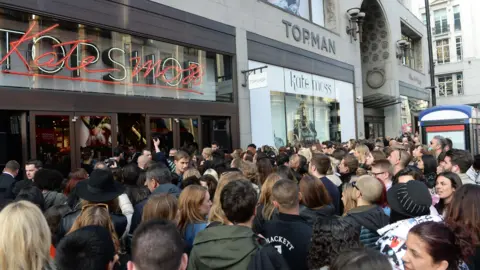
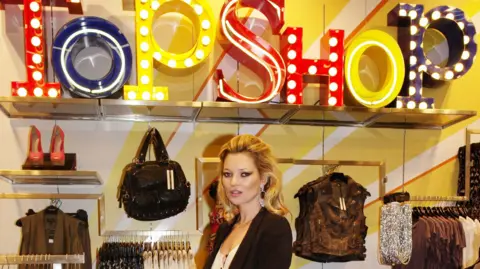
And I wasn’t the only one. Huge crowds would throng to the London landmark store to witness the launch of new ranges from A-listers like Beyoncé and Kate Moss.
 Getty Images
In the 90s and 00s, designers “used to laugh at High Street fashion”, said Wayne Hemingway, a designer and co-founder of Red or Dead.
“They couldn’t keep up with the trends. Topshop was the only one that did.”
Hemingway, who worked with Topshop through its heyday, said a large part of its success was down to the team behind it, including Jane Shepherdson, its hugely influential brand director.
“They brought in second hand clothes for example, that’s normal now, but back then it was seen as absolutely radical to have a shopping department store doing that,” he said.
“You had the collaborations, the London Fashion Walk catwalk, all this design and excitement at High Street prices. It was so fresh, everyone wanted to be part of it.”
But over time, what people were looking for changed – and Topshop didn’t always keep up, said Graafland.
“They offered that unique London look. Then the girls who shopped there grew up, and they didn’t want that look anymore,” she said.
“You cannot afford to take your finger off the pulse for one minute in fashion.”
 AFP via Getty Images
She added that Topshop 2.0 would benefit from the fact its core aesthetic – the London girl look – is back in style, and that not many other retailers are offering it.
“If you look at the High Street now, there’s a strong Spanish presence, with the likes of Zara, and also a Swedish presence with H&M. When Arcadia collapsed, we lost that Britishness,” she said.
She added that a lot of the High Street is “playing it safe right now”, and that could also work in Topshop’s favour if can “get that cool edge back”.
Topshop’s team is confident that it can still win over shoppers with its trademark London-based swagger.
“We still think there’s a huge gap in the market for that,” Wilson said.
“The most important thing that we won’t forget, and maybe got forgotten about towards the end of the previous era, is that product is everything.
“It has to be the best quality product, the most fashionable product for our customer base, and bringing that at good value.”
And then there are the prices
 Getty Images
Topshop’s popularity peaked in the heady years before the cost of living crisis. Its team are aware of the stiff competition it now faces.
A pair of Topshop jeans will easily set you back about £50, whereas Chinese fast fashion giant Shein offers jeans for about £17.
“If we’re just comparing Shein, then yes, I think most brands on the planet are at a higher price point than Shein,” Wilson said.
But she added: “We know that when we offer great fashion and great value for money then the product does sell very well, so absolutely no concerns about that to be honest.”
While Topshop might not churn out new pieces at the breakneck speed of its online-only rivals, in the past, it’s still faced questions over its environmental record.
For younger shoppers, this can be an important factor in deciding where to go.
Wilson, however, indicates the higher prices reflect a more sustainable model.
The firm’s focus, she said, is very much “on the livelihoods of people within the supply chain that we partner with and also the environmental impacts of the brand”.
‘There’s got to be a buzz around it’
 Shutterstock
After Sir Philip retail empire collapsed, the Topshop brand was bought by Asos.
You can still buy the items online on its website – but now, in-store shopping is coming back.
Topshop’s return to the High Street starts this month, with products set to be available to buy in certain stores.
But of course, the real interest is in the standalone stores which Wilson said are “definitely” coming back.
She wouldn’t give a date for their return, but said the aim was to open stores across the nation.
Topshop is choosing to relaunch at a time when the High Street continues to struggle. Just days ago, fashion accessories chain Claire’s collapsed into administration.
But Wilson said lessons have been learnt after what happened to Topshop 1.0.
“We’re just making sure we do it in the right way so that we don’t over-expand ourselves,” she said.
As for the stores themselves, it remains to be seen if they’ll have the same vibe as before.
For me, it was where I met friends after school, tried on eye shadow for the first time, and listened to DJs pumping out dance music.
In some stores you were able to order skinny caramel lattes, get your hair and nails done, and maybe even get a piercing or two if your mum wasn’t watching.
“Fashion is only part of the story. It’s about selling a lifestyle and an experience,” Graafland said. “There’s got to be that buzz around it.”
Topshop’s team say they won’t necessarily be replicating what it used to do, but rather, “finding ways to bring that into 2025 and do interesting things”.
Overall, the hopes are high.
“They will get the girls to the stores, I don’t doubt it,” Graafland said.
“The question is whether they can keep them there.”
Trump unfroze education funding, but the damage is already done

Summer is when superintendents and principals finalize staffing and allocate resources for the year ahead.
Instead, they’ve spent the past month scrambling to revise budgets and delay decisions after the Trump administration recklessly froze more than $6.8 billion in federal education funds approved by Congress four months ago — a move that unnecessarily threw school planning into chaos with the school year starting in just a few weeks.
On June 30, the Education Department abruptly informed states it would not release key fiscal year 2025 education funds as scheduled, affecting programs like teacher training, English learner support and after-school services.
After bipartisan backlash — including lawsuits from 24 states and pressure from Republican senators — the administration reversed course on July 25, announcing it would release the remaining funds. But the damage had already been done.
The administration claimed the freeze was part of a “programmatic review” to ensure spending aligned with White House priorities. Yet, the review was conducted without transparency while the funds were only released after intense political pressure.
The Education Department stated “guardrails” would be in place to prevent funds from being used in ways that violate executive orders, which is a vague statement that should raise concerns about future interference.
Districts had built their budgets assuming these funds would arrive by July 1, as they do each year. Instead of preparing for the new school year, states and districts were forced to scramble to minimize the damage.
In my home state of Texas, nearly 1,200 districts faced a freeze of $660 million, which represented about 16 percent of the state’s total K-12 funding.
I have spoken to superintendents, chief academic officers and chief financial officers who described how these unanticipated funding deficits undermined strategic investments into high-quality instruction and mental health services.
In Tennessee, $106 million was frozen, representing 13.4 percent of the state’s K-12 funding. Knox County Schools eliminated 28 central office positions, including staff supporting instruction for English learners.
Florida had $400 million frozen. Pinellas County School District alone stood to lose $9 million. The superintendent reported that they would have to make cuts that directly affect student achievement while the school board chair said the freeze “feels kind of like the straw that broke the camel’s back.”
Kansas saw $50 million frozen. Kansas City, Kan. Public Schools warned families that $4.9 million in lost funding would affect “programs that directly support some of our most vulnerable students — including those from low-income families, English language learners and students with disabilities.”
Even with the funds now being released, the uncertainty and disruption caused by the freeze will have lasting impacts. In some cases, district leaders were forced to make staffing and programming decisions without knowing whether critical federal support would be unfrozen.
All who care about public education must make clear that this kind of reckless disruption is unacceptable and will carry political consequences.
Governors from both parties should press their congressional delegations to pass legislation preventing future executive overreach. And Congress must require the Education Department to provide advance notice and justification for any future funding delays.
The funding freeze was a reckless policy choice that disrespected educators, destabilized schools and put children at risk. Public education cannot function on the Trump administration’s political whims and such unwarranted actions cannot go unchecked without the risk of normalizing executive overreach at the expense of students.
Now is the time for all policymakers and educators to stand up for our schools and ensure that no child’s education is ever again held hostage to such problematic politics.
David DeMatthews is a professor in the Department of Educational Leadership and Policy at The University of Texas at Austin.
CEO Says AI Is Taking On ‘Soul-Crushing Jobs’ With Agents That Work 24/7, Never Eat, And Never Need Benefits

Artificial intelligence is rapidly reshaping how major companies run their operations, with some executives saying it’s already transforming the workforce. ServiceNow Inc. (NYSE:NOW) CEO Bill McDermott says AI agents are taking over repetitive, draining work—and doing it without lunch breaks or healthcare benefits.
“We’re slowing down the hiring in jobs that are, quite frankly, soul-crushing jobs,” McDermott said in a recent interview with Bloomberg, pointing to IT support as an example. He said 97% of standard software is now generated by AI, and 80% of customer inquiries are fully managed by AI agents. Security and risk management tasks, patchwork, and change management are also handled by these systems.
Don’t Miss:
“They work hard 24 by seven. You don’t have to pay them and they don’t need any lunch and they don’t have any health care benefits,” McDermott said. “AI is affordable and complements our workforce.”
While ServiceNow is still hiring, it’s adding fewer people to these support roles. McDermott predicts other well-run companies will follow the same path, reorganizing around AI and moving away from traditional 20th-century corporate structures.
Salesforce (NYSE:CRM) CEO Marc Benioff told Bloomberg in June that AI now accounts for 30% to 50% of his company’s workload, calling the trend a “digital labor revolution.” The company has restructured around AI and cut more than 1,000 jobs this year. Benioff says Salesforce’s AI operates at about 93% accuracy and is helping employees focus on higher-value tasks.
Trending: ‘Scrolling To UBI’ — Deloitte’s #1 fastest-growing software company allows users to earn money on their phones. You can invest today for just $0.30/share.
Meanwhile, Goldman Sachs (NYSE:GS) has also warned that AI’s effects on the job market are already being felt, especially by younger workers. The bank says unemployment for tech workers ages 20 to 30 has risen nearly 3 percentage points since early 2024. That’s more than four times the increase in the overall jobless rate. According to Business Insider, Goldman Sachs Chief Economist Jan Hatzius estimates generative AI will eventually replace 6% to 7% of U.S. jobs within a decade, though many workers could find roles in other industries.
William and Kate set to move to new Windsor home Forest Lodge for ‘fresh start’

Daniela Relph
Royal correspondent
 Heritage Images/Getty Images
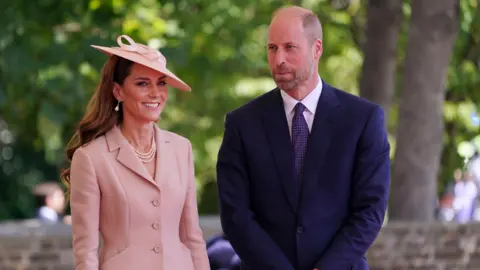
The Prince and Princess of Wales are set to move into a new home in Windsor.
William and Catherine will move to the eight-bedroom Forest Lodge in Windsor Great Park, with their children George, Charlotte and Louis.
The family have been living in Adelaide Cottage in the castle grounds since August 2022 but after a challenging 18 months that has seen the princess deal with a cancer diagnosis and treatment they have now decided to make a change.
“Windsor has become their home. However, over the last few years while they have lived at Adelaide Cottage there have been some really difficult times,” a royal source told the BBC.
“Moving gives them an opportunity for a fresh start and a new chapter.
“It’s an opportunity to leave some of the more unhappy memories behind,” the source said.
The royal couple see this as a move for the long-term and view Forest Lodge as their forever home.
It will be where they plan to live as a family when the Prince and Princess of Wales becomes King and Queen.
As with their four-bedroom Adelaide Cottage, it is understood they will not have any live-in staff as they focus on creating as private a family home as is possible.
William and Catherine announced they were moving from Kensington Palace in London to Windsor in August 2022.
They also have homes at Anmer Hall in Norfolk where they spend much of the school holidays and their offices remain at Kensington Palace.
The move to Windsor has been a successful one and afforded them the privacy and freedom that was more difficult to find in London.
It is understood the family are settled and the children are happy at Lambrook school where all three currently attend.
Any work carried out on Forest Lodge will not come from the Sovereign Grant which provides state funding for the monarchy.
The Prince and Princess of Wales are funding the move privately and they will pay market rent on the property.
 Alberto Pezzali/PA Wire
In 2001, Forest Lodge underwent £1.5m restoration works and was put on the rental market for £15,000 a month.
Images inside the home taken at the time showed original stonework, elaborate plaster cornices and ceiling decoration, plus a half-barrel vaulted hallway ceiling.
Redacted planning applications lodged with the Royal Borough of Windsor and Maidenhead show permission for minor internal and external alterations was granted earlier this month.
The council’s decision notice refers to the removal of a window and works to a fireplace.
The Royal Family receives funding through a mix of public and private sources.
Prince William’s private income comes from a variety of sources, including the Duchy of Cornwall, the estates which mainly covers land in south-west England and are worth £1bn.
A financial report for the duchy this year showed a profit of £22.9m, slightly down on the previous year when it generated a net surplus of £24m.
Forest Lodge is nestled in the heart of the 4,800-acre Windsor Great Park.
Kate has spoken of her belief in the healing power of the natural world and described nature as her “sanctuary”, while opening up about her “life-changing” cancer treatment.
She further showed her love for nature in the Mother Nature video series, which she launched in May.
The family hopes to move into the new property by Christmas and are said to be looking forward to creating many happy memories in their new home.
Abbott, Rollins announce plans to address screwworm threat on cattle, livestock
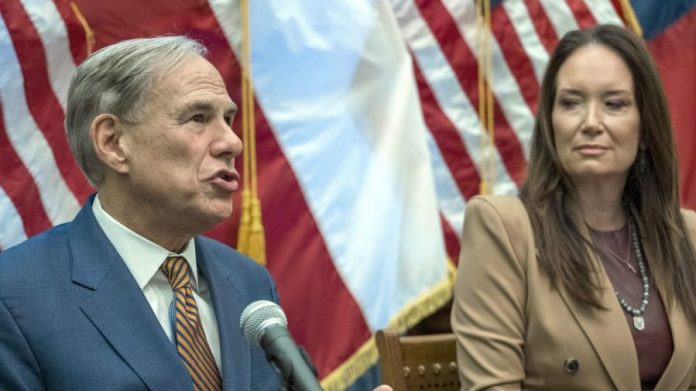

AUSTIN (KXAN) — On Friday, Texas Gov. Greg Abbott (R) and Secretary of Agriculture Brooke Rollins publicly addressed plans to fight against the New World screwworm, which has disrupted the livestock and cattle industries.
According to the U.S. Department of Agriculture, New World screwworms is an invasive species that burrows fly larvae into fresh wounds of living animals like livestock, pets and occasionally people. The damage they cause can be deadly.
During a press conference, Rollins announced a new sterile fly production facility in Edinburg, Texas. The facility will breed three hundred million flies a week.
Additionally, the Trump administration will invest in the development of technology and work closer with Mexico to track the screwworm population.
“We have a lot of data to collect. We have a lot of work to do. But we have to protect our beef and cattle industry in this country,” Rollins said.
Abbott said during the press conference that screwworms, which feed on cattle and deer, could result in billions of losses each year.
“This is an issue that is essential to the cattle industry, to the food supply which are at risk,” Governor Abbott said.
The animal is named after their feeding behavior, with the larvae screwing into the flesh of their victims.
Larry Gilbert, a professor at the Univerosty of Texas and the faculty director of the Brackenridge Field Lab, said he was more concerned about the impact New World screwworms could have on the deer population.
“The deer herds would be very vulnerable to this, and you don’t go around treating wounds on deer. Its hard to find them,” Gilbert said.
In June, the Department of Agriculture reported that screwworms were detected about 700 miles from the southern border. Cattle imports were suspended from Mexico to prevent an infestation in the states.
This drew concern from Abbott earlier in the year. He established a Texas New World Screwworm Response Team.
According to Peyton Schuman, senior director of government relations for the Texas and Southwestern Cattle Raisers Association, a screwworm outbreak could cost Texas around $1.8 billion in damages to livestock annually.
The state’s hunting industry could also face issues. During the 1960s outbreak, 80 percent of Texas’s white tailed deer died as a result of screwworms.
The species originates in Cuba, Haiti, the Dominican Republic and some countries in South America. The pests were mostly eradicated in the U.S. in the 1960s, but they have occasionally reemerged in Central America and Mexico.
According to the Texas A&M Agrilife Extension office, the population is controlled through the release of sterile males into the population. Using sterile populations for control was developed at the University of Texas in Austin by entomologists, Edward F. Knipling and Raymond C. Bushland.
Signs of an animal infested with the New World screwworm include:
- Foul-smelling wounds with maggots
- Animals biting or licking their wounds
- Lesions in bellybuttons, ears and where branding has occured
- Lethargy
If an infestation is suspected, Texas A&M Agrilife recommends you contact authorities, like the Texas Animal Health Commission and Texas Parks and Wildlife, and notify your veterinarian.
You should then inspect the animal for signs of infestation and collect any samples to give to authorities. There are several treatment options, including topical treatments.
Big changes could mark a housing market ‘sweet spot’ this fall — are you ready to take advantage of them?
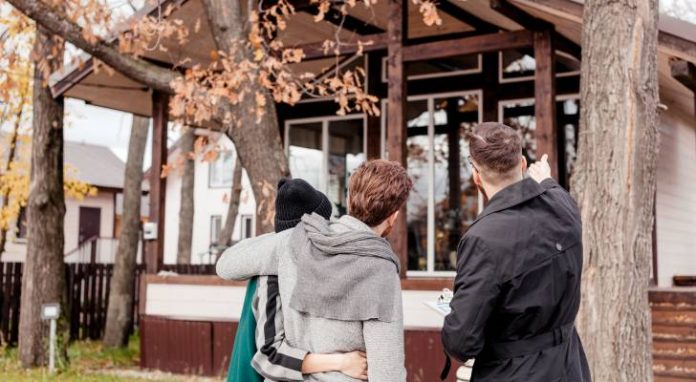
Maybe you were planning to buy a house this year but haven’t found anything yet — and panic is starting to set in because you’re worried you’ve missed the housing market season.
It’s common you’ll find a higher number of listed properties in late spring and summer. That means, if you’re in the market for a new home, you have more options to choose from, but you also face stiffer competition.
Traditionally, fall and winter are quieter, but if you find a place you like, you may be able to get a better deal on it.
Shop Top Mortgage Rates
Potential homebuyers, however, may be able to take some comfort from the picture being painted by recent data that suggests this fall may be a great time to buy a new home.
“There’s a lot of uncertainty out there, and some buyers are just waiting to see what happens,” Zillow senior economist Kara Ng said in an article published July 20. “So, if you’re able to buy, fall could be a sweet spot since you won’t be competing against the pool of buyers waiting on the sidelines.”
One of the main reasons this fall is shaping up to be a good one for homebuyers is that, according to Zillow data, the inventory of homes for sale is the highest it’s been since July 2020, with the number of listed homes up 20% from last year.
At the same time, for the past two years, October has seen the highest inventory of the year as homes listed earlier remain unsold. Zillow anticipates this seasonal pattern will repeat this year after a “lackluster spring” during which buyers didn’t show up.
A fall with high inventory and fewer buyers means that if you’re in the market for a new home, “you’re likely to have more time to decide on your options,” Ng said. “You have time to really consider if that home is the right fit for you.”
With fewer buyers, you’re also less likely to endure a bidding war for the home you want and you may have more negotiating power.
In some markets, prices aren’t rising as quickly as they have been over the past few years.
Home values across the U.S. grew by 45.3% between February 2020 to 2025, Zillow reported earlier this year — a rate that’s more than double the historic rate of increase.
Trump’s ceasefire pivot will have caused dismay in Kyiv

Paul Adams
BBC Diplomatic Correspondent
 Getty Images
No deal in Alaska. It was always the most likely and, in the absence of Ukrainian President Volodymyr Zelensky, perhaps the most desirable outcome.
But US President Donald Trump’s pivot away from the need for an immediate ceasefire, which he said beforehand he wanted, will have caused profound dismay in Kyiv and around Europe.
Russia’s position has long been that a ceasefire can only come in the context of a comprehensive settlement taking account of Russia’s interests – and inevitably implies Ukraine’s capitulation.
That’s the position that Trump, once again, appears to have endorsed.
“It was determined by all that the best way to end the horrific war between Russia and Ukraine,” he wrote on Truth Social, “is to go directly to a peace agreement.”
Ceasefires, he noted, “often times do not hold up”.
This appears to fly in the face of Ukraine’s main demand, endorsed by all its European backers: that an unconditional ceasefire has to come first.
Crucially, it also buys Russia’s Vladimir Putin time on the battlefield, where he is convinced he’s winning.
“If Putin’s military objective was to avoid immediate constraints on Russian operations in Ukraine then he appears to have succeeded,” says Matthew Savill, the director of military sciences at the Royal United Services Institute.
At their brief press appearance last night, Putin warned Ukraine and the Europeans not to “throw a wrench” in the works of the unspecified progress he and Trump had made.
But that, for Kyiv and its allies, is precisely what Trump has done, undoing the achievements of what they all hoped was a successful preceding week of frantic diplomacy aimed at influencing the outcome in Alaska.
It’s a reminder, as if one were needed, of Trump’s tendency to echo the views of the last person to have his ear.
For a short while this morning, European leaders will have held their breath, waiting to see if their efforts had borne fruit or been cast aside.
True to his word before the summit, Trump got on the phone to Zelensky. The two men spoke for an hour, before being joined by European leaders.
Zelensky said the call was “long and substantive” and that he would travel to Washington on Monday for his first visit since the disastrous Oval Office encounter in February.
A lot has happened since then, with Kyiv’s European allies working assiduously to repair the damage and school Zelensky in the best ways of handling the capricious and volatile occupant of the White House.
“I am grateful for the invitation,” Zelensky posted, adding “it is important that America’s strength has an impact on the situation”.
But in a later post, after Trump’s statement on Truth Social, Zelensky adopted a more urgent tone.
“Killings must stop as soon as possible,” he said. “The fire must cease both on the battlefield and in the sky, as well as against our port infrastructure.”
 Reuters
Europe’s “Trump whisperers” picked up this morning where they left off last week.
They highlighted the vital importance of involving Ukraine in conversations about its future but also paused, as they know they must regularly do, to show appreciation for Trump’s efforts.
“President Trump’s efforts have brought us closer than ever before to ending Russia’s illegal war in Ukraine,” said Sir Keir Starmer, the UK’s prime minister.
Starmer said he welcomed what he called the “openness” of the US, along with Europe, to provide “robust security guarantees” for Ukraine in the event of a deal.
If and when the fighting does eventually end, the precise nature of those guarantees will need to be spelled out in a great deal more detail than has so far been the case.
 Getty Images
Despite Europe’s emerging role as Ukraine’s principal military, economic and political backer, everyone knows Ukraine’s future security cannot really be assured without the substantive backing of the US.
In her own comments on the Alaska summit, Italy’s leader, Giorgia Meloni, said guarantees for Ukraine could be “inspired by Nato’s Article 5” – the principle of collective defence signed on to by all Nato members.
Several reports this morning suggested the idea of guarantees outside Nato but equivalent to Article 5 were discussed during the latest call between Trump and European leaders.
But in the wake of Trump’s apparent about-face this morning, you can almost hear the sound of minds spinning across European capitals.
In London, the government appears to be putting on a brave face.
“If you can get that all done [a ceasefire and a peace agreement] in one go or in quick succession that’s obviously a good thing,” said a senior Downing Street source.
“But we all want to see the fighting stop”.
 Getty Images
Trump has walked away from the idea of an immediate ceasefire, no doubt informed by Putin’s highly contentious account of how ceasefires broke down in the past.
The quasi-summit in Alaska already represented a cost-free win for Putin. The return of an international pariah to the international stage (albeit one festooned with unambiguous displays of American military might at the Elmendorf-Richardson airbase) and some of the trappings of a state visit.
The threat of increased US sanctions on Moscow receded too, with Trump saying it may be two or three weeks before he even has to think about it.
All this raises a host of questions about what may greet Zelensky, both on Monday in Washington and when he finally finds himself in the room with Putin and Trump.
What advice does Trump have for the Ukrainian leader, Fox’s Sean Hannity asked.
“Make a deal,” came the blunt reply. “Russia’s a very big power and they’re not.”