
30.8 C
New York
Saturday, June 13, 2026
Home Blog Page 339

Seafood fraud: Are your fish fishy?

0


Seafood is an iconic staple of our summer diets, but that shrimp on your po’boy may not be what it seems.

Despite promises of “fresh Gulf seafood” on menus across the country, many diners are unknowingly served imported products falsely labeled as local catch.  

Stark evidence of this came just last year, when an iconic Mississippi restaurant shocked the Gulf Coast by pleading guilty to selling more than 29 tons of mislabeled seafood, which led to a fine of more than $1 million and a prison sentence for the manager of the restaurant’s seafood distributor. The restaurant served what it called fresh Gulf seafood, like red snapper and grouper, when it was actually selling cheaper foreign imports to unwitting customers.  

This was not an isolated incident, but a warning sign.  

This type of seafood fraud dupes consumers, hides health risks and hurts honest fishermen and seafood businesses. It can occur anywhere throughout the complex seafood supply chain, especially with gaps in traceability requirements for the seafood we import. Without robust traceability systems and consumer labeling in place, dishonest actors can swap out species, hide origins, and lie about catch methods with little fear of being caught.  

This makes it more important than ever for the government to protect consumers and domestic fishermen. Due to shortcomings with the current seafood traceability program in the United States, seafood lovers, businesses and domestic fishermen aren’t comprehensively shielded from fraud.   

States are taking matters into their own hands, and this is especially true on the Gulf Coast. The case in Mississippi led the Magnolia State to adopt a law that went into effect in July requiring all seafood and crawfish sold in every restaurant, grocery store, market and food truck be labeled as either “imported” or “domestic.” Violators face fines of up to $10,000 or up to six months in jail.  

Louisiana and Alabama recently adopted similar laws, and Texas is following suit with a new shrimp-labeling law set to go into effect in September. Now, when you sit down at a restaurant in one of these places, you will be closer to knowing what’s actually on your plate.    

A Southern Shrimp Alliance seafood fraud analysis showed the distinct difference between states that have implemented seafood labeling laws and those that have not. In states that lack restaurant labeling laws, a jaw-dropping 75 percent of restaurants where seafood was tested appeared to offer U.S. wild-caught shrimp when they were selling imported, farm-raised products. That number was 34 percent in the states where seafood labeling laws are in place.  

Although these regional attempts at solutions matter, we know that seafood fraud is an interstate and international problem. State-level fixes are important, but patchwork policies can’t keep up with a product that crosses oceans and borders. The only real solution is strong, nationwide traceability. This includes catch documentation with key information about the origins of our seafood that is tracked from the farm or net to the final point of sale — making it harder to mislabel or defraud customers.  

Fortunately, we already have a tool in place: the Seafood Import Monitoring Program, which requires documentation and traceability for certain at-risk species of illegal, unreported and unregulated fishing, as well as seafood fraud. But this program currently covers less than half of all imported seafood. That’s a gaping hole in our food safety and enforcement system. Expanding it to cover all seafood imports, and enforcing it with robust oversight, would help reduce seafood fraud and keep illegal fishing products from our supply chain.   

This isn’t just about consumer protection; it’s about economic fairness and national food security. The U.S. seafood industry supports 1.6 million jobs and contributes billions to our economy. Our fishers do dangerous, vital work to feed the nation, and their livelihoods are threatened by seafood with a fake backstory and a falsified label.   

We must ensure that all of the seafood coming into our country is safe, legally caught, responsibly sourced and honestly labeled. That requires end-to-end traceability — from the point of catch to the final point of sale — coupled with consumer labeling laws to guarantee that consumers, regulators and businesses alike have access to critical data about their seafood.   

It’s the only way we can truly know what’s on our plate and how it got there.   

Max Valentine, Ph.D., is the campaign director and senior scientist for Oceana’s illegal fishing and transparency campaign in the United States. 

This Growth Stock Is Up 100% in the Last Year, but Still Down 15% From All-Time Highs: Should You Buy Today?

0


  • Shopify is growing quickly as it expands its commerce tools around the globe.

  • It keeps adding new tools for customers, such as cryptocurrency payments and artificial intelligence (AI).

  • Even though the business is great, the stock trades at an expensive valuation.

  • 10 stocks we like better than Shopify ›

Shopify (NASDAQ: SHOP) is still in the middle of its 2021 hangover, as shares are down 15% from all-time highs set during the COVID-19 pandemic stock market bubble. The stock is up over 100% in the last 12 months, but still has not eclipsed previous highs after going through a brutal drawdown in 2022. At the same time, business performance has been rock-solid if not stellar, as management keeps adding new commerce tools and attracting new businesses to join the platform.

With Shopify stock still down from all-time highs, should you buy shares in 2025 for your portfolio? Here’s what the numbers say.

As a software and payments provider for online businesses, Shopify has grown to dominate the North American market. Now, it is moving internationally.

Last quarter, growth in payments volume for its European division was 42%, outpacing overall growth. The company has built up a best-in-class set of tools for entrepreneurs and businesses of all sizes to sell and process payments online. Last quarter, even Starbucks signed a deal with Shopify, which shows the capabilities of the platform for online shopping.

Overall revenue grew 31% year over year in the quarter, with strong growth expected for the rest of the year. Profit margins remain strong, with free cash flow margins of 16% in the quarter. This combination of growth and profitability is impressive and the key reason why Shopify’s stock has soared in the last 12 months.

As more and more businesses sign up for Shopify’s software tools and payment processing, the more growth Shopify will achieve. Add new features such as advertising and the Shop Pay application for consumers, and it looks like growth will continue for many years into the future.

Person sitting at a desk with boxes, selling stuff online.
Image source: Getty Images.

Shopify is embracing new technologies as a way to leverage more usage from its business customers. It now has two artificial intelligence (AI) services called Sidekick and Magic that help analyze trends for a business, create content, and marketing products. Providing more value for enterprises will help customers stay entrenched within the Shopify ecosystem, leading to revenue growth and pricing power.

What’s more, Shopify is now beginning to expand and accept more forms of payment, such as Circle‘s stablecoin USDC. This should help with cross-border transactions and make it easier for shoppers who want to pay in different ways on Shopify’s e-commerce storefronts. It will not only help drive new payment growth (which directly translates to revenue for Shopify), but also adoption of shopping across borders.

What to know as Air Canada flights grounded and attendants strike

0


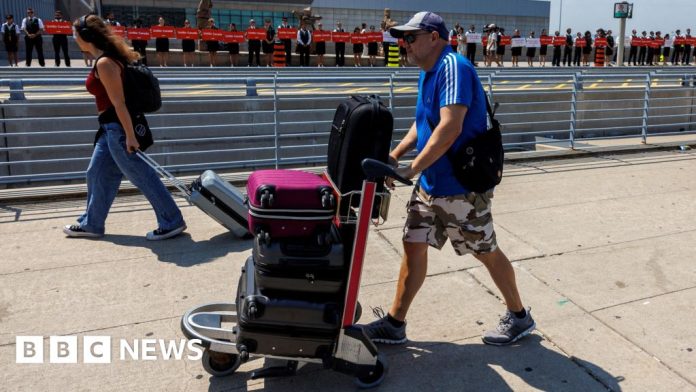
Reuters Man in blue short-sleeve shirt and camo shorts pushes trolley stacked with suitcases next to a woman with long hair, jeans, red tank top and backpack who pulls a gray suitcaseReuters

As Air Canada’s flight attendants began their strike Saturday, the airline said it has “suspended all operations” while the labour dispute unfolds.

The attendants gave a 72-hour strike notice earlier this week, after contract talks reached an impasse.

Their union said the company was not addressing key issues such as wages and unpaid work, and the strike took effect shortly after midnight on Saturday.

Soon afterwards, the carrier began delaying and cancelling some flights. On Friday, it expected to scrap 500 flights, affecting 100,000 passengers.

With the strike in effect, the airline announced it would halt flights on its Air Canada and Air Canada Rouge service.

Now travellers are scrambling as Canada’s largest airline shuts down during the height of summer season, and the government is pleading with both sides to come to an agreement. Here’s what to know.

Why is Air Canada cancelling flights?

The airline, which operates in 64 countries and has a fleet of 259 aircraft, warned that a “complete cessation of flying” would begin on Saturday, if the labour issues aren’t resolved. Air Canada Express flights, which carry about 20% of Air Canada’s daily customers, will not be affected.

Still, a shutdown could affect 130,000 daily customers, including 25,000 Canadians.

Upon receiving the strike notice, Air Canada issued its own 72-hour lock-out notice and began winding down operations, delaying and cancelling flights over those three days.

Chief Operations Officer Mark Nasr explained the airline’s system was complex and not something “we can start or stop at the push of a button”.

Watch: Moment Air Canada ends news conference after union activists disrupt event

What led to the strike?

The Canadian Union of Public Employees (CUPE), representing 10,000 Air Canada attendants, has asserted that it bargained in good faith with the airline for more than eight months.

The airline said it recently offered flight attendants a 38% increase in total compensation over four years, with a 25% raise in the first year.

But the union said the offer was “below inflation, below market value, below minimum wage” and would leave flight attendants unpaid for some hours of work, including waiting at airports ahead of flights or guiding the boarding process.

They said that wages had not kept up with inflation, so that Air Canada’s suggested pay increase was “in effect, a pay cut”.

Almost all of the attendants – 99.7% – voted to strike earlier this month. The company, meanwhile, has asked the government to intervene.

Government representatives had facilitated some of the negotiations already, but the carrier went further and asked Canada’s jobs minister, Patty Hajdu, to refer the matter for binding arbitration.

How has the government responded?

Earlier this week, Air Canada proposed having a third party step in to develop an agreement through what is called “binding arbitration”, but the union rejected that.

It then asked the government to force the parties into binding arbitration, pointing to recent government interventions in rail, port and other negotiations.

In binding arbitration, an independent third party sets the terms of a contract in an agreement that is legally enforceable.

The union said in a statement on Friday that it had requested that Hajdu not intervene and, instead, allow “the parties to reach a resolution through free and fair negotiations, without undue interference”.

For the flight attendants, the only answer is for both sides to come back to the table.

Should Hajdu side with the company, she would ask Canada’s Industrial Relations Board to impose binding arbitration in order to protect the economy, according to Reuters, which reported that the board typically agrees to such requests, but after it has studied them for a few days.

There is pressure from other parts of Canada, as well. The Board of Trade for the Toronto region has called for a government intervention , while the province of Newfoundland and Labrador released a statement describing the impact of a strike as “catastrophic” for the tourism industry during the summer season.

How long will the strike last?

That’s unclear.

When Air Canada pilots went on strike in September 1998 for 13 days, all of the carrier’s more than 600 daily flights were grounded, stranding passengers and costing the airline C$133m ($96m; £71m) before a negotiated deal was reached.

In recent years, the federal government has stepped in during labour disputes by Air Canada workers by blocking strikes and imposing agreements.

The union said imposing arbitration would stop the first strike by the carrier’s flight attendants since 1985.

What to do if your flight is cancelled?

Air Canada has said it will notify passengers if there is a change to the flight’s scheduled departure time.

As of Saturday, Air Canada was “strongly advising” passengers not to go to the airport unless they had tickets on other airlines.

Customers whose flights are cancelled will be notified and receive a full refund, the airline said. The company has also made arrangements with other Canadian and foreign carriers to provide customers alternative travel options.

If it’s a round trip, return flights are not automatically cancelled in case the passengers reaches the destination.

Those bookings can be cancelled with no fees.

Upset about DC's lack of voting rights? Look to the Democrats.

0


The deployment of the National Guard in Washington, D.C. has led to a media and political meltdown. In the New York Times, a column  lamented that the military had not revolted against the civilian president.

Even, so, commentators declared a “coup” because the federal government reasserted its constitutional power over the federal district. A Justice Department employee went so far as to scream profanities at federal officers on the street and assault one of them with a submarine sandwich. He was declared a “freedom fighter” against “the Gestapo.”

The utter lunacy of the left was again triggered by Trump with an almost Pavlovian predictability. Trump rang the bell, and suddenly thousands of Democratic leaders began to salivate. In addition to denying a very real crime crisis in the district, Democrats immediately pivoted on the issue to renew unpopular demands for D.C. statehood. 

 Rep. Jamie Raskin (D-Md.), the top Democrat on the House Judiciary Committee, insisted that this was only happening because “American citizens lack the protections of statehood.”

Ankit Jain echoed that view. Jain occupies a farcical position as “D.C. shadow senator,” an unpaid position in which he pretends to be a member of the U.S. Senate. Jain wrote that “it’s entirely possible that people will die as a result” of the deployment. He insisted that this would not occur in states where democracy governs: “We may not have it in Washington, but if you live in any of the other 50 states, you do.” 

Over the years, I have testified five times in the House and Senate to argue for the restoration of full representation for residents in Washington, D.C. Residents could have a governor, two real U.S. senators, a voting representative in the House, a state legislature, and every other trapping of statehood. It needs only to go back whence it came.

D.C. needs to return to Maryland through “retrocession.” 

In academic writings, I have advocated for what I called “modified retrocession” where Maryland would take back the land given initially to create what was called “the federal city.”

The Framers did not want the capital under the control of any state, so they created the federal enclave to be under the control of Congress as a whole.  Originally, the outlines of the federal city were laid out by none other than George Washington as the surveyor. It was a diamond shape, with territory ceded by both Virginia and Maryland. Within a few decades, Virginians in what is now Arlington County and Alexandria came to regret not having direct representatives and were allowed to retrocede back to their state.

That left the triangle of territory from Maryland. However, Marylanders did not agree with their Virginian counterparts. They liked living in the federal enclave and decided to remain without direct representation.

Congress previously allowed retrocession and could do so again. Under my prior proposal, the federal enclave would be reduced to the small sliver of land upon which our Capitol, Supreme Court, and the White House rest. 

It would finally give every Washington resident full representation. Also, in a city notoriously mismanaged for years, D.C. residents would be part of a state that excels in areas like education that could materially improve their positions.

So if the lack of representation is so intolerable, why wouldn’t Washington return to Maryland? It would give every Washington resident a voting representative in the U.S. House, two senators, a governor in a sovereign state, and a state legislature.

The reason is politics at its most cynical and hypocritical.

Democrats only want two senators representing D.C. if it boosts their numbers. It’s not good enough to give them Maryland’s senators. What’s more, Maryland Democrats will not suffer a shift in the center of their state’s political gravity from Baltimore to Washington. Finally, D.C. Democratic leaders are not eager to share power with Maryland Democrats, as they might gain all the trappings of a state.

This is why, for decades, Democrats have settled to leave D.C. voters without direct representation in Congress. They decided it is better to lament the lack of representation on license plates than to give residents such representation through retrocession of the residential sections of D.C. to Maryland.

Polling shows that most Americans still oppose statehood for this one city — a Vatican-like city-state. That is why Democrats are not keen on attempting a new constitutional amendment to change the status of the city. They would rather bewail the lack of direct representation while, ironically, trying to achieve effective statehood without a direct vote of citizens on a constitutional amendment. 

The fact is, Trump has every right to deploy the National Guard in Washington and to take over the D.C. police. Those are entirely lawful and constitutional orders. Yet the New York Times appears to have changed its position on the danger of insurrection.

The Times recently ran a bizarre column by former Obama officials Steven Simon and Jonathan Stevenson, “We Used to Think the Military Would Stand Up to Trump. We Were Wrong.” They complain that “it now seems clear to us that the military will not rescue Americans from Mr. Trump’s misuse of the nation’s military capabilities.”

The “rescue” would have meant military personnel disobeying a direct order from the commander-in-chief because they disagreed with the need for the deployment. In fairness to the New York Times, that is not exactly an insurrection — it is more of a mutiny.

What is striking about this debate is how entirely untethered it is from anything that touches upon reality.

Statehood remains easily attainable for Washington, if Democrats would only stop opposing retrocession. Meanwhile, the deployment is clearly constitutional, regardless of how many columns or submarine sandwiches you throw about in another furious fit. 

The only thing that is clear is that Washington residents are again being played. They remain political props left stateless because returning them to full representation is not politically advantageous. They are given make-believe “shadow senators” and protest license plates rather than restoring their prior status. As with the debate over crime, few want to discuss how to solve this problem.

Given the opposition of the Democrats, Trump should take the lead and order federal officials to develop a blueprint for retrocession. He should use his office to fully inform the American people, and particularly D.C. residents, of the benefits of returning to Maryland.

Jonathan Turley is the Shapiro professor of public interest law at George Washington University and the author of the best-selling book “The Indispensable Right: Free Speech in an Age of Rage.

Vanguard’s global chief economist offers ways to sharpen your investing strategy for the future

0


The next decade is going to be a grind.

In his new book, “Coming Into View: How AI and Other Megatrends Will Shape Your Investments,” Joseph Davis, Vanguard’s global chief economist and head of Vanguard’s Investment Strategy Group, lays out how the coming decade is likely to shape how investors and retirement savers prepare for a range of economic scenarios — declining population growth, increasing geopolitical and trade tensions, and mounting national debt.

“These megatrends are more like tectonic plates,” he writes, “grinding against each other rather than a seesaw balancing itself.”

Davis reaffirms the wisdom of Vanguard’s founder, Jack Bogle, and explains why it still resonates a half-century later.

Here are edited excerpts of our conversation:

Kerry Hannon: Can you tick off what you view as the megatrends?

Joe Davis: Technology and how it improves our work and raises growth. Deficits and debt levels of governments, which can affect the bond markets and economic growth and inflation. The third is globalization. That’s in the headlines for tariffs, but there are other aspects of globalization, such as where good ideas come from, an underrated part of globalization. The fourth is the two dimensions of demographics. It’s population growth, which includes immigration, as well as the aging of society.

Even if AI delivers extraordinary breakthroughs, there is still the real possibility that technology will not rescue us from the headwinds the economy faces.

How does someone build a resilient retirement portfolio taking all that into account?

There’s a lot of change (coming) in the years ahead from the economic perspective. Focus on the things that you can control.

Create clear, realistic investment goals for your portfolio, incorporating your time horizon and an honest assessment of your tolerance for risk. And stick with a research-­based investment plan through good times and bad. Investing evokes strong emotions that can lead to impulsive decisions.

Max out your savings and stay invested in the market. There’s going to be a lot of concern in terms of what interest rates may do and what the stock market may do. But in virtually all scenarios, everyone will heavily benefit from compounding and staying invested in the markets.

Maintain a diversified mix of broad investments across different kinds of investments to reduce a portfolio’s exposure to the risk common to an entire asset class, such as stocks and bonds.

Read more: Create a stock investing strategy in 3 steps

What about fees?

Minimizing cost and fees was perhaps Bogle’s greatest contribution to investors and the financial services industry, and it’s not going away. As Bogle often said, “in investing, you get what you don’t pay for.” Assume an annual return of 6%. With annual costs equal to 0.1% of assets, a $100,000 investment will grow to $557,383 after 30 years. If annual costs are 2.0%, the total will be just $317,081, some $240,000 less. When higher costs compound, the differences in your wealth can be staggering.

Premier League updates: Spurs-Burnley, Man City-Wolves

0


After Liverpool‘s emotional win over Bournemouth on Friday night, the first Saturday game of the 2025-26 Premier League season saw 10-man Aston Villa hold Newcastle United to a 0-0 draw after Ezri Konsa was sent off and the visitors struggled without star striker Alexander Isak, who is courting a move to Liverpool.

Later, Brighton and Hove Albion face Fulham, Sunderland are at home to West Ham United and Tottenham Hotspur face off against Burnley, before Manchester City take on Wolves in the late game. Can Tottenham overcome the disappointment of losing a two-goal lead to Paris Saint-Germain to miss out on another trophy in the UEFA Super Cup? How will Sunderland and Burnley fare back in the Premier League? And how will Pep Guardiola’s Man City start their season after a pretty poor campaign last time out?

Elsewhere, not all the major leagues across Europe are back in action yet after a summer break, but Barcelona begin their LaLiga campaign against Mallorca (stream live on ESPN+) and VfB Stuttgart take on the giants of Bayern Munich in the German Super Cup (also live on ESPN+).

Join us for all the highlights and big moments from today’s action.

Antoine Semenyo says ‘football showed its best side’ in response to racist abuse

0


“To my Bournemouth team-mates who supported me in that moment, to the Liverpool players and fans who showed their true character, to the Premier League officials who handled it professionally – thank you. Football showed its best side when it mattered most.

“Scoring those two goals felt like speaking the only language that truly matters on the pitch. This is why I play – for moments like these, for my team-mates, for everyone who believes in what this beautiful game can be.

“The overwhelming messages of support from across the football world remind me why I love this sport. We keep moving forward, together.”

Liverpool captain Virgil van Dijk called the incident “a disgrace”, and said anti-racism campaigns need to do more to eradicate it from the game.

“The only thing we can do is deal with it by dealing with him personally and try to educate the next generation,” he said. “That is the only way to try and kick it out, in my opinion.

“I can’t believe it. These things shouldn’t happen but unfortunately it does and it is an absolute disgrace in my eyes.”

Premier League chief executive Richard Masters says anyone guilty of racist abuse will be banned from stadiums and could face prosecution.

“No Premier League footballer should ever have to, in their workplace or online, suffer that sort of abuse. It is important that we keep saying that,” Masters told BBC Sport.

“It is a problem for society. It leaks into football, and it shouldn’t happen in a football stadium. It shouldn’t happen online.

“It makes people like me and other football people in charge of the game think twice about what else we can do to ensure that these things don’t happen in the future.

“If you are found to be using discriminatory language inside a football ground you will be ejected, second you will be banned, and third you may face criminal charges.”

The Premier League says it is investigating the incident and has offered its support to Semenyo and both clubs.

Instagram’s owner Meta said it is investigating and will take action against any offending comments and accounts.

Bowser seeks to reassure DC residents amid federal police takeover

0


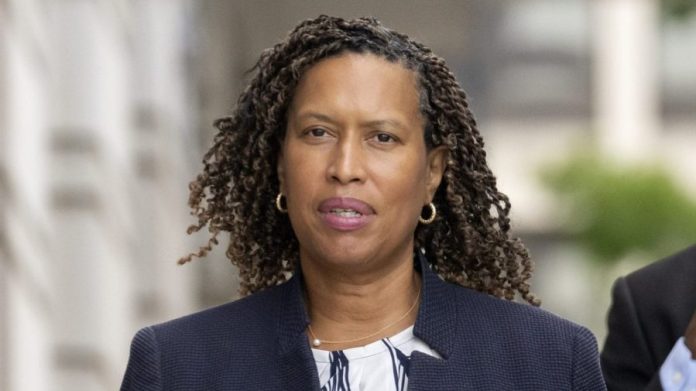
D.C. Mayor Muriel Bowser (D) wrote a letter to local residents Friday seeking to quell anxiety over the Trump administration’s federal takeover of Washington’s law enforcement.

Under a provision in the district’s Home Rule Act, President Trump earlier this week deployed National Guard troops and federal officials to patrol the streets in the nation’s capital. Bowser has blasted the move as “unsettling and unprecedented.”

“It has been an unsettling and unprecedented week in our city. Over the course of a week, the surge in federal law enforcement across DC has created waves of anxiety,” she wrote in the memo. “I was born one year before Home Rule became law, and while our autonomy has been challenged before, our limited self-government has never faced the type of test we are facing right now.”

“My jobs are many right now. Part of my job is just managing us through this crisis and making sure that our government continues to operate in a way that makes DC residents proud,” she added. “The first day of school is just over a week away, and our kids deserve a strong and joyful start to the year no matter what is happening in our city.”

The president said his goal is to crack down on violent crime in the city — despite data showing the crime rate decreasing — but local residents have been seen protesting the administration’s efforts in recent days.

Bowser in her letter vowed to defend the autonomy of Washington, including the local police department.

“We know that our access to democracy is different than anywhere else in America,” she wrote. “That said, while our Home Rule is limited, we still have rights as American citizens and we still have powers of local self-government.”

The comments come after the Trump administration made waves Thursday after announcing Drug Enforcement Administration (DEA) chief Terry Cole would take over the Metropolitan Police Department (MPD) as “emergency police commissioner.”

Following a lawsuit brought on by D.C. Attorney General Brian Schwalb, alleging the Justice Department (DOJ) overstepped its authority, the administration walked back the effort.

The mayor celebrated the decision in her letter to residents and praised MPD Chief Pamela Smith for her resilience.

“I am pleased to be able to report that, after a day in court and in accordance with Home Rule, Pamela Smith remains our Chief of Police, in command and control of the 3,100 men and women at the Metropolitan Police Department. I am incredibly proud of how the Chief has handled this experience,” she wrote. “Our city has also spent more than two decades building trust between MPD and the community, and it is important to all of us – and to the safety of our city – that we keep that trust.”

Bowser concluded the memo by touting a list of the city’s accomplishments and commended the residents for always sticking together.

“And what I have seen over this past week is a city that knows how to stick together,” the mayor continued. “I know that if we keep sticking together, we will make it to the other side of this, we will make future generations of Washingtonians proud, and we will show the entire nation what it looks like to fight for American democracy – even when we don’t have full access to it.”

She also received flack days earlier for leaving D.C. amid the turmoil — a trip she said was to pick up her daughter from summer camp. While out of town, federal forces began cleaning out local homeless encampments.

Trump also announced a plan to work with GOP lawmakers in Congress to approve a joint resolution to extend the federal takeover of MPD beyond the 30 days allotted in the Home Rule Act. Democrats have also introduced a separate bill to relinquish Trump’s authority over local police. 

One of You Saves, the Other Spends — Now What? A Financial Pro on Managing Money as a Couple

0


What’s the best way to manage money with a partner? 

You’re sitting at the breakfast table with your partner. Gazing into their eyes, you think about how much you love them, how much they — to quote “Jerry Maguire” — “complete you,” and how fortunate you are to have them.

For You: How Much Debt Is Too Much To Marry Into? Rachel Cruze Weighs In

Learn More: 3 Advanced Investing Moves Experts Use to Minimize Taxes and Help Boost Returns

Just as you’re about to fall even deeper in love, they open their mouth to tell you they might have, ahem, put a little more on the credit card than they planned. Or perhaps to chide you for not taking your employer match on your 401(k).

Ah, love. Ain’t it grand? It still can be — even if your money habits clash — when you learn how to balance different financial styles. That process might sound complex and uncomfortable, but according to Emma Johnson, founder of Wealthy Single Mommy and author of “The 50/50 Solution” and “The Kickass Single Mom,” it starts with something simple: listening to each other.

GOBankingRates caught up with Johnson to get her take on how happy couples can stay happy couples when it comes to managing money together.

https://www.youtube.com/shorts/dqyl46S4HvM

One of Johnson’s first pieces of advice is to recognize that you and your partner are, well, your own people. You each had fully formed identities and managed your own money before you got together. Acting like a parent or boss with your partner’s finances can only breed resentment.

“Each partner needs some financial autonomy – money you can spend without checking in first,” Johnson said. “You’re both adults.”

Therapists back this up. Given how often couples argue over money, it’s not surprising that services like Ascencion Counseling include financial advice right on their websites. To keep your financial independence while managing joint responsibilities, you and your partner need to communicate and plan together.

One common approach is to open a joint account for major shared expenses like rent, utilities and groceries, while keeping separate accounts for personal spending. Once you agree on how much each of you will contribute — ideally based on income rather than splitting everything 50/50 — you can still maintain individual control over your own separate accounts.

This kind of setup gives each partner more confidence in their financial abilities while also minimizing potential resentment. That’s a win-win.


The Hundred 2025 results: Tilly Corteen-Coleman claims 4-13 as Southern Brave beat Trent Rockets to go top

0


Teenager Tilly Corteen-Coleman claimed 4-13 as Southern Brave moved top of The Hundred standings with a six-wicket victory over Trent Rockets.

The 17-year-old left-arm spinner helped reduce the Rockets to 55-8 before Kirstie Gordon’s battling 32 from 27 boosted their total to 106.

Corteen-Coleman’s victims included England captain Nat Sciver-Brunt as she finished with her best figures in her 12th match of the tournament.

England seamer Lauren Bell was also in the wickets as she snared an impressive 3-16 from her 20 balls to extend her lead as the top wicket-taker in this year’s competition.

Brave had a bit of top-order wobble at the start of the chase at 10-2 when Danni Wyatt-Hodge and Laura Wolvaardt departed for four and one respectively.

Maia Bouchier steadied the ship with 42 off 30 balls in a 69-run stand with Sophie Devine, only to be stumped after dancing down the pitch to Aussie all-rounder Alana King.

Some tight bowling from Ash Gardner, Heather Graham and King ensured the game went down to the final set of five balls but Devine’s unbeaten 41 ensured Brave got home with two balls to spare.

Brave are now four points clear of second-placed Northern Superchargers at the top of the table on 16 points while the Rockets remain in sixth.